七天无理由退货

Search documents
首饰金能“七天无理由退货”吗
Zhong Guo Jing Ji Wang· 2026-02-25 22:15
Core Viewpoint - The article discusses the consumer rights regarding the return of gold jewelry, particularly focusing on the "seven-day no-reason return" policy and its applicability based on various factors such as product type, purchase channel, and merchant terms [1][2][3] Group 1: Consumer Rights and Return Policies - According to the Consumer Rights Protection Law of the People's Republic of China, certain products, including gold jewelry, may not be eligible for a "seven-day no-reason return" due to their nature, although there is some negotiation space for jewelry compared to investment gold bars [1] - Consumers have the legal right to return products with quality defects, such as unclear labeling or craftsmanship flaws, regardless of the "seven-day" or "no-reason" stipulations [2] - The return rights for gold jewelry are not absolute and depend on the type of product, purchase channel, platform rules, and merchant terms, necessitating clear communication between consumers and merchants before purchase [3] Group 2: Online vs. Physical Store Policies - Online platforms may offer different return policies, and merchants may voluntarily provide extended services to attract customers, even if the platform states "no seven-day no-reason return" [2] - Specific return timeframes can vary; for instance, one brand requires returns within 48 hours of order receipt, highlighting the need for consumers to be aware of individual merchant policies [2] - Consumers must ensure that the product is in good condition and retain all necessary documentation to facilitate any potential returns, especially in cases where the merchant supports no-reason returns [3]
首饰金能“七天无理由退货”吗?
Zhong Guo Jing Ji Wang· 2026-02-23 14:50
Group 1 - The core viewpoint of the articles discusses the complexities surrounding the return policies for gold jewelry, particularly during the festive season, highlighting the distinction between jewelry and investment gold products [1][2]. - According to the Consumer Rights Protection Law of the People's Republic of China, gold jewelry is generally not eligible for the "seven-day no-reason return" policy due to its special nature, although there may be some negotiation space for jewelry compared to investment gold bars and coins [1][2]. - Quality defects such as unclear labeling, craftsmanship flaws, or weight discrepancies allow consumers to return gold jewelry without being restricted by the "seven-day" or "no-reason" conditions, especially in online platforms [2]. Group 2 - Online gold retailers have varying return policies based on their own rules, and many may offer extended services to attract customers, even if they state that "no seven-day no-reason return" applies [3]. - Specific return conditions differ among retailers, with some requiring returns within 48 hours of order receipt, and detailed regulations on reasons for returns and handling fees [3]. - Consumers are advised to consider the volatility of gold prices when purchasing jewelry, as claiming a "no-reason return" based solely on price drops can be challenging, emphasizing the need for rational decision-making [3].
首饰金能“七天无理由退货”吗?丨快问快答
Jing Ji Ri Bao· 2026-02-23 03:30
Core Viewpoint - The article discusses the complexities surrounding the return policies for gold jewelry, particularly during the Spring Festival, highlighting the differences between jewelry and investment gold bars or coins in terms of returnability. Group 1: Return Policies for Gold Jewelry - According to the Consumer Rights Protection Law of the People's Republic of China, certain goods, including customized items and perishable goods, are not eligible for the "seven-day no-reason return" policy. Gold, while not explicitly listed, is generally considered unsuitable for return due to its special nature [1] - The return policy for investment gold bars and coins is stricter, as they are not ordinary consumer goods and are subject to price fluctuations. Banks and online retailers typically do not support returns without reason [1] Group 2: Conditions for Return - Gold jewelry can be returned without reason primarily in online platforms, but this is contingent on the absence of quality defects. If there are issues such as unclear labeling or craftsmanship flaws, consumers have the legal right to return the item regardless of the "seven-day" or "no reason" stipulations [2] - Physical gold stores usually have a "no return" policy once the item is taken out of the store, and exchanges are typically only allowed through price adjustments [2] Group 3: Online Retailer Policies - Online retailers have varying return policies based on their own rules, which can differ significantly. For instance, some brands may offer extended return services to attract customers, even if their standard policy states "no seven-day no-reason return" [3] - Specific return timelines may vary; for example, one brand requires returns within 48 hours of order receipt. Additionally, terms regarding reasons for return and associated fees are often detailed by individual retailers [3] - Consumers should be cautious of the current volatility in gold prices, as claiming a "seven-day no-reason return" based solely on price drops may be challenging. It is advisable to balance emotional attachment, wear value, and price risks when making purchasing decisions [3]


二手商品适用七天无理由退货吗?
Xin Lang Cai Jing· 2026-02-01 10:01
Core Viewpoint - The article discusses the applicability of the "seven-day no-reason return" policy for second-hand goods purchased online, highlighting a recent court ruling on a case involving a second-hand bag purchase [1] Group 1: Consumer Rights - The Consumer Protection Law stipulates that online shoppers have the right to a "seven-day no-reason return" [1] - The article raises the question of whether this right extends to second-hand items, given their unique characteristics [1] Group 2: Legal Precedents - A recent court ruling denied a woman's request to return a second-hand bag, indicating that the "seven-day no-reason return" policy may not apply to second-hand goods [1]
用A4纸吊牌、上密码锁”,当退货衣服沾着血迹和异味,商家开始出奇招防“蹭穿退货
Xin Jing Bao· 2026-01-15 00:09
Core Viewpoint - The rise of "wear and return" practices among consumers is causing significant financial losses for e-commerce merchants, as they face challenges in managing returns of damaged or used items under the current return policies [1][3][16]. Group 1: Impact on Merchants - Merchants report that up to 30% of their annual revenue is lost due to returns of damaged items, which are often unsellable [7][8]. - Many merchants have begun implementing measures such as large tags and password locks on items to deter "wear and return" behavior, but these efforts have had limited success [13][14]. - The average order value for merchants is around 200 yuan, with approximately 300 returned items annually affecting resale potential, leading to losses of about 60,000 yuan per year [7][8]. Group 2: Challenges in Return Policies - Merchants face difficulties in rejecting returns of damaged items due to stringent platform rules that favor consumers, making it hard to provide sufficient evidence for claims [8][9]. - The process for merchants to appeal return decisions is cumbersome, often requiring expensive quality reports that exceed the value of the returned items [8][12]. - Many merchants have experienced receiving items with severe odors or stains, which complicates the resale process and leads to further financial losses [6][9]. Group 3: Consumer Behavior and Platform Response - Consumers are increasingly exploiting the "7-day no-reason return" policy, treating it as a trial period for clothing, which undermines the original intent of the policy [16][17]. - Some platforms have introduced features to help merchants filter out high-return customers, but the effectiveness of these measures remains questionable [14][15]. - Legal experts suggest that platforms need to refine their return policies to create a fairer environment for merchants while ensuring consumer rights are protected [16][17].

无理由退货成“薅羊毛”工具?漏洞要靠规则堵
Ren Min Ri Bao· 2026-01-13 06:03
Core Viewpoint - The abuse of the "seven-day no-reason return" policy has raised significant social concerns, with instances of consumers returning used items, leading to financial strain on businesses and prompting them to expose dishonest practices online [1][4]. Group 1: Background and Purpose of the Policy - The "seven-day no-reason return" system was established to address the limitations of online shopping, providing consumers with a "right to regret" and enhancing consumer confidence by reducing trial-and-error costs [4]. - This initiative aimed to promote consumption and achieve a win-win situation, but some consumers exploit the loopholes, treating the policy as a means for free rentals and causing losses to businesses [4]. Group 2: Consequences of Abuse - The malicious return behavior leads to increased costs for businesses, which may raise prices or implement measures like "giant tags" to prevent such abuses, ultimately passing these costs onto all consumers [4]. - The ambiguity in defining "product integrity" during returns creates challenges for businesses in protecting their rights, leading to public exposure of customer information, which can result in backlash against both the customers and the businesses involved [4]. Group 3: Recommendations for Improvement - There is a need for more detailed regulations to clarify the standards of "product integrity," especially for clothing items that may be returned with stains or odors [5]. - E-commerce platforms should establish fair dispute resolution mechanisms, utilizing technology to identify and restrict accounts that frequently engage in malicious returns, while providing businesses with effective channels for appeals [5]. Group 4: Social Responsibility and Education - Social education and moral guidance are essential, particularly for student groups engaging in collective exploitation of the policy; schools and families should not dismiss these actions as harmless [6]. - Integrity should be emphasized as a crucial aspect of personal character and societal interaction, with a focus on teaching young people the importance of honesty in financial transactions [6]. Group 5: Overall Goals - The ultimate goal is not punishment but the establishment of reasonable rules and a compliant environment that protects the legitimate interests of all parties involved, ensuring that honest individuals are rewarded while those who exploit the system face consequences [7].
恶意退货、“买真退假” 网购乱象怎么管?
Xin Lang Cai Jing· 2026-01-12 00:26
Core Viewpoint - The rise of malicious returns in e-commerce, particularly in the clothing sector, is causing significant challenges for merchants, leading to increased operational costs and potential losses [2][6][11] Group 1: Malicious Returns Impact on Merchants - Merchants are facing difficulties with malicious returns, where items are returned after being worn or damaged, leading to financial losses [3][6] - A case study highlighted a merchant who experienced a high return rate, with items returned after being used for performances, resulting in unsellable goods [3][4] - The operational costs associated with returns, including logistics and handling, are increasing, which could lead to price hikes for consumers or threaten the viability of small businesses [6][11] Group 2: Legal and Regulatory Framework - Current laws, including the Civil Code and the upcoming Consumer Rights Protection Law, emphasize the principle of good faith, aiming to prevent the abuse of return policies by consumers [8][14] - Legal experts suggest that consumers who exploit return policies for profit may face legal consequences, including compensation for damages [8][14] - There is a call for improved regulatory measures to balance consumer rights with merchant protections, potentially through a consumer credit system to identify repeat offenders [13][14] Group 3: Merchant Strategies to Combat Returns - Merchants are adopting strategies such as using oversized tags to deter consumers from trying on items and returning them, although this may affect customer experience [10][12] - The effectiveness of these measures is still under evaluation, as they may lead to reduced sales and increased costs for merchants [12][13] - Experts recommend that merchants document the condition of items before shipping to strengthen their position in disputes over returns [9][14]
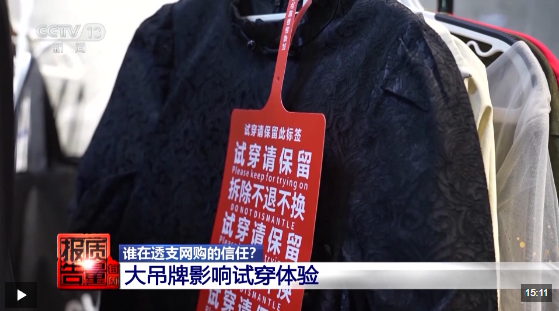
每周质量报告丨上防盗扣、挂大吊牌 谁在透支网购的信任?
Xin Lang Cai Jing· 2026-01-11 11:00
Core Viewpoint - The rise of online shopping has led to increased use of large tags and anti-theft devices on clothing, reflecting merchants' concerns over high return rates and potential losses from returned items that cannot be resold [1][8]. Group 1: Merchant Experiences - Merchants like Zhou Yuanxia and Wang Meng have adopted large tags and anti-theft devices to prevent returns of worn or damaged clothing, which is particularly problematic for items like Hanfu and Tang suits that have higher return rates [4][6]. - Wang Meng noted that while the use of large tags increases costs and reduces sales, it effectively mitigates losses from returns [6]. - E-commerce operators like Yan Qinqin have shifted focus from promoting products to managing returns, facing challenges with customers attempting to return items beyond the allowed return period [10][12]. Group 2: Consumer Impact - Consumers have expressed frustration with large tags that obstruct the view of clothing details, impacting their shopping experience and leading to potential returns due to sizing issues [17][19]. - Many consumers believe that only a small number of individuals engage in malicious return practices, suggesting that the majority are honest buyers affected by the stringent return policies [19][20]. Group 3: Industry Challenges - The overall return rate for women's clothing online hovers around 50% to 60%, with some sectors like live-streaming e-commerce exceeding 80%, leading to increased operational costs for merchants [28][30]. - The costs associated with returns, including logistics and product damage, can significantly erode profit margins, making it crucial for merchants to manage return policies effectively [30][32]. - Experts suggest that e-commerce platforms need to enhance their ability to identify and manage return behaviors to protect both consumer rights and merchant interests [32][34]. Group 4: Solutions and Recommendations - Experts recommend that platforms utilize big data to create a credit evaluation system that can help identify trustworthy consumers and flag suspicious return behaviors [34][36]. - There is a call for technological solutions to improve the tracking of consumer behavior and establish a credit rating system for return actions, which could help maintain trust in the market [36].
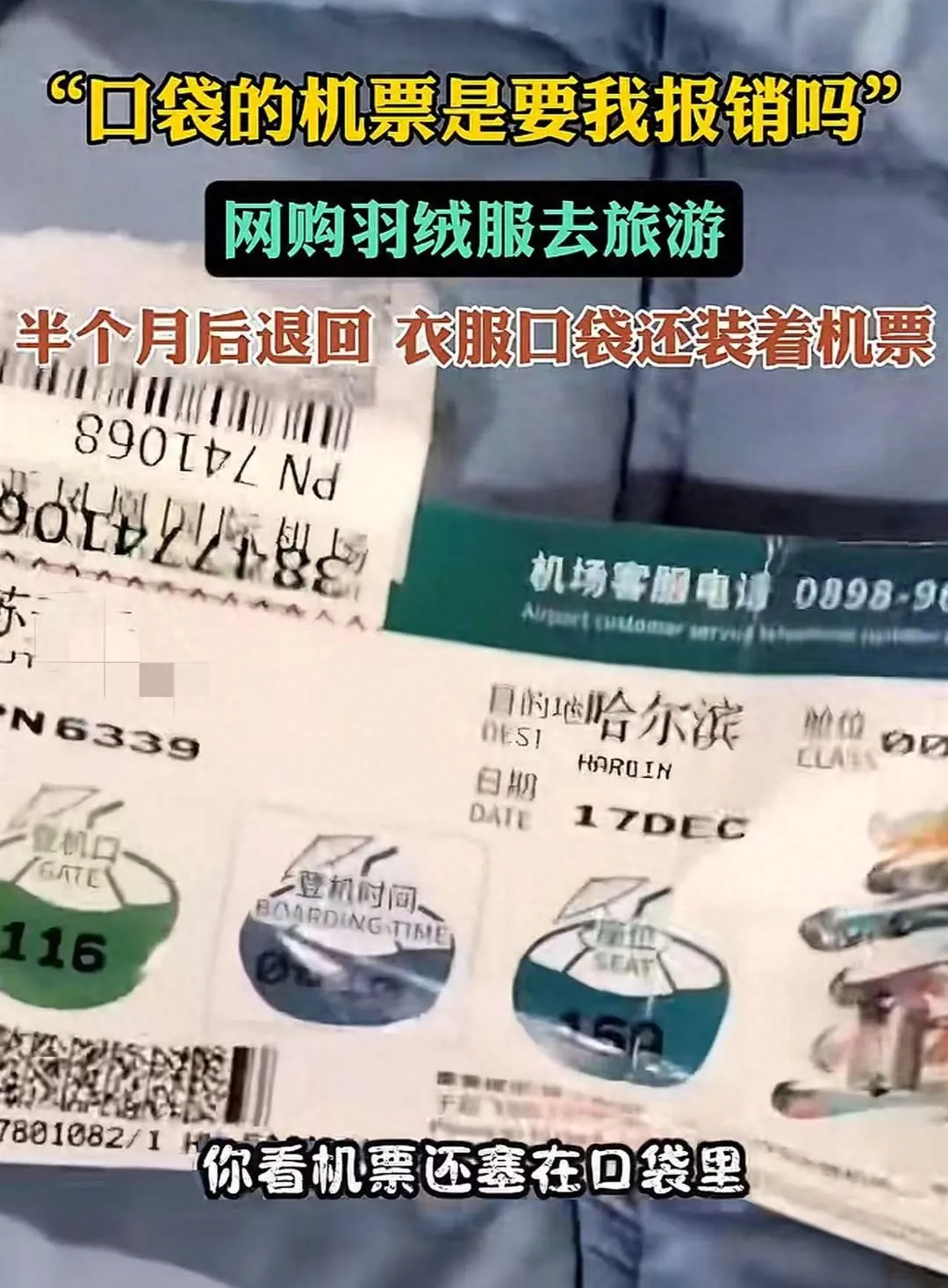
“退货羽绒服口袋现机票”引争议,买家遭网暴喊冤,销售方称视频系供货厂家发布
Mei Ri Jing Ji Xin Wen· 2025-12-30 08:39
Core Viewpoint - The incident involving a consumer's return of a down jacket has sparked significant online debate, with accusations of "free riding" and privacy violations due to the exposure of personal information in a viral video [2][4][11]. Group 1: Consumer's Actions and Responses - The consumer, referred to as Ms. Su, claimed that her return of the down jacket was legitimate and compliant with regulations, citing a broken tag as the primary reason for her return [7]. - Ms. Su stated that she only wore the jacket once during her trip and returned it within seven days, countering claims that she intended to "wear it for free" [7]. - The consumer's social media account provided evidence of communication with the seller, confirming that the jacket was new despite the tag issue [4][6]. Group 2: Seller's Perspective and Actions - The seller acknowledged the return and refund process, clarifying that the video in question was released by the supplier without knowledge of the agreed refund [9]. - The seller expressed concern over the impact of the incident on their business, indicating that the situation affected both parties involved [9]. - The seller's customer service confirmed that the return was processed according to platform policies, despite the jacket having some issues [9]. Group 3: Legal and Regulatory Context - Legal experts highlighted that for a return to be resold, the item must be in "new and unused" condition, and any damage or loss of value could lead to legal repercussions for the seller if sold as new [13]. - The "seven-day no-reason return" policy is designed to protect consumers but should not be abused for malicious returns, which can harm sellers and disrupt market order [15]. - E-commerce platforms are urged to enhance their mechanisms to balance the rights of consumers and sellers, ensuring fair practices in the return process [17].

“退货羽绒服口袋现机票”引争议!买家遭网暴喊冤:衣服疑二次销售,自己只穿过一次,已报警!销售方称视频系供货厂家发布
Mei Ri Jing Ji Xin Wen· 2025-12-30 08:16
Core Viewpoint - The incident involving a consumer returning a down jacket after a short period of use has sparked significant online discussion, raising questions about consumer behavior and the implications of return policies in e-commerce [1][3][5]. Group 1: Incident Overview - A video surfaced showing a woman, identified as Ms. Su, returning a down jacket after wearing it during a trip to Harbin, which led to public criticism of her actions as "free riding" [1][3]. - The video included details of her flight ticket, which further fueled online investigations into her identity and actions [3]. Group 2: Consumer's Response - Ms. Su defended her actions, claiming she purchased the jacket for 633 yuan and only wore it once, stating that the jacket had a damaged tag, suggesting it may have been previously returned [8][11]. - She emphasized that her return was within the seven-day return policy and was not an attempt to exploit the system, as she was still traveling when she initiated the return [8][14]. Group 3: Merchant's Perspective - The merchant acknowledged the return and stated that the situation was resolved with a refund, indicating that the video was released without their consent and did not reflect the agreed-upon resolution [10][11]. - The merchant's customer service confirmed that they followed platform procedures for the return and refund process [11]. Group 4: Legal and Regulatory Context - Legal experts highlighted that for a return to be considered valid for resale, the item must be in perfect condition, and any signs of use could lead to legal repercussions for the seller if sold as new [14][15]. - The "seven-day no-reason return" policy is designed to protect consumers but should not be abused for malicious returns, which can harm merchants and disrupt market order [15][16]. Group 5: Platform Responsibilities - E-commerce platforms are urged to enhance their mechanisms to balance the rights of consumers and merchants, including verifying the condition of returned items and monitoring for abnormal return patterns [17]. - Experts suggest that platforms should implement measures to prevent misuse of return policies, such as requiring evidence of the item's condition at the time of return [17][18].