不良贷款率

Search documents
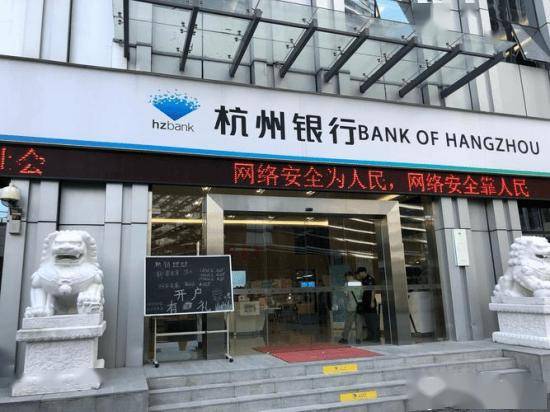
杭州银行去年净利润190亿! 董事长宋剑斌能力惊人!
Sou Hu Cai Jing· 2026-02-27 02:12
Core Insights - Hangzhou Bank reported impressive financial performance for the year 2025, particularly in net profit growth [3] Financial Performance - In 2025, Hangzhou Bank achieved operating revenue of 38.799 billion yuan, a year-on-year increase of 1.09% [3] - Net interest income reached 27.594 billion yuan, growing by 12.83% year-on-year [3] - Net fee and commission income was 4.207 billion yuan, with a year-on-year growth of 13.10%, indicating strong momentum in intermediary business [3] - The net profit attributable to shareholders for 2025 was 19.030 billion yuan, reflecting a significant year-on-year increase of 12.05% [3] Asset Quality - As of the end of the previous year, the non-performing loan ratio remained stable at 0.76%, which is considered low in the industry [3] - The provision coverage ratio stood at 502.24%, indicating a strong buffer against potential loan losses [3] - Return on equity (ROE) was reported at 14.65%, showcasing solid performance among listed banks that have disclosed their results [3] Competitive Position - Compared to its provincial counterpart, Ningbo Bank, Hangzhou Bank's revenue and profit figures are significantly lower, with Ningbo Bank reporting operating revenue of 71.968 billion yuan and net profit of 29.333 billion yuan for 2025 [3] - Hangzhou Bank's revenue and profit are approximately half of those of Ningbo Bank, indicating a long road ahead for catching up [3] Management Context - The position of the bank's president was vacant for nine months following the resignation of former president Yu Liming, which drew market attention [3][4] - Despite the leadership vacuum, Hangzhou Bank managed to maintain double-digit growth in net profit, demonstrating resilience in its internal control systems and operational capabilities [4] - The new president, Zhang Jingke, was officially appointed in January this year, following the interim period [4]


Banco Macro S.A.(BMA) - 2025 Q4 - Earnings Call Transcript
2026-02-26 17:02
Banco Macro (NYSE:BMA) Q4 2025 Earnings call February 26, 2026 11:00 AM ET Company ParticipantsBrian Flores - VP of Equity ResearchCarlos Gomez-Lopez - Head of EM and LatAm FinancialsErnesto Gabilondo - Director of LatAm FinancialsJorge Scarinci - CFOJuan Parma - CEOLindsey Shema - Equity Research AssociateNicolás Torres - Director of Investor RelationsYuri Fernandes - Executive DirectorConference Call ParticipantsKaio Prato - Stock AnalystMarcos Seru - Equity Research AnalystMatías Cattaruzzi - Senior Equi ...

【财经分析】2025年四季度银行业盈利增速改善 净息差企稳成关键支撑
Xin Hua Cai Jing· 2026-02-14 08:40
新华财经北京2月14日电 国家金融监督管理总局日前发布的2025年四季度银行业主要监管指标数据显 示,商业银行2025年全年累计实现净利润2.4万亿元,全年净利润同比增长2.3%,截至四季度末不良贷 款率为1.50%,较上季末下降0.02个百分点,净息差企稳在1.42%,行业经营整体呈现盈利增速逐季改 善、资产质量稳健、息差企稳的良好态势。 专家表示,2025年,银行业依靠规模稳增、息差企稳和信用成本平稳实现稳健发展,城商行、农商行盈 利增长势头凸显,国有大行持续发挥信贷"头雁"作用。2025年下半年以来净息差企稳为2026年发展奠定 基础,后续随着高成本长期限存款到期重定价、新发放贷款利率降幅趋缓,银行业盈利增长有望延续稳 健态势。 盈利增速结构分化城农商行增长势头凸显 国家金融监督管理总局数据显示,截至2025年四季度末商业银行平均资本利润率为7.78%,平均资产利 润率为0.60%。2025年银行业盈利增速的逐季改善成为行业发展的核心亮点,不同类型银行机构的盈利 表现呈现分化特征,低基数下城商行、农商行的盈利复苏势头凸显。 光大证券金融业首席分析师王一峰表示,商业银行2025年净利润同比增长2.3%,增 ...
商业银行2025年累计实现净利润2.4万亿元
Zheng Quan Ri Bao· 2026-02-13 22:45
南开大学金融学教授田利辉对《证券日报》记者表示,2025年四季度银行业交出了一份总量稳、结构 优、质量实的成绩单。总资产保持增长且继续向大型银行集中,这是市场选择与监管引导共同作用的结 果。普惠小微贷款余额同比实现较快增长,金融服务实体经济质效提升。 从经营效益指标来看,2025年全年,商业银行累计实现净利润2.4万亿元。截至2025年四季度末,商业 银行平均资本利润率为7.78%,平均资产利润率为0.60%,整体延续下降态势。净息差方面,截至2025 年四季度末,商业银行净息差为1.42%,较2025年三季度末、二季度末持平。 分不同类型银行来看,截至2025年四季度末,除了大型商业银行、外资银行的净息差较2025年三季度末 有所下滑,股份制商业银行、城商行、民营银行、农商行的净息差均较2025年三季度末持平或有所回 升。 本报记者 熊 悦 2月12日,国家金融监督管理总局发布2025年四季度银行业主要监管指标数据情况。总体来看,我国银 行业总资产保持增长。截至2025年四季度末,我国银行业金融机构资产总额为480万亿元,同比增长 8.0%。其中,商业银行的总资产为414.79万亿元,同比增长9.0%,占银 ...
商业银行2025年累计实现净利润2.4万亿元 连续三个季度净息差保持在1.42%
Zheng Quan Ri Bao· 2026-02-13 15:42
2月12日,国家金融监督管理总局发布2025年四季度银行业主要监管指标数据情况。总体来看,我国银 行业总资产保持增长。截至2025年四季度末,我国银行业金融机构资产总额为480万亿元,同比增长 8.0%。其中,商业银行的总资产为414.79万亿元,同比增长9.0%,占银行业金融机构资产总额的比例为 86.4%。 从不同类型机构来看,银行业金融机构资产规模向大型商业银行集中的态势持续。数据显示,截至2025 年四季度末,大型商业银行的总资产突破210万亿元,同比增长10.8%;大型商业银行总资产占银行业 金融机构资产规模的43.9%,在各类机构中占比最高,这一比例较2025年三季度末持平,较2025年一季 度末提升0.6个百分点。 与此同时,股份制商业银行的总资产占银行业金融机构比例为16.2%,较2025年三季度末上升0.1个百分 点;城商行的总资产占银行业金融机构比例为13.7%,较2025年三季度末下降0.1个百分点。此外,农村 金融机构和其他类金融机构的总资产占银行业金融机构比例分别为12.7%、13.5%,分别较2025年三季 度末下降0.2个百分点、提升0.1个百分点。 分不同类型银行来看,截至20 ...
加利西亚金融股价下跌,拉美选举年风险与机遇并存
Jing Ji Guan Cha Wang· 2026-02-12 19:30
机构观点 美银证券于2026年2月7日维持对加利西亚金融的"买入"评级。机构普遍看好公司长期目标,如2026年实 现11-12%的股本回报率,但提示需关注不良贷款率在2026年3月达峰后的改善进展。 经济观察网截至2026年2月12日,加利西亚金融(GGAL.OQ)股价收于47.17美元,单日下跌7.26%,振幅 达9.59%,成交金额约5957万美元。近7日股价波动显著,5日累计跌幅2.08%,年初至今跌幅扩大至 12.31%。同期,美股银行板块及大盘指数均下跌,显示行业整体承压。 近期事件 2026年是拉美关键选举年,地区政治整体向右转,投资者预期市场友好政策可能推动资产价值,但阿根 廷高通胀、汇率波动及金融科技竞争等风险持续发酵。公司聚焦石油、天然气、矿业和农业领域的商业 贷款以驱动增长,但面临阿根廷米莱政府经济调整带来的不确定性。 以上内容基于公开资料整理,不构成投资建议。 ...
柬埔寨银行业不良贷款率 攀升至8.9%
Shang Wu Bu Wang Zhan· 2026-02-11 01:24
Core Insights - The Cambodian banking sector demonstrated resilience and a strong capital base despite challenges such as external uncertainties, slowing credit growth, and border tensions [1] - The overall capital adequacy ratio and liquidity of the banking sector remain significantly above regulatory requirements, with profitability showing signs of recovery [1] Group 1: Banking Sector Performance - The non-performing loan (NPL) rate increased from 7.4% in 2024 to 8.9% in 2025, influenced by a decline in asset quality due to a weak real estate and construction sector [1] - The net NPL rate, after accounting for provisions, stands at 2.9%, indicating that risks are generally manageable [2] - The allowance coverage ratio reached 67.5%, reflecting strong risk resilience among financial institutions [2] Group 2: Capital and Liquidity - Capital adequacy ratios (CAR) for deposit-taking banks and financial institutions are at 21.9%, while non-deposit institutions have a CAR of 31.4%, both exceeding the statutory minimum of 15% [2] - The liquidity coverage ratio (LCR) is maintained at a high level of 177.3%, well above the 100% regulatory standard, ensuring sufficient short-term liquidity [2] Group 3: Credit Growth and Economic Context - Customer loans in the banking sector increased by 4.1% year-on-year, totaling $63 billion, while customer deposits rose by 14.7%, amounting to $65.7 billion [3] - The credit growth rate has significantly slowed, with a mere 3% increase in 2023, marking the lowest growth rate in the past 20 years [3] - The loan-to-GDP ratio has surpassed 170%, making Cambodia the country with the highest private debt ratio in the region [3]
星展集团:2025年四季度业绩:初步观点-20260210
citic securities· 2026-02-10 06:15
中信证券财富管理(香港) 产品及投资方案部 本文是由投资/产品专员而非分析师撰写的文章汇编。 它不构成研究报告,也不应被解释为研究报告,也不旨在提供 专业、投资或任何其他类型的建议或推荐。 CSIWM 个股点评 2026 年 2 月 10 日 星展集团 DBS SP 本文内容由 Kylie Kwok (郭凯欣) 提供 新加坡金融服务行业 电话:(852) 2237 9250 / 电邮:wminvestmentsolutions@citics.com.hk 2025 年四季度业绩:初步观点 摘要 中信证券财富管理与中信里昂研究观点一致。根据中信里昂研究在 2026 年 2 月 9 日发布的题为《4Q25 result: First thoughts》的报告,星展银行(DBS)税后净利润较市场一致预期低 11%。尽管贷款增长强劲,净利息收入基本符合 市场预期。非利息收入低于预期,较市场一致预期低 15%,主因财富管理和交易业务弱于预期。运营成本控制良好。 拨备高于市场预期,因房地产敞口导致特别拨备增加,但一般拨备释放部分抵消了该影响。尽管新增不良资产大幅增 加,不良贷款率保持稳定。季度总股息为 0.81 新加坡元 ...
齐鲁银行业绩双增利息净收入首破百亿 稳健扩张资产站上8000亿不良率七连降
Chang Jiang Shang Bao· 2026-02-08 23:38
Core Viewpoint - Qilu Bank has achieved double growth in revenue and net profit for the year 2025, while continuously optimizing its profit structure, with interest income becoming the core driver of performance growth [1][2]. Financial Performance - In 2025, Qilu Bank reported operating income of 13.135 billion yuan, a year-on-year increase of 5.12%, and a net profit attributable to shareholders of 5.713 billion yuan, up 14.58% year-on-year [1][2]. - The bank's net profit excluding non-recurring items reached 5.643 billion yuan, with a significant year-on-year growth of 15.36% [1][2]. - The weighted average return on equity was 12.17%, slightly down by 0.35 percentage points, primarily due to the dilution effect from convertible bonds [2]. Net Interest Margin - Qilu Bank's net interest margin increased by 2 basis points to 1.53%, contrasting with the industry trend of declining margins, which contributed to a substantial increase in interest income of 16.48% to 10.519 billion yuan [1][2][3]. - The bank's interest income surpassed the 10 billion yuan mark for the first time, compared to 9.031 billion yuan in 2024 [1]. Asset Quality - As of the end of 2025, Qilu Bank's total assets reached 804.381 billion yuan, reflecting a year-on-year growth of 16.65% [5][6]. - The non-performing loan ratio improved to 1.05%, down 14 basis points from the previous year, marking the seventh consecutive year of decline [5][6]. - The provision coverage ratio increased to 355.91%, up 33.53 percentage points year-on-year, indicating enhanced risk mitigation capacity [6]. Loan and Deposit Growth - The total loan amount reached 382.834 billion yuan, an increase of 45.692 billion yuan or 13.55% year-on-year, with loans constituting nearly 48% of total assets [3][5]. - Total deposits amounted to 489.531 billion yuan, up 49.989 billion yuan or 11.37% year-on-year, providing a stable funding source for asset expansion [3][5]. Dividend Distribution - Qilu Bank announced a cash dividend of 0.121 yuan per share for 2025, totaling 746 million yuan, with a cumulative dividend distribution of 5.617 billion yuan since its listing [7].


多家中小银行上调存款利率,未来会否再降?
Sou Hu Cai Jing· 2026-02-05 10:06
Core Viewpoint - The banking sector is experiencing upward adjustments in deposit rates among several small and medium-sized banks at the beginning of 2026, driven by the expiration of high-rate deposit products and a need to attract funds during a critical marketing period [2][4][9]. Group 1: Deposit Rate Adjustments - Many small and medium-sized banks have raised deposit rates by 5 to 25 basis points, with some products now offering rates around 2% [2][4]. - Specific examples include a small bank offering a 3-year deposit at 2.1% and a 2-year deposit at 2.05%, with promotional conditions attached [5]. - A central region rural commercial bank has also increased rates for its 3-year and 5-year deposits to 2.05% and 2.1%, respectively, with a low minimum deposit requirement [5]. Group 2: Market Dynamics - The increase in deposit rates is attributed to a seasonal influx of funds as many fixed-term deposits mature at the start of the year, creating a demand for reallocation of household funds [3]. - The timing coincides with the "opening red" marketing push by banks and the distribution of year-end bonuses, which further stimulates deposit inflows [3]. Group 3: Competitive Landscape - The average yield of bank wealth management products has dropped below 2%, making the newly adjusted deposit rates more competitive [6]. - Small and medium-sized banks are using attractive short-term rates as a strategy to secure deposits and strengthen their funding base amid competitive pressures [6]. Group 4: Future Outlook - Despite the recent rate increases, the overall trend for deposit rates is expected to remain downward, with future reductions likely to be smaller and less frequent [9]. - The banking sector's net interest margin is under pressure, influencing banks to manage their deposit costs carefully while maintaining stable operations [8][9].