
产品化

Search documents
低频的事故车维修缘何这么香?
Zhong Guo Qi Che Bao Wang· 2026-02-09 03:59
Core Viewpoint - The automotive dealership sector is increasingly entering the accident vehicle repair market, traditionally dominated by insurance companies, leading to heightened competition and new service offerings aimed at capturing market share [1][4]. Group 1: Market Dynamics - The accident vehicle repair market is driven by a large vehicle stock, millions of annual accidents, rising repair costs, and evolving automotive technology, with an estimated annual market value of 300 to 500 billion yuan [4]. - Accident vehicle repairs typically involve significant parts replacement and labor, with profit margins generally higher than routine maintenance, accounting for approximately 60% of after-sales profits [4]. - The relationship with insurance companies and the number of retained customers are crucial for profitability in the accident repair sector, as better relationships lead to more repair referrals [4]. Group 2: New Service Offerings - Zhongsheng Automotive has launched an "Accident Vehicle Differential Compensation" service, providing financial incentives for customers to replace vehicles at their dealerships after accidents [5]. - Other companies, including Wanjie, BYD, Xiaomi, and Zeekr, have introduced similar service packages with comparable conditions, emphasizing the need for customers to return to authorized centers for repairs [5][6]. - The introduction of these service packages is seen as a defensive strategy against insurance companies, aiming to reclaim control over repair flow and customer retention [6][10]. Group 3: Consumer Implications - The new service packages, akin to GAP insurance, provide additional financial protection for vehicle owners, particularly beneficial for high-end vehicle customers [7][8]. - While these packages offer immediate benefits to consumers, they may also limit consumer choice, as customers must return to authorized service centers to access the promised benefits [9]. - The potential for increased repair wait times and restrictive service terms may arise as consumers become more dependent on these packages [9]. Group 4: Future Trends - The competition in the accident vehicle repair market is expected to shift from price-based to data and standard-based competition, leading to a polarization where leading manufacturers dominate high-value repairs [10][11]. - Independent repair shops may struggle unless they develop specialized skills or strong community ties, potentially relegating them to lower-margin services [11]. - The trend towards "financialization" of services is anticipated, with standardized repair services evolving into financial products, and subscription-based repair services may emerge in the future [11].


浙江省空港贵宾公司举办首届“禧悦杯”服务技能大赛
Zhong Guo Min Hang Wang· 2025-12-19 03:26
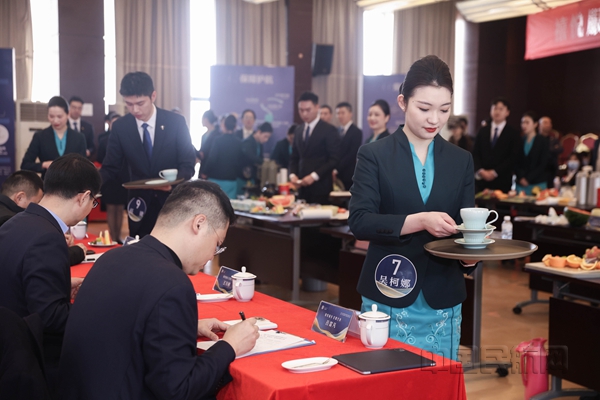
Core Insights - The Zhejiang Airport VIP Service Company successfully held the first "Xiyue Cup" service skills competition on December 18, aimed at enhancing the standardization of VIP services and promoting the "People's Aviation for the People" philosophy [1] Group 1: Competition Overview - The competition featured seven elite teams from service units and outsourced partners in Hangzhou, Ningbo, and Wenzhou, showcasing the skills and professionalism of modern civil aviation VIP service personnel [1] - The competition's purpose was to promote learning through competition, with a focus on improving service skills and addressing challenges in quantifying and applying service competition results [1] Group 2: Innovative Competition Structure - The competition included multiple core modules such as appearance, practical operations, emergency response, and language application, assessing participants' professional qualities in real-world scenarios [1] - The framework of the competition was announced a month in advance, with participant lists randomly generated a week prior, and specific details drawn on the day of the event, encouraging comprehensive preparation among participants [1] - Post-competition, units engaged in a thorough review process to identify gaps and enhance skills, creating a platform for skill exchange and experience sharing [1] Group 3: Strategic Development Initiatives - The Zhejiang Airport VIP Service Company is focused on high-quality development in civil aviation services, emphasizing standardization, productization, and branding [6] - Key initiatives include establishing a regular skill enhancement system, upgrading service brands, and transitioning service models to digital formats, including the development of an online membership service platform and the introduction of smart mobile service terminals [6] Group 4: Future Directions - The company plans to leverage insights and standards from the competition to enhance daily service practices, emphasizing heartfelt service and quality experiences for travelers [6] - There is a commitment to continuous innovation in service models to foster new growth drivers for the Zhejiang Airport Group's non-aviation business and contribute to the high-quality development of the civil aviation industry [6]
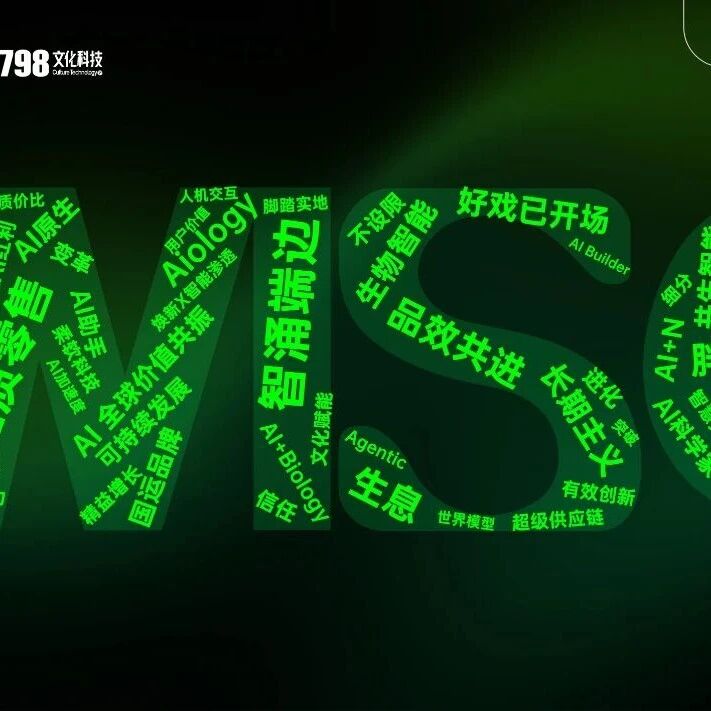
刚刚的WISE2025大会上,43位商业大佬用这些关键词解读2025……
36氪· 2025-11-29 13:35
Group 1: AI and Technology Transformation - AI is evolving from a tool for process optimization to a core productivity force that reshapes industry logic, marking the transition from "using AI" to "coexisting with AI" [7] - The emergence of embodied intelligence is transforming productivity by enabling robots to autonomously learn and operate in diverse environments, thus integrating AI's value into urban and industrial contexts [9] - The concept of Agentic AI is introduced, where AI evolves from a passive tool to an active collaborator, enhancing decision-making and operational efficiency across industries [16] Group 2: Consumer Behavior and Market Dynamics - The consumer market is undergoing a profound value reconstruction, with consumers balancing rational price-value assessments and emotional connections to brands [34] - The focus is shifting from chasing broad market appeal to creating unique, irreplaceable value for specific consumer segments, as seen in the "胖东来模式" and the rise of domestic brands [35][36] - Companies are urged to prioritize quality and authenticity in their offerings, aligning with consumer expectations for genuine value rather than inflated prices [37] Group 3: Health and Biotechnology - The integration of AI with biology is redefining health management, moving towards personalized solutions that decode individual life patterns and health needs [45] - The concept of "biological intelligence" emerges, emphasizing the collaboration between AI and biological sciences to unlock new potentials in disease treatment and human understanding [46] Group 4: Marketing and Brand Strategy - The marketing landscape is shifting from external traffic acquisition to building internal trust assets, with founders becoming the "trust conduits" for their brands [50] - Long-termism is identified as a foundational logic for brand growth, emphasizing sustained investment in core areas rather than short-term gains [51] - The importance of effective innovation is highlighted, focusing on simplifying choices and enhancing the utility of products rather than merely adding features [66] Group 5: Innovation and Entrepreneurship - The essence of innovation is returning to fundamental business principles, with successful entrepreneurs balancing visionary foresight with rigorous value assessments [59] - The concept of "soft technology" is gaining traction, emphasizing that the ultimate goal of technology is to enhance emotional connections and human welfare [65] Group 6: Global Collaboration and Sustainability - The global AI landscape is evolving towards a model of mutual empowerment, where resources and demands create a value cycle rather than a one-way output [22] - The focus on sustainable development is evident, with industries leveraging AI to create efficient, green manufacturing processes that redefine operational paradigms [25] Group 7: Conclusion and Future Outlook - The WISE2025 conference encapsulates the deep integration of technology and business, highlighting key themes such as AI acceleration, consumer value return, and global collaboration [68] - Trust, quality, and innovation are identified as the cornerstones for navigating uncertainties in the business landscape, emphasizing the role of entrepreneurs as active participants in shaping the future [68]
从云到AI,中国企业软件的历史级机会
Guan Cha Zhe Wang· 2025-11-17 17:38
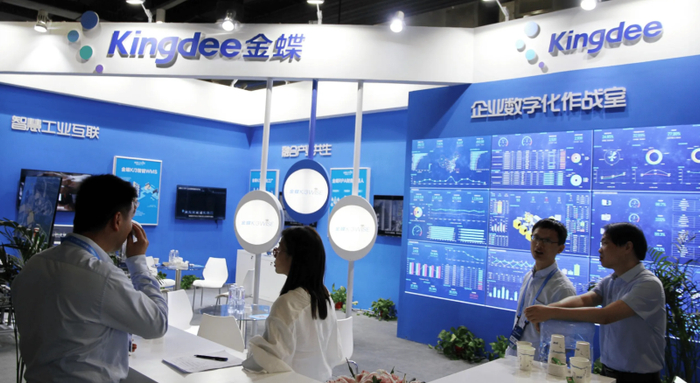
Core Insights - The article discusses the transformation of enterprise software towards AI, highlighting the trend among ERP vendors like Kingdee to upgrade their brands and focus on AI to enhance competitiveness in the global market [2][4][10] - The conversation emphasizes the challenges and opportunities for Chinese software companies in replacing established players like SAP, particularly in the context of the manufacturing sector [19][22] Group 1: AI Transformation in Enterprise Software - The shift towards AI in enterprise software is seen as an industry trend, with many companies still in the exploratory phase of AI application [4][10] - Kingdee's brand upgrade to "Kingdee AI" aims to leverage AI as a core driver for enhancing enterprise competitiveness [2][4] - The transition from traditional ERP systems to AI-native solutions is expected to take several years, with a focus on integrating AI into existing business processes [4][5] Group 2: Challenges and Opportunities for Chinese Software - Chinese software companies face the challenge of moving from a service-oriented model to a product-oriented model, which is essential for achieving exponential growth [25][26] - The complexity of China's manufacturing sector presents both a challenge and an opportunity for local software companies to develop competitive products [19][20] - Successful case studies of Chinese companies replacing SAP with domestic software indicate a growing acceptance and capability of local solutions [22][23] Group 3: Market Dynamics and Future Outlook - The future of enterprise software is expected to involve a hybrid model where AI plays a significant role in understanding and executing business processes [10][11] - The integration of AI into enterprise software is anticipated to create a collaborative environment between human users and AI systems, enhancing operational efficiency [10][11] - The article suggests that the market will evolve towards a structure where standardized backend systems (like those from Kingdee) support flexible front-end interactions driven by AI [18][29]
水厂“无人驾驶” 金科环境的“用水自由”之路
Shang Hai Zheng Quan Bao· 2025-11-05 18:41
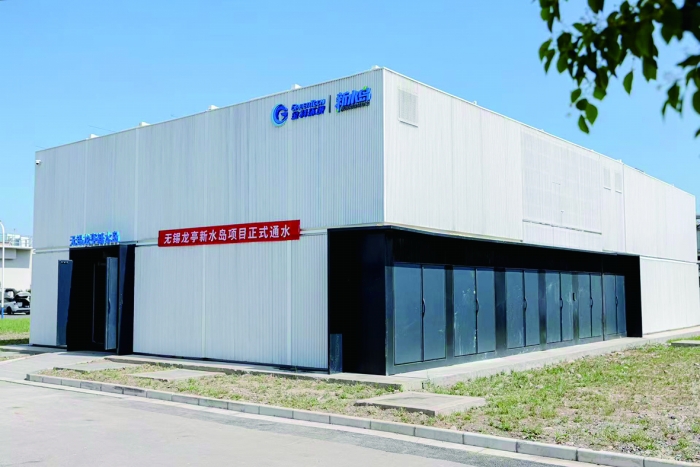
Core Insights - The company aims to revolutionize the traditional water treatment industry with its modernized water treatment plant, which operates autonomously using AI technology [2][5][6] - The "New Water Island" project represents a shift from traditional engineering projects to industrial products, significantly reducing initial investment costs and construction time [4][7] Group 1: Project Overview - The New Water Island project features a modern water treatment plant capable of processing 5,000 tons of water daily, operating without personnel due to the integration of the "Water Radish AI" system [2][5] - The New Water Island 1.0 was launched in 2023, with the 2.0 version expected in 2024, introducing modular design for efficient production and installation [3][4] Group 2: Technological Innovations - The AI-driven "Water Radish AI" system allows for autonomous operation, reducing the need for human oversight by 90% and lowering operational costs by 35% [5][6] - The system incorporates advanced AI models for process optimization and real-time monitoring, enhancing the efficiency and reliability of water treatment operations [5][6] Group 3: Market Potential - The demand for recycled water is expected to grow, with industrial water consumption projected to reach 97.1 billion cubic meters in 2024, highlighting the cost advantages of recycled water [7][8] - The company's strategic focus on resource recycling, AI integration, and productization positions it well to capitalize on emerging market opportunities in various industries [7][8]

法博会展现行业融合新趋势,助力深圳法治化营商环境建设
Nan Fang Du Shi Bao· 2025-10-27 11:30
Core Insights - The second Shenzhen Legal Services Expo successfully showcased the integration of legal services with technology and industry, emphasizing Shenzhen's proactive exploration in building a legal service ecosystem [1][7]. Group 1: Event Overview - The expo featured 123 participating institutions across seven exhibition areas, creating a complete service loop from demand-driven support to innovation iteration [3]. - The theme of the expo was "Deepening Integration and Innovation, Building a Legal Ecology" [1]. Group 2: Innovations in Legal Services - The "Legal + Technology" exhibition area highlighted cutting-edge technologies such as AI legal search and blockchain evidence storage, showcasing the profound transformation of legal services through technology [3][4]. - AI legal advisors became commonplace at the expo, enabling quick generation of legal opinions and risk assessment reports based on simple case descriptions [4]. Group 3: Industry Integration - The legal services effectively connected with Shenzhen's "20+8" industrial clusters, with over 900 lawyers serving more than 500 related enterprises in the past year [7]. - A total of 76 legal product lists were developed to cater to different industry characteristics, such as addressing chip infringement and export control issues in the semiconductor sector [7]. Group 4: Talent Development - The expo emphasized the importance of talent cultivation, with strategic cooperation agreements signed between the Shenzhen Lawyers Association and eight renowned law school faculties to build an integrated talent training system [7]. - Events like the Youth Lawyer AI Skills Competition and legal talent recruitment fair were held to prepare composite talents for the industry [7]. Group 5: Future Outlook - The successful hosting of the expo marks a significant step in Shenzhen's exploration of legal innovation and optimization of the business environment, injecting new legal momentum into the city's high-quality development [7].
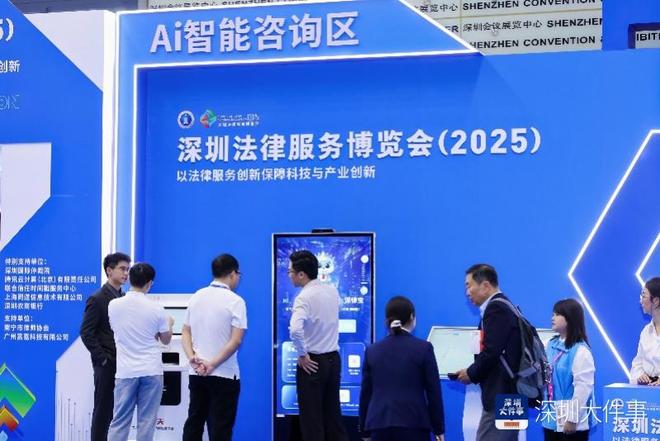
无锡首批!金科环境锡山中荷水务上榜 新水岛®节水装备成示范
Zheng Quan Ri Bao Zhi Sheng· 2025-10-16 05:10
Core Insights - Wuxi Xishan Zhonghe Water Co., Ltd. has been recognized as a key enterprise in the water-saving industry, marking it as a benchmark for the "water-based production" development concept in Xishan District [1][2] - The company has developed an innovative model integrating resource utilization, AI intelligence, and productization, gaining industry-wide recognition for its technological strength and operational effectiveness [1][2] Group 1: Company Achievements - Xishan Zhonghe Water has successfully transformed industrial wastewater into high-quality reclaimed water using advanced "ultrafiltration + reverse osmosis" dual membrane treatment technology, achieving a daily processing capacity of 32,500 tons and an annual replacement of 5.8825 million tons of tap water [1] - The company has significantly reduced wastewater discharge by 5.8825 million tons annually, providing stable water sources for various industrial sectors, including PCB electronics, thermal power, photovoltaic new energy, and semiconductors [1] Group 2: Innovative Practices - The Longting New Water Island 2.0 reclaimed water plant employs a highly integrated design, completing construction in just 15 days with a footprint of only 300 square meters, producing 5,000 tons of reclaimed water daily [2] - The plant utilizes the "Water Radish® AI Intelligent Body" operational management system, enabling a fully automated and efficient operation, reducing construction time, land area, operational personnel, and lifecycle costs by 90% and 50% respectively [2] - This industrialized approach to water plant construction is seen as a significant shift from traditional methods, marking the entry of the water treatment industry into a productization era [2]
应对“不敢供、不敢用、难持续”,可信数据空间成破局关键
Zhong Guo Xin Wen Wang· 2025-08-29 14:19
Core Viewpoint - The establishment of a trusted data space is crucial for addressing the three major pain points in data circulation: supply-side reluctance to provide data, demand-side hesitance to use data, and the sustainability challenges faced by platforms [1][2]. Group 1: Pain Points in Data Circulation - The supply side is hesitant to provide data due to concerns about where the data will be used and the potential loss of control [2]. - The demand side is reluctant to use data because of uncertainties regarding its source, compliance, and quality [2]. - Platforms face sustainability issues as data technologies continue to evolve, and the current business models are not clearly defined [2]. Group 2: Role of Trusted Data Space - The trusted data space is seen as a solution to the trust issues in data sharing, enabling integrated collaborative development and resource sharing to overcome data silos [2]. - Companies are increasingly recognizing the necessity of building trusted data spaces to ensure effective data supply, flow, and utilization [2]. Group 3: Practical Applications and Benefits - Trusted data spaces have demonstrated their effectiveness in reducing costs and enhancing competitiveness, particularly in industries like home textiles, where they protect intellectual property and original designs through integrated platforms utilizing blockchain and AI [3].
金科环境获多家机构推荐
Zheng Quan Ri Bao· 2025-05-08 06:35
Core Viewpoint - Jinko Environment Co., Ltd. has received "buy" ratings from Dongwu Securities and Huatai Securities, with Founder Securities initiating coverage with a "recommended" rating following the release of its 2024 annual report and 2025 Q1 report [2] Financial Performance - In 2024, Jinko Environment achieved operating revenue of 617 million yuan, an increase of 7.74% year-on-year [2] - In Q1 2025, the company's revenue grew by 17% year-on-year to 129 million yuan, with net profit attributable to shareholders increasing by 33% [2] - As of the end of March 2025, Jinko Environment had an order backlog of 709 million yuan, indicating steady growth in B-end orders [2] Strategic Initiatives - The company is deepening its strategy of "resource utilization, AI intelligence, and productization," with the New Water Island® project accelerating implementation and expanding applications in industrial scenarios [2][3] - The New Water Island® 2.0 product has secured multiple orders, including projects in Wuxi, Zhoushan, Kaifeng, and Taiyuan, each with significant capacities [3] - The Water Radish® AI intelligent system features a multi-model integrated architecture, enhancing operational efficiency and safety in the New Water Island® product's unmanned operations [3] Market Outlook - Institutions believe that Jinko Environment's growth prospects are promising due to policy support, product upgrades, and expanded sales channels, which are expected to accelerate order replication [3]
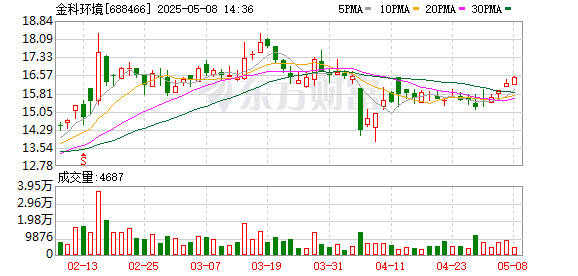
金科环境(688466):新水岛持续落地,构建国内外销售网络
HTSC· 2025-05-06 03:38
Investment Rating - The report maintains a "Buy" rating for the company [6] Core Views - The company achieved a revenue of 617 million RMB in 2024, representing a year-over-year increase of 7.74%, while the net profit attributable to the parent company was 66.79 million RMB, down 5.62% year-over-year, primarily due to a decline in revenue and gross margin from water treatment technology solutions [1][2] - The company is actively implementing its strategy of "resource utilization, AI digitization, and productization," which is expected to significantly reduce the comprehensive water production costs for water-using enterprises, indicating a positive outlook for its performance growth [1][2] Revenue Breakdown - In 2024, the revenue from water treatment technology solutions, wastewater resource utilization, and operation and maintenance technical services was 337 million RMB, 107 million RMB, and 172 million RMB, respectively, with year-over-year changes of -10.94%, -0.17%, and +98.74% [2] - The gross margins for these segments were 32.28%, 30.61%, and 46.88%, reflecting year-over-year changes of -8.64, -2.90, and +10.36 percentage points [2] New Product Development - The company has successfully secured orders for its New Water Island 2.0 product, with projects in Wuxi, Zhoushan, Kaifeng, and Taiyuan, each with a capacity of 5,000 m³/day, aimed at various industrial applications [3] - The company is building a sales network for the New Water Island product, establishing cooperation intentions with multiple domestic and international clients [3] Financial Projections - The report projects the company's earnings per share (EPS) for 2025, 2026, and 2027 to be 0.92 RMB, 1.14 RMB, and 1.33 RMB, respectively, with a downward adjustment of 24% for 2025 and 2026 [4] - The target price for the company is set at 21.90 RMB, based on a price-to-earnings (PE) ratio of 23.8 for 2025 [4][7] Market Position - The company's market capitalization is approximately 1.928 billion RMB, with a closing price of 15.66 RMB as of April 30 [7] - The report indicates a significant growth potential for the company, driven by the increasing demand for high-quality recycled water and the expansion of its industrial market applications [2][3]