
企业估值

Search documents
Smith & Nephew plc (SNN) Surpasses Earnings and Revenue Estimates
Financial Modeling Prep· 2026-03-03 12:00
Smith & Nephew plc reported adjusted earnings per share of $1.02 for the full year (up 21% from the prior year). Fourth-quarter revenue reached $1.70 billion, beating consensus estimates of approximately $1.67–1.68 billion. Full-year revenue was $6.16 billion, exceeding consensus estimates of approximately $6.14 billion. Operating profit rose by 20.7% to $794 million, and free cash flow increased by 52.5% to $840 million. Smith & Nephew plc, trading as NYSE:SNN, is a British company specializing in medical ...



Rapid Micro Biosystems, Inc. (NASDAQ: RPID) Quarterly Earnings Preview
Financial Modeling Prep· 2026-02-27 03:00
Rapid Micro Biosystems, Inc. (NASDAQ: RPID) is a prominent player in the life sciences technology sector. The company specializes in automation solutions that improve the manufacturing and release of healthcare products. As RPID prepares to release its fourth quarter and full year 2025 earnings on March 12, 2026, Wall Street anticipates an earnings per share (EPS) loss of $0.23 and revenue of approximately $10.9 million. Despite a negative price-to-earnings (P/E) ratio of -4.49, RPID remains a key participa ...


Richtech Robotics Inc. (NASDAQ: RR) Quarterly Earnings Preview and Legal Update
Financial Modeling Prep· 2026-02-12 10:00
Earnings Expectations - Richtech Robotics Inc. (NASDAQ:RR) is expected to report an earnings per share (EPS) of -$0.02 and revenue of approximately $2.34 million for the upcoming quarter on February 13, 2026 [1][6]. Legal Proceedings - Investors are reminded of the April 3, 2026, deadline to apply for the lead plaintiff role in the ongoing federal securities class action against RR, which is crucial for directing litigation strategies [2][6]. Financial Health - The company faces challenges with a negative price-to-earnings (P/E) ratio of -38.81 and a high price-to-sales ratio of 109.02, indicating a premium price paid by investors for each dollar of sales [3][6]. - Despite these financial hurdles, RR maintains a minimal debt-to-equity ratio of 0.0027, indicating low reliance on debt financing, and a high current ratio of 107.45, suggesting strong liquidity [5][6]. - The enterprise value to sales ratio is at 70.78, while the enterprise value to operating cash flow ratio is -39.49, highlighting negative cash flow [4].

Hillenbrand, Inc. (NYSE:HI) Financial Performance and Acquisition Overview
Financial Modeling Prep· 2026-02-11 11:03
Core Viewpoint - Hillenbrand, Inc. is facing financial challenges, highlighted by a significant earnings miss and a revenue shortfall, but is entering a new growth phase through a substantial acquisition by Lone Star Funds valued at approximately $3.8 billion [1][2]. Financial Performance - The company reported an earnings per share (EPS) of -$0.03, missing the estimated EPS of $0.63 [1]. - Actual revenue was $550.2 million, falling short of the anticipated $607.1 million [1]. Acquisition and Growth Strategy - Hillenbrand has been acquired by Lone Star Funds in an all-cash deal valued at around $3.8 billion, which is expected to enhance its growth and operational capabilities [2]. - Kim Ryan, President and CEO, expressed optimism about utilizing Lone Star's resources to improve customer service and drive growth [2]. Valuation Metrics - The price-to-sales ratio is approximately 0.90, indicating potential undervaluation relative to annual sales [3]. - The enterprise value to sales ratio stands at about 1.49, providing insight into the company's valuation concerning its sales [3]. - Hillenbrand's debt-to-equity ratio is around 1.17, and the current ratio is approximately 1.27, reflecting moderate debt use and reasonable liquidity levels [3].


“朋友圈”救场,西贝究竟值多少亿?
Xin Lang Cai Jing· 2026-01-28 09:26
//// 按新潮传媒计提损失测算,西贝的整体估值约为25亿元,新股东们是在赌西贝触底反弹吗? 在舆论最汹涌、经营数据最难看的时刻,西贝反而拿到了钱。而且,出手的是新荣记创始人张勇、阿里 前合伙人胡晓明。 工商信息显示,1月20日,内蒙古西贝餐饮集团有限公司完成股东结构调整。台州新荣泰投资有限公 司、呼和浩特市集体共创企业管理中心(有限合伙)、杭州舟轩股权投资管理合伙企业(有限合伙)等 新股东入局,公司注册资本由8990.3万元增至1.02亿元,增幅约13%。 但真正耐人寻味的,不在融资本身,而在另一份意外曝光的审计报告。 去年4月,分众传媒披露拟83亿元收购成都新潮传媒100%股权。今年1月9日,随交易披露的审计材料显 示,新潮传媒对其持有的西贝1%股权,计提了7480万元公允价值变动损失。这意味着,在独立审计机 构的评估口径下,西贝的整体估值被下调至25亿元左右。 炒股就看金麒麟分析师研报,权威,专业,及时,全面,助您挖掘潜力主题机会! 一边是商业大佬们的滚烫入局,一边是审计报告给出的冰冷估值。到底,这些精明到极致的资本是在押 注一个触底反弹的未来,还是为一场注定艰难的复苏提前埋单? "朋友圈"救场 在本轮 ...

包良清父子控制87.18%表决权,东方测控IPO前夕包才溢上任副董事长
Sou Hu Cai Jing· 2026-01-23 10:33
Core Viewpoint - Dongfang Measurement and Control Technology Co., Ltd. (referred to as Dongfang Measurement and Control) has recently had its IPO accepted on the Sci-Tech Innovation Board, with Guotai Junan Securities Co., Ltd. as the sponsor [3] Company Overview - Dongfang Measurement and Control was established in June 2013 and provides intelligent online detection and analysis equipment, intelligent control systems, and related services for various industries including non-ferrous and ferrous metal mining, coal, cement, metallurgy, wind power, and petrochemicals [3] - The company has a diversified equity structure, with Dongfang Measurement and Control Group as the absolute controlling shareholder, an employee stock ownership platform binding the core team, and external institutional investors providing resource support [3] Shareholding Structure - Dongfang Measurement and Control Group directly holds 68.07% of the shares, making it the controlling shareholder, while 8 out of 9 board members are nominated by the Group [3] - The actual controllers, Bao Liangqing and Bao Caiyi, directly hold 15.06% of the shares and control 72.12% of the voting rights through various entities, totaling 87.18% of the voting rights [4] Financial Highlights - The company plans to issue no more than 29.7 million new shares, accounting for at least 25% of the total share capital post-issuance, aiming to raise 1.1 billion yuan, which values Dongfang Measurement and Control at approximately 4.4 billion yuan, reflecting a 91.30% increase in valuation over the past three years [5] Management Background - Bao Liangqing, born in 1957, has been with the company since its inception and has served as both General Manager and Chairman for nearly 30 years [7] - Zhao Hongtao, a Dalian University of Technology alumnus, will succeed Bao Liangqing as General Manager in July 2025, while Bao Caiyi has held various roles within the company since joining [7] - In 2024, Bao Liangqing and Bao Caiyi received a combined salary of 1.6811 million yuan, while Zhao Hongtao earned slightly more than Bao Caiyi [7]
高特电子IPO:估值猛涨28亿,曾存在资金拆借
Sou Hu Cai Jing· 2026-01-13 06:38
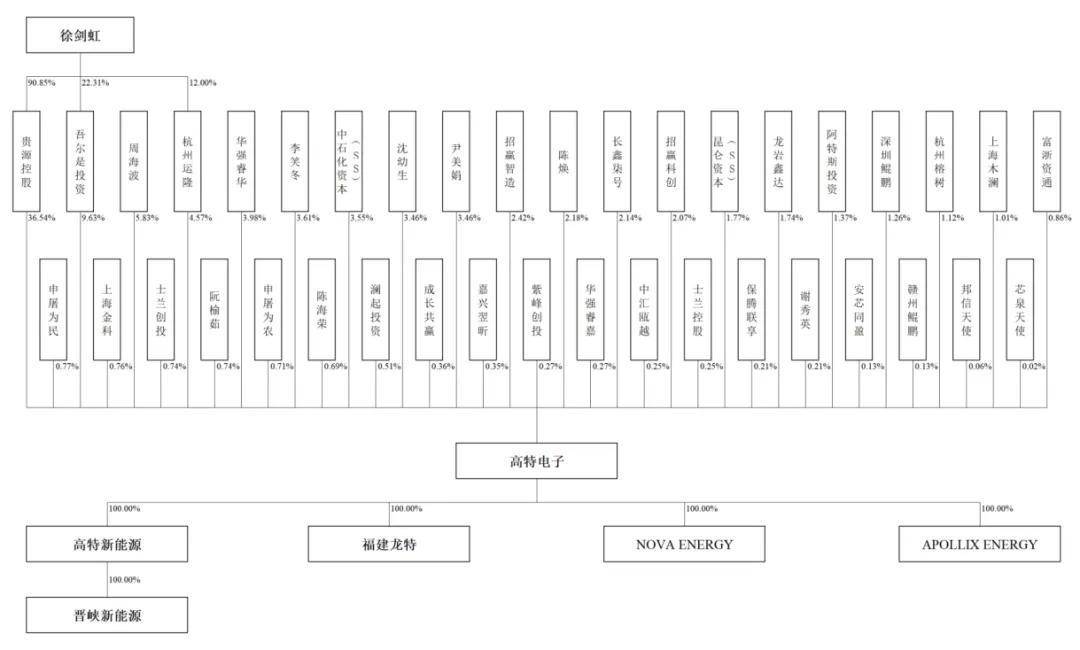
Core Viewpoint - Hangzhou Gaote Electronics Co., Ltd. is set to hold its listing meeting on the ChiNext board, marking it as the first company to do so in 2026, with CITIC Securities as the sponsor [1] Company Overview - Gaote Electronics specializes in energy storage BMS modules and related products, expanding into integrated control units and data services, with applications in high-voltage energy storage power stations, commercial and residential energy storage, new energy vehicles, and electric ships [1] - The company was founded in February 1998, originally as Gaote Limited, and underwent a shareholding reform in October 2016, increasing the number of shareholders to 13 [1] Shareholding Structure - The major shareholders include Guiyuan Holdings (51.14%), Wuer Investment (15.15%), Zhou Haibo (7.89%), and Hangzhou Yunlong (6.19%) [1] - Xu Jianhong holds over 46% of the voting rights and is the actual controller of the company through Guiyuan Holdings and Wuer Investment, controlling a total of 46.17% of the shares [1] Valuation Growth - The pre-IPO valuation of Gaote Electronics surged from 1 billion yuan to 3.8 billion yuan within a year, reflecting a significant increase in investor interest [4][7] - The company underwent multiple rounds of capital increases and share transfers, with the pre-IPO valuation reaching 3.8 billion yuan by December 2023 [7] Financial Transactions - In February 2023, Guiyuan Holdings transferred shares for 10 million yuan, and in April, further shares were transferred for 5 million yuan, both at a pre-valuation of 2 billion yuan [5] - The company has engaged in various capital increases, with notable transactions in July and September 2023, reflecting a growing investor base and increasing valuations [6][7] Related Risks - There are concerns regarding the financial transactions between Gaote Electronics and its major shareholders, including loans and payments for advisory services, which require scrutiny to ensure compliance and transparency [8][10]
收藏版干货:“企业融资”基础知识点超级汇总!
Sou Hu Cai Jing· 2025-12-13 23:35
Core Viewpoint - The potential halt of refinancing and mergers and acquisitions for entertainment companies by the China Securities Regulatory Commission (CSRC) could have a significant impact on the industry [3]. Group 1: Financing Knowledge - Equity financing involves bringing in new shareholders through capital increase, resulting in an increase in total share capital, with funds going to the company rather than existing shareholders [3]. - Project financing is specific to individual projects, such as a film or a variety show, and is settled upon project completion [3]. - Selling old shares refers to existing shareholders selling their stakes to investors, with funds going to the original shareholders rather than the company [3]. Group 2: Investment Rounds - The term "A round" and "B round" refers to the stages of external financing, with A round being the first and B round the second [4]. - Angel round investments occur at a very early stage, often when the company is just an idea or not yet registered [5]. - A round investments are made when a product prototype exists but the company is still relatively weak and may not yet be profitable [6]. - B round investments are for companies that have a clearer business model and require more funds for replication, often involving private equity (PE) funds [6][7]. Group 3: Investor Profitability - Investors aim to profit through equity appreciation driven by company growth, with institutional investors typically raising funds externally [9]. - Main revenue sources for funds include management fees (around 2% annually) and carry (typically 20% of profits upon exit) [9]. - Exit channels for investors include IPOs, mergers and acquisitions, selling shares to other investment institutions, and strategic investments [10][11]. Group 4: Investment Considerations - Investors prioritize the industry sector (or "track") as the primary determinant of investment decisions, emphasizing the importance of market conditions over individual founder qualities [12]. - The team behind a company is crucial, with a focus on the founder's sincerity and ability to communicate effectively with investors [13][14]. - The product and business model are also critical, with a preference for platform and technology companies over purely content-driven firms [16][17]. Group 5: Valuation Methods - Valuation for mature companies often uses price-to-earnings (PE) ratios, calculated as net profit multiplied by the PE multiple [19]. - In the entertainment industry, investors may prefer to pay higher prices for leading companies rather than lower prices for mid-tier firms due to the unpredictability of smaller companies' success [21]. - Valuation methods often involve benchmarking against peers to derive a final valuation based on various factors [21]. Group 6: New Third Board - The entertainment industry requires capitalization to mitigate concentrated risks, making the New Third Board a viable option if IPOs and mergers are restricted [22]. - The New Third Board is a national public market that offers transparency and regulation, beneficial for entertainment companies [22]. - It is recommended to approach the New Third Board with caution regarding market-making [22]. Group 7: Selecting Investors - Beyond capital, the brand of the investor can provide added value and resource interaction [24]. - The specific individual behind the investment is critical, with a focus on their understanding of the industry and compatibility with the company [24]. - Resources available through the investor should be clearly understood, as expectations should be realistic regarding the level of support provided [24]. Group 8: Timing and Strategy - Understanding when and how much funding to seek is essential for effective capital management [25]. - Companies should prioritize business operations over excessive focus on capital, maintaining a balance between the two [25].

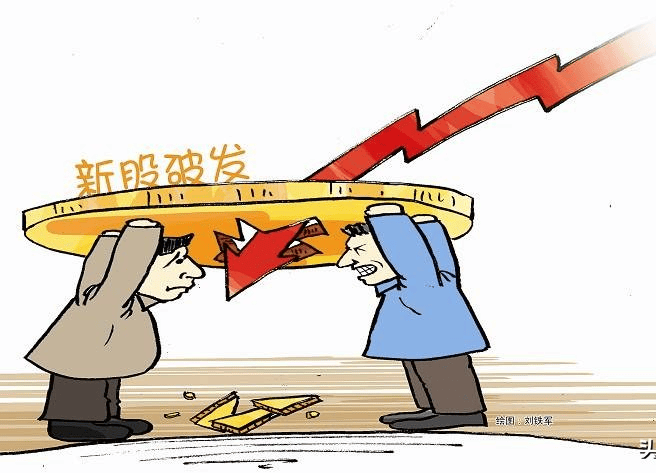
新修订《证券法》出台,会有更多企业IPO, 破发会更多吗?
Sou Hu Cai Jing· 2025-12-13 16:05
Group 1 - The introduction of the new registration system for IPOs is expected to increase the delisting rate in the A-share market, which has historically been low at less than 1%, compared to around 5% in the US [1] - The previous approval system allowed companies to maintain their listings even with significant stock price declines, as long as there was potential for restructuring and recovery [1] - With the new registration system, the barriers to listing are lowered, leading to a more competitive environment where the quality of companies may vary significantly, increasing the risk of delisting for investors [1] Group 2 - Under the new registration system, IPOs are no longer merely a means for companies to raise funds, as market dynamics will dictate valuations rather than management-set price-to-earnings ratios [3] - The scarcity of listing resources has diminished, leading to a more discerning investment landscape where investors are less likely to assign high valuations to companies with limited growth prospects [3]
SK海力士考虑在纽约上市的可能性
Ge Long Hui A P P· 2025-12-10 00:51
Core Viewpoint - SK Hynix, an artificial intelligence memory chip manufacturer, is evaluating the possibility of listing in New York to narrow the valuation gap with U.S. peers like Micron Technology [1] Group 1 - The company has submitted a document to regulators indicating it is assessing various measures to enhance corporate value, including the potential use of treasury stock for a U.S. stock market listing [1] - Reports from the Korea Economic Daily suggest that SK Hynix has received proposals from several investment banks to list approximately 2.4% of its issued shares (around 17.4 million shares) in the form of American Depositary Receipts [1]