
全球南方国家

Search documents
让全球南方的声音真正被世界听到——访南方中心执行主任卡洛斯·科雷亚
Xin Lang Cai Jing· 2026-02-22 11:48
科雷亚说,中国提出全球治理倡议具有重要意义,这表明全球南方国家有能力提出建设性方案,以推动 构建更加公正合理的全球治理体系,全球南方国家积极响应全球治理倡议并围绕这一倡议加强协作至关 重要。 科雷亚表示,当前多边体系面临的挑战很大程度上源于美国等国家的单边行动。美国的一些行为违背了 《联合国宪章》中的主权平等原则。美国基于自身利益和政治考量单方面加征关税,严重削弱了各方对 多边体系的信任。 转自:经济日报 南方中心执行主任卡洛斯·科雷亚日前在瑞士日内瓦接受新华社记者专访时说,中国提出的全球治理倡 议充分展现了全球南方国家在推动构建公正合理的全球治理体系方面的主动性与建设性。在国际事务 中,全球南方国家的声音需要得到倾听与尊重。 南方中心是由发展中国家共同发起、总部设在日内瓦的政府间国际组织,致力于维护发展中国家的共同 利益。科雷亚自2018年7月起担任南方中心执行主任,长期倡导维护多边贸易体系。他认为,中国经济 的稳健发展为全球经济复苏注入了动力。 科雷亚指出,全球南方国家的人口占世界人口大多数,其经济总量在全球占有较大比重,但在不少情况 下,"全球南方国家的重要性在国际谈判的结果中并未得到相应体现",尽管全 ...
刘少山:国际科技体系正出现三大变化
Huan Qiu Wang Zi Xun· 2026-01-20 23:14
Core Viewpoint - The article emphasizes the importance of technological development in the context of China's "14th Five-Year Plan," highlighting the goal of significantly improving the level of technological self-reliance and innovation as a core national strategy [1] Group 1: Changes in the International Technology System - The current international technology system, which has been dominated by a single country for a long time, is facing significant challenges due to profound changes in global technological power dynamics and international development trends [2] - The public nature of technology rules is weakening, with an increasing trend towards tool-based approaches, as some countries impose export controls and compliance reviews, raising the costs of international technological collaboration [3] - The focus of international technological discourse is shifting from technical capabilities to rule-making and platform dominance, with a few Western countries controlling key academic evaluation systems and standards, limiting the influence of emerging technological powers [3] Group 2: Needs of Developing Countries - There is a rising demand from global South countries for fair and sustainable technological cooperation, as many developing nations face high entry barriers and unstable cooperation mechanisms in the context of rapid digitalization and intelligence [4] - If the international technology system continues to operate with high barriers and a closed nature, it will not only fail to meet the development needs of these countries but also hinder the long-term healthy development of the technology system [4] Group 3: China's Role in the International Technology System - In this context, China's stronger leadership in the international technology system is both necessary and reasonable, aiming to provide more open, compatible, and sustainable rules and platforms for international technological cooperation [4] - China has made significant advancements in several key areas, achieving global influence in certain technologies, indicating that it is no longer just a follower but a competitor in core fields [4] - The core challenge lies not only in technical capabilities but also in effectively translating these advantages into rule-making influence, necessitating active participation in standard-setting and governance [5][6]
全球治理倡议具有深远世界意义
Xin Lang Cai Jing· 2025-12-23 22:11
Core Viewpoint - The article discusses the need for a more just and equitable global governance system in the context of significant global changes and challenges, emphasizing the importance of cooperation among nations to address these issues effectively [1][5]. Group 1: Global Governance Initiatives - China, as the largest developing country, has taken on significant responsibilities to ensure its development and the welfare of its population, proposing various global initiatives aimed at reforming the global governance system [2][3]. - The global governance initiative proposed by China aims to address issues such as development deficits, security deficits, and governance deficits, reflecting a commitment to a more equitable international order [3][4]. Group 2: Challenges Faced by Developing Countries - Developing countries, particularly in the Global South, face structural challenges exacerbated by the adoption of Western modernization models, leading to increased economic and social inequalities [6][7]. - The article highlights the detrimental impact of hegemonic practices by some Western nations, which have further marginalized developing countries in the global economic landscape [6][8]. Group 3: Proposed Solutions and Frameworks - The global governance initiative emphasizes an action-oriented and problem-solving approach to governance, advocating for collaboration on pressing issues such as climate change and international financial system reform [8][9]. - By promoting a shared governance model, the initiative seeks to enhance the voice and agency of developing countries, allowing them to prioritize their development agendas and maintain strategic autonomy [9][10].
海南对外投资增长迅速 东南亚成重要目的地
Zhong Guo Xin Wen Wang· 2025-11-25 02:58
Core Insights - Hainan Province has seen rapid growth in foreign investment, with 296 new foreign investment enterprises and an actual investment amount of $3.17 billion in the first ten months of the year, representing year-on-year increases of 43% and 42.6% respectively, ranking 8th in the country [1][2] Group 1: Foreign Investment Trends - The increase in foreign investment is attributed to favorable policies such as tax exemptions on overseas direct investment and the establishment of Hainan Free Trade Port accounts, which have accelerated the pace of investment by well-known enterprises [1] - Southeast Asian countries have become significant destinations for Hainan's foreign investment, with over $5.4 billion invested from 2020 to October 2025, accounting for 41.7% of Hainan's total foreign investment [1] Group 2: Trade and Economic Cooperation - Hainan Free Trade Port has established an open policy and institutional system characterized by "zero tariffs, low tax rates, and simplified tax systems," which will enhance the competitiveness of agricultural products and raw materials from global southern countries entering Hainan [2] - The port is expanding its international logistics capabilities, with 74 container international shipping routes and 82 civil aviation routes, facilitating the entry of tropical fruits from Southeast Asia, minerals from Africa, and coffee from Latin America into the Chinese market [2] - Hainan's goods trade import and export volume is projected to grow by 20% year-on-year in 2024, ranking 4th in the country, while service trade is expected to increase by 23.9% [2] - Unique processing and value-added tax exemption policies allow primary products from global southern countries to be processed into high-value goods and enter the Chinese mainland market without tariffs, enhancing industrial cooperation [2]
G20智库峰会举行 支持全球南方继续发出更多声音
人民网-国际频道 原创稿· 2025-11-15 06:42
Core Points - The G20 Think Tank Summit concluded in Johannesburg, South Africa, focusing on the theme of "Consolidation and Continuation" to support the voices of global South countries [1][2] - The summit addressed challenges such as geopolitical conflicts, trade fragmentation, and rising protectionism, emphasizing the need for cooperation among G20 member states, particularly from the global South [2][4] - A communiqué was released, presenting diverse perspectives on five key topics: trade and investment, digital transformation, financing for sustainable development, achieving the UN 2030 Sustainable Development Goals, and accelerating climate action and equitable energy transition [2] Group 1 - The summit was held from November 13 to 14 at the Sandton Convention Center in Johannesburg [3] - South Africa is the fourth consecutive global South country to hold the G20 presidency, following Indonesia (2022), India (2023), and Brazil (2024) [4] - The summit aimed to review significant public policy recommendations proposed by the G20 think tank working group over the past year [4]


携手推动全球治理公正化
Jing Ji Ri Bao· 2025-11-13 22:20
Group 1 - Malaysia's Prime Minister Anwar expressed the country's willingness to join BRICS, highlighting the platform's role in fostering a more just and equitable global governance system [1] - Anwar's statement reflects Malaysia's proactive stance on multilateral cooperation and the shared desire among developing countries to enhance their international voice and improve global governance [1] - The current global governance system is primarily dominated by a few developed countries, leading to the underrepresentation of developing nations' interests in key decision-making processes [1] Group 2 - The growth rate of emerging markets and developing economies is projected to be 4.2% in 2024, more than double that of developed economies, indicating a significant shift in global economic dynamics [1] - Over the past 20 years, developing countries have contributed 80% to global economic growth, underscoring their increasing importance in the international economic landscape [1] - The BRICS cooperation mechanism has gained widespread recognition among global South countries, providing new development opportunities and promoting a more democratic international relationship [2]
“伊中合作是两大文明间的合作”
人民网-国际频道 原创稿· 2025-10-29 02:41
Core Viewpoint - The cooperation between Iran and China is beneficial not only for both countries but also has profound implications for the region and the world [1]. Group 1: Belt and Road Initiative - The Belt and Road Initiative proposed by China is highly praised, as it serves as a bridge for the exchange of trade, science, art, and philosophy between Iran and China [4]. - Iran emphasizes the importance of "looking east" to strengthen practical cooperation with East Asian countries amidst unjust sanctions [4]. Group 2: Strategic Partnership - Iran views China as an important strategic partner, especially in opposing unilateral bullying and constructing a more balanced and diverse international order [4]. - The economic growth and technological innovation of China have positioned it as a significant player on the international stage, which Iran believes will aid its sustainable development and participation in global multipolarity [4]. Group 3: Historical Context and Cultural Exchange - The historic visit of Chinese President Xi Jinping to Iran in 2016 marked a new chapter in bilateral relations, leading to enhanced cooperation across various fields under the Belt and Road framework [5]. - Cultural exchanges between Iran and China have intensified, with numerous cultural performances, literary dialogues, and art exhibitions taking place [5]. Group 4: Political and Diplomatic Support - China firmly supports Iran in maintaining its legitimate rights, with both countries advocating for dialogue to resolve international disputes [5]. - The cooperation between Iran and China is characterized as a partnership between two great civilizations, contributing to enhanced communication between the East and West and promoting global stability [6].
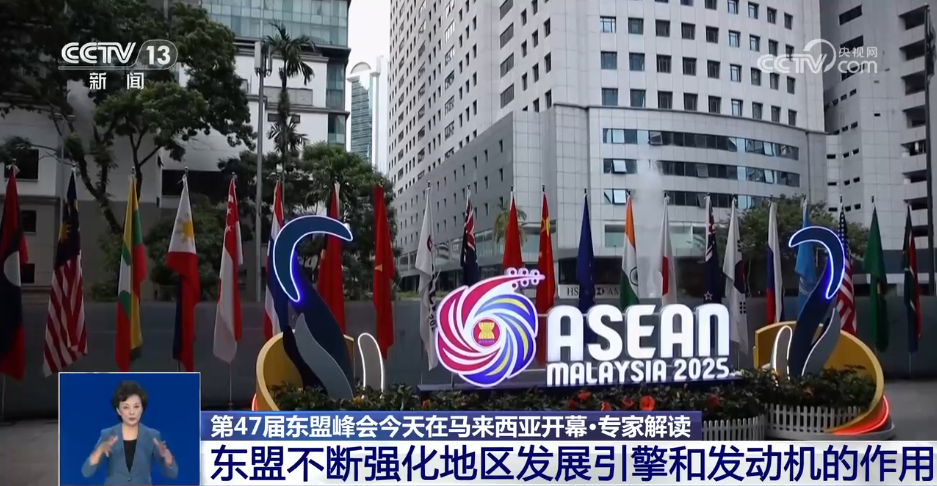
东盟二十余年来首次扩员 释放哪些信号?专家解读
Yang Shi Wang· 2025-10-26 16:55
Group 1 - The 47th ASEAN Summit opened on October 26 in Kuala Lumpur, Malaysia, marking Timor-Leste's official entry as the 11th member of ASEAN, the first expansion since 1999 [1] - The summit will last three days, focusing on ASEAN community building, external relations, regional integration, economic growth, and enhancing connectivity among ASEAN countries [1][3] - This summit is the largest in ASEAN's history, indicating a significant step in the organization's expansion in the 21st century [1] Group 2 - From an economic perspective, ASEAN's market has expanded to over 600 million people, playing a crucial role as a regional engine in economic integration [3] - The inclusion of Timor-Leste signifies ASEAN's increasing influence in regional affairs and its growing role in global southern countries [3][5] - The participation of the G20 and BRICS in ASEAN-related meetings highlights a unity among global southern nations, enhancing ASEAN's appeal and cohesion beyond Southeast Asia to other regions [5]
“中国在推动金砖合作机制方面发挥举足轻重的作用”
人民网-国际频道 原创稿· 2025-10-25 04:35
Core Insights - Jim O'Neill, the former chief economist of Goldman Sachs and the creator of the term "BRICs," emphasizes China's central role in the BRICS mechanism and its influence on global cooperation among emerging markets [1][2][3] Group 1: Development of BRICS - The term "BRICs" was coined in 2001, referring to Brazil, Russia, India, and China, which are expected to significantly impact the global economy [2] - By 2025, BRICS will expand to eleven member countries and ten partner countries, exemplifying cooperation among emerging markets and developing nations [2] - O'Neill highlights that China is the "anchor" of BRICS cooperation, playing a crucial role in fostering collaboration among member states [2] Group 2: China's Economic Influence - O'Neill predicts that China's economic size may match that of the United States within the next decade, positioning China as a de facto leader among global South countries [2] - He notes that while China focuses on its domestic affairs, it advocates for greater representation and influence for global South nations on the international stage [2] Group 3: Currency and Economic Trends - The international status of the renminbi is rising, with an increasing proportion of emerging economies using it [3] - The rapid increase in gold prices reflects a declining trend in the dominance of the US dollar, although the dollar's position is not ending [3] - O'Neill attributes the weakening of the US economy to isolationist tariff policies, which also create opportunities for BRICS countries to expand their influence [3] Group 4: Political Implications - O'Neill acknowledges that the economic power shift has led to significant changes in the 21st-century political landscape, with China playing a vital role in this transformation [3] - He asserts that economic dynamics are driving political changes, positioning China at the center of this narrative [3]

专访AIFC总裁:AIFC的愿景是成为中亚人民币离岸中心
2 1 Shi Ji Jing Ji Bao Dao· 2025-09-16 11:38
Core Insights - Kazakhstan is a key partner in China's Belt and Road Initiative, with bilateral trade expected to exceed $44 billion in 2024, marking a historical high [1] - The Astana International Financial Centre (AIFC) aims to become a financial hub in Central Asia, attracting global capital and top financial institutions [1][2] - AIFC has attracted over 4,000 companies from 85 countries, with more than 850 Chinese companies registered, making them the second-largest group of registered enterprises [1][2] Trade and Investment - As of September 2025, China's cumulative investment in Kazakhstan is projected to reach $27 billion, expanding from traditional sectors to agriculture, renewable energy, and infrastructure [2] - The recent issuance of 2 billion RMB in dim sum bonds by the Kazakhstan Development Bank marks the first government-controlled entity to issue RMB bonds in Central Asia, providing innovative cross-border financing for projects [2][6] Financial Infrastructure - AIFC is developing the first offshore RMB market in Central Asia and has established the Astana International Exchange (AIX) in collaboration with the Shanghai Stock Exchange [2][5] - AIFC's unique legal framework and tax incentives are designed to attract investment and facilitate international arbitration, enhancing its appeal as a financial hub [1][4] Regional Cooperation - AIFC is positioned to support the Belt and Road Initiative by providing a diversified financing support system, including multi-currency direct financing [4][5] - The center aims to facilitate cooperation between Chinese and Kazakh enterprises in high-tech and green economy sectors, promoting sustainable financing through green bonds [5][12] Role of Hong Kong - Hong Kong is recognized as an irreplaceable financial hub connecting East and West, enhancing capital flow and project financing opportunities for Kazakhstan [9] - The issuance of RMB-denominated bonds in Hong Kong is expected to increase, with several Central Asian companies planning to tap into this market [6][9] Global South Potential - The potential of global South countries is highlighted, with emphasis on collaboration to amplify existing resources and advantages [10] - The establishment of an investment office under the Shanghai Cooperation Organization (SCO) at AIFC is seen as a significant step towards enhancing investment opportunities in the region [10] Technological and Economic Collaboration - Kazakhstan seeks to localize parts of production processes, particularly in the electric vehicle and battery sectors, to benefit from China's advanced technologies [11][12] - The collaboration between Chinese companies and Kazakhstan in renewable energy projects is expected to create substantial investment opportunities and enhance regional economic resilience [11][12]