
农业供给侧结构性改革

Search documents
黑土情深:金融支农路上的暖心故事
Qi Huo Ri Bao Wang· 2026-02-10 01:54
Core Viewpoint - The "insurance + futures" model has been successfully implemented in Lin Dian County, Heilongjiang Province, providing a safety net for farmers against income loss due to market fluctuations and adverse weather conditions [2][4][8]. Group 1: Project Background - In 2017, Lin Dian County launched a corn income insurance project as one of the first nine pilot projects in the country [1]. - The county, located in a prime corn-growing area, produced 1.45 billion pounds of corn from 1.64 million acres in 2016, making grain sales a crucial income source for farmers [2]. Group 2: Implementation and Challenges - The project faced challenges such as abnormal weather during the summer of 2017, leading to significant corn yield reductions and a nearly 10% drop in corn prices at harvest time [3]. - The insurance payout of 1.01 million yuan was crucial for farmers, allowing them to purchase seeds and fertilizers for the next planting season [3]. Group 3: Innovative Financial Solutions - The project introduced a dual protection model combining price and yield insurance, which effectively mitigates risks associated with both price drops and crop failures [7]. - The insurance company provided nearly 80% of the premium subsidies, significantly lowering the financial burden on farmers [4]. Group 4: Collaborative Efforts - The success of the project was attributed to the collaboration between the exchange, local government, insurance companies, and futures companies, creating a comprehensive support system for farmers [7]. - The project involved extensive outreach and education efforts to help farmers understand the benefits of the insurance and futures market [5][6]. Group 5: Future Prospects - The "insurance + futures" model has expanded nationwide, covering 31 provinces and over 21 agricultural products, with a total insured value exceeding 200 billion yuan and benefiting over 7.5 million farmers [8]. - Future improvements include expanding coverage to more specialty crops, enhancing market mechanisms, and increasing training for agricultural stakeholders [9].
用好改革智慧,促进农民增收丨一号文件系列评②
Nan Fang Nong Cun Bao· 2026-02-05 10:30
Core Viewpoint - The article emphasizes the importance of increasing farmers' income as a critical factor for rural development and stability, highlighting the need for effective policies and reforms to achieve this goal [5][6][38]. Group 1: Policy Measures for Income Increase - The 2026 Central Document No. 1 outlines strategies to protect and stimulate farmers' enthusiasm for farming, cultivate county-level wealth generation industries, promote stable employment for migrant workers, and expand rural consumption [2][3]. - A key focus is on maintaining reasonable prices for important agricultural products, which directly impacts farmers' income and overall consumer price index (CPI) [10][12]. - The document suggests that increasing farmers' income, particularly from agricultural production, can be effectively achieved by raising agricultural product prices [11][12]. Group 2: Balancing Agricultural Development - The article discusses the relationship between promoting agricultural product prices and ensuring reasonable consumer prices, indicating that both aspects must be balanced to avoid negative impacts on either farmers or urban consumers [13][14]. - It advocates for continuous agricultural supply-side structural reforms to enhance the supply of high-quality agricultural products, thereby achieving better prices for farmers [16][17]. - Reducing costs in the agricultural supply chain, such as improving cold chain logistics and innovating e-commerce sales, is essential for farmers to capture a larger share of the agricultural value chain [18][19]. Group 3: Land Management and Scale of Operations - The second round of land contract extension will be piloted in 29 provinces in 2026, focusing on maintaining family contracting while also promoting moderate-scale operations to advance agricultural modernization [20][21]. - The article highlights the need for innovative business models, such as land transfer and "company + farmer" partnerships, to reconcile the goals of land stability and modern agricultural development [22][23]. - Emphasis is placed on ensuring that land transfer benefits farmers while allowing new agricultural entities to maintain reasonable profit margins to prevent rising costs from harming both parties [26][27]. Group 4: Long-term Strategies for Rural Prosperity - Promoting stable income for farmers is described as a long-term and systematic process that requires attention to both urban migrant workers and those who remain in rural areas [32][35]. - The article calls for a combination of reforms and innovations to activate rural resources and assets, ensuring that they contribute to farmers' income generation [37][38].


云南通海“绿动力”驱动杞麓湖新生
Xin Lang Cai Jing· 2026-02-02 10:49
Core Viewpoint - The article highlights the development of a modern agricultural demonstration base in Tonghai County, Yunnan Province, focusing on green and efficient planting practices, which aims to enhance vegetable production and protect the ecological environment of Qilu Lake [1][3]. Group 1: Agricultural Development - The modern agricultural base in Huanglong Community covers an area of 41 acres and integrates IoT control and microbial planting technologies to transition traditional farming to green and efficient practices [3]. - The base has already produced nearly 200 tons of vegetables and fresh-cut flowers for external markets, benefiting over 780 local farmers through scientific planting methods [4]. - The implementation of a "flower-vegetable rotation + order agriculture" model has established a close-knit mechanism involving companies, village collectives, farmers, training, and orders [3]. Group 2: Ecological Protection - Tonghai County is actively engaged in the comprehensive governance and protection of Qilu Lake through vegetable industry upgrades, ecological restoration, sewage treatment, and blue-green algae control [3]. - The ecological restoration project employs a three-dimensional governance model, including ecological ditches, lakeside buffers, and water area restoration, with over 8,200 purification trees planted [7]. - The second sewage treatment plant in Tonghai County has upgraded its processing standards, increasing daily treatment capacity from 4,338 cubic meters to 8,807 cubic meters, significantly reducing the concentration of major pollutants [7].
锚定“三农”目标,盐城滨海绘就乡村振兴新画卷
Yang Zi Wan Bao Wang· 2026-01-15 08:03
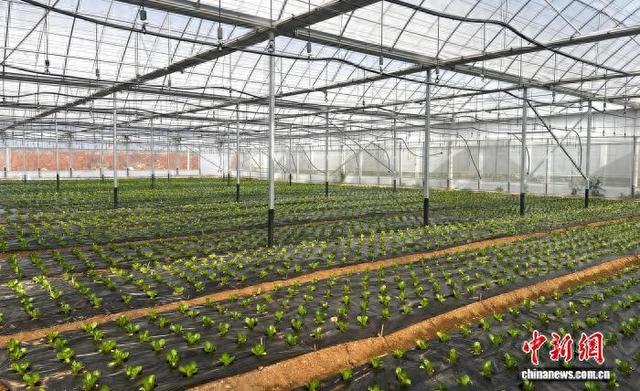
Core Insights - The article highlights the agricultural development initiatives in Yancheng's Binhai County, focusing on the core goals of strengthening agriculture, beautifying rural areas, and enriching farmers [1][2] Group 1: Agricultural Development Strategies - Binhai County aims to leverage industrial revitalization as a driving force for agricultural production, utilizing technology, quality improvement, and integration to enhance efficiency [1] - The Yancheng Binhai Agricultural Park, recognized as a national-level rural industrial integration development demonstration park, employs a "technology empowerment + full-chain layout" approach to modernize agriculture [1] - The park's Miao Le Agricultural Technology Company has achieved a survival rate of quality seedlings significantly higher than traditional methods, with 120 million seedlings produced, serving both local and out-of-province markets [1] Group 2: Key Agricultural Projects - The county is focusing on five major leading industrial chains, including rice, flour, and meat products, to transition from "agricultural product economy" to "agricultural commodity economy" [1] - Tongyu Town is implementing large-scale planting and standardized management to ensure stable wheat production, with plans for a 100-acre facility agriculture base and six 1,000-acre demonstration planting areas [1] - The town's government is actively engaging in招商 (investment attraction) efforts, aiming to sign three new agricultural product processing projects throughout the year to extend the industrial chain and increase local income [1] Group 3: Community and Infrastructure Development - The "Party building + cooperative + farmers" model in Zhenghong Town has led to the upgrade of traditional grape varieties, resulting in a yield of 3,000 pounds per acre and a nearly 20% increase in income [2] - Binhai County is simultaneously advancing infrastructure and brand development, implementing high-standard farmland and irrigation water-saving projects [2] - The county is fostering a collaborative effort between agricultural parks and town sectors, promoting a vibrant entrepreneurial spirit across various agricultural initiatives [2]
陕西铜川市耀州区:从“经验种地”到“科学种地” 智慧大棚孕育乡村振兴新希望
Xin Lang Cai Jing· 2025-12-26 08:48
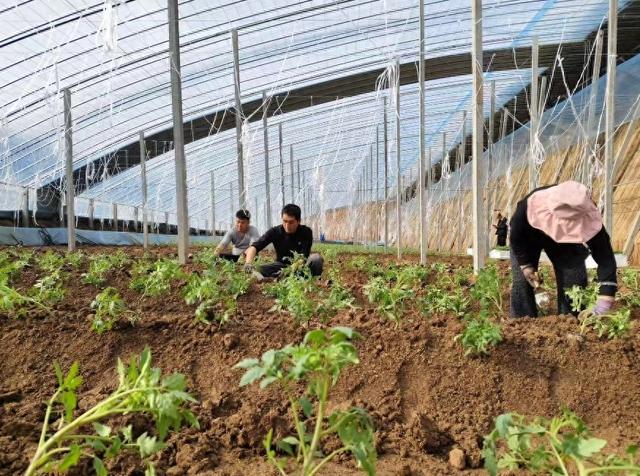
Core Viewpoint - The establishment of the Smart Agriculture Industry Demonstration Park in Xiaoqiu Town, Yaozhou District, represents a significant step towards rural revitalization through modern agricultural practices and technology integration [1][3]. Group 1: Project Overview - The Smart Agriculture Industry Demonstration Park covers an area of approximately 2,285 acres and includes the construction of 176 high-standard solar greenhouses, 5 column-free solar greenhouses, 2 thermal storage prefabricated solar greenhouses, and 1 glass greenhouse, with plans for completion within two years [3][4]. - The project is backed by Shouguang Agricultural Holding Group Co., Ltd., which focuses on integrating resources across the entire vegetable industry chain, including seed research, high-end vegetable cultivation, and processing [4][5]. Group 2: Technological Integration - The park utilizes IoT technology to monitor and automatically adjust key parameters such as temperature and humidity, allowing for efficient management of the growing environment via mobile devices [3][4]. - The time required for tomato planting has been reduced from 80-90 days to approximately 50 days until market readiness due to the application of new technologies and facilities [5]. Group 3: Community Engagement and Economic Impact - The project will implement a cooperative model involving state-owned enterprises, professional teams, and local farmer cooperatives, promoting a unified approach to planning, construction, and sales [4]. - Local farmers are encouraged to participate in greenhouse cultivation, with free technical guidance provided to transition from traditional farming to scientific methods [4][5]. - The establishment of the park is expected to ignite entrepreneurial enthusiasm among local villagers, with ongoing training and support to enhance agricultural practices and boost income [5].

“水果自由”,甜在两头(新知)
Ren Min Ri Bao· 2025-10-29 22:41
Core Insights - Consumers are increasingly noticing that fruits taste "sweeter," with data supporting this trend, such as the average sugar content of watermelons rising from 9 to over 12 in the past 20 years [1][2] - The fruit industry in China is significant, being the largest producer and consumer globally, with projected production and consumption reaching 335 million tons and 328 million tons respectively in 2024 [2] Industry Overview - The fruit industry has become the third largest agricultural sector in China, following grains and vegetables, and is a crucial pillar of the agricultural economy [2] - Advances in breeding technologies, such as hybrid breeding and molecular marker breeding, have enabled the development of new fruit varieties with improved sweetness and flavor [2][3] Consumer Trends - There is a shift in consumer preferences from merely seeking sweetness to a broader focus on nutritional components like vitamins, anthocyanins, and dietary fiber [2] - The rise of fast-moving consumer products like fruit salads and fruit bowls reflects the growing demand for nutritious and healthy eating options [2] Market Dynamics - In 2023, the per capita fruit consumption in China reached 232 kg, significantly exceeding the global average, with a diverse range of fruits available year-round [3] - The domestic production of durians has increased, with over 157,000 tons imported through the China-Laos railway in 2023, marking an 80% increase year-on-year [3] Challenges and Opportunities - The fruit industry faces challenges such as product homogeneity, low mechanization levels, and significant seasonal price fluctuations [4] - Continuous efforts in optimizing planting structures, enhancing technological innovation, and improving supply chain connections are essential for industry growth [4] - Successful examples, such as the apple harvest in Ningxia, demonstrate the potential for fruit production to drive local economic development [4]
“水果自由” 甜在两头(新知)
Ren Min Ri Bao· 2025-10-29 22:18
Core Insights - Consumers are increasingly noticing that fruits taste "sweeter," with data supporting this trend, such as the average sugar content in watermelons rising from around 9 to over 12 in the past 20 years [1] - The topic of "fruit freedom" has gained traction on social media, reflecting a broader trend of enhanced fruit quality and variety in consumer choices [1] Industry Overview - China is the world's largest producer and consumer of fruits, with projected total fruit production reaching 335 million tons and consumption at 328 million tons in 2024, making the fruit industry the third-largest agricultural sector after grains and vegetables [2] - Advances in breeding technology, such as hybrid breeding and molecular marker breeding, have enabled the development of new fruit varieties with superior taste and sweetness, while also allowing for more precise sugar content regulation [2] Market Trends - The per capita fruit consumption in China reached 232 kg in 2023, significantly exceeding the global average, with a diverse range of fruits now available year-round [3] - The increasing availability of high-quality fruits, such as durians, has been facilitated by domestic cultivation and improved import logistics, leading to lower prices for consumers [3] Challenges and Opportunities - The fruit industry faces challenges such as product homogeneity, low mechanization levels, and significant seasonal price fluctuations, necessitating ongoing efforts in variety optimization, technological innovation, and better supply chain coordination [4] - The successful harvest of drought-resistant apples in Ningxia demonstrates the potential for fruit production to drive local economic growth, highlighting the dual benefits of consumer satisfaction and producer profitability [4]
三亚出台热带优异果蔬奖补方案 力争到2028年全产业链产值破百亿元
Hai Nan Ri Bao· 2025-10-20 01:13
Core Points - The implementation plan aims to establish Sanya as a national demonstration zone for tropical high-quality fruits and vegetables by 2028, with goals including the collection of over 300 tropical germplasm resources, cultivation of more than 5 new varieties, and a cultivation area of 100,000 acres, leading to an industry chain output value exceeding 10 billion yuan [1][3] - The plan includes a comprehensive subsidy system to encourage various stakeholders in the tropical fruit and vegetable industry, focusing on introduction, breeding, planting, and promotion [1][2] Subsidy Policies - The first introduction reward provides a 20% subsidy on the purchase price for agricultural entities that successfully introduce and maintain over 100 seedlings of a single variety [1] - The first breeding reward offers 100,000 yuan for new varieties that meet market potential and production conditions [1] - Planting rewards vary by entity type, with enterprises receiving a 30% subsidy for new varieties listed in the annual development directory, while cooperatives and individual farmers can receive up to 50% [2] - The maximum subsidy for perennial fruits is capped at 3,000 yuan per acre, while vegetables are capped at 500 yuan per acre, with a maximum of 600,000 yuan per applicant [2] Promotion and Structural Adjustment - The promotion reward focuses on the commercialization of listed varieties, providing up to 3,000 yuan per acre for perennial fruits and 500 yuan for vegetables, with a maximum of 3 million yuan per entity [2] - A one-time incentive of 1,000 yuan per acre is available for agricultural entities that voluntarily remove mango trees and replace them with new tropical varieties from 2025 to 2028 [2] - The plan encourages multiple applications for different subsidy conditions, allowing for cumulative applications under specific criteria [2][3]
“十四五”成绩单丨14亿多中国人的饭碗端得更牢 农民的腰包越来越鼓
Yang Shi Wang· 2025-10-14 19:26
Core Insights - China has achieved significant agricultural milestones during the "14th Five-Year Plan," with grain production surpassing 1.4 trillion jin for the first time, reflecting a stable and positive trend in agricultural and rural development [1][3]. Group 1: Agricultural Production - The annual grain production has stabilized above 1.3 trillion jin, with a projected increase to 1.4 trillion jin by 2024, marking a growth of 74 billion jin since 2020 [3]. - China leads the world in the production of various agricultural products, including grains, meat, peanuts, vegetables, tea, and fruits, ensuring food security for over 1.4 billion people [3]. Group 2: Technological Advancements - Over 100 million acres of high-standard farmland have been established, with a comprehensive mechanization rate of over 75% for crop farming and a good seed coverage rate exceeding 96% [5]. Group 3: Rural Infrastructure and Livelihood - The total length of rural roads has exceeded 4.64 million kilometers, facilitating the development of industrial and tourism routes, enhancing rural economies [6]. - The average disposable income of rural residents has increased from 17,131 yuan in 2020 to 23,119 yuan in 2024, reflecting an annual growth rate of nearly 8% [8]. Group 4: Environmental and Economic Development - Significant improvements in rural living environments have been noted, with 140,000 villages undergoing greening and beautification [8]. - New business models such as rural e-commerce and live-streaming sales have emerged, contributing to the economic upliftment of rural areas [8].
让国产优质麦种得好、卖得好、用得好
Jing Ji Ri Bao· 2025-07-02 22:05
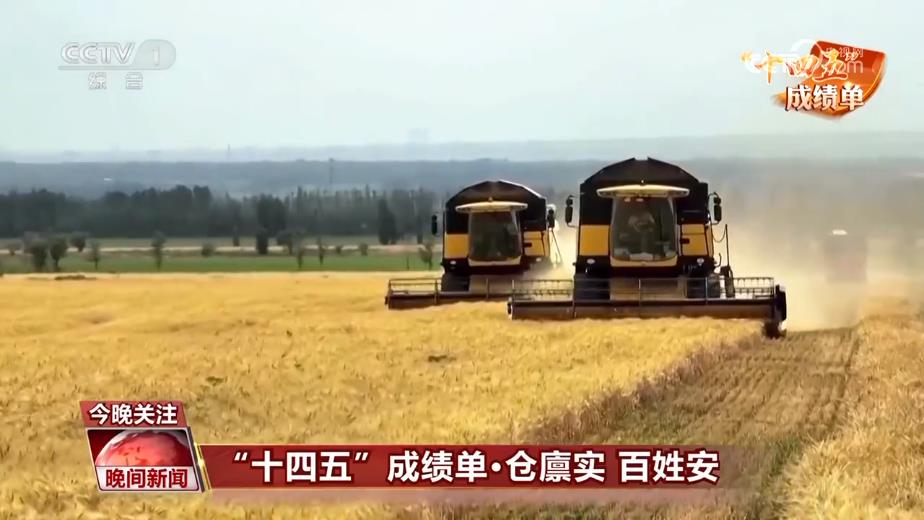
Core Viewpoint - The domestic high-quality specialty wheat is gaining traction in the market due to increased support for breeding and promotion, leading to a significant reduction in imports and a shift towards local procurement by enterprises [1][2][4] Group 1: Industry Developments - The government has implemented quality grain projects and seed industry revitalization actions, enhancing support for the breeding and promotion of domestic high-quality wheat varieties [1][2] - Precision agricultural technology has been integrated to significantly improve the yield and quality stability of high-quality wheat, with some varieties comparable to imported ones [2][3] - The domestic wheat import volume dropped to 1.61 million tons from January to May this year, a decrease of 80.1% year-on-year, creating market space for domestic high-quality wheat [2] Group 2: Market Dynamics - The demand for high-quality specialty wheat is rising due to consumption upgrades and the refined development of the food industry, with different wheat types catering to various food products [1][2] - The domestic high-quality specialty wheat has become dominant in the medium-gluten wheat market, with increasing market share in high-end strong-gluten and weak-gluten wheat segments [2] Group 3: Challenges and Recommendations - Despite improvements, domestic high-quality specialty wheat still faces challenges in key indicators like gluten strength and stability compared to imported high-end varieties [3] - There is a lack of collaboration in the supply chain, with some flour processing enterprises still relying on imports, leading to underutilization of the market value of high-quality wheat [3] - To enhance market recognition and sustainable development, it is essential to cultivate high-yield, resilient new varieties and support contract farming with insurance mechanisms to ensure stable income for farmers [3][4]