
国际化消费环境建设

Search documents
消费向新而行,外贸向强而进!西安商务蓄势“十五五”开局
Sou Hu Cai Jing· 2026-02-13 04:27
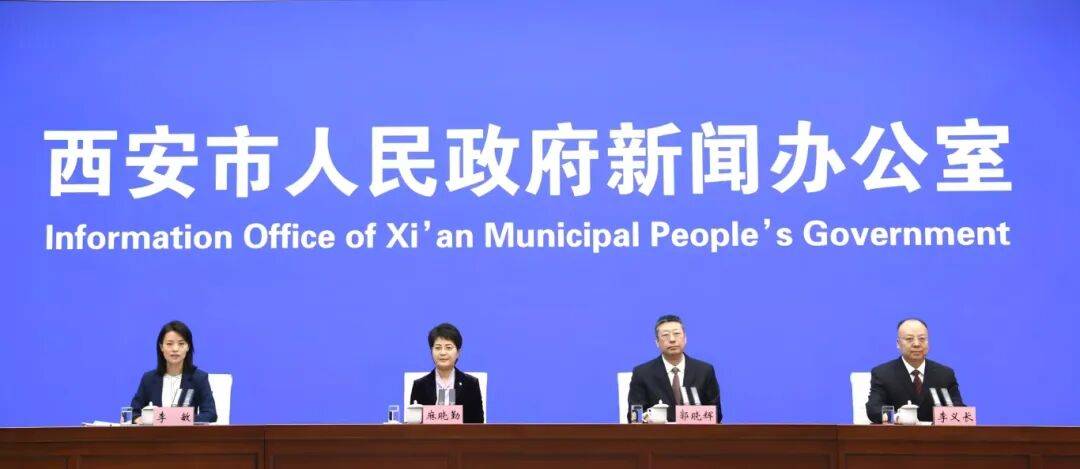
Core Viewpoint - The Xi'an Municipal Government is focusing on enhancing consumption, stabilizing growth, and promoting openness to achieve a strong start for the 14th Five-Year Plan, with significant achievements in retail sales and foreign trade in the past year [3][4]. Group 1: Consumption Growth - The retail sales of social consumer goods reached a historical high, with a total of 839 billion yuan driven by targeted policies and activities [3]. - The city introduced 376 new stores and organized over 900 promotional events, leading to a transaction volume exceeding 200 billion yuan in consumer exhibitions [3]. - By 2025, the retail sales are projected to reach 572.12 billion yuan, with a year-on-year growth of 5.3%, outperforming the national average by 1.6 percentage points [3]. Group 2: Foreign Trade Development - The total import and export value is expected to reach 498.79 billion yuan by 2025, marking a historical high with a year-on-year growth of 21.1% [4]. - Exports are projected to be 349.26 billion yuan, with a growth rate of 25.8%, leading among sub-provincial cities [4]. - New business models such as cross-border e-commerce saw a 75.1% increase in imports and exports, while high-tech products and "new three types" products also experienced significant growth [4]. Group 3: Platform Enhancement - The city is implementing a Free Trade Zone enhancement strategy, with 82 innovative cases cultivated and 6 promoted by national ministries [5]. - The import and export value through the Xi'an Comprehensive Bonded Zone reached 39.52 billion yuan, growing by 17.8% [5]. - By 2025, service trade imports and exports are expected to reach 69.3 billion yuan, with a year-on-year growth of 24.4% [5]. Group 4: Future Plans - The Xi'an Municipal Government will focus on boosting consumption and expanding high-level openness, with a strategic emphasis on policy empowerment and scenario-driven growth [6]. - Key initiatives include enhancing consumer supply, fostering new consumption scenarios, and promoting trade innovation to support enterprises in expanding their markets [7]. - The city plans to host 130 themed promotional events for the 2026 Spring Festival, aiming to create a vibrant consumption atmosphere [8].

最高2000万元补贴 北京支持打造国际化消费场景及服务项目
Bei Jing Shang Bao· 2026-02-11 13:13
为贯彻落实《财政部 商务部关于开展国 境建设工作的通知》(财建〔2025〕342号 足首都发展实际,打造国际化、多元化消费: 入境消费的便利性、舒适度,现支持开展北. 消费环境建设工作。 近年来,随着北京国际消费中心城市建设持续深化,国际化消费环境提升明显。退税方面,北京首创"全城退税,多点通办"模式,拥有退税商店近1600家、 即买即退商店37家、在国贸商城等区域设立7个集中退付点;支付方面,北京构建了"大额刷卡、小额扫码、现金兜底"涉外支付体系,覆盖八类场景1.8万家 重点商户,主要外卡卡种受理覆盖率达98%;语言方面,全市拥有应设外语标识场所832个,设置国际医疗部的医疗机构已达52家,可提供全流程外语服务 的医疗机构达156家;出行方面,"双枢纽"国际及地区航点120个、国际航班年起降18万架次,均居全国首位;推出"BEIJING PASS"多语种交通卡,覆盖地 铁、公交、出租车等场景。 北京商报讯(记者 刘卓澜)2月11日,北京市商务局发布《关于申报北京市国际化消费环境建设资金项目的通知》(以下简称《申报通知》),进一步推动 提升北京国际化消费环境。 《申报通知》重点支持三大方向。其中,北京支持打造 ...

王府井免税北京首家机场店正式开业
Xin Jing Bao· 2026-02-11 13:12
Core Insights - Wangfujing Duty-Free officially opened its duty-free store at Capital Airport T2 terminal, marking its entry into the Beijing-Tianjin-Hebei international aviation hub and establishing a presence in the core duty-free market [1] - The store features popular duty-free categories such as perfumes, cosmetics, alcohol, digital products, and travel items, showcasing both international brands and local cultural products [1] - The opening of the airport store signifies the establishment of a comprehensive consumption loop from inbound first purchases, in-city repurchases, to outbound supplementary purchases [1] Group 1 - The store is located in the international transit area of T2 terminal and includes a variety of high-end products, with a focus on integrating supply chain and marketing resources to create competitive advantages [1] - In 2025, Beijing received 5.48 million inbound tourists, a 39% increase, and the airport's passenger throughput reached 70.76 million, with a year-on-year growth of 5% [1] - Wangfujing Duty-Free expects to continue sales growth in Beijing, driven by the recovery of international inbound tourism [1] Group 2 - Beijing has been approved as a pilot for international consumption environment construction, supporting the development of international consumer clusters and tax refund stores [2] - The T2 duty-free store has implemented multiple initiatives to enhance the shopping experience for inbound tourists, including multilingual payment platforms and plans to incorporate AI technology and cultural experiences [2] - The second phase of the store's opening will focus on creating a cultural zone for domestic brands, providing international travelers with exposure to Chinese local culture [2]

商务部:下一步,商务部将牵头抓好《工作方案》落实落地
Sou Hu Cai Jing· 2026-02-06 08:06
Core Viewpoint - The Ministry of Commerce aims to enhance inbound consumption through a comprehensive work plan, focusing on policy design, platform optimization, and the promotion of the "Buy in China" brand [1] Group 1: Policy Measures - The Ministry will lead the formulation of policies to promote travel service exports and expand inbound consumption, including measures for tourism, business activities, events, entertainment, health, education, and support systems [1] - Specific initiatives will be proposed to boost inbound tourism consumption and facilitate various types of inbound activities [1] Group 2: Events and Activities - The Ministry will organize a series of "Buy in China" events focusing on product consumption, service consumption, and consumption scenarios, including a boutique consumption month and an international consumption season [1] - Fifteen pilot cities will be designated to create an international consumption environment, hosting city-specific events to foster a vibrant consumption atmosphere [1] Group 3: International Consumption Centers - The Ministry will guide cities like Shanghai, Beijing, Guangzhou, Tianjin, and Chongqing to align with international standards, enhancing quality consumption supply and creating an international consumption environment [1] - Efforts will be made to improve the international reputation and influence of these cities [1] Group 4: Tax Refund Initiatives - The Ministry will promote the development of departure tax refund services, encouraging more stores to become tax refund outlets and optimizing the refund process [1] - The goal is to attract foreign travelers to consume in China by expanding store participation, increasing product offerings, and enhancing service quality [1]
消费品以旧换新政策释放消费潜力 相关产品年销售额超2.6万亿
Chang Jiang Shang Bao· 2026-02-02 00:45
Core Insights - In 2025, the central government implemented a series of financial policies to support the expansion of commodity consumption and optimize service consumption supply, including the issuance of 300 billion yuan in long-term special bonds to support the replacement of consumer goods [1][4] - The retail sales of consumer goods exceeded 50 trillion yuan, reaching 50,120.2 billion yuan, with a year-on-year growth of 3.7%, accelerating by 0.2 percentage points compared to the previous year [1][2] Group 1: Policy Implementation and Impact - The "old for new" policy expanded from 8 categories of home appliances to 12, including digital products and electric bicycles, with increased subsidy intensity [2] - In 2025, over 11.5 million vehicles were replaced under the "old for new" policy, with nearly 60% being new energy vehicles [2][4] - The sales of related products under the "old for new" policy exceeded 2.6 trillion yuan, benefiting over 360 million people [4] Group 2: Market Performance - Retail sales of limited above units grew by 3.4%, with significant increases in categories such as communication equipment (20.9%) and cultural office supplies (17.3%) [3] - The retail sales of new energy passenger vehicles reached 12.8 million units, a year-on-year increase of 17.6%, with a penetration rate of 53.9% [3][4] - Upgraded product categories saw accelerated demand, with sports and entertainment goods growing by 15.7% and jewelry and cosmetics reversing previous declines [3] Group 3: Industry Upgrades and Environmental Impact - The "old for new" policy not only boosted consumption but also promoted industrial upgrades and green transformation, with over 90% of replaced home appliances being high-efficiency products [4] - The recycling of scrapped vehicles increased by 24.5%, leading to significant reductions in carbon emissions [4] - The Ministry of Finance, in collaboration with the Ministry of Commerce, initiated pilot projects to foster new consumption models and international consumption environments, allocating 9.6 billion yuan for the first batch of funding [4][5]
2025年全国科学技术支出12062亿元
Xin Lang Cai Jing· 2026-02-01 23:26
原标题:2025年全国科学技术支出12062亿元 在加力扩围支持消费品以旧换新方面,财政部经济建设司副司长吴盖介绍,2025年,财政部先后分四批 累计下达超长期特别国债资金3000亿元支持消费品以旧换新,部分地区还增加安排地方资金,有力释放 消费潜力,助力相关产业加快转型升级。 初步统计,2025年消费品以旧换新相关产品销售额超2.6万亿元,惠及超3.6亿人次。其中,汽车以旧换 新超1150万台,新能源汽车在汽车以旧换新中的销售占比达到近60%;家电以旧换新近1.3亿台,一级 能效(水效)产品占比超90%;手机等数码产品购新超9100万件,中高端机型销量占比达72.5%。在以 旧换新政策带动下,相关商品销售额持续增长,比如,乘用车零售量增长3.8%,限额以上家电、通讯 器材零售额增长11%、20.9%。 与此同时,2025年,财政部会同商务部联合启动消费新业态新模式新场景和国际化消费环境建设两项试 点工作,通过竞争性评审确定了65个试点城市,并下达了首批资金96亿元。消费新业态新模式新场景试 点聚焦支持首发经济、服务消费和"IP+消费"三个方向,通过打造一批带动面广、显示度高的消费新场 景,培育消费发展新动能 ...
锐财经丨中国财政运行平稳有序
Ren Min Ri Bao Hai Wai Ban· 2026-02-01 02:17
Core Viewpoint - The Ministry of Finance announced a stable fiscal operation for 2025, with a focus on a more proactive fiscal policy to support economic growth and ensure budget execution remains satisfactory [1]. Fiscal Revenue - In 2025, the national general public budget revenue is projected to be 21.6 trillion yuan, a decrease of 1.7% from 2024 [2]. - Central government revenue is expected to be 939.63 billion yuan, down 6.5%, while local government revenue is projected to grow by 2.4% to 1.22082 trillion yuan [2]. - Nearly 90% of regions are expected to see revenue growth, with 27 out of 31 provinces, autonomous regions, and municipalities reporting increases compared to 2024 [2]. - Tax revenue is anticipated to grow by 0.8%, while non-tax revenue is expected to decline by 11.3% due to a high base from 2024 [2]. - Specific tax categories show growth: domestic VAT up 3.4%, domestic consumption tax up 2%, and corporate income tax up 1% [2][3]. Fiscal Expenditure - Total general public budget expenditure is projected at 28.74 trillion yuan, a year-on-year increase of 1% [4]. - Key areas of expenditure include social security and employment (up 6.7%), education (up 3.2%), and health (up 5.7%) [4]. - A new childcare subsidy policy will allocate approximately 100 billion yuan, with 90.4 billion yuan from the central government [4]. - Significant funding for agriculture includes 176.6 billion yuan for high-standard farmland construction, a 53% increase, and 20.8 billion yuan for enhancing agricultural machinery [4]. Government Fund Budget - Government fund budget revenue is expected to be 5.77 trillion yuan, with expenditures rising to 11.29 trillion yuan, an increase of 11.3% from 2024 [5]. - The spending on special bonds and other financial instruments is projected to reach 6.19 trillion yuan, a 37.6% increase [5]. Support for Consumption - The Ministry of Finance is implementing policies to boost consumption, including 300 billion yuan in special bonds for consumer goods replacement programs [6][7]. - Estimated sales from these programs are projected to exceed 2.6 trillion yuan, benefiting over 360 million people [7]. - In Hainan Free Trade Port, "zero tariff" policies have led to a significant increase in imported goods, with a value of 857 million yuan, a 243% increase year-on-year [7].
戴德梁行2025年终盘点:南京写字楼蓄力提质
Sou Hu Cai Jing· 2026-01-31 11:55
消费市场展现强劲韧性 产业地产迈向质量竞争新阶段 南京,2026年1月20日——享誉全球的房地产服务和咨询顾问公司戴德梁行成功举办2025年终市场回顾 媒体发布会,针对写字楼市场、零售商业市场以及产业地产市场进行年终盘点,并展望2026年行业发展 新机遇。 南京写字楼市场震荡蓄力、积极求变 2025年南京典型高品质写字楼新增供应面积约40万平方米,入市的典型项目如华贸中心、南京招商局中 心、德基世贸中心、嘉华AKIS翎际T3等。截止季末,全市高品质项目存量超550万平方米。本年度全市 重点板块可录得吸纳量为22.3万平方米,较去年增加1.6万平方米,同比增长约8%。近两年成交量相较 于2021-2023年有明显提升,主要受联合办公及运营商等大面积客户成交助推影响。第四季度全市空置 率为29.1%,同比增长约3.9%,环比增长约0.7%,租赁市场仍面临一定挑战。 四季度,全市写字楼租赁市场整体租金延续小幅下行态势。截止季末,全市平均租金约2.37元/平方米/ 天,同比下降7.0%,环比下降0.8%。新街口、鼓楼、河西和江宁四大重点板块的平均租金分别为3.80 元/平方米/天、2.66元/平方米/天、3.10元/ ...
财政部:2025年中央财政出台多项政策支持提振消费
Yang Shi Xin Wen· 2026-01-30 10:58
Group 1 - The Ministry of Finance announced a series of funding policies to support the expansion of commodity consumption and optimize service consumption supply in 2025, in line with the "Special Action Plan to Boost Consumption" [1] - A total of 300 billion yuan in special long-term bonds will be allocated in four batches to support the old-for-new consumption policy, with preliminary statistics indicating that sales related to this initiative will exceed 2.6 trillion yuan, benefiting over 360 million people [1] - The old-for-new policy has led to significant sales in various sectors, including over 11.5 million vehicles (with nearly 60% being new energy vehicles), 130 million home appliances (over 90% being first-level energy-efficient products), and 91 million digital products (with 72.5% being mid-to-high-end models) [1] Group 2 - In late 2025, the Ministry of Finance, in collaboration with the Ministry of Commerce and the State Taxation Administration, will launch a prize invoice initiative in 50 cities to stimulate consumer demand across various daily consumption scenarios [2] - The selected trial cities account for approximately 44% of the national GDP and total retail sales of consumer goods, with funding to be allocated promptly after the public announcement of the city list [2]
财政部:2025年发行超长期特别国债1.3万亿元 持续支持“两重”“两新”
Di Yi Cai Jing· 2026-01-20 07:15
Core Viewpoint - The Chinese government is implementing proactive fiscal policies to stimulate consumption and promote high-quality economic and social development by 2025 [1] Group 1: Fiscal Measures - The issuance of long-term special government bonds totaling 1.3 trillion yuan will support initiatives related to "two new" and "two heavy" sectors, with 300 billion yuan allocated for consumer subsidies to encourage the replacement of old goods [1] - The expected impact of these measures includes boosting sales of related products by over 2.6 trillion yuan, facilitating the entry of green, low-carbon, and smart products into everyday life, and enhancing the quality of life for citizens while promoting economic transformation [1] Group 2: Consumption Potential - The government aims to stimulate consumption from both supply and demand sides by introducing personal consumption loans and interest subsidies for service industry loans, supporting new consumption formats, models, and scenarios [1] - Policies will also be adjusted to optimize duty-free shop operations and tax refund policies for departing tourists, including increasing the number of duty-free shops to encourage and expand related consumption [1]