
增长战略

Search documents
维蒙特工业公布未来财务目标与增长战略,聚焦公用事业扩张与农业复苏
Jing Ji Guan Cha Wang· 2026-02-13 14:16
Core Insights - The company is focusing on strategic execution and financial goals in the near term [1] Financial Performance Goals - The management has set clear short-term financial targets, aiming for sales growth of $500 million to $700 million and earnings per share to increase to $25 to $30 [2] Project Advancement - The utility sector is currently the fastest-growing business line for the company, with plans to invest approximately $150 million annually, including $100 million specifically for utility capacity expansion to capitalize on market opportunities from aging infrastructure replacement and energy transition [3] Capital Allocation - The company has authorized a $700 million stock buyback program and established a mechanism for regular dividend increases each first quarter, with a 13% dividend increase in 2025, reflecting management's confidence in cash flow generation and commitment to shareholder returns [4] Industry Conditions - The agricultural business is currently in a cyclical low, with market attention on the company's international market strategies (such as in Brazil, the Middle East, and Africa) and its ability to improve performance as food security demands rise and the industry cycle recovers [5]

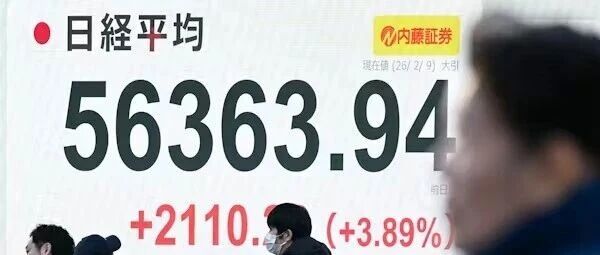
日经平均股指创新高,回应高市大选胜利
日经中文网· 2026-02-09 07:20
2月9日的东京股市,日经平均股指大幅续涨,收盘较上周末上涨2110点(3.89%),报56363点,刷新 历史最高纪录。涨幅一度超过3000点,盘中还有站上57000点区间的时刻。日本2月8日进行投计票的众 议院选举中,自民党取得压倒性胜利。二战后首次出现单一政党单独确保三分之二议席的情况,政权基 础牢不可破,市场对政策执行力的期待推动资金流入股市。此前因不确定性而观望的海外资金也开始买 入,为行情增添动能。 "也有交易系统一度变慢的情况,可见投资者关注度之高",SBI证券执行董事土居雅绍如此表示。自民 党胜选幅度超出市场预期,日本股市从开盘起便涌现集中买盘。 日经平均股指大幅续涨,收盘较上周末上涨2110点(3.89%),报56363点,创新高。在8日的众议院选 举中,自民党取得压倒性胜利,高市政权基础牢不可破,市场对政策执行力的期待推动资金流入股 市…… 创上市以来新高的个股接连出现。丰田汽车股价一度上涨5.82%,约两年来首次刷新最高价;川崎重工 业一度上涨17.95%,时隔三周再创历史新高;三菱UFJ金融集团也一度刷新三周来高点。大成建设一度 上涨7.93%,建筑类股票的强势同样引人注目。 市场关注点 ...

乔诺咨询创始人龙波2026致辞:增长,本质是价值观的外化体现
Sou Hu Cai Jing· 2026-01-07 14:22
Core Insights - The article discusses the challenges companies face in achieving growth and highlights the importance of understanding their current stage and market conditions [2][3] - It emphasizes that many companies have successfully transformed and maintained growth through strategic changes and innovations [6][7] Group 1: Reasons for Growth Challenges - Companies often rush to implement new projects without fully understanding their unique challenges and market conditions, leading to ineffective strategies [2] - The article suggests that many businesses are stuck in outdated growth models and need to adapt to the changing market landscape [3] Group 2: Key Drivers of Sustained Growth - The pursuit of high growth has led to innovative business models, as seen in companies like Yadea, which transformed its growth targets from 15% to 50% and significantly increased revenue [8][11] - A focus on product quality and customer experience is crucial, with companies like Tesla and Apple exemplifying how high-quality products lead to customer loyalty and recommendations [12][13] - Retail transformation is essential, emphasizing the importance of consumer experience over mere channel focus, which has been adopted by companies like Yadea and TCL [15][17] - Companies are increasingly recognizing the need for extreme cost management and efficiency, as demonstrated by firms like Zero Run and TCL, which have successfully reduced costs while improving quality [17][18] - Global expansion is becoming a necessity for survival, with companies like DJI and Shein successfully penetrating international markets, highlighting the importance of understanding local cultures and markets [19][20] Group 3: Organizational Vitality and Transformation - Successful companies exhibit traits such as ambitious goals that exceed current capabilities, fostering a culture of innovation and growth [24][26] - Emphasis on internal talent development over reliance on external hires is crucial for sustainable growth, as internal teams better understand the company's unique challenges [27][28] - Companies that embrace open growth and learning from global best practices tend to outperform their peers, as seen in the investment in training and development by firms like Yadea and TCL [30][31] Group 4: Value System Upgrades - The article posits that growth is a reflection of an organization's evolving values, with companies needing to shift their focus from merely attracting customers to prioritizing quality and customer satisfaction [32][33] - Continuous self-reflection and adaptation of values are essential for companies to navigate challenges and achieve long-term success [33]


赛诺菲(SNY.O):协议不会影响三年期内的主导增长战略或财务展望。
Jin Rong Jie· 2025-12-19 19:37
Group 1 - The core viewpoint of the article is that Sanofi's agreement will not impact its dominant growth strategy or financial outlook over the next three years [1] Group 2 - Sanofi maintains a strong focus on its growth strategy despite the recent agreement [1] - The financial outlook remains stable and unaffected by the agreement [1]

Enerpac Tool(EPAC) - 2026 Q1 - Earnings Call Transcript
2025-12-18 14:32
Financial Data and Key Metrics Changes - Enerpac's first quarter revenue for Fiscal 2026 was $144 million, a decrease of 1% year-over-year [5] - Adjusted EBITDA was $32.4 million, representing a margin of 22.4%, while adjusted earnings per share was $0.36 compared to $0.40 in the previous year [8][10] - Gross profit margin was 50.7%, consistent with previous quarters, but impacted by higher tariff-driven costs [7] Business Line Data and Key Metrics Changes - In the Industrial Tools and Services (IT&S) segment, product sales grew 4% organically, while IT&S sales declined 3% [3][5] - Standard products saw low single-digit growth, and heavy-lifting technology business experienced double-digit growth year-over-year [5] - Service revenue declined by 26%, primarily in the EMEA region, particularly the U.K. [5][6] Market Data and Key Metrics Changes - Revenue in the Americas grew by 5%, driven by an 8% increase in product revenue [6] - EMEA region revenue declined by 10%, with product revenue growing by 5% but service revenue declining significantly [6] - APAC revenue decreased by 8%, affected by a decline in heavy-lifting technology business and political uncertainties in Southeast Asia [7] Company Strategy and Development Direction - The company is focused on investing in innovation and expanding sales capabilities in markets like India, Australia, and the Philippines [12][14] - Enerpac aims to capitalize on growth opportunities in power generation and infrastructure, with significant contract wins in bridge and tunnel projects [15] - The company is also enhancing its e-commerce capabilities to improve user experience and marketing tools [12] Management's Comments on Operating Environment and Future Outlook - Management expressed confidence in the outlook for the year, citing strong order growth across all geographic regions [11] - The company is maintaining its full-year fiscal 2026 guidance, expecting organic revenue growth of 1%-4% and adjusted EBITDA growth of 6% at the midpoint [10] - Management acknowledged challenges in the service business but remains optimistic about future growth and margin expansion [22] Other Important Information - The company reported a net debt of $49 million, resulting in a net debt-to-Adjusted EBITDA ratio of 0.3, indicating a strong balance sheet [9] - Total liquidity was $539 million, and free cash flow increased to $13 million, up $10 million year-over-year [9] Q&A Session Summary Question: What caused the sharp decline in service revenue this quarter? - Management noted that the decline was largely driven by a contraction in the U.K. market, with ongoing initiatives to capture higher-margin service business [21][22] Question: Can you elaborate on changes being made in services to capture higher value business? - Management discussed transitioning from an agent-based model to a direct model to enhance customer relationships and margins [25][26] Question: What is the pricing strategy heading into calendar year 2026? - A small, low single-digit price increase was implemented in early December, with ongoing efforts to maintain margins [27] Question: Can you provide insights on the 2026 organic guidance and new product contributions? - Management highlighted an ambitious innovation program with plans to launch more new products than in the previous fiscal year [33][34] Question: How is the backlog compared to a normalized basis? - Management indicated that the backlog has increased due to strong order activity, providing confidence in the outlook for the year [43]

Curtiss-Wright(CW) - 2025 Q3 - Earnings Call Transcript
2025-11-06 16:02
Financial Data and Key Metrics Changes - The company reported sales of $869 million, representing a 9% year-over-year increase, with 6% organic growth [5][6] - Operating income increased by 14% year-over-year, leading to a 90 basis points expansion in overall operating margin to 19.6% [6][14] - Diluted earnings per share (EPS) rose by 14% year-over-year, slightly exceeding expectations [6][9] - Free cash flow was $176 million, up 8% year-over-year, reflecting nearly 140% conversion due to higher cash earnings and lower tax payments [6][9] Business Line Data and Key Metrics Changes - In the aerospace and industrial segment, sales increased by 8%, driven by strong demand in commercial aerospace and ground defense markets [10][11] - The defense electronics segment saw a 4% sales growth, primarily due to tactical communications equipment revenues [11][12] - The naval and power segment experienced a 12% increase in sales, driven by production acceleration on submarine programs [12][13] Market Data and Key Metrics Changes - The order book increased by 8%, resulting in a book-to-bill ratio of 1.1 times, indicating continued confidence in future growth [6][46] - The backlog reached a record of over $3.9 billion, up 14% year-to-date [8][46] - Strong demand for commercial nuclear orders was noted, including new contracts supporting government sites [7][8] Company Strategy and Development Direction - The company is focused on a "pivot to growth" strategy, emphasizing operational excellence and targeted investments [4][24] - There is a strong alignment with U.S. defense priorities, particularly in shipbuilding and defense electronics [25][26] - The company is positioned to capitalize on increased global defense spending and has significant content in key defense programs [25][26] Management's Comments on Operating Environment and Future Outlook - Management expressed confidence in the company's positioning across A&D and commercial markets, anticipating meaningful growth opportunities into the next decade [4][24] - The company raised its full-year 2025 guidance for sales, operating income, and EPS, reflecting strong year-to-date performance [8][9] - Management acknowledged potential impacts from government shutdowns but remained optimistic about the order pipeline and future growth [41][47] Other Important Information - The company plans to maintain a strong focus on research and development while also pursuing strategic acquisitions [33][80] - Increased capital expenditures are anticipated to support future growth initiatives, with a 40% year-over-year increase expected [22][64] Q&A Session Summary Question: Can you provide details on the AP1000 reactor content? - Management confirmed that the content per reactor coolant pump (RCP) is approximately $28 million, with additional content expected to increase significantly [39][40] Question: How are bookings performing across segments? - Overall bookings were strong, with a book-to-bill ratio of 1.1 times, although some delays were noted in the defense electronics segment due to government shutdowns [41][46] Question: What is the outlook for the nuclear market in the U.S.? - Management indicated that the first orders are expected from Poland and Bulgaria, with U.S. orders anticipated to follow, but timing remains uncertain [60][61] Question: What is the capacity for building AP1000 reactors? - The company estimates a capacity of 12-16 reactors per year, with increased capital expenditures aimed at supporting this capacity [62][64] Question: What is the state of the M&A pipeline? - Management confirmed that M&A remains a top priority, with ongoing discussions for strategic acquisitions [80]

Curtiss-Wright(CW) - 2025 Q3 - Earnings Call Transcript
2025-11-06 16:00
Financial Data and Key Metrics Changes - The company reported revenue of $869 million for Q3 2025, representing a 9% year-over-year increase, with 6% organic growth [5] - Operating income increased by 14% year-over-year, leading to an overall operating margin expansion of 90 basis points to 19.6% [5] - Diluted earnings per share (EPS) rose by 14% year-over-year, slightly exceeding expectations due to improved operational performance and fewer shares outstanding [5] - Free cash flow was $176 million, up 8% year-over-year, reflecting nearly 140% conversion due to higher cash earnings and lower tax payments [5] Business Line Data and Key Metrics Changes - In the Aerospace and Industrial segment, sales increased by 8%, driven by strong demand in commercial aerospace and modest growth in aerospace defense [10] - The Defense Electronics segment saw a 4% sales growth, primarily due to tactical communications equipment revenues [11] - The Naval and Power segment experienced a 12% increase in sales, driven by production acceleration on submarine programs [12] Market Data and Key Metrics Changes - The order book increased by 8%, resulting in a book-to-bill ratio of 1.1 times, indicating continued confidence in future top-line growth [5] - The backlog reached a record of over $3.9 billion, up 14% year-to-date [8] - Commercial nuclear orders saw tremendous growth, including new multi-year contracts funded by the DOE [6][8] Company Strategy and Development Direction - The company is focused on a "pivot to growth" strategy, emphasizing operational and commercial excellence while making targeted investments [4] - There is a strong alignment with U.S. defense priorities, particularly in shipbuilding and defense electronics, which are expected to benefit from increased global defense spending [24][25] - The company aims to capitalize on growth opportunities in commercial aerospace and nuclear markets, with expectations for significant revenue growth in the coming years [30][31] Management's Comments on Operating Environment and Future Outlook - Management expressed confidence in the company's positioning across A&D and commercial markets, anticipating meaningful growth opportunities well into the next decade [4] - The company raised its full-year 2025 guidance for sales, operating income, and EPS, reflecting strong year-to-date performance and a growing backlog [8][9] - Management acknowledged potential impacts from the government shutdown but indicated that the overall pipeline remains healthy and growing [37][43] Other Important Information - The company is maintaining its free cash flow guidance while increasing capital expenditures to support future growth initiatives [9][22] - Share repurchase activity has been accelerated, with expectations to exceed $450 million in repurchases for the year [32] Q&A Session Summary Question: Can you provide details on the AP1000 reactor content? - Management confirmed that the content per reactor coolant pump (RCP) is approximately $28 million, with additional content expected to increase significantly [35][36] Question: How did bookings perform by segment, particularly in defense electronics? - The company reported a book-to-bill ratio of 1.1 times, with defense electronics experiencing some order push-outs due to the government shutdown, but the overall pipeline remains strong [37][38] Question: What is the expected timeline for revenue recognition on the AP1000 orders? - Revenue recognition will depend on the timing of material receipts, with some revenue expected in 2026 and a quicker acceleration in 2027 [52][53]
ArcelorMittal(MT) - 2025 Q3 - Earnings Call Transcript
2025-11-06 15:32
Financial Data and Key Metrics Changes - The third quarter EBITDA per ton was $111, which is 25% above the historical average margin, indicating structural improvements in the company's financial performance [3][4] - Free cash flow for the first nine months was approximately $0.5 billion positive, despite nearly $1 billion invested in strategic growth projects [4][5] - The company expects to capture $0.7 billion in structural EBITDA improvement this year, with a medium-term impact of $2.1 billion remaining unchanged [4][5] Business Line Data and Key Metrics Changes - The company reported record levels of shipments at Calvert, contributing positively to North American operations despite challenges in Mexico [23][24] - The company anticipates normal seasonal improvements in European volumes and higher iron ore shipments from strategic projects in Liberia [20][21] Market Data and Key Metrics Changes - The company expects imports in Europe to decline by about 40%, allowing it to capture a larger market share [16] - Demand in India remains strong, while Brazil faces challenges from rising imports and low prices, although anti-dumping measures are expected to have a positive impact [62] Company Strategy and Development Direction - The company is focused on a three-year transformation program aimed at achieving zero fatalities and serious injuries, with progress already observed [3] - The company is actively enabling the energy transition by supplying steel for new energy systems and investing in high-quality electrical steels [7] - The company plans to continue implementing its capital return policies, having grown dividends at a compound rate of 16% over the past five years [7] Management's Comments on Operating Environment and Future Outlook - The outlook for the business has improved compared to three months ago, with expectations for healthier capacity utilization in the European steel sector [5][6] - Management expressed confidence in the ability to manage working capital effectively, anticipating a significant release in Q4 [51][52] - The company remains optimistic about the demand recovery in 2026, supported by lower interest rates and improving PMIs in Europe [12][28] Other Important Information - The company is undergoing budget discussions for 2026 and beyond, maintaining a CapEx range of $4.5 billion to $5 billion [27] - The company is committed to maintaining production in Ukraine despite challenges, focusing on managing high energy costs [63] Q&A Session Summary Question: What unusual or exceptional costs should be considered for 2026? - Management indicated that there are no significant changes expected regarding tariffs, and losses in Mexico are not anticipated to recur in 2026 [11][13] Question: How much can production be flexed in Europe if imports decline? - Management stated that they expect to supply the market effectively, with current capacity exceeding 31 million tons [16] Question: What are the moving parts for Q4 by division? - Key factors include seasonal improvements in European volumes, higher iron ore shipments, and expected lower pricing in North America [20][21] Question: How is the performance of Dofasco? - Dofasco remains profitable and is considered one of the best facilities globally [73] Question: What is the company's stance on capital allocation in Europe? - Management emphasized that a sustainable framework would allow for future investments in Europe [36] Question: What is the outlook for working capital in Q4? - A significant release of working capital is expected, driven by seasonal factors and operational adjustments [51][52] Question: How is the company managing tariff costs with automakers? - Management noted ongoing contract renewals with OEMs and a stable volume outlook for automotive [45] Question: What is the company's view on the situation in Brazil and India? - The company remains bullish on Brazil despite import pressures and is optimistic about strong demand in India [62] Question: What is the company's approach to CO2 emissions and free allocations? - Management indicated that they do not expect significant losses in free emissions allocations and highlighted the importance of CBAM for competitiveness [90][88]

大摩:华尔街认为高市早苗“利好”日股,牛市持续,估值提升
美股IPO· 2025-10-23 03:46
Core Viewpoint - The appointment of Japan's first female Prime Minister, Sanae Takaichi, is expected to drive valuation expansion in the Japanese stock market through growth strategies, corporate governance reforms, and improvements in ESG ratings, potentially doubling the price-to-earnings (P/E) ratio [1][3][4]. Group 1: Morgan Stanley's Analysis - Morgan Stanley predicts that if the government implements growth strategies and corporate governance reforms, the expected growth rate of companies could increase by 0.5 percentage points, while the cost of capital could decrease by 0.5 percentage points, leading to a potential doubling of the expected P/E ratios for the Nikkei Index and TOPIX [4][5]. - The growth strategies advocated by the Liberal Democratic Party and the Japan Innovation Party are expected to enhance corporate earnings growth expectations and expand P/E ratios through market-friendly policies such as fiscal stimulus, tax cuts, deregulation, and innovation support [4][5]. - Morgan Stanley emphasizes the significance of improving ESG ratings, suggesting that Takaichi's leadership may reduce Japan's ESG risk premium, potentially attracting foreign investors back to Japanese stocks as a signal of commitment to governance reforms [5][6]. Group 2: Citigroup's Perspective - Citigroup highlights that despite the ruling coalition not having a majority in both houses, support from smaller conservative parties and independents allows Takaichi's government to effectively push policies, which are expected to drive the Japanese stock market upward [7][8]. - The bank maintains its forecast that the TOPIX index will reach 3,400 points by December 2025 and 3,500 points by March 2026, while the Nikkei 225 index is projected to hit 51,000 points and 52,500 points in the same timeframe, viewing 50,000 points as merely a "checkpoint" rather than a terminal point [3][10]. - Citigroup outlines key policy expectations from Takaichi's government, including tax relief for families facing income declines, investment promotion in growth sectors, and measures to stabilize wages and prices, which could potentially boost the Japanese economy and stock market [8][9].



华尔街认为高市早苗“利好”日股:牛市持续,估值提升
Hua Er Jie Jian Wen· 2025-10-23 03:26
Core Viewpoint - The election of Japan's first female Prime Minister, Sanae Takaichi, is expected to drive a bullish sentiment among Wall Street investment firms, with Morgan Stanley and Citigroup predicting an expansion in Japanese stock market valuations and a continuation of the bull market [1][4]. Group 1: Market Expectations - Morgan Stanley anticipates that Takaichi's government will enhance Japanese stock market valuations through growth strategies, corporate governance reforms, and improved ESG ratings [1][2]. - Citigroup maintains its forecast that the TOPIX index will reach 3,400 points by December 2025 and 3,500 points by March 2026, while the Nikkei 225 index is expected to hit 51,000 points and 52,500 points in the same timeframe [1][6]. Group 2: Growth Strategies - Morgan Stanley highlights that if the government implements growth strategies and reforms corporate governance, the expected growth rate for companies could increase by 0.5 percentage points, leading to a potential doubling of the expected price-to-earnings ratio for the Nikkei and TOPIX indices [2][3]. - The growth initiatives proposed by the Liberal Democratic Party and the Japan Innovation Party are expected to enhance corporate profit growth and expand price-to-earnings ratios through fiscal stimulus, tax cuts, deregulation, and innovation support [2][3]. Group 3: Corporate Governance Reforms - Takaichi's emphasis on corporate governance reform includes potential taxation on retained earnings and mandatory disclosure of their usage, aligning with the Financial Services Agency and Tokyo Stock Exchange's push for better capital cost and stock price management [2][3]. Group 4: ESG and Foreign Investment - Morgan Stanley notes that Takaichi's appointment is likely to improve Japan's ESG ratings, potentially reducing the ESG risk premium and attracting foreign investors back to Japanese stocks as a signal of commitment to governance reforms [3]. - The seasonal trend of foreign investors favoring large-cap, high-liquidity stocks is expected to be amplified with Takaichi's leadership, especially during the mid-October earnings season [3]. Group 5: Political Stability and Policy Implementation - Citigroup emphasizes that despite the ruling coalition not having a majority in both houses, support from smaller conservative parties and independents will facilitate smoother policy implementation under Takaichi's government [4][5]. - The new government is expected to focus on tax relief for households facing declining real incomes, investment in growth sectors to enhance productivity, and establishing a stable cycle of wages and prices [5][6].