定制芯片

Search documents
谷歌工程师:定制芯片才是未来!
半导体行业观察· 2026-01-31 03:49
Core Viewpoint - The demand for custom chips is increasing among large-scale data center operators, with Broadcom positioned as a leader in this field, particularly highlighted by Google's successful use of Broadcom's custom-designed Tensor Processing Units (TPUs) for training its Gemini AI models [2][3]. Group 1: Custom Chips vs. General-Purpose GPUs - Custom chips are specifically designed for large-scale tasks, unlike NVIDIA's general-purpose GPUs, which are claimed to have broader market applicability [3]. - NVIDIA's CEO downplayed the threat posed by custom chips, asserting that NVIDIA's products are more versatile and can operate across various computing scenarios [3]. - Despite the rise of custom chips, NVIDIA remains a significant supplier for major clients like Google, which relies heavily on NVIDIA GPUs for its cloud infrastructure [3][4]. Group 2: Market Dynamics and Risks - Analysts believe NVIDIA faces limited market risks currently, but its dominance in the AI chip market is being tested as competitors enter the space [4]. - The market is diversifying, as evidenced by Broadcom's partnership with OpenAI for custom chip development, indicating a shift away from reliance on a single supplier [4][5]. - The high production barriers for Application-Specific Integrated Circuits (ASICs) favor NVIDIA, as smaller companies may struggle with the costs and time associated with developing custom chips [5]. Group 3: Financial Performance and Projections - Broadcom reported a 65% year-over-year increase in AI business revenue, reaching $20 billion, contributing to a record $37 billion in total semiconductor revenue [5]. - Analysts predict NVIDIA will maintain over 50% market share in the next five years, with a potential 70% share in the next three years [5]. - Morgan Stanley maintains a "buy" rating for both Broadcom and NVIDIA, while Wolfe Research is optimistic about Broadcom's future, raising its rating and projecting significant growth in TPU shipments [6]. Group 4: Investor Sentiment and Stock Performance - Investor sentiment towards Broadcom has been cautious despite its strong financial performance, with stock prices recently declining [7]. - NVIDIA's stock has seen slight increases but faces pressure from valuation concerns and geopolitical tensions [7]. - Analysts suggest that upcoming product announcements from NVIDIA could positively impact its stock price [8].


博通营收大增28%,利润狂飙97%,股票下跌
半导体行业观察· 2025-12-12 01:12
Core Viewpoint - Broadcom has reported impressive financial performance for the fourth quarter, driven by strong demand for artificial intelligence processors, with a significant revenue increase of 28% to $18.02 billion, surpassing expectations [2] Financial Performance - The company's earnings per share before stock compensation costs were $1.95, exceeding analyst expectations of $1.86 [2] - Net profit for the quarter increased by 97% year-over-year to $8.51 billion, compared to $4.32 billion in the same period last year [2] - Broadcom forecasts revenue of approximately $19.1 billion for the upcoming quarter, higher than Wall Street's estimate of $18.3 billion [2] AI Chip Demand - AI chip sales surged by 74%, contributing an additional $8.2 billion in sales [2] - The company has secured its fifth custom chip client, with a $1 billion order expected to be delivered by the end of 2026 [3] - Broadcom's backlog for custom AI chips and other data center components totals $73 billion, with plans to convert these orders into revenue within 18 months [5] Market Position and Competition - Broadcom is positioned as a major beneficiary of the AI industry's growth, with its stock rising over 75% this year, despite a recent drop of over 6% post-earnings report [3] - The custom AI chip market is expected to grow significantly, with projections of $1 trillion in annual growth over the next few years, and Broadcom is anticipated to capture 70% to 80% of the custom chip market share [6] - The company's semiconductor solutions segment reported AI chip sales of $11.07 billion, a 22% year-over-year increase [6]

TPU挑战GPU,但美银建议:英伟达、博通、AMD都买
美股IPO· 2025-11-27 10:28
Core Viewpoint - Bank of America predicts that the AI data center market will grow fivefold to over $1.2 trillion by 2030, maintaining a buy rating on Nvidia, Broadcom, and AMD despite potential market share declines for Nvidia [1][3]. Market Growth and Dynamics - The total addressable market (TAM) for AI data centers is expected to increase from $242 billion in 2025 to over $1.2 trillion by 2030, indicating significant growth potential [6]. - Even if Nvidia's market share normalizes from 85% to 75%, its absolute revenue is projected to experience explosive growth [3][6]. Competitive Landscape - Despite the emergence of Google's TPU and other custom chips, which pose challenges to GPUs, Bank of America maintains a bullish outlook on Nvidia, Broadcom, and AMD [3][5]. - Custom chips are primarily advantageous for companies like Google and Meta with large internal workloads, while GPUs retain irreplaceable advantages in public cloud and enterprise markets [3][7]. Investment Recommendations - Bank of America recommends a buy rating for Nvidia, Broadcom, and AMD, asserting that current valuations do not fully reflect their long-term profitability [3][9]. - Nvidia is expected to achieve over 40% sales and earnings per share growth, with a target price of $275, while Broadcom is seen as a major beneficiary of the custom chip trend, with a target price of $400 [9][10]. - AMD is also recommended for holding, with a target price of $300, reflecting its competitive position against Nvidia [12]. Future Projections - Nvidia's earnings per share are projected to exceed $10 by 2027 and surpass $20 by 2030 [10]. - Bank of America anticipates that the company's AI business revenue will grow over 100% year-on-year in 2026 due to additional TPU and Anthropic projects [11].

这条芯片赛道,大火
3 6 Ke· 2025-11-22 03:18
Core Insights - The ASIC (Application Specific Integrated Circuit) market is experiencing unprecedented growth due to the surging demand for AI computing power, positioning it as a new focal point in the semiconductor industry [1][11]. Group 1: ASIC Market Dynamics - The emergence of ASICs was driven by the need for customized chips that meet specific application requirements, contrasting with the traditional model of generic chip production [2][3]. - The introduction of TSMC and the maturation of EDA tools allowed system vendors to adopt a customer-owned tools (COT) model, enhancing supply chain flexibility [4]. - The AI boom in the 2010s has made ASICs the most important and fastest-growing application area, with major tech companies like Google, Tesla, and Amazon investing heavily in custom ASICs [6][11]. Group 2: Key Players and Market Share - Broadcom and Marvell have emerged as the dominant players in the ASIC market, collectively holding over 60% market share, with Broadcom alone capturing 55-60% [12]. - The collaboration between Broadcom and Google has been particularly successful, leading to the development of multiple generations of TPU products [13]. - Marvell focuses on Amazon AWS, developing AI training and inference chips, securing a significant portion of production capacity for upcoming projects [13]. Group 3: Financial Performance and Projections - Broadcom's AI business revenue exceeded $4.4 billion, a 46% year-over-year increase, while Marvell's data center revenue reached $1.441 billion, a 76% increase [12]. - By 2028, global data center capital expenditures are projected to exceed $1 trillion, with ASIC market size expected to reach $55.4 billion, reflecting a compound annual growth rate (CAGR) of 53% [14]. - The growth in the ASIC market is driven by both custom XPU business and related peripheral markets, with the latter expected to grow at a CAGR of 90% [14][15]. Group 4: Technological Advancements - ASICs offer significant advantages in performance optimization, power efficiency, and physical size, making them ideal for AI applications [7][8][9]. - The development of advanced SerDes technology is crucial for high-speed data transmission in AI training tasks, with Broadcom and Marvell leading in this area [17][18]. Group 5: Competitive Landscape - Traditional chip manufacturers like Intel and Qualcomm are pivoting towards ASICs, with Intel focusing on custom chip services and Qualcomm acquiring Alphawave to enhance its SerDes capabilities [21][24]. - Taiwanese companies like MediaTek and the trio of design service firms (WorldChip, Creative, and Chipone) are also emerging as significant players in the ASIC market, leveraging their relationships with foundries like TSMC [30][31][34]. Group 6: Challenges and Future Outlook - The ASIC market faces challenges such as increasing competition and potential pressure on profit margins due to the bargaining power of cloud giants [41]. - Despite these challenges, the ASIC market is expected to continue thriving, driven by the ongoing demand for AI computing power and the evolution of industry dynamics [41].
这条芯片赛道,大火
半导体行业观察· 2025-11-22 03:09
Core Viewpoint - The article highlights the rapid growth and significance of ASIC (Application Specific Integrated Circuit) in the semiconductor industry, particularly driven by the increasing demand for AI computing power. Unlike general-purpose GPUs, ASICs are tailored for specific applications, leading to superior performance and efficiency in AI tasks [1][4][11]. Group 1: ASIC Development and Market Dynamics - ASIC emerged in the 1980s as a response to the need for customized chips that could meet specific product requirements, breaking away from the traditional model of generic chip production [1][2]. - The introduction of TSMC and the evolution of EDA tools in the 1990s allowed system manufacturers to design chips independently, leading to the customer-owned tools (COT) model, which enhanced supply chain flexibility [3]. - The success of Google's TPU in 2016 marked a turning point, establishing ASIC as a critical component in AI infrastructure, with major tech companies recognizing the need for customized chips to optimize efficiency and cost [4][5]. Group 2: Advantages of ASIC - ASICs offer extreme performance optimization by focusing resources on specific tasks, such as matrix multiplication and convolution operations, which are essential for AI computations [7][8]. - The energy efficiency of ASICs is a significant advantage, especially in AI applications where power consumption is critical. ASICs can minimize static power loss by eliminating unnecessary components [9][10]. - The compact design of ASICs allows for powerful functionalities to be integrated into small form factors, which is increasingly important in modern devices like smartphones and IoT applications [10][11]. Group 3: Market Leaders and Financial Performance - Broadcom and Marvell have emerged as dominant players in the ASIC market, with Broadcom reporting AI business revenues exceeding $4.4 billion, a 46% year-over-year increase, and Marvell's data center revenue reaching $1.441 billion, a 76% increase [12][14]. - The combined market share of Broadcom and Marvell exceeds 60%, with Broadcom holding 55-60% and Marvell 13-15%, primarily serving top-tier cloud service providers [12][13]. - Marvell predicts that global data center capital expenditures will surpass $1 trillion by 2028, with ASIC market size expected to reach $55.4 billion, growing at a CAGR of 53% from 2023 to 2028 [14][15]. Group 4: Emerging Competitors and Strategic Moves - Traditional semiconductor companies like Intel and Qualcomm are pivoting towards ASIC markets, with Intel focusing on custom chip services and Qualcomm acquiring Alphawave to enhance its SerDes capabilities [22][24]. - MediaTek is also making strides in the ASIC space, securing contracts with major tech firms like Google and Meta for custom chip designs [29][31]. - Taiwanese companies such as Wistron and Chipone are capitalizing on the ASIC trend, leveraging their relationships with TSMC and their technical expertise to secure significant market positions [32][34]. Group 5: Future Outlook and Challenges - The ASIC market is expected to continue growing, driven by the increasing complexity of AI models and the need for efficient computing solutions [16][17]. - However, challenges remain, including the need for advanced IP design capabilities and the ability to manage complex system integrations as AI applications evolve [17][20]. - Domestic Chinese firms are also positioning themselves to capture market share in the ASIC space, despite facing challenges in IP accumulation compared to international giants [39][41].

英特尔中国区董事长王稚聪:若中国客户想“点菜”,我们也可以定制芯片
Xin Lang Ke Ji· 2025-11-20 04:07
Core Insights - Intel is shifting from designing large, complex single chips to a modular approach using chiplets, allowing for customized chip production based on specific customer needs [1] - The company aims to provide both standard "package" products and customizable "a la carte" options for Chinese customers, indicating a more flexible and open business model [1] - Intel's future strategy includes adapting to uncertainties and challenges while continuing to innovate and grow [1] Summary by Categories Business Model Evolution - Intel is transitioning to a chiplet-based design starting with Meteor Lake, and upcoming products like Panther Lake and Clearwater Forest will follow this modular approach [1] - The company will offer both general-purpose "package" products and customizable designs tailored to the specific demands of Chinese clients [1] Product Strategy - Each functional IP, such as CPU, GPU, NPU, or I/O, is compared to a dish in a hot pot, emphasizing the flexibility in product offerings [1] - The focus on customization reflects Intel's commitment to meeting diverse customer requirements in the evolving tech landscape [1] Future Outlook - Intel's leadership emphasizes the importance of adaptability in the face of future uncertainties and challenges [1] - The dual approach of providing standard and customized solutions is seen as a key direction for Intel's technological and business evolution [1]


全景相机龙头影石创新回应与大疆竞争:通过良性竞争做大行业增量
Zheng Quan Ri Bao Wang· 2025-11-05 12:38
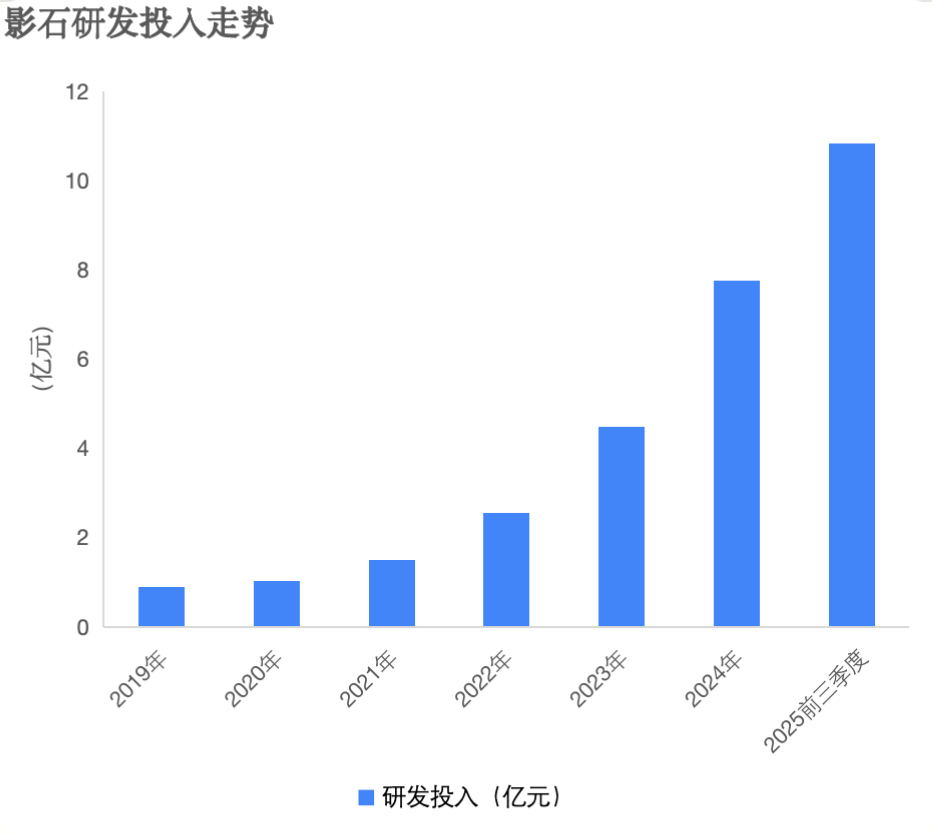
Core Insights - The competition between YingShi Innovation Technology Co., Ltd. and DJI has become a focal point for investors, with both companies competing in the fields of panoramic cameras, action cameras, and drones [1][2][3] - YingShi Innovation reported a significant revenue growth of over 90% year-on-year in Q3 2025, driven by increased consumer interest due to competitive pricing strategies in the market [1][3] Company Performance - YingShi Innovation achieved a revenue of 29.40 billion yuan in Q3 2025, reflecting a year-on-year growth of 92.64%, with an acceleration of over 30 percentage points compared to Q2 [3][4] - The company holds an 85.8% global market share in the panoramic camera sector, with 87.5% of its share coming from overseas markets and nearly 80% from domestic markets [3][4] Competitive Landscape - DJI has entered the panoramic camera market, increasing competition and putting price pressure on YingShi Innovation, which has established a leading position in this sector [3] - The current market dynamics show a "YingShi leading, DJI chasing" scenario, with YingShi holding a 75% global market share in Q3 2025, while DJI has a 17.1% share [3] Research and Development - YingShi Innovation has invested over 10 billion yuan in R&D in the first three quarters of 2025, with Q3 R&D expenses reaching 5.24 billion yuan, a year-on-year increase of 164.81% [4] - R&D expenditures account for 17.81% of the company's revenue, focusing on core areas such as panoramic imaging technology and AI algorithms, as well as strategic projects like custom chips [4] Strategic Outlook - The company aims to strengthen its technological barriers and enhance its competitive edge through increased R&D investment and innovation [4] - YingShi Innovation is committed to developing high-value products and services to meet market demands and improve its core competitiveness [4]

影石创新2025Q3财报:营收增长93%,双11表现突出
Guan Cha Zhe Wang· 2025-10-30 05:45
Financial Performance - The company reported a revenue of 2.94 billion yuan for Q3 2025, representing a year-on-year growth of 92.64% [1] - Cumulative revenue for the first three quarters reached 6.611 billion yuan, with a year-on-year increase of 67.18% [1] - The net profit for Q3 was 272 million yuan, showing a decline of 15.9% year-on-year, primarily due to strategic R&D investments [5] Market Performance - The company achieved significant sales during the Double Eleven shopping festival, driven by product innovation and enhanced user experience in core categories like action cameras and panoramic cameras [1] - The opening of the first flagship store in Hong Kong on October 25 attracted considerable attention [1] - A new panoramic camera, X4 Air, is set to be launched on October 28, along with promotional activities expected to boost sales [1] Research and Development - R&D investment exceeded 1 billion yuan in the first three quarters of 2025, with Q3 investment at 524 million yuan, marking a year-on-year increase of 164.81% [5] - Investments focus on cutting-edge areas such as panoramic imaging technology, AI algorithms, and custom chips, reflecting a long-term strategic vision despite short-term profit impacts [5] Product Innovation - The company expanded its product line with new releases including the Ace Pro 2 "Glacier White" limited edition, Flow 2 smartphone gimbal, and panoramic camera GO Ultra [7] - An AI omnidirectional microphone, Wave, targeting enterprise clients has also been launched, enhancing the company's audio segment [7] - The company is nearing the public testing phase for the world's first panoramic drone, "Yingling Antigravity," expected to begin trial sales in Q4 2025 [7] Industry Position - The global smart imaging device market is highly concentrated, with a CR3 of 78.9% in 2024 [10] - The company's market share increased from 28.4% in 2023 to 35.6% in 2024, indicating a continuous expansion of its leading position in the industry [10]

这家深圳公司,前三季度研发投入已超去年净利润
2 1 Shi Ji Jing Ji Bao Dao· 2025-10-28 08:41
Core Insights - The company reported a significant revenue increase of 92.64% year-on-year for Q3 2025, reaching 2.94 billion yuan, while net profit decreased by 15.90% to 272 million yuan [1] - For the first three quarters of 2025, total revenue was 6.61 billion yuan, up 67.18%, with net profit at 792 million yuan, down 5.95% [1] - The decline in net profit is attributed to increased R&D expenses due to market expansion, new product launches, and higher salaries for R&D personnel [1][4] Revenue and Profit Analysis - The company's revenue growth is driven by market expansion and product innovation, despite a decrease in net profit [1][4] - R&D expenses have significantly increased, with Q3 2025 R&D investment reaching 524 million yuan, a 164.81% increase year-on-year, accounting for 17.81% of revenue [1] - Cumulatively, R&D investment for the first three quarters exceeded 1 billion yuan, surpassing the previous year's net profit [1] Market Position and Competition - The company is experiencing rapid growth, increasing its market share from 28.4% in 2023 to 35.6% in 2024, making it one of the fastest-growing leaders in the smart imaging device industry [5] - In comparison, the competitor DJI reported revenues of 80 billion yuan in 2024, significantly overshadowing the company's figures [5] - The competitive landscape is intensifying, with DJI launching products that directly compete with the company's offerings at lower prices [5][6] Product Development and Innovation - The company is focused on innovation over price competition, as indicated by the founder's statement on social media [6] - The upcoming launch of the Antigravity drone is anticipated for Q4 2025, following successful public testing [1][6] - The company plans to release a new panoramic camera model, X4 Air, on October 28 [6] Supply Chain and Production Challenges - The company follows a "self-research + outsourcing" production model, relying on international suppliers for critical components like chips [7] - Increased outsourcing costs and rising raw material prices have impacted production expenses, necessitating a stronger supply chain resilience [7] - The company is investing in custom chip development and other strategic projects to mitigate supply chain risks [7]
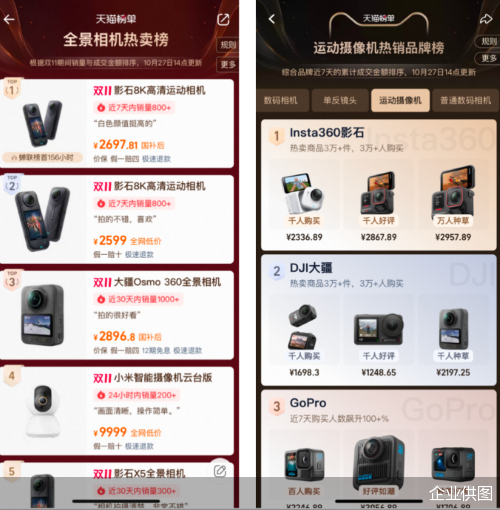
双11全面霸榜!影石Q3营收猛增93%, 研发投入翻倍加码定制芯片
Bei Jing Shang Bao· 2025-10-28 06:42
Core Viewpoint - The company, Yingshi Innovation, reported significant revenue growth in Q3 2025, driven by market expansion and positive reception of new products [1][2]. Group 1: Financial Performance - In Q3 2025, the company achieved a revenue of 2.94 billion yuan, marking a substantial year-on-year increase of 92.64% [1]. - Cumulatively, the revenue for the first three quarters reached 6.61 billion yuan, reflecting a year-on-year growth of 67.18% [1]. - The net profit attributable to shareholders for Q3 was 272 million yuan, a decrease of 15.9% year-on-year, primarily due to high R&D investments [2]. Group 2: Research and Development - The total R&D expenditure for the first three quarters exceeded 1 billion yuan, with Q3 R&D spending at 524 million yuan, up 164.81% year-on-year [2]. - R&D expenses accounted for 17.81% of revenue, indicating a sustained high level of investment [2]. - The company is focusing on core areas such as panoramic imaging technology and AI algorithms, while also increasing investment in custom chip projects [2]. Group 3: Product Development and Market Strategy - The product matrix has expanded to meet diverse consumer and enterprise needs, including the launch of new cameras and audio solutions [4][5]. - The company plans to enter the drone market with two new brands, including a panoramic drone that has been recognized by Time magazine as one of the best inventions of 2025 [5]. - The opening of the first flagship store in Hong Kong and strong sales performance during the Tmall Double Eleven event highlight the brand's market appeal [1][4]. Group 4: Market Position and Industry Trends - The global smart imaging device industry has a high concentration, with the top three companies holding a market share of 78.9% [7]. - Yingshi's market share increased from 28.4% in 2023 to 35.6% in 2024, positioning it as one of the fastest-growing leading companies in the sector [7]. - The company is leveraging its market position and R&D capabilities to push smart imaging technology into broader consumer markets [9].