智能体时代

Search documents
OpenAI和国产模型悄悄打起“价格战”
第一财经· 2026-03-18 10:27
Core Viewpoint - The article discusses OpenAI's launch of two new small models, GPT-5.4 mini and nano, which are optimized for high-frequency workloads, offering lower latency and higher cost-effectiveness compared to flagship models [3][10]. Group 1: Model Performance and Features - OpenAI's GPT-5.4 mini is designed for a balance of speed and performance, operating at over twice the speed of its predecessor and achieving scores close to the flagship model in various benchmarks [7][8]. - The GPT-5.4 mini scored 54.4% on the SWE-bench Pro programming benchmark, 72.1% on the OSWorld-Verified benchmark, and 88.0% on the GPQA Diamond test, indicating strong performance in programming and multi-modal tasks [8]. - The GPT-5.4 nano is the smallest and cheapest version, suitable for lighter tasks, and performs slightly below the mini model [7][9]. Group 2: Pricing and Cost Efficiency - The pricing for GPT-5.4 mini is set at $0.75 per million tokens for input and $4.5 for output, consuming only 30% of the GPT-5.4 quota, making it a cost-effective option for simple programming tasks [9][10]. - GPT-5.4 nano is priced at $0.20 per million tokens for input and $1.25 for output, approximately one-fourth the cost of the mini model [10][16]. - Comparatively, other models like DeepSeek V3.2 and Kimi-K2.5 offer lower prices, raising questions about the competitiveness of OpenAI's new models in terms of cost [16][18]. Group 3: Industry Implications and Strategic Positioning - The release of these small models signifies a strategic shift towards model layering, where developers will utilize a combination of models based on task complexity and cost [10][12]. - OpenAI emphasizes the importance of a system where larger models handle complex planning while smaller models execute simpler tasks efficiently [12][13]. - The competitive landscape is intensifying, particularly with Chinese models dominating the cost-performance ratio, leading to debates on the effectiveness of OpenAI's new offerings [5][14].


AI时代冲击波:APP退居后台,智能体浮出水面。
2 1 Shi Ji Jing Ji Bao Dao· 2026-01-16 02:03
Core Insights - Alibaba's Qianwen App has launched over 400 service functions, marking its transition from a "chat dialogue" to an "AI service era" [1] - The rise of AI is leading to a shift from an "app-centric" to a "user-intent-centric" model, where users express needs naturally and AI agents handle task execution [3][4] - The transition to an intelligent economy is changing competitive logic from product and service-based competition to "AI+" ecosystem competition [7][8] Group 1: AI Integration and Functionality - Qianwen App integrates with Alibaba's ecosystem, enabling AI-driven functionalities like food delivery, shopping, and travel bookings, and is currently in user testing [2] - The AI capabilities of Qianwen App are expected to enhance user efficiency and optimize resource allocation in the digital economy [4] Group 2: Market Predictions and Expert Opinions - Experts predict that traditional apps may become background resources, with AI agents taking over user interactions, leading to a fundamental change in human-computer interaction [3][4] - The introduction of AI agents could potentially double the effective flow of digital services without increasing the population, addressing the flow bottleneck in the digital economy [4] Group 3: Competitive Landscape Changes - The competitive landscape is shifting towards AI-driven strategies, where companies must embed AI technologies into their operations to gain an edge [7][8] - Not all apps will retreat to the background, but those that do not integrate with leading AI agents may face visibility challenges and risk being outcompeted [8][9] Group 4: Business Model Innovations - The emergence of AI agents is expected to lead to disruptive business model innovations, allowing for flexible service combinations tailored to individual user preferences [9] - The marketing paradigm is shifting from "traffic purchase" to "intent purchase," enabling brands to target specific user intentions with unprecedented precision [9]


智能体时代,大厂向应用层渗透的逻辑与路径
Sou Hu Cai Jing· 2026-01-13 04:14
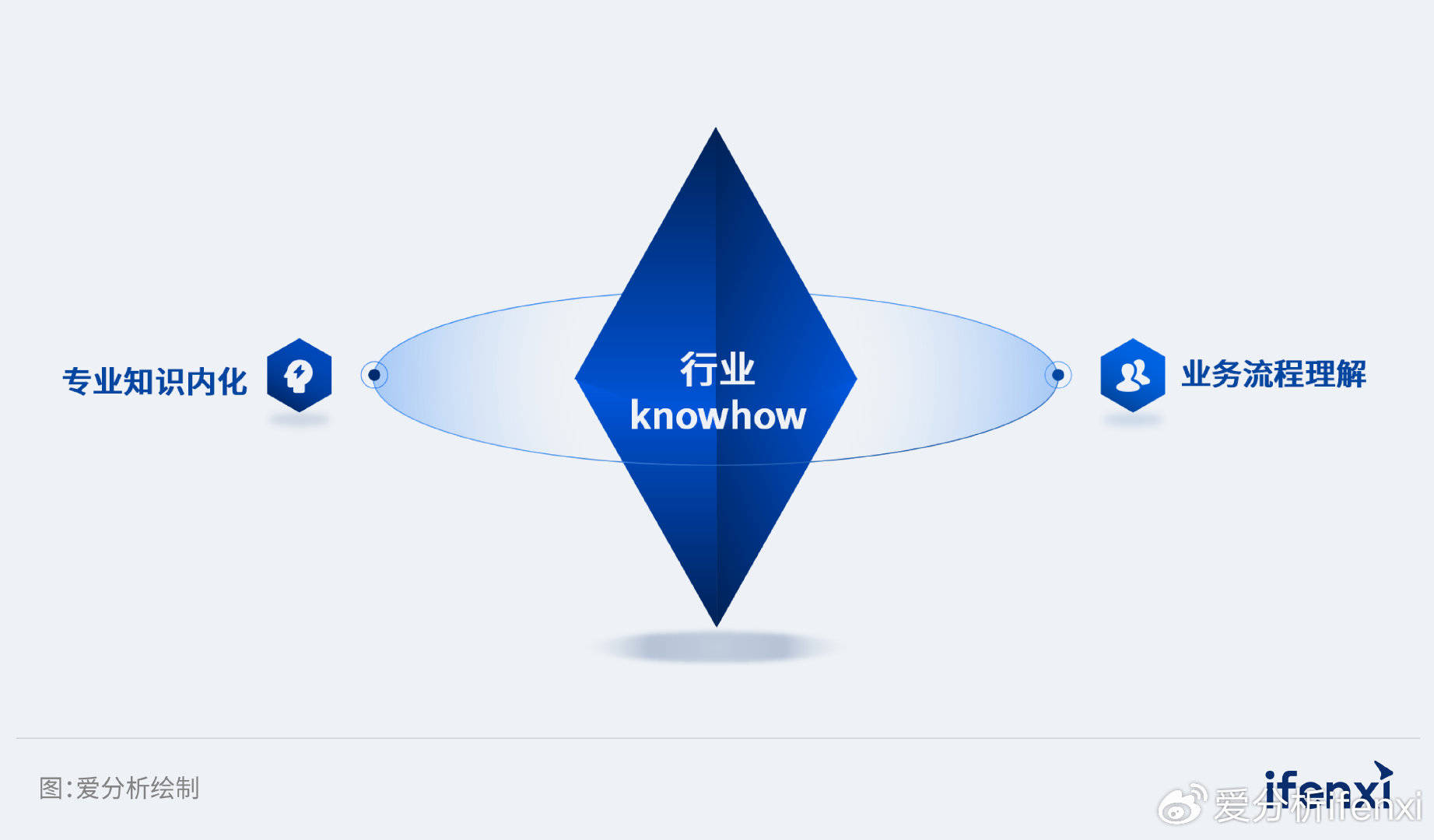
Core Viewpoint - The report discusses the transformation of the enterprise application service landscape in China due to the advent of the intelligent agent era, highlighting the blurring boundaries between large tech companies and application vendors, and the need for both to adapt to new business dynamics [1][2]. Group 1: Driving Logic of Boundary Crossing - The traditional boundary between large tech companies and application vendors is becoming increasingly ambiguous as large companies gain the capability to penetrate the application layer [2]. - Historically, application vendors maintained a stronghold due to their deep industry know-how, which large companies struggled to replicate [3][5]. - The shift in enterprise demand from process management to result delivery is a key factor enabling large companies to cross into the application layer [7][8]. Group 2: Knowledge Governance and Interaction Paradigms - The weakening of knowledge governance requirements allows large companies to utilize vast amounts of unstructured data directly, facilitating their entry into specialized fields [9][10]. - The transformation of user interaction from "users finding applications" to "applications finding users" centralizes control and allows large companies to dominate the entry points of enterprise applications [11]. Group 3: Quadrant Analysis of Application Risk - A quadrant model based on task complexity and knowledge complexity is proposed to assess which applications are at risk of being absorbed by large companies [15]. - Applications that involve simple, single-point tasks are at high risk of being integrated into large companies' platforms, while those requiring complex processes serve as a natural barrier for application vendors [16][20]. - The quadrant analysis identifies four areas: "large company absorption zone," "fusion symbiosis zone," "process reshaping zone," and "moat zone," each with varying levels of risk and strategic implications for both large companies and application vendors [18][22]. Group 4: Strategies for Application Vendors - Application vendors must transition from being mere functionality providers to becoming injectors of industry-specific knowledge to survive in the face of large company encroachment [24]. - In the "fusion symbiosis zone," application vendors should position themselves as plugins within large companies' ecosystems to avoid direct competition and leverage shared resources [25]. - For applications in the "process reshaping zone," vendors should modularize their capabilities to facilitate integration with large companies' systems [26]. Group 5: Large Companies' Strategic Focus - Large companies are advised to adopt a self-developed strategy for applications in the "large company absorption zone," embedding capabilities directly into their models or platforms [28]. - In the "fusion symbiosis zone," large companies should focus on building ecosystems rather than developing specialized knowledge internally [29]. - The "moat zone" remains a challenging area for large companies, where they should focus on providing infrastructure support rather than competing directly with established application vendors [30].
华为赵蕊:金融AI成功90%取决于工程能力 战略目标需从“可用”转向“好用”
Xin Lang Cai Jing· 2025-12-30 01:39
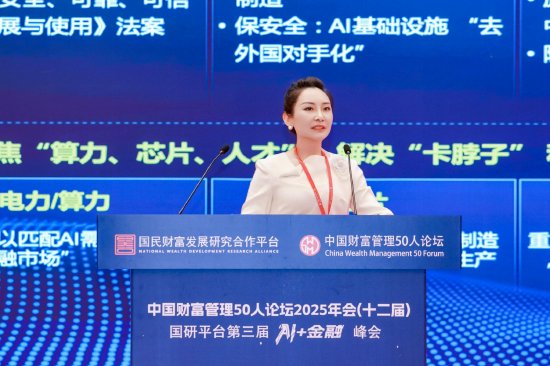
Core Insights - The core theme of the China Wealth Management 50 Forum 2025 Annual Meeting is "Towards the Construction of a Financial Power during the 14th Five-Year Plan" [1] AI Application in Finance - AI applications in the financial industry are transitioning from the "usable" stage to the "useful" stage, with 90% of success depending on engineering capabilities [3][8] - The development of large models is entering the "Agentic" era, where AI will autonomously complete tasks and create business value [3][8] - AI will lead to structural changes in financial institutions, reshaping competitive barriers in five key areas: 1. Redefining traffic entry points from passive app clicks to proactive intent recognition through intelligent services 2. Redefining financial products and services for deep customization 3. Restructuring the entire user journey to make financial services more inclusive 4. Redefining operational objects and forms, with intelligent assistants becoming the main channel influencing customer mindset 5. Ultimately affecting talent and organization, moving towards a "human-machine coexistence" state [3][8] Huawei's AI Strategy - Huawei's financial AI strategy aims to support the industry in moving from "usable" to "useful," providing a full-stack capability from advanced Ascend computing power to a one-stop AI development platform (ModelArts) and an intelligent agent development and operation platform (Versatile Agent) [3][8] - The strategy includes talent training courses and focuses on three typical scenarios co-created with leading financial institutions [3][8] Specific Use Cases - In mobile banking app scenarios, Huawei uses models like Pangu 7B to enhance service accuracy to over 95% while optimizing computing power and reducing costs, achieving end-to-end latency under 2 seconds [4][9] - In intelligent risk control scenarios, the core solution involves converting expert experience into "thinking chain" data and using large models with "slow thinking" capabilities for reinforcement learning, ensuring real-time updates and high accuracy of risk control models [4][9] - For report generation (applicable to credit and investment research), an innovative "Deep Research" development paradigm allows intelligent agents to automatically organize tasks and generate high-quality reports through repeated interactions with external data sources and knowledge bases [4][10] Engineering Challenges and Recommendations - The financial industry, characterized by strong regulation and high standards, faces challenges in engineering rather than merely applying generic models or external knowledge bases [5][10] - To address systemic latency, accuracy, humanization, and cost issues, strong dynamic business orchestration capabilities are required, along with complex model tuning, intelligent agent tuning, system integration, and full-link monitoring [5][10] - Eight recommendations for financial institutions include: 1. AI should be a company-level strategy led by top management 2. Business departments must deeply participate in building integrated teams of technology, business, and data 3. Focus on "useful" applications rather than "showcase" applications, paying attention to actual usage metrics 4. Adopt diversified models and open architectures 5. Combine engineering experience from professional fields 6. Build enterprise-level AI pipelines and regulatory-compliant governance systems 7. Develop high-quality datasets 8. Recognize that 90% of success depends on engineering capabilities [6][10]
模型免费、推理翻倍:Gemini 3 Flash 深夜炸场,发放智能体时代的「入场券」
3 6 Ke· 2025-12-18 01:21
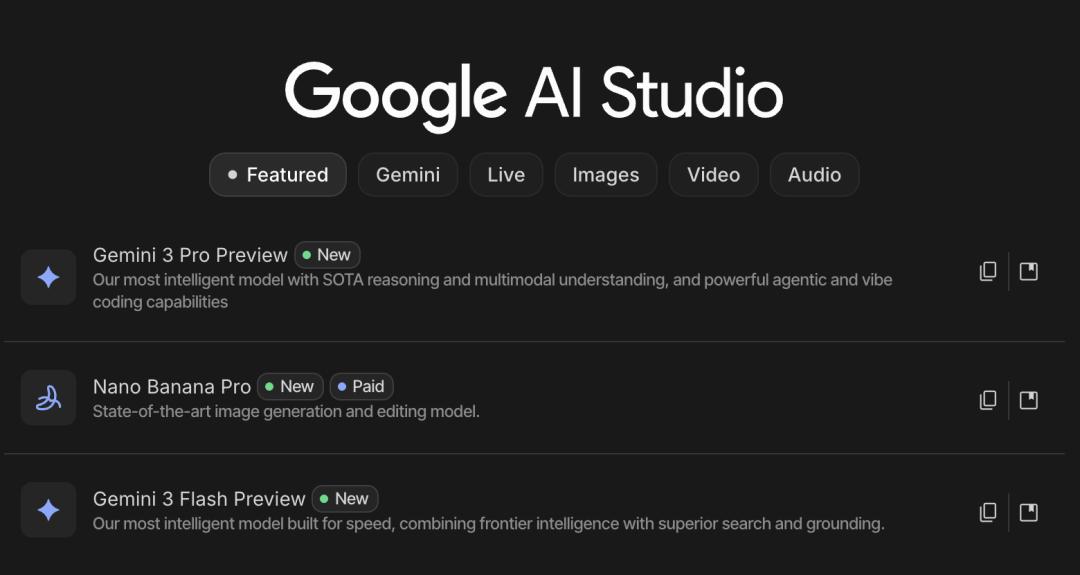
Core Insights - Google has launched Gemini 3 Flash, which replaces Gemini 2.5 Flash as the default model in the Gemini application, allowing millions of users to access its capabilities for free [1] - Gemini 3 Flash offers high performance at a significantly lower cost, achieving a score of 78% in the SWE-bench Verified benchmark, surpassing both Gemini 2.5 and even outperforming Gemini 3 Pro in certain areas [1][3] - The model is designed for high-frequency, rapid development scenarios, enabling real-time application updates and simplifying workflows for users [2][6] Pricing and Cost Efficiency - The pricing for Gemini 3 Flash is set at $0.50 per million input tokens and $3.00 per million output tokens, making it highly competitive compared to previous models [2][5] - The introduction of Gemini 3 Flash significantly lowers the entry barrier for advanced AI capabilities, which were previously costly, thus fostering a more accessible AI environment [5] Performance and Benchmarking - Gemini 3 Flash demonstrates superior performance across various benchmarks, achieving three times the speed of Gemini 2.5 Pro and excelling in tasks requiring high precision and rapid feedback [5][9] - In specific tests, Gemini 3 Flash outperformed flagship models like GPT and Claude in certain dimensions, indicating its strong capabilities in automation and real-time processing [3][4] Applications and Use Cases - The model is being integrated into various sectors, including software engineering, legal, and financial industries, where it enhances response times and accuracy in complex tasks [9][11] - Gemini 3 Flash's multi-modal capabilities allow for rapid transformation of unstructured data into actionable insights, proving its utility in diverse applications from legal document analysis to game development [6][11] Ecosystem and Market Impact - The launch of Gemini 3 Flash signifies a strategic enhancement of Google's AI ecosystem, positioning it as a leader in the competitive landscape of AI models [9][10] - The model's capabilities are expected to drive widespread adoption of AI technologies across industries, marking a shift towards more integrated and efficient AI solutions [8][13]

城记 | 续写智能体时代的“Deepseek时刻”,长三角AI产业何以爆款频出?
Xin Hua Cai Jing· 2025-11-27 15:24
Core Insights - The article highlights the transition of artificial intelligence (AI) into the "intelligent agent era" by 2025, marking a shift from tool-based products to autonomous decision-making systems [1] - China's AI sector is evolving from "made in China" to "created in China," positioning itself as a leader in the global AI race with unique paths in performance, cost, and algorithm originality [1] - The Yangtze River Delta region is emerging as a hub for AI innovation, with a surge of new AI products and applications in recent months [1] Technological Breakthroughs - The Yangtze River Delta's AI models are establishing a robust foundation for intelligent agents, exemplified by MiniMax's M2 model, which ranks among the top five in global assessments with only 10 billion activation parameters [2] - MiniMax's technology has been integrated by global tech giant Meta, marking a significant recognition of Chinese AI algorithms on an international scale [2] - MiniMax has expanded its offerings with a comprehensive suite of models across text, video, voice, and music, showcasing a breakthrough in multimodal AI capabilities [2] Vertical Industry Advantages - Companies in the Yangtze River Delta are demonstrating specialized strengths, such as Nanjing's NanZhi Optoelectronics, which upgraded its photon-specific model to enhance design efficiency by 30% [3] - The "Inspiration Intelligent Agent" developed by Hefei's team revolutionizes visual content creation, allowing users to perform complex tasks through simple dialogue interactions [3] - The team received the Best Demonstration Award at the ACM International Multimedia Conference, highlighting their innovative contributions to the field [3] Scene Empowerment - The rich industrial ecosystem and large consumer market in the Yangtze River Delta facilitate the practical application of AI models, as evidenced by the rapid success of Ant Group's "Lingguang" application, which surpassed 2 million downloads within a week [4][5] - The "Qwen" model from Alibaba also achieved over 10 million downloads shortly after its public testing, showcasing the competitive edge of Chinese AI products [5] - Suzhou's industrial park has seen significant algorithm aggregation, with 35 algorithms approved for deep synthesis services, leading the province in this area [5] Policy Support - The article discusses the comprehensive "ecological cultivation" system established in the Yangtze River Delta, supported by forward-looking policies from key cities [7] - Shanghai has positioned AI as one of its three leading industries, with projections indicating the industry will exceed 450 billion yuan by 2025 [7] - Hangzhou aims to create a full-chain support system for AI innovation, with the launch of the largest AI open-source community in China [7] City-Specific Initiatives - Suzhou's action plan aims for over 3,000 AI companies and a core industry scale growth of over 20% annually by 2026 [8] - Nanjing plans to achieve a core industry scale of 60 billion yuan by 2026, focusing on developing foundational and industry-specific AI models [8] - Hefei is advancing its AI industry through a dual strategy, establishing a comprehensive ecosystem that includes data labeling and computational support [9]
头豹研究院:智能体时代已来,从模型能力到场景价值
Tou Bao Yan Jiu Yuan· 2025-11-18 14:05
Investment Rating - The report indicates a strong growth potential for the AI Agent industry, with a projected market size exceeding 35.7 billion yuan by 2029, reflecting a compound annual growth rate (CAGR) of 52.4% [8][9]. Core Insights - The AI Agent industry is positioned as a key commercial application of large models, showcasing significant potential for market expansion and value creation [8][9]. - The growth of the large model market is driven by three main factors: optimization of computing power and infrastructure, exponential growth in data resources, and the increasing demand for digital transformation across industries [12][16]. - AI large models are reshaping enterprise value systems through internal process integration and external product innovation, leading to a comprehensive transformation of business operations and models [18]. - The commercialization of AI large models is evolving in three layers: embedded applications, native applications, and hardware applications, with embedded applications being the most mature [22][23]. Summary by Sections AI Large Model Market Size and Growth Forecast - By 2029, the Chinese large model market is expected to exceed 140 billion yuan, driven by overall infrastructure expansion [8][9]. Growth Drivers of the Large Model Market - The expansion of the large model market is propelled by advancements in computing power, improvements in data quality and governance, and a surge in digitalization and intelligent upgrade demands across various sectors [12][16]. AI Large Model Empowering Enterprise Value Reconstruction - AI large models enhance operational efficiency and user experience, leading to significant value creation for enterprises [18][19]. Commercialization Development Status of AI Large Models - The commercialization of AI large models is characterized by a three-tier evolution, with embedded applications being the most developed, while native applications and hardware applications are still in exploratory and early stages, respectively [22][23]. AI Large Model Product Usage Flow Distribution - The flow distribution of AI large model products shows that dialogue assistants dominate both web and mobile platforms, indicating a concentrated user engagement [25][26]. AI Agent Product System - The AI Agent product system consists of three layers: general-purpose, business-specific, and industry-specific, facilitating rapid coverage and validation across various sectors [27][28]. AI Agent Supply Scene Distribution - The supply side of AI Agent products is primarily focused on general scenarios, accounting for nearly 70% of the market, leveraging technological versatility and cost advantages [28][29]. AI Agent Industry Demand Scene Distribution - Demand for AI Agents is concentrated in high-frequency interaction scenarios such as e-commerce, finance, and education, with advanced manufacturing also experiencing growth through digital transformation [32].
苹果前CEO发声:OpenAI成苹果AI时代劲敌
Sou Hu Cai Jing· 2025-10-13 04:45
Core Insights - John Sculley, former CEO of Apple, stated that OpenAI has become Apple's first real competitor in decades, emphasizing that artificial intelligence is not a particularly strong area for Apple [1][3] Group 1: Apple's Position in AI - Apple's performance in the AI race is lagging compared to competitors like OpenAI, Google, Amazon, and Meta, which are continuously updating their products [3] - Apple's plans to upgrade its AI assistant Siri faced delays earlier this year, marking a significant setback in product launches [3] Group 2: Future Leadership and Business Model Shift - Speculation surrounds the potential retirement of current CEO Tim Cook, with Sculley suggesting that whoever succeeds him must lead Apple from an application-centric era to an agent-centric era [3] - In the agent-centric era, intelligent agents will replace many applications and autonomously complete complex tasks, posing a significant challenge to Apple's existing business model [3] - Sculley believes that AI-driven intelligent agents will help knowledge workers automate cumbersome workflows, prompting more tech companies to shift towards subscription-based business models, which he views as more advantageous than the current application-centered model [3] Group 3: Collaboration with OpenAI - Notably, former Apple design chief Jony Ive recently appeared at OpenAI, where the company acquired his device startup for over $6 billion earlier this year [4] - Ive aims to develop devices that address issues arising from smartphones and tablets since their inception, and Sculley recognizes his capabilities, suggesting that his collaboration with OpenAI CEO Sam Altman could lead to breakthroughs in the field of large language models [4]


理想MindGPT 3.1被大大低估了
理想TOP2· 2025-08-26 15:35
Core Insights - The article emphasizes that the capabilities of Li Auto's MindGPT 3.1 are significantly underestimated, highlighting three main anchors of value [1] - MindGPT 3.1's ASPO incorporates innovative optimizations from DeepSeek R1's GRPO, showcasing Li Auto's ability to rapidly learn and internalize the best practices in AI [1][8] - There is a lack of in-depth discussion about Li Auto's technology in the information ecosystem, indicating a potential undervaluation of its advancements [1] Performance Metrics - MindGPT 3.1 is a fast reasoning language model, achieving speeds of up to 200 tokens per second, nearly five times faster than MindGPT 3.0, which is a significant improvement compared to GPT-4's maximum of 79.87 tokens per second [2][4] - The model shows notable enhancements in tool invocation accuracy, complex task completion rates, and response richness compared to its predecessor [4] Benchmarking Results - MindGPT 3.1 outperforms other models in various benchmark tests, achieving high scores in both deep and non-deep thinking modes across multiple assessments [4][5] - In deep thinking mode, MindGPT 3.1 scored 0.8625 in AIME 2024, indicating strong performance relative to competitors [4] Learning Methodology - The ASPO method addresses the issue of data sampling precision, focusing on filtering low-quality learning signals to enhance model training [8][9] - Unlike GRPO, which operates at the output stage, ASPO manages the training pool at the input stage, ensuring that only samples that match the model's capability are used [8][9] Strategic Focus - Li Auto's leadership emphasizes that the primary focus is on enhancing model capabilities rather than artificially inflating benchmark scores, which they consider a waste of resources [5][6] - The company is committed to improving user experience by reducing reasoning time and enhancing the overall quality of responses from the model [5] Collaborative Initiatives - Li Auto has initiated a joint fund with local scientific committees to engage with academic professionals, aiming to gather the latest research insights without specific deliverable requirements [10]


迈向智能体时代“第一步” DeepSeek-V3.1 发布
Xin Jing Bao· 2025-08-21 14:09
Core Viewpoint - DeepSeek officially released DeepSeek-V3.1, marking a significant step towards the "Agent era" with enhanced capabilities in reasoning and task performance [1] Group 1: Product Upgrade - The upgrade includes a mixed reasoning architecture that supports both thinking and non-thinking modes in a single model [1] - DeepSeek-V3.1-Think can provide answers in a shorter time compared to its predecessor, DeepSeek-R1-0528 [1] - The new model shows significant improvements in tool usage and intelligent agent tasks through Post-Training optimization, resulting in stronger agent capabilities [1] Group 2: User Experience - The official app and web model have been synchronized to DeepSeek-V3.1, allowing users to switch freely between thinking and non-thinking modes via a "deep thinking" button [1]