
特朗普经济学

Search documents
美联储或许并不重要
CAITONG SECURITIES· 2026-01-27 13:22
Group 1: Economic Insights - The focus on the new Federal Reserve chair and interest rate cuts reflects a desire to lower global financing costs and stimulate capital expenditure and demand recovery, but the key factor is the long-term U.S. Treasury yield rather than the policy rate[5] - The expansion of the real economy is more closely related to medium- to long-term risk-free rates than to the central bank's benchmark rate[5] - Despite three rate cuts totaling 75 basis points in 2025, the 10-year Treasury yield only decreased by 36 basis points, indicating limited responsiveness of long-term rates to Fed actions[12][19] Group 2: Fiscal Challenges - The pricing logic of long-term U.S. Treasuries has shifted, now anchored by U.S. fiscal sustainability and the credibility of the dollar, rather than Fed policy[5][11] - The U.S. fiscal situation is under increasing strain, with interest payments on debt rising as a share of total expenditures, which could exacerbate fiscal contradictions[18][25] - The "impossible trinity" of fiscal balance, inflation, and monetary easing presents significant challenges for U.S. economic policy, especially in light of electoral pressures[18] Group 3: Market Implications - A weak dollar and high interest rates are likely to remain key macroeconomic assumptions in 2026, raising questions about the sustainability of capital expenditure growth[25] - If long-term Treasury yields remain high, it could hinder global capital expenditure expansion and create uncertainty in asset repricing[27] - The reliance on debt financing for AI investments may be challenged in a high-rate environment, questioning the viability of current growth trajectories[26]
中期选举,权力版图如何重划?——“特朗普经济学”之中期选举
陈兴宏观研究· 2026-01-18 04:05
Key Points - The midterm elections will determine the distribution of seats between the two parties in Congress, impacting Trump's policy implementation during the latter half of his term [2][6] - Approximately one-third of Senate seats will be up for election, while all House seats will be contested [7][9] - The House of Representatives is currently controlled by the Republican Party, which holds a slim majority, while the Senate has a more solid Republican presence [9][22] Election Highlights - Key dates include "Super Tuesday" on March 3, where early primaries will take place in North Carolina and Texas, potentially reflecting party dynamics and voter sentiment [3][11] - June will see a peak in primaries with 16 states holding elections, including critical battlegrounds like California and New Jersey [11] Influencing Factors - Redistricting is a significant factor, as both parties are actively working to redraw district boundaries to enhance their chances of winning seats [4][16] - Voter satisfaction, particularly regarding inflation and economic issues, is crucial, with Trump's approval rating dropping from 50% to 43% over the past year [19][21] Potential Outcomes - Historically, the party of the sitting president tends to lose seats in the House during midterm elections, with only 4 out of 31 instances since 1902 where the ruling party maintained its position [22] - If the Democrats regain control of the House, it could significantly impact fiscal legislation, as only the House can initiate tax and revenue-related bills [23]


"特朗普经济学"之中期选举:中期选举,权力版图如何重划?
Huafu Securities· 2026-01-17 15:08
Group 1: Election Overview - The midterm elections will determine the distribution of seats between the two parties in Congress for the 2027-2028 period, impacting Trump's policy implementation[2] - Approximately one-third of Senate seats and all House seats will be contested, with the Senate currently held by Republicans at a ratio of 53:47[18] - The House is closely contested, with Democrats needing to gain only 3 seats to take control[18] Group 2: Key Factors Influencing the Election - Redistricting is a significant factor, with Republicans currently leading in redistricting efforts, potentially gaining 9 seats, while Democrats may gain 6 seats[27] - Trump's approval rating has declined from 50% in January of last year to 43% this January, primarily due to dissatisfaction with inflation and economic issues[31] - Voter sentiment towards Congress and the President will heavily influence election outcomes, with dissatisfaction likely to favor Democrats[32] Group 3: Potential Outcomes and Implications - Historically, the party of the sitting president tends to lose seats in midterm elections, with an average loss of about 30 seats since 1902[39] - The most likely scenario is that Democrats will regain control of the House while Republicans maintain the Senate, affecting the passage of fiscal legislation[40] - If Democrats regain the House majority, it could hinder the passage of Republican fiscal plans, as only the House can initiate tax-related legislation[40]
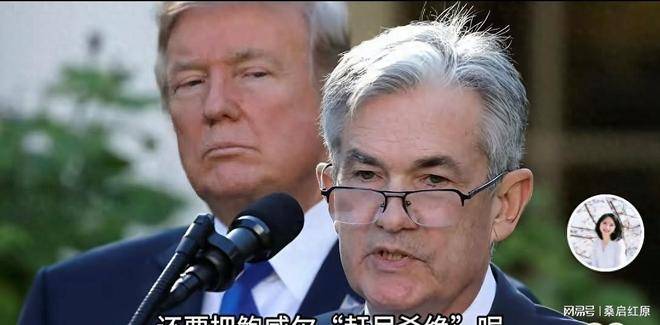
特朗普为何迫不及待要对美联储赶尽杀绝,记者王冰汝点评一针见血
Sou Hu Cai Jing· 2026-01-15 03:34
Core Viewpoint - The article discusses the escalating pressure from Trump on Federal Reserve Chairman Jerome Powell, culminating in a criminal investigation by the U.S. Department of Justice, highlighting Trump's urgency to control the Federal Reserve ahead of the upcoming midterm elections [1][3]. Group 1: Trump's Motivations - Trump is facing imminent midterm elections, and losing control of Congress could lead to political crises, including impeachment and criminal charges, prompting him to act swiftly [3]. - By forcing Powell to resign, Trump aims to install his own appointee at the Federal Reserve, thereby consolidating his control over the institution and facilitating the implementation of his economic policies [3][5]. Group 2: Nature of the Investigation - The criminal investigation against Powell is based on allegations of excessive renovations and false statements, which may not lead to substantial prosecution [5]. - Despite the low likelihood of successful prosecution, Trump's aggressive tactics serve as a warning to bureaucrats like Powell, indicating that failure to align with Trump's political goals could result in judicial repercussions [6].
万斯赴摇摆州“灭火”:力挺特朗普经济学,恳求选民保持耐心
Jin Shi Shu Ju· 2025-12-17 04:12
Core Points - Vice President Vance visited Lehigh Valley, Pennsylvania, to defend the economic messaging of the Trump administration amidst disappointing employment reports and rising inflation [1] - Vance acknowledged that most Americans do not feel better off under the current administration and urged patience, emphasizing the administration's commitment to improving the lives of hardworking Americans [2] - Supporters in swing states like Pennsylvania may help Vance lay the groundwork for a potential presidential run in 2028, although he remains focused on the upcoming midterm elections [3] Economic Messaging - Vance defended Trump's protectionist trade policies and highlighted tax cuts from the "Big and Beautiful Act," asserting that federal efforts to combat illegal immigration would alleviate pressure on public services and the housing market [2] - The event took place at a warehouse owned by Uline, a significant Republican donor, which underscores the connection between business interests and political support [3] Public Sentiment - While some attendees supported Vance's message, others expressed skepticism about Trump's economic policies, indicating that the effectiveness of tariffs remains uncertain [3] - A warehouse worker criticized the administration's claims, stating that prices remain high and that the cost of groceries continues to burden consumers [4] Overall Outlook - Vance aims to portray a positive economic outlook for the U.S. and remains a loyal defender of Trump's administration, echoing Trump's self-assessment of economic performance as "A+++++" [5]
BILLIONS LOST: Economist reveals real weekly cost of the government shutdown
Youtube· 2025-11-14 14:01
Economic Impact of Government Shutdown - The government shutdown cost approximately $15 billion per week, leading to an estimated total economic impact of around $90 billion, which could reduce GDP growth by about 0.7% [1][2] - The Labor Department has not released key economic data for over a month, and the October jobs report may not be published, leaving the Federal Reserve without crucial employment statistics ahead of its next meeting [1][2] - The shutdown resulted in the loss of around 60,000 non-federal jobs, significantly affecting various sectors, including financial services and travel [1] Presidential Economic Policies - President Trump is proposing a $2,000 check for families funded by tariff revenue, alongside other affordability measures such as health insurance subsidies and a 50-year mortgage option [1] - The administration's economic policies are expected to lead to a significant increase in median household income, with a reported rise of nearly $7,000 during the first term [1] - The introduction of 100% expensing on capital expenditures is anticipated to drive a supply-side economic boom, enhancing productivity and living standards [1][2] Tariff Policies and Legal Considerations - The Supreme Court is currently reviewing President Trump's emergency tariff authority, which could have significant implications for tariff revenue and presidential trade powers [1][2] - The administration remains optimistic about the court's ruling, asserting that there are backup options available should the court rule against them [2][3] - Tariffs are viewed as a critical component of the strategy to re-industrialize the U.S. manufacturing base and improve supply chains, which have been weakened over the past 25 years [3][4]

特朗普又变了?万斯紧急“灭火”,港A股巨震,黄金飙涨!
Ge Long Hui· 2025-10-13 03:54
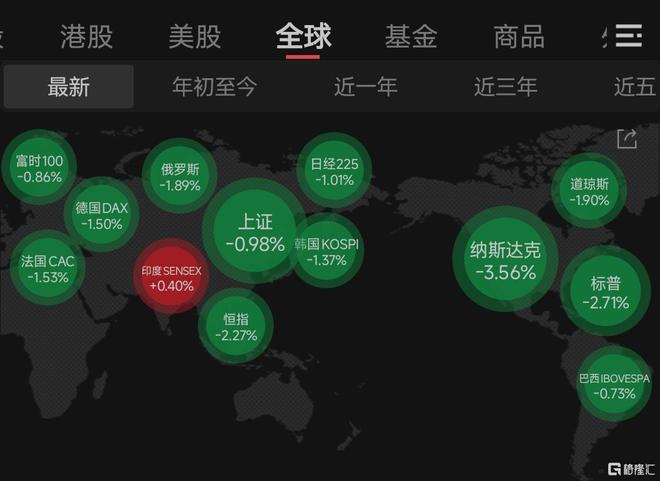
Market Overview - A-shares opened significantly lower, with the Shanghai Composite Index narrowing its decline to 1% and the ChiNext Index down 2.14%, having previously dropped over 4% at the open. The Sci-Tech 50 Index turned positive, with a strong performance in self-controlled industrial chains, particularly in lithography machines, EDA, operating systems, and rare earths [1] - The Hang Seng Index fell over 2.27%, while the Hang Seng Tech Index dropped 2.71% [2] - The volatility index for the Hang Seng surged by 20%, reaching its highest level since May 2025 [5] Global Economic Sentiment - Following Trump's claim of imposing "100% tariffs," there was a subsequent report of "tariff easing," causing significant global market fluctuations [3] - The FTSE China A50 Index futures opened higher but were down 1.22% after a previous night session decline of 4.26% [7] Commodity Market - Risk assets saw a broad increase, with gold and silver reaching new highs. Spot gold peaked at $4,060 per ounce before retreating to $4,048 per ounce, while spot silver rose over 1% to $50.81 per ounce [9] Cryptocurrency Market - The cryptocurrency market rebounded strongly, with Bitcoin recovering from a low of $101,500 to $115,275, marking a 4.29% increase. Ethereum and other cryptocurrencies also saw significant gains [11][12] Trade Policy and Market Reactions - U.S. Vice President Vance indicated a willingness for rational negotiations with China, suggesting that Trump's tariff threats may not materialize as expected [13][14] - Analysts from Huaxi Securities believe the likelihood of the 100% tariff being implemented is low, citing past experiences that indicate high tariffs could disrupt U.S.-China trade, especially during the holiday season [15][16] - The "TACO" (Trump Always Chickens Out) trading strategy has been identified, highlighting a pattern of Trump threatening tariffs followed by market volatility and subsequent easing signals [18]
鲁比尼:美国经济将冲破特朗普经济学的阻碍
Di Yi Cai Jing· 2025-09-28 12:37
Core Viewpoint - The article argues that despite the negative impacts of Trump's trade policies, innovation will lead to significant positive supply shocks, ultimately enhancing economic growth and reducing inflation over time [1][4]. Economic Outlook - Following Trump's announcement of comprehensive tariffs, there has been widespread pessimism regarding the short- and medium-term outlook for the U.S. economy, with concerns about recession and the sustainability of fiscal and current account deficits [1]. - The expectation is that the U.S. economy will experience growth recession rather than a full-blown recession, as Trump's more destructive economic policies have shifted to milder forms [2]. Innovation and Growth - The U.S. is expected to maintain its exceptional economic status due to its leadership in revolutionary innovations, which could increase the potential annual growth rate from 2% to 4% by the late 2020s [2]. - The positive impact of technology is anticipated to outweigh the negative effects of tariffs, suggesting that the private sector's dynamism will drive future growth rather than Trump's policies [2]. Debt Sustainability - If the potential growth rate accelerates towards 4%, the ratio of public and external debt to GDP is likely to stabilize and eventually decline, countering predictions of rising debt ratios based on lower growth assumptions [3]. - The U.S. current account deficit may remain high due to increased investment driven by technology, while the savings rate stays relatively stable, leading to a balance through securities investment inflows [3]. Dollar's Global Status - The dollar's status as the world's primary reserve currency is unlikely to be significantly challenged, even with rising tariffs, as structural capital inflows will mitigate downward pressure on the dollar [3]. - The article emphasizes that the ongoing technological innovations will create substantial positive supply shocks, which are expected to outweigh the potential damages from inflationary policies [4].
百万美元兜售美国居留权,特朗普这个脑洞开得有点大 | 京酿馆
Xin Jing Bao· 2025-09-21 10:37
Group 1 - The introduction of the "Trump Gold Card" allows individuals to obtain U.S. residency by paying $1 million or $2 million through corporate sponsorship, significantly reducing the initial price from $5 million [2][4] - The "Trump Gold Card" program is expected to issue approximately 80,000 cards and is currently in a trial phase, with the potential to replace existing EB-1 and EB-2 visa categories [4][5] - The increase in H-1B visa fees to $100,000 aims to compel U.S. companies to hire domestic employees instead of foreign workers, which may lead to operational challenges for major firms reliant on skilled foreign labor [7][8] Group 2 - The proposed changes to immigration and visa policies reflect a shift in focus from attracting skilled talent to targeting high-net-worth individuals, which may undermine the competitiveness of U.S. industries [10] - The financial implications of these policies are significant, with the Trump administration projecting potential revenue increases in the hundreds of billions, although the actual effectiveness of these measures remains uncertain [9][10] - The current U.S. national debt stands at $36.7 trillion, and the fiscal strategies employed by the Trump administration, including tax cuts and increased tariffs, are projected to exacerbate the federal deficit in the coming years [10]
百万美元兜售美国居留权,特朗普这个脑洞开得有点大
Xin Jing Bao· 2025-09-21 10:33
Group 1 - The "Trump Gold Card" program allows individuals to obtain U.S. residency by paying $1 million or $2 million through corporate sponsorship, significantly reducing the initial price from $5 million announced earlier this year [1][3] - The program is divided into three categories: the "Gold Card" for individuals, the "Platinum Card" for longer stays, and the "Corporate Gold Card" for companies sponsoring employees [3][4] - The introduction of the "Gold Card" effectively undermines the existing EB-1 and EB-2 visa programs, which were designed to attract skilled talent to the U.S. [4][5] Group 2 - The increase in H-1B visa fees to $100,000 aims to compel U.S. companies to hire domestic workers instead of foreign employees, particularly in tech and finance sectors [5][6] - Major U.S. companies like Amazon, Google, and Microsoft have been the largest users of H-1B visas, with a significant portion of visa holders coming from India [5][6] - The new fee structure may lead to a reevaluation of relationships between large corporations and the Trump administration, as companies face challenges in hiring skilled labor [6][7] Group 3 - Trump's economic policies, characterized by tax cuts domestically and increased tariffs internationally, are seen as attempts to address a growing fiscal deficit, which has reached $36.7 trillion [7][8] - The administration's focus on monetizing visas reflects a shift from attracting technical talent to prioritizing high-net-worth individuals, potentially compromising U.S. competitiveness [7][8] - The overall strategy may backfire, as the U.S. risks losing its appeal to global talent and wealthy individuals due to these aggressive policy changes [8]