脱钩断链

Search documents
专栏|这波“访华潮”,印证了一个时代共识
Xin Hua She· 2026-02-27 01:36
Core Viewpoint - The recent wave of foreign leaders visiting China reflects a growing consensus on the importance of pragmatic cooperation in a complex global landscape, with China being seen as a reliable partner for future investments and opportunities [1][2]. Economic Cooperation - The primary motivation for the influx of foreign leaders is the economic cooperation, as global economic recovery faces challenges while China's economy demonstrates resilience and vitality [2]. - Notable delegations accompanied leaders such as UK Prime Minister Starmer with over 60 representatives, and German Chancellor Merz with the largest group of executives since the Merkel era, indicating strong business interests [2]. Perception and Understanding - The visits also aim to break down misconceptions and seek a deeper understanding of China, with leaders recognizing the limitations of interpreting China through ideological lenses and fragmented information [3]. - Leaders like Starmer and Finland's Prime Minister Orpo emphasized the need for a comprehensive understanding of China, moving beyond stereotypes and engaging in meaningful dialogue [3]. Global Stability and Multilateralism - China is positioned as a source of certainty in a turbulent world, advocating for multilateralism and maintaining a consistent policy approach amidst rising unilateralism and protectionism [4]. - Observations from international media highlight that Western leaders are visiting China due to its non-aligned stance, contrasting with the exclusive approaches of some countries [4]. Future Cooperation - The shift in global focus towards China signifies a recognition of opportunities and a collective expectation for stability in a changing world [5]. - Despite existing differences, China's commitment to high-level openness is seen as a pathway to foster cooperation and mutual benefits, contributing positively to the global environment [5].
欧洲冬天取暖难的问题,竟被浙江人破解了,他们是咋闷声发大财的
Sou Hu Cai Jing· 2026-02-26 13:09
Core Insights - The article highlights how the energy crisis in Europe during 2022 led to a surge in demand for heating appliances, particularly electric blankets and heaters from China, specifically from Cixi, Zhejiang [1][3][5] Group 1: Impact of the Energy Crisis - The energy crisis was triggered by the Russia-Ukraine conflict, which resulted in sanctions against Russia and a significant disruption in Europe's energy supply, leading to skyrocketing energy prices [3][11] - European consumers, who traditionally relied on central heating and natural gas, faced a survival crisis and turned to Chinese heating products as a solution [5][11] Group 2: Cixi's Manufacturing Advantage - Cixi, with over 2,000 home appliance manufacturers and more than 10,000 supporting enterprises, was uniquely positioned to meet the urgent demand for heating devices, achieving an export value of 3.35 billion yuan in heating appliances to the EU, a 55.2% increase [7][9] - The local supply chain in Cixi allowed for rapid production and delivery of heating devices, showcasing a "capillary-level" capability in manufacturing [9][19] Group 3: European Manufacturing Challenges - The crisis exposed the hollowing out of European manufacturing, where many brands had outsourced production to China, resulting in a dependency on imports for essential heating equipment [13][15] - In 2022, 70% of heating equipment in the EU was imported, with over 60% coming from China, highlighting a significant reliance on Chinese manufacturing [15][21] Group 4: Shifts in Consumer Behavior and Political Landscape - The demand for Chinese heating products led to a backlash against the European elite's environmental policies, with rising support for right-wing parties as citizens prioritized immediate needs over long-term environmental goals [17][19] - The situation illustrated a contradiction in EU policies, where efforts to reduce reliance on Chinese products in high-tech sectors contrasted with increasing dependence in consumer goods [21][23] Group 5: Future of Cixi's Manufacturing - Cixi's manufacturers are evolving from mere OEMs to brand creators, with a significant increase in self-owned brands registered in the EU, rising from 12% to 28% of exports [27][29] - The focus is shifting towards innovation and technology, with local companies developing advanced heating solutions that exceed EU standards, indicating a transformation in the competitive landscape [27][29] Group 6: Long-term Implications - The article suggests that the surge in heating demand is not a one-time event but reflects deeper issues in European energy policy and the resilience of Chinese manufacturing capabilities [33] - The future of Sino-European trade will likely revolve around regulatory standards rather than tariffs, presenting both challenges and opportunities for Chinese companies [31][33]


美国牵头构建关键矿产“小圈子”不会顺利
Xin Lang Cai Jing· 2026-02-11 16:40
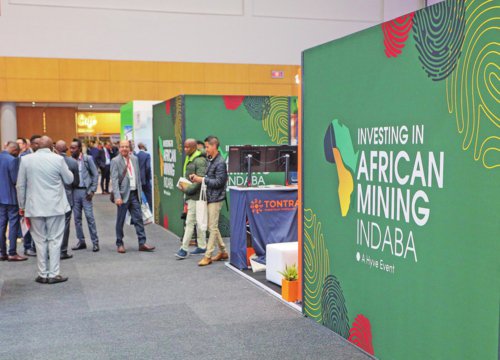
Group 1 - The 2026 Africa Mining Investment Conference commenced in Cape Town, South Africa, featuring high-level dialogues and investment forums [3] - The United States, EU, and Japan have formed a strategic partnership on critical minerals, aiming to establish a "de-risked" supply chain and address global market distortions [3][4] - The Forum on Resource Geopolitics and Economic Security (FORGE) initiative aims to reshape supply chains by coordinating procurement among member countries to ensure price stability and protect local processing projects [4][5] Group 2 - Resource supply countries include Australia, Canada, Indonesia, and the Democratic Republic of the Congo, while technology and investment countries include the US, Japan, South Korea, and parts of the EU [4] - South Korea has been appointed as the first chair of FORGE, tasked with initial organizational coordination until June 2026 [4] - The FORGE alliance plans to reach a memorandum of understanding on critical minerals by late February to early March 2026, establishing a comprehensive supply chain and trade rules independent of major competitors [4][5] Group 3 - The US has launched the "Project Vault," a $12 billion initiative to procure critical minerals for national strategic reserves, ensuring stable supply for advanced manufacturing sectors [6][7] - The plan focuses on approximately 50 essential minerals, particularly those used in clean energy technologies, aligning with the US Department of Energy and Department of Defense's critical mineral lists [6] - Australia has introduced a $1.2 billion National Critical Minerals Stockpile plan to secure essential minerals for its clean energy and defense industries, enhancing its reliability within the FORGE alliance [7][8] Group 4 - The US-Mexico Critical Minerals Action Plan aims to integrate Mexico's mineral resources into a North American supply chain, focusing on clean energy minerals and potential price adjustment mechanisms [10][11] - This plan represents a specific implementation of the FORGE initiative in North America, ensuring that Mexico's resources serve the supply chain needs of the US and its allies [11][12] - The upcoming USMCA review will address strengthening North American supply chains for critical minerals and electric vehicle components, potentially reshaping trade rules [12] Group 5 - The FORGE initiative and associated plans may disrupt global trade norms, as they introduce mechanisms that could interfere with market pricing and violate WTO principles [13][14] - The US's approach may lead to inefficiencies and increased costs in the global economy, as countries may be forced to choose sides, impacting resource sovereignty and development paths [14]
中国对经济全球化的支持更趋重要
Zhong Guo Xin Wen Wang· 2026-02-11 06:09
Group 1 - The core argument emphasizes that any attempts to exclude China from global supply and value chains will ultimately backfire on those making such attempts, highlighting the interdependence of the global economy [1][2] - The current international environment is marked by uncertainty and geopolitical conflicts, which pose unprecedented challenges to economic globalization [1][2] - China has reiterated its strong support for economic globalization, free trade, and multilateralism, asserting that development is a right for all countries, not just a privilege for a few [1][2] Group 2 - European leaders are warned that the greatest risk to the global economy is not from openness itself, but from the artificial creation of "decoupling" and "disconnection" from China, which could raise costs and weaken competitiveness [3] - The call for cooperation in trade, investment, technology, and green development with China aligns with the concerns of many developing countries, emphasizing the need for a stable and predictable international economic environment [2][3] - The importance of soft power and cultural exchanges in supporting globalization is highlighted, with a focus on the need for understanding and trust between societies [4]
中国对经济全球化的支持更趋重要(国际论坛)
Ren Min Ri Bao· 2026-02-10 22:23
Group 1 - The core argument emphasizes that attempts to exclude China from global supply and value chains will ultimately backfire in a highly interdependent world economy [1][2][3] - The current international landscape is marked by uncertainty and geopolitical conflicts, leading to discussions about the end of globalization at the World Economic Forum [1][2] - China reiterates its commitment to economic globalization, free trade, and multilateralism, asserting that development is a right for all nations, not just a privilege for a few [1][3] Group 2 - European perceptions of China are heavily influenced by ideological and geopolitical narratives, which can hinder rational economic judgments and increase costs of trade and connectivity [2][3] - The risk of "decoupling" from China is highlighted as a significant threat to Europe's competitiveness and economic transformation, advocating for pragmatic cooperation in trade, investment, and technology [3][4] - The importance of soft power and cultural exchange in supporting globalization is stressed, with a call for more direct engagement with China rather than relying on third-party narratives [4]
欧媒:都怪中国不肯帮忙,欧洲去中国化又失败了,中方要负责
Sou Hu Cai Jing· 2026-02-08 21:41
Core Viewpoint - The bankruptcy of Northvolt Battery serves as a cautionary tale about the pitfalls of pursuing "decoupling" from China while neglecting the importance of technical expertise and operational knowledge [1][7][21] Group 1: Company Background and Performance - Northvolt Battery was established nine years ago with high expectations, but it burned through 100 billion in funding and achieved less than 1% of its initial production capacity [3] - The company declared bankruptcy in March of the previous year, leaving behind advanced lithium battery production equipment that remains unused [3][21] - Despite efforts to build production capacity in 2023, the company faced operational challenges due to a lack of trained personnel who could operate the sophisticated equipment [5][10] Group 2: Operational Challenges - The operational issues stemmed from a refusal to accept Chinese technical expertise, leading to a disconnect between advanced equipment and the knowledge required to operate it [7][10] - Workers relied on translation software to understand equipment instructions, highlighting a significant gap in training and technical support [5][10] Group 3: Management Decisions and Political Context - Northvolt's management aimed to create a European battery supply chain independent of China, driven by political considerations and a sense of superiority [7][10] - The company implemented strict regulations that barred Chinese engineers from assisting, which exacerbated its operational difficulties [10][19] Group 4: Aftermath and Public Perception - Following bankruptcy, Northvolt's management sought to blame external factors rather than reflect on their own failures, leading to a narrative that framed the situation as a geopolitical issue rather than a business failure [12][14] - The Swedish government and media began to shift blame onto Chinese equipment, suggesting that operational failures were part of a larger conspiracy [15][19] Group 5: Lessons Learned - The downfall of Northvolt is not just a failure of a single company but reflects a broader failure in understanding the complexities of manufacturing and the importance of accumulated knowledge and experience [21][24] - The attempt to replicate a successful model without the necessary expertise and experience ultimately led to the company's demise, illustrating that manufacturing requires consistent effort and learning rather than shortcuts [24]
逯新红:深化中韩经贸合作共促互利共赢
Jing Ji Ri Bao· 2026-01-29 00:54
Group 1 - The core viewpoint emphasizes the importance of the stable development of China-South Korea relations for the well-being of both nations and regional peace, especially in the context of global economic recovery challenges [1] - China has been South Korea's largest trading partner for 21 consecutive years, with bilateral trade consistently exceeding $300 billion, highlighting the economic complementarity and potential for deeper cooperation [1] - The two countries should enhance practical cooperation in various sectors, such as semiconductors and electric vehicles, to avoid zero-sum thinking and foster collaborative development [1] Group 2 - Emerging fields like artificial intelligence, green industries, and digital economy are identified as key areas for future cooperation between China and South Korea, leveraging each country's strengths [2] - The two nations are encouraged to strengthen policy dialogue and establish joint laboratories or innovation parks to facilitate technological collaboration and joint investment, particularly in green transformation [2] - Continued institutional openness and the implementation of trade agreements like RCEP and the advancement of the China-South Korea Free Trade Agreement are crucial for promoting regional economic integration [2] Group 3 - Both countries bear significant responsibility for maintaining regional peace and stability in Northeast Asia and should work together to uphold the outcomes of World War II and promote genuine multilateralism [3] - There is a call for enhanced cooperation in addressing global challenges such as climate change, public health, and disaster prevention, which can empower broader regional cooperation and development [3]
心智观察所:AI狂奔,中国变压器成了最硬通货
Guan Cha Zhe Wang· 2026-01-27 00:43
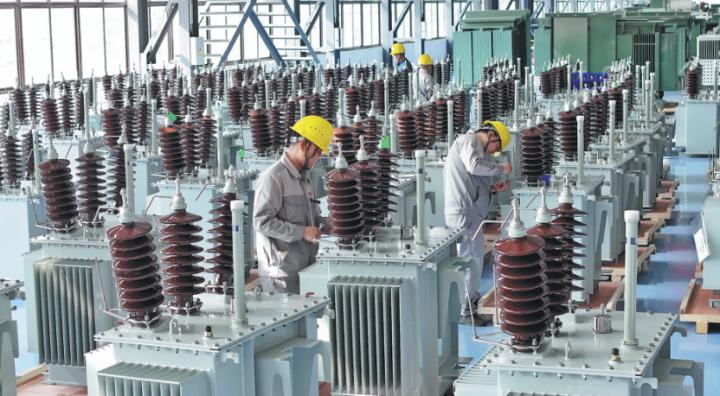
Core Viewpoint - The article emphasizes that the real bottleneck for the future of artificial intelligence (AI) is not computational power but electrical power, specifically the availability of large power transformers (LPTs) which are critical for energy infrastructure [1][2]. Group 1: Current Situation in the U.S. - The U.S. is facing a significant shortage of large power transformers, which are essential for converting high-voltage electricity for long-distance transmission [2][3]. - The average delivery time for a standard large transformer has reached 128 weeks, while transformers for data centers can take up to 144 weeks, with some cases nearing four years [2]. - Over 80% of large power transformers in the U.S. are expected to be imported by 2025 due to the decline of domestic manufacturing capabilities [3]. Group 2: Policy and Economic Implications - The U.S. government has imposed high tariffs on Chinese transformers, yet American companies are still compelled to purchase them due to a lack of alternatives [3][9]. - The high costs associated with tariffs are ultimately borne by U.S. electricity companies and consumers, revealing the limitations of "decoupling" strategies in critical infrastructure [9]. Group 3: European Context - Europe is also experiencing a transformer shortage, which hampers the integration of renewable energy projects into the grid [4][5]. - The European Union aims to increase renewable energy to 45% by 2030, but many projects are stalled due to insufficient transformer supply [4]. - European countries are beginning to source transformers from China, despite political pressures, to avoid project delays [5]. Group 4: China's Manufacturing Advantage - China has developed a complete and efficient transformer manufacturing supply chain, from raw materials to assembly, making it a key player in the global market [6][8]. - The typical delivery time for a large transformer in China is 10 to 14 months, significantly shorter than in the U.S. and Europe [8]. - Chinese manufacturers are not only meeting domestic demands but are also exporting transformers globally, establishing themselves as a reliable supplier [6][8]. Group 5: Strategic Insights - The article highlights the importance of stable energy supply for technological advancements, asserting that without reliable electricity, ambitious AI projects remain unfeasible [9][10]. - China's sustained investment in its manufacturing base has positioned it as a strategic player in the global supply chain for critical infrastructure [10].


不准报复美国,美方话刚落,欧盟作出决定,将逐步淘汰中国制造
Sou Hu Cai Jing· 2026-01-25 08:32
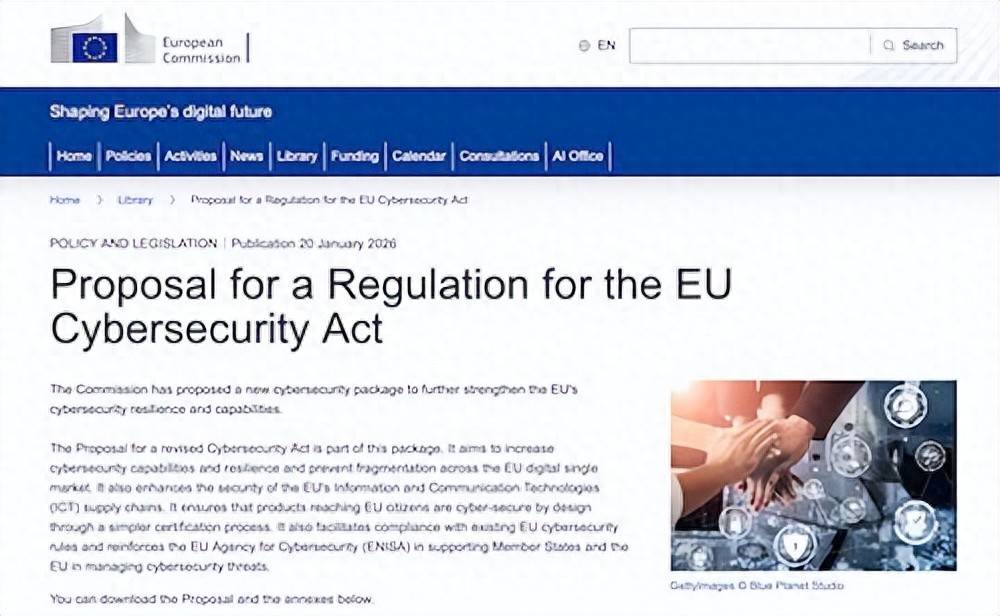
Group 1 - The EU is becoming a focal point in international politics, especially after the recent Davos Forum, where the US warned the EU against retaliating to new tariff policies, while the EU introduced a cybersecurity bill targeting Chinese companies like Huawei and ZTE [1][3] - The US Commerce Secretary claimed that the US GDP growth could exceed 5% or even 6% in Q1 2026, threatening the EU with harsher tariffs if they retaliate, yet the EU's response was to target China instead of the US [3][4] - Macron criticized US trade policies at the Davos Forum, emphasizing the need for Europe to achieve greater sovereignty, but major EU countries remain heavily reliant on the US market, leading to a search for a common adversary in China [4][6] Group 2 - The EU's actions appear contradictory, as it publicly welcomes Chinese investment while simultaneously imposing restrictions on Chinese companies, reflecting a lack of coherent strategy [6][12] - Despite recognizing the benefits of cooperation with China for technological independence, the EU continues to impose challenges on Chinese investments, indicating a lack of foresight [12][16] - Denmark exemplifies EU countries' attempts to align with the US against China, yet this strategy has not yielded the expected benefits, as the US remains dismissive of such gestures [14][16]
中国人民大学教授翟东升简介|翟东升研究领域|翟东升核心演讲主题
Sou Hu Cai Jing· 2026-01-24 08:07
Group 1: Core Insights - Zhai Dongsheng is a prominent figure in international relations and political economy, holding multiple academic and research positions, including Vice Dean of the School of International Relations at Renmin University of China [2] - His research focuses on the international political economy of currency and finance, emphasizing the vulnerabilities of the US dollar hegemony and advocating for the internationalization of the digital RMB [3] - Zhai has accurately predicted trends such as "de-Americanization" and has provided strategic recommendations for China to reduce reliance on single markets through initiatives like the "Belt and Road" [4] Group 2: Economic Relations and Strategies - Zhai analyzes US economic policies, including tariffs and technology restrictions, and suggests that China should pursue industrial upgrades and market diversification to counter these economic warfare tactics [5] - His recent speeches address the need for China to develop resilience through endogenous growth and strategic partnerships in response to geopolitical tensions [6][8] Group 3: Digital Economy and Geopolitical Competition - Zhai predicts that by 2030, the digital economy will contribute 45% to China's GDP, positioning it as a key player in global governance [10] - He emphasizes the importance of establishing international standards in emerging technologies like 5G and AI, leveraging China's advantages in these fields [11] Group 4: Policy Recommendations and Innovations - Zhai proposes a "three-line defense system" that includes industrial upgrades, market diversification, and financial defenses through the internationalization of the digital RMB [12] - His insights have been integrated into national policy discussions, influencing China's approach to economic strategy and international cooperation [15] Group 5: Academic Influence and Public Engagement - Zhai's interdisciplinary research has reshaped the paradigm of international political economy, with his policy suggestions impacting China's foreign economic strategy [15] - His public engagement through platforms like Bilibili has garnered over 200 million views, highlighting his influence in shaping public understanding of China's rise [15][16]