货币紧缩政策

Search documents
美媒:多重因素致金银价“高台跳水”
Sou Hu Cai Jing· 2026-02-01 11:09
Group 1 - The nomination of Kevin Warsh as the next Federal Reserve Chair by President Trump has led to significant market volatility, with major U.S. stock indices declining, particularly the Nasdaq Composite, which fell by 0.9% [1] - Gold and silver prices experienced historic drops, with gold futures falling over 10% to $4,745 per ounce, marking the largest single-day decline in nearly 46 years, and silver futures dropping 31% to $78 per ounce [2] - Warsh's hawkish stance on monetary policy is perceived as a stabilizing factor against calls for aggressive rate cuts, which has contributed to the strengthening of the dollar and the decline in precious metal prices [1][2] Group 2 - The market's reaction to Warsh's nomination indicates a reversal in the previous trend of speculative buying of gold and silver, which had surged due to uncertainty surrounding Trump's aggressive rate-cutting policies [2] - Analysts suggest that if Warsh's proposed asset reduction policy is implemented, it could lead to a decrease in money supply, reversing the current trend of currency depreciation trades and reducing long positions in gold and silver [2] - Despite the recent price drop, some analysts believe that the current gold price decline may represent a correction rather than a reversal of the overall trend, given ongoing geopolitical and economic uncertainties [3]
美国汇率报告删除对日本央行加息的要求
日经中文网· 2026-01-30 08:00
Core Viewpoint - The focus of the U.S. Treasury has shifted from monetary policy to other factors influencing the currency market, particularly regarding Japan's economic policies and the yen's depreciation [2][5]. Group 1: U.S. Treasury Report Insights - The U.S. Treasury's semi-annual currency report, released on January 29, indicates a change in stance regarding Japan's monetary policy, removing previous recommendations for the Bank of Japan to continue tightening [2][4]. - Japan remains on the "monitoring list" for potential currency manipulation, with trade surpluses exceeding specified thresholds, but not meeting the criteria for frequent intervention [2][5]. - The report highlights that the yen's depreciation is influenced not only by interest rate differentials but also by the new government's expansionary fiscal policy outlook [5]. Group 2: Currency Market Dynamics - The recent appreciation of the yen has been influenced by scrutiny from U.S. and Japanese authorities, leading to a temporary stabilization of the market [5]. - The U.S. Treasury Secretary emphasized the pursuit of a "strong dollar," which has contributed to the dollar's depreciation against other major currencies [5]. - The report does not designate any countries as "currency manipulators," but includes Japan, China, South Korea, Taiwan, Thailand, Singapore, Vietnam, Germany, Ireland, and Switzerland on the monitoring list, with Thailand being a new addition [5].


DLS MARKETS:决议前夕日元走强,美元兑日元空头趋势能否坐实?
Sou Hu Cai Jing· 2025-12-15 10:33
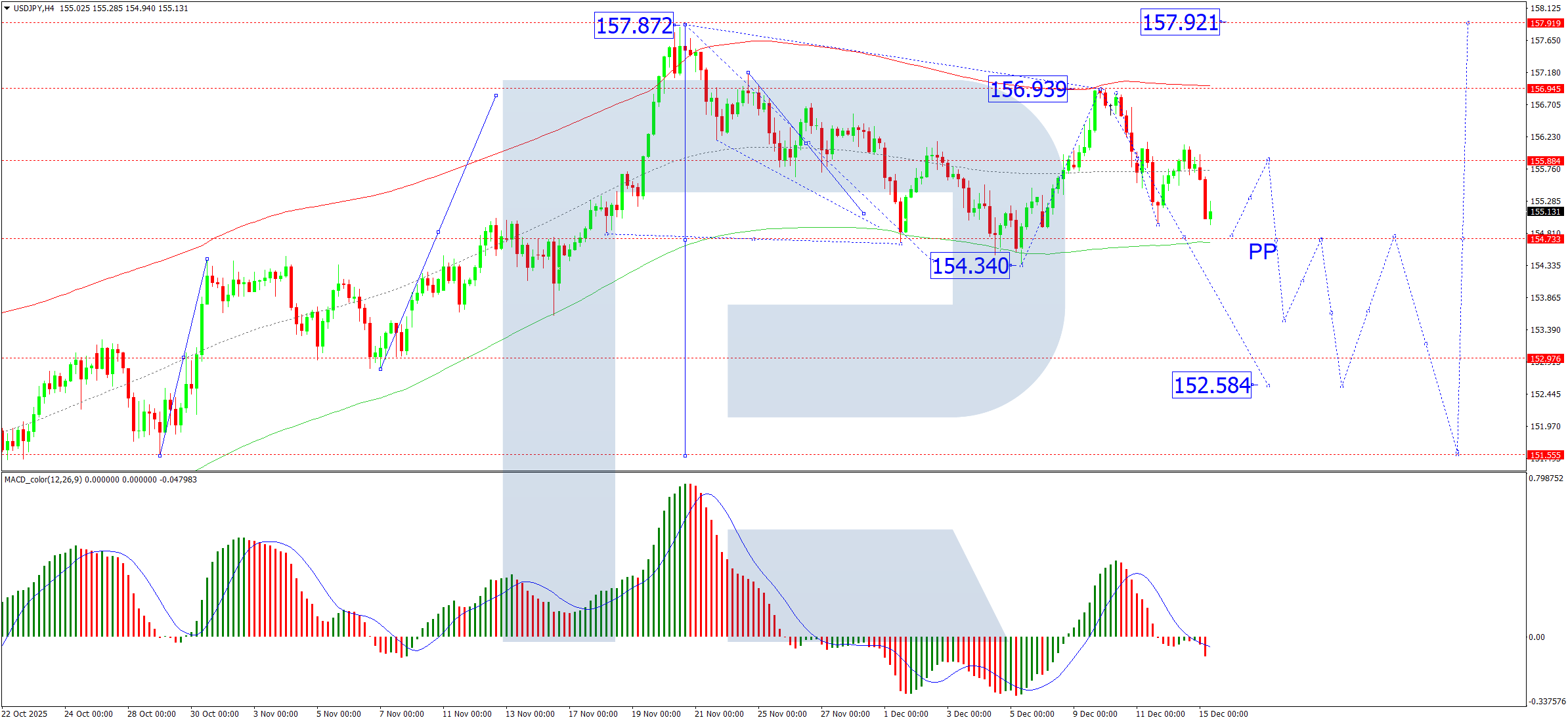
Group 1 - The Japanese yen has appreciated to around 155 yen per dollar, reaching a new high in over a week, reflecting investor expectations for the Bank of Japan's upcoming monetary policy meeting [1] - The market anticipates a 25 basis point increase in the benchmark interest rate to 0.75%, with a focus on the forward guidance from Governor Kazuo Ueda for signals regarding the pace and intensity of monetary tightening through 2025 [1] - Analysts predict that the policy rate may reach 1.0% by July 2026, driven by resilient domestic economic data and persistent consumer inflation above the Bank of Japan's historical target [1] Group 2 - Political resistance to interest rate hikes appears to be diminishing, as the Suga cabinet is unlikely to oppose rate increases due to the yen's continued weakness, which has raised import costs and exacerbated inflationary pressures [1] - Technical analysis indicates that the USD/JPY has completed an initial decline to 154.34, followed by a corrective rebound to 156.93, with expectations of a new downward wave targeting 154.73 [2] - The H1 chart shows a developing downward wave with a near-term target of 154.82, followed by a potential corrective rebound to 155.45, but the main downward trend is expected to resume, pushing the exchange rate down to 153.52 [4] Group 3 - The market is betting on a significant interest rate hike by the Bank of Japan, leading to a continued strengthening of the yen, while technical indicators across multiple time frames show a clear bearish structure for USD/JPY [5] - Despite the possibility of short-term corrective rebounds, the overall trend points to further weakness, with key downward targets at 154.73 on the H4 chart and 153.52 on the H1 chart [5] - Governor Ueda's policy guidance on Friday will be crucial in determining whether the current technical correction can evolve into a sustained trend reversal [5]
加息预期继续推动 日债收益率再触历史高点
Xin Hua Cai Jing· 2025-12-01 09:11

Core Viewpoint - The Japanese government bond market is experiencing increased volatility, with yields reaching historical highs due to expectations of interest rate hikes by the Bank of Japan, particularly affecting the 2-year and 10-year bonds [1][3]. Group 1: Interest Rate Expectations - The 2-year Japanese government bond yield rose by 3.3 basis points to 1.025%, marking the first time it has surpassed 1% since 2006 [1]. - The 10-year bond yield increased by 6.1 basis points to 1.871%, both yields reaching their highest levels since June 2008 [1]. - Bank of Japan Governor Kazuo Ueda indicated that the central bank will weigh the pros and cons of raising interest rates in the upcoming policy meeting, signaling a potential rate hike [3]. Group 2: Currency and Economic Impact - The Japanese yen strengthened to 155.55 against the dollar, following concerns over the yen's depreciation, which had previously approached historic lows near 158 yen per dollar [3]. - The depreciation of the yen is raising concerns about its negative impact on consumer spending, prompting the government and central bank to be vigilant [4]. - Analysts suggest that the combination of a weak yen and expectations of significant economic stimulus provides favorable conditions for a rate hike by the Bank of Japan [6]. Group 3: Market Dynamics and Investor Sentiment - The rapid rise in bond yields is attributed to increasing expectations that the government's economic stimulus plan may be larger than previously anticipated, raising concerns about the sustainability of Japan's long-term fiscal situation [4]. - Changes in the supply-demand dynamics of the government bond market are making yields more susceptible to upward pressure, especially with the Bank of Japan's plans to abandon its yield curve control framework by March 2024 [4]. - There is growing reliance on foreign investors for purchasing Japanese government bonds, which may lead to a more cautious stance from these investors amid concerns over fiscal deterioration due to new stimulus measures [4].
盘中暴涨1000点!日本股市突发!央行维持利率不变
Zheng Quan Shi Bao Wang· 2025-10-31 03:29
Market Performance - The Nikkei 225 index has reached a historic high, surpassing 52,000 points for the first time, with an intraday increase of over 1,000 points and a peak gain of more than 2% [1] - The Tokyo Stock Exchange index also hit a record high, with semiconductor, consumer, and electric sectors leading the gains [1] Company Highlights - Semiconductor design company Socionext saw its stock hit the limit up, with a gain of 16.72%, and is set to hold an earnings meeting on October 31, where it will announce mid-term performance up to September 30, 2025 [2] - Socionext has begun developing 3nm ADAS and customized SoCs for autonomous driving, expected to enter mass production in 2026, utilizing TSMC's N3A process [2] - Other notable stocks include Renesas Electronics and Hitachi, both rising over 9%, while Kansai Electric Power increased by over 6% [2] Economic Indicators - Tokyo's core consumer price index (CPI) for October rose by 2.8% year-on-year, exceeding the Bank of Japan's 2% inflation target for over three years [2][3] - The CPI increase was higher than the market expectation of 2.6% and up from 2.5% in September [2] Monetary Policy - The Bank of Japan decided to maintain the policy interest rate at approximately 0.5%, marking the sixth consecutive meeting without a rate change [4] - The decision was made despite predictions of a potential rate hike to curb unexpected inflation, with a vote of 7 in favor and 2 against maintaining the current rate [4] - Bank of Japan Governor Kazuo Ueda indicated that external economic uncertainties, particularly from the U.S., will be closely monitored [4][5]
盘中,暴涨1000点!日本股市,突发!
券商中国· 2025-10-31 02:28
Core Viewpoint - The Japanese stock market is experiencing a strong upward trend, with the Nikkei 225 index reaching a historic high of over 52,000 points, driven by gains in sectors such as semiconductors, consumer goods, and electricity [1][2]. Group 1: Market Performance - The Nikkei 225 index surged over 1,000 points, achieving a gain of more than 2% during trading, and closed at 52,058 points, reflecting a 1.43% increase [1]. - The Tokyo Stock Exchange index also reached a historic high, with significant contributions from the semiconductor sector, particularly Socionext, which saw a price increase of 16.72% [1][2]. Group 2: Company Highlights - Socionext, a fabless semiconductor design company, is set to hold an earnings meeting on October 31, where it is expected to announce mid-term performance results up to September 30, 2025. The company has begun developing 3nm ADAS and customized SoCs, with production expected to start in 2026 [2]. - Other notable companies include Renesas Electronics and Hitachi, both of which saw stock increases of over 9%, while Kansai Electric Power rose over 6% [3]. Group 3: Economic Indicators - The core consumer price index (CPI) in Tokyo rose by 2.8% year-on-year in October, exceeding the Bank of Japan's target of 2% for the third consecutive year, and surpassing market expectations of 2.6% [3]. - The Bank of Japan decided to maintain its policy interest rate at approximately 0.5%, marking the sixth consecutive meeting without a rate change, despite prior predictions of a potential rate hike [4]. Group 4: Monetary Policy Insights - Analysts suggest that the Bank of Japan's decision to keep interest rates unchanged reinforces expectations of a cautious approach to monetary tightening under Prime Minister Fumio Kishida's leadership [5]. - The market's perception of a prolonged low-interest-rate environment may lead to increased short positions on the yen, especially in the context of the U.S. Federal Reserve's easing cycle [5][6].

盘中暴涨1000点,日本股市突发
Zheng Quan Shi Bao· 2025-10-31 02:13
Market Performance - The Nikkei 225 index has reached a historic high, surpassing 52,000 points for the first time, with an intraday increase of over 1,000 points and a rise of more than 2% [1][2] - The Tokyo Stock Exchange index also hit a record high, with semiconductor, consumer, and electric power sectors leading the gains [1] Company Highlights - Semiconductor design company Socionext saw its stock hit the limit up, with a gain of 16.72%. The company is set to hold an earnings meeting on October 31, where it is expected to announce mid-term performance up to September 30, 2025 [2] - Socionext has begun developing 3nm ADAS and customized SoCs for autonomous driving, with production expected to start in 2026, utilizing TSMC's N3A process [2] - Other notable stock performances include Renesas Electronics and Hitachi, both rising over 9%, while Kansai Electric Power increased over 6% [2] Economic Indicators - Tokyo's core consumer price index (CPI) for October rose by 2.8% year-on-year, exceeding the Bank of Japan's 2% inflation target for over three years [2][3] - The CPI increase was higher than the market expectation of 2.6% and up from 2.5% in September [2] Monetary Policy - The Bank of Japan decided to maintain the policy interest rate at approximately 0.5%, marking the sixth consecutive meeting without a rate change [5] - The decision was made despite predictions of a potential rate hike to curb unexpected inflation, with a vote of 7 in favor and 2 against maintaining the current rate [5] - Bank of Japan Governor Kazuo Ueda indicated that the central bank will continue to monitor overseas economic conditions and their impact on Japan [5][6]
【环球财经】土耳其央行放缓降息步伐以应对通胀压力
Xin Hua Cai Jing· 2025-10-24 15:54
Core Viewpoint - The Central Bank of Turkey has lowered the benchmark interest rate from 40.5% to 39.5%, indicating a slowdown in the rate of interest cuts amid persistent inflationary pressures [1] Summary by Relevant Sections Interest Rate Changes - The recent interest rate cut is a significant slowdown compared to previous cuts of 300 and 250 basis points in July and September, respectively [1] - The decision reflects the Central Bank's attempt to balance economic stimulation and inflation control [1] Inflation Trends - Turkey's annual inflation rate unexpectedly rose to 33.29% in September, marking the first increase since May 2024 [1] - The likelihood of year-end inflation falling within the range of 25% to 29% has increased, surpassing earlier expectations [1] Economic Context - Since mid-last year, Turkey's inflation rate has generally been on a downward trend, attributed to the Central Bank's shift from a long-standing low-interest rate policy to a tighter monetary stance [1] - The Central Bank's current decision to slow down interest rate cuts suggests ongoing concerns about rising prices, particularly in the food sector [1]
俄央行年内第四次降息
Xin Hua She· 2025-10-24 14:48
Core Viewpoint - The Central Bank of Russia has lowered the benchmark interest rate by 50 basis points to 16.5%, marking the fourth rate cut this year [1] Economic Outlook - The Russian economy is returning to a balanced growth trajectory, although inflation expectations remain high in recent months [1] - The annual inflation rate in Russia is projected to be between 6.5% and 7.0% by the end of 2025 [1] - The Central Bank will maintain a tight monetary policy as needed to bring inflation back to target levels [1] Growth Projections - The economic growth forecast for Russia in 2025 has been revised down from 1%-2% to 0.5%-1% [1]
金融巨头,大跌!
中国基金报· 2025-10-17 01:41
Group 1 - The Japanese stock market is experiencing a decline, with the Nikkei 225 index down by 1% as of the report [2] - Japanese financial stocks are particularly affected, with the banking sector index dropping by 1.88%, making it the worst-performing sector on the Tokyo Stock Exchange [4] - Major financial institutions such as Mizuho Financial Group, Mitsubishi UFJ Financial Group, and Sumitomo Mitsui Financial Group have all seen declines exceeding 2% [4] Group 2 - Analysts from JPMorgan indicate that the banking sector is one where investors tend to "sell first and ask questions later," highlighting a growing concern over market sentiment rather than the banks' balance sheets [6] - The Bank of Japan's Governor, Kazuo Ueda, has not ruled out the possibility of interest rate hikes, suggesting that the door for recent rate increases remains open [6] - Ueda emphasized the need to assess economic data before the upcoming monetary policy meeting on October 29-30, indicating a cautious approach to policy adjustments [6] Group 3 - The South Korean stock market is also experiencing fluctuations, with the KOSPI index reported at 3744.69 [8] - South Korea's unemployment rate for September was reported at 2.5%, a slight decrease from 2.6% in August [10] - The South Korean government is facing challenges in negotiations with the U.S. regarding a $35 billion investment requirement, which could have implications for the foreign exchange market and economic stability [10]