
232调查

Search documents
美政府被曝酝酿新关税 涉伊最新制裁名单发布!铂强、钯稳格局延续
Qi Huo Ri Bao· 2026-02-26 00:26
Group 1: Incident Overview - The Cuban Ministry of the Interior reported that a U.S.-registered speedboat illegally entered Cuban territorial waters and opened fire, resulting in the death of four attackers and injuries to six others [2] - The Cuban authorities reaffirmed their commitment to defending their territorial waters and are conducting an investigation to ascertain the facts of the incident [2] Group 2: U.S. Government Response - Florida Attorney General Ashley Moody has instructed state prosecutors to collaborate with federal and state law enforcement partners to investigate the incident involving the speedboat [4] - U.S. Vice President Kamala Harris stated that the White House is closely monitoring the situation, expressing hope that it does not escalate into a serious incident [4] Group 3: Trade Policy Developments - The U.S. government is reportedly preparing to impose new tariffs on various industries following a Supreme Court ruling that deemed its large-scale tariff policy illegal [6] - The U.S. Department of Commerce is initiating investigations under the Trade Expansion Act of 1962, focusing on products such as large batteries, cast iron, and industrial chemicals, citing national security risks [6] - The U.S. Trade Representative's office is also starting new trade investigations under the Trade Act of 1974, which may lead to additional tariffs on perceived unfair trade practices [6] Group 4: Sanctions on Iran - The U.S. Treasury Department announced sanctions against over 30 entities, tankers, and individuals to combat what it describes as Iran's illegal oil sales and production of ballistic missiles and drones [8] - The sanctions coincide with upcoming indirect negotiations between the U.S. and Iran, indicating a continuation of the U.S. strategy of maximum pressure on Iran [8] Group 5: Precious Metals Market - The global platinum group metals market has seen a strong upward trend, with palladium and platinum prices rising significantly, with palladium prices increasing over 4% and platinum prices over 7% as of February 25 [10] - Supply constraints are identified as a key driver of the current market conditions, with over 75% of global platinum supply coming from mining, primarily in South Africa [11] - Demand for platinum and palladium is shifting, with the penetration of hybrid vehicles increasing, while traditional gasoline vehicles are expected to see a marginal decline in demand [11] Group 6: Future Outlook for Precious Metals - Analysts predict that platinum prices may remain strong due to supply disruptions in South Africa and expectations of interest rate cuts by the Federal Reserve [12] - Palladium prices may face downward pressure due to the ongoing transition to electric vehicles, which could lead to an oversupply in the long term [12] - The investment attributes of platinum and palladium are expected to strengthen, with geopolitical tensions providing additional support for prices [12]
美政府被曝正酝酿征收新关税
Yang Shi Xin Wen· 2026-02-25 15:18
Group 1 - The U.S. Supreme Court ruled that the government's large-scale tariff policy is illegal, prompting the government to consider new tariffs on various industries [1][3] - The U.S. Department of Commerce is initiating new investigations under Section 232 of the Trade Expansion Act of 1962, focusing on products such as large batteries, cast iron and iron fittings, plastic pipes, industrial chemicals, and telecommunications equipment [1] - The U.S. Trade Representative's office is also preparing to launch new trade investigations under Section 301 of the Trade Act of 1974, which may lead to additional tariffs due to alleged unfair trade practices [1] Group 2 - New York Governor Kathy Hochul has requested the federal government to refund approximately $13.5 billion in tariffs paid by the state, arguing that these tariffs are unreasonable and illegal [3] - Similar requests for tariff refunds have been made by California and Illinois, indicating a broader push among states for reimbursement [5] - Over a thousand companies, including major firms like FedEx, Costco, and Reebok, have filed lawsuits in the U.S. International Trade Court seeking refunds for the tariffs they have paid [5]

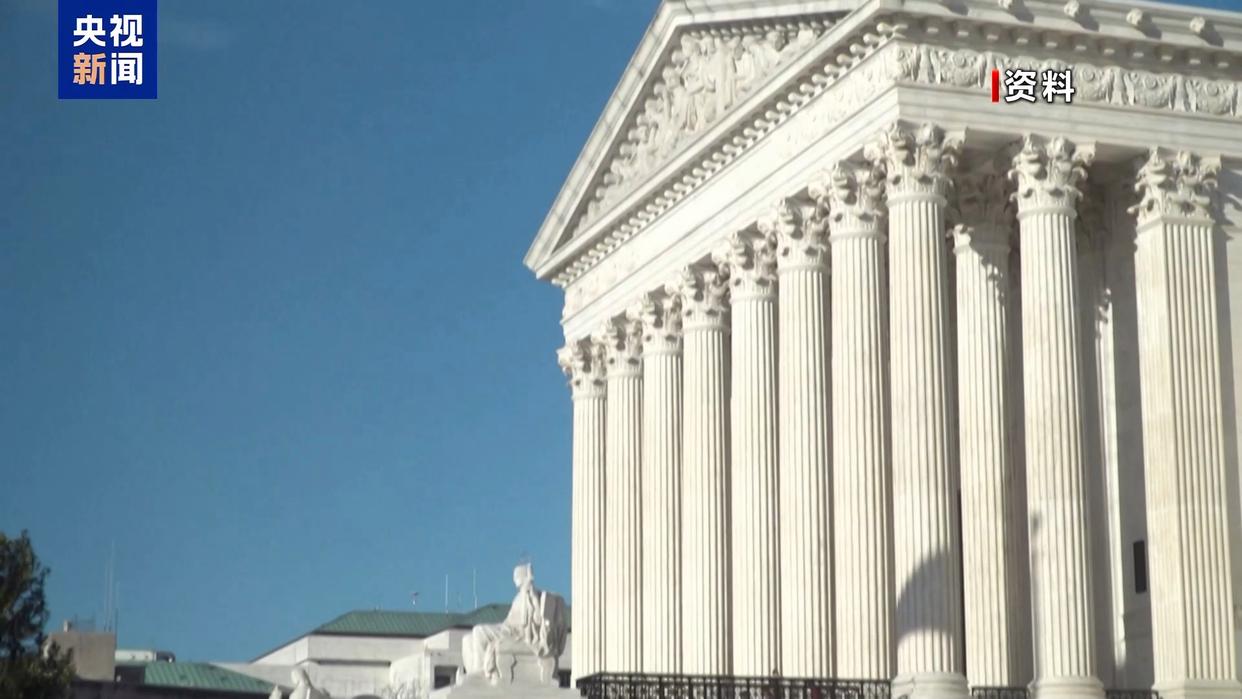
专家:美最高法院裁定重击美关税政策 却难阻其后续动作
Ge Long Hui· 2026-02-21 01:25
Core Viewpoint - The U.S. Supreme Court's ruling that the U.S. tariff policy is illegal will significantly impact the government's trade war strategy, particularly affecting Trump's tariff policies [1] Group 1: Legal and Political Implications - The ruling is seen as a major blow to Trump's tariff policies, potentially limiting the President's power in trade matters [1] - There is uncertainty regarding whether the short-term gains from the tariff increases will need to be reversed as a result of this ruling [1] Group 2: Future Trade Strategies - Despite the ruling, the U.S. government is expected to continue its trade war through alternative measures, such as "301 investigations" and "232 investigations," to achieve its tariff objectives [1]
被判违法后 特朗普为何能宣布额外征收10%全球关税?还有牌?
Di Yi Cai Jing· 2026-02-21 00:51
Group 1 - The U.S. government plans to impose an additional 10% tariff on global goods based on Section 122 of the Trade Act of 1974, following a Supreme Court ruling that deemed previous tariff policies illegal [1][2] - The tariffs under Section 122 can be implemented immediately and are temporary, lasting up to 150 days unless extended with Congressional approval [3][4] - Experts suggest that the Trump administration is in a difficult position regarding tariffs, as failing to impose additional tariffs could undermine existing trade agreements [3][4] Group 2 - The administration has several options for imposing tariffs, including Sections 232, 301, and 201 of various trade laws, with Section 232 being expected to be used more broadly [5][6] - Section 301 investigations are currently underway against countries like Brazil, but these investigations are time-consuming and may not be used immediately [7] - Section 338 of the Tariff Act of 1930 allows for immediate tariffs of up to 50% against discriminatory trade practices, while Section 201 provides a mechanism for emergency import relief with flexible tariff limits [5][7]
特朗普政府关税案未裁决,B计划还有这些
第一财经· 2026-01-10 03:24
Core Viewpoint - The article discusses the potential implications of the U.S. Supreme Court's upcoming decision on tariffs imposed by the Trump administration, highlighting the administration's contingency plans if the court rules against them [3][4]. Group 1: Supreme Court Decision - The U.S. Supreme Court will not make a ruling on the Trump administration's tariff case on January 9, with the next hearing scheduled for January 14 [3]. - The court is expected to announce its decision on the case by February 3, 2026, with indications that the Trump administration may lose [7][11]. Group 2: Contingency Plans - Trump administration officials have indicated they are prepared with a "Plan B" if the Supreme Court rules against the tariffs, suggesting the use of alternative legal frameworks [4][10]. - The administration has identified several legal tools, including the 1974 Trade Act Section 122, the "232 investigation," and the "301 investigation," to potentially impose tariffs without relying on the International Emergency Economic Powers Act (IEEPA) [13][14]. Group 3: Financial Implications - If the Supreme Court rules the tariffs illegal, the Trump administration could face a refund obligation ranging from $133.5 billion to $150 billion [10][11]. - The administration's statements suggest that even if they lose the case, they will find ways to continue imposing tariffs through different legal mechanisms [11][12]. Group 4: Legal Frameworks - The article outlines various legal frameworks available to the Trump administration for imposing tariffs, including: - IEEPA: Immediate effect under national emergency [14] - Section 301: Takes 9-12 months to implement [14] - Section 232: Related to national security, takes about 9 months [14] - Section 122: Allows for quick imposition of tariffs within 150 days [14] - Section 338: Can impose tariffs up to 50% for discriminatory practices [14][16].
美国最高法院未宣判!但要警惕特朗普政府布局这些关税后手
Di Yi Cai Jing· 2026-01-09 22:55
Core Viewpoint - The U.S. Supreme Court will not make a ruling on the Trump administration's tariff case on January 9, and the next scheduled hearing is on January 14. The administration has prepared alternative legal strategies in case of an unfavorable ruling regarding tariffs imposed under the International Emergency Economic Powers Act (IEEPA) [1][2][5]. Group 1: Legal Framework and Tariff Strategies - The Trump administration has various legal tools available, including the 1974 Trade Act Section 122, Section 232 investigation, Section 301 investigation, and the 1930 Tariff Act Section 338, which can be utilized to impose tariffs if IEEPA is deemed invalid [3][11][13]. - The IEEPA is considered the most straightforward method for imposing tariffs, granting significant negotiation power to the President, but other methods, while more complex, can still achieve similar outcomes [6][7][8]. Group 2: Potential Financial Implications - If the Supreme Court rules against the Trump administration, the government may face a refund obligation ranging from $133.5 billion to $150 billion [9][10]. - The administration has indicated that even if tariffs are overturned, they will seek alternative methods to maintain tariff revenue, suggesting a strategy to continue imposing tariffs through different legal avenues [10][11]. Group 3: Immediate Actions and Future Considerations - The administration is expected to utilize the Section 122 of the Trade Act, which allows for the rapid imposition of tariffs up to 15% within 150 days, as an immediate response [13]. - Experts believe that while the Section 301 investigation is currently being used against certain countries, it is less likely to be employed immediately due to its lengthy process [13][14].

关税裁决引市场提前布局,钯金2026开年顺利走出强势形态
Guo Tai Jun An Qi Huo· 2026-01-09 12:27
Group 1: Report Industry Investment Rating - No relevant content Group 2: Core Viewpoints of the Report - Palladium has shown a strong performance since the beginning of 2026, with a significant divergence from platinum in high - frequency data. The core driver of palladium's rapid rise is the market's pre - trading of potential adjustments to US tariff policies. The US Supreme Court is about to rule on the legality of Trump's general tariffs. If the tariff is ruled illegal, the probability of the 232 investigation will increase significantly, leading to pre - layout of funds and price increase [2]. - The upward trend of platinum and palladium in the first quarter remains unchanged. The structural tightness on the spot end has not eased, and the spot tight balance is the core fundamental factor supporting prices. However, platinum and palladium prices are likely to follow silver's retracement, and the retracement amplitude is usually larger [2]. - In the short term, the tariff ruling result of the US Supreme Court will be a key watershed for market sentiment and fund flow. The policy's impact on silver, platinum, and palladium prices needs continuous attention [3]. Group 3: Summary by Related Catalogs Market Performance - Since May 2025, palladium has generally followed platinum, but it has been significantly stronger since the beginning of 2026. The divergence between the two at the high - frequency data level has further widened. Palladium ETFs continue to see inflows, while platinum ETFs experience outflows. The forward rate of palladium has risen, and NYMEX palladium inventory has accumulated, showing a differentiation from platinum and silver [2]. Investment Strategies 场内期权 - For low - buying traders, when palladium's implied volatility is high and its absolute price is in a large - scale oscillation area, they can sell out - of - the - money put options to collect premiums and buy at - the - money call options as a hedge. If the price drops rapidly, stop losses on the put side in time and keep the call options to capture the upward movement driven by tariff expectations [4]. 场外期权 - For investors with low - buying trading needs, during the window period when palladium's volatility is high and its absolute price is in a large - scale oscillation, it is recommended to arrange a fuse fixed - payout accumulator option with a moderately extended cycle and a relatively far - away lower strike price to continuously increase revenue during market oscillations. If the market retraces again, low - position long positions can be gradually established [5].
美最高法院周五将裁决特朗普关税案,输了要退1335亿美元?
Di Yi Cai Jing· 2026-01-07 22:50
Group 1 - The U.S. Supreme Court is set to announce a ruling on tariffs on January 9, which could significantly impact the Trump administration's economic policies and represent a major legal setback for Trump since taking office [1][2] - If the Supreme Court rules against the Trump administration, it may lead to the potential refund of over $133.5 billion in tariffs collected from importers [1][6] - The tariffs in question were imposed under the International Emergency Economic Powers Act (IEEPA) without Congressional approval, and previous courts have deemed these policies illegal [2][3] Group 2 - The Trump administration has plans to reimpose tariffs if the ruling is unfavorable, potentially utilizing the Trade Expansion Act of 1962 and the Trade Act of 1974 to justify new tariffs [4][5] - Legal experts indicate that the administration could invoke various trade laws to impose tariffs of up to 50% on certain goods, depending on the court's decision [5] - Major retailers and companies, including Costco and Revlon, have initiated lawsuits to reclaim tariffs paid, with approximately 40 legal briefs submitted to the Supreme Court opposing the Trump administration's tariff policies [8]
美最高法院周五将裁决特朗普关税案,输了要退1335亿美元?
第一财经· 2026-01-07 15:56
Core Viewpoint - The U.S. Supreme Court is set to make a ruling on tariffs on January 9, which could significantly impact the Trump administration's economic policies and potentially require the return of over $133.5 billion in tariffs if deemed illegal [3][12]. Group 1: Tariff Policy and Legal Context - The Trump administration implemented a series of tariffs using the International Emergency Economic Powers Act (IEEPA) without Congressional approval [5]. - Previous rulings by the U.S. Court of Appeals and the U.S. International Trade Court deemed these tariffs illegal, prompting the Trump administration to appeal to the Supreme Court [6]. - The tariffs in question include "reciprocal tariffs" and those related to fentanyl [7]. Group 2: Potential Financial Implications - If the Supreme Court rules against the Trump administration, it may face the obligation to refund over $133.5 billion in tariffs collected since February 2025 [12]. - The U.S. Customs and Border Protection reported that the net revenue from tariffs reached a record $195 billion for the fiscal year 2025, with monthly revenues around $30 billion [12]. Group 3: Future Actions and Legal Challenges - In anticipation of a potential unfavorable ruling, the Trump administration is considering using other legal provisions, such as the Trade Expansion Act of 1962 and the Trade Act of 1974, to impose new tariffs [8][9]. - Numerous companies, including Costco and Revlon, have initiated lawsuits to reclaim tariffs paid, with around 40 legal briefs submitted to the Supreme Court opposing the tariff policies [14].
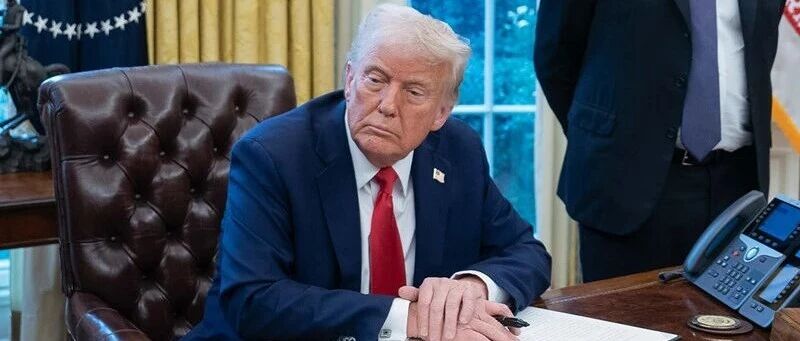
白银和铜列入特朗普政府“关键矿产”清单
Di Yi Cai Jing· 2025-11-07 11:18
Core Points - The USGS has updated its critical minerals list, adding copper, silver, and metallurgical coal, which may increase the likelihood of these materials being included in tariff policies [1] - This update is the most significant since the list was first published in 2018, with a total of 10 new minerals added, bringing the total to 60 [3] - The inclusion of these minerals is part of a broader strategy to secure the supply chain of critical minerals deemed essential for the US economy and national security [2][3] Summary by Category New Additions to the Critical Minerals List - The updated list now includes copper, silver, metallurgical coal, uranium, potassium, rhenium, silicon, and lead among others [1] - The total number of minerals on the list has increased to 60, which includes 15 rare earth elements [3] Implications for Tariff Policies - The inclusion of these minerals allows the US government to conduct Section 232 investigations under the guise of national security [1] - The strategic importance of these minerals is underscored by their critical role in manufacturing and potential supply chain disruptions [2] Market Reactions and Concerns - The addition of silver has raised concerns in the market, as any tariffs on silver could significantly impact the silver market [4][5] - The US imports nearly two-thirds of its silver, which is widely used in electronics, solar panels, jewelry, and investment [5] - Increased inventory levels of silver in New York have been observed, reaching historical highs due to tariff concerns [5]