
scaling law

Search documents
Dense、MoE之外第三条Scaling路径:交大提出JTok模块,省1/3算力
机器之心· 2026-03-02 15:16
Core Insights - The article discusses the limitations of traditional scaling methods in large models, emphasizing the need for new approaches to decouple parameters from computational costs [2][4][19] - It introduces the JTok and JTok-M modules, which utilize token-indexed parameters to enhance model capacity without significantly increasing computational requirements [3][5][10] - The findings suggest that JTok-M can achieve substantial performance improvements while reducing computational costs by approximately 35% [5][24][26] Summary by Sections Traditional Scaling Limitations - Traditional scaling methods bind parameters and computational requirements, leading to linear increases in both as model size grows [2][19] - The MoE (Mixture of Experts) approach, while promising, has drawbacks such as lower sample efficiency and increased memory and communication overhead [2][3] Introduction of JTok and JTok-M - JTok introduces a new scaling dimension by using modulation vectors for each token, allowing for enhanced model capacity without additional computational costs [3][10] - JTok-M further refines this by incorporating context-aware dynamic modulation, improving performance while maintaining efficiency [14][16] Performance and Efficiency Gains - JTok-M has shown significant performance improvements across various tasks, with notable increases in accuracy for models ranging from 650M to 61B parameters [5][39] - The approach allows for a reduction in computational requirements while achieving similar or better performance compared to traditional models [5][26][44] Theoretical Framework and Validation - The article presents a theoretical framework that integrates JTok-M into existing scaling laws, demonstrating its potential to shift the performance-computation curve downward [24][25] - Empirical results confirm that JTok-M maintains stable performance gains across different model sizes and training budgets, validating its scalability [26][29] Practical Applications and Future Directions - JTok and JTok-M have been tested across various downstream tasks, showing improvements in knowledge retention, reasoning, and mathematical problem-solving capabilities [35][39] - The innovations presented in JTok-M represent a significant step forward in redefining scaling laws for large models, offering a sustainable path for future developments in the field [34][32]


汽车及汽车零部件行业研究:智驾行业2026年投资策略:从辅助驾驶走向物理AI
SINOLINK SECURITIES· 2026-03-02 05:13
Investment Rating - The report suggests a positive investment outlook for the smart driving industry, particularly focusing on companies that can leverage cost advantages and regulatory benefits in the evolving landscape of intelligent driving technology [5]. Core Insights - The smart driving sector is expected to maintain high growth momentum, driven by the trend of "Smart Driving Equality 2.0," which will see advanced features like urban NOA (Navigation on Autopilot) becoming more accessible to consumers in the 100,000 to 200,000 RMB price range [1][12]. - The L2 level of autonomous driving is entering a strong regulatory phase, which will benefit testing institutions and lead to a significant expansion of the market for compliance testing [2][29]. - The concept of scaling law is identified as a deterministic technological trend, with advancements in end-to-end architectures approaching L4 level capabilities [3][50]. - The Robotaxi business model has shown initial validation, indicating that the industry is on the verge of a significant turning point, particularly with the potential success of Tesla's Robotaxi [4][50]. Summary by Sections Section 1: Smart Driving Equality 2.0 - The trend of smart driving equality is expected to strengthen, with urban NOA features penetrating the 100,000 to 200,000 RMB price segment, supported by robust supply and demand dynamics [1][12]. - The penetration rate of urban NOA hardware configurations is projected to increase from 16% in 2025 to 25% in 2026, with sales expected to reach 5.45 million units, reflecting a year-on-year growth of over 50% [1][12]. Section 2: L2 Regulatory Phase - The L2 level is entering a strong regulatory phase, with the implementation of stringent standards that will benefit testing institutions and expand the market for compliance testing [2][29]. - The L3/L4 autonomous driving regulatory framework is gradually being established, moving from local trials to a national legal framework [2][40]. Section 3: Scaling Law and Technological Trends - The scaling law is recognized as a key technological trend, with the end-to-end architecture reaching preliminary L4 thresholds [3][50]. - The demand for computational power on the vehicle side is expected to grow alongside the increase in model parameters, necessitating companies to develop integrated software and hardware capabilities to remain competitive [3][50]. Section 4: Robotaxi Business Model - The Robotaxi model has been validated through successful regional operations by leading L4 manufacturers, indicating a growing consumer demand for such services [4][50]. - The success of Tesla's Robotaxi is seen as a potential catalyst for the industry, with significant implications for the advancement of high-level autonomous driving technologies [4][50].






星海图完成10亿元B轮融资:「百亿具身智能独角兽」中成立时间最短的一家
IPO早知道· 2026-02-11 01:36
Core Viewpoint - Xinghaitu has completed a B-round financing of 1 billion yuan, becoming a unicorn in the embodied intelligence sector with a valuation of 10 billion yuan, and has the highest proportion and frequency of continued investment from existing shareholders among its peers [2][4]. Group 1: Financing and Valuation - Xinghaitu has raised nearly 3 billion yuan in total financing, making it one of the few unicorns in the embodied intelligence industry alongside Yushu, Zhiyuan, and Yinhe General, and it is the youngest among them [2]. - The company has received investments from top-tier industry capital and private equity funds, indicating strong market confidence [2]. Group 2: Efficiency and Strategy - Xinghaitu is recognized as the most efficient spender among leading companies in the embodied intelligence sector for 2025, emphasizing a cautious approach to spending in anticipation of future data growth and model training demands [4]. - The company views the industry as a marathon rather than a sprint, focusing on long-term development rather than short-term gains [4]. Group 3: Technological Development - Xinghaitu is committed to an end-to-end visual-language-action (VLA) foundational model technology route, with plans to release a state-of-the-art G0 model in August 2025 and its upgraded version G0 Plus in January 2026 [5]. - The company has achieved over 500,000 downloads of its open-source dataset, making it the most widely adopted dataset in the field [5]. Group 4: Data Collection and Model Training - Xinghaitu has established a high-efficiency data collection and model training base, incorporating innovative data collection methods to enhance the efficiency and accuracy of data gathering [7]. - By 2026, the company aims to enter a phase of large-scale training with hundreds of thousands of hours of high-quality data [7]. Group 5: Commercialization and Market Position - Xinghaitu has secured thousands of orders and has a strong customer base that includes top universities and industry leaders, demonstrating its market competitiveness [11]. - The company leads in the developer market, with its platforms covering over 90% of top global developers, indicating a strong market presence [11]. Group 6: Vision and Future Goals - Xinghaitu aims to redefine its mission beyond manufacturing single robots, focusing on building foundational infrastructure for the intelligent transformation of the physical world [15]. - The company envisions deploying 10 billion intelligent agents to serve 10 billion people, aiming to lead technological iterations and industry integration [16].

赵何娟对话张宏江:世界模型已是兵家必争之地|2025 T-EDGE全球对话
Tai Mei Ti A P P· 2025-12-22 14:52
Core Insights - The discussion highlights the transformative impact of AI, particularly the emergence of superintelligence, which may lead to job displacement [2][8] - The conversation emphasizes the high expectations surrounding world models and next-generation AI models, with significant investments being made in startups despite their early stages [4][20] - The debate around the sustainability of scaling laws in AI development is addressed, with experts suggesting that new paths must be explored beyond traditional scaling [19][20] Group 1: AI Development and Trends - The emergence of new AI startups in Silicon Valley has led to valuations reaching $4 billion to $5 billion, indicating strong market confidence in world models [4] - The scaling law, which has been a guiding principle in AI development, is believed to be reaching its limits, prompting calls for new technological pathways [19][20] - The efficiency of scaling laws has diminished over time, suggesting that while progress continues, it may not be as rapid as in previous years [19][20] Group 2: Competitive Landscape - The competition between Google and OpenAI is highlighted, with both companies having distinct advantages; however, it is too early to determine a clear winner [6][41] - The potential for coexistence of multiple systems in the AI era is discussed, drawing parallels to the PC and mobile internet eras [41] - The importance of execution and resource management in AI development is emphasized, particularly in relation to Google's full-stack capabilities [34] Group 3: Infrastructure and Investment - The current phase of AI development is characterized by significant infrastructure investments, including data centers and energy resources, which are essential for future growth [48][49] - Concerns about high debt levels in AI infrastructure investments are raised, with the need for a balance between investment and sustainable returns [50] - The analogy of AI infrastructure investments to historical infrastructure developments, such as railroads and electricity, is presented to argue against the notion of a bubble [48][49]



生成式推荐与广告大模型的真实落地挑战 | 直播预告
AI前线· 2025-11-26 06:15
Group 1 - The core theme of the live broadcast is the practical challenges and advancements of search, recommendation, and advertising systems in the era of large models [2][4][7] - Experts from companies like Honor, Huawei, and JD.com will discuss the evolution and difficulties faced by search and advertising systems with the integration of large models [2][4][7] - Key challenges include scaling generative recommendations, the effectiveness of scaling laws in search and advertising, balancing online inference latency and costs, and integrating multimodal and behavioral large models throughout the entire process [2][4][7] Group 2 - The live broadcast is scheduled for November 26, from 20:00 to 21:30, hosted by Yan Lin, the content recommendation architecture leader at JD.com [3] - The event will feature experts such as Feng Xiaodong from Honor, Wang Hao from the University of Science and Technology of China, and Zhang Zehua from JD.com, focusing on the full-chain upgrade in recommendation and advertising [3][4] - The broadcast will cover practical insights into technical architecture, application cases, and engineering deployment related to large models, providing valuable information for various industries [5][7]


写在英伟达业绩前、谷歌十年磨一剑
傅里叶的猫· 2025-11-19 14:56
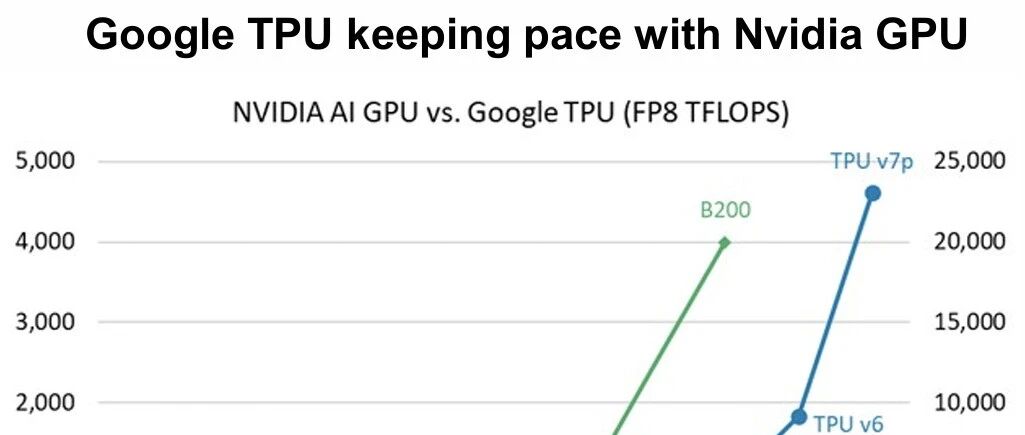
Core Insights - The article highlights the impressive performance of Google's Gemini 3, which has received positive evaluations across various benchmarks, outperforming competitors like Claude Sonnet 4.5 and GPT-5.1 in multiple dimensions [1][3] Benchmark Performance - Gemini 3 Pro achieved significant scores in various benchmarks, such as: - 91.9% in scientific knowledge without tools [1] - 95.0% in mathematics without tools [1] - 100% in mathematics with code execution [1] - 87.6% in knowledge acquisition from videos [1] - 72.7% in screen understanding [1] - The model's performance in complex reasoning tasks showcases its superiority in high-difficulty scenarios, indicating a breakthrough in AI capabilities [4][3] Technological Advancements - The advancements in Gemini 3 are attributed to improvements in pre-training and post-training methodologies [3] - The model was trained using Google's own TPU, which is a strategic advantage over NVIDIA's GPUs, potentially impacting NVIDIA's market position negatively [7][8] Cost Efficiency - Training costs using TPU V7 are reported to be only half of that of NVIDIA's B200, highlighting a significant cost advantage for Google [8][12] - The article emphasizes that the performance improvements are based on substantial computational power, suggesting that scaling laws still have room for growth [15] NVIDIA's Market Outlook - NVIDIA has consistently exceeded market expectations, with forecasts for Q3 revenue ranging from $555.56 billion to $567 billion, driven by sustained AI demand [17][19] - The company is expected to maintain high gross margins, with estimates around 73.5% to 74% for Q3, despite rising component costs [22][24] Competitive Landscape - NVIDIA faces competition from AMD's MI300 and in-house chip developments by major cloud providers like Google and Amazon, which could impact its market share [26] - The article notes that while NVIDIA's software ecosystem remains a stronghold, the emergence of alternative solutions may challenge its pricing power [26] AI Capital Expenditure Trends - Global AI capital expenditure is projected to reach $204.6 billion by 2026, with a significant increase in enterprise adoption of generative AI expected [27][28] - The demand for AI infrastructure is anticipated to support NVIDIA's growth, even if some startups reduce their GPU purchases [28]
Scaling Law再遭质疑:“退化式AI”竟成终局?
Hu Xiu· 2025-08-04 12:14
Group 1 - The large model industry is experiencing a "scaling law" trend, with tech companies and research institutions investing heavily to achieve better model performance through larger data scales [1][2] - Scholars P.V. Coveney and S. Succi warn that the scaling law has significant flaws in improving the predictive uncertainty of large language models (LLMs), suggesting that blindly expanding data may lead to "Degenerative AI," characterized by catastrophic accumulation of errors and inaccuracies [2][4] - The core mechanism supporting LLM learning, which generates non-Gaussian output from Gaussian input, may be the fundamental cause of error accumulation and information disasters [5] Group 2 - Current LLMs exhibit impressive capabilities in natural language processing, but the research team argues that machine learning fundamentally operates as a "black box" and lacks understanding of underlying physics, which limits its application in scientific and social fields [7][9] - Only a few AI tech companies can train large state-of-the-art LLMs, with their energy demands being extremely high, yet performance improvements appear to be limited [10][11] - The research team identifies a low scaling exponent as a root cause of poor LLM performance, indicating that the ability to improve with larger datasets is extremely limited [14] Group 3 - Despite the hype surrounding large models, even advanced AI chatbots produce significant errors, which do not meet the precision standards required in most scientific applications [15][23] - The research team illustrates that even with increased computational resources, accuracy may not improve and could significantly decline once a certain threshold is crossed, indicating the presence of "barriers" to scalability [16][17] - The accuracy of machine learning applications is highly dependent on the homogeneity of training datasets, and issues with accuracy can arise even in homogeneous training scenarios [18][19] Group 4 - The limitations of LLMs in reliability and energy consumption are evident, yet discussions on their technical details are scarce [24] - The tech industry is exploring the use of large reasoning models (LRMs) and agentic AI to enhance output credibility, although these approaches still rely heavily on empirical foundations [25][26] - The research team suggests that a more constructive direction would be to leverage LLMs for generative tasks, guiding uncertainty into exploratory value [27][28] Group 5 - The concept of "Degenerative AI" poses a significant risk, particularly in LLMs trained on synthetic data, leading to catastrophic error accumulation [29][30] - While the current scaling exponent is low but positive, indicating that the industry has not yet entered a phase where more data leads to less information, it is in a stage of "extreme diminishing returns" [32] - The research team emphasizes that relying solely on brute force and unsustainable computational expansion could lead to the reality of Degenerative AI [33][34]

大模型发展情况综述
2025-07-28 01:42
Summary of Key Points from Conference Call Records Industry Overview - The conference call discusses the development of large model technology, indicating a shift from research to application, with 2025 being a critical turning point for the industry [1][2] - The global landscape shows the U.S. leading in computing power while China excels in efficiency [1][5] Core Insights and Arguments - The capital market's attitude towards AI investments has shifted from research funding to a focus on certainty and stability, with a noted pessimism regarding domestic large models that may be corrected, leading to potential gains [1][6] - The accuracy of large models has improved due to real-time data integration and enhanced retrieval-augmented generation techniques, with synthetic data expected to surpass human-accumulated data by 2028-2030 [3][16][17] - The context window length has significantly increased, allowing models to process longer text, thus improving overall performance and accuracy [9] - The development of agent and collective intelligence is advancing rapidly, with agents capable of completing complex tasks more efficiently than typical interns, indicating strong commercial potential [12][14] Important but Overlooked Content - The scaling law's effectiveness was validated by GPT-4.5, emphasizing the importance of deep reasoning and the significant impact of reasoning time on model performance [1][5][8] - The introduction of low-precision training techniques has reduced computing costs while facing challenges like gradient loss, with advancements in models like Deepseek R1 achieving large-scale training at FP8 precision [19] - The AI application revenue growth is notable, with sectors like AI search and programming showing rapid expansion, and a strong willingness to pay for AI applications compared to traditional ones [25][26] - Collective intelligence in finance has shown advantages through collaboration among agents, leading to higher return rates in stock trading compared to single models [15] Conclusion - The large model technology is at a pivotal moment, with significant advancements in efficiency, accuracy, and commercial viability, particularly in the AI sector, which is poised for explosive growth and investment opportunities [1][27]
肖仰华教授:具身智能距离“涌现”还有多远?
3 6 Ke· 2025-06-27 11:30
Group 1 - The development of artificial intelligence (AI) has two clear trajectories: one represented by AIGC (Artificial Intelligence Generated Content) and the other by embodied intelligence [3][6] - AIGC is considered a technological revolution due to its foundational nature, its ability to significantly enhance productivity, and its profound impact on societal structures [10][11] - Embodied intelligence aims to replicate human sensory and action capabilities, but its impact on productivity is seen as limited compared to cognitive intelligence [11][13] Group 2 - The current stage of AI development emphasizes the quality of data and training strategies over sheer data volume and computational power [3][15] - The scaling law, which highlights the importance of large datasets and computational resources, is crucial for both AIGC and embodied intelligence [14][15] - The industry faces challenges in gathering sufficient high-quality data for embodied intelligence, which is currently lacking compared to language models [20][21] Group 3 - The future of embodied intelligence relies on its ability to understand and interact with human emotions, making emotional intelligence a core requirement for consumer applications [5][28] - The development of embodied AI is hindered by the complexity of accurately modeling human experiences and environmental interactions [30][32] - There is a need for innovative data acquisition strategies, such as combining real, synthetic, and simulated data, to overcome current limitations in embodied intelligence training [22][23]
中信证券:系统级算力有望成为AI发展的下一站 建议关注国内产业链相关公司
智通财经网· 2025-06-26 00:29
Core Viewpoint - The report from CITIC Securities indicates that the demand for AI large model training and inference is continuously growing, with system-level computing expected to become the next generation of AI computing infrastructure [1] Group 1: System-Level Computing - System-level computing is anticipated to become the next generation of AI computing infrastructure, driven by the need for generality in foundational infrastructure to address future model developments [1] - The scaling law is rapidly evolving in post-training and online inference stages, with innovations in model architecture enhancing training capabilities [1] - The focus on hardware deployment for achieving higher throughput and lower latency in inference is becoming critical, with a shift towards cluster-based inference models [1] Group 2: Technical Aspects - The development of single-chip computing capabilities is outpacing advancements in communication technology, making communication efficiency a key factor for cluster performance [3] - Two primary methods for building large clusters are identified: Scale up (increasing resources per node) and Scale out (increasing the number of nodes), with Scale up being a significant future direction [3] - Notable examples include NVIDIA's NVL72 system and Huawei's CloudMatrix384 super node, which provide insights into industry development [3] Group 3: Industry Dynamics - The semiconductor industry typically utilizes mergers and acquisitions for technology integration and market expansion, with leading companies often pursuing these strategies to enhance their market position [4] - NVIDIA's acquisition of Mellanox exemplifies this strategy, expanding its NVLink technology to include RDMA networks for large-scale computing [4] - AMD's acquisition of ZT Systems has strengthened its system architecture design capabilities and data center solution delivery experience, contributing to the core of AI solutions [4][5]
