不正当竞争

Search documents
企业爬取5万多条短视频传播,构成不正当竞争被判赔500万
Nan Fang Du Shi Bao· 2025-08-28 08:17
Core Viewpoint - A cultural company was sued for unfair competition due to the unauthorized scraping and use of over 50,000 short videos and user data from a technology company's app, resulting in a court ruling that the cultural company must compensate the technology company 5 million yuan [1][3]. Group 1: Case Background - The technology company operates an app (甲APP) and the cultural company operates another app (乙APP). Between November 2018 and May 2019, 50,392 short videos on the乙APP were found to be identical to those on the甲APP, including proprietary codes [2]. - The case involved 19,079 user nicknames and avatars, with 15,924 being identical to those on the甲APP. Additionally, 127 comments were found to be the same in content, order, and punctuation [2]. - The technology company claimed that the cultural company engaged in unfair competition by directly scraping and displaying data from甲APP without permission, seeking 40 million yuan in damages [2]. Group 2: Court Rulings - The Beijing Haidian District Court ruled on December 31, 2020, ordering the cultural company to publish a statement to eliminate the impact of its actions and to pay 5 million yuan in damages to the technology company [3]. - The Beijing Intellectual Property Court upheld this ruling on March 16, 2023, dismissing the cultural company's appeal [3]. Group 3: Legal Interpretation - The Haidian Court identified two main issues: the rights of the technology company over the aggregated data and whether the cultural company's actions constituted unfair competition [4]. - The court concluded that the technology company holds economic interests in the aggregated data, which includes user-uploaded content and associated user information, despite not being the original creators of the short videos [4][5]. - The cultural company's actions of scraping and using the data without permission were deemed to substantially replace the technology company's products and services, thus constituting unfair competition [6].
花国内的钱,打国内的企业,滴滴丢脸丢到南半球了!
Sou Hu Cai Jing· 2025-08-20 02:46
Core Insights - Didi's subsidiary 99Food is aggressively pursuing market share in Brazil by spending 900 million reais (approximately 1 billion RMB) to force merchants into "semi-exclusive agreements" that prohibit them from partnering with Meituan's Keeta, despite allowing continued collaboration with local giant iFood, which holds over 80% market share [1] - This strategy is seen as hypocritical, as Didi itself was a victim of similar tactics in 2022 when iFood imposed exclusive agreements that forced Didi out of the Brazilian delivery market [1] - The Brazilian court has intervened, ordering Didi to cease its unfair competition practices, including the purchase of Google Ads for the term "Keeta," which misleads users and diverts traffic away from Keeta's organic search results [1][7] Industry Context - The Brazilian food delivery market is experiencing a healthy annual growth rate of 20%, indicating a potential blue ocean for new entrants [2] - Instead of focusing on collaborative growth within this expanding market, Didi's actions reflect a more competitive and divisive approach, which may hinder overall industry development [2]


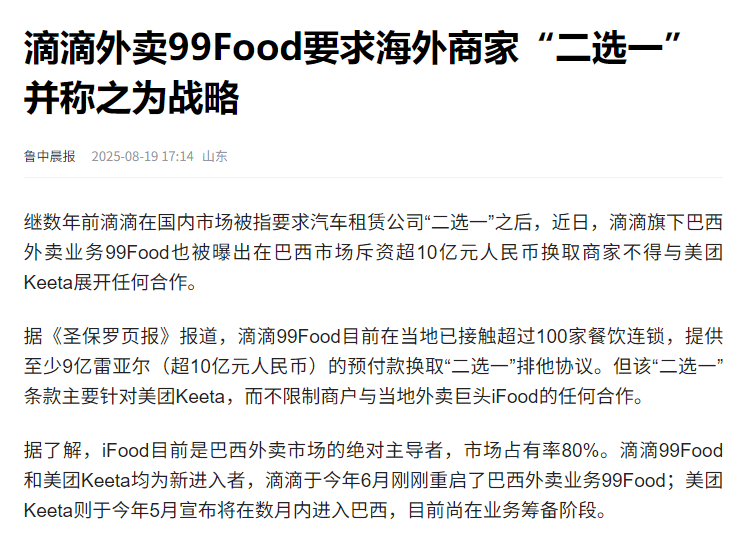
滴滴99Food:斥资超10亿“二选一”,遭巴西法院禁令
Sou Hu Cai Jing· 2025-08-19 09:51
Core Insights - Didi's Brazilian food delivery business, 99Food, has been accused of engaging in "choose one" practices and unfair competition, similar to past allegations in the domestic market [1] - The company has invested over 1 billion RMB in Brazil, offering prepayments of at least 900 million Brazilian Reais to over 100 restaurant chains in exchange for exclusive agreements that primarily target Meituan's Keeta [1] - 99Food has admitted to signing "choose one" exclusive agreements with some restaurants and has been found to engage in practices that undermine Meituan's visibility in search results [1] - A Brazilian court has ruled that 99Food's actions constitute unfair competition and trademark infringement, ordering the company to cease these activities within three days or face daily fines [1] Investment and Market Dynamics - 99Food's strategy includes targeting key merchants with substantial financial incentives, such as offering 6 million Reais (approximately 8 million RMB) for semi-exclusive agreements [1] - The competitive landscape in Brazil's food delivery market is dominated by iFood, which holds an 80% market share, while Meituan's Keeta is still in the preparatory phase of entering the market [1] - The recent legal ruling against 99Food highlights the regulatory challenges and potential risks associated with aggressive competitive strategies in the Brazilian market [1]

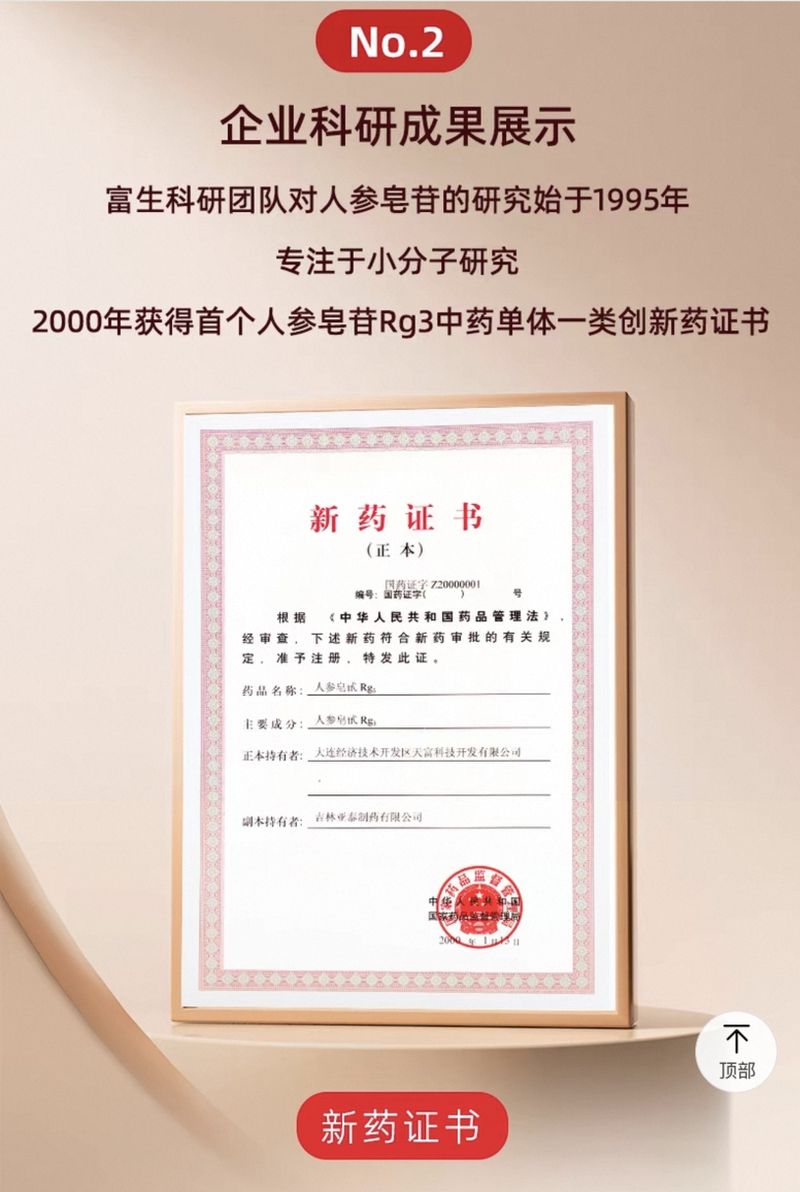
高价人参皂苷食品暗示抗癌功效,富生制药被指虚假宣传
Xin Jing Bao· 2025-08-19 08:21
Core Viewpoint - The company Dalian Fusheng Pharmaceutical is under scrutiny for misleading advertising of its product "Fuli Doctor Ginsenoside Rg3," which is marketed as having anti-tumor effects but is actually a solid beverage and not a drug [1][2][6]. Product Description - The product "Fuli Doctor Ginsenoside Rg3" is sold at a price of 1780 yuan per box and is classified as a solid beverage, containing mainly ginseng roots aged five years or less [1][2]. - The product's composition includes ginsenosides Rg3 and Rg5, with specific amounts stated, but it lacks any unique medicinal ingredients [2][3]. Marketing and Promotion Tactics - The company employs various promotional strategies, including showcasing research achievements and using AI to suggest potential health benefits, which may mislead consumers into believing the product has anti-cancer properties [3][9][14]. - The marketing materials frequently reference the product's association with a drug called "Can Yi Capsule," which has been approved for cancer treatment, creating a misleading connection between the food product and pharmaceutical efficacy [6][26]. Legal and Regulatory Concerns - The promotional practices may violate the Anti-Unfair Competition Law and the Price Law of the People's Republic of China, as they could be seen as misleading consumers regarding the product's capabilities and pricing [6][7][8][26]. - Legal experts indicate that the company's actions could be classified as "confusion behavior," potentially leading to penalties if deemed unlawful [6][26]. Scientific Evidence and Expert Opinions - Experts note that while there is some evidence suggesting ginsenoside Rg3 may have anti-cancer properties, the clinical evidence supporting its efficacy is insufficient, with most studies being small-scale and lacking rigorous design [21][22]. - The product's marketing may lead consumers to mistakenly believe it can replace conventional cancer treatments, which poses significant health risks [25][26].
用低价房源引流?经纪人控诉同行不正当竞争 贝壳南京回应
Xin Lang Cai Jing· 2025-08-12 04:40
Core Viewpoint - A real estate agent from Nanjing has publicly accused a local Beike brand of engaging in unfair competition by posting fake listings online to attract clients, leading to customer dissatisfaction and complaints against legitimate agents [1] Group 1: Unfair Competition Allegations - The agent claims that some intermediaries under the Beike brand are advertising properties at significantly lower prices than their actual transaction values, misleading potential buyers [1] - For instance, a property that sells for 2 million yuan is being advertised for 1.5 million yuan, which is a tactic to collect customer contact information without actually facilitating property viewings [1] - This practice has resulted in clients feeling misled after purchasing properties at higher prices, leading them to demand refunds based on the false listings [1] Group 2: Company Response - The local Beike operations center has intervened in the situation, with personnel dispatched to the involved store to conduct interviews with the store owner and the agents responsible for the misleading listings [1] - Beike has stated that if any violations are confirmed, appropriate actions will be taken in accordance with their management regulations [1]
固收 《价格法》修订如何助力“反内卷”?
2025-08-11 01:21
Summary of Key Points from the Conference Call Industry or Company Involved - The discussion revolves around the **revised Pricing Law** and its implications for the **platform economy** and **market competition** in China. Core Points and Arguments 1. **Revised Pricing Law**: The new law shifts from direct pricing to establishing rules, focusing on creating a scientific and reasonable pricing mechanism to ensure fair competition and effective regulation of monopolistic behaviors [1][4][7]. 2. **Increased Penalties**: The law significantly raises fines for violations, enhancing legal deterrence against unfair competition, with penalties now ranging from 5,000 to 50,000 yuan for serious offenses [4][24]. 3. **Cost Monitoring**: The government will implement cost monitoring as a crucial procedure in pricing, ensuring prices do not fall below cost and enhancing regulatory oversight [8][21]. 4. **Clarification of Unfair Competition**: The law specifies standards for identifying unfair competition, including low-price dumping and price collusion, to protect smaller businesses from larger competitors [9][3]. 5. **Impact of Platform Economy**: The platform economy has intensified internal competition, leading to harmful practices that undermine fair market conditions, necessitating legal regulation [6][10]. 6. **Response to "Involution"**: The law aims to combat "involution" by promoting fair competition and reducing malicious competition through legal means [5][13]. 7. **Consumer and Merchant Protection**: The revised law seeks to protect both consumers and merchants from the adverse effects of aggressive pricing strategies employed by platforms [10][19]. 8. **Algorithm Misuse**: New regulations prohibit the misuse of data algorithms in unfair competition, ensuring that platforms do not exploit their market position to harm smaller businesses [17][18]. Other Important but Possibly Overlooked Content 1. **Industry Self-Regulation**: Industry associations are encouraged to collaborate with the government to establish self-regulatory measures, particularly in sectors like solar energy and e-commerce, to avoid price wars [23]. 2. **Market Monitoring**: The government will actively seek public opinions and conduct price surveys to ensure the pricing mechanisms are aligned with market conditions and consumer needs [21]. 3. **Future Legal Framework**: The revised Anti-Unfair Competition Law, effective from October 15, 2025, will complement the Pricing Law by addressing the misuse of market dominance in the platform economy [3][11]. 4. **Impact on Small Businesses**: Small businesses face challenges from platform pressures and rising operational costs, highlighting the need for a balanced approach to market competition [13][19]. 5. **Safety Concerns for Delivery Workers**: The pressure on delivery workers due to algorithm-driven performance metrics raises safety concerns, prompting calls for regulatory intervention to ensure fair working conditions [20].
理想i8碰撞“测试”风波始末
Zhong Guo Jing Ying Bao· 2025-08-08 20:50
Core Viewpoint - The unconventional collision test conducted by Li Auto for its newly launched i8 has sparked significant public debate regarding marketing ethics, industry standards, and brand competition, leading to a joint statement from Li Auto, China Automotive Engineering Research Institute, and Dongfeng Liuzhou Motor to advocate for self-regulation and integrity in the automotive industry [1][2][3]. Group 1: Incident Overview - The incident originated from a video shown at Li Auto's new car launch on July 29, where a collision test between the 2.6-ton Li i8 and an 8-ton Dongfeng Liuzhou truck was presented, showcasing the i8's passenger cabin integrity [2][3]. - Following the video release, Dongfeng Liuzhou issued a statement on July 31, criticizing the test for being misleading and damaging to its brand image [3]. - On August 3, both China Automotive Engineering Research Institute and Li Auto responded, clarifying that the test was not intended to evaluate the safety of other brands [3]. Group 2: Joint Statement and Industry Response - On August 6, a joint statement was released by the three parties to clarify facts, eliminate misunderstandings, and maintain a healthy industry environment [1][3]. - Li Auto apologized for the unintended negative impact on Dongfeng Liuzhou's brand and committed to taking measures to prevent similar controversies in the future [3][4]. - Dongfeng Liuzhou emphasized its commitment to high-quality products and compliance with legal standards, rejecting unfair competition [4]. Group 3: Industry Implications - The incident highlighted the need for industry-wide cooperation for high-quality development, with experts acknowledging the importance of the joint statement in addressing the controversy [2][5]. - The collision test raised questions about the appropriateness of comparing vehicles across different categories, as standard testing typically does not include such comparisons [5]. - The event unexpectedly increased visibility for Dongfeng Liuzhou, leading to a surge in social media engagement and brand awareness [6]. Group 4: Market Performance - The commercial vehicle market, particularly heavy trucks, showed strong performance in July, with sales reaching 83,000 units, a 42% year-on-year increase [6][7]. - The overall commercial vehicle production and sales for the first half of the year were 2.099 million and 2.122 million units, respectively, reflecting growth of 4.7% and 2.6% year-on-year [6].


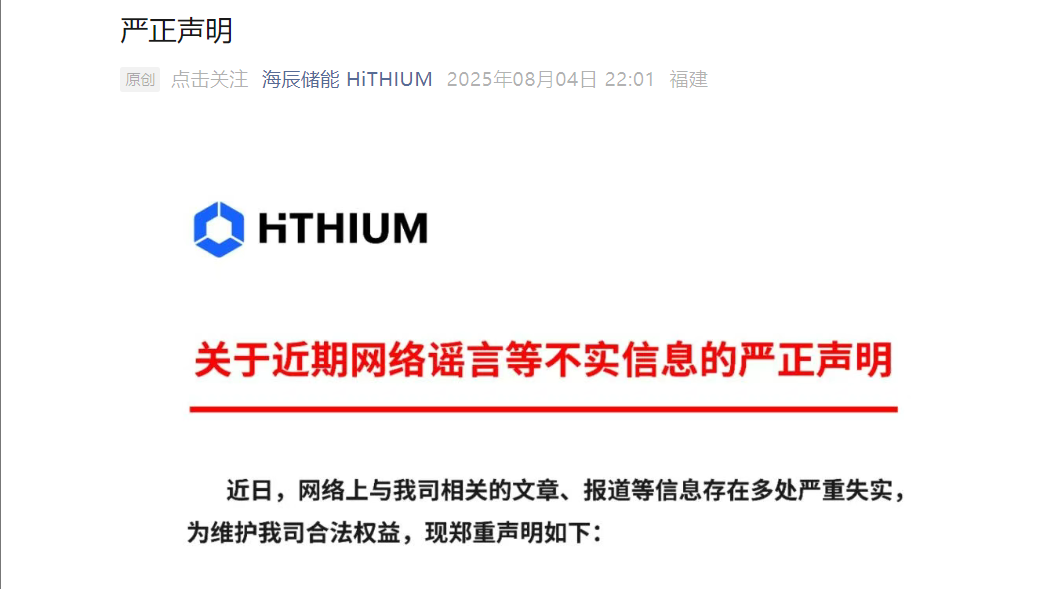
海辰储能发布严正声明!
起点锂电· 2025-08-06 09:43
Core Viewpoint - The company has issued a formal statement addressing recent rumors and misinformation circulating online, clarifying various allegations and asserting its commitment to legal rights and business integrity [3][5][7]. Group 1: Clarifications on Allegations - The company refutes claims regarding a "commercial secret infringement" involving a technology that has been deemed public knowledge, asserting that it has not utilized this technology in any products [3]. - The company corrects misinformation about the age of its chairman's spouse, stating the accurate birth year is 1991, not 1964 [4]. - The company clarifies that its collaboration with the U.S. energy integrator Powin has not reached a scale of delivery, and it is not listed as a creditor in Powin's bankruptcy filing, indicating no adverse impact on its operations [5]. Group 2: Product and Legal Matters - The company defends its 587Ah battery cell against claims of similarity to a competitor's product, emphasizing that it is a fully self-developed product based on its previously released energy storage cell [6]. - The company addresses a civil lawsuit regarding unfair competition, stating that no legal documents have confirmed any wrongdoing, and it plans to defend its rights through legal channels [7]. - The company expresses strong condemnation of the malicious fabrication and dissemination of false information, urging the public to refrain from spreading rumors and to maintain a fair competitive environment [7].
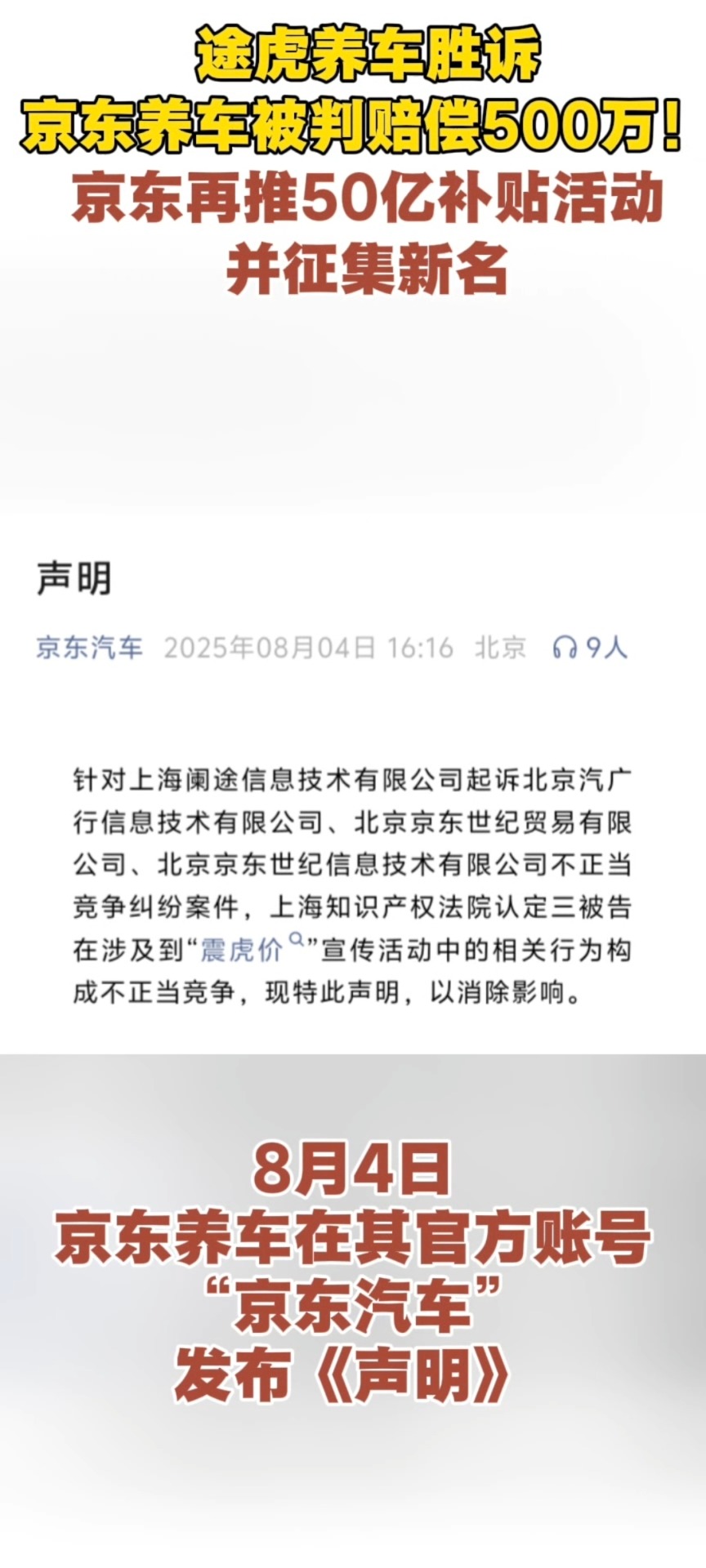
京东养车被判赔偿500万元,推“50亿养车补贴”活动并向全网征集新名称
Guang Zhou Ri Bao· 2025-08-05 05:51
Group 1 - JD Auto announced a "50 billion car maintenance subsidy" campaign and launched a "365 worry-free purchase" service while soliciting new names from the public [4] - The Shanghai Intellectual Property Court ruled that JD Auto engaged in unfair competition related to the "Zhenhu Price" promotional activities, leading to a final judgment against JD Auto [4] - The court found that JD Auto's actions constituted commercial defamation and false advertising, causing consumer misunderstanding in specific scenarios [4] Group 2 - Tu Hu Car Maintenance has received a compensation payment of 5 million yuan from JD Auto following the court's ruling [4]

高管涉嫌侵犯商业秘密被采取强制措施,海辰储能发布声明回应
Nan Fang Du Shi Bao· 2025-08-05 03:53
Group 1 - The president of Haicheng Energy, Feng Dengkai, has been reported for allegedly infringing on trade secrets and has been taken into custody by the police in Ningde, Fujian [1][3] - Haicheng Energy issued a statement claiming that the technology in question, "composite electrolyte technology," is publicly known and does not constitute a trade secret, asserting that the dispute will not adversely affect its operations [3][4] - The company clarified that it has not used the disputed technology in any products and is providing support to Feng Dengkai and his family during the ongoing investigation [3][4] Group 2 - The company addressed rumors regarding its chairman's spouse's age and the bankruptcy of its major U.S. customer, Powin, stating that these claims are false and that the bankruptcy will not impact its operations [3][4] - Haicheng Energy's 587Ah battery cell is claimed to be fully self-developed and not in violation of any competition laws, with no legal documents confirming any unfair competition claims against the company [4][5] - The company has been involved in ongoing disputes with Ningde Times, including a civil lawsuit filed by Ningde Times for unfair competition, with a court hearing scheduled for August 12 [4][5] Group 3 - Founded in 2019, Haicheng Energy focuses on providing energy storage battery solutions and has rapidly developed into the third-largest energy storage battery company globally by shipment volume [5][6] - The company is currently in the process of listing on the Hong Kong Stock Exchange, with projected revenue of 12.917 billion yuan and an adjusted net profit of 318 million yuan for 2024 [5][6] - The chairman, Wu Zuyu, and several executives have backgrounds in Ningde Times, but this has not led to a positive relationship, as disputes have arisen over competition and employment agreements [6]