中国制造2025

Search documents
万讯自控2024年度网上业绩说明会问答实录
Quan Jing Wang· 2025-05-09 00:09
Core Viewpoint - The company emphasizes its commitment to R&D and innovation to maintain competitive advantages in the industrial automation control sector, despite facing market challenges and competition [1][2][4]. R&D Investment - The company has consistently invested over 7% of its revenue in R&D for several years, indicating a strong focus on innovation [1]. Market Competition - The company aims to enhance its technological capabilities through a dual approach of "independent innovation + international cooperation," focusing on overcoming technical barriers and improving product quality [1][2]. Strategic Development - The company plans to deepen its integration into national strategies like "Industry 4.0" and "Made in China 2025," aiming for high-quality growth and international competitiveness [1][4]. Financial Performance - The company reported a lack of profit in the first quarter, attributing it to changes in product sales structure and increased expenses [1][3]. Subsidiary Performance - The company has a stake in Shenzhen Vision Robot Co., which specializes in 3D vision systems for industrial robots, indicating a focus on advanced technology applications in various sectors [6]. Future Growth Drivers - The company identifies several growth drivers, including the modernization of industrial technology, energy efficiency upgrades, and the increasing demand for automation products due to economic transformation [3][4]. Shareholder Engagement - The company achieved a 100% response rate during its recent performance briefing, reflecting its commitment to investor relations and transparency [1]. Financial Health - The company has accumulated goodwill of 238.86 million yuan, with 200.88 million yuan already impaired, leaving a remaining goodwill of 37.99 million yuan [5].

验证中国制造2025(下)药品对华依赖加深,机器人国产化在路上
日经中文网· 2025-05-08 03:20
中国江苏省的制药公司的研究室(资料图,reuters) 医药品的全球供应链对中国的依赖度正在加深。有数据显示,在美国报告的药品原料(有效成 分)制造地中,中国占到三成。不过,工业机器人的国产化进展较为缓慢,2024年的国产比例为 52%,低于目标…… 美国特朗普政府已对半导体和医药品启动旨在征收关税的调查。对于医药品,中国一直作为 产业政策"中国制造2025"的重点领域而加以振兴。生产和研发实力持续提高,美国对此加强 警惕。在机器人和农机领域,中国也一直力争提高竞争力,但在国产化等方面还存在难以顺 利推进的一面。 在医疗医药相关的7个领域中,中国在生物制造技术等3个领域排名第一,在剩下的基因组测 序分析等4个领域也排在第二,与美国展开激烈竞争。 涉足医药医疗调查的美国Citeline的数据显示,中国开发的医药品数量2024年超过6000种,与 2015年相比增至逾7倍。 美国国务卿鲁比奥在就任前的2024年撰写的报告中,针对中国的生物医药产业表示:"有迹象 表 明 , 未 来 数 年 内 中 国 将 从 快 速 跟 随 者 (fast follower) 转 变 为 技 术 领 导 者 ( technolog ...


中国7家主要光伏企业合计损益首陷亏损
日经中文网· 2025-05-07 07:06
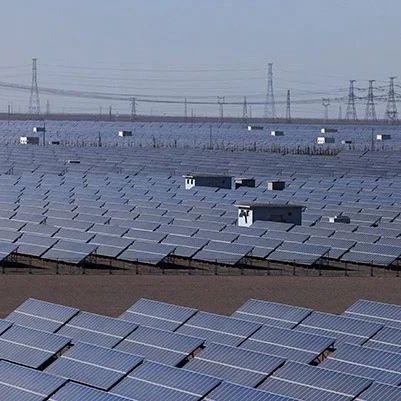
Core Viewpoint - The financial reports of seven major Chinese photovoltaic (PV) battery companies for the fiscal year 2024 show a combined loss of 27 billion yuan, marking the first loss since 2017 due to overproduction and deteriorating market conditions [1][2][3]. Group 1: Financial Performance - The seven listed Chinese PV battery companies reported a total loss of 27 billion yuan for the fiscal year 2024, a stark contrast to a total profit of 41.8 billion yuan in the previous fiscal year [2]. - Five of these companies, including Longi Green Energy, experienced significant losses, while the largest, JinkoSolar, saw a 98% reduction in profits [2][3]. Group 2: Market Dynamics - The rapid decline in performance is attributed to overproduction by Chinese companies, leading to a market downturn [3]. - The price of PV battery panels has dropped nearly 70% since early 2022, with prices reaching 9 cents per watt by the end of 2024 [3]. Group 3: Global Market Position - Chinese companies dominate the global PV battery market, holding over 80% of the production capacity and accounting for nine out of the top ten global PV panel manufacturers [2][3]. - Despite being a major demand country for new PV installations, China faces challenges in absorbing its domestic supply, resulting in excess products being exported [3]. Group 4: International Trade Issues - The influx of low-priced PV products from China has weakened local manufacturers in Europe, leading to increased international friction [2][4]. - The European Solar Manufacturing Council has urged the EU to implement trade protection measures to safeguard local businesses [5].
验证中国制造2025(中)光伏占世界6成,高铁是新干线15倍
日经中文网· 2025-05-07 02:45
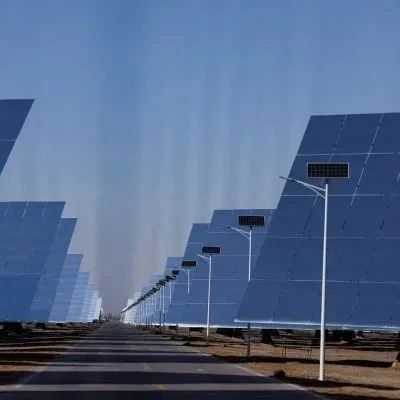
Core Viewpoint - China's manufacturing policies, particularly "Made in China 2025," have significantly expanded the scale of industries such as photovoltaic power generation and high-speed rail, leading to both global market dominance and international friction due to overproduction [1][3]. Photovoltaic Power Generation - By 2024, China's installed photovoltaic capacity is projected to reach 338 GW, approximately 18 times that of 2015, accounting for nearly 60% of the global total [3]. - Chinese companies dominate the production of photovoltaic components, with over 80% market share in solar cells, wafers, polysilicon, and metal silicon [3]. - China's supply capacity for photovoltaic panels is expected to reach 1,036 GW in 2023, 1.9 times the global demand, leading to price declines and the elimination of some European companies [3]. High-Speed Rail - China's high-speed rail operating mileage is set to reach 48,000 kilometers by 2024, 2.5 times that of 2015, representing nearly 70% of the global total of approximately 59,400 kilometers [4]. - By the end of 2024, China's high-speed rail mileage will be about 15 times that of Japan's Shinkansen, solidifying its absolute lead in scale [4]. - In the fiscal year 2024, China Railway Rolling Stock Corporation (CRRC) is expected to achieve sales exceeding 3 trillion yen in its railway manufacturing division, surpassing competitors like France's Alstom [4]. Overseas Expansion Challenges - Despite the ambitious goals of "Made in China 2025" to establish a world-leading modern railway transportation industry, CRRC's overseas sales accounted for only over 10% in the fiscal year 2024, indicating ongoing challenges in international expansion [5]. New Materials - China's new materials industry accounts for approximately 30% of the global market, with leading positions in several sectors [6]. - In the market for key electric vehicle battery materials, Chinese companies have risen to dominate, with the top five positions held by them as of 2023, a significant shift from 2013 when Japanese firms led [6]. - Although China's autonomous innovation capabilities are still developing, R&D investments by leading companies are increasing, and advancements in high-performance products are expected to accelerate with the application of artificial intelligence [6].

中国制造十年进展评估 | 中国科学院院刊
机器人圈· 2025-05-06 12:30
编者按:2025年3月11日,中国人民大学重阳金融研究院(人大重阳)在 "中国制造2025"提出十周年主题研讨会 上发布了 《十年跃迁:美国各界评 估"中国制造2025"的文献总结及"制造强国"的未来展望》 智库报告,引发国 内外广泛关注。近日,该报告论文版在 《中国科学院院刊》2025年第4期 刊 发。作者:人大重阳院长 王文 、副研究员 申宇婧 、助理研究员 金臻 。 现 将文章全文发布如下,供研究参考。 "中国制造",制造强国,中美竞争,科技创新 正 文 党的十八大以来,以习近平同志为核心的党中央高度重视制造业发展,作出建设制造强国的重大战略规划。 经过10余年发展,中国制造业的发展取得举世瞩目的成就,制造强国战略目标"三步走"的第一个十年规划于2025 年完成。随之而来的是,全球范围内对中国制造业进展的关注度日益升温,尤其是美国政府、学术界与媒体界对 中国制造强国发展战略(以下简称"中国制造")表示了极大的关切,通过发布多份研究报告、深度文章等形式全 方位跟踪"中国制造"的实施动态。尤其以2024年9月时任美国参议员马尔科·鲁比奥(Marco Rubio)发布约2万 字的深度长文报告为典型。该报告在充 ...

验证中国制造2025(上)造船份额70%,EV掌握主导权
日经中文网· 2025-05-06 03:27
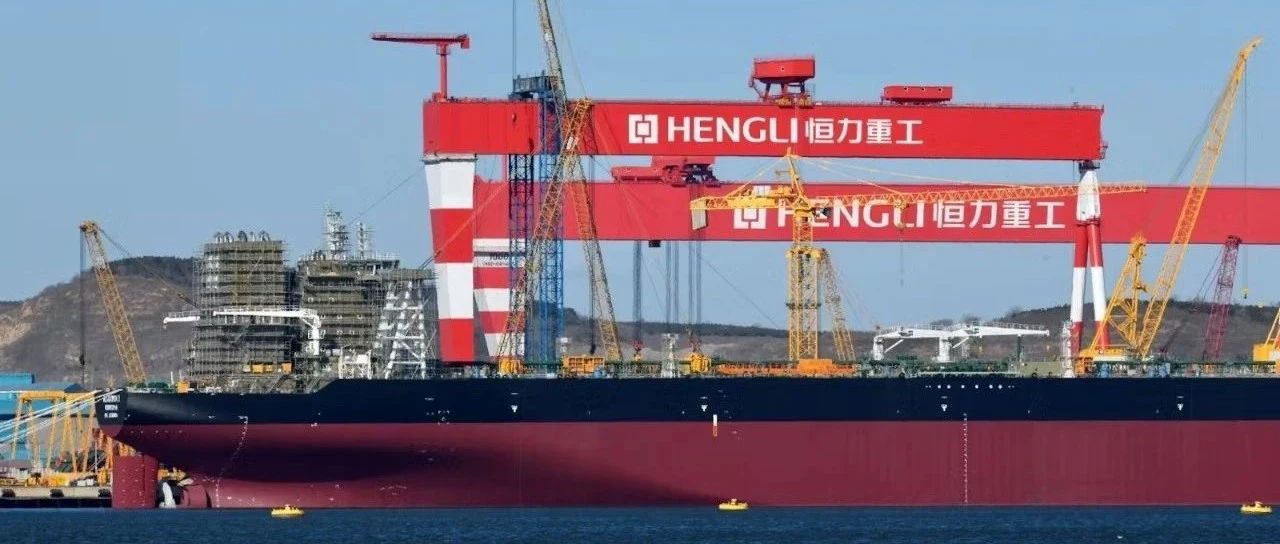
Core Viewpoint - The article discusses the advancements in China's manufacturing capabilities under the "Made in China 2025" policy, highlighting its impact on various industries and the resulting international competition, particularly with the United States. Shipbuilding - China has become a global leader in shipbuilding, with 2024 orders reaching a historical high of 46.5 million CGT, accounting for 70% of global orders, while South Korea holds only about one-fifth of that amount [2][4]. - The U.S. shipbuilding industry has weakened, unable to meet the demands for new ship construction and maintenance, reflecting a decline in American manufacturing [6]. Space Development - China has made significant strides in space development, achieving independent manned spaceflight and becoming the only country with a fully operational manned space station [7][8]. - In contrast, the U.S. has faced delays in its Artemis program, which aims for manned lunar exploration, indicating a stagnation in its space initiatives [8]. Automotive Industry - China has emerged as the world's largest producer of electric vehicles (EVs), with one in every two EVs globally being a Chinese brand by 2024 [12]. - In the battery sector, CATL holds a 38% market share, with the top three Chinese companies capturing about 60% of the global market [12]. Semiconductor Industry - China's self-sufficiency in semiconductors is currently at about 20%, falling short of its 70% target, but it holds a 24% share of the global capacity for mature semiconductor products [13]. - Companies like SMIC and YMTC are rising in prominence, focusing on domestic production of critical technologies [13]. Overview of "Made in China 2025" - The "Made in China 2025" policy aims to elevate China's manufacturing capabilities by 2049, selecting ten key sectors and serving as a foundation for various industrial support policies [14].
联得装备:深耕智能装备,联得中国智造!“小而美”投资价值凸显
Zheng Quan Shi Bao Wang· 2025-04-22 12:03
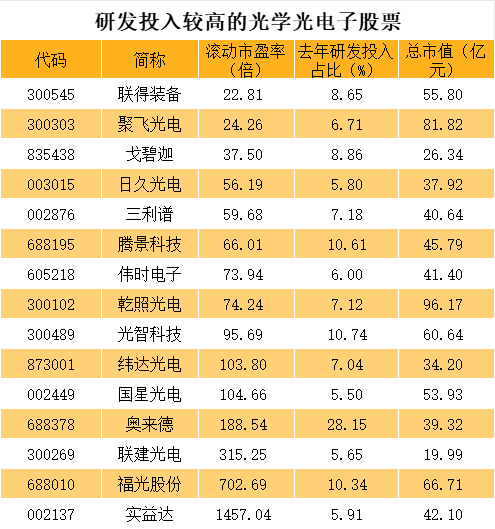
Core Viewpoint - The company, LianDe Equipment, reported a revenue of 1.396 billion yuan for 2024, marking a year-on-year increase of 15.63%, and a net profit of 243 million yuan, up 37.06% year-on-year. The company plans to distribute a cash dividend of 2.0 yuan per 10 shares, totaling 36.01 million yuan, which is a historical high for the same period [1]. Group 1: Financial Performance - In 2024, LianDe Equipment achieved a revenue of 1.396 billion yuan, reflecting a 15.63% increase compared to the previous year [1]. - The net profit attributable to the parent company reached 243 million yuan, representing a 37.06% year-on-year growth [1]. - The company plans to distribute a cash dividend of 2.0 yuan per 10 shares, totaling 36.01 million yuan, which is the highest amount for the same period in history [1]. Group 2: Business Focus and Product Offerings - LianDe Equipment is focused on high-end intelligent manufacturing, providing comprehensive solutions in new semiconductor displays, automotive intelligent cockpits, semiconductor packaging and testing, and green energy [1][2]. - The company has a complete equipment layout in the new semiconductor display field, covering major production processes in the module segment, including binding, laminating, AOI inspection, and film coating [1]. - In the automotive intelligent cockpit system equipment sector, the company is expected to capture a larger market share due to the increasing demand driven by the acceleration of automotive intelligence [1]. Group 3: Research and Development - The company has a strong emphasis on technology research and development, with R&D investment accounting for 8.65% of revenue in 2024, and over 10% in the previous two years [3][4]. - As of December 31, 2024, the company employed 409 R&D personnel, making up 26.66% of its total workforce, and has obtained 272 authorized patents [4]. - The company successfully developed a large-size TV binding line equipment, which is the only supplier in China with mass production capabilities for panels larger than 100 inches [4]. Group 4: Customer Base and Market Presence - LianDe Equipment has established long-term stable relationships with numerous well-known domestic and international clients, including major manufacturers and brands in the display sector [5][6]. - The company has accumulated a strong customer base, including several Fortune 500 companies, and has successfully expanded its market presence in Europe, Southeast Asia, and North America [6]. Group 5: Competitive Positioning - The company has demonstrated a notable increase in sales gross margin, exceeding 37% last year, and achieving a weighted average return on equity of 13.63%, both marking multi-year highs [7]. - LianDe Equipment's rolling P/E ratio is 22.81, indicating a favorable cost-performance ratio compared to peers in the optical and electronic sector [7][8].
大摩宏观闭门会议:前瞻4月底会议和中美演绎,财政刺激,看多A股
2025-04-22 06:52
Summary of Key Points from Conference Call Records Industry or Company Involved - The discussion primarily revolves around the **Chinese economy** and its response to the **U.S.-China trade war**. Core Points and Arguments 1. **Economic Strategies in Response to Trade War** - China needs to implement three major strategies: expand domestic demand, promote international expansion, and reduce production capacity. An additional fiscal stimulus of 1-1.5 trillion RMB is recommended to support these strategies [1][2][3]. 2. **Impact of U.S. Export Controls** - The U.S. has escalated export controls, particularly affecting NVIDIA chips, which disrupts China's AI capital expenditure and applications. This necessitates a focus on enhancing domestic technological innovation and self-research capabilities [4][36]. 3. **Challenges in the Banking Sector** - The Chinese banking sector faces increased bad debts and profit pressures due to declining exports. It is essential to strengthen risk management, optimize business structures, and innovate financial products to mitigate these challenges [5][40]. 4. **Global Economic Context** - There is a global focus on U.S. policy changes and their impact on capital markets. China is advised to seize opportunities by quickly implementing stimulus and reform policies, transitioning from "Made in China 2025" to "China Market 2030" [6][7]. 5. **GDP Growth Forecasts** - China's GDP growth forecast has been revised down from 4.5% to 4.2% due to trade tensions and expected tariff impacts. The growth rate is projected to decline further in the latter half of the year [17][18]. 6. **A-Share Market Performance** - Recommendations to increase allocations in the A-share market are based on its superior performance amid global geopolitical uncertainties and lower correlation with global markets [24][25]. 7. **Hong Kong Market Dynamics** - The Hong Kong market is seen as favorable due to its alignment with new productivity, technology companies, and dividend-sharing concepts. It serves as a buffer against geopolitical tensions [14][46]. 8. **Employment and Wage Pressures** - The trade war has led to significant employment pressures, with a projected decline in wages and an exacerbation of the wage-price downward spiral. The impact on employment from exports is substantial, with 180 million jobs directly or indirectly linked to exports [19][47]. 9. **Policy Adjustments and Fiscal Measures** - Future policies may include increased infrastructure investment to stimulate domestic demand and address overcapacity issues. The government is expected to maintain flexibility in fiscal measures to respond to economic data [20][42]. 10. **Social Security System Reform** - Reforming the social security system is crucial for promoting long-term domestic consumption and addressing high savings rates among households. This reform is seen as a structural necessity amid rising debt levels and an aging population [23][47]. Other Important but Possibly Overlooked Content - The potential for a comprehensive U.S.-China agreement exists, but significant gaps remain, requiring time for negotiations [11]. - The likelihood of tariff reductions is anticipated by the end of Q2, but it is unlikely to return to pre-Trump levels [12]. - The financial sector's investment strategies are shifting towards banks due to their defensive characteristics amid market volatility [46]. - The importance of maintaining a stable interest rate policy to support long-term financial stability is emphasized [44]. This summary encapsulates the critical insights and recommendations from the conference call, highlighting the challenges and strategic responses of the Chinese economy in the context of ongoing trade tensions with the U.S.
国泰君安资管|制度创新与内需战略:“福利中国2035”愿景下的市场机遇
Xin Lang Zheng Quan· 2025-04-21 07:37
Core Viewpoint - The article discusses the "Welfare China 2035" framework proposed by Guotai Junan Asset Management, which aims to address structural issues in China's economy as it transitions from high-speed growth to high-quality development, focusing on consumption-driven growth and improving social welfare [1][2][3]. Economic Transition - The transition in China's economy is marked by a shift from production-driven to consumption-driven growth, with final consumption expenditure consistently accounting for over 50% of GDP for the past 11 years [3]. - In 2023, final consumption accounted for 55.6% of GDP, significantly lower than developed countries like the US (81%) and Japan (75%) [3]. Income Distribution - In 2024, the proportion of per capita disposable income to GDP is projected to be 43.15%, which is still below the levels seen in developed countries [4]. - The income disparity between urban and rural residents is significant, with the urban-rural income ratio at 2.34 in 2024 [4]. Social Welfare - China's social welfare spending is low, with only 14.5% of the general public budget allocated to social security and employment, compared to 33% in Japan and 22% in the US [4][5]. - The social security system relies heavily on personal and family contributions, limiting consumption potential [5]. Structural Imbalances - The current economic model, heavily reliant on investment, is facing diminishing returns, with a capital formation rate of 41% in 2023, far exceeding the global average of 25% [6][7]. - The need for a transition to a consumption-driven economy is emphasized to address issues like manufacturing overcapacity and external trade imbalances [6][7]. "Welfare China 2035" Framework - The framework aims to innovate the distribution of national wealth, improve the social security system, and optimize the supply-demand cycle to release consumption potential [8]. - Key goals include increasing disposable income, expanding the middle-income group, and achieving social security coverage for all [9][10]. Income Distribution Reform - The reform aims to increase labor compensation in the income distribution system and explore new factors like technology and data in income distribution [11][12]. - Direct tax systems will be established to reduce the tax burden on labor compared to capital income, enhancing compensation for low- and middle-income groups [12]. Enhancing Property Income - The strategy includes measures to stabilize the stock market and increase residents' property income by facilitating long-term capital market investments [14]. - Policies will be implemented to allow rural housing transactions and mortgages, potentially generating significant property income for rural residents [16]. Welfare Initiatives - Initiatives will be introduced to enhance the sense of well-being among citizens, including childcare subsidies and improved healthcare and pension support [17]. - The goal is to reduce precautionary savings and stimulate consumption by ensuring reliable social security [17]. Conclusion - The "Welfare China 2035" strategy represents a significant shift in China's economic model, aiming to create a consumption-driven society that balances supply and demand, ultimately contributing to shared prosperity and high-quality development [18].

从日本股市里的中国概念股股价说起
日经中文网· 2025-03-12 03:22
Core Viewpoint - Japanese companies with significant revenue from China are facing challenges, as indicated by a decline in their market capitalization index from 100 to 67 since March 7, 2024, due to intensified competition from Chinese firms and economic concerns stemming from US-China tensions [1][2]. Group 1: Market Performance - The weighted average market capitalization of ten major Japanese companies with high revenue from China has dropped significantly, while companies like SUBARU and Takeda Pharmaceutical, which have higher revenue from the US, remain relatively stable at 91 [2]. - The Japanese stock market is particularly affected by the performance of Chinese concept stocks, which are struggling amid fears of economic slowdown and increased competition from Chinese enterprises [2]. Group 2: Economic Policies and Expectations - The Japanese market is closely watching China's National People's Congress for policies aimed at stimulating domestic demand, with a notable increase in the mention of "consumption" in the government work report [1]. - There are expectations that China's economic stimulus measures starting in 2024 could positively impact Japanese companies' performance [1]. Group 3: Competitive Landscape - Chinese companies, particularly in the automotive sector, are gaining market share through cost reductions and innovations, with BYD's electric vehicle sales projected to grow by 40% in 2024, while Japanese automakers like Honda and Nissan are experiencing declines in sales [2][3]. - The rise of Chinese firms is attributed not only to government subsidies but also to significant improvements in production efficiency, with labor productivity in China increasing by 30% from 2017 to 2022, compared to a 7% increase in Japan [3]. Group 4: Strategic Responses - Despite the competitive pressures, some Japanese companies are investing in China, such as Toyota's plan to build a Lexus factory in Shanghai and launch a budget EV [4]. - Pigeon Corporation, a baby products giant, is implementing aggressive marketing strategies to recover its lost market share in China, aiming for a 20% increase in sales [4][5]. Group 5: Future Outlook - The competitive landscape in China is described as overly competitive, raising questions about the prospects for Japanese companies [5]. - There is a belief that Japanese firms, known for their quality and price balance, may have opportunities to regain market share, especially in sectors like AI and hardware [5].