
产业生态

Search documents
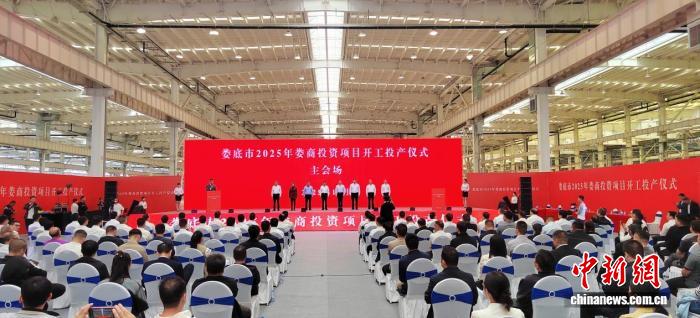
从“15分钟产业链”到“上下楼就是上下游” 湖南娄底引娄商“归巢”
Zhong Guo Xin Wen Wang· 2025-10-17 10:51
Core Insights - The article discusses the development of a 15-minute industrial chain in Loudi, Hunan, connecting the silicon steel and "three electric" (electric motors, transformers, home appliances) industries, with a total investment of 439.15 billion yuan in 128 projects [1][2]. Group 1: Industrial Development - Loudi is transforming into a national advanced manufacturing cluster by focusing on advanced steel materials, with a production capacity of 4.5 million tons of silicon steel substrate and 3.5 million tons of finished products, accounting for 16% of the national output [2]. - The city has established a comprehensive industrial structure consisting of one raw material base, four production platforms, and 130 manufacturing projects, ensuring local consumption of silicon steel substrates and local production of end products [2]. Group 2: Investment and Economic Growth - The "three electric" industry in Loudi is projected to exceed 24 billion yuan in output value by 2024, becoming a key growth driver for the regional economy [2]. - The total asset scale of the global Loudi business community has surpassed 1 trillion yuan, with nearly 1 million workers, indicating a strong commercial presence [2]. Group 3: Local Business Initiatives - Local entrepreneurs, such as the chairman of Guangdong Xinqi Electric, are returning to invest in Loudi, citing favorable conditions such as guaranteed raw materials and a supportive business environment [2][3]. - The Loudi Economic Development Zone has launched 26 projects with a total investment of 13.286 billion yuan, showcasing strong development momentum [3]. Group 4: Infrastructure and Support - The development zone features a 300,000 square meter silicon steel industrial park and a 166,000 square meter electric motor industrial park, facilitating a streamlined production process [3]. - The local government is enhancing the business environment by establishing a Loudi business database and offering specialized financial products, having provided 1.98 billion yuan in financing guarantees and 2.02 billion yuan in credit for "three electric" enterprises [5].

深重投集团总经理邱文:“湾芯展”构建产业生态平台,持续助力深圳核心竞争力提升
Mei Ri Jing Ji Xin Wen· 2025-10-16 01:21
Core Insights - The "Bay Area Semiconductor Industry Expo" (Bay Chip Expo) is significantly contributing to the localization of the semiconductor industry in the Guangdong-Hong Kong-Macao Greater Bay Area, enhancing the region's industrial competitiveness [1][2] - The expo showcases technological breakthroughs and product launches, including the "Wanliyan" ultra-high-speed real-time oscilloscope, which has surpassed U.S. embargo standards, indicating a strong domestic innovation capability [2] - Compared to the previous year, the expo has seen over 50% growth in both exhibition area and number of exhibitors, reflecting its increasing industry influence and business value [2][3] Industry Development - The expo serves as a platform for the semiconductor industry ecosystem in Shenzhen and the Greater Bay Area, aiming to position the region as a true Silicon Valley of China [3] - Local semiconductor production lines are attracting investments from high-quality semiconductor equipment, components, and materials companies, which is essential for the development of Shenzhen's electronic information industry [3] - The integration of high-end academic conferences, such as the International Lithography Conference and Chip Conference, enhances the expo's professional influence and establishes it as a leading platform for academic research and industry development [2][3]
万联晨会-20251015
Wanlian Securities· 2025-10-15 00:36
Market Overview - The A-share market experienced a pullback on Tuesday, with the Shanghai Composite Index falling by 0.62% to 3865.23 points, the Shenzhen Component Index down by 2.54%, the ChiNext Index down by 3.99%, and the Sci-Tech 50 Index down by 4.26%. The total trading volume in the Shanghai and Shenzhen markets was 2.58 trillion yuan [2][8] - In terms of sector performance, banking, coal, and food & beverage sectors led the gains, while communication, electronics, and non-ferrous metals sectors lagged [2][8] - Concept sectors such as cultivated diamonds, liquor, and the China-South Korea Free Trade Zone saw increases, while sectors like national big fund holdings, lithography machines, and advanced packaging experienced declines [2][8] - The Hong Kong market also saw declines, with the Hang Seng Index closing down 1.73% at 25441.35 points and the Hang Seng Tech Index down 3.62% [2][8] - Internationally, the U.S. stock indices showed mixed results, with the Dow Jones up 0.44%, the S&P 500 down 0.16%, and the Nasdaq down 0.76% [2][8] Important News - Premier Li Qiang hosted a meeting with economic experts and entrepreneurs to discuss the current economic situation and future economic work. He emphasized the need to accurately grasp the economic resilience from the perspective of international changes, strengthen confidence, and face issues head-on. He called for enhanced efforts in counter-cyclical adjustments and expanding domestic demand [9] - The central bank stated that the macroeconomic fundamentals are stable, and there is a solid foundation for medium- to long-term exchange rate stability. The bank will continue to maintain market-determined exchange rates and prevent excessive fluctuations [3][9]
长沙晚报长理轩文章:涵养“群虎啸星城”的新生态
Chang Sha Wan Bao· 2025-10-08 23:16
Core Viewpoint - The article highlights the rapid industrial transformation and economic development in Changsha, driven by major companies from South China, referred to as the "Five Tigers," which include BYD, Gree, Huawei, and others, establishing a strong presence in the region [1][2]. Group 1: Industrial Development - BYD established its first electric vehicle base in Changsha in 2009, evolving from a barren land to a collaborative industrial hub within 16 years [1]. - Gree's investment in Ningxiang has exceeded 10 billion yuan, creating a diverse industrial cluster covering seven major projects, showcasing a leap from single-category production to a full industrial chain [1]. - The "Five Tigers" have collectively contributed to Changsha's growth in strategic emerging industries such as new energy vehicles, electronic information, and intelligent equipment [4]. Group 2: Business Environment - Changsha's appeal to major corporations is attributed to its continuously optimized business environment, which has been recognized as superior to that of Shenzhen [1]. - The city has been awarded the title of "International Benchmark City for Business Environment Construction," reflecting its commitment to improving the business climate [1]. Group 3: Political Ecology - A healthy political ecology is essential for a favorable business environment, characterized by orderly power operations and harmonious government-business relations [3]. - Changsha has implemented reforms to enhance administrative efficiency, with processes like "one map" approvals and "one-stop" services becoming standard [3]. Group 4: Industrial Ecosystem - A robust industrial ecosystem is crucial for attracting production factors, with the "Five Tigers" fostering a collaborative environment through shared technology and supply chain integration [4]. - The city is focused on enhancing its industrial chain and promoting investment to create a more attractive environment for businesses [4]. Group 5: Innovation Ecosystem - Innovation is identified as a key driver of development, supported by a strong innovation ecosystem that reduces risks and costs associated with new ventures [5][6]. - Changsha aims to integrate talent, innovation, and industry to foster a collaborative environment for various stakeholders, including enterprises and educational institutions [6]. Group 6: Open Ecosystem - An internationalized business environment is being developed in Changsha, emphasizing alignment with global standards and enhancing the city's openness [7]. - The city plans to improve its international trade capabilities and attract foreign investment through efficient governance and a transparent legal framework [7].



外资规模多年保持全国首位,世界500强中有408家前来投资“开放江苏”何以赢得外资“加码”
Xin Hua Ri Bao· 2025-10-06 23:38
Core Insights - Jiangsu province has become a leading destination for foreign investment in China, contributing significantly to the country's import and export figures, tax revenue, and urban employment [1] - The province has attracted over 56,000 foreign enterprises, accounting for nearly 1% of the total number of enterprises, and contributing 46.6% of the total import and export value [1][4] - Foreign investment in Jiangsu is expected to reach $19.05 billion in 2024, with a cumulative total of $103.74 billion over four years, maintaining the highest level in the country [1] Group 1: Investment Landscape - The density of German enterprises in the Taicang area is notable, with over 560 German companies established, generating an annual industrial output value exceeding 67 billion yuan [2] - The collaborative environment in Jiangsu, particularly in the Taicang and Changzhou regions, has fostered a strong industrial ecosystem that supports foreign enterprises [2][3] - Foreign companies are increasingly expanding their operations in Jiangsu, with Scania and Bosch making significant investments in local production and R&D facilities [3][4] Group 2: Economic Contributions - Foreign enterprises in Jiangsu have significantly contributed to the province's economic growth, with a focus on high-quality projects and substantial investment increases from key countries like Germany, Japan, and Switzerland [4] - The province has been recognized for its high-quality foreign investment projects, leading the nation with 17 major foreign investment projects and 96 key projects [4] Group 3: Technological Advancements - Foreign investment is shifting towards advanced manufacturing, modern services, and high-tech industries, marking a transition from quantity to quality in investment [7] - Jiangsu has attracted $37.58 billion in manufacturing foreign investment from 2021 to 2024, representing 36.2% of total foreign investment, indicating a growing focus on advanced manufacturing [7] Group 4: Policy Support - Jiangsu has implemented innovative policies to support foreign enterprises, including a three-year action plan to encourage profit reinvestment, leading the nation in this regard for six consecutive years [8] - The province has established several foreign headquarters economic clusters, providing a conducive environment for foreign enterprises to thrive [8] Group 5: Infrastructure and Ecosystem - Jiangsu has developed various international cooperation parks and free trade zones, enhancing the investment environment and providing tailored support for foreign enterprises [10] - The Suzhou Industrial Park has been recognized for its strong industrial cluster, housing over 800 medical device companies, including many global leaders [10] Group 6: Future Outlook - Jiangsu aims to enhance its investment ecosystem by improving cross-border payment facilitation, expanding free trade zones, and opening up service sectors to attract more foreign investment [11] - The province's commitment to high-level openness and adherence to international trade rules positions it as a reliable destination for foreign investment [11]
聚力“链群协同” 壮大“产业森林”
Xin Hua Ri Bao· 2025-10-03 18:52
Core Insights - The article highlights the successful collaboration between companies and academic institutions in Hai'an, leading to technological breakthroughs and enhanced industrial ecosystems [1][4]. Group 1: Industrial Development - Hai'an has integrated resources to launch a "three-drives linkage" mechanism, enhancing the industrial ecosystem through government, finance, and enterprise collaboration [1]. - As of August, Hai'an has 1,396 industrial enterprises above designated size, ranking first in Nantong, with over 400 enterprises generating more than 100 million [1]. - Industrial sales in Hai'an increased by 4.7% year-on-year in the first eight months of this year, leading Nantong in total sales [1]. Group 2: Financial Support - Financial institutions like China Merchants Bank and Hai'an Rural Commercial Bank provided significant credit support, with 620 billion pre-approvals during specialized industry events [2]. - Eight industry-specific matchmaking events have been held this year, covering various sectors and facilitating nearly 100 technology demand collections and over 40 collaborative intentions [2]. Group 3: Addressing Industry Pain Points - Hai'an established 10 teams to visit 147 enterprises, identifying over 280 needs to address issues like high raw material transportation costs and supply instability [3]. - The local government facilitated connections between companies and domestic suppliers to resolve reliance on imported materials, significantly reducing costs [3]. Group 4: Innovation and Collaboration - A collaborative model involving industry mentors, government officials, and business executives was implemented to tackle industrial chain challenges effectively [4]. - Hai'an has created a "hundred-person team" platform for industry think tanks, promoting resource coordination and sharing of practical experiences among stakeholders [4]. Group 5: Strategic Development - The local government is committed to optimizing the "five clusters and ten chains" cultivation system to accelerate high-quality development through project-driven initiatives [5].

苏州首份乡镇招商白皮书发布
Su Zhou Ri Bao· 2025-09-28 00:41
Core Insights - The first investment attraction white paper from a township-level government in Suzhou, titled "Suzhou Wuzhong District Mudu Town Investment White Paper (2022-2024)," has been officially released, showcasing the town's transformation from a "manufacturing town" to a "smart manufacturing stronghold" over the past three years [1] Group 1: Investment and Economic Growth - From 2022 to 2024, Mudu Town attracted a total of 2,144 enterprises, including 764 manufacturing companies, with 88 projects signed for over 100 million yuan, totaling an investment of 33.2 billion yuan [1] - The town has revitalized 1,120 acres of inefficient industrial land and added over 2.36 million square meters of industrial space to support quality project implementation [1] Group 2: Industry Focus and Local Development - Mudu Town focuses on the "robotics + smart manufacturing" industry, successfully attracting major enterprises like the East China R&D and manufacturing headquarters of Sanhuan Group and the East China headquarters of OptoVision [1] - The local enterprise Green Harmonic has become a leader in the global harmonic reducer market, holding the second-largest market share, while other traditional companies have successfully transitioned to suppliers of new energy vehicle components [2] Group 3: Strategic Framework and Support Systems - Mudu Town has implemented a "dual-wheel drive" strategy supported by a top-level design and efficient execution system, creating a collaborative industrial ecosystem rather than relying solely on policy incentives [2] - The town has established a cross-departmental joint meeting system involving 12 functional departments to streamline project approval processes, reducing the average project landing time by over 40% [3] Group 4: Talent and Innovation - From 2022 to 2024, Mudu Town introduced 1,120 innovative enterprises and 69 quality talent projects, increasing the total number of leading talents from 127 to 201, a growth of 58% [3] - The town aims to continue its strategic direction of "industry-driven town, innovative development," enhancing the business environment and support services for local enterprises [3]

加力向新而行 更好合作共赢——透视2025世界制造业大会
Xin Hua Wang· 2025-09-26 10:17
Core Insights - The 2025 World Manufacturing Conference showcased significant advancements in China's manufacturing sector, highlighting the integration of new technologies and products, with a total of 735 projects signed and an investment of 380.2 billion yuan [1][3]. Group 1: Industry Upgrades - Traditional industries are undergoing transformation, with companies like Tongling Nonferrous Metals Group focusing on high-end product structures and digital transformation [2]. - The "2025 China Manufacturing Enterprises Top 500" list revealed that industries such as engineering machinery and rubber products have seen an average R&D investment growth rate exceeding 100% since the 14th Five-Year Plan [3]. - High-tech manufacturing industries experienced a 9.5% year-on-year increase in value added in the first half of the year, contributing 23.3% to overall industrial growth [5]. Group 2: Innovation and New Industries - The conference featured a variety of new technologies, including humanoid robots and advanced materials, indicating a shift towards innovative manufacturing practices [4]. - China is focusing on strategic needs and advancing key technology projects to foster new industries and applications [4][5]. - The establishment of over 3.5 million industrial internet connections and the creation of numerous smart factories demonstrate the integration of digital technologies in manufacturing [5]. Group 3: Industry Ecosystem and Collaboration - The conference emphasized the importance of a robust industrial chain, with companies showcasing products that reflect deep integration within the supply chain [7]. - New research institutions are being established to support innovation and facilitate the transition of technology from labs to production lines [8]. - The event highlighted the need for global cooperation, with companies like Anhui Hefei Co., Ltd. demonstrating products that will be used in international markets [9][10]. Group 4: Global Engagement - Chinese manufacturing is increasingly engaging with global markets, with companies like Volkswagen leveraging experiences from China to enhance competitiveness in Europe [11]. - The conference called for collaboration among small and medium-sized enterprises to integrate into international supply chains [11][12]. - China's manufacturing sector continues to support global supply chains, maintaining its position as the world's largest manufacturing economy for 15 consecutive years [12][13].
中国 AI 以开放生态 角逐全球科技长跑
Xin Hua Cai Jing· 2025-09-26 05:07
Group 1 - Zhongke Shuguang's subsidiary, Zhongke Tianji, has launched a high-resolution meteorological data sharing initiative, marking a significant milestone in China's AI industry for open sharing and industrial integration [1][2] - The shared meteorological data includes global 12 km and regional 3 km resolution data, covering over 160 meteorological elements such as temperature, wind field, and precipitation, with a time scale of up to 15 days and hourly updates [2][3] - The initiative addresses the data bottleneck, a key factor in AI development, as China has abundant data resources but lacks effective and high-quality domain-specific data [3][5] Group 2 - The AI computing open architecture, announced by Zhongke Shuguang in collaboration with over 20 industry partners, aims to foster collaborative innovation across the AI ecosystem, moving away from isolated technological advancements [4][5] - China's AI industry is projected to exceed 900 billion yuan in 2024, with a year-on-year growth of 24%, and over 5,300 companies operating in the sector [5] - The establishment of standards and frameworks for collaborative innovation, along with the development of legal regulations and ethical guidelines, positions China's AI industry for high-quality growth and a more significant role on the global stage [5][6]

佛山市纺织服装产业协同创新发展大会在禅城举行 “织梦行动”重塑佛山纺织产业
Guang Zhou Ri Bao· 2025-09-26 01:13
Core Insights - The textile and apparel industry in Foshan is undergoing significant self-reform in response to global supply chain restructuring and consumption upgrades, with a focus on collaborative innovation and high-quality development [1] Group 1: Industry Transformation - The "Weaving Dream Action" collaborative mechanism is being led by the government to enhance synergy among over 8,000 textile and apparel enterprises in the region [1] - The textile industry in Zhanjiang District is concentrated in Zhangcha and Zhumiao streets, with Zhangcha recognized as a "Chinese Knitting Town" housing over 5,800 knitting enterprises and an industrial output value of approximately 16.7 billion [1] - Zhumiao street, known for children's clothing, has over 2,000 related enterprises and an industrial output value of about 0.94 billion, forming a relatively complete industrial chain [1] Group 2: Action Plan - The "Weaving Dream Action Plan" aims to establish a full-chain collaborative innovation mechanism, focusing on 14 key tasks including innovation research and development, artificial intelligence, and brand marketing [2] - By 2027, the plan targets an industrial output value exceeding 20 billion and retail revenue surpassing 25 billion, with the establishment of over 5 high-tech enterprises in the textile sector [2] - By 2030, the goals include an industrial output value exceeding 25 billion and retail revenue surpassing 30 billion, with over 10 new high-tech enterprises recognized [2] Group 3: Soft Power and Ecosystem - The "Zhancheng Quality Products" and "Dream Partners" initiatives emphasize the importance of soft power in industry competition, with 19 enterprises receiving the "Zhancheng Quality Products" certification [3] - The certified enterprises demonstrate strong R&D capabilities and brand influence across the entire industrial chain, aiming to drive high-quality, brand-oriented, and innovative development [3] - The first batch of 23 "Dream Partners" includes various entities such as universities and industry associations, focusing on design, AI applications, and brand building [4] Group 4: Collaborative Development - The establishment of the "China (Zhangcha) School Uniform Industry Innovation Base" and the "Foshan Textile and Apparel Supply Chain Service Center" marks a shift towards full-chain collaborative development [6] - These platforms will integrate resources for design, material supply, and brand operation, providing systematic support for local enterprises [6] - Strategic cooperation agreements with associations from other regions aim to promote Foshan's manufacturing on international fashion stages [6] Group 5: Future Outlook - The "Weaving Dream Action" is seen as a key measure for promoting high-quality development in the textile industry, with a focus on resource integration and collaborative effects [7] - The initiative aims to enhance the competitiveness of Foshan's textile and apparel industry both nationally and globally through collaboration among the five districts [7] - The future of the industry relies on shared innovation resources and market expansion, fostering a diverse and vibrant development landscape [7]