低碳发展

Search documents
一财社论:发挥碳市场“指挥棒”作用 政府和市场要各归其位
Di Yi Cai Jing· 2025-08-26 15:48
Core Viewpoint - The document outlines the Chinese government's plan to accelerate the construction of a unified national carbon market, aiming for optimal resource allocation and maximum efficiency in carbon emissions management by 2030 [1]. Group 1: Goals and Objectives - By 2027, the national carbon trading market will cover major industrial sectors, and the voluntary greenhouse gas reduction trading market will achieve full coverage in key areas [1]. - By 2030, a comprehensive carbon trading market will be established, featuring a combination of free and paid allocation methods, with a transparent and unified approach that aligns with international standards [1]. Group 2: Market Development and Participation - The carbon market will expand to include more industries beyond the current four (electricity, steel, building materials, and non-ferrous metals), based on industry development status and carbon emission characteristics [2]. - The introduction of qualified individuals into the voluntary greenhouse gas reduction trading market and the establishment of carbon pledge and repurchase policies are effective measures to broaden the trading participant base [2]. Group 3: Regulatory Framework and Oversight - The government will implement a combination of free and paid carbon allocation methods, gradually increasing the proportion of paid allocations while preventing non-compliant carbon assets from entering the market [3]. - Strengthening regulatory oversight of trading activities is essential, including the establishment of risk assessment and management systems for compliance among major emitters [3]. Group 4: Legal and Institutional Framework - Ongoing legislative research is focused on improving the management of voluntary greenhouse gas reduction trading, enhancing the efficiency of fund clearing mechanisms, and reducing transaction costs in the carbon market [4]. - The construction of the national carbon market is a complex system engineering project that requires a balanced approach between government regulation and market dynamics [4].
绿潮澎湃 新能源产业的“万亿展望”
Su Zhou Ri Bao· 2025-08-24 00:31
Core Insights - The article emphasizes the importance of transitioning from fossil fuels to clean energy for achieving high-quality development and addressing ecological issues [1] - Suzhou is actively integrating sustainable development into daily life and industrial transformation through innovative practices and technology [1] Group 1: Low-Carbon Logistics - Suzhou has established a consensus on low-carbon and smart logistics, exemplified by the Suzhou Postal Yangtze River Delta E-commerce Industrial Park, which utilizes solar power for its operations [2] - The solar power station at the park has a capacity of 1.19 MWp and has generated 30 million kWh of green electricity, equivalent to saving over 11,000 tons of standard coal and reducing CO2 emissions by 30,000 tons [2] Group 2: Renewable Energy in Public Spaces - The "Tiger Hill Flower Event" market features outdoor photovoltaic air-conditioning systems that generate up to 400,000 kWh annually while providing shade [3] - In Donglin Village, a distributed photovoltaic project has produced 5.4 million kWh of electricity, reducing CO2 emissions by 3,500 tons annually, earning the village the title of "Zero Carbon Village" [3] Group 3: Industrial Collaboration and Growth - Suzhou's new energy industry aims to exceed 1 trillion yuan in output value by 2026, with specific targets for photovoltaic and energy storage industries [7] - The city has launched several action plans to enhance the quality of its new energy sector, including a three-year action plan and a photovoltaic industry development plan [7] Group 4: Innovation and Technology - The establishment of a solid-state battery production project by Jiangsu Heisitong New Energy Technology Co. is set to enhance the energy storage sector in Suzhou [8] - The city is fostering a comprehensive ecosystem for innovation, integrating research, development, and application across various sectors, including electric vehicles and AI [8][9] Group 5: Synergy in the New Energy Sector - Suzhou has developed a complete supply chain for the new energy vehicle industry, facilitating rapid industrial transformation for innovative products like flying cars [9] - The collaboration between universities and enterprises is accelerating the conversion of research outcomes into practical applications, enhancing the overall innovation capacity [9]
人民论坛:“甜蜜的烦恼”辩证看
Ren Min Ri Bao· 2025-08-14 03:33
Group 1 - Urban life is increasingly integrating nature, leading to both appreciation and challenges among residents, indicating an improvement in ecological conditions [1] - Cities are facing "sweet troubles" as they accommodate more natural elements, necessitating a balance between ecological benefits and urban living experiences [1] - Shanghai's Jing'an District has implemented a scientific approach to tree management, addressing the conflict between greenery and light access for residents [1] Group 2 - The shift from addressing isolated issues to managing broader categories of concerns is essential for effective urban governance, especially as public needs diversify [2] - Waste management has improved through recycling and technological advancements, transforming waste into resources, exemplified by Jiangsu Zhangjiagang's waste-to-energy initiatives [2] - The concept of circular economy and low-carbon development is being promoted through innovative waste management practices [2] Group 3 - Urban renewal projects are vital for utilizing underused spaces, preventing resource wastage, and enhancing safety [3] - Guangzhou's innovative use of bridge underpasses for cultural and recreational purposes demonstrates the potential for transforming neglected areas into vibrant community spaces [3] - The economic potential of seasonal changes, such as snow, highlights the importance of balancing development with environmental considerations [3]
龙头企业增长潜力将不断释放 增强低碳发展竞争力
Xin Hua Wang· 2025-08-12 06:27
Core Viewpoint - The low-carbon industry has become a new engine for implementing the new development concept and promoting the construction of a sustainable economic system, with over 260 listed companies in this sector on the Shenzhen Stock Exchange, totaling a market value of over 7 trillion yuan [1]. Group 1: Company Performance - Among the eight companies, the fastest revenue growth was achieved by Dangsheng Technology, with a revenue of 8.258 billion yuan in 2021, representing a year-on-year increase of 159.41%, and a net profit of 1.091 billion yuan, up 183.45% [2]. - Other notable companies include BWS with nearly 10 billion yuan in revenue and Jidian Co. with revenue exceeding 10 billion yuan [2]. - Both Tienswind Energy and Dangsheng Technology reported net profits exceeding 1 billion yuan [2]. Group 2: Competitive Advantages - Tienswind Energy emphasizes quality and customer-first principles, enhancing cost control and maintaining stable revenue and profitability despite rising raw material prices and declining industry installation volumes [3]. - Dangsheng Technology's products have achieved international leading performance, with sales surpassing 47,000 tons in 2021, and the company is expanding its production capacity and resource layout [3]. - BWS leverages membrane technology to maintain a competitive edge in the water purification sector, actively increasing market share through both online and offline strategies [4]. Group 3: Impact of COVID-19 - Companies are accelerating recovery and maintaining confidence in the low-carbon industry despite the pandemic's impact on production and logistics [5]. - Tienswind Energy's chairman expressed confidence in the wind power industry's growth over the next decade, despite some production disruptions due to COVID-19 [5]. - Dangsheng Technology reported that the pandemic has not significantly affected its production or operations, with over 70% of its sales being international [5].


衢州绿水青山间书写美丽衢州生态答卷
Zhong Guo Huan Jing Bao· 2025-08-12 01:36
Core Viewpoint - The articles highlight the transformation of Quzhou, Zhejiang Province, focusing on ecological development and environmental protection, showcasing successful initiatives that have led to improved water quality and economic growth through sustainable practices [2][5][10]. Group 1: Environmental Protection and Water Quality - Quzhou has implemented the "Green Water and Green Mountain is Gold and Silver Mountain" concept, leading to significant improvements in water quality, with the Qiantang River maintaining a Class II water quality standard [5]. - The city has closed down polluting chemical enterprises and upgraded wastewater treatment facilities, achieving a Class I discharge standard for treated wastewater [4][5]. - Over the years, Quzhou has seen a remarkable increase in the quality of its water bodies, with over 200 days of Class I water quality recorded in the outbound water from Kaifa County [5]. Group 2: Economic Growth and Development - From 2005 to 2024, Quzhou's GDP grew approximately sevenfold, from 32.91 billion to 226.283 billion [10]. - Urban residents' per capita disposable income increased about fivefold, from 13,000 to 63,600, while rural residents' income rose 7.5 times, from 4,850 to 36,200 [10]. - The implementation of collective forest rights reform in Jin Xing Village has led to a significant increase in income, with the village's collective income exceeding 2 million and per capita income reaching 46,000 [8]. Group 3: Biodiversity and Ecological Initiatives - Quzhou has established a biodiversity protection system, with a forest coverage rate of 65.06% and 27 natural protected areas covering over 1,166 square kilometers [11][13]. - The city is home to 10,643 species of various organisms, accounting for 82.28% of the total species in Zhejiang Province, indicating a rich biodiversity [12]. - Quzhou's efforts in biodiversity protection have gained international recognition, with its practices being highlighted at global forums such as COP15 [14][15].

“希望中国车企帮助我们实现目标”
Zheng Quan Shi Bao· 2025-08-11 22:33
Core Viewpoint - The Malaysian Electric Vehicle Association, led by Dennis Chuah, emphasizes the need for Chinese electric vehicle companies to invest in the rapidly growing Malaysian market to help achieve the goal of 15% electric vehicle penetration by 2030 [1][4]. Group 1: Market Development - Dennis Chuah has replaced his gasoline vehicles with electric ones, including a Tesla and a BYD, to better understand the Chinese EV market [1]. - Malaysia has over 4,000 public charging stations, with a revised target of 10,000 stations by 2030, delayed from the original 2025 goal [3][4]. - The government aims to reduce gasoline subsidies, which is seen as a prerequisite for supporting electric vehicle development [4][5]. Group 2: Competition and Collaboration - Japanese automakers are promoting plug-in hybrid electric vehicles (PHEVs) in Malaysia, creating competition for Chinese EV companies [5]. - The establishment of the ASEAN Electric Vehicle Association aims to enhance collaboration among member countries and improve negotiation power with automakers [7]. - Chinese EV companies are encouraged to localize production in Malaysia to capture market opportunities before growth stabilizes [10]. Group 3: Employment and Education - There is a lack of interest among Malaysian youth in electric vehicle-related careers due to perceived limited job opportunities compared to the semiconductor industry [6]. - The association is working to facilitate academic exchanges among students in Malaysia, Thailand, and the Philippines to promote interest in the EV sector [6]. Group 4: Future Outlook - The goal of achieving 15% electric vehicle market share by 2030 remains unchanged despite challenges, including the delay in charging infrastructure development [4]. - Concerns exist regarding the sustainability of Chinese EV companies in Malaysia without sufficient government support and subsidies [11].
专访马来西亚电动车协会主席蔡德明: “希望中国车企帮助我们实现目标”
Zheng Quan Shi Bao· 2025-08-11 17:42
Group 1 - The core viewpoint is that Malaysia's electric vehicle (EV) market is rapidly growing, and there is a strong push for collaboration with Chinese EV manufacturers to meet local demand and achieve government targets [2][4][5] - Dennis Chuah, the president of the Malaysian Electric Vehicle Association, emphasizes the need for local assembly and production by Chinese companies to support Malaysia's EV goals [2][7] - The Malaysian government aims for EVs to account for 15% of total vehicle sales by 2030, but the timeline for building public charging stations has been extended to 2030 due to delays [5][4] Group 2 - Currently, Malaysia has over 4,000 public charging stations, with a revised target of 10,000 by 2030, which is crucial for the adoption of EVs [4][5] - The government is considering reducing fuel subsidies, which could further support the development of the EV sector [6][10] - There is a competitive landscape with Japanese automakers promoting plug-in hybrid electric vehicles (PHEVs) in Malaysia, which poses a challenge for Chinese EV companies [6][10] Group 3 - The youth in Malaysia show reluctance to pursue careers in the EV sector due to perceived limited job opportunities compared to other industries like semiconductors [8][10] - The establishment of the ASEAN Electric Vehicle Alliance aims to enhance cooperation among member countries and strengthen the EV industry's resilience [9][10] - Concerns exist regarding the sustainability of Chinese EV companies in Malaysia without sufficient government support and subsidies [12][13]
构建三位一体低碳驱动体系 | 大家谈 如何当好“碳路先锋”
Zhong Guo Hua Gong Bao· 2025-08-11 02:29
Core Viewpoint - The Puguang gas field aims to become a "carbon road pioneer" by establishing a low-carbon driving system that integrates ideology, technology, and institutional frameworks, focusing on innovation in concepts, strategic guidance, and path innovation [1][2]. Ideological Innovation - The gas field should adopt a comprehensive energy efficiency perspective, shifting carbon footprint management from end-of-pipe treatment to source control, and from individual equipment energy savings to overall system efficiency optimization [1]. - A collaborative governance framework integrating "energy-production-environment" should be established, embedding carbon footprint management throughout the entire lifecycle of exploration, development, transportation, purification, and product output [1]. - The cultivation of carbon asset management awareness is essential, transforming carbon emission constraints into drivers for technological innovation and converting carbon reduction achievements into core competitive advantages for the company [1]. Strategic Guidance - The gas field's strategic focus should be on technological autonomy, lean management, and ecological industrial development, with a "three-step" implementation path: short-term focus on existing facility efficiency, mid-term breakthroughs in low-carbon process technologies, and long-term layout for renewable energy alternatives and carbon circular economy [1][2]. - Emphasis should be placed on constructing a smart management system for energy and carbon emissions through "digital twin + simulation + model iteration," enabling visual monitoring, intelligent diagnosis, and adaptive optimization of energy flow and carbon footprints [1][2]. Path Innovation - In terms of technological breakthroughs, the gas field should establish a closed-loop innovation chain encompassing "basic research-engineering transformation-industry promotion," focusing on energy-saving technologies specific to high-sulfur gas fields, integrated carbon capture and storage solutions, and hydrogen substitution technologies [2]. - A spiral improvement mechanism should be developed in management transformation, guided by standards, benchmark demonstrations, and performance enhancement through tools like energy efficiency benchmarking, carbon accounting, and green certification [2]. - The creation of an ecological circle for "gas field-purification-renewable energy" is crucial, exploring cross-sector integration models such as waste heat power generation, photovoltaic hydrogen production, and carbon trading [2]. Conclusion - To achieve the vision of being a "carbon road pioneer," the Puguang gas field must construct a three-dimensional driving system of "ideology-institution-technology," reinforcing a "whole staff low-carbon culture" and improving incentive mechanisms for "innovation tolerance-results sharing-value transformation," ultimately forming a leading low-carbon development model for similar gas fields [2].
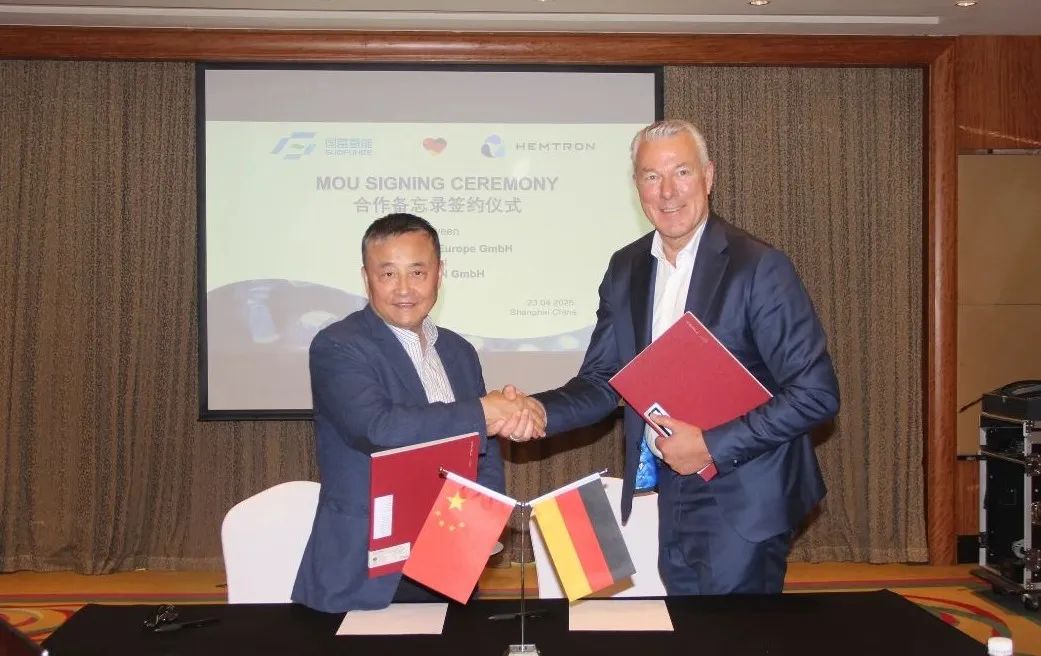
国富氢能(02582)与德国Hemtron签署液氢战略合作协议
智通财经网· 2025-08-08 00:51
根据合作规划,双方将围绕液氢供应链展开深度合作,致力于构建灵活高效的"非管道段"液氢解决方案,并通过整合全球优质氢能技术资源,推动欧洲液 氢基础设施的建设与应用。项目聚焦于全链条协同优化,计划联合推进多个项目的实施,涵盖氢液化、液氢罐箱运输及加氢站等关键环节;同时,通过与 新能源发电、电解水制氢等上游环节的直接对接,在有效控制成本的基础上,实现依托绿色可再生能源的低碳制氢路径。 近日,国富氢能(02582)与德国 Hemtron GmbH 正式达成深度合作,双方将聚焦液氢产业链关键环节开展紧密协作,助力全球氢能产业规模化发展。国 富氢能董事长邬品芳与 Hemtron 公司 CEO Dirk Graszt 先生代表双方推进合作事宜。 全球绿色能源转型背景下,液氢市场需求持续攀升。此次合作是双方优势整合与技术互补的重要举措,标志着国富氢能在国际合作与氢能规模化应用中迈 出关键一步,为中德绿色能源合作注入新活力。双方将加快项目节奏,深化技术研发、装备应用与产业链构建合作,探索市场适配模式,共享成果,助力 全球低碳发展。 德国 Hemtron 是 Oilinvest B.V. 旗下液氢产业链平台企业,在氢液化工厂建设 ...
今天的西藏,欣欣向荣生机勃勃(权威发布)
Ren Min Ri Bao· 2025-08-05 22:21
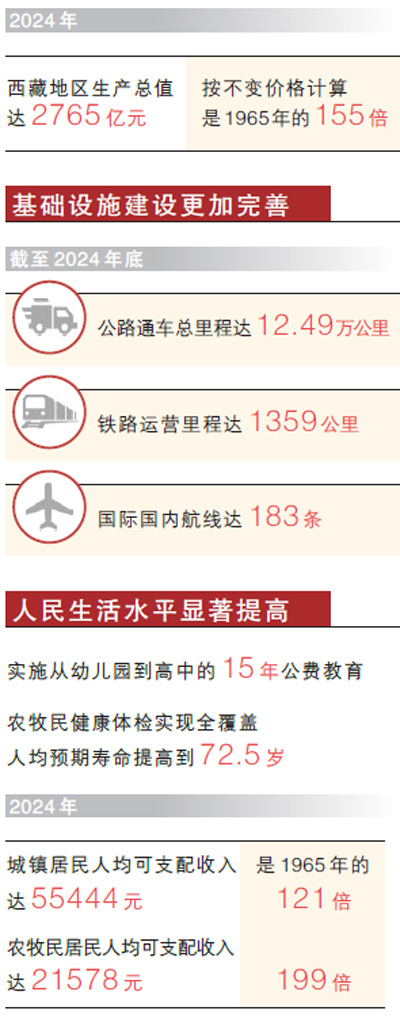
Economic Development - The GDP of Tibet is projected to reach 276.5 billion yuan in 2024, which is 155 times that of 1965, with the first trillion achieved in 50 years and the second in just 6 years [6][7] - The region's GDP is expected to exceed 300 billion yuan this year, marking the third trillion target [6] - Modern industries such as clean energy, cultural tourism, and highland light industry are flourishing, contributing to a significant increase in economic indicators [6][7] Infrastructure Improvement - By the end of 2024, Tibet's total road mileage will reach 124,900 kilometers, and railway operation mileage will be 1,359 kilometers, with 183 domestic and international flight routes [7] - The completion of four power grids has significantly improved the bottlenecks that previously hindered economic and social development [7] Cultural and Tourism Growth - The cultural industry in Tibet is expected to grow by 23.8% in 2024, with 63.89 million domestic and international tourists, a 15.8% increase, and inbound tourists increasing by 188.2% [7] - In the first half of this year, 32.18 million tourists were received, reflecting an 11.7% year-on-year growth [7] Income and Living Standards - The per capita disposable income for urban residents in Tibet is projected to reach 55,444 yuan in 2024, which is 121 times that of 1965, while for farmers and herdsmen, it is expected to be 21,578 yuan, 199 times that of 1965 [8] - Significant improvements in living standards have been noted, with comprehensive victories in poverty alleviation and advancements in education and healthcare [8] Social Welfare and Security - The social security system in Tibet has been continuously improved, ensuring that the basic living standards of the population are met [8][9] - Various social projects have been implemented with a total planned investment of 24.65 billion yuan, of which 23.678 billion yuan has been allocated [9] Ecological Protection - Tibet is recognized as one of the regions with the best ecological environment globally, with over 50% of its land designated as ecological protection areas [12][13] - The region has achieved over 99% in clean energy generation, leading the nation in this aspect, and has a non-fossil energy consumption ratio exceeding 55% [12][13]