医药创新

Search documents
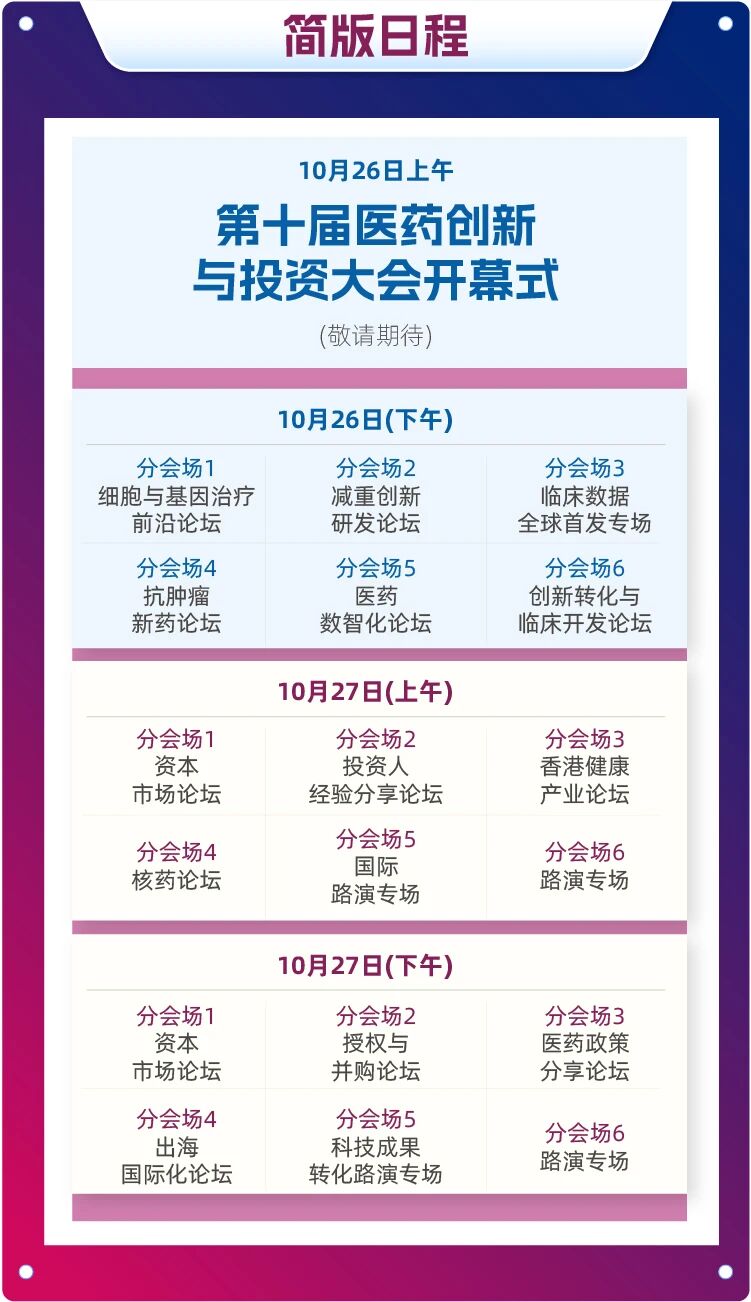
剧透抢先看|第十届医药创新与投资大会初版日程正式发布
Xi Niu Cai Jing· 2025-10-10 12:32
Core Insights - The 10th Pharmaceutical Innovation and Investment Conference will be held on October 26-27, 2025, in Nanjing, focusing on global pharmaceutical frontiers and capital trends, gathering top minds in the pharmaceutical innovation and investment fields [1][2]. Conference Information - The conference will take place at Fengda International Hotel, Nanjing, and will cover multiple thematic forums including innovative drug research and development, clinical research, cell and gene therapy, investment mergers and acquisitions, capital markets, and commercial insurance policies [2]. - The agenda includes various sub-forums such as cell and gene therapy, weight loss innovation, clinical data, anti-tumor new drugs, and international roadshows, ensuring comprehensive coverage of the pharmaceutical industry [3][4]. Key Topics - The conference will address core challenges and development trends in the pharmaceutical industry, emphasizing internationalization, investment financing, and regulatory policies, with a focus on the synergy between basic medical insurance and commercial health insurance [5]. - Discussions will include the strategies of Chinese innovative pharmaceutical companies in global markets, particularly in terms of licensing, mergers, and new investment trends [5][6]. Expert Participation - The conference will feature senior experts, clinical specialists, industry leaders, and frontline investors who will share insights on breakthrough technologies, practical experiences in investment mergers, and policy interpretations [4][6]. - Notable speakers include leaders from prestigious institutions and companies, contributing to discussions on the construction of innovative ecosystems and cross-sector collaboration [4][6]. Forum Structure - The conference will be structured around multi-dimensional forums designed to promote deep dialogue and knowledge sharing across clinical, industrial, capital, and policy fields, with three core discussion directions: global strategic layout, capital collaborative innovation, and market trend outlook [6].

医药生物行业双周报:2025ESMO大会召开在即:关注临床数据及基本面优异的公司-20251009
Great Wall Glory Securities· 2025-10-09 11:14
Investment Rating - The investment rating for the pharmaceutical and biotechnology industry is "Positive" and the rating has been maintained [1] Core Insights - The pharmaceutical and biotechnology industry index experienced a decline of 2.72%, ranking 23rd among 31 primary industries, underperforming the CSI 300 index which declined by 2.62% [4][16] - The industry valuation as of September 30, 2025, is a PE (TTM overall method, excluding negative values) of 31.23x, down from 31.79x in the previous period, indicating a downward trend and below the average [21] - The top three sub-industries in terms of PE (TTM overall method, excluding negative values) are vaccines (55.74x), medical devices (41.29x), and hospitals (39.51x), with the median at 33.19x, while pharmaceutical circulation has the lowest valuation at 14.34x [21] Industry Review - The report highlights that during the reporting period, 51 listed companies in the pharmaceutical and biotechnology sector had a net reduction in shareholders amounting to 2.435 billion yuan, with 14 companies increasing their holdings by 681 million yuan and 37 companies reducing their holdings by 3.116 billion yuan [4] - The report emphasizes the importance of upcoming clinical data and the strong fundamentals of companies ahead of the ESMO 2025 conference, which is expected to showcase significant clinical research results from various domestic pharmaceutical companies [7][8] Important Industry News - AstraZeneca plans to list on the New York Stock Exchange [6] - The report mentions the approval of a new oral SERD drug by Eli Lilly, marking it as the second such drug approved globally [8][45] - The approval of the first domestic quadrivalent HPV vaccine in China is expected to expand the coverage population and potentially be priced lower than imported versions [8][50][52]



2025版中国药典实施!19项技术空白填补,分析仪器检测标准全面升级
仪器信息网· 2025-10-09 09:05
Core Viewpoint - The 2025 edition of the "Pharmacopoeia of the People's Republic of China" officially implemented on October 1, 2025, serves as a critical standard for drug safety and a guide for the development of the pharmaceutical industry in China [3][4]. Summary by Sections New Additions and Revisions - The new edition includes 159 newly added varieties and 1,101 revised varieties, totaling 6,385 varieties [3][4]. - It introduces 69 new general technical requirements and revises 133, along with 33 new guiding principles and 17 revisions [3]. Focus on Domestic Innovations - The pharmacopoeia emphasizes the inclusion of domestically developed drugs with independent intellectual property rights, such as trastuzumab and rituximab, marking their first inclusion in an international pharmacopoeia [4][5]. - It highlights the addition of five anti-tumor drugs and medications for pediatric use, such as growth hormone for treating children's growth disorders [4]. Safety Standards and International Alignment - The new edition raises safety standards for drug residues, increasing the number of controlled pesticide residues in traditional Chinese medicine from 33 to 47 [7]. - It aligns with international standards, facilitating the registration process for Chinese drugs abroad and enhancing the global competitiveness of Chinese pharmaceuticals [7][8]. Comprehensive Drug Standards - The pharmacopoeia covers a wide range of categories, including traditional Chinese medicine, chemical drugs, biological products, excipients, and packaging materials, establishing a comprehensive national drug standard system [8].

走进北京医药健康产业区,解码首都医药创新策源力
Xin Jing Bao· 2025-09-30 08:48
Core Insights - The event "Innovation Source, Health Navigation" highlighted the role of innovative pharmaceuticals in driving high-quality economic development in Beijing, showcasing the complete path from target discovery to clinical approval for "star" innovative drugs [1] Group 1: Industry Overview - The Zhongguancun Life Science Park has become one of the most concentrated areas for innovation resources in China's life sciences, housing over 1,000 innovative pharmaceutical companies and several national-level research institutions [2] - The Life Valley, part of the Future Science City, is a key component of Beijing's international innovation center, benefiting from multiple national policy advantages [3] Group 2: Company Highlights - Wantai Biological Pharmacy has invested over 1 billion yuan annually in R&D, with over 30% of its workforce dedicated to research, resulting in hundreds of products, including six global firsts and seven domestic firsts [5] - Huahui Anjian focuses on developing competitive innovative drugs in virology and hepatology, with six drugs in various clinical development stages, including a breakthrough therapy for hepatitis B [6] - Nuo Cheng Jian Hua has over ten innovative drugs in clinical stages, with more than 30 clinical trials ongoing globally, including the BTK inhibitor approved in China and Singapore [7]

经济热力站丨走进北京医药健康产业区,解码首都医药创新策源力
Bei Ke Cai Jing· 2025-09-30 08:37
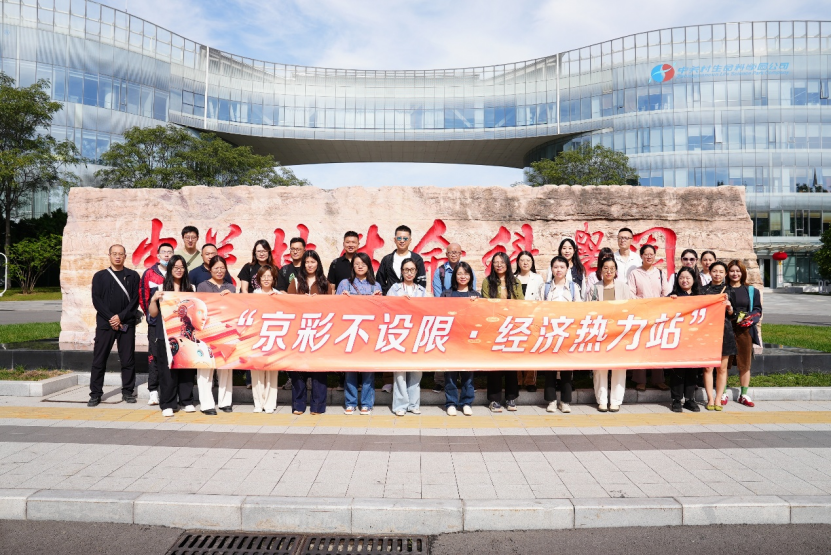
Core Viewpoint - The event "Innovation Source, Health Navigation" highlights Beijing's strategic focus on the pharmaceutical and health sectors, showcasing the city's efforts to drive high-quality economic development through innovation and clinical needs [1][3][19]. Group 1: Event Overview - The event was organized by the Beijing Municipal Cyberspace Administration and featured a visit to various innovative pharmaceutical companies and research centers [1][2]. - The media delegation explored the complete path of innovative drugs from target discovery to clinical approval, emphasizing the importance of clinical needs and policy support in driving pharmaceutical innovation [2][3]. Group 2: Industry Development - The Zhongguancun Life Science Park has become a hub for innovation in China's life sciences, housing over 1,000 innovative pharmaceutical companies and several national-level research institutions [3][4]. - The park includes significant medical facilities with over 3,000 beds, supporting clinical research and the development of innovative drugs and medical devices [3]. Group 3: Company Highlights - Wantaibio invests over 1 billion yuan annually in R&D, with over 30% of its workforce dedicated to research, resulting in hundreds of innovative products, including six global firsts [12]. - Huahui Anjian focuses on developing competitive innovative drugs in virology and oncology, with several drugs in different clinical development stages, including a breakthrough therapy for hepatitis B [14]. - Nuo Cheng Jian Hua has over ten innovative drugs in clinical stages, with significant trials ongoing in China and globally, including a BTK inhibitor and a humanized monoclonal antibody [16][18]. Group 4: Innovation Ecosystem - The event emphasized the importance of a supportive research policy and industrial ecosystem in Beijing, which provides fertile ground for the growth of innovative pharmaceutical companies [19]. - The ongoing monthly thematic visits aim to promote the achievements of high-quality economic development in Beijing, focusing on key sectors such as advanced manufacturing and biomedicine [19].
阿斯利康暂停2亿英镑在英扩建工厂计划
Shang Wu Bu Wang Zhan· 2025-09-26 02:52
Group 1 - AstraZeneca has confirmed the suspension of its £200 million expansion plan in Cambridge, following the cancellation of a £650 million investment plan in the UK [1] - The company previously announced the cancellation of its Liverpool project in January 2023, indicating a trend of reduced investment in the UK pharmaceutical sector [1] - Merck has also halted plans to establish a new research center in London, citing a lack of investment in the life sciences sector and low valuations of innovative drugs and vaccines by successive UK governments [1] Group 2 - The UK pharmaceutical industry has been facing challenges, with calls from executives for better commercial terms from European governments to ensure fair returns on innovation [1] - The CEO of the UK Pharmaceutical Industry Association emphasized the need for a commercial environment that rewards pharmaceutical innovation and benefits UK patients [1] - A recent report from the UK Pharmaceutical Industry Association and PwC indicates that the UK's pharmaceutical R&D investment has lagged behind global trends, with a growth rate of 1.9% since 2020 compared to a global average of 6.6% [2]

医药近期投资策略
2025-10-13 01:00
Summary of Key Points from the Conference Call Industry Overview - The pharmaceutical industry in China is experiencing enhanced innovation capabilities, with leading companies showing growth rates surpassing the global average, indicating an increase in global competitiveness [1][2] - Despite recent market fluctuations, the fundamentals of the pharmaceutical industry remain robust, with reasonable valuations and no signs of bubbles [1][3][4] Core Insights and Arguments - The overall valuation of the pharmaceutical sector is deemed reasonable, with potential growth for innovative drug companies projected at 50-100% over the next three years [1][4] - The medical device, CRO (Contract Research Organization), consumer healthcare, and traditional Chinese medicine sectors also show relatively low valuations, indicating manageable risks [1][4] - The current allocation in the pharmaceutical sector is at a historical low, suggesting room for improvement in future investments [5] - The innovative drug sector's logic remains unchanged, with active business development (BD) activities expected, particularly in areas like PD-L1 Plus, ADC, and dual antibodies [1][7] Market Performance and Trends - The pharmaceutical sector has shown significant performance this year, with the Hong Kong stock index rising nearly 100% and the A-share market increasing by approximately 40-50% [3][5] - The recovery of the innovative drug sector is expected to lead to nonlinear growth, with many companies in the sector having a PEG ratio of less than 1, indicating accelerated earnings growth [6][7] - The medical device sector is in a mild recovery phase, with procurement pressures easing and opportunities for domestic companies to gain market share through competitive pricing [3][24][25] Investment Opportunities - Innovative drugs are highlighted as the primary investment focus due to their potential for significant earnings growth and market interest following recent interest rate cuts [6][7] - The medical device sector is also seen as a stable investment opportunity, with leading companies showing signs of recovery in their financial performance [6][7] - Consumer healthcare and traditional Chinese medicine are currently more focused on individual stock selection, with potential for recovery in the latter half of the year [6][35] Company-Specific Insights - Key companies with strong growth potential include Heng Rui, BeiGene, and Innovent Biologics, with expectations of exceeding profit forecasts [7][10] - The performance of companies like WuXi AppTec and WuXi Biologics is also noted, with a focus on their recovery and growth potential in the coming years [19][20] Policy and Regulatory Environment - Recent policy changes, such as the optimization of centralized procurement, are expected to positively impact the pharmaceutical sector, providing better financial and profit margins for innovative drug companies [9][24] - The adjustment of the essential drug list is anticipated to have significant implications for the traditional Chinese medicine sector, with expectations for clearer guidelines in the near future [45] Risks and Challenges - While there are no significant risks currently identified in the industry, geopolitical factors, particularly U.S.-China relations, could introduce uncertainties [23] - The medical device sector faces ongoing pricing pressures, particularly in the context of centralized procurement, which could impact profitability [25][29] Conclusion - The pharmaceutical industry in China is positioned for growth, with innovative drugs and medical devices leading the way. The current market environment presents numerous investment opportunities, particularly for companies demonstrating strong fundamentals and growth potential.




从“跟跑者”到“引领者”——中国医药产业创新的蝶变时刻
Ge Long Hui· 2025-09-22 04:34
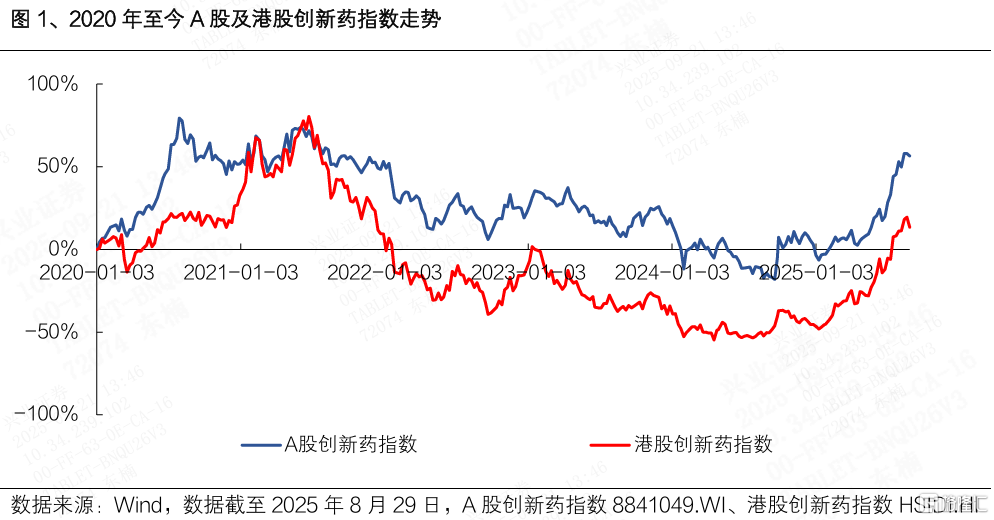
Core Insights - The pharmaceutical industry is driven by both policy and technology, with innovation being the most certain long-term trend since 2015 [1][12] - The Chinese innovative drug sector has shown significant growth, with A-share and Hong Kong innovative drug indices increasing by 56% and 105% respectively from early 2025 to August 29, 2025 [1] - The development of innovative drugs in China can be categorized into three stages: 1.0 (2000-2014), 2.0 (2015-2021), and 3.0 (2022-present) [3][6] Policy and Market Dynamics - Since 2015, a series of healthcare reforms in China have accelerated the transition from generic to innovative drugs, with significant improvements in drug approval times [12][18] - The average time from application to approval for innovative drugs in China has been reduced by 57 days, with priority-reviewed drugs seeing an even greater reduction of 189 days [12] - The market for innovative drugs in core hospitals is projected to reach 882.2 billion RMB in 2024, with a compound annual growth rate of 3.3% [12] International Competitiveness - In 2024, the number of original innovative drugs developed by Chinese companies reached 704, leading globally, while the U.S. produced 400-500 annually [6] - The total transaction amount for innovative drug licensing from China reached $51.9 billion in 2024, with upfront payments totaling $4.1 billion [7] - Chinese innovative drug companies are increasingly competitive internationally, particularly in complex drug types like ADCs and bispecific antibodies, which accounted for 44% of licensing transactions but contributed 66% of upfront payment amounts [26][31] Technological Advancements - The current phase of innovation in the pharmaceutical industry is marked by new technological paradigms, including ADCs and bispecific antibodies, which enhance treatment efficacy [23][26] - Chinese companies are leveraging their advantages in research efficiency and cost-effectiveness to compete in the global market [18][20]

从GSK到奥利佳:21年老将跳槽 跨国药企迎转型阵痛
2 1 Shi Ji Jing Ji Bao Dao· 2025-09-20 05:22
Core Insights - The departure of Cecilia Qi from GSK after 21 years reflects significant strategic restructuring and industry changes faced by multinational pharmaceutical companies in the Chinese market [2][3][10] Financial Performance - GSK reported a total revenue of £15.502 billion (approximately $20.157 billion) for the first half of 2025, marking a 5% year-on-year increase [2] - Revenue from GSK's vaccine segment reached £4.186 billion (approximately $5.443 billion), with a 1% year-on-year growth [2] - Sales of the respiratory syncytial virus vaccine Arexvy fell by 39% to £144 million (approximately $187 million) [2] - Sales of the shingles vaccine Shingrix decreased by 1% to £1.720 billion (approximately $2.236 billion) [2] - GSK anticipates a 3% to 5% growth in total revenue and a 6% to 8% increase in core operating profit for the full year of 2025 [2] Strategic Adjustments - GSK's business structure is based on three pillars: specialty medicines, vaccines, and generics, with respective revenues of £6.260 billion ($8.141 billion), £4.186 billion ($5.443 billion), and £5.056 billion ($6.573 billion) for the first half of 2025 [5] - GSK initiated a regional integration strategy in June 2025, merging emerging markets with Greater China and intercontinental regions to enhance market flexibility and resource allocation efficiency [5] - The appointment of a Chief Operating Officer in China aims to improve local operational efficiency [5] Market Challenges - GSK faces pressure on its main product lines, with growth drivers becoming insufficient, particularly in the vaccine and specialty drug sectors [6][7] - The company’s traditional high-margin model is under threat due to increased competition and pricing pressures from domestic generic drugs [7] - GSK's strategic focus has shifted towards oncology and immunology, but its pipeline in these areas lags behind competitors like Pfizer and AstraZeneca [7] Industry Trends - There is a noticeable divergence in performance among multinational pharmaceutical companies in China, with Novartis achieving $2.2 billion in sales (an 8% increase) while Merck's revenue plummeted by 70% to $1.075 billion [8][9] - The trend of multinational companies adjusting their strategies from broad coverage to focused approaches is evident, with companies like BMS and Merck restructuring their operations in China [9] - The flow of high-level talent from multinational firms to local companies is increasing, as these professionals bring valuable experience and global perspectives to enhance local competitiveness [12][13] Collaborations and Future Outlook - GSK's collaboration with Heng Rui Medicine, potentially worth up to $12 billion, aims to enhance its pipeline in respiratory and oncology treatments [11] - The shift in multinational companies' strategies indicates a transition from "in China, for China" to "in China, for the world," leveraging local talent and innovation for global markets [13]

速递 | 全球GLP-1药物上半年销售额破350亿美金,超过PD-1/PD-L1药物
GLP1减重宝典· 2025-09-18 10:28
Core Insights - The global pharmaceutical market is experiencing a significant shift with GLP-1 receptor agonists surpassing $35 billion in sales, marking a historic change as they outpace PD-1/PD-L1 inhibitors for the first time [2] - GLP-1 drugs are projected to reach over $70 billion by the end of 2025, indicating a robust growth trajectory in the pharmaceutical sector [2] Group 1: Market Dynamics - PD-1/PD-L1 inhibitors, once the leading cancer treatment, are seeing a slowdown in growth due to limited indications and increased competition, with a projected market size of $53.9 billion to $62.2 billion by 2025 [5] - In contrast, GLP-1 drugs are tapping into the vast markets of diabetes and obesity, with over 500 million diabetes patients and nearly 1 billion obese individuals globally, driving rapid market expansion [5] Group 2: Competitive Landscape - The GLP-1 market is dominated by two major players: Novo Nordisk and Eli Lilly, with Novo Nordisk's semaglutide products gaining significant market share and recognition [7] - Eli Lilly's tirzepatide is also gaining traction, with a revenue increase of over 45% in its weight management segment, contributing to the company's market capitalization exceeding $800 billion [7] Group 3: Expanding Indications - Semaglutide's approval for chronic kidney disease treatment in China signifies an expansion of its application in chronic disease management, potentially benefiting millions of patients [8] - Eli Lilly's entry into the obstructive sleep apnea (OSA) market with tirzepatide highlights the potential for GLP-1 drugs to address multiple metabolic diseases, with the OSA market estimated to exceed $20 billion [9]