对赌协议

Search documents
近一周又一起!万达所持94亿股权被冻结
第一财经· 2025-09-05 12:56
Core Viewpoint - Wanda Group is facing significant financial challenges, evidenced by frequent equity freezes due to debt issues and failed IPO commitments, leading to a cash flow crisis and asset sales to manage liabilities [2][3][4][5]. Group 1: Equity Freezes - Wanda Group has recently reported two new equity freezes involving Shanghai Wanda Network Financial Services Co., Ltd. and Shanghai Wanda Microfinance Co., Ltd., with a total frozen equity value exceeding 9.4 billion yuan, lasting for three years [2]. - The total number of equity freeze records for Wanda has reached 37, with the latest freeze being the largest in terms of value [2]. - The underlying cause of these freezes is primarily related to debt obligations, as each freeze corresponds to unpaid debts, including bank loans and trust plans [2][3]. Group 2: Debt and Cash Flow Issues - As of September 2024, Wanda Commercial Management has over 43.9 billion yuan in short-term debts due within a year, while its cash reserves are only 15.1 billion yuan [4]. - The company is relying on "borrowing new to pay old" strategies to manage its cash flow, which could lead to further asset freezes if financing channels are blocked [4]. - Despite selling assets like Wanda Plaza, the cash inflow has been below expectations, with many transactions being "debt-for-equity" swaps, raising concerns about the actual cash recovery [4]. Group 3: Asset Sales and Strategic Moves - To navigate its financial difficulties, Wanda is aggressively selling assets, with a recent transaction involving a consortium including Tencent and JD.com to acquire 100% equity of 48 target companies for a total investment of 22.43 billion yuan [5]. - The purpose of these asset sales is to generate substantial cash for repaying imminent domestic and dollar-denominated debts while retaining operational control through Wanda Commercial Management [5]. - Ultimately, Wanda needs to address its financing challenges in the capital markets to stabilize its financial situation [5].

万达所持94亿股权被冻结,大手笔“卖广场”后仍需解决根源问题
Di Yi Cai Jing· 2025-09-05 10:00
Group 1 - The core issue for Wanda Group is the continuous occurrence of equity freezes, with recent cases involving over 9.4 billion yuan in frozen shares for its subsidiaries [2] - As of now, Wanda Group has a total of 37 equity freeze records, indicating a significant debt issue linked to overdue obligations [2][3] - The company faces a cash flow challenge, with short-term debts exceeding 43.9 billion yuan and cash reserves only at 15.1 billion yuan, necessitating reliance on refinancing [3] Group 2 - The recent equity freezes are largely attributed to a "betting agreement" signed during pre-IPO financing, which requires Wanda to buy back shares at an 8% annual interest if it fails to go public by the end of 2023 [3] - To address its financial situation, Wanda is selling assets to generate cash, with a recent transaction involving the establishment of a private equity fund with a total investment of 22.43 billion yuan [3][4] - The asset sales aim to provide immediate cash for repaying domestic and foreign debts while allowing Wanda to retain operational control, aligning with its strategy of transitioning to a "light asset" model [4]
600亿龙头分拆上市失败,四份对赌协议将被“引爆”
Zhong Guo Ji Jin Bao· 2025-09-02 01:57
Core Viewpoint - The plan for the spin-off of Chint Electric's subsidiary, Chint Aneng, to list on the A-share market has officially failed, triggering a buyback obligation of at least 1.5 billion yuan [1][11]. Group 1: IPO Process and Outcome - Chint Electric announced the plan to spin off Chint Aneng for an IPO in October 2022, but the application was withdrawn on September 1, 2023, after a lengthy review process [1][2]. - The IPO application was accepted in September 2023, but after multiple updates to financial data, the process stalled without further inquiries or meetings [1][3]. Group 2: Financial Performance and Challenges - Chint Aneng's revenue for the years 2022 to 2024 was reported at 13.704 billion yuan, 29.606 billion yuan, and 31.826 billion yuan, with net profits of 1.753 billion yuan, 2.604 billion yuan, and 2.861 billion yuan respectively [3][4]. - The company's inventory has significantly increased, with the value at the end of 2024 reaching 37.414 billion yuan, which is 1.18 times its annual revenue [4][5]. - Chint Aneng's total assets were reported at 74.257 billion yuan, with inventory accounting for over half of this total [5][6]. Group 3: Debt and Financial Obligations - The company has a high debt level, with asset-liability ratios of 76.92%, 79.16%, and 80.25% over the reporting periods, indicating a tight cash flow situation [8][9]. - Short-term borrowings reached 8.97 billion yuan by the end of 2024, a threefold increase over two years, while cash reserves were only 3.22 billion yuan, covering less than 20% of short-term debts [9][10]. - The failed IPO will activate several buyback agreements, potentially costing Chint Group and its controlling shareholder over 1.5 billion yuan [11].


600亿龙头分拆上市失败,四份对赌协议将被“引爆”
中国基金报· 2025-09-02 01:51
Core Viewpoint - The IPO plan for Zhejiang Chint Electrics' subsidiary Chint Aneng has failed, triggering a buyback obligation of at least 1.5 billion yuan [1][12][16]. Group 1: IPO Failure - Chint Aneng's IPO application was officially withdrawn on September 1, 2023, after a lengthy process that began in October 2022 [1][2]. - The company faced delays in the IPO process, with no second-round inquiries or entry into the listing committee meeting after submitting updated financial data [1][4]. Group 2: Financial Performance - Chint Aneng's revenue for the years 2022, 2023, and 2024 was reported at 13.704 billion yuan, 29.606 billion yuan, and 31.826 billion yuan, respectively, with net profits of 1.753 billion yuan, 2.604 billion yuan, and 2.861 billion yuan [4][11]. - The company's inventory levels have risen significantly, with inventory at the end of 2024 reaching 37.414 billion yuan, which is 1.18 times its annual revenue [6][10]. Group 3: Inventory and Debt Issues - Chint Aneng's inventory accounted for over half of its total assets, which were valued at 74.257 billion yuan at the end of 2024 [6][13]. - The company has a high debt level, with a debt-to-asset ratio of 80.25% as of the end of 2024, and short-term borrowings reaching 8.97 billion yuan [13][14]. Group 4: Buyback Obligations - The failure of the IPO will activate multiple buyback agreements, with potential liabilities exceeding 1.5 billion yuan for Chint Group and its actual controller, Nan Cunhui [12][16].

投资人,抢了我的公司
36氪· 2025-09-01 10:46
Core Viewpoint - The article discusses the increasing trend of investors using litigation as a means to gain control over companies, highlighting a shift in the relationship dynamics between entrepreneurs and investors, where the latter are no longer satisfied with mere financial returns but seek to control the core assets and operations of the companies they invest in [4][22][45]. Group 1: Investor Strategies - Investors are increasingly turning to litigation to secure control over companies, especially in the context of rising competition and financial pressures in the venture capital industry [22][24]. - The traditional model of financial investment is being challenged, with investors seeking direct control over businesses to ensure stability and long-term value [22][27]. - The trend of using lawsuits to gain control is particularly evident in cases where the controlling shareholders face debt issues, as seen in the example of Jingjia Co., where a significant portion of shares was frozen due to legal disputes [16][22]. Group 2: Entrepreneurial Challenges - Entrepreneurs often find themselves in a precarious position, where the promises made during investment negotiations can turn into tools for investor control, leading to a loss of autonomy [11][18]. - The emotional toll on entrepreneurs is significant, as they view their companies as extensions of their personal vision and identity, making it difficult to accept investor-driven changes [37][45]. - The article illustrates that many entrepreneurs are caught in a dilemma where they must either accept stringent investment terms or risk losing their companies entirely [20][28]. Group 3: Legal and Operational Implications - The use of litigation as a strategy can lead to a "squeeze" effect, where multiple lawsuits can overwhelm a company, hindering its ability to operate normally [33][34]. - Legal disputes often arise from misalignments in expectations and communication failures between investors and entrepreneurs, leading to a breakdown of trust [41][45]. - The complexities of modern investment agreements, including performance guarantees and control clauses, can create significant challenges for both parties, often resulting in litigation as a last resort [14][40]. Group 4: Industry Trends - The venture capital industry is experiencing a fundraising crisis, with a significant drop in capital raised compared to previous years, prompting investors to seek alternative strategies for securing returns [22][23]. - Emerging industries, particularly those aligned with national development goals, are becoming prime targets for investor control, as they offer both strategic value and long-term growth potential [26][27]. - The shift from financial investor to operational controller reflects a broader trend in the industry, where investors are increasingly willing to take on the challenges of running businesses directly [27][28].

衡美健康冲刺北交所上市 核心股东解除一致行动关系
Mei Ri Jing Ji Xin Wen· 2025-08-27 06:10
Core Viewpoint - Zhejiang Hengmei Health Technology Co., Ltd. is preparing for an IPO on the Beijing Stock Exchange, facing challenges such as a decline in revenue and net profit, and regulatory scrutiny over inaccurate disclosures related to a terminated betting agreement [1][2]. Group 1: Company Overview - Hengmei Health specializes in the research, production, and sales of nutritional functional foods, primarily providing comprehensive R&D and production services to brand clients [3]. - The company is controlled by Feng Wei, who holds 78.10% of the voting rights, with key shareholders including Zheng Yadan and Yang Peng [3][4]. Group 2: Financial Performance - The company reported revenues of approximately 587 million yuan, 979 million yuan, and 1.072 billion yuan for the years 2022, 2023, and 2024, respectively, with net profits of about 39.84 million yuan, 97.44 million yuan, and 103 million yuan [6]. - In Q1 2025, Hengmei Health experienced a revenue decline of 10.14% year-on-year, totaling 217 million yuan, and a net profit drop of 23.12%, amounting to 20.61 million yuan [7]. Group 3: Regulatory Issues - The company received a warning letter from the regulatory authority due to inaccurate disclosures regarding the termination of special rights agreements with investors [5][6]. - The warning highlighted discrepancies in the timing of the signing of supplementary agreements related to the company's obligations [5]. Group 4: Production Capacity and Challenges - The company faced low capacity utilization rates for certain products in 2024, with liquid products at 55.81%, bar products at 69.90%, and baking products at only 11.97% [8]. - The decline in revenue was attributed to market demand fluctuations and rising costs of key raw materials, particularly protein-based ingredients [7][8]. Group 5: Future Plans - Hengmei Health plans to raise 50.13 million yuan for projects aimed at expanding production capacity and enhancing R&D capabilities [9]. - The new production base is expected to improve operational efficiency and attract skilled talent, thereby strengthening the company's market position [9].
纳百川IPO:实控人表决权近8成,融资超7亿,宁德时代是大客户
Sou Hu Cai Jing· 2025-08-25 10:52
Core Viewpoint - Nanbaichuan New Energy Co., Ltd. is preparing for its IPO on the Shenzhen Stock Exchange, focusing on thermal management products for electric vehicle batteries and fuel vehicles, with significant concerns regarding governance, financial performance, and reliance on major clients [1][6][18]. Group 1: Company Overview - Nanbaichuan specializes in the research, production, and sales of thermal management products for electric vehicle batteries, fuel vehicle power systems, and energy storage batteries [1]. - The company was established in October 2007 and underwent a shareholding reform in February 2023, increasing the number of shareholders to 14, with the controlling shareholder being Chen Rongxian [3][5]. Group 2: Shareholding Structure - The actual controllers, Chen Rongxian, Zhang Liqin, and Chen Chaopengyu, collectively hold approximately 79.45% of the voting rights, indicating significant control over the company's operations [5][6]. - Chen Rongxian has a background in management and currently serves as the chairman and general manager of Nanbaichuan [5]. Group 3: Financial Performance - Revenue has shown steady growth from 1.031 billion yuan in 2022 to 1.437 billion yuan in 2024, with year-on-year increases of 98.37%, 10.21%, and 26.48% respectively [16]. - However, net profit has fluctuated, with a decline from 113 million yuan in 2022 to 95 million yuan in 2024, indicating a trend of increasing revenue without corresponding profit growth [16]. Group 4: Product Performance - The battery liquid cooling plate contributes approximately 80% of the company's revenue, but its gross margin has decreased from 19.69% to 14.32% over the past two years [16]. - The company has faced challenges with the battery box product line, which has not met revenue expectations, achieving only 377.5 thousand yuan in 2024 compared to a forecast of 2.748 million yuan [14]. Group 5: Client and Supplier Concentration - Nanbaichuan's revenue is heavily reliant on a few major clients, with the top five clients accounting for over 60% of sales, including significant dependence on CATL [18]. - The company also has a high concentration of suppliers, with the top five suppliers representing over 68% of procurement costs, raising concerns about supply chain risks [20]. Group 6: Accounts Receivable - Accounts receivable have been increasing, reaching 560 million yuan in 2024, which constitutes 40.9% of current assets, indicating potential liquidity issues [20]. - The company has also seen a rise in bad debt provisions, reflecting concerns over the collectability of receivables [21].


“三无”公司华芢\生物两年三闯港交所:它的生死对手,是时间错配
Hua Xia Shi Bao· 2025-08-24 11:11
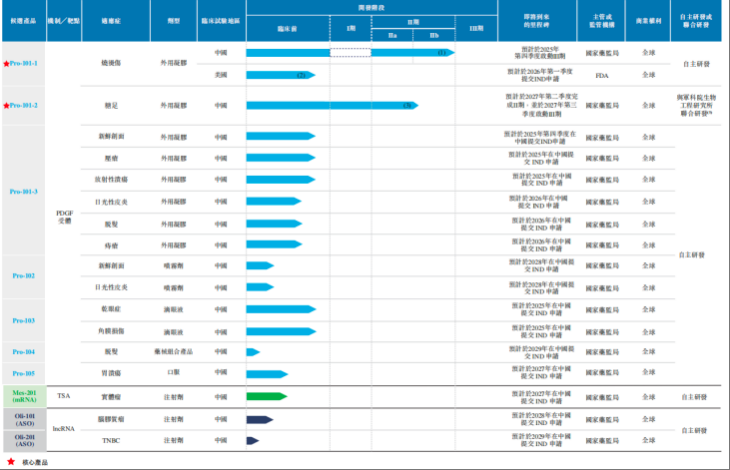
Core Viewpoint - Huazhang Biotech has submitted its third IPO application to the Hong Kong Stock Exchange, despite being in a "three no" state: no commercial products, no stable revenue, and no profit [2][4][12] Company Overview - Established in April 2012, Huazhang Biotech focuses on developing protein drugs for clinical needs, particularly in the wound healing treatment area [3][4] - The company has a pipeline of ten candidate products, with two core products, Pro-101-1 and Pro-101-2, currently in clinical research stages [3][4] Product Development - Pro-101-1, aimed at treating burns, has completed Phase IIb clinical trials and is expected to start Phase III trials in Q4 2025, with a goal to be approved in China by Q4 2027 [4][5] - Pro-101-2, targeting diabetic foot ulcers, is in Phase II trials and aims for market introduction by 2030 [4][5] Financial Performance - The company has reported minimal revenue, with figures of 472,000 RMB, 261,000 RMB, and 0 RMB for 2023, 2024, and the first five months of 2025, respectively [7][8] - Losses have significantly increased, with amounts of 105.2 million RMB, 212.3 million RMB, and 72.4 million RMB for the same periods [7][8] Funding and Valuation - Huazhang Biotech has completed three rounds of financing, with valuations increasing from approximately 805 million RMB in May 2021 to 3.3 billion RMB in October 2023 [9][10] - The company faces stringent conditions from investors, including a requirement to complete its IPO by the end of 2026, or face share buyback obligations [11][12] Challenges Ahead - The transition from Phase II to III clinical trials is fraught with high failure rates, and the company has not yet validated its core products through Phase II trials [5][11] - The company’s liquidity is tightening, with a current ratio dropping from 20.9 in 2023 to 4.9 by May 2025, indicating potential cash flow issues [9][11]
“三无”公司华芢生物两年三闯港交所:它的生死对手,是时间错配
Hua Xia Shi Bao· 2025-08-23 08:55
Core Viewpoint - Huazhang Biotech has submitted its third IPO application to the Hong Kong Stock Exchange, despite being in a "three no" state: no commercial products, no stable revenue, and no profit. The company faces a buyback pressure from investors if it fails to go public by the end of 2026, highlighting a critical race against time for its survival [1][10]. Group 1: Company Overview - Established in April 2012, Huazhang Biotech focuses on developing protein drugs for clinical needs, particularly in the wound healing treatment area. The company has a pipeline of ten candidate products, with two core products, Pro-101-1 and Pro-101-2, currently in clinical research [2][3]. - Pro-101-1, aimed at treating burns, has completed Phase IIb trials and plans to start Phase III trials in Q4 2025, targeting market approval in 2027. Pro-101-2, for diabetic foot ulcers, is in Phase II trials, expected to complete in Q2 2027, with a market launch aimed for 2030 [3][4]. Group 2: Financial Performance - The company has reported minimal revenue, with figures of 472,000 RMB, 261,000 RMB, and 0 RMB for 2023, 2024, and the first five months of 2025, respectively. Losses have escalated to 105.2 million RMB, 212.3 million RMB, and 72.4 million RMB during the same periods, primarily due to rising R&D and administrative costs [6][7]. - R&D expenditures were 39.9 million RMB, 91.3 million RMB, and 32.1 million RMB for the respective years, with administrative expenses sometimes exceeding R&D costs [6][7]. Group 3: Investment and Financing - Huazhang Biotech has completed three rounds of financing, with valuations increasing from approximately 805 million RMB in May 2021 to 3.3 billion RMB in October 2023. However, the financing agreements include strict terms requiring the company to complete its IPO by the end of 2026, or face buyback obligations [8][9]. - The company's liquidity has deteriorated, with the current ratio dropping from 20.9 in 2023 to 4.9 by May 2025, indicating a tightening cash flow situation [8]. Group 4: Challenges and Risks - The transition from Phase II to Phase III trials is fraught with challenges, often referred to as the "valley of death" due to high failure rates. The company faces significant uncertainty regarding the efficacy and marketability of its products [4][10]. - The pressure from investors for rapid progress in clinical trials and the IPO poses a risk of compromising data quality, which could lead to a failed market entry if timelines are not met [10][11].
闪回科技第三次申请赴港上市
Zhong Guo Zheng Quan Bao· 2025-08-19 08:29
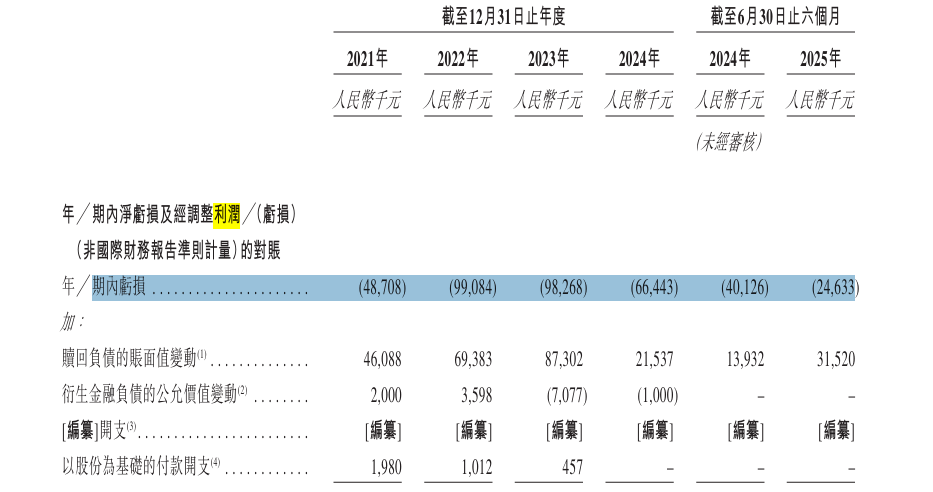
Core Viewpoint - Flashback Technology Limited has submitted its third application for H-share listing on the Hong Kong Stock Exchange, following two previous failed attempts in 2024, amidst ongoing financial struggles and increasing debt levels [1][2]. Company Overview - Flashback Technology focuses on the recycling and resale of consumer electronics, primarily second-hand mobile phones, with over 90% of its revenue in 2024 coming from this segment, amounting to 1.231 billion RMB [3]. - The company operates under brands such as Flashback Recycling and Flashback Quality [3]. Financial Performance - Since 2021, Flashback Technology has been consistently operating at a loss, with a gross margin significantly lower than its peers. In 2024, the company's gross margin was only 4.8%, compared to over 20% for competitors like Wanwu Xingsheng [5]. - The company reported a loss of 660 million RMB in 2024, which was a 32% reduction from the previous year, but still far behind Wanwu Xingsheng, which reduced its losses by over 90% during the same period [5]. Debt and Financial Obligations - Flashback Technology has faced increasing debt levels due to multiple failed investment agreements, with its current liabilities rising from 351 million RMB in 2021 to 929 million RMB in 2024, an increase of over 160% [9]. - As of the first half of 2025, the company's current liabilities reached 953 million RMB, four times its current assets, with over 80% of these liabilities attributed to redemption obligations from failed agreements [10]. Market Position - According to Frost & Sullivan, Flashback Technology is the third-largest mobile phone recycling service provider in China based on the total transaction value of recycled and sold second-hand phones in 2024 [5]. - The competitive landscape includes other companies like Wanwu Xingsheng and Zhuanzhuan, with Wanwu Xingsheng having successfully listed in the U.S. in 2021 [4]. Challenges and Competition - The company has faced increased competition since a major consumer electronics brand launched its own recycling platform in June 2022, which has negatively impacted Flashback's profit margins [8]. - The rising costs of procuring mid-to-high-end second-hand phones and the inability to fully pass on these costs to customers have further pressured the company's profitability [8].