摩尔定律

Search documents
价值投资的对立面不是“小登科技”
Sou Hu Cai Jing· 2025-11-10 12:54
Core Viewpoint - The article discusses the evolving landscape of value investing in the context of emerging technologies like AI, emphasizing that value investing is not opposed to technology investment but rather encompasses it as part of a broader investment strategy [1][16]. Group 1: Value Investing and AI - Value investors can participate in the AI era without abandoning their principles, as value investing is fundamentally about assessing long-term cash flows rather than being confined to specific industries [1][16]. - Tian Yu, a representative value investor, has been early in researching AI and integrates it into his investment evaluations without distinguishing between emerging and traditional industries [2][3]. Group 2: Investment Framework - Tian Yu employs a consistent framework for evaluating all types of companies, focusing on three criteria: clear demand limits, assessable business models, and identifiable economic moats [3][11]. - His analysis of the semiconductor industry, particularly wafer foundries, highlights the importance of understanding the physical and economic principles that govern these businesses [4][5]. Group 3: Case Studies and Insights - The analysis of advanced process wafer foundries reveals that the business model is characterized by high economies of scale and steep learning curves, making it a niche market that can support only a few dominant players [4][5]. - Tian Yu's investment in a specific analog chip company illustrates the importance of looking beyond static financial metrics, focusing instead on long-term cash flow potential [6][7]. Group 4: Market Perceptions and Misconceptions - There is a common misconception that value investors only buy currently profitable companies, but Tian Yu argues that future profitability is equally important, as long as the business can generate cash flow over time [6][11]. - The article emphasizes that value investing is not synonymous with investing in traditional industries; it can also encompass high-tech sectors as long as the underlying business logic is sound [16][18]. Group 5: Portfolio Management - Tian Yu maintains a concentrated portfolio, with over 80% of his holdings in the top ten positions, reflecting a strategy of focusing on high-quality companies across various sectors [13][14]. - His approach to portfolio management balances exposure across different market segments, adapting to changing market conditions while maintaining a focus on companies with strong economic moats [13][14].

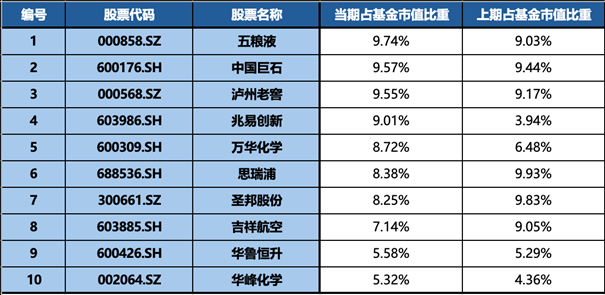
骄成超声(688392):25Q3业绩超预期 先进封装超扫设备实现突破
Xin Lang Cai Jing· 2025-11-10 00:31
Core Viewpoint - The company reported strong financial performance for the first three quarters of 2025, with significant year-on-year growth in revenue and net profit, indicating robust operational efficiency and market demand [1]. Financial Performance - For the first three quarters of 2025, the company achieved revenue of 521 million yuan, a year-on-year increase of 28% [1]. - The net profit attributable to shareholders reached 94 million yuan, up 360% year-on-year [1]. - The non-recurring net profit was 76 million yuan, reflecting a 673% increase year-on-year [1]. - The gross margin was 65.05%, an increase of 14 percentage points year-on-year [1]. - The net profit margin stood at 16.71%, up 12 percentage points year-on-year [1]. - In Q3 alone, the company reported revenue of 198 million yuan, a 20% increase year-on-year and a 13% increase quarter-on-quarter [1]. - The Q3 net profit attributable to shareholders was 36 million yuan, a 137% increase year-on-year and a 5% increase quarter-on-quarter [1]. - The Q3 non-recurring net profit was 30 million yuan, up 289% year-on-year and 13% quarter-on-quarter [1]. - The Q3 gross margin was 64.74%, an 11 percentage point increase year-on-year but a 1 percentage point decrease quarter-on-quarter [1]. - The Q3 net profit margin was 16.18%, a 7 percentage point increase year-on-year but a 2 percentage point decrease quarter-on-quarter [1]. Product Development and Market Position - The company successfully shipped its 2.5D/3D advanced packaging ultrasonic scanning microscope, breaking the technology monopoly in Europe and the US [2]. - The new Wafer400 series ultrasonic scanning microscope can detect 6, 8, and 12-inch wafers, offering various solutions to meet customer needs, with performance metrics comparable to leading international brands [2]. - In the semiconductor equipment sector, the company has established a dual layout in power semiconductors and advanced packaging, with a full range of ultrasonic solutions already in mass production [3]. - The company is actively promoting new products in the advanced packaging sector, including ultrasonic scanning microscopes and ultrasonic bonding machines, with successful orders from well-known domestic clients [3]. - The company is focusing on the solid-state battery sector, launching ultrasonic welding and detection equipment to meet the growing demand in the lithium battery market [3]. Business Model and Future Outlook - The "equipment + accessories" business model continues to support the company's performance, with an increasing revenue share from accessory sales [4]. - The company expects to achieve revenues of 866 million yuan, 1.198 billion yuan, and 2.368 billion yuan for the years 2025, 2026, and 2027, respectively, with net profits of 134 million yuan, 250 million yuan, and 469 million yuan [4]. - The corresponding price-to-earnings ratios are projected to be 92.54, 49.63, and 26.45 for the years 2025, 2026, and 2027, respectively [4].

ASML中国区总裁沈波:AI正加速半导体产业生态系统创新
Zheng Quan Shi Bao· 2025-11-08 03:51
Core Insights - ASML is showcasing its comprehensive lithography solutions at the China International Import Expo, emphasizing the integration of lithography machines, computational lithography, and electron beam measurement technologies to support the evolution of Moore's Law in the AI era [1] - The company aims to enhance communication and interaction with partners and the semiconductor industry while adhering to legal and compliance principles to support sustainable development in China [1] - AI is identified as a key driver for both advanced and mainstream semiconductor processes, accelerating innovation within the industry ecosystem [1] Industry Trends - The demand for chips across various process nodes is surging due to AI's profound impact on society and daily life, with mainstream chips playing a crucial role in this growth [1] - The semiconductor industry faces challenges related to computing power and energy consumption, with sustaining Moore's Law being a critical response to these issues [1] Technological Innovations - To address the challenges, two main directions are proposed: improving AI model efficiency and enhancing chip performance through 2D scaling and 3D integration [2] - ASML has launched its first lithography machine for advanced packaging, the TWINSCAN XT:260, which boasts a production efficiency increase of up to 4 times compared to existing models [2] Market Presence - ASML has been operating in China for over 30 years, with a significant presence including offices in 17 cities, 15 logistics centers, 3 development centers, 1 training center, and 1 maintenance center [2] - The company employs over 2,000 people in mainland China, with a year-on-year growth of approximately 10% [3] Financial Performance - In 2023, the net system sales proportion from the China region was 27% in Q1, 27% in Q2, and 42% in Q3, with an expected 41% for 2024 [3] - The increase in market share in China is attributed to the cyclical nature of the semiconductor industry and the ability to fulfill backlog orders from Chinese clients [3] Future Outlook - The global semiconductor sales are projected to exceed $1 trillion by 2030, driven by AI infrastructure and other core growth engines [3] - The demand for servers and computing power is expected to lead to significant growth in the semiconductor industry as AI applications become more prevalent in consumer and industrial sectors [4]

ASML驱动摩尔定律前行,以全景光刻赋能AI时代半导体创新
半导体行业观察· 2025-11-08 02:10
Core Insights - The article discusses the evolution of the semiconductor industry driven by the explosion of generative AI technology, transitioning from "chips everywhere" to "AI chips everywhere" [1] - It predicts that global semiconductor sales will exceed $1 trillion by 2030, with data centers and edge AI demand accounting for approximately 40% of the market share [1] - The article highlights the challenges posed by the exponential growth of AI model parameters, which outpace the traditional pace of Moore's Law, leading to a significant gap in computing power and energy efficiency [1] Group 1: Industry Trends - The semiconductor industry is experiencing a new wave of development fueled by AI, with high-performance computing becoming a key growth engine [1] - AI's demand for computing power is growing at a rate that exceeds the advancements in chip transistor counts and energy efficiency [1][2] - By 2035, the power required to train cutting-edge AI models could consume the entire global electricity output [1] Group 2: ASML's Role - ASML is positioned as a core equipment supplier in semiconductor manufacturing, focusing on optimizing lithography processes to reduce costs and environmental impact [8] - The company emphasizes the importance of advanced lithography technology in driving improvements in chip technology and manufacturing processes [8][29] - ASML's holistic lithography approach integrates lithography machines, computational lithography, and measurement technologies to enhance chip manufacturing efficiency and yield [29][32] Group 3: Technological Innovations - The article outlines four key areas for innovation to address AI's challenges: efficient AI models, AI-oriented chip design, advanced chip technologies, and improved production equipment and processes [2][4] - ASML's EUV lithography technology is crucial for achieving smaller chip nodes and higher performance, with ongoing advancements in optical innovation [13][14] - The introduction of the TWINSCAN XT:260 lithography system aims to meet the growing demands of advanced packaging technologies in the semiconductor industry [26][27] Group 4: Future Outlook - ASML's strategies are designed to support the semiconductor industry in overcoming challenges related to power consumption and integration of 3D architectures [37] - The company is evolving from a technology provider to a collaborative partner in exploring future innovations within the semiconductor ecosystem [37] - ASML's holistic lithography solutions are expected to play a vital role in sustaining Moore's Law and driving semiconductor innovation in the AI era [37]

ASML亮相第八届进博会 助力中国客户把握主流芯片市场机遇
Guo Ji Jin Rong Bao· 2025-11-07 17:18
Core Insights - ASML emphasizes the growing demand for various process node chips driven by AI, highlighting its commitment to assist Chinese customers in seizing opportunities in the mainstream chip market [2][5] - The company showcases its comprehensive lithography solutions aimed at reducing energy consumption and costs while enhancing yield for customers [3][4] Group 1: ASML's Participation in the Expo - ASML is participating in the China International Import Expo for the seventh time, aiming to strengthen interactions with Chinese customers and partners [2] - The theme of ASML's exhibition is "From Nano to Macro," focusing on the opportunities and challenges in the semiconductor industry in the AI era [2] Group 2: Technological Innovations - ASML's lithography solutions integrate lithography machines, computational lithography, and electron beam measurement technologies to support advanced packaging and 3D integration [3] - The TWINSCAN XT:260, a new i-line lithography machine, enhances production efficiency by four times compared to existing models, while the TWINSCAN NXT:870B achieves a wafer output of over 400 wafers per hour [4] Group 3: Market Presence and Growth - ASML has been operating in the Chinese market for over 30 years, with more than 2,000 employees and offices in 17 cities, along with logistics and maintenance centers [4] - The rapid development of AI applications is driving significant growth in the semiconductor industry, particularly in mainstream chip markets, which are crucial for various AI-driven applications [5]
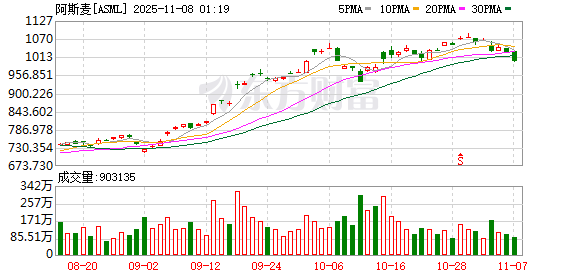
ASML亮相第八届进博会,助力中国客户把握主流芯片市场机遇
Guo Ji Jin Rong Bao· 2025-11-07 15:36
Core Insights - ASML emphasizes the growing demand for chips driven by AI, particularly in mainstream chip markets, during the China International Import Expo [1][5] - The company showcases its holistic lithography solutions aimed at enhancing efficiency and reducing costs for chip manufacturers [3][4] Group 1: Company Overview - ASML has participated in the China International Import Expo for the seventh time, aiming to strengthen interactions with Chinese customers and partners [1] - The company has over 2,000 employees in China, with offices in 17 cities and multiple logistics and maintenance centers [4] Group 2: Technological Innovations - ASML's holistic lithography solutions integrate lithography machines, computational lithography, and measurement technologies to improve yield while lowering energy consumption and costs [3] - Key products showcased include the TWINSCAN XT:260, which enhances production efficiency by four times, and the TWINSCAN NXT:870B, capable of processing over 400 wafers per hour [4] Group 3: Market Trends - The rapid development of AI applications is driving significant growth in the semiconductor industry, particularly in areas like smart devices, electric vehicles, and industrial automation [4][5] - The importance of mainstream process chips is expected to rise, with China focusing heavily on this segment due to its extensive AI application scenarios [5]
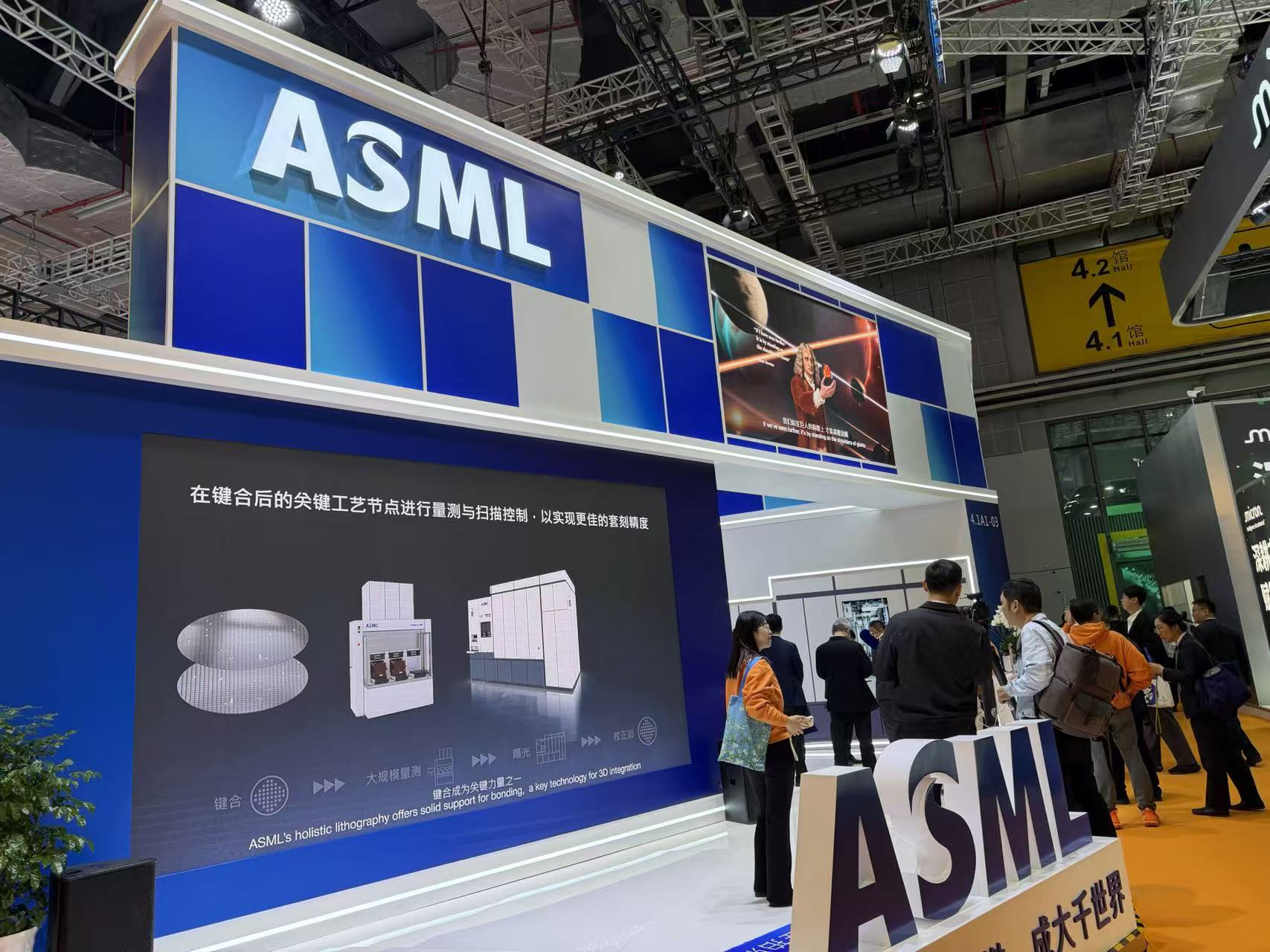
基金经理请回答 | 价值投资者如何分享AI时代的红利?
中泰证券资管· 2025-11-07 07:03
Core Viewpoint - The article discusses the perceived dichotomy between value investing and technology investing, particularly in the context of the AI era, and explores the reasons behind this stereotype [4][5]. Group 1: Value vs. Technology Investing - The stereotype that value investing and technology investing are oppositional stems from the low proportion of technology investments made by well-known value investors [5]. - Value investors often struggle to share their technology investment cases, reinforcing the stereotype [5]. - A key principle of value investing is that value must be assessable, which is challenging in the rapidly changing technology sector [5][6]. Group 2: Characteristics of Technology Companies - Not all technology companies are unprofitable at inception; some, like Nvidia, can be profitable from the start [6]. - The financial losses of some tech companies do not negate their long-term value, as profitability can be established once business models and payment capabilities are confirmed [6][9]. - Understanding the business model of technology companies often requires specialized knowledge, creating a barrier for value investors [7][13]. Group 3: AI's Impact on Industries - The demand for computing power driven by AI has significantly enhanced the value of the semiconductor foundry industry, which has a stable business model and clear competitive advantages [16][18]. - AI has transformed the storage industry by increasing the demand for storage capacity and bandwidth, leading to supply shortages and rising prices [19][20]. - The shift from traditional computing to AI-driven models has created bottlenecks in storage, as the new computing methods require more frequent data storage [19]. Group 4: Semiconductor Industry Dynamics - The semiconductor industry is experiencing a slowdown in the pace of innovation, as evidenced by the observed deceleration of Moore's Law [25][28]. - Future advancements in semiconductor manufacturing may occur at a slower rate, with increased reliance on chip clusters to enhance computing power [29]. - The competitive landscape in semiconductor manufacturing is evolving, particularly in the context of national policies promoting self-sufficiency in technology [21][24].

柏基Baillie Gifford如何用尽调10问评估一家意向企业
IPO早知道· 2025-11-07 00:45
Core Viewpoint - Baillie Gifford, established in 1908, has successfully navigated various economic cycles and has become a prominent investment giant by accurately betting on high-growth companies in the 21st century, such as Amazon, Tesla, and Nvidia [2][5]. Investment Philosophy - Baillie Gifford's investment philosophy emphasizes long-term growth potential, focusing on a framework called "10 Questions for Due Diligence" that assesses companies based on their competitive advantages, corporate culture, social contributions, growth potential, and capital allocation [7][16]. Due Diligence Framework - The "10 Questions" framework includes inquiries about revenue growth, future changes, competitive advantages, cultural uniqueness, user satisfaction, profitability, capital distribution, market valuation, and the reasons for potential undervaluation [10][16]. - This approach prioritizes long-term factors over short-term metrics, allowing for a deeper understanding of a company's future potential rather than relying solely on historical data [16][17]. Case Study: ASML - ASML, a leading photolithography equipment manufacturer, has a dominant market share of 70%-80% and is crucial for advancing semiconductor technology, particularly through its extreme ultraviolet (EUV) lithography machines [18][19]. - Baillie Gifford's investment in ASML began in 1996, and the company is viewed as essential for maintaining the momentum of Moore's Law, which predicts the doubling of transistors on a chip approximately every two years [29][30]. - ASML's corporate culture is characterized by a competitive spirit, aiming for leadership in the industry, and the company is expected to achieve significant revenue growth in the coming years [30][31]. Recent Developments - Despite ASML's strong historical performance, recent market conditions have led to a reduction in Baillie Gifford's holdings in the company, reflecting concerns over future growth amid changing industry dynamics and leadership transitions [31].

ASML中国区总裁沈波:AI浪潮下的“光刻逻辑”
2 1 Shi Ji Jing Ji Bao Dao· 2025-11-06 23:25
Core Insights - ASML has reported strong financial results for the first three quarters of 2025, with net sales of €7.5 billion, net lithography system sales of €5.6 billion, and a net profit of €2.1 billion, reflecting a gross margin of 51.6% [2] - The company anticipates a 15% growth in net sales for 2025 and expects sales in 2026 to be at least at the same level as 2025, with long-term revenue projections for 2030 ranging between €44 billion and €60 billion [2] - AI is identified as a key driver for growth in the global semiconductor industry, with increasing demand for advanced logic chips and DRAM chips benefiting ASML's broader customer base [2][5] Financial Performance - ASML's net sales for Q3 2025 reached €7.5 billion, with a significant portion coming from lithography systems [2] - The company achieved a net profit of €2.1 billion, indicating robust financial health despite the cyclical adjustments in the semiconductor industry [2] Market Outlook - The semiconductor industry is currently in an adjustment phase, gradually moving towards an upward cycle, with ASML maintaining an optimistic outlook on the overall industry prospects [2][11] - AI is expected to play a transformative role in the semiconductor market, with predictions that it will contribute approximately $10 trillion to global GDP by 2030 [6] AI's Impact on Semiconductor Demand - AI is seen as a major force driving the next wave of semiconductor market growth, with the potential to significantly influence chip demand once applications become widespread [5][8] - Current AI developments are still in the investment and construction phase, and the true demand for chip production capacity has yet to be fully realized [3][7] China Market Dynamics - ASML's sales in China have been high due to previously accumulated unfulfilled orders, but the company expects a normalization of business in the Chinese market in the coming years [3][11] - The Chinese market accounted for over 30% of ASML's global sales in recent years, but this is expected to revert to historical levels of 15%-20% as part of the normal cyclical adjustments [12][13] Technological Challenges and Innovations - The AI era presents challenges in terms of computational power and energy consumption, with demand for AI capabilities growing exponentially [9][10] - ASML is pursuing a dual-track strategy to address these challenges, focusing on both 2D scaling and advancing 3D integration technologies to enhance chip performance and efficiency [10]
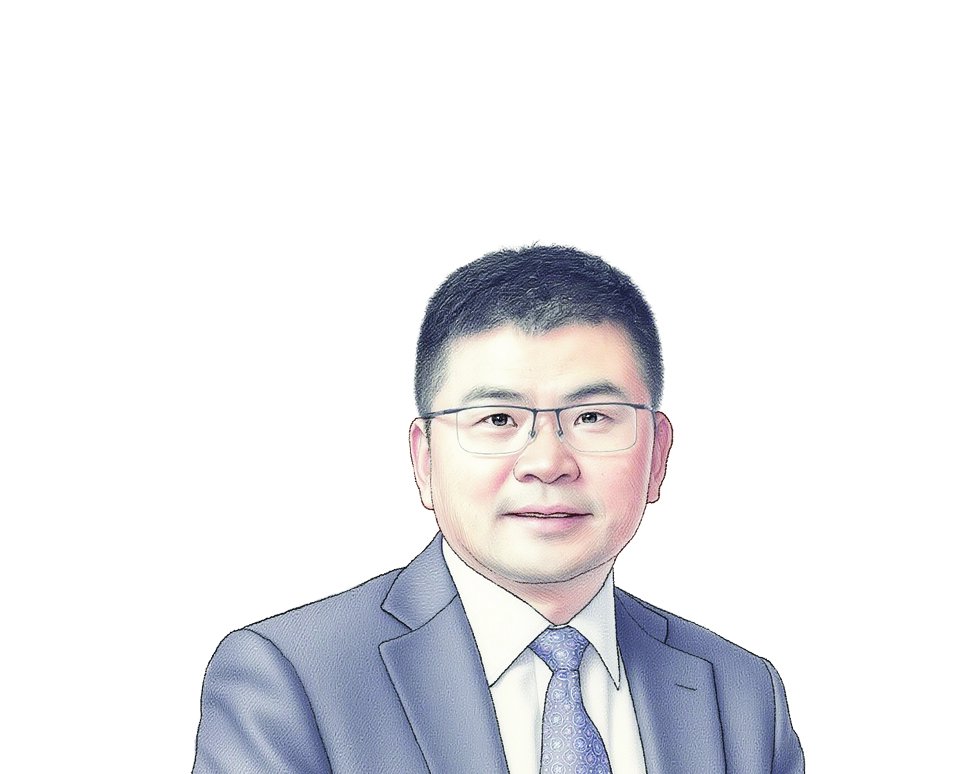
对话ASML中国区总裁沈波:AI浪潮下的“光刻逻辑”
2 1 Shi Ji Jing Ji Bao Dao· 2025-11-06 13:33
Core Viewpoint - ASML has reported strong financial results for the first three quarters of 2025, with a net sales of €7.5 billion, net lithography system sales of €5.6 billion, and a net profit of €2.1 billion, reflecting a gross margin of 51.6% [1] Financial Performance - In Q3 2025, ASML achieved net sales of €7.5 billion and net profit of €2.1 billion, with a gross margin of 51.6% [1] - The company anticipates a 15% growth in net sales for 2025 and expects 2026 sales to be at least at the same level as 2025 [1] AI's Impact on Semiconductor Industry - AI is becoming a key driver for growth in the global semiconductor industry, with strong investments in AI leading to increased demand for advanced logic chips and DRAM chips [3] - The CEO of ASML noted that while AI is expected to benefit semiconductor equipment companies, the actual demand for equipment has not yet fully materialized [4] - The semiconductor industry recognizes AI as a major force for the next wave of market growth, with AI evolving into a fundamental part of social infrastructure [5] Challenges and Opportunities - The current phase of AI development is characterized by significant investment but limited immediate demand for chips, indicating that the true impact on semiconductor capacity is yet to be realized [4][7] - AI presents two major challenges: the exponential growth in computing power demand and energy consumption concerns [9] - ASML is pursuing a dual-track approach to address these challenges, focusing on both 2D scaling and advancing 3D integration technologies [10] Market Dynamics in China - ASML's sales in China have been significant, with the Chinese market accounting for over 30% of global sales in recent years [12] - The company expects a normalization of sales in China, with a return to historical levels of 15%-20% of global sales [13] - ASML continues to support local customers in China while adhering to export control regulations [13] Strategic Collaborations - ASML has formed a strategic partnership with Mistral AI, investing in the company to accelerate AI applications and integration [7] - The company has launched the TWINSCAN XT:260 lithography machine aimed at enhancing production efficiency in advanced packaging [10]