
改革开放

Search documents
谈改革开放,总书记讲述了一次出访见闻
Xin Lang Cai Jing· 2025-12-19 13:19
Core Viewpoint - The article emphasizes the significance of reform and opening-up in China's development, highlighting its role in achieving historical milestones and creating opportunities for both China and the world [3][6][8]. Group 1: Historical Context and Achievements - Reform and opening-up is identified as the most notable characteristic of contemporary China, initiated by the Third Plenary Session of the 11th Central Committee in December 1978 [5][6]. - Since the 18th National Congress, under the leadership of Xi Jinping, China has achieved historic accomplishments, including the victory in poverty alleviation and becoming the world's second-largest economy [6][8]. - The development of Shenzhen from a fishing village to a modern metropolis is cited as a miracle of China's reform and opening-up [6][8]. Group 2: Current Initiatives and Future Directions - The 20th Central Committee's Fourth Plenary Session emphasizes the need for further comprehensive reform to achieve new breakthroughs, signaling a continued commitment to reform and opening-up [9]. - The establishment of the Hainan Free Trade Port and other special economic zones represents significant strategic measures to enhance high-level openness and promote a global economic framework [12]. - The article highlights China's ongoing efforts to embrace the world through various international trade fairs and the reduction of foreign investment restrictions, contributing approximately 30% to global economic growth during the 14th Five-Year Plan period [8][12].

深圳发布“十四五”亮眼成绩单
Zhong Guo Jing Ji Wang· 2025-12-19 07:47
Core Insights - Shenzhen's economic and social development during the "14th Five-Year Plan" period is characterized as extraordinary, with a focus on becoming a globally influential economic center and modern international metropolis [1] Economic Performance - Shenzhen's GDP increased from 2.78 trillion yuan in 2020 to 3.68 trillion yuan in 2024, with an average annual growth rate of 5.5%, leading among first-tier cities [1] - The total value of industrial output and industrial added value has maintained the top position among national cities since 2022 [1] - Foreign trade import and export volume rose from 3.05 trillion yuan in 2020 to 4.5 trillion yuan in 2024, ranking first among national cities [1] Industrial Development - The added value of strategic emerging industries grew by over 10% annually, accounting for 42.3% of GDP [2] - Advanced manufacturing and high-tech manufacturing accounted for 68.2% and 58.2% of the industrial output, respectively [2] - Shenzhen is a leader in the production of 39 industrial products, including integrated circuits and industrial robots, with over 10% of the national share [2] Innovation and R&D - Total R&D investment increased from 151.08 billion yuan in 2020 to 245.31 billion yuan in 2024, with an average annual growth of 12.9% [3] - R&D intensity reached 6.67%, ranking first among national cities, with corporate R&D investment consistently above 93% of the total [3] - Shenzhen has maintained the highest number of PCT international patent applications for 22 consecutive years [3] Reform and Business Environment - Shenzhen has made significant progress in comprehensive reforms, with 48 innovative experiences and typical measures being promoted nationwide [4] - The number of business entities remains the highest among national cities, with 4.1 million new foreign-invested enterprises established since the beginning of the "14th Five-Year Plan" [4] - The port's customs clearance volume reached 245 million people in the first 11 months of this year, setting a new historical record [4] Future Outlook - The "15th Five-Year Plan" period is seen as a key opportunity for Shenzhen to solidify its role as a national economic center and a hub for innovation [5] - Shenzhen is positioned to leverage its advantages in fixed asset investment, retail sales, R&D intensity, and talent resources to lead in the practice of Chinese-style modernization [5]
以改革开放培塑陕西发展新动能新优势
Shan Xi Ri Bao· 2025-12-18 22:59
Core Viewpoint - The article highlights the significant reforms and innovations in Shaanxi province, emphasizing the importance of reform and opening-up as a driving force for economic growth and modernization in China. Group 1: Reform Initiatives - Shaanxi has implemented 19 reform pilot experiences that are being replicated nationwide, showcasing innovative reforms that stimulate new vitality [1] - The province has introduced 9 new national-level reform pilot projects and 190 new measures to optimize the business environment this year [2] - Strategic restructuring in state-owned enterprises across various sectors, including transportation and energy, has led to enhanced core competitiveness [1][2] Group 2: Economic Performance - From January to October this year, Shaanxi's total import and export value increased by 12.2%, surpassing the national average of 8.6% [5] - The actual use of domestic capital grew by 12.5%, and over 10,000 technology transfer achievements were made, resulting in the establishment of 905 technology transfer companies [5] - The technology contract transaction amount exceeded 370 billion yuan, addressing 761 key industry chain technology challenges [5] Group 3: Innovation and Technology - The Qin Chuang Yuan innovation-driven platform is facilitating the transition of research achievements from laboratories to production lines [1] - The province is promoting the integration of technological innovation and industrial innovation, with initiatives like the "three reforms" pilot for technology achievement transformation [3][4] - A provincial technology innovation mother fund of 10 billion yuan has been initiated to support technological advancements [3] Group 4: International Trade and Connectivity - The opening of new air routes, such as the direct flight from Xi'an to Kazakhstan, enhances Shaanxi's connectivity with Central Asia [7] - The province's exports to Central Asian countries increased by 48.1%, with direct investments in Belt and Road countries growing by 135.5% [7] - The Shaanxi Free Trade Zone has introduced over 20 innovative reform measures to streamline customs processes, reducing export clearance times by 50% and transportation costs by over 15% [9] Group 5: Future Outlook - The "15th Five-Year Plan" aims for greater breakthroughs in building an inland reform and opening-up highland, positioning Shaanxi as a model for the western region [10] - Continuous deep-level reforms and high-level opening-up are essential for overcoming bottlenecks and enhancing productivity [10]
听,高质量发展新脉动丨深化改革激发发展新动力
Xin Hua Wang· 2025-12-18 10:03
Group 1 - The core viewpoint emphasizes the necessity of comprehensive deepening of reforms and innovation as fundamental driving forces for economic and social development during the "14th Five-Year Plan" period [1] - The Central Economic Work Conference highlighted the importance of combining policy support with reform and innovation, focusing on enhancing the momentum for high-quality development as a key task for 2026 [1] Group 2 - Continuous reform and opening-up have significantly contributed to China's economic achievements, with a 30% reduction in the negative list for the market during the "14th Five-Year Plan" period and the introduction of the Private Economy Promotion Law to invigorate the private sector [2] - The breadth and depth of reforms are expanding, providing institutional guarantees and strong momentum for economic and social development [2] Group 3 - The National Development and Reform Commission is focusing on enhancing the effectiveness of comprehensive reforms and encouraging local pilot programs, promoting 88 innovative measures across four batches for nationwide replication [6] - The establishment of a unified national market is crucial for strengthening domestic circulation, with plans to formulate regulations for the unified market and improve supporting laws for the private economy [12] Group 4 - The rapid development of technology and innovation in China is attributed to a series of reform measures, fostering confidence in the private economy and encouraging investment in research and development [13][15] - The ongoing reforms aim to release development momentum from a deeper level, aligning with the high-quality development goals set forth in recent party meetings [15]

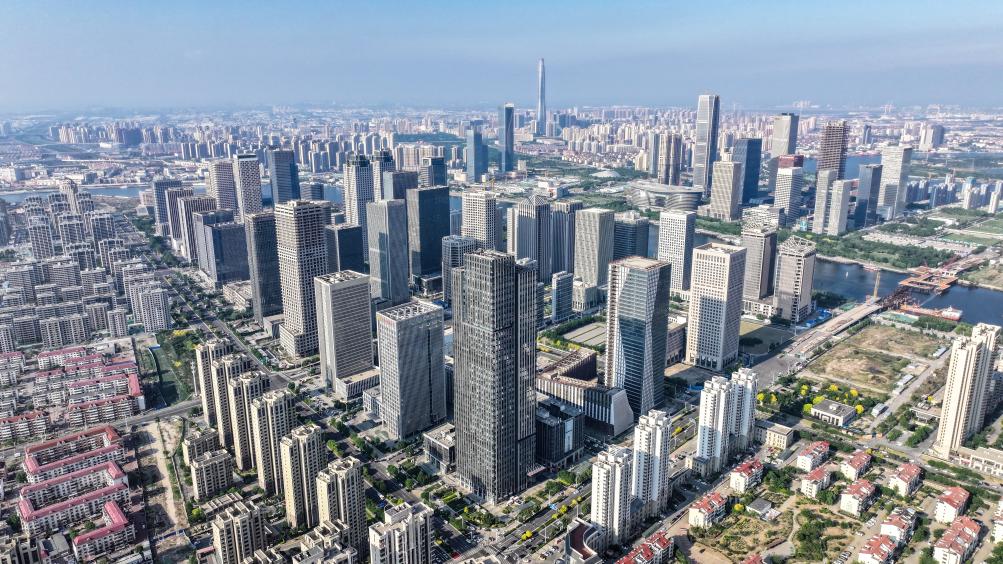
十五五”如何发力 深圳市长提了“五个着力
2 1 Shi Ji Jing Ji Bao Dao· 2025-12-18 09:27
21世纪经济报道记者 陈思琦 深圳报道 具体来看,深圳规上工业总产值、工业增加值从2022年开始保持全国城市"双第一";"十四五"期间,深 圳固定资产投资总额可达4.5万亿元、约为"十三五"的1.5倍;社会消费品零售总额从2020年的8664亿元 增加到2024年的1.06万亿元;外贸进出口总额从2020年的3.05万亿元增加到2024年的4.5万亿元,跃居全 国城市首位;来源于深圳辖区的一般公共预算收入预计连续五年保持在万亿元以上。 从经济结构看,"十四五"前四年,深圳战略性新兴产业增加值年均增长10%以上、占GDP比重提高到 42.3%。 具体来看,深圳建成投产11个百亿级大型工业项目,先进制造业和高技术制造业增加值占规上工业比重 分别达68.2%、58.2%;集成电路、工业机器人、智能手机等39种工业产品产量占全国比重超10%;现代 服务业增加值占服务业比重提高至76.5%;国家级专精特新"小巨人"企业数量达1333家、跃居全国城市 首位;境内外上市企业592家、瞪羚企业215家、独角兽企业42家,均位居全国前列。 "十四五"期间,深圳科技创新亦取得重大突破,创造多个"首位"。总体来看,深圳全社会研发投 ...
“十五五”如何发力 深圳市长提了“五个着力”
2 1 Shi Ji Jing Ji Bao Dao· 2025-12-18 09:16
Economic Growth - Shenzhen's GDP increased from 2.78 trillion yuan in 2020 to 3.68 trillion yuan in 2024, with an average annual growth rate of 5.5%, leading among first-tier cities [1][2] - Fixed asset investment during the "14th Five-Year Plan" is expected to reach 4.5 trillion yuan, approximately 1.5 times that of the "13th Five-Year Plan" [2] - Retail sales of consumer goods rose from 866.4 billion yuan in 2020 to 1.06 trillion yuan in 2024 [2] - Foreign trade import and export volume increased from 3.05 trillion yuan in 2020 to 4.5 trillion yuan in 2024, ranking first among cities in the country [2] Industrial and Technological Development - Shenzhen maintained the top position in national cities for industrial output and added value since 2022 [2] - The added value of strategic emerging industries grew by over 10% annually, accounting for 42.3% of GDP [2] - R&D investment increased from 151.08 billion yuan in 2020 to 245.31 billion yuan in 2024, with an annual growth rate of 12.9% [3] - Shenzhen ranked first in the number of national specialized and innovative "little giant" enterprises, totaling 1,333 [3] Infrastructure and Urban Quality - Significant improvements in urban quality, particularly in transportation, with major projects like the Ganshen High-speed Railway and the Shenzhen-Zhongshan Link [5] - The airport passenger throughput is expected to exceed 65 million this year, and metro operation mileage surpassed 600 kilometers [5] - Social welfare expenditures reached 1.6 trillion yuan, accounting for nearly 70% of fiscal spending [5] Future Development Strategies - Shenzhen aims to expand domestic demand comprehensively and enhance effective investment [7] - The city plans to cultivate new productive forces and become a hub for innovation and advanced manufacturing [8] - Emphasis on deepening reform and opening up, particularly in the Guangdong-Hong Kong-Macao Greater Bay Area [8] - Focus on high-quality urban development and improving public services to ensure equitable benefits for citizens [8]
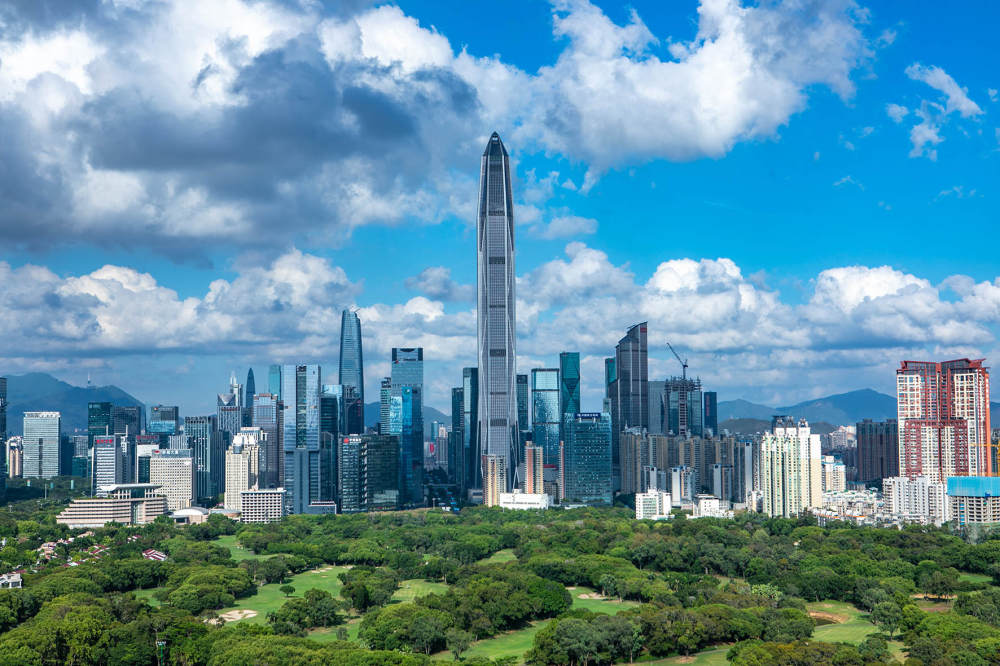
全球媒体聚焦 | 外媒:海南自贸港为全球经贸合作开启新篇章
Sou Hu Cai Jing· 2025-12-18 00:24
Core Viewpoint - The official launch of the Hainan Free Trade Port on December 18, 2025, marks a significant step in China's deepening reform and expansion of high-level opening-up policies [1][4]. Group 1: Policy and Economic Impact - The "zero tariff" list in Hainan will expand from over 1,900 to more than 6,600 items, enhancing the attractiveness for foreign investment [1]. - Hainan's negative list for foreign investment is the most open in the country, with the implementation of more relaxed market access policies to attract foreign capital and promote trade growth [1]. - The zero tariff coverage will increase from 21% to 74%, benefiting more qualifying enterprises [4]. Group 2: Strategic Importance - Hainan is viewed as a "testing ground" for China's economic liberalization and regional economic integration [1]. - The geographical location of Hainan positions it as a crucial hub connecting China's domestic market with the ASEAN region [6]. - The Free Trade Port is expected to provide a more stable platform for international economic and trade cooperation amid rising global economic uncertainties and protectionism [4]. Group 3: Operational Model - Imported goods will circulate tax-free within the island, and products with at least 30% value-added processing in Hainan can enter the mainland market tax-free, incentivizing light manufacturing, high-tech assembly, and consumer goods production [4]. - Institutional innovations in financial and data cross-border flows will lay the foundation for an international business environment [4].
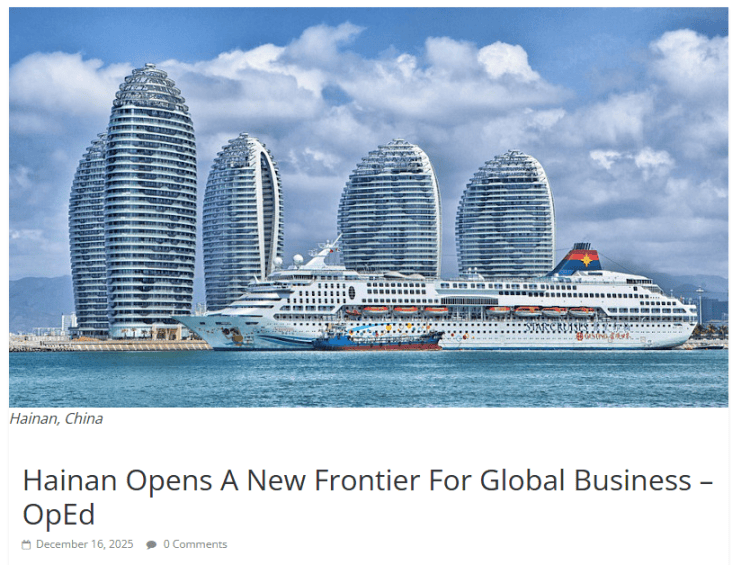
坚定不移深化改革扩大开放——五论学习贯彻中央经济工作会议精神
Xin Hua She· 2025-12-17 00:52
新华社北京12月16日电 题:坚定不移深化改革扩大开放——五论学习贯彻中央经济工作会议精神 新华社评论员 改革不停顿,开放不止步。中央经济工作会议把"坚持改革攻坚,增强高质量发展动力活力"和"坚 持对外开放,推动多领域合作共赢"纳入明年经济工作重点任务,释放了在深化改革、扩大开放中推动 高质量发展、推进中国式现代化建设的鲜明信号。学习贯彻中央经济工作会议精神,就要大力弘扬改革 开放精神,围绕激发高质量发展的动力活力,坚定不移深化改革扩大开放,不断开创经济社会发展新局 面。 改革开放是党和人民事业大踏步赶上时代的重要法宝,也是推进中国式现代化的根本动力。2025年 是很不平凡的一年,我国经济顶压前行、向新向优发展,改革开放迈出新步伐。从发布《全国统一大市 场建设指引(试行)》到出台民营经济促进法、再到10个地区获批开展要素市场化配置综合改革试点, 从实施自由贸易试验区提升战略到外资准入负面清单持续缩减、再到过境免签政策扩容带火"中国 游""中国购"……我国改革开放的广度和深度不断拓展,为经济社会发展提供了制度保障和强劲动力。 回望过去5年,以习近平同志为核心的党中央团结带领全党全国各族人民,迎难而上、砥砺前行, ...
中央财办:2025年中国经济总量有望达到140万亿元左右
Zhong Guo Xin Wen Wang· 2025-12-16 14:48
Core Viewpoint - The Central Financial Office projects that China's economy is expected to grow by around 5% in 2025, reaching a total economic volume of approximately 140 trillion yuan [1][2]. Group 1: Economic Performance - The overall economic operation is stable, with major economic indicators meeting expectations, and a projected annual growth rate of around 5%, keeping China among the leading major economies globally [1]. - Employment remains generally stable, with rapid growth in foreign trade and significant diversification in exports [1]. Group 2: Industrial Development - The construction of a modern industrial system is continuously advancing, with steady development of new productive forces and abundant technological innovation achievements [1]. - Research and application in artificial intelligence, biomedicine, and robotics are leading globally [1]. Group 3: Reform and Opening Up - New steps have been taken in reform and opening up, with the construction of a unified national market progressing deeply [1]. - Comprehensive rectification of "involution" competition has shown positive results, and the capital market remains active with orderly self-opening [1]. Group 4: Risk Management - Positive progress has been made in resolving key area risks, including orderly replacement of local government hidden debts and the completion of "guaranteeing housing delivery" tasks [1]. - Significant results have been achieved in the reform of small and medium financial institutions, maintaining a baseline to prevent systemic risks [1]. Group 5: Social Welfare - Strengthened social welfare measures include the implementation of childcare subsidies and one year of free preschool education, contributing to the continuous improvement of social security levels [2]. - The overall social situation remains stable, with economic and social development goals expected to be successfully achieved, aiding in the completion of the "14th Five-Year Plan" [2]. Group 6: Future Outlook - The active flow of factors and innovation is expected to continuously inject new momentum into development, with rapid growth in the flow of people, logistics, information, and capital [2]. - Investment and consumption growth rates are anticipated to recover next year, accelerating industrial transformation and upgrading, with a concentrated outbreak of technological and industrial innovation achievements [2].
统筹推进深层次改革和高水平开放
Zheng Zhou Ri Bao· 2025-12-15 00:46
Core Viewpoint - The article emphasizes the importance of deepening reforms and expanding high-level openness as key strategies for achieving modernization in China, particularly in the context of Zhengzhou's development as a national central city and a hub for domestic and international dual circulation [1][2][4]. Group 1: Reform and Development - The need to deepen reforms to enhance advantages and build a dual circulation hub is highlighted as a strategic choice for Zhengzhou to fulfill its responsibilities as a national central city [2]. - Zhengzhou is one of three cities in China designated as pilot cities for comprehensive market-oriented allocation of factors, indicating its role in leading reform initiatives [2]. Group 2: Open Economy and Market Integration - The article stresses the importance of integrating into the national unified market to leverage the advantages of a large market scale and unlock development potential [2]. - Zhengzhou aims to strengthen its position as a comprehensive international transportation hub and enhance its modern commercial logistics capabilities [2][3]. Group 3: Infrastructure and Connectivity - Zhengzhou is positioned as a critical transportation hub with a high-level international status, featuring a comprehensive high-speed rail network and international air transport capabilities [3]. - The city is recognized for its strategic resources that connect various regions, making it a vital manufacturing base and an inland opening window [3]. Group 4: Systematic Reform and Innovation - The article advocates for a unified approach to reform and openness, suggesting that deeper reforms will necessitate higher levels of openness and vice versa [4]. - It calls for innovative thinking to expand institutional openness and actively participate in the construction of a unified national market [4].