
经济增长

Search documents
国信期货有色(镍)周报:高位震荡,上冲乏力-20260201
Guo Xin Qi Huo· 2026-01-31 23:30
研究所 高位震荡,上冲乏力 ——国信期货有色(镍)周报 2026年02月01日 研究所 0.00 50,000.00 100,000.00 150,000.00 200,000.00 250,000.00 300,000.00 2020/12/31 2021/02/28 2021/04/30 2021/06/30 2021/08/31 2021/10/31 2021/12/31 2022/02/28 2022/04/30 2022/06/30 2022/08/31 2022/10/31 2022/12/31 2023/02/28 2023/04/30 2023/06/30 2023/08/31 2023/10/31 2023/12/31 2024/02/29 2024/04/30 2024/06/30 2024/08/31 2024/10/31 2024/12/31 2025/02/28 2025/04/30 2025/06/30 2025/08/31 2025/10/31 2025/12/31 镍期货收盘价(主力合约)(单位:元/吨) 数据来源:WIND 国信期货 免责声明:本报告以投资者教育为目的,不构成 ...
32039.46亿元!广州最新公布
Sou Hu Cai Jing· 2026-01-31 05:04
Economic Overview - In 2025, Guangzhou's GDP reached 32,039.46 billion yuan, with a year-on-year growth of 4.0% at constant prices [1][4][13] - The primary industry added value was 317.02 billion yuan, growing by 3.3%; the secondary industry added value was 7,710.27 billion yuan, growing by 1.6%; and the tertiary industry added value was 24,012.17 billion yuan, growing by 4.8% [1][13] Industrial Performance - The industrial output of large-scale industries in Guangzhou increased by 1.2% year-on-year [1][18] - The automotive manufacturing sector, undergoing a transition, saw a narrowing decline of 1.6%, with new energy vehicle production increasing by 21.6% [1][4] - Stable growth was observed in electronic products and petrochemical manufacturing, with increases of 1.4% and 4.1%, respectively [1] Service Sector Growth - From January to November, the revenue of large-scale profit-making service industries grew by 10.1% year-on-year [1][22] - Significant growth was noted in the internet, software, and information technology services, with a revenue increase of 9.3% [1] - The human resources, advertising, consulting, and cultural sectors experienced revenue growth rates of 11.9%, 22.5%, and 25.7%, respectively [1][22] Domestic Demand and Trade - Guangzhou's total retail sales of consumer goods reached 11,032.38 billion yuan, with a year-on-year growth of 5.5%, maintaining a leading growth rate among major cities in China [2][25] - The city's import and export scale exceeded 1.2 trillion yuan, marking a historical high with a year-on-year growth of 10.4% [2][27] - Exports surpassed 800 billion yuan, growing by 17.8%, the highest growth rate in the province [2][27] Investment Trends - Fixed asset investment in Guangzhou decreased by 6.7% year-on-year, with real estate development down by 2.8% and infrastructure down by 5.9% [2][29] - Notable growth was seen in water transportation (15.9%), air transportation (16.1%), and aerospace manufacturing (60.6%) [2][29] Economic Challenges and Future Outlook - The city faces challenges from a complex external environment and internal structural adjustments, with industrial production in a low recovery phase [2] - Future strategies include leveraging demand to expand markets, strengthening project support, and enhancing technological innovation to drive new momentum for economic recovery [2]


2025年荷兰经济增长1.9%
Shang Wu Bu Wang Zhan· 2026-01-31 01:55
2025年,商品和服务出口增长2.6%,进口增长2.5%,贸易顺差对荷兰经济增长做出了积极贡献;政府 消费增长2.6%,家庭消费增长1.4%,投资增长0.5%。工业、贸易、医疗保健和公共管理对2025年的经 济增长贡献最大。 据荷兰中央统计局初步统计,2025年荷兰国内生产总值(GDP)同比增长1.9%,高于2024年1.1%的增速, 其过去30年的平均年增长率约为2%。 ...
法国经济2025年增长0.9%
Sou Hu Cai Jing· 2026-01-31 01:37
Group 1 - The core viewpoint of the articles indicates that France's economy is projected to grow by 0.9% in 2025, slightly above the government's previous forecast of 0.7% and in line with market expectations, but still lower than the 1.1% growth anticipated for 2024 [1] - The main drivers of France's economic growth in 2025 are expected to be household consumption and public spending, with overall investment remaining stable [1] - Despite the impact of U.S. tariffs on global trade, foreign trade is anticipated to be a significant contributor to France's economic growth in 2025, particularly in the aerospace, shipbuilding, and digital services sectors [1] Group 2 - The economic growth forecast for the Eurozone in 2025 is set at 1.5%, while the EU is expected to grow by 1.6% [2] - Germany's economy is projected to experience a slight growth of 0.3% in 2025, narrowly avoiding a third consecutive year of recession, with the government revising its 2026 growth forecast down to 1% [2]
幸福生活,我们团结拼搏共奋斗
Da Zhong Ri Bao· 2026-01-31 01:04
共奋斗,我们为的是"文明和美",既要富口袋,也要富精神。 打开政府工作报告,民生答卷温暖而具体—— 城镇新增就业124.9万人,普通高中学位供给率70.4%、提高5.9个百分点,学前一年免费教育有效 落实,育儿补贴有序发放……五年,一锤接着一锤敲,山东"民生为大"的承诺,就这样写进了千家万户 的幸福生活。 一切幸福生活,都是共同奋斗的结果。 共奋斗,我们为的是"物阜民丰",让家底更厚实、日子更殷实。 10万亿的经济总量,是千万经营主体、亿万齐鲁儿女奋力拼搏结出的硕果。厚实的家底,让八成左 右的财政支出能坚定地投向民生关切。每一份就业的保障、教育的提升、医疗的改善,都凝聚着大家的 汗水与智慧。正是这份共同的奋斗,将经济增长的动能,实实在在地转化为了社会进步、民生改善的阶 梯。 从"一元剧场""小戏小剧"惠及城乡,到大汶口国家考古遗址公园挂牌、大明湖西南遗址考古获突 破;从《生万物》等鲁剧热播,到山东健儿勇夺全运会"五连冠"……这些文化的生机、历史的温度、体 育的荣耀,皆由汗水浇灌。精神的丰盈与集体的光芒,正源于每一个人的热爱、付出与分享。 共奋斗,我们为的是"宜居宜业",看见更多的绿水青山蓝天白云。 77.8% ...
Economic Forecast Slower Due To Lower Immigration, New Data Confirms
Forbes· 2026-01-30 14:50
Population Growth and Economic Implications - The latest U.S. Census Bureau estimates indicate very low population growth from June 30, 2024, to July 1, 2025, suggesting potential future weaknesses in economic growth [2] - Natural population increase has been low, with fluctuations primarily driven by net migration, which is not perfectly measured [4] - The forecast indicates that population growth in the coming years may be even lower than the current estimates, with net migration expected to approach zero due to increased enforcement of border restrictions [7] Labor Market and Productivity - Most immigrants are of working age but tend to be lower-skilled and earn lower wages, which means a decline in immigration has a less significant impact on the economy compared to a drop in native-born workers [5] - Low-skilled workers complement high-skilled workers, enhancing overall productivity in various sectors, such as construction [6] - Labor productivity growth is beginning to reflect advancements in artificial intelligence, with historical data showing variability in productivity growth rates [8] Economic Growth Forecast - With approximately zero population growth and an expected productivity growth of around two percent, inflation-adjusted GDP is projected to increase by slightly more than two percent in the coming years [9] - Business planning should be slightly less optimistic than in previous years, particularly for sectors serving low-wage consumers, which will experience slower growth [10] - The economy can remain healthy with low immigration, but its size and characteristics will differ compared to scenarios with higher immigration levels [11]

FED WATCH: Trump set to announce chairman pick this morning
Youtube· 2026-01-30 11:36
Federal Reserve Chairman Announcement - President Trump is expected to announce his choice for the chairman of the Federal Reserve, likely Kevin Worsh, who previously met with the president [1][2] - Worsh is recognized in the financial world and was considered for the position during Trump's first term before Jay Powell was appointed [3] Economic Outlook and Federal Reserve Policy - Worsh has expressed concerns about the current Federal Reserve's policies, suggesting that the balance sheet is too large and interest rates are too high, advocating for a reduction in both [5][7] - He believes the Fed has lost its way in terms of supervision and monetary policy, indicating a need for a shift in focus to benefit the entire economy, not just Wall Street [6][8] Growth Projections - Economic growth is projected to be strong, with expectations of 4-5% growth in the upcoming quarters, indicating a positive outlook for the economy [10][11] Venezuela Airspace Reopening - The U.S. plans to reopen Venezuelan airspace, allowing American citizens to travel safely to Venezuela, which has been restricted since 2019 [12][13] - This move is seen as a step towards improving the quality of life and economic conditions in Venezuela [14][15] Oil Market Impact - The influx of new oil on the market is expected to exert downward pressure on oil prices, leading to lower prices across the economy, contributing to disinflationary trends [16]

烟台今年入选省级重点项目152个总投资首次突破万亿元大关
Qi Lu Wan Bao· 2026-01-30 11:23
Core Insights - Yantai City has been selected for 152 provincial key projects this year, with total investment exceeding 1 trillion yuan for the first time [1][3] - The city aims to lead the province in economic development by focusing on key project construction as a primary driver [1] - The construction of key projects has shown significant progress, with investments exceeding annual targets and a strong emphasis on new industries [1][3] Group 1: Project Management and Investment - Yantai City has implemented a "list management and responsibility implementation" approach for key projects, ensuring accountability and timely progress [1] - The city has achieved a total investment of 1,214.5 million yuan in 139 provincial key projects and 1,030 million yuan in 200 municipal key projects, both exceeding annual goals [1] - The city has maintained a leading position in the province for four consecutive years in terms of the number and scale of major projects [1][3] Group 2: Resource Allocation and Support - The city has adopted a "resources follow projects" strategy, ensuring precise support for land, funding, and energy resources for key projects [2] - In 2025, Yantai City will secure over 19,000 acres of land for key project construction, meeting all land needs for significant projects [2] - The city has successfully obtained over 50 billion yuan in various policy funds, marking a historical high for financial support [2] Group 3: Future Project Planning - Yantai City has a robust pipeline of projects, with 300 municipal key projects totaling over 600 billion yuan and an annual planned investment exceeding 700 million yuan [3] - The city is home to four projects with investments exceeding 1 billion yuan and 26 projects with investments over 100 million yuan, indicating a solid project construction framework [3] - These projects are expected to provide strong support for investment growth and high-quality development in the next 3-5 years [3]
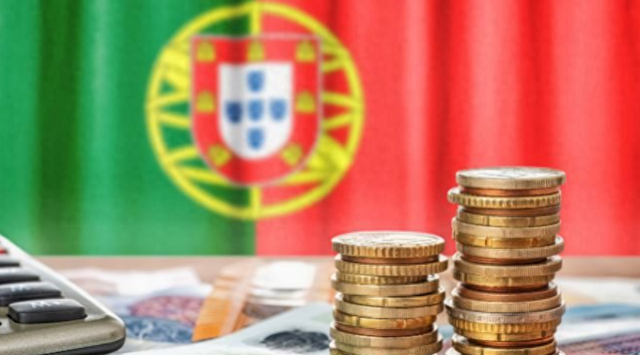
葡萄牙2025年经济增长1.9%
Xin Lang Cai Jing· 2026-01-30 10:24
来源:央视新闻客户端 当地时间1月30日,葡萄牙国家统计局公布的数据显示,2025年葡萄牙国内生产总值(GDP)同比增长 1.9%,较2024年的2.1%有所放缓,也略低于政府此前设定的2%增长目标。数据显示,2025年第四季度 GDP同比增长1.9%,环比增长0.8%。 ...
尼泊尔工商界领袖呼吁各政党将经济发展作为大选核心共同议程
Shang Wu Bu Wang Zhan· 2026-01-30 08:43
Core Viewpoint - The President of the Federation of Nepalese Chambers of Commerce and Industry, Chandra Prasad Dhakal, urges political parties to prioritize economic development in the upcoming national elections, emphasizing it as the country's most urgent priority [1] Group 1: Economic Development Focus - Dhakal calls for all political forces to place economic growth at the forefront of their election manifestos and policy commitments, expecting clear policies to promote industrial expansion, investment growth, and domestic job creation [1] - He highlights the critical moment for political parties to draft their election manifestos, suggesting they incorporate long-term reform proposals advocated by the private sector [1] Group 2: Implementation of Reforms - Dhakal reiterates that the economy must transcend political divisions and reveals that some recommendations from the previously proposed "High-Level Economic Reform Advisory Committee" have entered the implementation phase [1] - He mentions institutional reforms under his leadership, including the revision of outdated laws to improve the investment environment, aimed at creating a business-friendly atmosphere, attracting investment, and boosting private sector confidence [1] Group 3: Current Economic Challenges - These statements come at a time when the Nepalese economy faces challenges such as slow credit growth, underutilization of industrial capacity, and employment pressures, making economic policy direction a focal point for all parties involved [1]