
西电东送

Search documents
±800千伏青豫特高压工程青海段2025年度检修工作顺利完成
Zhong Guo Neng Yuan Wang· 2025-09-23 07:34
Core Insights - The Qinghai-Henan ±800 kV UHVDC project has successfully completed its annual maintenance, ensuring reliable power supply for the upcoming winter peak demand and promoting efficient development and utilization of renewable energy in Qinghai [1] Group 1: Project Overview - The Qinghai-Henan UHVDC project is the world's first long-distance transmission corridor for renewable energy and is a crucial part of China's "West-to-East Power Transmission" initiative [1] - The project spans 1,587 kilometers, starting from Hainan Tibetan Autonomous Prefecture in Qinghai and ending in Zhumadian City, Henan, passing through four provinces [1] - Since its operation, the project has delivered a total of 86.8 billion kWh of clean electricity to Henan, equivalent to a reduction of 39.06 million tons of standard coal consumption and a decrease of 64.23 million tons of CO2 emissions [1] Group 2: Maintenance and Safety Measures - The annual maintenance for the Qinghai section began on September 15, involving over 500 maintenance personnel and 10 teams conducting comprehensive inspections of the converter station and 231 kilometers of direct current lines [4] - A systematic assessment of equipment status was conducted prior to maintenance, leading to the development of a scientific and comprehensive maintenance plan [4] - Strict safety protocols were implemented, including a "Ten No Work" safety guideline and a three-level acceptance system to ensure safety and quality throughout the maintenance process [4] Group 3: Technological Advancements - This year's maintenance saw the first large-scale use of drones for tasks such as grounding line installation and data collection, enhancing data accuracy and operational efficiency [5] - Upgrades were made to the intelligent inspection system and infrared dual-vision system at the Qingnan converter station to improve equipment status perception and defect identification accuracy [5]

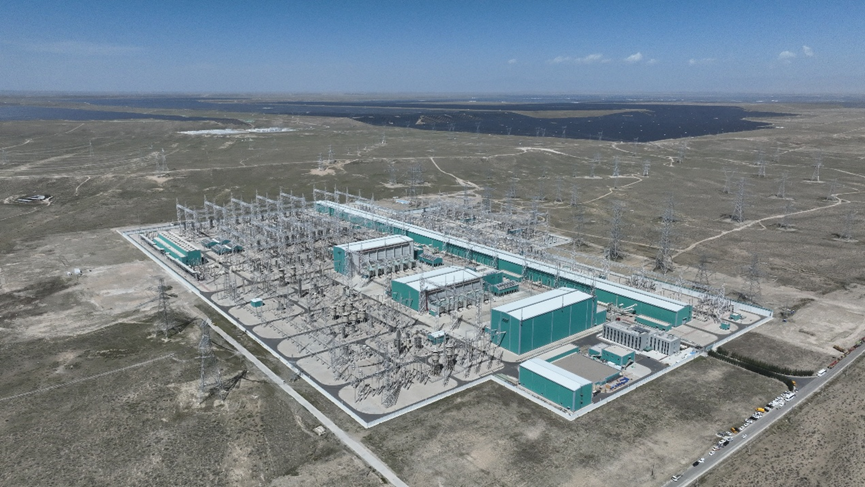
青豫直流工程青海段完成2025年度检修
Xin Hua She· 2025-09-22 06:13
Core Points - The Qinghai-Henan ±800 kV UHVDC project has successfully completed its annual maintenance, ensuring reliable power supply for the upcoming winter peak [1] - This project is the world's first long-distance transmission channel for renewable energy and is a crucial part of China's "West-to-East Power Transmission" initiative [1] - Since its operation, the project has delivered a total of 86.8 billion kWh of clean electricity to Henan, equivalent to a reduction of 39.06 million tons of standard coal consumption and a decrease of 64.23 million tons of CO2 emissions [1] Project Details - The Qinghai-Henan UHVDC project spans over 1,500 kilometers, passing through four provinces: Qinghai, Gansu, Shaanxi, and Henan [1] - The annual maintenance includes the innovative use of drones for data collection, enhancing the precision and efficiency of operations [1] - Maintenance and optimization upgrades were conducted on the intelligent inspection system at the Qingnan converter station [1]
工业硅:逢高布空思路为主,多晶硅:短期情绪或有降温
Guo Tai Jun An Qi Huo· 2025-09-19 01:48
Report Summary 1. Investment Rating - The report suggests a strategy of shorting industrial silicon at high prices and indicates that the short - term sentiment for polysilicon may cool down [1]. 2. Core View - The report provides a comprehensive analysis of the fundamentals of industrial silicon and polysilicon, including price, volume, inventory, profit, and raw material costs, and also presents relevant macro and industry news [1][3]. 3. Summary by Directory 3.1 Fundamental Tracking - **Futures Market**: Si2511 (industrial silicon) had a closing price of 8,905 yuan/ton, with a change of - 60 yuan compared to T - 1, 165 yuan compared to T - 5, and 280 yuan compared to T - 22. Its trading volume was 475,698 lots, and the open interest was 285,052 lots. PS2511 (polysilicon) had a closing price of 53,205 yuan/ton, with a change of - 285 yuan compared to T - 1 and - 505 yuan compared to T - 5. Its trading volume was 198,758 lots, and the open interest was 122,834 lots [1]. - **Basis**: The spot premium or discount of industrial silicon and polysilicon showed different changes compared to different benchmarks. For example, the industrial silicon spot premium (against East China Si5530) was + 445 yuan/ton, with a change of 60 yuan compared to T - 1, - 15 yuan compared to T - 5, and - 330 yuan compared to T - 22 [1]. - **Price**: The price of Xinjiang 99 - silicon was 8,800 yuan/ton, up 50 yuan compared to T - 1, 200 yuan compared to T - 5, and 100 yuan compared to T - 22. The price of polysilicon - N - type re - feedstock was 52,600 yuan/ton, up 50 yuan compared to T - 1, 1,050 yuan compared to T - 5, and 5,600 yuan compared to T - 22 [1]. - **Profit**: The profit of silicon plants in Xinjiang (new standard 553) was - 2,366 yuan/ton, with a change of - 60 yuan compared to T - 1, - 165 yuan compared to T - 5, and 55 yuan compared to T - 22. The profit of polysilicon enterprises was - 14.1 yuan/kg, with a change of 0.4 yuan compared to T - 1, 0.7 yuan compared to T - 5, and 2.9 yuan compared to T - 22 [1]. - **Inventory**: The social inventory of industrial silicon (including warehouse receipt inventory) was 54.3 million tons, with an increase of 0.4 million tons compared to T - 5. The manufacturer inventory of polysilicon was 21.9 million tons, with an increase of 0.8 million tons compared to T - 5 [1]. - **Raw Material Costs**: The price of silicon ore in Xinjiang was 330 yuan/ton, with a decrease of 10 yuan compared to T - 5 and T - 22. The price of washed coking coal in Ningxia was 1,100 yuan/ton, unchanged compared to T - 1 and T - 5, and up 130 yuan compared to T - 22 [1]. 3.2 Macro and Industry News - The Ningxia - Hunan ±800 kV UHV DC transmission project was officially put into operation, which can transmit 36 - 40 billion kWh of clean electricity annually, meeting 1/6 of Hunan's electricity demand. Sungrow provided 1.27GW high - power string inverters for the Ningxia photovoltaic base of the project [1][3]. 3.3 Trend Intensity - The trend intensity of industrial silicon and polysilicon was both - 1, indicating a relatively bearish view [3].
打通西藏与广东,又一个超级工程来了
虎嗅APP· 2025-09-18 13:21
Core Viewpoint - The construction of the Tibet-Guangdong direct current project marks a significant step in energy transmission, enabling Tibet to supply 43 billion kilowatt-hours of electricity annually to the Guangdong province, which is crucial for meeting its growing energy demands [4][27]. Group 1: Energy Supply and Demand - Guangdong, as China's largest economy and industrial province, has an electricity consumption forecast of 912.1 billion kilowatt-hours for 2024, comparable to that of Japan [9]. - Despite having a generation capacity exceeding 700 billion kilowatt-hours, Guangdong faces a significant electricity shortfall, necessitating the expansion of nuclear power and reliance on "West-to-East Power Transmission" [10][15]. - The Tibet-Guangdong project will enhance energy supply, with the potential for Tibet to develop its vast hydropower resources, estimated at a theoretical annual generation capacity exceeding 1 trillion kilowatt-hours [19][21]. Group 2: Infrastructure and Economic Impact - The Tibet-Guangdong direct current project will span over 2,600 kilometers, utilizing advanced technology to deliver electricity with minimal latency [25][26]. - The project is expected to create over 100,000 jobs during peak construction, significantly impacting the local economy in Tibet [31]. - The total investment for the project is projected to reach 200 billion yuan, including direct investments and supporting infrastructure [30]. Group 3: Economic Growth and Development - Tibet, historically the weakest province in terms of GDP and population, is experiencing a turnaround with multiple large-scale infrastructure projects, including the 300 billion yuan Sichuan-Tibet Railway and the 1 trillion yuan Yarlung Tsangpo River hydropower project [40][42]. - Recent years have seen Tibet achieving the highest GDP growth rates in the country, indicating a shift in its economic trajectory [38]. - The combination of significant investments and infrastructure development positions Tibet to potentially escape its status as the weakest province economically [43][44].
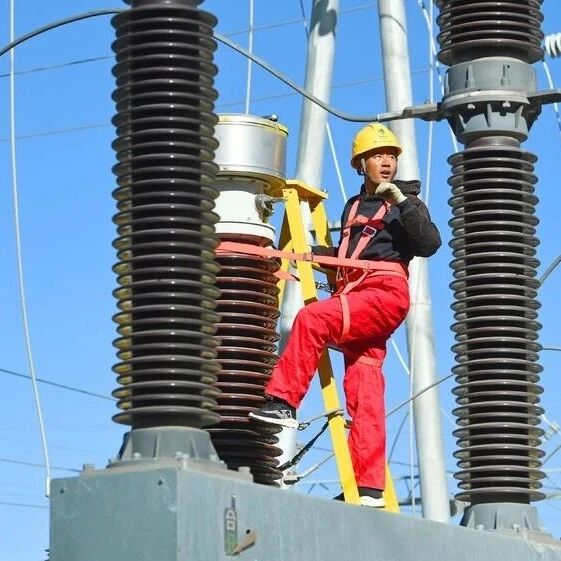
首次横跨三大地理阶梯 藏粤直流工程启动建设
Xin Hua Wang· 2025-09-17 00:26
Core Points - The construction of the Tibet-Guangdong ultra-high voltage direct current transmission project (Tibet-Guangdong DC Project) has commenced, marking a significant step in China's energy transmission strategy during the 14th Five-Year Plan [1][2] - This project is the first ultra-high voltage transmission line to cross the Tibetan Plateau, Yunnan-Guizhou Plateau, and South China hills, highlighting its geographical significance [1][2] Investment and Capacity - The total investment for the Tibet-Guangdong DC Project is approximately 53.2 billion yuan, with full operation expected by 2029, capable of delivering over 43 billion kilowatt-hours of electricity annually to the Guangdong-Hong Kong-Macao Greater Bay Area, all sourced from clean energy [1][2] - The project has a rated transmission capacity of 10 million kilowatts, surpassing the Kunming-Lijiang DC Project, and is expected to replace approximately 12 million tons of standard coal consumption, reducing carbon dioxide emissions by about 33 million tons annually [2] Technical Challenges - The project faces significant technical challenges, including construction at high altitudes (with nearly 90% of the line in mountainous areas and 30% in high-altitude regions), and the need for new technologies and equipment to operate at altitudes of 4,300 meters [1][2] - The project aims to address world-class technical challenges related to safely integrating renewable energy from high-altitude regions into the grid and ensuring long-distance transmission and consumption [2]
直达湾区,又一条“能源大动脉”来了
Mei Ri Jing Ji Xin Wen· 2025-09-17 00:14
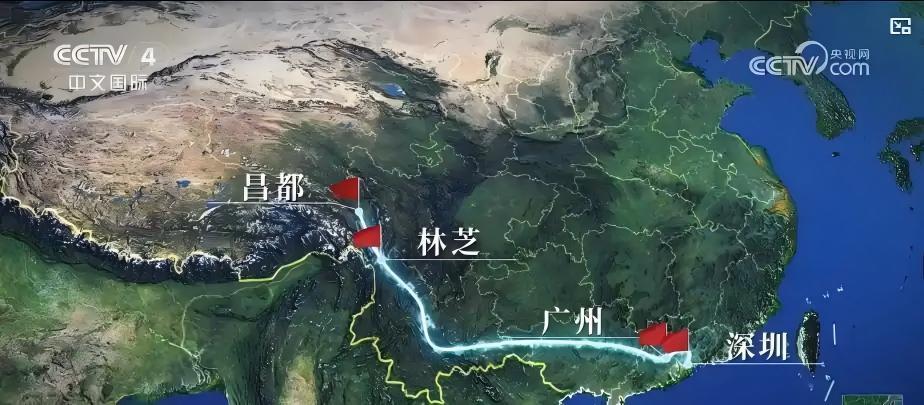
Core Insights - The construction mobilization meeting for the ±800 kV UHVDC project from Tibet to the Guangdong-Hong Kong-Macao Greater Bay Area marks the start of the world's largest flexible DC transmission project, which is also the most advanced in technology and largest in investment scale [1][4] Group 1: Project Overview - The Tibet-Guangdong DC project relies on the "water-wind-solar integration" clean energy base in Tibet, with four ±800 kV converter stations being built in Changdu and Linzhi in Tibet, and Guangzhou and Shenzhen in Guangdong [1] - The project aims to deliver over 43 billion kWh of electricity annually to the Greater Bay Area upon full operation in 2029, which is equivalent to half the annual output of the Three Gorges Dam, with 100% of the energy being clean [4] Group 2: Economic Impact - The total investment for the Tibet-Guangdong DC project is approximately 53.2 billion yuan, with an additional investment of over 150 billion yuan for the supporting "water-wind-solar integration" power base, which is expected to significantly boost the upstream and downstream equipment industries [4] - The project is anticipated to create over 100,000 direct jobs during peak construction [4] Group 3: Energy Demand and Supply - In July, Guangdong's peak electricity load reached 165 million kW, making it the first province to exceed 160 million kW, accounting for 11% of the national electricity load [2] - The total electricity consumption in Guangdong from January to July was 531.52 billion kWh, a year-on-year increase of 4.3% [1][2] Group 4: Strategic Importance - The project is seen as a key move in the national strategy of optimizing energy resources, breaking regional barriers, and achieving precise alignment between resources and markets, thus fostering a new model of regional collaborative development [4]
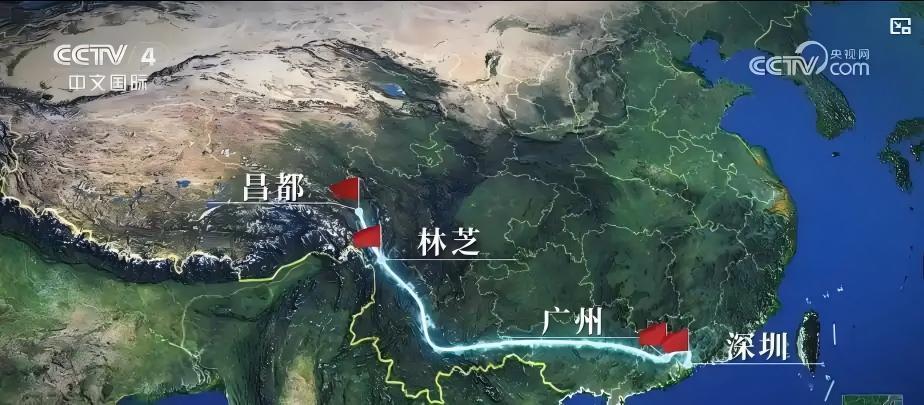
城市24小时 | 直达湾区,又一条“能源大动脉”来了
Mei Ri Jing Ji Xin Wen· 2025-09-16 16:04
Core Points - The construction mobilization meeting for the ±800 kV UHVDC project from Tibet to the Guangdong-Hong Kong-Macao Greater Bay Area was held on September 16, marking the start of the world's largest flexible DC transmission project [1][4] - The project will connect four converter stations in Tibet and Guangdong, aggregating over 20 million kW of clean energy, providing a strong green low-carbon energy guarantee for the region [1][4] - The total investment for the project is approximately 53.2 billion yuan, with an additional investment of over 150 billion yuan for supporting clean energy infrastructure [4] Energy Demand and Supply - In July, Guangdong's electricity consumption reached 531.52 billion kWh, a year-on-year increase of 4.3%, with the highest load reaching 165 million kW, accounting for 11% of the national load [2][4] - The total electricity consumption in China for the year reached 1.02 trillion kWh in July, marking an 8.6% year-on-year increase [1][2] Economic Impact - The project is expected to create over 100,000 direct jobs during peak construction and significantly boost the upstream and downstream equipment industries [4] - Since 2015, the cumulative electricity export from Tibet has reached 15.79 billion kWh, generating over 4.2 billion yuan in economic benefits for the region [2] Strategic Importance - The UHVDC project is seen as a key move in optimizing national energy resource allocation, breaking regional barriers, and achieving precise alignment between resources and markets [4] - The project will enable the delivery of over 43 billion kWh of clean energy annually to the Greater Bay Area, equivalent to half the annual output of the Three Gorges Dam [4]
“蒙电”入苏 点亮美好图景
Zhong Guo Neng Yuan Wang· 2025-09-16 10:21
Core Viewpoint - The article highlights the significant impact of the Xilin Gol-Tai Zhou ±800 kV UHVDC transmission project, which has delivered over 200 billion kWh of electricity to Jiangsu, facilitating economic growth and development in the region while reducing carbon emissions by 190 million tons [2][12]. Group 1: Agricultural Impact - The stable electricity supply from the UHVDC project has transformed agricultural practices in Jiangsu, particularly in areas like Qiantang Town, where farmers no longer worry about power outages affecting irrigation [3][4]. - The project has enabled the operation of 26 smart pumping stations and improved irrigation infrastructure, allowing for efficient water management and increased agricultural productivity [3][4]. - The availability of reliable electricity has also enhanced grain drying processes, significantly reducing losses due to spoilage during adverse weather conditions [3]. Group 2: Industrial Development - The UHVDC project has provided a stable power supply crucial for high-tech industries in Jiangsu, such as semiconductor manufacturing, where even minor voltage fluctuations can disrupt production [5][6]. - Companies like Huaxin Semiconductor have benefited from the stable electricity, achieving a chip yield rate of 99.2% and a 40% increase in export orders year-on-year [6]. - The project has supported the growth of 137 high-tech enterprises in the Taizhou High-tech Zone, fostering innovation and enhancing the region's manufacturing capabilities [6]. Group 3: Pharmaceutical Sector - The stable power supply has been vital for pharmaceutical companies in Taizhou, ensuring consistent production conditions and reducing the risk of quality issues due to power instability [11]. - Jiangsu Yingke Biopharmaceutical Co., Ltd. has expanded its production capacity, planning to deliver more quality medicines globally thanks to the reliable electricity provided by the UHVDC project [11][12]. - The project exemplifies the successful implementation of the national "West-to-East Power Transmission" strategy, optimizing resource allocation and promoting regional collaboration [12].
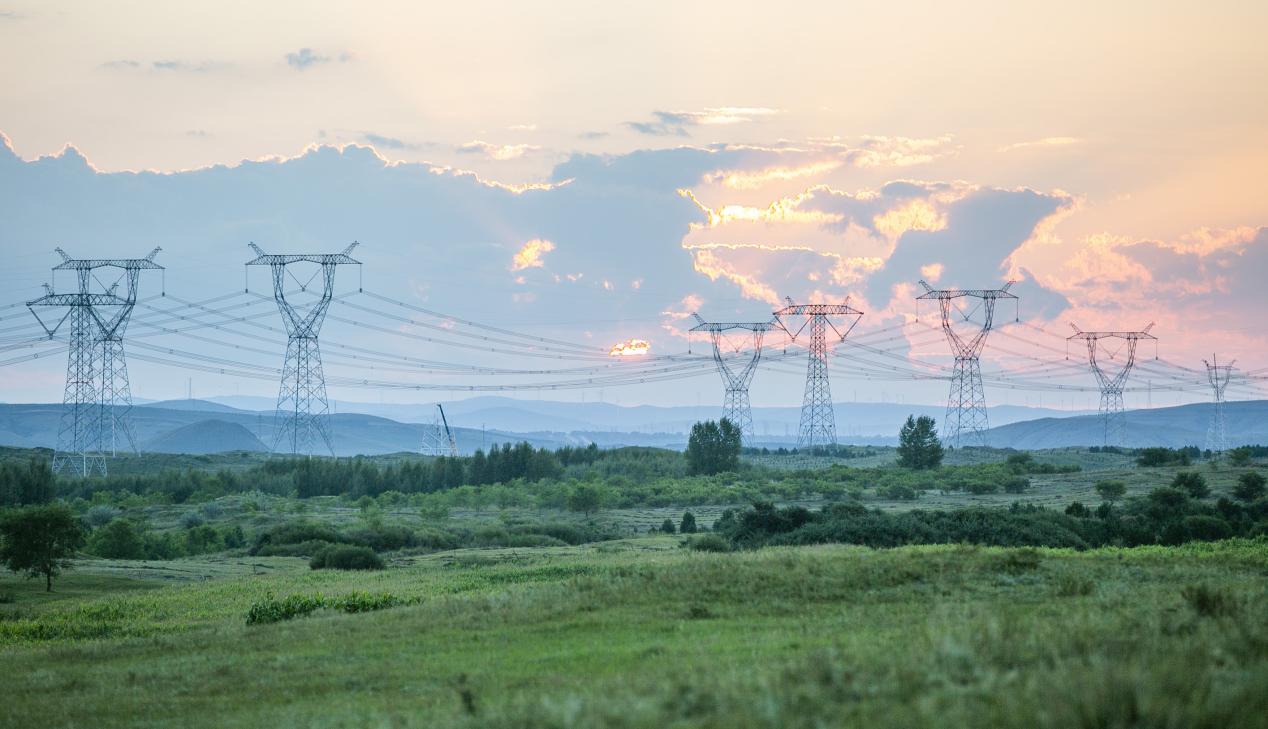
架起空中"能源丝路"--来自新疆的调查
Jing Ji Ri Bao· 2025-09-15 04:42
Core Viewpoint - Xinjiang has become a crucial part of China's energy strategy due to its abundant energy resources, including coal, solar, and wind power, which are among the highest in the country. The region's energy development has significantly contributed to the national energy structure transformation since the launch of the "Xinjiang Power Transmission" initiative in 2010 [1][2]. Energy Resources - Xinjiang has confirmed coal reserves of 4.5 trillion tons, accounting for 25% of the national total and approximately 40% of the predicted total coal resources. Solar energy resources are about 4.2 billion kilowatts, representing 26.9% of the national total, while wind energy resources are around 1 billion kilowatts, making up 18% of the national total [1]. - The region's energy resources are likened to "rich mines," providing strong support for energy development [1]. Power Transmission Infrastructure - Since the launch of "Xinjiang Power Transmission," five external transmission channels have been established, increasing the number of provinces receiving electricity from 7 to 22, with a cumulative transmission of over 940 billion kilowatt-hours [1][4]. - The "Hami-Dunhuang 750 kV" project marked the beginning of Xinjiang's connection to the national grid in 2010, followed by the "Hami South-Zhengzhou ±800 kV" project in 2014, which has consistently delivered over 40 billion kilowatt-hours annually for six years [3][4]. Technological Advancements - The "Zhundong-Wannan ±1100 kV" project, operational since September 2019, is the highest voltage and largest capacity transmission project globally, overcoming numerous technical challenges [3]. - New technologies, including drones and digital twins, have been applied to enhance operational efficiency by three times since the project's launch [3]. Energy Development Goals - By the end of 2024, Xinjiang aims to achieve an external transmission capacity of 1,267 billion kilowatt-hours, leading the northwest region [4]. - Plans for 2025 include the construction of 41 new and ongoing ultra-high voltage projects, marking a 50% increase from 2024 [7]. Renewable Energy Integration - As of mid-2023, Xinjiang's total installed capacity reached 219 million kilowatts, with renewable energy accounting for 58.45% of this capacity [11]. - The region has seen a significant increase in green electricity transactions, with 61.5 billion kilowatt-hours traded in the first half of 2023, a 13.57% increase from the previous year [11]. Economic Impact - The "Xinjiang Power Transmission" initiative is expected to inject significant momentum into local economic development, particularly in the wind, solar, and coal industries [12]. - The establishment of specialized industrial parks in energy-rich areas aims to create an integrated layout of "electricity, grid, production, and chain," reducing initial investment burdens for enterprises [13].
新疆:“同心共舞”点亮万家灯火
Jing Ji Ri Bao· 2025-09-14 05:59
Core Insights - The Xinjiang region is experiencing significant development in its power transmission capabilities, particularly through the ±1100 kV Changji Converter Station, which enhances the efficiency of electricity transmission across multiple provinces [1][2] - The Jiquan DC project has successfully integrated various energy sources, including coal, wind, and solar power, with a growing proportion of renewable energy being transmitted [2] - The collaboration between local government and companies like TBEA has been crucial in advancing technology and supporting sustainable development in the energy sector [2][3] Group 1: Infrastructure and Technology - The Changji Converter Station is a key component of the Jiquan DC project, with a total line length of 3,293 kilometers and an annual electricity transmission capacity exceeding 62 billion kWh [1] - TBEA has developed the highest voltage level and most advanced technology in the industry with its ±1100 kV converter transformer, showcasing the company's leadership in the power transmission sector [2] - The company has overcome over 20 technical challenges related to converter valves and transformers, demonstrating its innovation capabilities [2] Group 2: Resource Utilization and Innovation - The transformation of crude oil into specialized transformer oil at PetroChina Karamay has addressed issues related to corrosion, heat dissipation, and insulation, significantly increasing the value of the product [3] - The development of dielectric cooling liquids by Karamay Petrochemical has extended the application of oil products, contributing to the local cloud computing industry [3] - The region is shifting from resource dependency to innovation-driven development, reflecting a broader trend of industrial transformation in Xinjiang [3]