货币政策独立性

Search documents
百利好丨美联储突遭“断供”!10月降息预期升高
Sou Hu Cai Jing· 2025-10-23 08:25
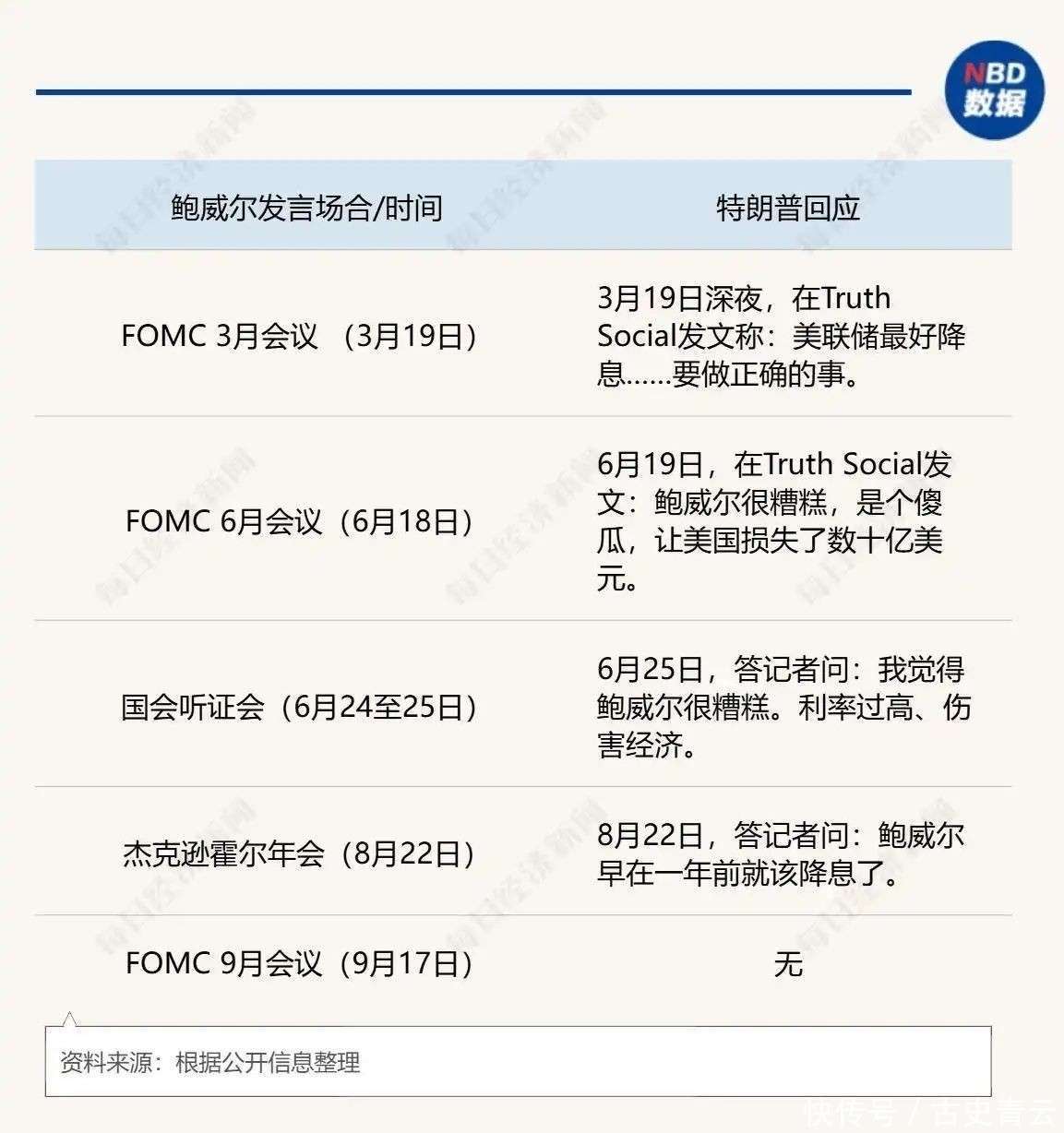
Group 1 - ADP Research has suspended providing its employment data series to the Federal Reserve, which previously covered about 20% of the private sector employment in the U.S. This suspension is expected to widen the information gap for the Fed ahead of key monetary policy meetings [1] - The Federal Reserve is scheduled to hold a monetary policy meeting on October 28-29, with a strong market consensus anticipating a 25 basis point rate cut. The probability of this rate cut has reached 96.7% according to CME's FedWatch tool [3] - Despite the interruption of key economic indicators, market expectations for a loose monetary policy continue to strengthen, with a recent survey indicating that 115 out of 117 economists expect a 25 basis point rate cut, lowering the federal funds rate target range to 3.75%-4.00% [3] Group 2 - If the rate cut occurs as expected, it may lead to downward pressure on the U.S. dollar, affecting the prices of dollar-denominated assets like gold [4] - A loose monetary environment is likely to provide liquidity support for global risk assets [4] - The ongoing public calls from the White House for larger rate cuts may challenge the independence of the Federal Reserve's monetary policy [4]


美联储穆萨勒姆:货币政策的独立性至关重要,但需要透明度和问责制。
Sou Hu Cai Jing· 2025-10-17 16:44
来源:滚动播报 美联储穆萨勒姆:货币政策的独立性至关重要,但需要透明度和问责制。 ...
美联储官员警告关税不确定性重创企业决策 就业与物价均面临压力
智通财经网· 2025-09-30 23:05
Group 1 - The recent tariff measures announced by the Trump administration are causing businesses in the Midwest to adopt a wait-and-see approach, leading to concerns over stalled investment decisions [1] - The impact of tariffs on heavy trucks, lumber, and cabinets is particularly significant in manufacturing hubs like Michigan and Iowa, with many businesses postponing major investment plans due to uncertainty [1] - The Federal Reserve recently lowered the federal funds rate target range by 25 basis points to 4% to 4.25% to mitigate employment market risks, but there is notable disagreement among officials regarding future rate paths [1] Group 2 - Concerns over the independence of monetary policy have been expressed, particularly regarding proposals that would allow the Trump administration to directly influence interest rate decisions, which could lead to higher inflation and poorer economic performance [2] - Other Federal Reserve officials have emphasized the need for caution in accelerating rate cuts, as inflation pressures remain significant despite signs of softening in the labor market [2] - The current financial environment is still supportive of economic growth, allowing the Federal Reserve some flexibility in assessing the situation [2]
管涛:完善国债公开市场操作需增加短债供给 | 立方大家谈
Sou Hu Cai Jing· 2025-09-28 15:04
Core Viewpoint - The article discusses the evolution of China's monetary policy and its relationship with exchange rate policy, emphasizing the need for increased issuance of short-term government bonds to enhance the independence of the central bank's monetary policy [1][11]. Group 1: Historical Context of Monetary Policy - Before the "8·11" exchange rate reform in 2015, the People's Bank of China (PBOC) used foreign exchange reserves to prevent rapid appreciation of the RMB, which limited its monetary policy autonomy [1][3]. - Following the "8·11" reform, the PBOC shifted to a more neutral exchange rate policy, reducing its intervention in the foreign exchange market and focusing on domestic credit channels for monetary supply [1][6]. - The ratio of new foreign exchange reserves to new base money supply was significantly high during various periods, indicating a reliance on foreign exchange reserves for monetary control, which weakened the independence of the PBOC's monetary policy [3][4][10]. Group 2: Current Monetary Policy Challenges - The PBOC's monetary policy has been constrained by a lack of short-term government bonds, which are essential for effective open market operations [12][14]. - Recent measures to adjust interest rates and reserve requirements have not fully addressed the challenges posed by the current lending environment, where banks are cautious about lending [12][15]. - The introduction of government bond trading in the open market is seen as a step towards improving liquidity management, but the current supply of short-term bonds remains insufficient [13][14]. Group 3: Future Directions - There is a growing recognition of the need to issue more short-term government bonds to facilitate the PBOC's monetary policy operations and enhance its ability to manage liquidity effectively [11][15]. - The collaboration between the Ministry of Finance and the PBOC aims to explore the reintroduction of net purchases of government bonds, which could improve market conditions and support monetary policy objectives [14][15].
管涛:完善国债公开市场操作需增加短债供给
Di Yi Cai Jing· 2025-09-28 12:11
Group 1 - The core argument emphasizes the need for the central bank to enhance its monetary policy independence by increasing the issuance of short-term government bonds to improve the monetary control mechanism [1][11][15] - The central bank's monetary policy has historically been constrained by exchange rate policies, which limited its ability to manage domestic liquidity effectively [2][6][10] - The transition from relying on foreign exchange reserves to domestic credit channels for monetary policy implementation marks a significant shift in China's monetary control strategy [10][12] Group 2 - The People's Bank of China (PBOC) has gradually shifted its focus from foreign exchange interventions to domestic liquidity management, particularly through the use of medium-term lending facilities and other monetary policy tools [8][12][13] - The lack of short-term government bonds has been identified as a critical issue for the PBOC's open market operations, which traditionally rely on such instruments for liquidity management [14][15] - Recent policy changes, including the resumption of government bond trading in the open market, indicate a move towards a more flexible and responsive monetary policy framework [12][13][15]
穆迪:稳定币带头“加密化”,币圈要夺新兴市场的“货币主权”
Hua Er Jie Jian Wen· 2025-09-27 11:18
Core Insights - Moody's warns that the rise of "cryptoization" driven by stablecoins poses significant challenges to monetary sovereignty and financial stability in emerging markets [1][2] - The report highlights that the increasing adoption of stablecoins, particularly those pegged to fiat currencies like the US dollar, undermines central banks' control over interest rates and exchange rates [1][2] Group 1: Risks to Monetary Policy and Financial Stability - The core risk of "cryptoization" is its erosion of a country's monetary policy independence and the stability of its financial system [2] - When a significant portion of economic activity is conducted through stablecoins, central banks' ability to manage the economy via interest rate adjustments is weakened [2] - The potential dominance of dollar-pegged stablecoins as a medium of exchange could directly impact the stability of local currencies' exchange rates [2] Group 2: Systemic Risks of Stablecoins - Moody's warns that stablecoins themselves carry systemic risks despite being perceived as relatively safe [3] - The rapid growth of stablecoins introduces systemic vulnerabilities, with insufficient regulation potentially leading to runs on reserves [3] - A de-pegging event could force governments to undertake costly rescue measures [3] Group 3: Imbalance in Growth and Regulatory Gaps - The global adoption of crypto assets shows significant regional imbalances, with emerging markets facing heightened risks due to regulatory lag [4] - Currently, less than one-third of countries have implemented comprehensive digital asset regulations, exposing many economies to market volatility and systemic shocks [4] - The disparity in regulatory frameworks contrasts with the differing growth patterns, where developed markets focus on investment while emerging markets prioritize practical needs like cross-border remittances and inflation hedging [4] - This divergence highlights both the potential of digital assets in promoting financial inclusion and the accumulating risks of financial instability in the absence of adequate regulation [4]
DLS MARKETS:经济降温就是衰退?美联储高官有不同解读
Sou Hu Cai Jing· 2025-09-25 02:39
Core Viewpoint - The article discusses the insights of Chicago Fed President Goolsbee regarding the future of U.S. monetary policy and the state of the U.S. economy, emphasizing the complexities and uncertainties facing the economy as 2025 approaches [1]. Group 1: Economic Outlook - Goolsbee believes that the slowdown in the U.S. labor market does not indicate an imminent recession, asserting that the fundamentals of the U.S. economy remain strong despite concerns [3]. - He highlights that inflation continues to be a significant challenge for U.S. economic policy, cautioning against an over-reliance on interest rate cuts, especially given the prolonged period of inflation above the Fed's target [3]. Group 2: Trade Policy and Inflation - Goolsbee points out that while tariffs from the Trump administration may have caused short-term price increases, their impact is not as severe as some economists fear regarding sustained inflation [3]. - He suggests that the negative effects of tariff policies may be underestimated, partly due to the lack of interest from major trading partners in retaliatory measures [3]. Group 3: Immigration Policy and Economic Growth - Concerns are raised about the Trump administration's adjustments to policies affecting high-skilled foreign labor, which could have long-term implications for U.S. economic growth and innovation [4]. - Goolsbee emphasizes that attracting scientific and technical talent is crucial for productivity growth, and overly strict immigration policies could undermine U.S. competitiveness in global technology innovation [4]. Group 4: Monetary Policy Stance - Goolsbee supports the recent 25 basis point rate cut by the Fed but remains cautious about further aggressive cuts, advocating for a gradual approach towards a neutral interest rate level [4]. - He argues that maintaining a relatively neutral monetary policy is essential for ensuring long-term economic health rather than merely stimulating growth [4]. Group 5: Independence of the Federal Reserve - Goolsbee expresses the importance of the Fed's independence in controlling inflation, indicating that it should not be influenced by external political pressures [5]. - This stance is crucial for maintaining economic stability and avoiding excessive intervention in monetary policy [5].
万腾外汇:多数人都认为将连续降息时,古尔斯比却表示不要急于降息
Sou Hu Cai Jing· 2025-09-25 01:30
Core Viewpoint - The Chicago Federal Reserve Bank President, Goolsbee, emphasizes the need for substantial justification before implementing further monetary easing beyond the recent 25 basis point rate cut [1][3]. Group 1: Monetary Policy Insights - Goolsbee warns against hastily initiating consecutive rate cuts based on the assumption that inflation will naturally decline, as this could lead to policy misjudgments [3]. - The current unemployment rate of 4.3% is considered healthy, and labor market indicators suggest moderate cooling rather than a sharp contraction typical of historical recessions [3]. - The recent adjustment of the Federal Reserve's interest rate to a range of 4% to 4.25% reflects an assessment of trade war impacts, with retaliatory tariffs from major trading partners being less severe than anticipated, resulting in weaker inflationary pressures [3]. Group 2: Political Influence and Economic Predictions - Goolsbee reaffirms the importance of the independence of monetary policy, stating that the Federal Reserve has never altered its standards due to political interference, with professional competence being the primary criterion for reappointment [3]. - Investors generally expect the Federal Reserve to implement two more 25 basis point rate cuts within the year, supported by the latest economic forecasts from the Fed [3]. - Goolsbee expresses caution regarding aggressive easing paths, noting that the Trump administration's trade policies have disrupted the economic environment, which previously seemed to be moving towards neutral interest rates [3]. Group 3: Concerns on Talent Mobility - Goolsbee raises concerns about the proposed significant increase in H-1B visa application fees to $100,000, highlighting the positive correlation between high-skilled talent mobility and technological innovation, as well as productivity growth [4]. - He warns that restricting the influx of scientific talent could lead to insufficient productivity growth in the long term [4]. Group 4: Employment Data Risks - Federal Reserve Governor Bowman identifies potential risks in current employment data, suggesting that moderate rate cuts may be necessary to prevent sudden deterioration in the labor market [5].

X @Bloomberg
Bloomberg· 2025-09-22 23:18
今日必读🧮TikTok美国版将重新训练算法🪙紫金黄金国际或因台风推迟上市💴中国央行行长强调货币政策独立性获取免费中文电子报《彭博财经早茶》,洞悉全球市场动态。Catch up on what's moving China's markets in our free Chinese language newsletter.️ https://t.co/m6tr8EaL8O ...
普京再次让美失望,特朗普与欧洲达成共识,制裁俄石油结束战争?
Sou Hu Cai Jing· 2025-09-22 02:42
Group 1 - The Federal Reserve announced a 25 basis point rate cut to a range of 4.25% on September 18, 2025, marking the first cut of the year after a 9-month interval since the last reduction [4] - The decision was made amidst significant external pressure from President Trump, who had been advocating for a more substantial rate cut [5][7] - The voting outcome of 11 to 1 in favor of the rate cut indicates a surprising level of unity within the Federal Reserve, despite the political pressures [5][7] Group 2 - Following the announcement, U.S. stock markets experienced a decline, contrary to expectations, while Chinese concept stocks surged, indicating a shift in global capital flows [6][8] - The market's reaction suggests that investors are seeking better value investments outside of the U.S. stock market, potentially signaling the end of the previous trend of blind investment in U.S. equities [8] - The rate cut of 25 basis points is viewed as insufficient to address fundamental economic issues, including a $37 trillion government debt and risks in commercial real estate [10]