6G通信

Search documents
川普又来创造买点了?——A股一周走势研判及事件提醒
Datayes· 2025-10-12 14:44
Core Viewpoint - The article discusses the recent volatility in the A-share market amid renewed tensions between China and the U.S., highlighting the market's current state where most investors are fully invested, which may lead to potential risks if the consensus becomes too strong [2][4]. Market Analysis - The A-share market is facing both favorable and unfavorable factors compared to the previous tariff announcements in April. Favorable factors include a smaller decline in the FTSE China A50 futures and a growing consensus among investors to increase equity holdings. Unfavorable factors include higher current market levels, significant pressure to realize profits, and a larger scale of market financing [4]. - Recent market performance shows significant declines across major indices, with the Shanghai Composite Index down 0.94% and the Shenzhen Component Index down 2.70% [5][23]. Sector Insights - The rare earth sector is highlighted for its strategic importance in AI, electric vehicles, and military technology, with China controlling about 80% of global rare earth production and monopolizing processing technologies. This gives China leverage in potential trade negotiations [6][7]. - The rare earth price has increased by 37% to 26,205 yuan per ton, marking the highest level since Q2 2023, indicating strong demand and potential profitability in this sector [7]. Investment Opportunities - Companies such as Li Min Co., Northern Rare Earth, and Youyan New Materials are expected to see significant profit increases, with some projecting over 100% year-on-year growth in net profits for Q3 [14][15]. - The semiconductor industry is also poised for growth, with New Kai Lai's upcoming product launch at the Bay Area Semiconductor Industry Expo showcasing advancements in high-speed oscilloscopes, which could benefit various tech sectors [12][13]. Fund Flow and Market Sentiment - The A-share market experienced a net outflow of 39.167 billion yuan, with significant selling in the electronics and power equipment sectors. Conversely, the non-ferrous metals sector saw a net inflow of 10.81 billion yuan, indicating a shift in investor sentiment [24][25]. - The upcoming "Double 11" e-commerce event is expected to simplify promotional strategies, potentially boosting consumer spending and benefiting retail sectors [16]. Industry Trends - The public utilities, commercial trade, and banking sectors are currently in a recession phase, while non-bank financials, steel, and non-ferrous metals are in an expansion phase, suggesting varying investment opportunities across sectors [28]. - The rare earth and agricultural sectors are identified as high-growth, low-valuation areas worth exploring for potential investments [29].



玻璃基板,一步之遥
半导体行业观察· 2025-09-20 01:55
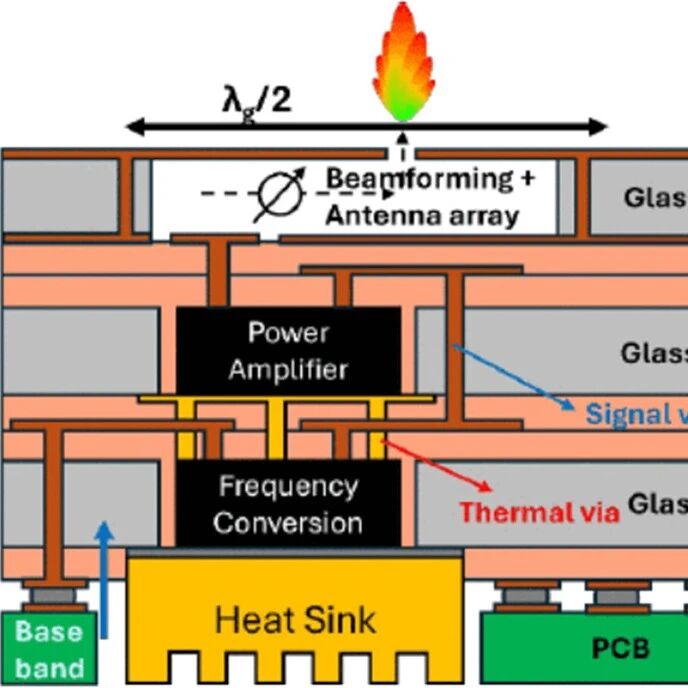
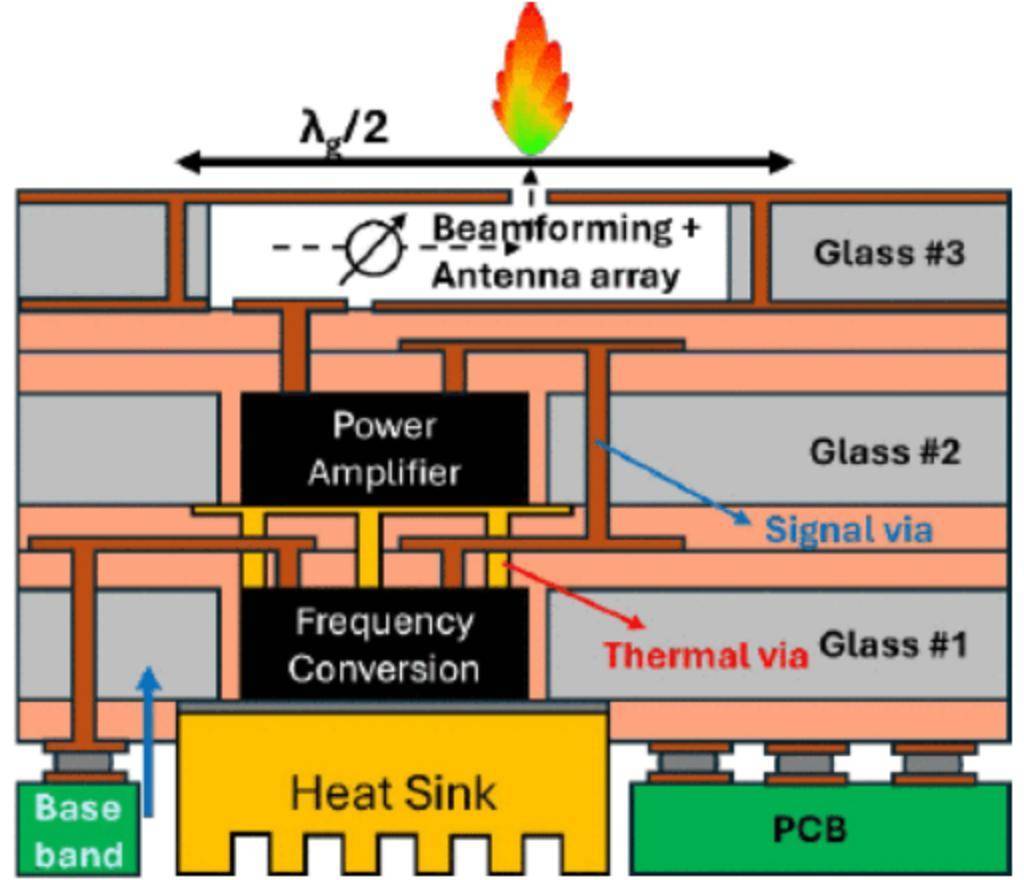
Core Viewpoint - Glass substrates are emerging as a superior alternative to organic substrates in advanced packaging due to their flatness, lower thermal expansion coefficient, and reduced warpage issues, making them ideal for high-frequency applications and 6G communications [2][3][5]. Group 1: Advantages of Glass Substrates - Glass substrates provide significant improvements in warpage reduction (50%) and positioning accuracy (35%) compared to organic substrates, facilitating the implementation of redistribution layers (RDL) with line widths and spacings below 2 micrometers [2]. - The dielectric constant of glass (2.8) is much lower than that of silicon (12), resulting in significantly lower transmission losses and enhanced signal integrity for high-frequency applications [3]. - Glass substrates are versatile and can be used as carriers, core substrates for embedded components, 3D stacking materials, or sealed cavities for sensors and MEMS [2]. Group 2: Manufacturing Challenges - Glass cutting is prone to micro-cracking, and the challenge of repeatedly manufacturing thousands of fine-pitch through-glass vias (TGV) hinders the full potential of glass substrates [3][22]. - The laser-induced deep etching (LIDE) technology is being improved to facilitate mass production of TGVs, allowing for the etching of vias as small as 3 micrometers with a spacing of 5 micrometers [10][11]. Group 3: Applications in 6G Technology - Glass substrates are ideal for 6G wireless communication networks, which require data rates exceeding 100 GHz, due to their high-frequency transmission capabilities and low loss characteristics [5]. - Heterogeneous integration in stacked glass can combine high-frequency front-end chips with low-loss interconnects, enhancing the performance of large-scale antenna arrays [5]. Group 4: Innovations in Glass Processing - The use of ABF (Ajinomoto Build-up Film) as a low-k dielectric and adhesive for glass bonding has shown promising results, achieving electrical performance up to 220 GHz with minimal loss [5][8]. - New methods for cutting glass substrates, such as embedding cut substrates in organic resin for edge protection, are being explored to minimize damage during handling [24]. Group 5: Yield Improvement Techniques - Predictive modeling and machine learning are being utilized to enhance yield rates in glass substrate manufacturing, particularly in identifying and mitigating defects early in the production process [18][19]. - The development of automated systems for wet etching and drying processes is aimed at improving the efficiency and yield of TGV manufacturing [10][11]. Group 6: Future Directions - The glass ecosystem is preparing for the continued growth in chip and substrate sizes in multi-chip advanced packaging, with significant progress being made in laser modification and high-frequency etching techniques [28]. - Ongoing research aims to further reduce micro-cracking during cutting processes and improve the compatibility of new processing techniques with stringent design rules [29].
玻璃基板,势头强劲
Sou Hu Cai Jing· 2025-09-19 05:14
Core Viewpoint - Glass is gaining attention as the next-generation packaging substrate material due to its numerous advantages over organic substrates, including lower thermal expansion, improved flatness, and reduced transmission loss for high-frequency applications [1][2][3]. Group 1: Advantages of Glass Substrates - Glass substrates are significantly flatter and have a lower thermal expansion coefficient compared to organic substrates, simplifying lithography processes [2]. - The warpage issues associated with multi-chip packaging have been notably improved with glass substrates, allowing for better chip bonding and alignment [2]. - Glass substrates provide extremely low transmission loss for high-frequency devices, making them suitable for applications like 6G communications [3][4]. Group 2: Manufacturing Challenges - The cutting of glass substrates can lead to micro-cracks, which pose a significant manufacturing challenge [3][17]. - The process of creating through-glass vias (TGV) is complex, with challenges in achieving high yield rates due to the need for precise laser etching and filling techniques [6][12]. - Despite the challenges, companies like Intel continue to invest heavily in glass substrate technology, indicating a strong belief in its potential for high-performance computing and AI applications [3][12]. Group 3: Innovations in Glass Processing - Recent advancements in laser-induced deep etching (LIDE) technology have improved the manufacturing process for TGVs, allowing for smaller and more precise vias [6][10]. - The use of automated systems for wet etching processes has been developed to enhance the efficiency and yield of glass substrate production [7][10]. - New methods, such as embedding cut glass substrates in organic resin for edge protection, are being explored to mitigate issues related to cracking during processing [19][20]. Group 4: Future Outlook - The glass ecosystem is preparing for the ongoing growth in chip and substrate sizes for advanced multi-chip packaging, with significant progress being made in the industry [22]. - The potential for direct laser etching using excimer lasers is being considered as a more environmentally friendly alternative to traditional methods, provided it can meet the requirements for subsequent copper filling [22]. - Continued research into polymer retraction techniques before cutting may help prevent micro-cracking, indicating a focus on improving manufacturing processes for glass substrates [22].
趋势研判!2025年中国深海资源开发行业政策、发展现状、细分市场、企业布局及战略前景分析:深海资源开发技术迭代加速,万亿产业蓝海正待深度掘金[图]
Chan Ye Xin Xi Wang· 2025-09-17 01:11
Core Insights - Deep-sea resource development focuses on areas deeper than 200 meters, encompassing strategic resources such as minerals, energy, and biological resources, which are crucial for overcoming land resource limitations and ensuring national security [1][2] - The Chinese government has integrated deep-sea development into its national security strategy, designating it as a strategic emerging industry in the 2025 government work report, supported by a special fund of 50 billion yuan for marine economy [1][5] - The industry is projected to reach a scale of 3.25 trillion yuan by 2025 and exceed 5 trillion yuan by 2030, driven by significant growth in oil and gas development, mining, and biopharmaceutical sectors [1][9] Industry Overview - Deep-sea resource development involves exploration, extraction, and utilization of resources in deep-sea areas, aiming to acquire strategic resources through advanced technologies [2][3] - The sector is categorized into five main types: deep-sea mineral resources, oil and gas resources, biological resources, energy resources, and spatial resources [3] Development Drivers - National strategy and policy support are key drivers, with deep-sea development included in China's national security framework and significant funding allocated to support technological advancements [5][6] - The high dependency on foreign oil and gas, with over 70% reliance, necessitates deep-sea oil and gas development as a strategic solution to energy security [5][6] - Technological breakthroughs and domestic equipment manufacturing have positioned China to lead in deep-sea resource development, enhancing its global competitiveness [6][7] Current Industry Status - The deep-sea economy is rapidly growing, with the marine economy reaching 10.54 trillion yuan in 2024, driven by significant demand in deep-sea oil and gas and biological resource development [8][9] - The deep-sea oil and gas sector has seen substantial advancements, with the first ultra-deepwater gas field "Deep Sea No. 1" entering production, marking China's entry into the global first tier of deep-sea oil and gas development [10][11] Corporate Landscape - Major companies in the deep-sea resource development sector include China National Offshore Oil Corporation, China Shipbuilding Industry Corporation, and others, forming a comprehensive ecosystem from resource development to equipment manufacturing [13][14] - The industry is characterized by a full-chain ecosystem that integrates resource development, equipment manufacturing, technological innovation, and regional collaboration [13][14] Future Trends - The industry is expected to evolve towards technological integration and intelligence, with AI and quantum sensing driving automation and efficiency in exploration and extraction processes [15][16] - Environmental sustainability will become a core focus, with the adoption of eco-friendly technologies and the establishment of monitoring systems to minimize ecological impact [16][17] - Expansion into ultra-deepwater and polar regions will reshape the competitive landscape, necessitating international cooperation and standard-setting to address high costs and technical challenges [17][18]







新劲刚:公司产品尚未应用于6G通信领域
Zheng Quan Ri Bao Wang· 2025-09-04 08:52
Group 1 - The core viewpoint is that the company is currently monitoring the developments in 6G communication technology, which is still in the research phase [1] - The company has not yet applied its products in the 6G communication field [1]

新劲刚(300629.SZ):公司产品尚未应用于6G通信领域
Ge Long Hui· 2025-09-04 01:04
Group 1 - The core viewpoint is that 6G communication technology is still in the frontier research stage, and the company will continue to closely monitor developments and application trends in this field [1] - Currently, the company's products have not been applied in the 6G communication domain [1]
通宇通讯(002792) - 002792通宇通讯投资者关系管理信息20250902
2025-09-02 09:24
Company Overview and Financial Performance - The company introduced its basic situation and business development in the first half of 2025, along with future business plans [2] - The financial data for the first half of 2025 was analyzed, showing a revenue of approximately 119 million CNY for microwave antennas, with a year-on-year growth of about 84% [4] - Satellite communication revenue reached 26 million CNY, with a year-on-year increase of 2.59% [4] Business Growth and Strategic Focus - The company is optimistic about the future growth of its satellite communication business, aiming to establish it as a second growth curve alongside existing products [3] - The overseas sales ratio has approached 50% of total revenue, driven by 4G and 5G network upgrades in countries along the Belt and Road [3] - The company plans to enhance its sales strategies in Southeast Asia, the Middle East, and Africa, focusing on expanding its MACRO WIFI product sales channels [3] Product Development and Market Expansion - The company has developed specialized antennas for unique scenarios, such as high-speed rail and remote areas, addressing communication needs in underserved regions [4] - The company is actively participating in satellite communication applications and has established a solid presence in both domestic and international markets [4] - The company is also expanding its product lines in collaboration with Sichuan Guangwei Communication, focusing on high-demand areas like data centers and cloud computing [5] Future Outlook and Market Positioning - The company plans to maintain its focus on the base station antenna market over the next 3-5 years, despite a decline in domestic direct procurement [6] - It aims to leverage international market growth from 4G and 5G investments, enhancing its competitive edge through new product launches [6] - The company is committed to optimizing its business structure, with microwave antennas as the core and satellite communication as a key growth area for the next five years [4]

6G里程碑式突破!我国科学家研发超宽带光电融合集成系统,首次实现全频段高速无线通信【附6G行业市场分析】
Qian Zhan Wang· 2025-08-29 06:56
Core Viewpoint - The development of 6G technology is becoming a focal point in global technological competition, with significant advancements made by Chinese researchers in the field of wireless communication, particularly through the development of a broadband optoelectronic integrated system that supports high-speed wireless communication across a wide frequency range [2][11]. Group 1: Technological Advancements - Chinese scientists have achieved a breakthrough in 6G communication with a system that allows seamless reconfiguration across a frequency range of 0.5GHz to 115GHz, surpassing traditional electronic hardware limitations [2]. - The new system can dynamically switch frequency bands to avoid interference and supports wireless transmission rates of up to 100Gbps, capable of transmitting 1000 8K ultra-high-definition videos simultaneously [2][11]. - 6G technology is expected to enhance key performance indicators such as peak rate, user experience rate, and latency by at least ten times compared to 5G [6][8]. Group 2: Comparative Metrics - Key metrics for 5G and 6G include: - Peak Rate: 5G (10-20Gbps) vs. 6G (100Gbps-1Tbps) - User Experience Rate: 5G (0.1Gbps) vs. 6G (1Gbps) - Latency: 5G (1ms) vs. 6G (0.1ms) - Traffic Capacity: 5G (10Tbps/sq km) vs. 6G (100-10000Tbps/sq km) - Connection Density: 5G (1 million/sq km) vs. 6G (up to 100 million/sq km) [8]. Group 3: Strategic Importance - China has been at the forefront of 6G research since 2018, with government initiatives and strategic plans emphasizing the importance of developing 6G technology as a national priority [10]. - The establishment of various working groups and the inclusion of 6G in national development plans highlight the commitment to advancing this technology [10][11]. - The first small-scale 6G trial network was launched by China Mobile in July 2025, achieving data transmission speeds of 280Gbps, which is 14 times faster than the theoretical peak of 5G [11].


每日市场观察-20250829
Caida Securities· 2025-08-29 05:58
Market Performance - On August 28, the market experienced a V-shaped rebound, with the Shanghai Composite Index rising by 1.14%, the Shenzhen Component Index by 2.25%, and the ChiNext Index by 3.82%[4] - On August 29, the index showed a V-shaped reversal with a trading volume of 3 trillion, a decrease of approximately 200 billion from the previous trading day[1] Sector Trends - Most sectors saw gains, with telecommunications, electronics, military, and computers leading the increases, while coal, agriculture, textiles, and food and beverage sectors experienced slight declines[1] - The leading AI chip stocks surpassed the leading liquor stocks in price, indicating a significant shift towards technology as a long-term market focus[1] Capital Flow - On August 28, the net capital outflow from the Shanghai Stock Exchange was 14.55 billion, while the Shenzhen Stock Exchange saw a net inflow of 33.13 billion[5] - The top three sectors for capital inflow were telecommunications equipment, semiconductors, and components, while the top three sectors for outflow were power, chemical pharmaceuticals, and liquor[5] Investment Insights - Following the new highs in AI chip stocks, the leading semiconductor foundries also reached new price highs, indicating a broadening of the tech market from AI to semiconductors[2] - The brokerage industry benefits from the high certainty in the market, suggesting that investors should consider positioning during pullbacks[2] Policy Developments - The "2025 China Top 500 Private Enterprises" report was released, with JD Group, Alibaba, and Hengli Group ranking in the top three[6] - Upcoming policies to promote service exports are expected to be announced, aimed at enhancing service supply capabilities and stimulating service consumption[7]
分布式智能微机器人可在水中交流协作;我国科学家研发出全球首款可智能实现全频段高速通信芯片丨智能制造日报
创业邦· 2025-08-29 03:23
Group 1 - A distributed intelligent micro-robot called "smartlets" has been developed by scientists at Chemnitz University of Technology, capable of communication and collaboration in water, marking a significant advancement in intelligent robotic systems [2] - Chinese scientists have created the world's first adaptive, full-band, high-speed wireless communication chip based on optoelectronic integration technology, achieving over 120 Gbps transmission rates, which meets the peak rate requirements for 6G communication [2] - Samsung Electronics plans to manufacture Tesla's AI6 processor using its second-generation 2nm process technology, SF2P, with initial trials in South Korea and mass production in Texas [2]