
高端化

Search documents
小米集团20250527
2025-05-27 15:28
小米集团 20250527 摘要 小米 2025 年第一季度总收入达 1,006 亿元,同比增长 27%,净利润 89 亿元,同比增长 63.7%。毛利率为 22.8%,同比增长 0.5 个百分点。 智能手机业务收入 506 亿元,同比增长 9%,全球出货量 4,180 万台, 市场份额 14.1%,稳居全球前三。 小米在中国大陆智能手机市场重返第一,市场份额达 18.8%,同比增长 4.7 个百分点。高端手机出货量占比提升至 25%。IoT 及生活消费产品 收入 323 亿元,同比增长 59%,大家电业务收入同比翻倍增长,空调、 冰箱、洗衣机等产品出货量均实现 65%以上的高速增长。 小米汽车业务一季度交付 796 万台,其中 SU7 系列累计交付超 25.8 万 台,4 月交付超 2.8 万台,是 20 万元以上价格段销量冠军。小米 17 定 位豪华高性能 SUV,将于 7 月上市。汽车业务毛利率超过 23%,得益 于产品力、规模经济和高效渠道。 小米计划在 2026 年至 2030 年投入 2000 亿元用于研发,重点发展 AI 和芯片等底层核心技术。过去四年已累计投入 135 亿人民币用于芯片研 发, ...

榆林化工园区丝博会合作落地开花
Zhong Guo Hua Gong Bao· 2025-05-27 06:57
Core Insights - The 9th Silk Road International Expo and China East-West Cooperation and Investment Trade Fair concluded in Xi'an, showcasing significant investment opportunities in Yulin City, particularly in the chemical industry [1] Group 1: Investment and Economic Development - Yulin Economic Development Zone and Yulin High-tech Zone signed projects that account for nearly 70% of the total investment in Yulin City during the expo [1] - Yulin Economic Development Zone has established a modern coal chemical industry system, with 125 projects landed and a planned investment scale exceeding 500 billion yuan, of which over 100 billion yuan has been completed [2] - The high-tech zone signed 41 projects with a total investment of 21.778 billion yuan, covering fine chemicals, new materials, and new energy sectors [4] Group 2: Future Development Strategies - Future development strategies include enhancing existing industrial chains, attracting projects in modern plastics, construction materials, and coal-based fine chemicals [3] - The high-tech zone aims to create three communities: a development community for strategic collaboration, an ecological community for innovation sharing, and a community of shared destiny for value co-existence [4] - The focus will be on promoting projects in chemical new materials, equipment manufacturing, and energy storage, with specific emphasis on PGA, polybutylene-1 new materials, and all-vanadium flow batteries [5]
第三十九届中国国际陶瓷工业展下月举办
Xiao Fei Ri Bao Wang· 2025-05-27 02:39
Group 1 - The 39th China International Ceramic Industry Exhibition will be held from June 18 to 21 in Guangzhou, with an exhibition area exceeding 80,000 square meters and over 800 exhibitors [1] - The exhibition will attract approximately 100,000 industry visitors and professional buyers from more than 80 countries and regions [1] - The event will cover the entire production process of ceramics, including raw material processing, product packaging, and storage, featuring advanced equipment and innovative solutions [1] Group 2 - The exhibition will focus on the themes of high-end, intelligent, green, and integrated transformation and upgrading, providing advanced technologies and innovative processes for various ceramic production enterprises [2] - It will offer lower-cost high-performance ceramic matrix composites and new environmentally friendly materials, as well as higher levels of automation and intelligent operations [2] - The event will include over ten high-quality forums and conferences, inviting industry experts to share insights on the latest technologies, future trends, and market strategies to enhance brand value and core competitiveness [2]
悟规律 明方向 学方法 增智慧 | 推进中国式现代化要继续把制造业搞好
Zhong Yang Ji Wei Guo Jia Jian Wei Wang Zhan· 2025-05-27 00:29
Group 1: Manufacturing Industry Overview - The industrial added value of large-scale industries in China experienced a year-on-year growth of 6.1% in April 2025 [2] - The manufacturing sector is emphasized as a crucial pillar of the national economy, with a call for maintaining a reasonable proportion of manufacturing in the context of modernization [4][5] - The importance of technological empowerment in modern manufacturing is highlighted, with a focus on self-innovation and overcoming reliance on foreign technology [7][10] Group 2: Challenges and Opportunities - The risk of industrial hollowing-out poses a significant threat to the manufacturing sector, potentially impacting productivity and economic structure [6] - China's manufacturing value added as a percentage of GDP has decreased from 32.1% in 2011 to an estimated 24.9% in 2024, indicating a need for innovation to upgrade the value chain [8] - The country has made significant strides in key technology breakthroughs, transitioning from "following" to "leading" in various fields such as aerospace and high-speed rail [9][10] Group 3: Strategic Directions - The Chinese government is committed to promoting high-end, intelligent, and green development in the manufacturing sector as part of building a modern industrial system [15][16] - The integration of high-end, intelligent, and green strategies is essential for enhancing competitiveness and achieving sustainable development [18] - The focus on digital transformation is reshaping the industrial ecosystem, leading to new organizational forms and competitive rules [13][14] Group 4: Future Prospects - By 2025, the goal is to achieve comprehensive development in future industries, with some sectors reaching international advanced levels [14] - The manufacturing industry is expected to transition from being a "global factory" to an "innovation source," with significant advancements in core technologies and sustainable practices [14][18] - The collaboration of high-end, intelligent, and green initiatives is anticipated to create new opportunities and solidify China's position in the global manufacturing landscape [18]


海信家电20250526
2025-05-26 15:17
海信家电 20250526 摘要 海信家电一季度内销受价格竞争影响,经销商积极性受挫,但预计二季 度改善。高端化品类销售良好,中间价格带表现较弱,整体销售结构正 向发展。 海信家电外销市场预期增长,一季度增长超 20%,但受关税影响接单走 弱。新兴市场支撑 4 月仍有个位数增长,全年外销预期增长 15%,欧美 市场占比高增速快。 海信推出新风空调和单筒洗衣机等新品,新风空调增速较快,贡献显著。 冰箱领域,海信和容声品牌将迭代高端机型,配合世界杯营销,有望促 进内外销。 二季度中央空调业务预期与一季度持平。精装修市场承压,C 端和公建 渠道实现个位数增长。海信央控将与大金竞争,推出新一代产品优化渠 道结构。 海信日立长沙水机工厂投产,增强核心零部件自制能力,提高议价能力。 海信品牌在 5G 中央空调领域份额领先,通过渠道拓展提升整体份额。 Q&A 今年(2025 年)二季度以来,海信家电在内销市场的表现如何? 二季度以来,海信家电在内销市场的表现有所改善。尽管国补政策继续延续, 但其效果边际较去年(2024 年)四季度有所减弱。一季度公司资金到位情况 不理想,影响了经销商的积极性,但二季度预计会有所改善。整体销 ...
康师傅的“价值战”答卷:一碗面的创新与担当
Xin Lang Cai Jing· 2025-05-26 06:01
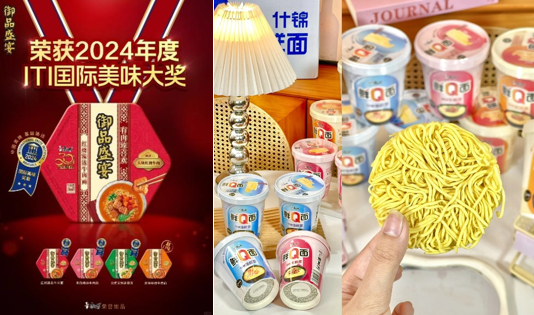
Core Viewpoint - The instant noodle industry is shifting from price competition to value competition, focusing on innovation, quality, and emotional resonance to meet evolving consumer demands [1][2]. Group 1: Market Trends - The Chinese instant noodle market has surpassed 150 billion yuan in 2023, with high-end products growing over 20%, significantly outpacing traditional categories [2]. - 67% of consumers are willing to pay a 20%-30% premium for healthier, higher-quality instant noodles, indicating a shift in consumer preferences towards comprehensive value rather than just price [2]. - Traditional low-priced instant noodle sales have declined for three consecutive years, while high-end products priced above 8 yuan have seen a 15% growth, highlighting market segmentation [2]. Group 2: Company Strategies - Leading companies like Master Kong are adopting a three-dimensional innovation strategy, focusing on multiple price points, diverse scenarios, and high quality to break free from industry stagnation [2]. - Master Kong's "Yupin Shengyan" series targets the high-end market, while the "Xian Q Mian" product utilizes non-fried technology to enter the health segment, achieving over one million boxes sold in its first month with a 35% repurchase rate [2][4]. Group 3: Product Innovation - The revival of classic products, such as the upgraded black and white pepper noodles, reflects a strategic shift from price wars to value wars, tapping into consumer nostalgia and enhancing brand loyalty [5][7]. - Master Kong's product upgrades in 2024 include enhancements to classic bucket and bag products, utilizing higher quality ingredients to fill gaps in the 3 yuan and 5 yuan price segments [4]. Group 4: Quality and Technology - Quality upgrades are becoming a key competitive barrier in the instant noodle industry, with companies leveraging advanced technology for systemic improvements [8]. - Master Kong has partnered with China's aerospace sector to adopt stringent standards in raw material selection, production processes, and quality control, enhancing product stability and consumer trust [10][11]. Group 5: Social Responsibility and Brand Value - Companies are increasingly focusing on social responsibility, with Master Kong's "Everything Has a Source" project enhancing agricultural practices and supporting local farmers, which has garnered recognition for its ESG efforts [12][14]. - Research indicates that companies with strong ESG performance can achieve a 15%-20% higher product premium, reinforcing the idea that social values can enhance commercial value [14]. Group 6: Future Outlook - The future of the instant noodle industry will belong to companies that can redefine product value and reshape industry ecosystems, emphasizing quality, innovation, and long-term commitment to consumer needs [12][14].

2025年中国五轴联动机床产业发展现状及格局简析,市场逐步进入成熟期[图]
Chan Ye Xin Xi Wang· 2025-05-26 01:43
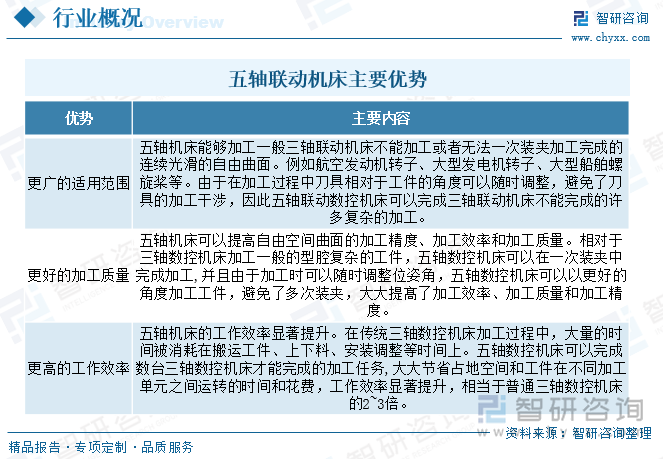
Core Viewpoint - The five-axis CNC machine tool industry in China has developed steadily, driven by policy support, technological innovation, and market demand, with a projected market size of 4.26 billion yuan in 2024, reflecting a growth of 6.23% from 2023 [1][11]. Group 1: Industry Overview - Five-axis CNC machine tools are high-end models in the CNC machine tool sector, primarily used in aerospace, military, scientific research, and precision instruments for high-precision processing [2]. - The industry has transitioned from rapid growth in its early stages to a more mature phase, with market expansion slowing as the base increases [11]. Group 2: Policy Background - The industry benefits from significant policy support, including tax incentives and initiatives for upgrading the industrial chain, which accelerates the localization process [4]. - Future developments will focus on smart, high-end, and green technologies, leveraging AI and IoT to enhance processing precision and efficiency [5]. Group 3: Industry Chain - The upstream of the five-axis machine tool industry includes core components such as CNC systems and servo drives, with domestic manufacturers gradually overcoming technological barriers [7]. - Downstream applications are concentrated in aerospace and automotive manufacturing, with increasing diversification into medical devices and electronics [9]. Group 4: Current Industry Status - The industry has seen accelerated domestic substitution, with local companies making breakthroughs in core technologies, thus reducing reliance on foreign technology [11]. - The market is expected to reach 4.26 billion yuan in 2024, with a growth rate of 6.23% compared to 2023 [11]. Group 5: Competitive Landscape - The industry features a diverse competitive landscape, with leading companies like Kede CNC and Beijing Jingdiao focusing on high-end machine tools and key components [15]. - Companies are enhancing their market responsiveness through customized services and solutions tailored to high-end applications in sectors like aerospace and new energy vehicles [13]. Group 6: Development Trends - The industry is rapidly transitioning towards smart and digital solutions, integrating AI and big data to improve processing capabilities [18]. - There is a strong emphasis on high precision, performance, and multifunctionality, with a focus on breaking foreign technology monopolies [19].

江苏推动传统产业焕新升级纪实
Xin Hua Ri Bao· 2025-05-26 00:07
Core Viewpoint - The transformation and upgrading of traditional industries in Jiangsu is a necessary response to environmental pressures and a proactive choice to seize opportunities in the new industrial revolution, aiming for high-end, intelligent, green, and integrated development [1][12]. Group 1: High-end Transformation - Jiangsu is implementing a traditional industry renewal project, focusing on five major actions: eliminating backward production, upgrading old facilities, promoting green transformation, enhancing product quality, and optimizing layout [1]. - Jiangsu Hengli Group announced a sales revenue of 871.5 billion yuan for 2024, evolving from a small textile factory to a global leader in the integrated development of the textile industry [3]. - The textile industry in Jiangsu is shifting from basic processes to high-end fabrics and branded clothing, while the steel industry is investing in high-end special steel production, demonstrating the province's commitment to high-end transformation [4]. Group 2: Intelligent Upgrading - The introduction of smart manufacturing in Jiangsu has significantly increased production efficiency, with some companies reporting efficiency improvements of nearly 15 times [6]. - Jiangsu's digital transformation initiatives include the establishment of smart factories and the integration of 5G and industrial internet technologies, enhancing operational efficiency and competitiveness [7]. - Companies like Nanjing Steel Group are leading the digital transformation in the steel industry, establishing standards for smart upgrades and digitalization [6][7]. Group 3: Green Transformation - Jiangsu is focusing on green and low-carbon transitions, with initiatives like the Jinmaoyuan (East China) surface treatment circular economy industrial park, which achieves 50% wastewater recycling [8][9]. - The province has added 94 green factories and 18 green industrial parks in the past year, leading the nation in the number of green facilities [9]. - Companies are adopting energy-saving technologies, with examples like Suzhou Shenghong Group achieving over 20% energy savings through advanced production techniques [9]. Group 4: Integrated Development - The integration of various sectors is being emphasized in Jiangsu, with initiatives to create specialized industrial zones that foster collaboration and innovation among small and medium enterprises [10][11]. - Companies are leveraging digital platforms for supply chain management and quality control, enhancing their operational efficiency and market competitiveness [11]. - The focus on cross-industry integration is expected to break traditional industry barriers and create new growth opportunities [10][11].
石化行业未来:以高端化差异化走出“内卷”困境
Zhong Guo Chan Ye Jing Ji Xin Xi Wang· 2025-05-25 22:22
Core Viewpoint - The petrochemical industry in China is facing increasing external challenges, with a significant decline in profits and a need for high-quality development through innovation, structural optimization, and green transformation [1][2]. Group 1: Industry Challenges - The petrochemical industry is experiencing a supply-demand imbalance, leading to a continuous decline in product prices, with profits dropping by 20.7% in 2023 and projected to decrease by another 8.8% in 2024 [2][3]. - Despite the overall profit decline, the oil and gas sector saw revenue growth of 1.5% and profit growth of 12.4%, while the chemical sector's revenue grew by 4.6% but profits fell by 6.4% [2][3]. - The industry is characterized by aggressive investment in capacity expansion despite losses, exacerbating the oversupply situation and increasing risks [2][4]. Group 2: Future Development Strategies - The industry is advised to focus on high-end and differentiated new projects, optimizing downstream product structures to mitigate oversupply risks [5][6]. - Emphasis is placed on advancing green and low-carbon development, encouraging investment in green technologies and processes to enhance competitiveness and sustainability [6][10]. - The transition towards a petrochemical powerhouse involves reducing reliance on crude oil, diversifying raw materials, and enhancing product value through innovation and technology [7][8]. Group 3: Specific Product Insights - The production of propylene is expected to grow by 9.1% in 2024, but demand is not keeping pace, leading to price declines and industry-wide losses [3][4]. - Synthetic resin production, particularly nylon 66, is projected to increase significantly, yet actual consumption growth is expected to be much lower, resulting in potential losses [4][9]. - The chemical new materials sector faces challenges with a self-sufficiency rate of only 49% for high-end polyolefins, indicating a need for technological advancements and capacity improvements [9][10].
小米集团-W:玄戒O1开启硬核科技新起点,YU7激光雷达、超长续航全系标配-20250525
CMS· 2025-05-25 04:20
Investment Rating - The report maintains a "Strong Buy" investment rating for Xiaomi Group [1][6] Core Views - The launch of the self-developed chip "Xuanjie O1" marks a significant milestone for Xiaomi, enhancing its high-end product strategy and ecosystem integration [5][6] - Xiaomi's various business segments, including smartphones, IoT, and internet services, are expected to experience sustained growth, driven by high-end product offerings and international expansion [5][6] - The upcoming release of the Xiaomi YU7 SUV is anticipated to strengthen the company's position in the automotive market, with advanced features and performance metrics [5][6] Summary by Sections Financial Data and Valuation - Total revenue projections for 2025, 2026, and 2027 are estimated at 517.9 billion, 701.4 billion, and 895.6 billion CNY respectively, with adjusted net profits of 43.8 billion, 67.6 billion, and 89.3 billion CNY [7] - The current market capitalization corresponds to a PE ratio of 27.7, 18.0, and 13.6 for the years 2025, 2026, and 2027 respectively [7] Product Launches - The Xiaomi 15S Pro features the Xuanjie O1 chip, with a starting price of 5499 CNY, and is positioned as a high-end smartphone [5][20] - The Xiaomi Pad 7 Ultra, also equipped with the Xuanjie O1 chip, is priced from 5699 CNY and represents Xiaomi's entry into the high-end tablet market [5][38] - The Xiaomi Watch S4, featuring the Xuanjie T1 chip, is priced at 1299 CNY and offers advanced connectivity and health monitoring features [5][52] Automotive Sector - The Xiaomi YU7 SUV is set to launch in July, featuring a luxurious design, advanced safety features, and a maximum range of 835 km [5][61][73] - The YU7 will be equipped with cutting-edge technology, including NVIDIA Thor chips and laser radar, enhancing its performance and safety [5][61][84] Research and Development - Xiaomi has invested approximately 102 billion CNY in R&D over the past five years, with plans to invest an additional 200 billion CNY from 2026 to 2030 [5][6]
