人工智能(AI)

Search documents
小摩2026年美股“作战图”:“选择性”牛市到来 板块轮动将惠及高质量增长及低波动性股票(附详细名单)
美股IPO· 2025-12-21 10:55
Core Viewpoint - Morgan Stanley's report emphasizes the specific opportunities and risks faced by various sectors in an AI-driven, K-shaped economic environment, highlighting a constructive but selective investor sentiment [1][6]. Group 1: Investment Themes - Key investment themes for 2026 include long-term growth driven by AI and data center expansion, infrastructure development, and a shift towards high-quality growth and operational resilience [3][6]. - Companies with strong pricing power, long-term growth drivers, robust balance sheets, and those benefiting from transformative trends like data center expansion and infrastructure investment should be prioritized [3][6]. Group 2: Selected Stocks by Sector - The report lists selected stocks across various sectors, including technology (e.g., Arista Networks, Palo Alto Networks), industrials (e.g., Boeing, Caterpillar), healthcare (e.g., Eli Lilly, CVS Health), and energy (e.g., ExxonMobil, Schlumberger) [4][5]. Group 3: Economic Outlook - The U.S. is expected to remain a global growth engine, driven by a resilient economy and an AI-driven supercycle, leading to record capital expenditures and rapid earnings expansion [6][8]. - Despite concerns about an AI bubble and valuation worries, current high valuation multiples are seen as justified due to anticipated above-trend earnings growth and increased shareholder returns [6][7]. Group 4: K-shaped Economic Recovery - The K-shaped economic recovery is creating a scenario of winners and losers, with a significant concentration of market gains among high-quality growth stocks [6][10]. - The S&P 500 index is projected to reach 7,500 points by the end of 2026, with earnings growth expected to be between 13%-15% [7][12]. Group 5: AI and Capital Expenditure - 2026 is anticipated to be another strong year for AI stocks, with capital expenditures likely to exceed expectations as companies and governments accelerate spending to address infrastructure and computing power imbalances [9][12]. - Approximately 60% of S&P 500 companies are investing in AI, with 50% mentioning cost-saving benefits, indicating a growing focus on commercialization [9][12]. Group 6: Policy Environment and Market Dynamics - The dynamic policy environment is expected to drive differentiation among stock themes, with potential benefits from deregulation in sectors like finance and energy [13]. - Tactical opportunities are emerging in low-end consumer stocks and U.S. importers, with attractive valuations and potential short-term upside from fiscal stimulus related to the "Inflation Reduction Act" [13].


A股,重磅来袭!芯片,大消息!证监会出手!摩尔线程,最新发布!影响一周市场的十大消息
券商中国· 2025-12-21 09:31
Group 1: Government Initiatives - The State Council, led by Premier Li Qiang, emphasized the need for all departments to align their actions with the central government's economic strategies for the upcoming year, enhancing responsibility and urgency in task execution [2] - Departments are encouraged to collaborate closely and develop specific implementation plans to ensure effective execution of economic policies [2] Group 2: Market Regulation - The National Internet Information Office and the China Securities Regulatory Commission have cracked down on accounts spreading rumors and illegal stock recommendations, highlighting the importance of maintaining market stability [3] - The authorities have urged the public to adopt correct investment philosophies and enhance their ability to discern financial information [3] Group 3: Major Corporate Transactions - China Shenhua announced a significant acquisition involving the purchase of 100% equity in multiple companies, with a total transaction value of 133.598 billion yuan, marking it as the largest acquisition in A-share market history [4][5] - The acquisition will enhance China Shenhua's coal reserves and production capacity significantly, with coal reserves increasing by 64.72% to 6.849 billion tons and production capacity rising by 56.57% to 512 million tons [5] Group 4: Technological Advancements - Researchers at Shanghai Jiao Tong University have achieved a breakthrough in optical computing, developing a chip that supports large-scale semantic media generation, which is crucial for AI and data processing [6] - Moore Threads unveiled a new GPU architecture that improves computing density by 50% and energy efficiency by ten times, indicating advancements in AI computing capabilities [7] Group 5: Regulatory Developments - The National Development and Reform Commission has released the "Internet Platform Pricing Behavior Rules" to regulate pricing practices on online platforms, ensuring fair competition and consumer protection [9] - The rules prohibit platforms from imposing unreasonable restrictions on sellers' pricing autonomy, promoting a healthier e-commerce environment [9] Group 6: Market Movements - Major U.S. stock indices saw gains, with significant increases in tech stocks, indicating a positive market sentiment [11] - The Chinese stock market is set to experience a substantial unlock of restricted shares, with a total of 210.32 billion shares worth approximately 1879.88 billion yuan becoming tradable [14][15]




生物医药产业:如何从 “上海策源”走向 “长三角共振”?
Di Yi Cai Jing· 2025-12-21 08:13
Core Viewpoint - The integration of technology, talent, and policy tools in the Yangtze River Delta region is crucial for the development and cross-domain collaboration of the biopharmaceutical industry, which has already surpassed a scale of 1.2 trillion yuan, accounting for about one-third of the national total [1] Group 1: Industry Development and Collaboration - The biopharmaceutical industry in the Yangtze River Delta is expected to benefit from the expansion of the international innovation center, leading to better integration of scientific resources across cities [1][2] - The Shanghai Technology Exchange has established a biopharmaceutical special board to address challenges in technology assessment and investment cycles, facilitating 1,835 transactions with a total value exceeding 38 billion yuan [2] - The G60 Science and Technology Corridor in the Yangtze River Delta has 9 cities with 9,813 biopharmaceutical companies, representing 14.67% of the national total, indicating a strong cluster effect [3] Group 2: Regulatory and Policy Tools - Regulatory cooperation agreements among the drug monitoring departments of the three provinces and one city have been signed to enhance efficient development in the biopharmaceutical sector [4] - There is a need for improved tracking of the implementation of signed framework agreements to ensure effective cross-regional collaboration [5] Group 3: Capital Participation and Investment Trends - By 2025, the total investment in the biopharmaceutical sector in the Yangtze River Delta is projected to reach 150 billion yuan, accounting for 45% of the national total, with Shanghai and Jiangsu leading in financing [6] - Companies are increasingly seeking opportunities for pilot testing and production in surrounding areas due to lower labor costs and more available space [6][7] - The establishment of biopharmaceutical funds in the G60 Science and Technology Corridor aims to integrate resources from Shanghai and surrounding cities to support industry development [7] Group 4: Future Opportunities and Strategic Recommendations - The intelligent pharmaceutical sector driven by AI and big data is expected to see significant growth, with AI playing a role in target discovery and clinical design optimization [8] - Companies are advised to actively engage in regional collaborative ecosystems and leverage clinical resources to reduce transformation costs [8] - Emphasis should be placed on addressing unmet clinical needs and ensuring the domestic production of key materials to enhance cost competitiveness [8]
周德宇:从羊吃人到房子吃人到AI吃人,资本主义从来不缺物吃人
Xin Lang Cai Jing· 2025-12-21 04:12
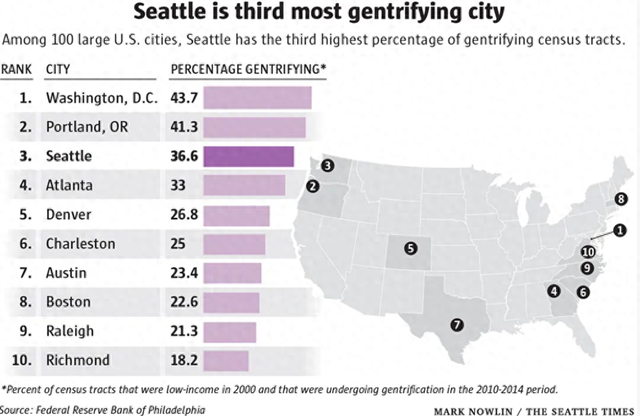
【文/观察者网专栏作者 周德宇】 通过"牢A"的出圈,想必今年很多人都了解到了美国西雅图这个城市中,底层生活的悲惨一面。想要理 解为什么西雅图这样一个看似经济发达科技先进的城市,底层会有这样的遭遇,我们可以从一个词谈 起,就是"士绅化"(gentrification),毕竟西雅图就是美国"士绅化"问题最严重的城市之一。 在美国前 可能这位读者想的是我国城市发展的时候,被拆迁的人会领到补偿款,所以他觉得士绅化导致流离失所 的人都是活该——怎么说呢,这就是文化差异了,你从中国人的常识角度,是不可能理解美国在发生什 么的。 士绅化的过程,正如资本主义的过程一样,往往是伴随着无形甚至有形的暴力的。看不见的手自然就不 用说了,对于大部分没有积蓄的美国人来说,他们完全无法应对生活成本的上涨。而对于本来就处于租 金最低廉区域的穷人来说,士绅化带来的房租增长往往意味着他们直接没有任何容身之处,连消费降级 的希望都没有。至于补偿款?那是给地主的,跟你们普通人有什么关系? 100个大城市中,西雅图市的士绅化程度排在第三位 图自《西雅图时报》 士绅化是什么意思呢?是一个街区吸引更多的资本和人才流入的过程,是一个街区减少犯罪增加便利 ...
英伟达入股英特尔,美国核准
半导体行业观察· 2025-12-21 03:58
Group 1 - The core viewpoint of the article is that the FTC has approved a $5 billion partnership agreement between Nvidia and Intel, indicating that the transaction does not immediately raise antitrust concerns [1][2] - Nvidia will purchase Intel stock at a price of $23.28 per share to jointly develop AI and chip technologies for next-generation personal computing products and data centers [1] - The agreement aims to integrate Nvidia's GPU technology with Intel's CPU technology, competing against rivals like TSMC and AMD [1] Group 2 - Nvidia currently holds approximately 85-95% of the data center GPU market, and completing the deal with Intel would further solidify its market position [1] - The FTC's approval contrasts with its previous rejection of Nvidia's $40 billion acquisition of ARM in 2022, suggesting a shift in regulatory stance [1][2] - Analyst Stacy Rasgon noted that Nvidia's current trading price is about 13% discounted compared to the Philadelphia Semiconductor Index, making it an attractive investment opportunity [2]

日本水军发反华视频能拿4000日元
Xin Lang Cai Jing· 2025-12-21 02:13
#起底日本煽动对华仇恨水军#【#日本水军发反华视频能拿4000日元#】近日,日本大型众包平台 CrowdWorks被曝长期发布网络招募信息,付费征集"批评中国"等内容的短视频。 随着更多事实被揭露,一条操弄网络舆论的外包链条逐渐浮出水面——从散布仇恨言论到为右翼政治人 物造势。日本网民质疑,在日本网络上浓重的保守派言论氛围背后,存在政治势力图谋操纵网络舆论的 黑手。 此外,还有帖文公开招募"(日本首相)高市早苗等知名人物和时事新闻的解读视频"制作者,并且鼓励 长期兼职,"坚持1个月以上可以加薪或升职"。 转自:京报网_北京日报官方网站 日本《朝日新闻》的调查显示,CrowdWorks平台的一个发包方从去年11月到今年11月已至少发布了14 条征集"批评中国"主题视频的信息。引发争议后,相关信息现在已全被转为非公开状态。 11月下旬以来,CrowdWorks网站上多条招募帖文引发关注。这些帖文面向视频制作者征集视频,主题 须为"称赞日本""批评中国"等内容。 招募方要求制作者收集视频素材或利用人工智能(AI)生成素材,完成配音、剪辑等加工,最终视频 要突出"日本技术、日本文化、日语的优秀之处",展示所谓"中国人 ...
英伟达入股英特尔 美国核准
Jing Ji Ri Bao· 2025-12-20 23:54
Group 1 - The U.S. Federal Trade Commission (FTC) has approved a $5 billion partnership agreement between NVIDIA and Intel, indicating that regulators do not see immediate antitrust concerns with this deal [1] - NVIDIA signed a strategic partnership agreement with Intel in September, where NVIDIA will purchase Intel shares worth $5 billion at a price of $23.28 per share to jointly develop AI and chip technologies for next-generation personal computing products and data centers [1] - This agreement aims to integrate NVIDIA's GPU technology with Intel's CPU technology to compete with rivals such as TSMC and AMD [1] Group 2 - NVIDIA currently holds approximately 85-95% of the data center GPU market, raising antitrust concerns, and completing the deal with Intel would further solidify its market position [1] - In 2022, the FTC blocked NVIDIA's $40 billion acquisition of ARM, but the approval of the NVIDIA-Intel deal suggests that regulators view this transaction as not immediately violating antitrust laws [1] - Analyst Stacy Rasgon from Bernstein noted that NVIDIA's current trading price is about 13% discounted compared to the Philadelphia Semiconductor Index, and historically, the price-to-revenue ratio is at 1, indicating a rare attractive level for NVIDIA's stock [1]
中国生物医药十年突围
Cai Jing Wang· 2025-12-20 23:36
Core Insights - The Chinese biopharmaceutical industry has significantly improved in both the quantity and quality of innovative drugs, with 43 innovative drugs approved in the first half of 2025, a 59% year-on-year increase, and domestic innovative drugs accounting for 93% of this total [1][7] - The industry has evolved from a focus on generic drugs to a strong emphasis on original innovation, supported by policy reforms and increased R&D investment [5][7] - The geopolitical landscape poses challenges for the industry, necessitating a strategic global positioning and market diversification to mitigate risks associated with supply chain security and international cooperation barriers [2][3] Industry Development - The transformation of the Chinese biopharmaceutical industry began with the 2015 reform of the drug approval system, which shifted the focus to clinical value and significantly shortened approval times [5] - The industry has seen a shift from a model of "combination of imitation and innovation" to "source innovation," with substantial increases in R&D investment over the past decade [5][6] - The successful case of the drug Senglitin, which bypassed phase II clinical trials due to its strong performance in phase I trials, exemplifies the supportive environment for innovation in China [6] Global Positioning - The Chinese biopharmaceutical industry is increasingly targeting emerging markets in Southeast Asia and the Middle East, facilitated by regulatory cooperation under the Belt and Road Initiative [2][3] - The industry is forming a diversified international cooperation model, addressing local healthcare needs while enhancing resilience against geopolitical risks [3] Capital Market Dynamics - The capital market for biopharmaceuticals has experienced volatility, with a significant contraction in financing since 2022, but signs of recovery are emerging as of mid-2025 [8][9] - The need for "patient capital" is emphasized, with suggestions to relax investment restrictions for long-term capital sources to strengthen the ecosystem [9][10] - A proposed mechanism linking IPO approvals to the outcomes of major national drug projects aims to enhance funding opportunities for innovative companies [10] Technological Advancements - The application of artificial intelligence (AI) in drug development is becoming a key driver for innovation, improving efficiency in clinical trials and enhancing drug accessibility [11][12] - AI's role in integrating data across various stakeholders is crucial for establishing reasonable pricing and ensuring the sustainability of innovative drugs [12] Future Outlook - The transition from a "China New" to a "Global New" paradigm requires ongoing collaboration among policymakers, industry leaders, researchers, and capital markets, focusing on clinical value and global perspectives [13]

601088,千亿级重大收购
Zheng Quan Shi Bao· 2025-12-20 14:18
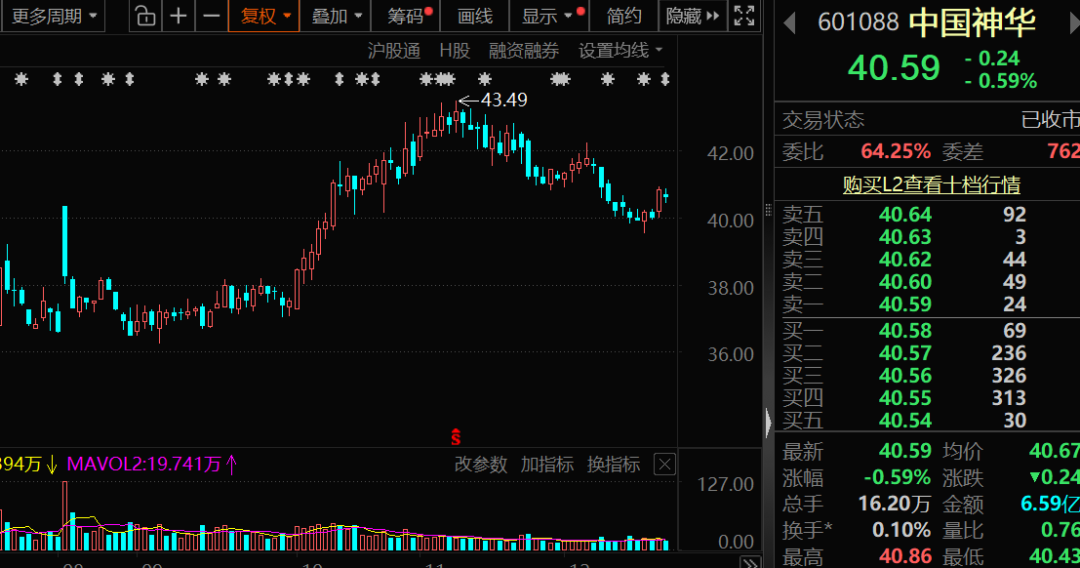
短短数周内,白银价格便开启了连续刷新纪录的上涨行情。 中国神华千亿级收购方案出炉 12月19日晚,煤炭行业龙头公司中国神华(601088)一口气发布了88则公告,其中主要内容为:中国神华拟购买国家能源集团及其全资子公司西部能源持 有的相关资产,交易价格高达1335.98亿元。公告称,公司拟收购控股股东国家能源集团旗下12家核心企业股权,业务覆盖煤炭、坑口煤电、煤化工等多 个领域。千亿元级的收购交易价格,在A股历史上并不多见。 国际银价突破67美元/盎司 根据公告披露,本次交易具体包括:中国神华通过发行A股股份及支付现金的方式购买国家能源集团持有的国源电力100%股权、新疆能源100%股权、化 工公司100%股权、乌海能源100%股权、平庄煤业100%股权、神延煤炭41%股权、晋神能源49%股权、包头矿业100%股权、航运公司100%股权、煤炭运 销公司100%股权、港口公司100%股权,并以支付现金的方式购买西部能源持有的内蒙建投100%股权;同时,中国神华拟向不超过35名特定投资者发行A 股股份募集配套资金。 公司表示,本次交易前后,公司控股股东均为国家能源集团,实际控制人均为国务院国资委;本次交易不会导致 ...

重大突破!芯片,大消息!
券商中国· 2025-12-20 12:54
Core Viewpoint - The article highlights a significant breakthrough in the field of optical computing chips, specifically the development of the LightGen chip by researchers at Shanghai Jiao Tong University, which supports large-scale semantic media generation models [2][3]. Breakthrough Achievements - Researchers have successfully developed the LightGen chip, which is capable of achieving two orders of magnitude improvement in computing power and energy efficiency compared to top digital chips, even when using less advanced input devices [4]. - The LightGen chip overcomes three critical bottlenecks: integration of millions of optical neurons on a single chip, all-optical dimensional transformation, and a novel optical training algorithm that does not rely on ground truth [4]. - LightGen can perform a complete closed-loop process of input, understanding, semantic manipulation, and generation, enabling high-resolution image generation (≥512×512), 3D generation (NeRF), and high-definition video generation [4]. Advantages of Optical Computing - Optical computing is recognized for its scalability, low power consumption, ultra-high speed, wide bandwidth, and high parallelism, making it a key technology for rapid computation of large-scale data in AI, scientific computing, and multimodal perception [5]. - The article notes that traditional chip architectures are struggling to keep pace with the increasing demands for computing power and energy efficiency due to the rapid evolution of deep neural networks and large-scale generative models [3][5]. Recent Developments in Optical Computing - A recent advancement by the Shanghai Institute of Optics and Fine Mechanics has led to the development of a high-parallel optical computing integrated chip, achieving a parallelism greater than 100, which addresses the challenge of high-density information processing on optical chips [6][7]. - The new optical chip system includes a self-developed integrated micro-cavity optical frequency comb and a high-performance parallel computing core, enabling a theoretical peak computing power of over 2560 TOPS with a power efficiency of over 3.2 TOPS/W [7].