
科技金融

Search documents
银基合作、生态共建,沪农商行投融资生态联盟启航
Zhong Guo Jin Rong Xin Xi Wang· 2025-11-25 08:05
Core Insights - Shanghai Rural Commercial Bank has launched the first Private Equity Fund Forum and established the "Investment and Financing Ecological Alliance" to enhance financial services for technology enterprises [1] - The "Investment and Financing Ecological Alliance" aims to create an open and integrated financial service ecosystem, breaking traditional banking service boundaries [1] - The bank has introduced the "Xinhuitou" comprehensive financial service plan for private equity institutions, covering the entire lifecycle of fundraising, investment, management, and exit [1] Group 1 - The "Investment and Financing Ecological Alliance" will leverage various resources to support the high-quality development of technology enterprises through comprehensive services such as policy interpretation and one-stop professional guidance [1] - The alliance will also create a rich rights system, including industry salons, investment roadshows, corporate visits, and exclusive training [1] - Shanghai Rural Commercial Bank has established deep cooperation with over 300 private equity funds and has conducted hundreds of matching activities to support technology enterprises [2] Group 2 - The bank successfully assisted AP Company in securing several million yuan in pre-A round financing by leveraging its private equity resources and professional services [2] - Looking ahead, Shanghai Rural Commercial Bank aims to deepen collaboration with private equity funds and continuously innovate comprehensive financial service plans for technology enterprises [2] - The bank's service philosophy focuses on enhancing technology innovation and integration with capital and industry to drive regional technological advancement and industrial upgrading [2]
三家股份制银行AIC获批开业 能否破解科创企业融资难题?
Sou Hu Cai Jing· 2025-11-25 06:46
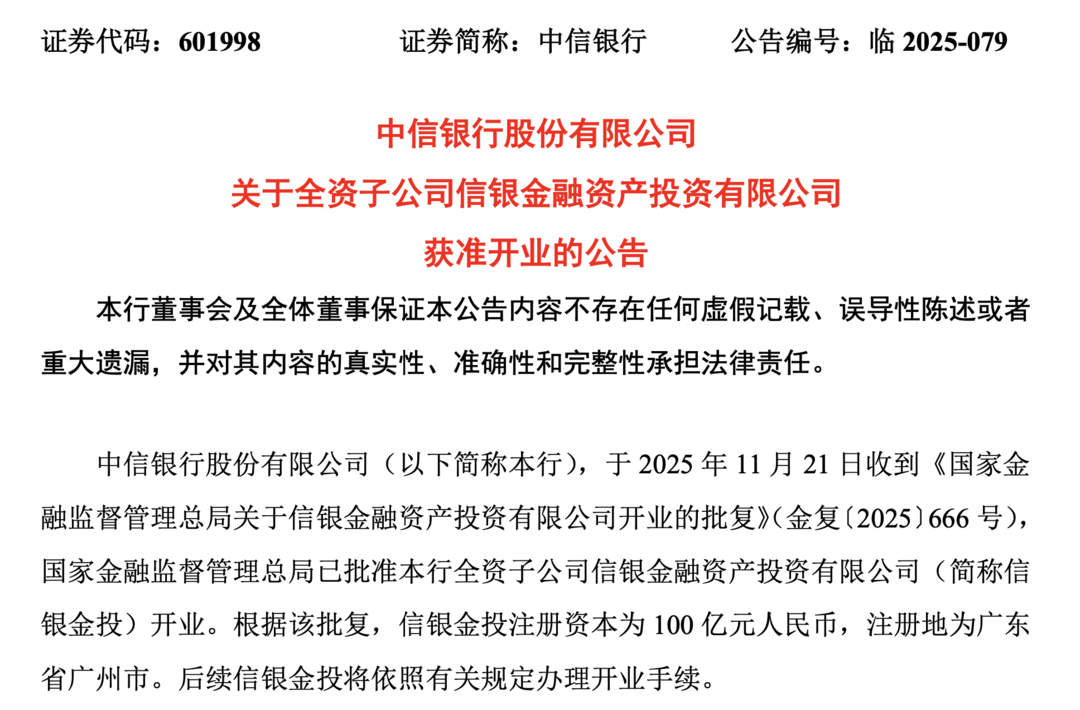
Core Viewpoint - The establishment of financial asset investment companies (AICs) by several joint-stock banks marks a significant expansion in China's banking sector, aimed at enhancing capital flow to technology innovation enterprises and optimizing financing structures [9][10][13]. Group 1: Recent Developments - Three joint-stock banks, including CITIC Bank, China Merchants Bank, and Industrial Bank, have recently received approval to establish their AICs, with registered capitals of 10 billion RMB for CITIC and Industrial Banks, and 15 billion RMB for China Merchants Bank [1][3][11]. - The establishment of these AICs is seen as a strategic move to support the development of technology finance and enhance the banks' comprehensive operational capabilities [13][14]. Group 2: Purpose and Function of AICs - AICs are designed to facilitate market-oriented debt-to-equity swaps, primarily aimed at helping enterprises reduce leverage and improve capital structures [9][10]. - The initial focus of AICs was on managing non-performing assets, but they are now evolving into market-driven asset management and investment institutions [10][12]. Group 3: Trends and Future Directions - The regulatory framework for AICs has expanded, allowing for broader investment activities beyond debt-to-equity swaps, including equity investments and corporate restructuring [10][12]. - The approval of AICs from joint-stock banks signifies a shift in the competitive landscape from state-owned banks to a more diversified banking system, enhancing the efficiency of financial resource allocation [14]. Group 4: Impact on Technology and Innovation - AICs are increasingly positioned as long-term capital providers for technology innovation, with a focus on sectors such as semiconductors, new energy, and high-end equipment [15][16]. - The combination of debt-to-equity swaps and equity investments allows AICs to offer comprehensive financial services to technology enterprises, addressing their unique financing challenges [15][16].




对话上海银行郑涵:商业银行须自我革命,从放贷者转向赋能者
2 1 Shi Ji Jing Ji Bao Dao· 2025-11-25 06:12
Core Viewpoint - Traditional credit logic is mismatched with the needs of technology innovation enterprises, necessitating a self-revolution in commercial banks to transition from "lenders" to "enablers" [1][4] Group 1: Financial Needs of Technology Enterprises - Technology innovation enterprises exhibit characteristics of light capital, light assets, high growth, and high risk, leading to a composite financing demand for both equity and low-cost bank debt [3] - These enterprises require financial services throughout their lifecycle, including initial loans, credit, and medium to long-term financing solutions [3] Group 2: Challenges in Financial Support - The key challenges in providing financial support to technology innovation enterprises include the difficulty in value assessment due to traditional credit evaluation methods relying on financial statements and collateral, which do not suit the characteristics of tech firms [3] - There is also a challenge in balancing risk and return, as traditional fixed loan rates do not adequately compensate for the risks associated with lending to technology enterprises [3][4] Group 3: Shanghai Bank's Transformation Strategy - Shanghai Bank is focusing on two main transformations: reshaping the risk evaluation logic for technology enterprises and balancing the risk-return logic in financial products [4] - The bank aims to create a dedicated evaluation method for tech enterprises, design collaborative financing solutions, and engage in active management to support enterprise growth [4] Group 4: Innovative Service Models in Shenzhen - In Shenzhen, Shanghai Bank is implementing a three-pronged service model that includes a specialized organizational structure, industry-specific operations, and an ecosystem for service innovation [6][7] - The bank has established partnerships with local research and investment institutions to provide comprehensive services to over 2,500 enterprises, positioning itself as a key node in the innovation resources of the Guangdong-Hong Kong-Macao Greater Bay Area [7] Group 5: Future Vision and Planning - Shanghai Bank aims to serve national strategies and become the preferred bank for technology transformation and incubation, focusing on early-stage technology enterprises and innovative products [8] - The bank plans to enhance its service capabilities by concentrating on strategic industries, conducting in-depth research, and building a collaborative ecosystem with various partners [8]

长三角6家上市城商行的韧性增长:息差承压之下营收净利双增,对公业务成信贷投放“主引擎”
Mei Ri Jing Ji Xin Wen· 2025-11-25 06:00
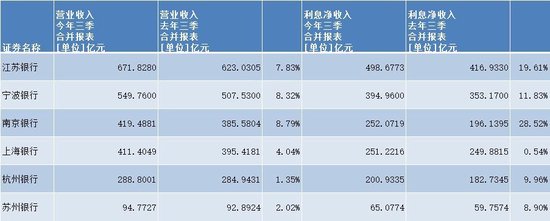
Core Viewpoint - The six A-share listed city commercial banks in the Yangtze River Delta region are demonstrating resilient growth, achieving increases in both revenue and net profit despite the pressure of narrowing interest margins [1][2]. Revenue and Profit Growth - All six city commercial banks reported year-on-year growth in both revenue and net profit for the first three quarters, with five banks achieving profits exceeding 10 billion yuan, except for Suzhou Bank, which is relatively smaller [2]. - Jiangsu Bank led with a revenue of 67.183 billion yuan and a net profit of 30.583 billion yuan, ranking first among A-share city commercial banks [2]. Interest Income Performance - Despite the overall pressure on interest margins, all six banks achieved year-on-year growth in net interest income, with Nanjing Bank and Jiangsu Bank showing significant increases of 28.52% and 19.61%, respectively [3]. - Nanjing Bank attributed its growth in net interest income to increased credit investment and optimized asset allocation strategies, alongside a reduction in deposit costs [3]. Asset Expansion - The six banks are steadily expanding their asset scales, with Jiangsu Bank holding the largest total assets of 4.93 trillion yuan, marking a 24.68% increase from the beginning of the year, the fastest growth among A-share listed banks [6]. - All banks exhibited strong growth in both deposits and loans, with Jiangsu Bank's total deposits reaching 2.54 trillion yuan, a 20.22% increase, and total loans growing by 17.87% to 2.47 trillion yuan [6]. Corporate Lending Growth - Corporate lending has become the main driver of credit expansion for these banks, with significant growth in loans for technology finance, inclusive finance, and green finance [9]. - For instance, Nanjing Bank's corporate loans increased by 14.63%, with notable growth in green finance (33.03%), technology finance (17.47%), and inclusive finance (16.16%) [9]. Asset Quality - The asset quality of the six banks remains stable, with non-performing loan (NPL) ratios either holding steady or declining. Jiangsu Bank's NPL ratio decreased by 0.05 percentage points to 0.84% [10]. - Nanjing Bank's NPL ratio remained stable at 0.83%, reflecting effective risk management and asset disposal strategies [10]. Capital Adequacy - Shanghai Bank reported a high core Tier 1 capital adequacy ratio of 10.52%, up 0.17 percentage points from the beginning of the year, supported by improved profitability and capital management [11]. - Both Hangzhou Bank and Nanjing Bank completed convertible bond conversions, with their core Tier 1 capital ratios rising to 9.64% and 9.54%, respectively [11]. Dividend Distribution - Several banks, including Shanghai Bank and Suzhou Bank, have completed mid-term dividend distributions, with Jiangsu Bank and Ningbo Bank also advancing their mid-term dividend plans [12]. - Hangzhou Bank has consistently increased its cash dividend ratio, with a projected mid-term dividend of 2.755 billion yuan for 2025, reflecting a commitment to enhancing shareholder returns [13].





大公国际:“十五五”时期债券市场支持金融“五篇大文章”的路径探析
大公国际资信· 2025-11-25 05:57
Group 1: Report Industry Investment Rating - No relevant information provided Group 2: Core Viewpoints of the Report - The "15th Five-Year Plan" proposes to develop science and technology finance, green finance, inclusive finance, pension finance, and digital finance, and the bond market will play a key foundational role in promoting the implementation of these "five major articles" [1][2] - The bond market has achieved significant progress in the areas guided by the "five major articles," but there are still problems such as insufficient funds, structural imbalance, and imperfect mechanisms in some areas [3][16] - Through mechanism, product, and technology innovation, the bond market has broken through inherent bottlenecks and provided precise impetus for the real economy [17] - During the "15th Five-Year Plan" period, the bond market will play a more systematic and strategic role in serving the "five major articles" [26] Group 3: Summary by Relevant Catalogs I. Significant Progress in the Bond Field under the Guidance of the "Five Major Articles" (A) Science and Technology Innovation Bonds - Since 2024, the total issuance of science and technology innovation bonds in the market has reached approximately 2.72 trillion yuan, with 2,567 bonds issued [7] - Features include longer financing terms, a high proportion of high-credit ratings, cost advantages in issuance interest rates, and a high proportion of central and state-owned enterprises among financing entities [7][8] (B) Green Finance - As of the end of 2024, the cumulative issuance of green bonds in China reached 4.1 trillion yuan, and in 2025, the issuance of labeled and non-labeled green bonds totaled 936.765 billion yuan [9] - The average issuance interest rate of green bonds has steadily declined, and the main issuers are commercial banks and traditional green industries such as public utilities and transportation [12][13] (C) Inclusive, Pension, and Digital Finance Bonds - The bond market has enhanced financial support for the grass-roots economy and key regions through diversified bond varieties, with a cumulative issuance scale of nearly 2.47 trillion yuan, and the "Three Rural Issues" special financial bonds have reached 1.21 trillion yuan [14] - The bond market is relatively weak in pension and digital finance, facing problems such as single bond varieties and difficulties in bond financing for digital enterprises [16] II. Three Major Innovation Points for the Bond Market to Support Key Areas (A) Mechanism Innovation - In the green finance field, the trading association optimized the green bond rules, allowing the replacement of self-owned funds in advance and implementing hierarchical and classified information disclosure management [18] - In the inclusive finance field, counter bond repurchase business and other measures have enhanced the liquidity of small and medium-sized institutions [20] - In the science and technology finance field, the establishment of the bond market's "science and technology board" has solved the problem of patient capital sources and built a comprehensive support system [20] (B) Product Innovation - Science and technology innovation bills have expanded the use of raised funds to equity investment and fund contributions, effectively introducing long-term and low-cost funds into early-stage scientific research [21] - In the green finance field, the issuance of carbon-linked and carbon asset - pledged debt financing instruments has been encouraged, exploring the integration of green finance and the carbon market [21] - In the inclusive and pension finance fields, there have been product innovations such as small and medium - sized enterprise support bonds and pension - specific financial bonds [22] (C) Technology Innovation - The application of digital RMB in bond issuance has improved settlement efficiency, ensured the special use of funds, and enhanced transaction traceability and regulatory penetration [24] - The application of artificial intelligence technology in bond investment research and risk control has been continuously deepened, showing significant value [24] III. New Trends for the Bond Market to Empower the "Five Major Articles" during the "15th Five-Year Plan" Period - Science and technology finance will be the key direction for the bond market to support the layout of new productive forces, providing stable capital guarantee for key core technology research [26] - Green finance will assume a more core function of green capital supply, guiding social funds to flow to key green fields [27] - In the inclusive finance field, the role will shift from making up for shortcomings to deeply integrating into the industrial chain and supply chain system, providing long - term and low - cost funds for small and medium - sized enterprises [27] - Pension finance will become an important growth area for expanding long - term funds and securitizable assets, with the potential for the expansion of special pension bonds [28] - Digital finance will lead the systematic digital upgrade of infrastructure and factor allocation, promoting the formation of a new ecosystem covering "frontier technology - digital industry - bond financing" [28]
科技创新驱动高质量发展显成效 渤海银行荣获2025年度科技创新银行“天玑奖”
Zhong Jin Zai Xian· 2025-11-25 03:39
Core Viewpoint - Bohai Bank has been awarded the "Annual Technology Innovation Bank" at the 2025 China Banking "Tianji Award" for its strategic layout and innovative practices in the field of financial technology [1] Group 1: Awards and Recognition - The "Tianji Award" aims to recognize outstanding practices and innovative achievements of financial institutions in key areas such as cross-border finance and wealth management [1] - Bohai Bank's recognition reflects its significant investment in financial technology and its commitment to integrating financial services with the real economy [1] Group 2: Strategic Initiatives - Bohai Bank has positioned financial technology as the "first engine" to support national strategies for becoming a technology and financial powerhouse [3] - The bank has established a leadership group to implement the "Five Major Articles of Finance" and has developed a plan to promote high-quality development in technology finance [3] Group 3: Product Offerings - Bohai Bank has launched specialized products like "Bohai Technology Fast Loan" to cater to the characteristics of small and medium-sized technology enterprises, focusing on intellectual property and R&D investments [3] - The bank's product matrix includes "Talent Loan," "Bohai e-Chain," and "Bohai Haina Pool," providing comprehensive financial services throughout the lifecycle of technology enterprises [3] Group 4: Regional Collaboration - Bohai Bank collaborates with government agencies and industry parks to create a supportive financing environment for technology enterprises, exemplified by the "Bohai Binhai New Area Points Loan" initiative [4] - This initiative has achieved nearly 100 million yuan in business scale, promoting technology achievement transformation and regional innovation [4] Group 5: Bond Issuance - Bohai Bank is a pioneer in the technology innovation bond sector, having underwritten multiple national first batch technology innovation bonds with a planned issuance scale exceeding 3 billion yuan [6] - The bank has also partnered with CITIC Securities to launch the first technology innovation bond basket in the Beijing-Tianjin-Hebei region, expanding financing channels for technology enterprises [6] Group 6: Future Outlook - Bohai Bank aims to deepen innovation in technology financial products and services, promoting the integration of production, education, research, and application to support high-quality development of technology enterprises [6]

科技金融助力重点产业“链式”崛起
Jin Rong Shi Bao· 2025-11-25 03:39
Core Insights - The rapid response and professional support from the Hunan branch of the People's Bank of China have enabled companies in the aerospace and Beidou industries to secure critical financing, addressing their funding challenges due to external factors [1] - The Hunan branch has established a comprehensive financial support system for technology-driven small and medium-sized enterprises (SMEs), significantly increasing the loan balance for key industrial chains [2][7] Financial Support Mechanisms - The Hunan branch has developed a multi-faceted financing system that includes specialized bank branches, intellectual property pledges, customized insurance products, and dedicated capital market platforms to support technology SMEs [2] - As of August, the loan balance for technology-related financing in Hunan has increased by 11.5% year-on-year, reflecting the effectiveness of these initiatives [2] Internal Management and Team Development - The introduction of the "Four Specialties and Four Optimizations" credit management model aims to enhance the efficiency of technology financing for key industrial chains [3] - Over 90% of banks in the province have allocated special quotas for technology financing, with more than 70% establishing due diligence exemption lists [3] Bank Initiatives - Several banks, including ICBC and CCB, have established technology finance centers and specialized teams to support key industries, with ICBC raising the credit limit for specific industries to 150 million yuan [4][6] - Hunan banks have actively engaged in supply chain financing, with significant amounts allocated to various industrial chains, such as 57 billion yuan for the new energy vehicle industry [6] Product and Service Optimization - Financial institutions in Hunan have innovated financing solutions tailored to the needs of 13 major industrial chains, facilitating direct engagement between banks and enterprises [5] - The "Bankers Go to Counties" initiative has resulted in over 11,200 visits and 223 financing matchmaking events, leading to a total signed amount of 2,745.3 billion yuan [5] Collaborative Financial Policies - The Hunan government has implemented policies to enhance the synergy between financial and fiscal support, including interest subsidies for digital transformation projects [7] - A total of 146.8 billion yuan in knowledge value credit loans has been issued this year, benefiting 5,825 technology enterprises [7] Risk Mitigation and Investment Facilitation - The establishment of the Hunan Technology Financing Guarantee Company aims to strengthen risk-sharing mechanisms for technology enterprises [8] - Collaborative efforts among various financial institutions have led to significant investments in key sectors, such as 13.7 billion yuan for the smart computing industry [8]
第二批来了!4家民营股权投资机构拟发科创债9.3亿元
Zhong Guo Jing Ji Wang· 2025-11-25 03:23
Core Viewpoint - The second batch of technology innovation bonds (科创债) supported by risk-sharing tools is set to be issued in the interbank market from November 26 to 28, following a successful roadshow on November 24, aimed at providing financial support for technology innovation activities [1] Group 1: Issuance and Participants - Four private equity investment institutions are participating in the second batch of technology innovation bonds, aiming to raise a total of 930 million yuan [1] - The institutions involved include 基石资产管理股份有限公司 (基石资本), 深圳同创伟业资产管理股份有限公司, 盛景嘉成投资管理有限公司, and 上海道禾长期投资管理有限公司 [1] - 基石资本 plans to issue 400 million yuan of bonds as part of a larger 1.5 billion yuan issuance over two years, with most funds directed towards future investments in technology innovation [1] Group 2: Funding and Support Mechanisms - The technology innovation bonds have a term of up to 10 years, aligning with the investment horizon of the managed innovation funds [2] - The risk-sharing tools have significantly enhanced the issuance capacity of the bonds, providing a basic funding guarantee for the innovation funds established over the next two years [2] - Three of the four participating companies received credit enhancement from the risk-sharing tools, while one received market-based credit enhancement from 中债信用增进投资股份公司 [2] Group 3: Market Impact and Future Outlook - As of November 21, the interbank market has supported 276 companies in issuing technology innovation bonds totaling 534.6 billion yuan, with the issuance scale exceeding 10% of the total debt financing tools in the market for the first time [3] - The participation of private enterprises in the technology bond market has increased, with 55 private companies issuing 107.4 billion yuan, accounting for 20% of the total issuance [3] - The risk-sharing tools have effectively leveraged funds into key sectors such as integrated circuits, artificial intelligence, biomedicine, and new materials, demonstrating the ongoing support for technology innovation [3]
金融活水润泽实体,新网银行以普惠实践作答金融“五篇大文章”
Jin Rong Jie· 2025-11-25 02:55
新网银行作为数字金融先锋,深耕科技金融、绿色金融、普惠金融、养老金融、数字金融五大领域,以 线上服务触达小微、AI风控筑牢屏障、绿色金融助力"双碳"、适老化服务传递温度,为实体经济注入数 字时代的澎湃动能。这不仅是一家民营银行的探索之路,更是三十年精神血脉在数字时代的延续与升华 ——根植人民、因需而变、与时偕行。 科技金融:专利转化引擎,科创造血新动能 自1995年中国第一家城市商业银行落子深圳,如今城商行已走过三十年历程。这三十年,是城商行服务 实体经济的三十年,是精细化、差异化发展的三十年。在监管指引下,城商行始终坚守"服务城乡居 民、服务中小企业、服务地方经济"的基本定位,走出了一条特色化的发展道路,成为我国多层次金融 体系中举足轻重的组成部分。 在国家政策持续引导金融机构破解小微企业融资难题的背景下,新网银行坚持"两个只做"——只做主流 银行不能充分服务的客群,只做依靠技术能够管控风险的业务,以差异化战略破局,通过全线上化数字 信贷产品的精准触达,新网银行以科技力量延伸了金融服务实体经济的毛细血管。 针对供应链场景中的小微企业,新网银行创新推出"全线上、全实时、纯信用、随借随还"的去中心化供 应链金融 ...
农行郑旭华:以全周期金融服务助力高水平科技自立自强
2 1 Shi Ji Jing Ji Bao Dao· 2025-11-25 02:44
21世纪经济报道记者张欣 11月22日,为凝聚行业智慧、探寻发展新路径,由南方财经全媒体集团指导、21世纪经济报道主办 的"第二十届21世纪金融年会"在北京盛大召开。 "农业银行将坚定不移扛起服务高水平科技自立自强的责任,以全周期、全链条服务陪伴科技型企业成 长。"在"主题论坛一:金融助力高水平科技自立自强"上,农业银行(以下简称"农行")公司业务部副 总经理郑旭华结合农行实践分享了金融服务科技创新的思路与成效。他强调,国有大行作为国家金融体 系的支柱力量,需以更完善的服务体系、更精准的政策工具,为科技自立自强提供坚实金融支撑。 "在中美博弈的大背景下,大家对科技自立自强都有切肤之痛。特别是'十五五'期间作为实现社会主义 现代化的关键时期,科技自立自强的成效将为其提供坚实底座。"郑旭华在谈及学习四中全会精神体会 时表示,这一认识让农业银行更加明确了在科技金融领域的使命与责任。 在组织体系建设上,农行在全国设立25家科技金融服务中心,挂牌300多家科技金融专业支行,组建超 1300人的专家团队,"通过能力画像形成专家库,让客户经理能快速匹配专家为科技企业提供精准支 持",目前全行已有近5000名直接从事科技金融 ...
