绿色转型

Search documents
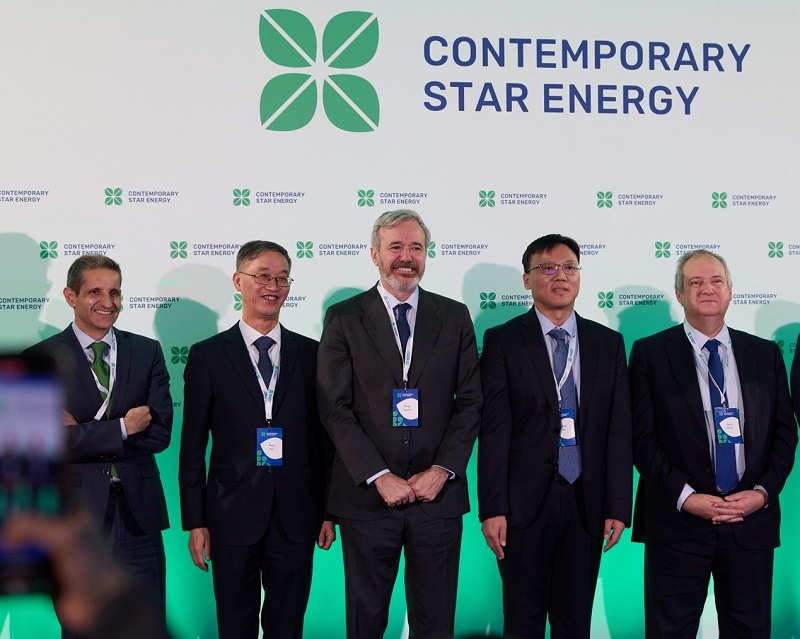
宁德时代西班牙合资电池工厂奠基
Xin Hua She· 2025-11-27 05:05
Core Points - The foundation ceremony for a lithium iron phosphate battery factory jointly invested by CATL and Stellantis took place in Aragon, Spain, marking one of the largest Chinese investments in Spain with a total investment of €4.1 billion [1] - The factory is expected to utilize renewable energy fully and aims to commence production by the end of 2026 [1] - The factory represents a significant milestone in Spain's electric vehicle industry chain and reflects the deepening technological and industrial cooperation between Spain and China [1] Investment and Economic Impact - The factory is projected to have an annual production capacity of 50 GWh, providing lithium iron phosphate batteries for electric vehicles [1] - The establishment of the factory is anticipated to enhance Aragon's position in the European electric vehicle supply chain and inject long-term economic momentum into the region [1] - The project is seen as a commitment to green transformation and industrial upgrading, with both countries aiming to share technology and opportunities for mutual development [1] Environmental Commitment - The joint venture aims to achieve complete carbon neutrality during its operations [1] - The project emphasizes the importance of collaboration in achieving green transformation, highlighting that no single country or enterprise can accomplish this alone [1]


绿色钢铁的经济账:每吨高出300元,电炉短流程的低碳优势如何变现?
Zhong Guo Neng Yuan Wang· 2025-11-27 04:56
Core Viewpoint - The steel industry in China, as the largest producer and consumer globally, faces significant pressure to reduce carbon emissions, which account for approximately 15% of the country's total emissions. The transition to a low-carbon model, particularly through the adoption of electric arc furnace (EAF) short processes, is becoming increasingly urgent in the context of global green transformation [1]. Group 1: Development of Electric Arc Furnace Short Processes - The report highlights that the traditional blast furnace-converter process is challenged by high carbon emissions due to its reliance on iron ore and coal, while the EAF short process, which primarily uses scrap steel, offers clear advantages in terms of low carbon emissions and energy efficiency [1][2]. - Sichuan province has emerged as a leader in the development of EAF short processes, with a total crude steel capacity of 32.3 million tons, where the short process accounts for approximately 40% of the total production [2]. - The province's electricity generation capacity has increased significantly, with hydropower contributing over 80% of the total, providing a stable and low-cost energy source for EAF operations [2]. Group 2: Challenges in Scrap Steel Supply - Scrap steel is the primary raw material for the EAF short process, but a shortage of scrap resources poses a significant barrier to its development. By 2045, scrap steel is expected to become the main raw material for steel production in China, with EAF processes projected to account for about 50% of production by 2060 [3]. - A specific example from a southwestern province indicates that while scrap steel resources have increased from 8.86 million tons in 2020 to 9.64 million tons in 2024, consumption has also risen, leading to a persistent shortage [3]. Group 3: Economic Viability and Cost Challenges - The production cost of EAF short processes in Sichuan is approximately 300 RMB per ton higher than that of traditional processes, primarily due to high scrap prices and greater energy consumption [5]. - The report suggests that stable clean energy supply is crucial for maintaining the cost-effectiveness of EAF production, as fluctuations in energy availability can undermine its low-carbon advantages [5]. - To enhance the economic viability of EAF short processes, the report recommends promoting green finance and establishing a green premium sharing mechanism to improve competitiveness [5]. Group 4: Industry Perspectives and Future Outlook - Despite current cost challenges, many steel companies remain optimistic about the future of EAF technology. It is anticipated that as carbon emission costs rise, companies will reassess the overall costs, including carbon costs, leading to increased investment in EAF short processes [6].
广西零碳故事,向世界讲述
Guang Xi Ri Bao· 2025-11-27 03:18
Core Viewpoint - The "Guilin Zero Carbon Green Power Alliance" represents an innovative practice in addressing climate change, showcasing China's commitment to green energy and sustainable development at the COP30 conference [4][12]. Group 1: Formation and Structure of the Alliance - The Guilin Zero Carbon Green Power Alliance was established in 2024, led by the Guangxi Power Grid Company, in collaboration with 63 major enterprises, universities, and research institutions [4]. - The alliance aims to break the traditional "single combat" approach in energy governance by creating a collaborative platform that integrates the entire energy supply chain, enhancing regional cooperation in new energy development [4][5]. Group 2: Energy Transition and Achievements - By 2024, over 75% of electricity generated in Guangxi is expected to be green power, with the region's renewable energy capacity becoming the largest in southern China [5]. - The first large-capacity sodium-ion battery energy storage station in China was completed in Nanning, capable of handling 600 charge-discharge cycles annually, which can absorb approximately 30 million kilowatt-hours of wind and solar energy each year [5]. Group 3: Technological Innovations and Market Integration - The alliance employs advanced technologies, including the world's first intelligent simulation model for power systems, to optimize low-carbon grid planning [7]. - A green consumption ecosystem is being developed to facilitate the market integration of clean energy, allowing for the full market entry of centralized wind and solar power [8]. Group 4: Market Performance and Economic Impact - In 2023, Guangxi's marketized renewable energy reached 52.688 billion kilowatt-hours, with green electricity trading volume at 15.055 billion kilowatt-hours, leading in southern China [9]. - The economic value of green electricity is reflected in its growing market presence, demonstrating a sustainable development model that harmonizes ecological and economic benefits [9]. Group 5: Collaborative Efforts and Global Integration - The alliance has established an energy and power academic innovation center to collaborate on cutting-edge technologies, extending its influence to ASEAN countries through talent development and technology sharing [10]. - The initiative aims to contribute to global energy governance, forming a transnational network for energy cooperation [10].


中企在西合资超级电池工厂举行奠基仪式
人民网-国际频道 原创稿· 2025-11-27 02:17
Core Viewpoint - The foundation ceremony for a large lithium iron phosphate battery factory, a joint venture between China's CATL and multinational automotive group Stellantis, was held in Zaragoza, Spain, marking a significant investment in the electric vehicle sector and green energy transition in Europe [1][3][4]. Group 1: Project Overview - The factory, located in the Aragon region, represents a total investment of €4.1 billion, making it one of the most important industrial projects in Spain [3]. - The factory is expected to produce lithium iron phosphate batteries for electric vehicles, with a planned annual production capacity of 50 GWh, and aims for complete carbon neutrality [5]. Group 2: Strategic Importance - The project is seen as a transformative initiative for the industrial landscape of Aragon and a milestone for Spain and Europe, leveraging the region's mature automotive industry and ecosystem [3]. - The collaboration between CATL and Stellantis highlights the strong partnership and mutual trust between Spain and China, showcasing a commitment to shared technology and green energy development [4]. Group 3: Economic Impact - The factory is anticipated to create job opportunities in Spain and is viewed as a significant investment from China, reflecting the growing economic ties between the two nations [4][5]. - The project symbolizes a broader commitment to green transformation and industrial upgrading, emphasizing the importance of cooperation for sustainable development [5].
化工行业估值与盈利双底,绿色转型+新材料驱动增长,石化ETF(159731)份额创新高
Sou Hu Cai Jing· 2025-11-27 02:10
Group 1 - The Petrochemical ETF (159731) has seen a 0.37% increase as of November 27, with notable gains from holdings such as Xingfa Group, Cangge Mining, and Yara International. The ETF has experienced net inflows in 8 out of the last 10 trading days, totaling 22.42 million yuan, reaching a record high of 228 million shares [1] - The National Development and Reform Commission has revised and issued the "Regulations on the Planning, Construction, and Operation Management of Oil and Gas Infrastructure," which will take effect on January 1, 2026. This regulation marks a significant milestone for systematic and comprehensive management in China's oil and gas industry, aiming to enhance management and ensure national energy security while promoting green and sustainable development [1] - Western Securities indicates that the chemical industry is currently at a dual bottom in valuation and profitability, with a 7.45% year-on-year increase in net profit for the basic chemical sector from Q1 to Q3 of 2025. The industry is experiencing internal competition, and attention should be paid to the implementation of anti-competition policies. With resource supply tightening and steady demand recovery, the industry is expected to continue its upward cycle [1] Group 2 - The Petrochemical ETF closely tracks the CSI Petrochemical Industry Index, with the basic chemical industry accounting for 60.85% and the oil and petrochemical industry for 32.16%. The elimination of outdated production capacity and the strengthening of green technology innovation in the petrochemical industry are expected to enhance the value of the industry chain [2]
破解供需错配释放消费潜能
Jing Ji Ri Bao· 2025-11-26 22:37
Core Viewpoint - The article emphasizes the importance of enhancing the adaptability of supply and demand in the consumer market to strengthen domestic circulation and address external challenges, as outlined in a new implementation plan by six government departments [1][4]. Group 1: Current Market Situation - The consumer market in China is experiencing a clear upgrading trend, with final consumption expenditure contributing 53.5% to economic growth in the first three quarters of this year [1]. - There is a structural contradiction characterized by an oversupply of low-end products and a shortage of high-quality offerings [1]. Group 2: Technological Innovation - Technological innovation is identified as a key driver to address supply-demand mismatches, with companies like Joyoung leveraging consumer big data to significantly boost smart product sales [2]. - A full-chain digital system should be established to connect user demand, intelligent design, and flexible production, particularly in key industries like home appliances and furniture [2]. Group 3: Rural Market Adaptation - Improving supply-demand adaptability in rural areas is crucial, focusing on precise demand matching rather than merely delivering goods [3]. - Encouragement for companies to develop energy-efficient appliances suitable for rural environments is highlighted, along with the need for improved logistics and commercial facilities [3]. Group 4: Green Transformation - The green transition is seen as a new space for consumption growth, with over 90% of sales in energy-efficient appliances last year coming from first-level energy efficiency products [3]. - Support for green low-carbon consumption in sectors like new energy vehicles and high-efficiency appliances is recommended [3]. Group 5: Policy Shift - The new plan signifies a shift in consumption policy from merely stimulating demand to a dual approach of enhancing both supply and demand [4]. - The application of new technologies and the emergence of unique products are expected to unlock greater market potential, serving as a significant engine for economic growth [4].
多维度挖潜绿色空间(促进民营经济高质量发展)
Ren Min Ri Bao· 2025-11-26 22:21
Core Viewpoint - Shanxi Jianbang Group has made significant investments in ultra-low emission transformation and waste resource recycling, aiming to enhance environmental sustainability while achieving economic benefits [2][3]. Group 1: Ultra-Low Emission Transformation - Since 2016, the company has invested 3.5 billion yuan in ultra-low emission transformation and related governance efforts [2]. - The company has implemented a fully enclosed material transportation corridor and upgraded dust collection technologies in various production areas, achieving a state where "mining is invisible, material handling is invisible, and iron output is invisible" [2][3]. - The intelligent control platform allows real-time monitoring of air quality and emission points, significantly reducing dust emissions during material handling [1]. Group 2: Waste Resource Recycling - The company has introduced advanced steel slag processing technology, increasing the recovery rate of iron elements in steel slag to over 66% [3]. - Various waste materials, including water slag and converter slag, are processed for reuse in cement and building materials, contributing to cost reduction in production [3]. - The company has been recognized as a national "green factory" in 2022, reflecting its commitment to sustainable practices and carbon reduction [3].
山西建邦集团聚焦发展循环经济 多维度挖潜绿色空间(促进民营经济高质量发展)
Ren Min Ri Bao· 2025-11-26 22:09
11时15分,空气湿度78.4%,PM2.5为0.34微克/立方米……日前,记者走进位于临汾市的山西建邦集 团,只见超低排放智能化管控平台上,实时显示着厂区综合原料场的空气质量。"只需通过这个数据平 台,便可追溯厂区每个排放点的排放情况。"建邦集团副总裁田琰介绍。 在500万吨封闭式综合原料场,矿石堆积如山,卸料车往来穿梭。"以前,料场卸料时烟尘飞扬,很不环 保。"料场工段长许林全介绍,现在,料场经过智能化改造后,可实现自动化清洁作业,场内的鹰眼能 自动捕捉、监测产尘点,一旦颗粒物超过设定值,雾炮就会自动启动,瞄准产尘点喷出细密的水雾,吸 附粉尘及颗粒物,净化空气。 "物料存储、装卸所产生的排放,是钢铁企业里典型的无组织排放,其源头分散、数量众多、排放随 机,除了矿料装卸,炼铁、炼钢、轧钢等一系列工序均有不同程度的无组织排放情况,有的环节排放源 多达上百个。要真正实现超低排放,离不开智能化、系统化的治理方式。"田琰说。 2016年以来,建邦集团先后投资35亿元开展超低排放改造等治理工作。建设物料输送全密闭通廊;对炼 钢车间进行全封闭改造,采用高效覆膜袋式工艺除尘;对烧结机机尾、转炉、轧机等高温产尘点进 行"全 ...
萨拉热窝举办首届国际电动汽车会议
Shang Wu Bu Wang Zhan· 2025-11-26 14:01
Core Viewpoint - Bosnia and Herzegovina is at a crossroads in the European green transition, necessitating the establishment of a clean transportation system tailored to local characteristics [1] Group 1: Conference Highlights - The first international conference titled "Electric Vehicles: The Beginning or End of the Ice Age" was organized by the Federation of Bosnia and Herzegovina Chamber of Commerce [1] - The conference featured experts from 10 countries, including Sweden, Norway, and Germany, discussing topics related to the electrification of passenger and freight transport and energy technologies [1] - The ChargerBiH charging application was launched during the conference [1] Group 2: Expert Insights - Experts emphasized the need for Bosnia and Herzegovina to develop a clean transportation system that aligns with local conditions [1] - A representative from Norway shared experiences regarding the end of the internal combustion engine era [1] - EU experts highlighted that "every crisis contains opportunities" [1]
我在COP30|路上行驶的是一辆辆中国新能源汽车
Xin Jing Bao· 2025-11-26 11:08
Core Insights - BYD is actively participating in COP30 as an official partner, showcasing its electric vehicles as symbols of low-carbon transportation [2][4] - The company emphasizes the importance of electric vehicle adoption for carbon reduction in the transportation sector, leveraging innovative technologies [4][5] - BYD has established a comprehensive low-carbon industrial chain, contributing to local sustainable development in Brazil [4][6] Group 1: Technological Innovations - BYD's fifth-generation DM super hybrid technology reduces fuel consumption to 2.6L/100km, significantly lowering carbon emissions [5] - The megawatt fast-charging technology allows for a 5-minute charge to enable a range of 400 kilometers, enhancing the efficiency of electric vehicle adoption [5] - The company aims to reduce operational carbon intensity by 50% by 2030 and achieve carbon neutrality across its value chain by 2045 [5] Group 2: Market Performance in Brazil - BYD has sold over 87,000 vehicles in Brazil from January to October 2025, with an 80% market share in pure electric models and 25% in hybrid models [6] - The company has surpassed major automotive brands in consumer satisfaction, ranking as the highest-rated brand in Brazil according to Decoupling's report [6] - BYD's local factory operates entirely on renewable energy and has been recognized for its contributions to the local economy [6] Group 3: Global Expansion and Recognition - BYD's green footprint extends to 117 countries and regions, with over 785,000 overseas passenger cars and pickups sold from January to October 2025 [8] - The company has built an 8-vessel roll-on/roll-off fleet to support its global strategy for efficient product distribution [8] - BYD has been recognized in the Kantar BrandZ Top 10 Global Automotive Brands for three consecutive years and ranks 91st in the Fortune Global 500 [8]