
数字孪生

Search documents
新华时评丨创新驱动,激发增长新动能——中国发展增益世界之创新性
Xin Hua She· 2025-07-23 05:03
Group 1 - China's economy shows strong performance with a 10.2% year-on-year increase in equipment manufacturing value added and a 9.5% increase in high-tech manufacturing value added [1] - Significant growth in production of 3D printing equipment, new energy vehicles, and industrial robots, with respective increases of 43.1%, 36.2%, and 35.6% [1] - China ranks 11th in the global innovation index for 2024, marking it as one of the fastest-growing economies in terms of innovation over the past decade [1] Group 2 - Chinese technological innovations are creating new business models and growth points for the global economy, with applications in various countries enhancing operational efficiency and promoting local industries [2] - Technologies such as artificial intelligence, digital payments, and 5G are driving new industries and models globally, shifting the world economy from competition for existing resources to new growth opportunities [2] Group 3 - China is integrating green technology innovation into its national innovation system, achieving breakthroughs in key technologies like photovoltaic cell efficiency and new energy vehicle manufacturing [3] - Chinese green technologies are aiding countries in Central Asia in their transition to low-carbon economies, exemplified by projects like wind and solar power stations [3] Group 4 - China maintains a commitment to sharing innovation resources, attracting foreign investment and fostering international cooperation in technology [4] - The number of intergovernmental technology cooperation agreements reached 118 in 2024, with over 70 joint laboratories established under the Belt and Road Initiative [4]
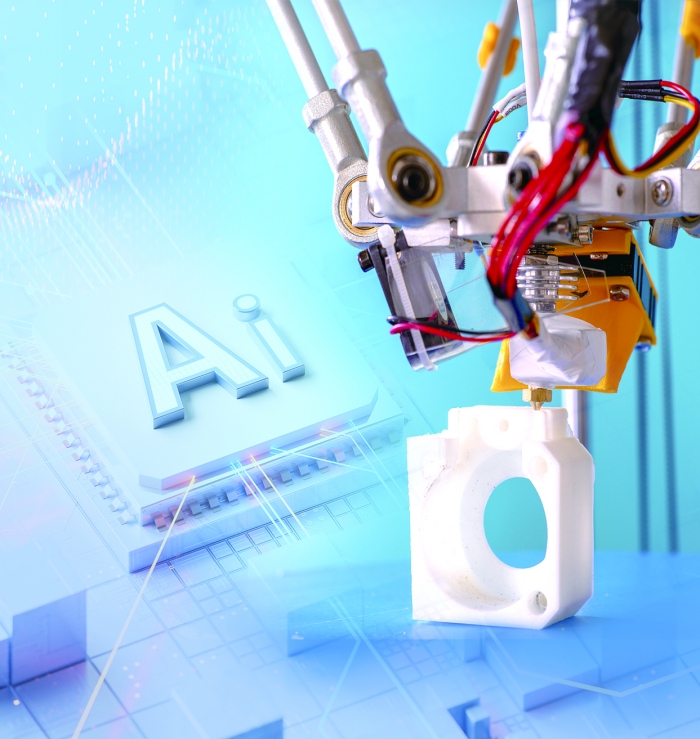
AI深度赋能3D打印产业 普及化、智能化、自主化成趋势
Shang Hai Zheng Quan Bao· 2025-07-22 18:16
Group 1 - The Ministry of Industry and Information Technology of China has released the 2025 work points for the integration of informatization and industrialization, emphasizing the "Artificial Intelligence + Manufacturing" initiative to support enterprises in applying general and industry-specific large models and intelligent agents in key scenarios [2] - The 3D printing industry is identified as a key area for AI empowerment, showing trends of popularization, intelligence, and autonomy, with expectations for higher quality development as the "Artificial Intelligence + Manufacturing" initiative is implemented [2][3] - AI is lowering the barriers to entry for 3D printing, enabling ordinary users to design complex products through AI-assisted modeling, thus transforming 3D printing from a professional tool to a mass-market application [3] Group 2 - The user demographic for consumer-grade 3D printing devices is shifting from skilled "makers" to a broader audience, including ordinary users, as AI facilitates the entire process from modeling to final product [3] - The application scenarios for consumer-grade 3D printing are expanding into areas such as home DIY, education, and maker spaces, driven by AI's ability to assist users in completing the entire workflow independently [3] - In the industrial-grade 3D printing sector, the integration of AI is transforming personalized medical applications from "experience-driven" to "data-driven" approaches, exemplified by digital orthodontic treatment models supported by 3D printing and AI technologies [3] Group 3 - AI is rapidly integrating into the manufacturing processes of 3D printing, enhancing the intelligence, efficiency, and usability of 3D printing equipment, thereby reshaping the competitive landscape and technological barriers of the industry [5] - AI is involved in the entire lifecycle of 3D printing products, from design to production and post-processing, reconstructing the industry's value and transitioning 3D printing from a "manufacturing tool" to an "intelligent system" [5] - AI's closed-loop control capabilities monitor defects during printing and adjust parameters in real-time, improving the stability and success rate of 3D printing operations [5] Group 4 - The development model of 3D printing is evolving from "human + experience" to "autonomous operation" through the integration of AI and digital twin technologies [6] - AI-driven software can detect various parameters of 3D printed products in real-time, allowing for corrective actions to be taken during the printing process [6] - The future of 3D printing is expected to achieve a fully AI-driven design process, creating a new manufacturing ecosystem characterized by on-demand creation and zero waste [7] Group 5 - The production chain of 3D printing is predicted to evolve towards a "fully autonomous operation" model, integrating AI and digital twin technologies for comprehensive decision-making regarding product processes, structures, and performance [8] - AI large models are anticipated to possess capabilities for perception, planning, execution, and reflection in the production of 3D printed products, leading to a platform system that enables "one-click printing" with zero human intervention [8]

超图软件20250722
2025-07-22 14:36
Summary of Conference Call for SuperMap Software Industry Overview - The water conservancy industry has seen an increase in investment, but not exponential growth. In 2024, the cement engineering national bond project was approved for approximately 500 billion, and in the first half of 2025, around 200 billion was approved, with an overall growth rate of about 10% to 20% [2][8] - The national water network construction plan proposes an investment of 5 trillion during the 14th and 15th Five-Year Plans [2][8] Company Insights - SuperMap Software is responsible for the information technology portion of the Yaxia Hydropower Station project, which has a total investment of 1.2 trillion, accounting for about 5% of the total investment. This includes smart hardware and software for various business scenarios such as dam safety, flood control, and water resource scheduling [2][7] - The company has made significant progress in the water conservancy business, particularly in large hydropower station construction, with the Yaxia project expected to break even in about ten years [4][6] - SuperMap's internal estimates indicate a market space of approximately 10 billion to 12 billion for 2025, focusing on digital twin and information technology construction [5][17] Technological Developments - SuperMap, in collaboration with North China University of Water Resources and Electric Power and iFlytek, has applied for the Ministry of Water Resources' "Water Intelligent Body Innovation Center," focusing on visual intelligence and spatial intelligence [2][9] - The company emphasizes the importance of digital twins and artificial intelligence, noting that government demand for these applications is increasing, although they require policy support and a standard system for large-scale development [9][11] Financial Projections - The information technology investment in water conservancy projects typically accounts for about 5% of the total budget, with smaller projects ranging from 5% to 8% and larger projects like Yaxia potentially at 3% to 4% [3][13] - In 2025, Sichuan Province plans to invest approximately 80 billion in water conservancy, with about 5 billion allocated specifically for digital twin and information technology projects [5][14] Competitive Advantages - SuperMap's competitive advantages include compliance with information innovation requirements, extensive experience in data governance, and leading capabilities in intelligent body research, particularly in spatial and visual intelligence [15][16] - The company has been a key player in the water conservancy sector for nearly 20 years, accumulating rich experience in data management and software solutions [16] Market Expansion Plans - SuperMap plans to align with the information technology needs of large projects and focus on significant national investments, such as the 3-5 trillion in mobile investments in 2024 and the 500-600 billion in the first half of 2025 [10] - The company aims to leverage early business engagement to secure larger opportunities in the market [10] Future Outlook - The company anticipates a significant increase in AI orders in the natural resources sector, driven by policy and local government demand, with expectations of one to two times growth this year [19][20] - SuperMap has been actively researching AI since 2019 and has launched several AI products, indicating a strong commitment to this area as a future growth driver [19][20] Conclusion - SuperMap Software is strategically positioned in the water conservancy industry, with a focus on digital transformation and AI, backed by significant government investments and a robust competitive edge in technology and data management. The company is poised for growth in the coming years, particularly in the context of increasing demand for intelligent solutions in water management and other sectors.

超图软件(300036) - 300036超图软件投资者关系活动记录表20250722
2025-07-22 11:02
Group 1: Company Overview and Business Focus - ChaoTu Software has been dedicated to the water conservancy industry for over a decade, serving various governmental departments and institutions [2] - The company has shifted its focus towards water conservancy projects, emphasizing its involvement in water resource management and infrastructure development [2][3] - In 2024, the company plans to enhance its investment in AI applications within the water conservancy sector, indicating a strategic pivot towards digital transformation [4][5] Group 2: Project Achievements and Innovations - ChaoTu Software participated in the "Digital Management Platform for the Full Lifecycle of Hydropower Projects," showcasing its technological innovation in integrating BIM and GIS [1][2] - The company has developed a range of digital products, including a water conservancy digital twin platform and various management systems, to support intelligent decision-making in water resource management [3][4] - In 2023, water conservancy contracts increased by over 100% compared to the previous year, reflecting a growing market opportunity [5][6] Group 3: AI and Digital Twin Development - The company has established a strategic partnership with North China University of Water Resources and Electric Power and iFlytek to advance AI applications in the water conservancy sector [4] - ChaoTu Software's AI projects are expected to double in revenue this year, indicating strong market demand for AI-driven solutions [9] - The introduction of digital twin systems for new water conservancy projects is mandated from 2025, with full coverage expected by 2028 [13] Group 4: Competitive Advantages - ChaoTu Software's expertise in data governance and its experience in handling complex projects provide a competitive edge in the water conservancy sector [15] - The company is positioned as a leader in the integration of AI and GIS technologies, enhancing its service capabilities across various applications [10][15] - The focus on digital twin technology and intelligent systems is expected to significantly improve operational efficiency and decision-making accuracy in water management [14][15] Group 5: Market Outlook and Risks - The company anticipates a favorable outlook for water conservancy projects in the second half of the year, driven by the cyclical nature of central budget funding [6] - ChaoTu Software emphasizes the importance of risk awareness among investors regarding industry trends and company forecasts [16]
芯片碰到的又一个危机
半导体行业观察· 2025-07-22 00:56
Core Insights - The rapid energy consumption of AI data centers is approximately four times the rate of new power generation, necessitating a fundamental shift in power generation locations, data center construction sites, and more efficient systems, chips, and software architectures [2][4] - In the U.S., data centers consumed about 176 TWh of electricity last year, projected to rise to between 325 and 580 TWh by 2028, representing 6.7% to 12% of total U.S. electricity generation [2][4] - China's energy consumption for data centers is expected to reach 400 TWh next year, with AI driving a 30% annual increase in global energy consumption, where the U.S. and China account for about 80% of this growth [4][22] Energy Consumption and Infrastructure - The U.S. Department of Energy's report highlights the significant increase in energy consumption by data centers, emphasizing the need for a complete overhaul of the power grid to accommodate this growth [2][5] - The average energy loss during power transmission is about 5%, with high-voltage lines losing approximately 2% and low-voltage lines losing about 4% [5][9] - Key areas for improvement include reducing transmission distances, limiting data movement, enhancing processing efficiency, and improving cooling methods near processing components [7][9] Data Processing and System Design - The challenge of data processing proximity is crucial, as reducing the distance data must travel can significantly lower energy consumption [11][12] - Current AI designs prioritize performance over power consumption, but this may need to shift as power supply issues become more pressing [12][13] - Optimizing the collaboration between processors and power regulators can lead to energy savings by reducing the number of intermediate voltage levels [9][13] Cooling Solutions - Cooling costs for data centers can account for 30% to 40% of total power expenses, with liquid cooling potentially halving this cost [17][18] - Direct chip cooling and immersion cooling are two emerging methods to manage heat more effectively, though both present unique challenges [18][19] - The efficiency of cooling technologies is critical, especially as AI workloads increase the dynamic current density in servers [17][19] Financial and Resource Considerations - The semiconductor industry faces pressure to address sustainability and cost issues to maintain growth rates, particularly in AI data centers [21][22] - The total cost of ownership, including cooling and operational costs, will be a determining factor in the deployment of AI data centers [22][23] - The projected increase in AI data center power demand by 350 TWh by 2028-2030 highlights the urgent need for innovative solutions to bridge the gap between energy supply and demand [22][23]


中国团队披露新型晶体管,VLSI 2025亮点回顾
半导体行业观察· 2025-07-22 00:56
Core Viewpoint - The article focuses on the latest advancements in semiconductor technology presented at the VLSI conference, highlighting innovations in chip manufacturing, including digital twins, advanced logic transistors, and future interconnects, as well as comparisons between Intel's 18A process and TSMC's technologies [1]. Group 1: FlipFET Design - Despite various restrictions, China continues to advance in semiconductor R&D, with Peking University's FlipFET design gaining significant attention for its novel patterning scheme that achieves PPA similar to CFET without the challenges of monolithic or sequential integration [2]. - The FlipFET technology involves a process where NMOS is formed on the front side and PMOS on the back side of the wafer, showcasing good performance for both types of transistors [8][10]. - The main drawback of FlipFET is its cost, as it requires multiple back-end processes and is more susceptible to wafer warping and alignment errors, potentially affecting yield [12]. Group 2: DRAM Developments - DRAM is at a pivotal point in its five-year roadmap with two key advancements: 4F2 and 3D technologies, with 4F2 expected to increase density by 30% compared to 6F2 without reducing minimum feature size [16][23]. - The 4F2 architecture necessitates vertical channel transistors to fit within the unit size, presenting manufacturing challenges due to high aspect ratios [24][31]. - 3D DRAM is being developed concurrently, with Chinese manufacturers showing strong motivation to innovate in this area due to its independence from advanced lithography technologies [36]. Group 3: Digital Twin Technology - Digital twin technology is becoming essential in semiconductor design and manufacturing, allowing for design exploration and optimization in a virtual environment before physical production [79]. - This technology spans atomic-level simulations to wafer-level optimizations, enhancing productivity and yield in semiconductor fabrication [80][87]. - The implementation of "unmanned" fabs is a future goal, aiming for automated maintenance and operation without human intervention, which poses challenges in standardizing processes across different equipment vendors [92]. Group 4: Intel's 18A Process - Intel's 18A process, set to enter mass production in late 2025, combines Gate-All-Around transistors with a PowerVia back power network, significantly reducing interconnect spacing and improving yield [74][78]. - The 18A process claims a 30% reduction in SRAM size compared to Intel's 3rd generation baseline, with performance improvements of approximately 15% at the same power consumption [76]. - The process also features a reduction in the number of front metal layers and an increase in back metal layers to support the new architecture, indicating a shift towards more efficient manufacturing [77].


黄仁勋急了?盘点他关于投资中国市场的30个想法
3 6 Ke· 2025-07-21 01:32
Group 1: Company Overview - Nvidia's CEO Jensen Huang is on his third visit to China this year, aiming to further invest in the Chinese market as the company reaches a market cap of over $4 trillion, becoming the first in the world to do so [1] - The current supply chain cycle for Nvidia spans nine months, from wafer ordering to AI supercomputer delivery, with efforts underway to restore production capacity for the Hopper architecture [1][2] Group 2: Product Insights - The new RTX Pro product is designed for digital twin applications, enhancing the efficiency and quality of smart factories by training "digital robots" [2] - The H20 chip is particularly suitable for training large models, boasting exceptional memory bandwidth, making it ideal for innovative architectures like DeepSeek [1][2] Group 3: AI Development in China - AI development involves three levels: computation, models, and applications, with China making significant strides in model development, particularly with companies like DeepSeek and Alibaba [3] - Approximately 50% of global AI researchers come from China, highlighting the country's strong educational system and advantages in mathematics and science [3] Group 4: Future of AI - AI is evolving through stages, currently entering the third generation—reasoning AI, which mimics human thought processes [6] - AI is becoming a new infrastructure, akin to electricity and the internet, with significant implications for global GDP through automation [6][7] Group 5: Corporate Philosophy and Employee Engagement - Nvidia maintains a low employee turnover rate due to high salaries and a strong commitment to employee welfare, which is a core aspect of the company's culture [8] - The company emphasizes the importance of creating valuable technology and products that positively impact the world [8] Group 6: Advice for the Younger Generation - Young individuals should engage with AI early, as it serves as an unprecedented "equalizer of capabilities," providing equal opportunities for learning and creativity [10][11] - Teaching critical thinking based on first principles is essential for understanding AI and its applications [10][11]
逐新向高,创新场活力充沛(年中经济观察)
Ren Min Ri Bao· 2025-07-20 00:40
Group 1 - China's economy shows strong growth in high-tech manufacturing, with an increase of 9.5% in value added for large-scale high-tech manufacturing in the first half of the year [2] - Strategic emerging service industries also saw significant growth, with revenues increasing by nearly 10% from January to May [2] - The innovation-driven development strategy is gaining momentum, enhancing the vitality of innovation and driving economic growth [2] Group 2 - Traditional industries are undergoing upgrades, with companies like Xiangtan Steel focusing on high-end and specialty steel products to capture market demand [3][4] - The integration of advanced technologies such as AI and 5G in industries like coal mining is improving safety, efficiency, and environmental sustainability [5] - Companies are increasingly adopting innovative technologies to enhance productivity and reduce training times, as seen in Suzhou Huazhan Aerospace Electric Co. [5] Group 3 - The development of compound semiconductor industries is crucial, with companies like Huagong Technology achieving breakthroughs in laser wafer cutting equipment [6][7] - Innovation is essential for industries to withstand risks and enhance resilience, with a focus on addressing critical technological challenges [8] Group 4 - The transformation of scientific achievements into productive forces is accelerating, with companies like Xihai Biotechnology rapidly moving from research to industrial production [9] - Over 77% of R&D investment in China comes from enterprises, highlighting the importance of market-driven innovation [9] Group 5 - New industries are gradually emerging, with a focus on sectors such as marine technology and hydrogen energy, as demonstrated by the launch of China's first offshore CCUS project [12] - The development of new materials, such as high magnesium lightweight aluminum, is key to enhancing competitiveness in various fields [15] Group 6 - Private enterprises are becoming increasingly active in innovation, with sectors like integrated circuits and artificial intelligence seeing significant growth [16][17] - Foreign investment is shifting towards innovation-driven projects, as evidenced by new R&D facilities established by companies like Siemens in China [18] Group 7 - Continuous innovation efforts are supported by a robust talent pool, with China leading globally in the number of R&D personnel and STEM graduates [22] - The integration of education, technology, and talent development is crucial for fostering innovation and high-quality growth [21]
百年电梯巨头加码中国制造数字化转型,将宣布在华投资新计划
Di Yi Cai Jing· 2025-07-19 12:21
Group 1 - Digital technology is transforming the elevator industry's manufacturing processes, with automation software controlling large-scale production in Kone's Kunshan facility [1][2] - Kone is planning a significant new investment project in China to enhance local service capabilities and export smart manufacturing results globally, focusing on projects in the Greater Bay Area [1][2] - The Kunshan industrial park is Kone's largest production base globally and the largest R&D center outside Finland, with a local supply chain accounting for 99% and products exported to over 100 countries [1] Group 2 - The Kunshan factory has achieved a leading level of automation globally, with full 5G network coverage and the use of AI digital twin technology for real-time monitoring and optimization of production processes [2] - Predictive maintenance services enabled by AI and big data can reduce equipment failure rates by up to 55% and decrease the risk of entrapment by up to 40% [2] - Kone is adapting to the shift from new construction to the maintenance of existing elevators in China, emphasizing the importance of digitalization in creating a flexible production system [2] Group 3 - Major elevator companies, including Kone and Otis, are actively investing in government-supported projects for the upgrade of old residential elevators to expand their presence in China's existing market [3] - Kone has completed the first batch of 2,106 old elevator upgrades in Kunshan within eight months [3] - Otis's Shanghai R&D center is the largest globally for the company, focusing on developing smart elevator equipment and digital technology innovations [3]
中国灾害防御协会推出“房屋体检师”专项能力培训 助力城市更新
Zheng Quan Ri Bao Wang· 2025-07-18 13:47
Core Insights - The China Disaster Prevention Association has launched a specialized training program for "house inspectors" and established a standard evaluation system for inspection agencies, responding to policy calls and aiming to supply standardized technical talent to the industry [1][2] - The training program includes a standardized curriculum covering the entire house inspection process, integrating AI technology and digital twin applications, addressing the growing demand for house inspections as urbanization rates exceed 70% in China [1][2] Market Demand and Opportunities - The demand for house inspections is expected to experience explosive growth, with the market size projected to exceed 100 billion yuan in the next five years, covering various sectors such as property inspection, property management, renovation, and engineering testing [1] - The training program targets 12 categories of professionals, enhancing their capabilities in material assessment, structural diagnosis, and equipment evaluation, with a projected shortage of over 500,000 house inspector positions in the next five years, indicating a broad career development outlook [2] Industry Impact - The training initiative not only fills the talent gap in the industry but also promotes a "detection-diagnosis-governance" closed loop for house health management, closely linked to urban renewal efforts [2] - The concept of "inspection first, then renewal; no inspection, no renewal" has become a key consensus in the urban renewal sector, with professional inspections providing critical insights for subsequent renovation and remediation efforts [2]