数字孪生

Search documents
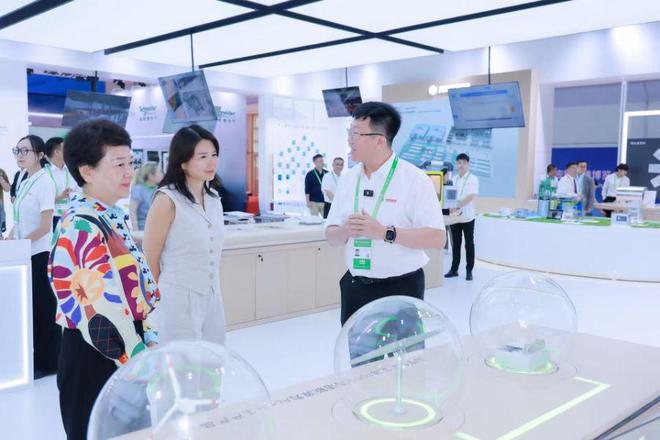
苹果连续三年参加链博会 深化中国供应链合作
2 1 Shi Ji Jing Ji Bao Dao· 2025-07-18 11:32
Core Viewpoint - The third China International Supply Chain Promotion Expo showcased the deepening collaboration between Apple and its Chinese suppliers, highlighting advancements in smart manufacturing and green transformation [1][6]. Group 1: Event Overview - The third China International Supply Chain Promotion Expo took place in Beijing from July 16 to 20, featuring leading global companies in manufacturing and supply chain [1]. - Apple participated for the third consecutive year, showcasing its collaboration with three Chinese suppliers: Xinwanda, Jieshida, and Shandong Innovation [1]. Group 2: Technological Advancements - Apple's products, including Apple Vision Pro and iPhone, are produced in China, reflecting the country's leading position in smart manufacturing [3]. - Xinwanda has developed a magnetic levitation production line that significantly improves speed, precision, and equipment reusability, showcasing advancements in China's manufacturing capabilities [3]. - Jieshida exhibited a micro O-ring assembly device that utilizes high-precision control systems and automation technology, representing a shift towards vertical integration in Chinese manufacturing [5]. Group 3: Environmental Initiatives - Apple and its suppliers are increasingly focusing on carbon neutrality, exploring sustainable materials and packaging [5]. - Shandong Innovation provides 100% recycled aluminum for production, contributing to the carbon-neutral Mac Mini [5]. - Apple has reduced its carbon emissions by 60% since 2015, with two-thirds of its production in China powered by renewable energy [5]. Group 4: Investment and Future Plans - Apple has invested approximately 20 billion USD in smart and green manufacturing in China over the past five years [6]. - The company announced a commitment of 720 million RMB for the second phase of its clean energy fund in China [6]. - Apple's CEO Tim Cook emphasized the importance of China in Apple's supply chain, noting continuous investment and expansion over the past 30 years [6].


摩尔线程科创板IPO“已问询” 拟募资80亿元
Zhi Tong Cai Jing· 2025-07-18 07:39
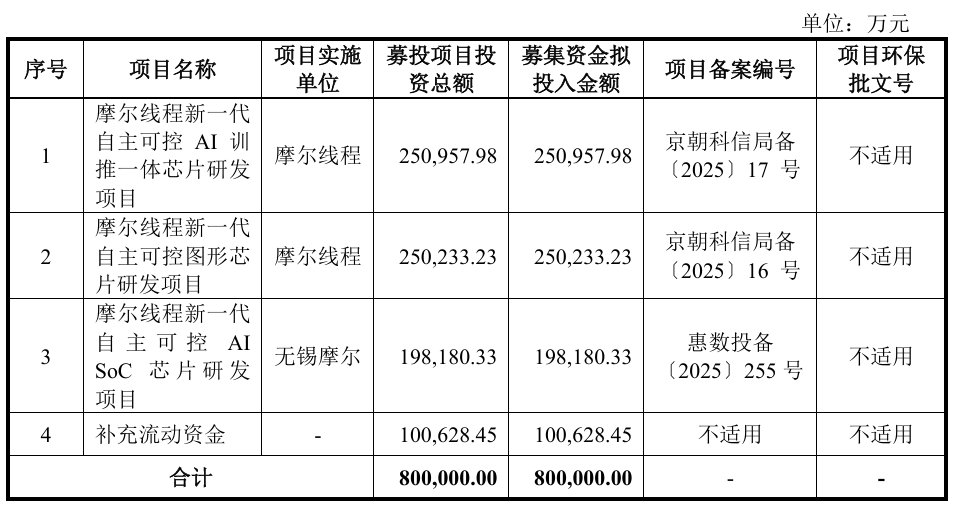
Core Viewpoint - Moore Threads is seeking to raise 8 billion RMB through an IPO on the Shanghai Stock Exchange's Sci-Tech Innovation Board, focusing on the development and sales of GPUs and related products for high-performance computing applications [1] Company Overview - Moore Threads, established in 2020, specializes in the research, design, and sales of full-featured GPUs, targeting AI, digital twins, and scientific computing sectors [1] - The company operates under a Fabless model, outsourcing wafer manufacturing and other processes to specialized firms [1] Market Position - The global integrated circuit industry is largely dominated by major international players like NVIDIA and AMD, while domestic companies are gaining market share through close customer service and rapid response capabilities [1] - Moore Threads has made significant strides in performance metrics, with its MTT S80 graphics card nearing the performance of NVIDIA's RTX 3060 [2] Fundraising Allocation - The funds raised will be allocated to several projects, including: - Development of next-generation AI training integrated chips - Development of next-generation graphics chips - SoC chip development - Supplementing working capital - The total amount targeted for these projects is 800 million RMB [3] Financial Performance - Projected revenues for Moore Threads are approximately 46.09 million RMB in 2022, 124 million RMB in 2023, and 438 million RMB in 2024, with net losses of around 1.84 billion RMB, 1.67 billion RMB, and 1.49 billion RMB respectively [3][5] - The company has a total asset value of approximately 708.24 million RMB and a total liability of about 259.24 million RMB as of 2024 [5] - The debt-to-asset ratio is projected to be 36.60% in 2024, a significant improvement from 62.15% in 2023 [5]
机器人、AI、数字孪生 先进制造“新物种”上岗
Zhong Guo Zheng Quan Bao· 2025-07-17 21:03
Group 1: Robotics in Manufacturing - The integration of robotics in manufacturing is accelerating, with applications such as AI-driven quality inspection systems that enhance precision to 0.15 mm, replacing traditional manual inspections [2] - Companies like Jiedi have developed their own robotic systems to reduce costs and energy consumption, showcasing the trend towards automation in production lines [2] - The deployment of intelligent operation robots, such as the iSpect X40, is transforming maintenance practices from manual oversight to continuous AI-driven inspections [3] Group 2: AI and Digitalization - AI and digital technologies are redefining manufacturing logic, with significant improvements in production efficiency, such as an 82% increase in productivity and a 67% reduction in delivery times at Schneider Electric's Shanghai factory [5] - Digital twin technologies are enabling real-time monitoring and optimization of production processes, as demonstrated by companies like Aisin Wanda [5][6] - The use of advanced digital tools is facilitating faster design and production cycles, significantly reducing the time from design to mass production [6] Group 3: Industry Trends and Innovations - The concept of advanced manufacturing is evolving to encompass innovation, intelligence, and sustainability, as highlighted by industry leaders at the Chain Expo [7][8] - Major companies, including Apple, have invested heavily in smart and green manufacturing initiatives, with Apple alone investing $20 billion in the past five years [8] - The restructuring of global supply chains is driving a shift towards digital manufacturing paradigms, emphasizing data as a critical production factor [8]

北自所(北京)科技发展股份有限公司关于自愿披露签订日常经营合同的公告
Shang Hai Zheng Quan Bao· 2025-07-17 18:49
Core Viewpoint - The company has signed a daily operational contract with a total amount of RMB 164 million, which is expected to positively impact its performance in the current and future years [2][14]. Group 1: Contract Details - Contract Type: Daily operational contract [2] - Total Contract Amount: RMB 164 million [2][10] - Contract Effective Condition: The contract becomes effective upon signing or stamping by both parties [2][12]. - Payment Method: Payments will be made in installments based on the progress of contract execution [10]. Group 2: Counterparty Information - Counterparty: Giant Group Huai'an Co., Ltd. [7] - Company Type: Limited liability company (Hong Kong, Macao, and Taiwan investment, non-independent) [8] - Main Business: Manufacturing and sales of fiberglass and related products [8][9]. - Major Shareholders: Giant Group Co., Ltd. holds 60% and Giant Group Hong Kong Co., Ltd. holds 40% [9]. Group 3: Impact on Company Performance - The contract involves advanced intelligent logistics systems and is a significant achievement in the field of fiberglass intelligent manufacturing [14]. - Successful execution of the contract is expected to enhance the company's profitability and overall competitiveness [15]. - The counterparty does not have any related party relationship with the company, ensuring independence in business operations [15].
脱掉皮衣换唐装,黄仁勋急了
36氪· 2025-07-17 12:33
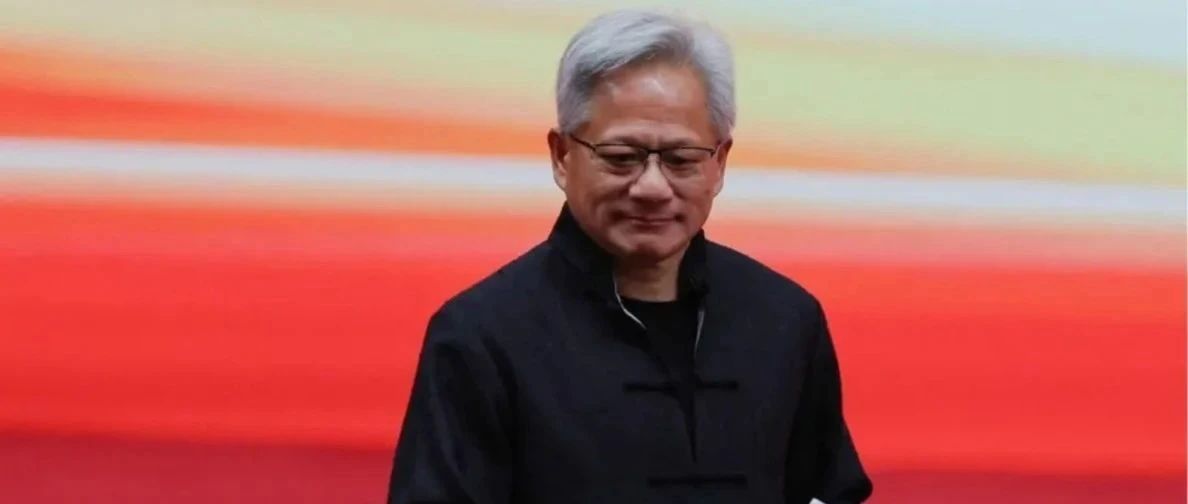
Core Viewpoint - Huang Renxun, the founder of Nvidia, has made significant strides in the tech industry, particularly in AI, and recently visited China to discuss the company's advancements and partnerships, highlighting the importance of the Chinese market for Nvidia's growth [4][13][24]. Group 1: Nvidia's Market Position and Products - Nvidia has regained export qualifications for its H20 chip, which had previously been banned, allowing it to supply Chinese tech companies again [5][13]. - The H20 chip, while not the best in Nvidia's lineup, is still considered "very good" and suitable for various applications, particularly in AI model training [14][16]. - Nvidia's Orin and Thor chips are expected to generate $5 billion annually, with a growing market as the company continues to dominate the high-end autonomous driving chip sector [10]. Group 2: AI Industry Trends - The AI sector is experiencing a talent acquisition frenzy, with companies like Meta investing heavily to build their AI capabilities, indicating a multi-trillion dollar industry potential [19][20]. - Huang Renxun believes that Meta's aggressive investment in AI is a wise decision, positioning the company as an "AI First" organization [20]. Group 3: Personal Insights from Huang Renxun - Despite Nvidia's market capitalization surpassing $4 trillion, Huang Renxun expresses a lack of personal ambition tied to wealth, focusing instead on the company's mission and contributions to technology [23][26]. - Huang Renxun emphasizes the importance of having enough resources to support family and pursue meaningful work, rather than being driven by financial success alone [26].


盛赞中国:黄仁勋为何嘴更甜了?
和讯· 2025-07-17 09:50
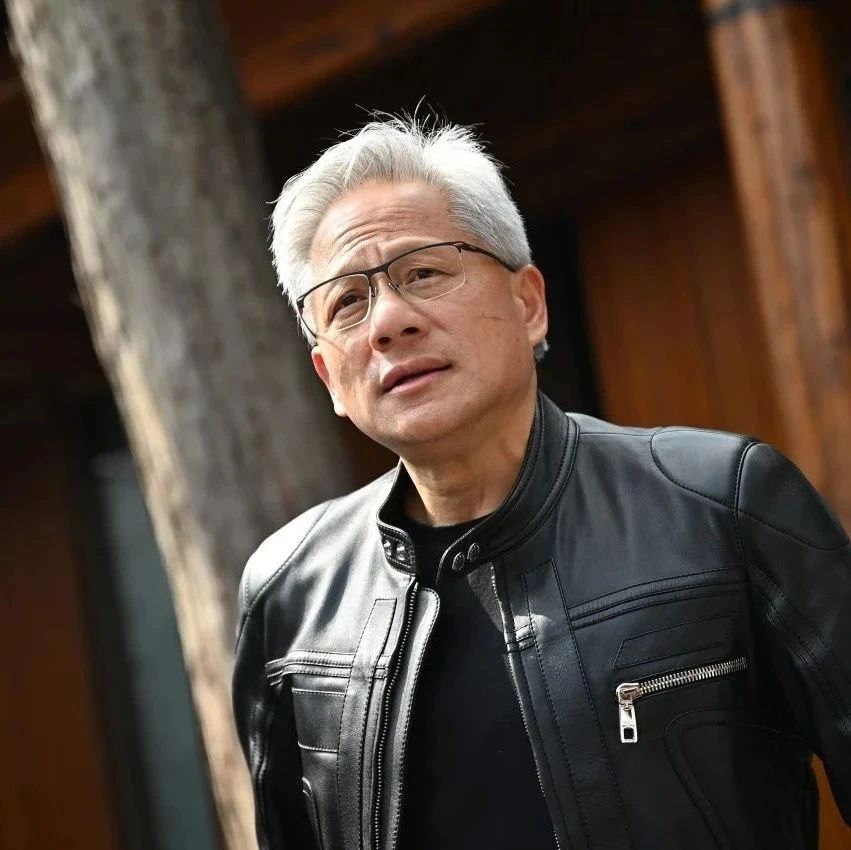
Core Viewpoint - The article highlights NVIDIA CEO Jensen Huang's recent visit to China, emphasizing the company's commitment to the Chinese market and the potential for collaboration in AI and technology sectors [1][2]. Group 1: NVIDIA's Engagement in China - Jensen Huang's visit marks his third trip to China this year, indicating a strong focus on the Chinese market [1]. - During his visit, Huang met with Xiaomi's founder Lei Jun, expressing admiration for Xiaomi's automotive technology and design [1]. - Huang emphasized the importance of U.S. companies establishing a presence in the Chinese market due to its vast and dynamic nature [1]. Group 2: AI and Technology Developments - Huang announced that NVIDIA has received U.S. government approval to sell the H20 chip to the Chinese market, which is designed specifically for AI applications [2][3]. - He highlighted the transformative role of AI across various industries, including healthcare and entertainment, and its integration into major Chinese platforms like Tencent and Alibaba [4]. - Huang noted that NVIDIA's technology has been pivotal in the development of the AI ecosystem globally, and he expressed optimism about future collaborations with Chinese companies [4]. Group 3: Competition and Market Dynamics - Huang acknowledged the competitive landscape with Chinese companies like Huawei, praising their technological advancements and capabilities in various fields [5]. - He pointed out that while NVIDIA has decades of experience, Huawei's rapid progress in a short time demonstrates its strength in the market [5]. - Huang believes that China is well-prepared for advancements in AI, with several models showing high efficiency and adaptability for various applications [6]. Group 4: Robotics and Manufacturing - Huang expressed optimism about China's robotics industry, citing the country's strong manufacturing base and capabilities in mechatronics [7]. - He highlighted the potential for robots to be integrated into various sectors, further enhancing China's technological landscape [7].
山科智能易主复牌:国资入主开启智慧水务新篇章
Xin Lang Zheng Quan· 2025-07-17 09:36
Core Viewpoint - The control change at Shankang Intelligent marks the entry of a leading company in the smart water industry into the state-owned capital era, with Hubei Changjiang Aerospace Investment acquiring a 19.7% stake for 571 million yuan [1] Business Overview - Shankang Intelligent has over 20 years of experience in the water information technology sector, establishing a comprehensive business matrix covering "smart water supply, smart sewage, smart water conservancy, and direct drinking water" [2] - Key products include: - Smart hardware: Full range of smart remote water meters and solutions [2] - IoT platform: Smart metering cloud platform, leakage control systems, and smart water plant platforms [2] - Smart water conservancy products: Digital twin applications and operational management matrices [2] - The company's water network control machine products have shown rapid growth rates of 33.99%, 20.52%, and 6.49% over the past three years, maintaining a gross margin around 60% [2] National Capital Empowerment - The smart water industry faces increasing financial pressure on local governments, with Shankang Intelligent's Q1 2025 revenue down 17.62% and net profit down 43.28% due to delayed project bidding [3] - The entry of state capital is timely, providing: - Resource synergy: Collaboration with Wuhan Aerospace New City for market expansion in Central China [3] - Policy benefits: Participation in "smart city + digital twin" projects in the New District of Wuhan [3] Market Outlook - Analysts suggest that with state capital involvement, the company may accelerate industry consolidation through acquisitions, particularly in emerging fields like smart water conservancy and digital twins [4] - The smart water service system market in China is projected to grow from 2.28 billion yuan in 2024 to 3.91 billion yuan by 2029, with a compound annual growth rate of 9.12% [4] - The integration of capital and industry may provide a new model for the intelligent upgrade of traditional manufacturing, with Shankang Intelligent poised for a new phase of value reassessment [4]
时空智能“解锁”山城新动能
Zhong Guo Zi Ran Zi Yuan Bao· 2025-07-17 08:29
Group 1: Core Concepts of Time-Space Intelligence - Time-space intelligence encompasses a wide range of fields from deep space to underwater, significantly altering human understanding and utilization of the world [1] - It is not only a technological innovation but also a crucial force driving industrial transformation and social development [1] Group 2: Time-Space Base Development - The construction of the time-space base is essential for urban digitalization and intelligence, evolving from a 1.0 version that created a three-dimensional real scene map to a 2.0 version utilizing high-precision laser radar for a comprehensive digital base [2] - The 1.0 version has established a three-dimensional real scene map covering 1,031 towns and streets in Chongqing, supporting 87 municipal departments and 70,000 road test cameras [2] - The 2.0 version integrates over 6,000 kilometers of roads and 11,000 buildings, providing high-quality time-space datasets necessary for artificial intelligence applications [2][3] Group 3: Time-Space Perception and Monitoring - Time-space perception combines various technologies such as satellite positioning and drones, creating a comprehensive monitoring network that enhances urban governance [4][5] - The monitoring network allows for rapid response to urban issues, with a processing time of under 30 minutes for incidents like illegal parking [5] - The system has improved urban governance efficiency by three times compared to traditional methods [5] Group 4: Industrial Empowerment through Time-Space Intelligence - Time-space intelligence serves as a "central brain" for industrial development, optimizing experiences in sectors like smart connected vehicles [7] - The establishment of a multimodal time-space knowledge base with millions of samples enhances applications in intelligent manufacturing, enabling real-time tracking and dynamic planning [7] - The technology supports the implementation of the "dual carbon" strategy by providing comprehensive monitoring and analysis capabilities for carbon emissions [8] Group 5: Future Directions and Innovations - Future efforts will focus on strengthening core technologies in time-space intelligence and promoting deep integration with various industries [9] - The aim is to create a collaborative innovation path for the time-space intelligence industry while ensuring information security [9]
数字孪生与工业互联网赋能工厂智能运维升级
Sou Hu Cai Jing· 2025-07-17 07:11
Core Insights - The integration of digital twin technology and industrial internet is revolutionizing factory operations and maintenance, shifting from passive response to proactive prevention, significantly enhancing operational efficiency and equipment reliability [1] Group 1: Real-time Monitoring and Predictive Maintenance - Real-time perception of equipment status is fundamental to intelligent maintenance, with sensors deployed on factory equipment continuously collecting operational parameters and transmitting them to digital twin systems [1] - Predictive maintenance is the core value of intelligent operations, with digital twin systems utilizing operational data and machine learning to accurately predict equipment failure times and locations [2] - A chemical plant's digital twin model improved fault detection rates to over 95% by enabling early identification of potential issues, thus preventing unplanned downtime [1] Group 2: Remote Operations and Collaborative Diagnosis - Remote operations and collaborative diagnosis eliminate spatial limitations, allowing experts to participate in maintenance diagnostics without being on-site [4] - A remote expert resolved a welding quality issue in a car manufacturing plant within 2 hours, a task that would typically take 1 day, by analyzing real-time data through the digital twin system [4] - This remote collaboration accelerates fault resolution and optimizes the sharing of technical resources across geographically dispersed factory clusters [4] Group 3: Spare Parts Management and Inventory Optimization - Spare parts management is enhanced through digital twin support, allowing for dynamic inventory management based on equipment failure patterns and maintenance history [4] - A mechanical processing plant's digital twin platform improved key spare parts inventory turnover by 40%, ensuring maintenance needs are met while reducing capital tied up in inventory [4] - The system also verifies spare parts compatibility before purchase, minimizing waste due to mismatched components [4] Group 4: Digital Reconstruction of Maintenance Processes - The digital reconstruction of maintenance processes through digital twin systems enhances overall efficiency by linking maintenance work orders, repair procedures, and equipment records to virtual models [5] - An electronic manufacturing plant achieved a 90% standardization rate in maintenance tasks, significantly reducing the processing time for maintenance work orders by 40% [5] - The accumulated maintenance data continuously optimizes the digital twin model's analytical capabilities, fostering a virtuous cycle of improved maintenance proficiency [5]
黄仁勋交流会全文:谈中美芯片、H20,夸雷军,赞华为 ,点名蔚小理
21世纪经济报道· 2025-07-17 01:00
Core Insights - Huang Renxun, CEO of Nvidia, emphasizes the importance of China's advanced supply chain and manufacturing capabilities for global AI hardware and smart factory development [4][9] - Nvidia's H20 chip has been reapproved for sale in China, which is expected to drive the launch of more Blackwell architecture products in the region [5] - China is recognized as a global leader in AI models, engineering talent, and industrial applications, with significant advancements in electric vehicles and AI technologies [6][35] Group 1 - Huang Renxun's visit to China reflects a strong interest in the country's technological ecosystem and supply chain [2][9] - The CEO praises Chinese companies like Xiaomi, NIO, and XPeng for their innovative contributions to the global automotive landscape [6][35] - Nvidia's strategy includes continuous investment in China to maintain growth and competitiveness in a rapidly evolving market [11][29] Group 2 - The CEO highlights the interconnectedness of global supply chains and the need for technological interoperability as key themes in industry evolution [2][4] - Nvidia's commitment to adapting to changing trade policies and maintaining relationships with global partners is emphasized [14][18] - The company acknowledges the competitive landscape in AI and the importance of respecting and learning from competitors [50][61] Group 3 - Huang Renxun discusses the significance of AI infrastructure and the potential for AI to transform traditional manufacturing processes [47][48] - The CEO outlines the four stages of AI development: perception, generation, reasoning, and robotics, indicating a shift towards reasoning AI [44][45] - Nvidia's focus on developing advanced AI systems and architectures is positioned as a response to increasing demand for computational power [42][64] Group 4 - The CEO expresses optimism about the future of AI and its role as a foundational technology across industries [51][64] - Nvidia's collaboration with various companies, including those in China, is aimed at fostering innovation and addressing market needs [41][55] - The company is committed to ensuring the safety and ethical use of AI technologies through ongoing research and development [67][68]