脑机接口

Search documents
爱朋医疗20260115
2026-01-16 02:53
Summary of Aipeng Medical Conference Call Company Overview - Aipeng Medical focuses on the commercialization of non-invasive brain-computer interfaces, particularly in intraoperative anesthesia monitoring, achieving over 10 million yuan in revenue. However, progress has been hindered by medical cost control measures, prompting the company to actively explore new applications [2][6]. Key Points and Arguments Revenue Projections - The company anticipates that new applications targeting treatment systems for refractory insomnia and multimodal ADHD could generate tens of millions of yuan in revenue by 2026, with 2027 potentially marking a turning point in performance, contingent on a solid commercialization foundation in hospitals [2][6]. Product Offerings and Market Penetration - Aipeng Medical's perioperative brain state monitoring product is available in approximately 20 provinces, charging around 300 yuan per session, and is not covered by medical insurance. Similar models are used for the refractory insomnia and pediatric ADHD treatment systems [2][7]. - The intraoperative anesthesia monitoring product has been adopted in over 100 hospitals, with a target of exceeding 200 by 2026. The refractory insomnia treatment system has partnered with two hospitals, while the pediatric ADHD treatment aims to cover the top 100 pediatric clinics in China [2][8]. Research and Development - A semi-invasive epilepsy warning product is in the prototype research phase, expected to have a prototype by the end of 2026 and enter animal clinical trials in 2027, collaborating with research institutions [2][9]. Strategic Partnerships - Aipeng Medical holds a stake in Ruishen An, a company focused on implantable neurostimulation devices, which has received 15 product certifications and is projected to exceed 100 million yuan in revenue by 2025, ranking among the top three to four in the domestic neurostimulation field [4][11]. Competitive Landscape - The company differentiates its strategy by focusing on pain, anesthesia, sleep, and attention disorders, contrasting with competitors that emphasize rehabilitation or motor imagery. Aipeng Medical plans to accumulate clinical validation through hospital channels before gradually promoting products to the consumer market [5][13]. - Non-invasive and semi-invasive brain-computer interface technologies each have their advantages. Non-invasive products are expected to commercialize rapidly within 2-3 years, while semi-invasive and fully implanted devices will become significant as technology advances and costs decrease [5][14]. Future Outlook - Aipeng Medical aims to enhance its stake in Ruishen An through share transfers, with expectations of results in the first half of the year, despite lengthy processes for state-owned capital exits [4][12]. - The company expects gradual recovery and stable growth in its pain management business by 2026, despite initial impacts from centralized procurement policies. The nasal care business faces challenges but is anticipated to rebound as the economy improves [15]. Additional Important Information - The company’s non-invasive products are currently not covered by medical insurance, which affects their market penetration and pricing strategy [7]. - Aipeng Medical's approach emphasizes building strong clinical data and partnerships with hospitals to establish a competitive edge in the medical field [14].

有“老基金”触发比例配售;医疗基金2026年业绩“开门红”
Mei Ri Jing Ji Xin Wen· 2026-01-16 01:37
Group 1 - On January 14, 2026, China Asset Management announced dividend distributions for 17 funds, including active equity, bonds, and passive index products, with the Jiashi Theme Selection fund having distributed over 10 billion yuan since its inception [1] - The China Europe Fund announced a proportionate allocation for its small-cap growth mixed fund, which exceeded its asset limit of 2 billion yuan, confirming a ratio of 47.84% for effective subscription applications as of January 12, 2026 [2] - Medical-themed funds have shown strong performance at the start of 2026, with several funds achieving returns significantly higher than their entire 2025 performance, such as the Galaxy Kang Le Mixed Fund with a 24% return in the first two weeks of the year [3] Group 2 - Public fund institutions have focused their research efforts on the technology sector, with 145 institutions participating in A-share company research, covering 154 stocks across 26 industries, with a total of 999 research instances [4] - The investment limit for non-direct channel subscriptions to the QDII fund managed by Pi Jinsong has been raised from 2,000 yuan to 20,000 yuan per day per account, reflecting a significant change in investment strategy [5] - On January 15, 2026, the three major indices showed mixed results, with the Shanghai Composite Index down 0.33% and the Shenzhen Component Index up 0.41%, while the total trading volume decreased by 1.04 trillion yuan compared to the previous trading day [6]
阿尔特曼的脑机接口初创公司Merge Labs完成2.5亿美元融资
Zheng Quan Shi Bao Wang· 2026-01-16 01:33
Core Insights - Merge Labs, founded by OpenAI CEO Altman, has completed a $250 million seed funding round with a valuation of $850 million [1] - OpenAI is the largest investor in this funding round and will collaborate with Merge Labs to develop scientific foundational models and advanced tools [1] Funding Details - The seed funding round raised a total of $250 million [1] - Merge Labs' valuation at the time of funding was $850 million [1] Company Vision - Merge Labs aims to utilize non-invasive methods, such as ultrasound, to transmit and receive information rather than invasive brain-machine technologies [1] - The collaboration with OpenAI is intended to "accelerate progress" in the development of innovative technologies [1]
三七互娱:游戏巨头+投资大鳄,长期投资价值凸显
Ge Long Hui· 2026-01-16 01:15
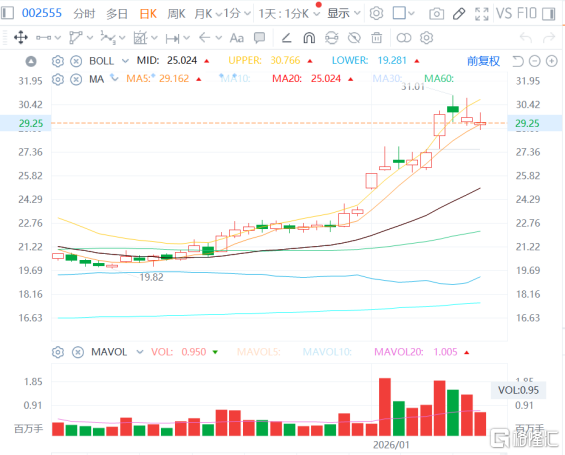
Core Viewpoint - The article highlights the strong performance of 37 Interactive Entertainment, driven by its strategic investments in AI and technology, positioning it as a leader in the gaming industry and beyond [1][2]. Group 1: AI and Gaming Sector - The rise of AI applications has made gaming one of the most mature fields for AI technology deployment, attracting significant investor interest and accelerating market trends [1]. - 37 Interactive Entertainment has developed its own AI model, "Xiao Qi," which has been widely applied across various business functions, enhancing its operational capabilities [1]. Group 2: Investment Strategy and Value Creation - 37 Interactive Entertainment has constructed a value logic that transcends traditional gaming companies through strategic technology investments, marking a critical moment for value realization [2]. - The company has invested in several promising firms, including Zhipu, Lijing Innovation, and Qiangnao Technology, which are gaining market attention and aligning with trends in AI, fruit supply chains, and brain-computer interfaces [2][6]. Group 3: Systematic Investment Approach - The company’s investment strategy is comprehensive, covering the entire value chain from foundational computing power to upper-level applications, which strengthens its market position [6]. - 37 Interactive Entertainment's investments span various sectors, including AI, quantum computing, and biomanufacturing, positioning it for future growth and innovation [6][7]. Group 4: Ecosystem Empowerment and Business Synergy - The company actively explores ecosystem empowerment, enhancing the development of its industrial ecosystem while reinforcing its business synergies [9][10]. - The investment in Qiangnao Technology exemplifies its strategy, as this company is a leading player in the brain-computer interface sector, promising significant collaborative opportunities [11][12]. Group 5: Long-term Growth and Value Reassessment - The strong performance of 37 Interactive Entertainment is not merely a short-term phenomenon but reflects the maturation of its investment ecosystem, leading to new growth paradigms and value reassessment [14]. - The company’s extensive user base and rich content offerings provide a fertile ground for innovative product development and market testing, fostering a robust partnership with its investments [14].


三七互娱:科技投资开花,构筑超越传统游戏公司的价值逻辑
Ge Long Hui· 2026-01-16 00:44
Core Viewpoint - The article highlights the strong performance of 37 Interactive Entertainment, driven by its strategic investments in AI and technology, positioning it as a leader in the gaming industry and beyond [1][2]. Group 1: AI and Gaming Sector - The rise of AI applications has made gaming one of the most mature fields for AI technology deployment, attracting significant investor interest and accelerating market trends [1]. - 37 Interactive Entertainment has developed its own AI model, "Xiao Qi," which has been widely applied across various business functions, enhancing its operational capabilities [1]. Group 2: Investment Strategy and Value Creation - 37 Interactive Entertainment has constructed a value logic that transcends traditional gaming companies through strategic technology investments, marking a critical moment for value realization [2]. - The company has invested in several promising firms, including Zhipu, Lijing Innovation, and Qiangnao Technology, which are gaining market attention and aligning with trends in AI, fruit supply chains, and brain-computer interfaces [2][6]. Group 3: Systematic Investment Approach - The company has a broad investment portfolio that spans from foundational computing power to upper-level applications, creating a comprehensive industry chain [6]. - Its investments cover various sectors, including AI, semiconductors, and quantum computing, establishing a robust infrastructure for future growth [6][7]. Group 4: Ecosystem Empowerment and Business Synergy - 37 Interactive Entertainment's investment narrative emphasizes not only precise positioning in core technology sectors but also the exploration of ecosystem empowerment to drive industry development [9]. - The investment in Qiangnao Technology exemplifies the company's strategy, aiming to leverage brain-computer interface technology in entertainment and education, fostering significant business synergies [11][13]. Group 5: Long-term Growth and Value Reassessment - The strong performance of 37 Interactive Entertainment is not merely a short-term phenomenon but reflects the maturation of its investment ecosystem, leading to new growth paradigms and value reassessment opportunities [14]. - The company's extensive user base and rich content will provide practical scenarios for testing and developing innovative products and services, reinforcing its position in the evolving landscape of the entertainment industry [14].
侯喜保:实体经济“大树”根深叶茂
Jing Ji Ri Bao· 2026-01-16 00:05
Core Viewpoint - The "14th Five-Year Plan" emphasizes the importance of consolidating and strengthening the foundation of the real economy as a strategic task, highlighting its critical role in China's modernization efforts [1]. Group 1: Modern Industrial System - Building a modern industrial system is a strategic choice to strengthen the foundation of the real economy and is essential for promoting high-quality development [2]. - The focus should be on intelligent, green, and integrated development, promoting deep integration of technological and industrial innovation [2]. - Traditional industries need optimization and enhancement, while emerging industries should focus on cultivation and growth in sectors like new energy and aerospace [2]. Group 2: Manufacturing Sector - The manufacturing sector is fundamental to national strength and the core of the modern industrial system, with China's manufacturing value added accounting for nearly 30% of the global total [3]. - China has maintained its position as the world's largest manufacturer for 15 consecutive years, producing the majority of 504 major industrial products globally [3]. - The goal is to strengthen and optimize the manufacturing sector, ensuring it remains a backbone of the modern industrial system [3]. Group 3: Service Industry - The modern service industry is a crucial support for the modern industrial system, but it faces structural and systemic challenges [3]. - There is a need to promote high-quality development in the service sector, enhancing the integration of productive services with manufacturing [3]. - The focus should be on improving the quality and diversity of life services while advancing the digitalization of the service industry [3]. Group 4: Infrastructure Development - Infrastructure is essential for industrial development and must be optimized to support the real economy [4]. - A modern infrastructure system should leverage China's large market and existing facilities, focusing on new infrastructure construction and the digital transformation of traditional infrastructure [4]. - The goal is to enhance the resilience and adaptability of infrastructure to support China's modernization efforts [4].
中信建投:集采规则进一步优化,看好器械板块中长期投资机会
Ge Long Hui· 2026-01-16 00:00
Group 1 - The core viewpoint of the article highlights that the medical device sector is experiencing a performance turning point due to the optimization of procurement policies, continuous improvement in equipment bidding data, and a gradual decrease in channel inventory [1] - The high-value consumables segment is expected to see valuation and performance recovery under the backdrop of ongoing optimization of procurement policies [1] - There is optimism regarding the international expansion of domestic medical device companies, which are anticipated to undergo valuation reshaping due to their long-term growth potential in international markets [1] Group 2 - The article emphasizes investment opportunities in technological innovation within the medical device sector, particularly in areas such as AI in healthcare, brain-computer interfaces, surgical robots, and exoskeleton robots, which are expected to attract investor attention [1]

中信建投:集采规则进一步优化 看好器械板块中长期投资机会
智通财经网· 2026-01-15 23:55
Core Viewpoint - The medical device sector is experiencing a performance turning point due to optimized procurement policies, improved bidding data, and decreasing channel inventory, particularly in the high-value consumables segment, which is expected to see valuation and performance recovery [1][7]. Group 1: Procurement Policy Updates - The sixth batch of national high-value medical consumables procurement was opened on January 13, with 12 types of consumables included, resulting in 440 products from 202 companies being selected out of 496 bids from 227 companies [2][3]. - The procurement process aims to ensure clinical continuity and quality by grouping products based on demand and supply capabilities, allowing for more competitive pricing strategies [4][6]. - Special product functionalities are considered in the procurement process, allowing for differentiated pricing based on clinical value and innovation [5]. Group 2: Market Outlook - The high-value consumables segment is expected to see a performance turning point by 2026, particularly in areas like electrophysiology, peripheral intervention, urology, and cardiovascular intervention, as the effects of procurement policies take hold [7]. - There is optimism regarding the international expansion of domestic medical device companies, with expectations that international business will surpass domestic growth, leading to valuation re-evaluation for companies with significant overseas operations [1][7]. - Investment opportunities in technological innovation within the medical device sector are anticipated, with emerging areas such as AI healthcare, brain-computer interfaces, surgical robots, and exoskeleton robots likely to attract investor attention [1][7].
方正证券:A股与美股ROE长期对比分析与启示
智通财经网· 2026-01-15 22:46
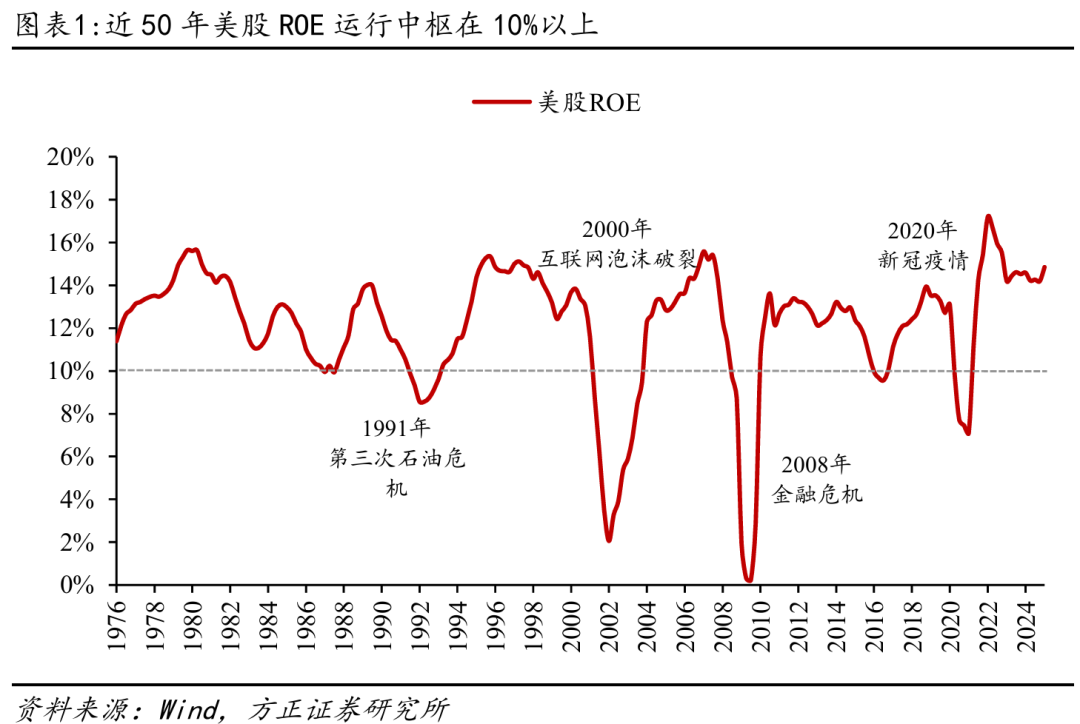
Group 1 - The core conclusion of the report is that there is a relative misalignment in ROE levels between A-shares and US stocks, with US stocks at historical highs and A-shares recovering from a bottom [2][12] - The primary reasons for the ROE misalignment are the divergence in net profit margins and asset turnover rates between A-shares and US stocks [2][17] Group 2 - Net profit margin is identified as the most critical factor influencing the strong ROE in US stocks, with A-shares experiencing a gradual decline in net profit margins [3][20] - A-shares' net profit margin decreased from 5.8% to 3.9%, a change rate of -32.2%, while US stocks' net profit margin increased from 7.3% to 8.6%, a change rate of +17.7% [20][22] - The asset turnover rate for A-shares has also declined significantly, from 87% to 60%, while US stocks' turnover rate remained relatively stable [20][43] Group 3 - The leverage ratio for US stocks is significantly higher than that of A-shares, with US stocks maintaining a stable leverage ratio around 460% [5][56] - A-shares' leverage ratio is expected to rise slowly but will remain significantly lower than that of US stocks due to different corporate financing strategies [59][60] Group 4 - The report emphasizes that the long-term trend of A-shares' ROE will improve, driven by the "14th Five-Year Plan" which aims for high-quality development and increased corporate profitability [6][62] - The focus on technological innovation and the establishment of a unified national market are expected to enhance the profitability of A-share companies, leading to a systematic improvement in ROE [62][64]

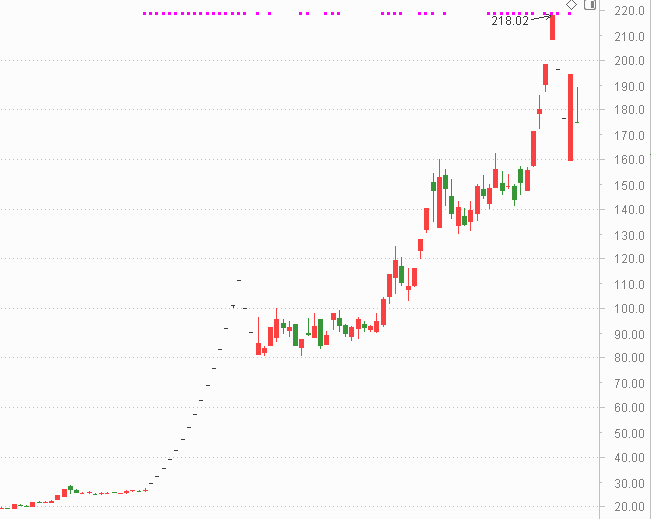
5家“热门概念”公司被警示或立案调查,16倍大牛股天普股份位列其中
Mei Ri Jing Ji Xin Wen· 2026-01-15 22:44
Core Viewpoint - The recent surge in A-share market activity has led to regulatory scrutiny of five companies involved in popular concepts such as commercial aerospace, brain-computer interfaces, and artificial intelligence due to issues with information disclosure and risk warnings [1][4]. Group 1: Companies Under Scrutiny - Five companies, including Hangxiao Steel Structure, Electric Science Digital, Yahui Long, Yingjixin, and Tianpu Co., have received warning letters or are under investigation for misleading disclosures related to trending market concepts [1][4]. - Tianpu Co. experienced a significant stock price increase of 16 times by 2025, raising concerns about its disclosure practices [1]. Group 2: Historical Disclosure Issues - Several of the companies have a history of disclosure problems, with Hangxiao Steel Structure previously involved in a major insider trading case, and Yahui Long facing issues during its IPO phase [3][14]. - Electric Science Digital has seen a decline in its information disclosure rating, dropping from A to B over the past two years, indicating a long-term downward trend in disclosure quality [17]. Group 3: Regulatory Actions and Responses - The Shanghai Stock Exchange has criticized these companies for failing to provide accurate and complete information regarding their projects and potential risks, which could mislead investors [5][6][10]. - Each company has been warned or penalized for inadequate risk disclosures, with specific instances noted for Hangxiao Steel Structure and Electric Science Digital regarding their project details and sales impact [5][6][10]. Group 4: Market Reactions and Investor Interaction - The companies have shown varying levels of engagement with investors on the Shanghai Stock Exchange's E-interaction platform, with Electric Science Digital having the highest response frequency [15][18]. - The average response time for investor inquiries varies significantly among the companies, with some taking as long as 13 days to respond [15][18]. Group 5: Impact of Market Trends - The current market environment, characterized by a strong interest in sectors like commercial aerospace and AI, has led to increased scrutiny of companies attempting to capitalize on these trends without adequate disclosures [5][11]. - Regulatory experts emphasize the importance of adhering to core principles of transparency and accuracy in information disclosure to protect investor interests [12][13].