
数字孪生

Search documents
第三届链博会火热进行;特斯拉官宣Model Y L|南财早新闻
2 1 Shi Ji Jing Ji Bao Dao· 2025-07-16 23:44
Company Developments - JD.com will invest 2 billion to upgrade benefits for full-time delivery riders, with over 150,000 full-time riders as of the end of Q2. The company has also started to upgrade its compensation service from "timely compensation" to a new service called "准时宝" since around July 11 [6] - The ice cream brand "钟薛高" has been applied for bankruptcy due to its inability to repay debts, leading to a court suspension of execution and transfer of the case for bankruptcy review [6] - Tesla's new model, Model Y L, has appeared in the latest vehicle public directory from the Ministry of Industry and Information Technology, estimated to be priced around 400,000 yuan and expected to launch in Q3 [6] - Pinming Technology expects a net profit of 28 million to 34 million, representing a year-on-year growth of 231.79% to 302.89% [6] - Tuoxin Pharmaceutical plans to increase capital by 10 million yuan in a biotechnology company that has achieved high-purity ergotamine production [6] Investment News - China Securities Depository and Clearing Corporation reported that 12.74 million new investors were added in 2024, a year-on-year increase of over 5%, indicating an average of over 1 million new investors entering the market each month [4] - Over 130 funds have announced liquidation this year, continuing the trend of "normalization of liquidation" seen in the past two years, affecting popular thematic funds in sectors like dividends and pharmaceuticals [4] - On Wednesday, A-shares experienced fluctuations with the lithium mining index declining and circuit board concept stocks dropping, while pharmaceutical and robotics concept stocks were active. The Shanghai Composite Index closed down 0.03% at 3,503.78 points [4] - The Hong Kong Hang Seng Index fell 0.29% to 24,517.76 points, with the Hang Seng Technology Index down 0.24%. The market saw a turnover of 259 billion HKD, with net buying from southbound funds amounting to 1.603 billion HKD [4]

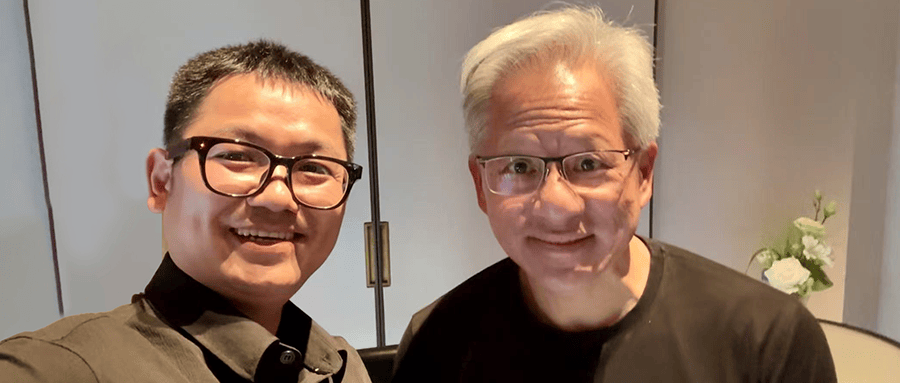
与黄仁勋北京对谈90分钟:54问无所不谈,夸雷军,赞华为,点名蔚小理
Sou Hu Cai Jing· 2025-07-16 16:35
Core Insights - Huang Renxun, the founder and CEO of NVIDIA, emphasized the importance of the Chinese market, noting it as the second-largest technology market globally with rapid growth [5][18] - NVIDIA's H20 GPU has been reintroduced to the Chinese market, although rebuilding the supply chain will take time [6][38] - Huang highlighted the advanced level of computer science and AI talent in China, stating that about 50% of AI researchers globally are based in China [5][31] Group 1 - Huang Renxun's visit to China this year was motivated by invitations, reflecting the significance of the Chinese market for NVIDIA [5][6] - The RTX PRO product is designed for digital twin applications, which aligns well with China's advancements in robotics and smart factories [20][30] - Huang expressed optimism about the collaboration with Chinese companies, citing a long history of partnerships with major firms like Tencent and Alibaba [11][18] Group 2 - Huang acknowledged the challenges posed by global trade policies and tariffs, stating that NVIDIA must adapt to these changes [6][16] - The company is committed to investing in the Chinese market to keep pace with competitors who are also increasing their investments [17][18] - Huang praised the innovation and craftsmanship present in China, indicating that NVIDIA's products are powering many innovative Chinese enterprises [6][19] Group 3 - Huang noted that the education system in China has produced a significant number of top AI researchers, contributing to the country's strong position in AI development [5][31] - He mentioned the importance of open-source AI models like DeepSeek, which have gained global traction and are being utilized across various industries [63][42] - Huang emphasized the need for companies to focus on creating valuable products and technologies that can impact the world positively [16][70]

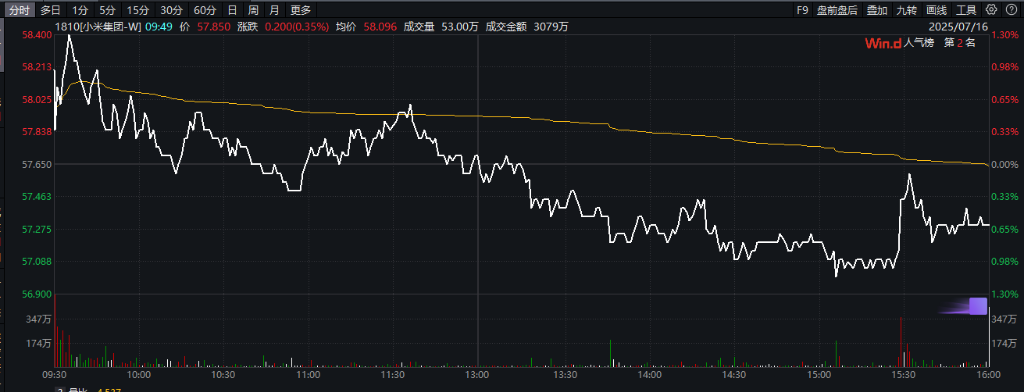
黄仁勋:我很想买一辆小米汽车,英伟达在很多方面与小米有紧密合作
Hua Er Jie Jian Wen· 2025-07-16 12:29
Core Viewpoint - Huang Renxun, the founder and CEO of Nvidia, expressed high praise for Lei Jun and Xiaomi, emphasizing their remarkable achievements and the strong collaboration between Nvidia and Xiaomi in various fields [1][2][5]. Group 1: Praise for Xiaomi and Lei Jun - Huang Renxun recognized Lei Jun's potential from their first meeting, stating that he always believed Lei would achieve extraordinary success [2]. - He described Xiaomi's growth as a "miracle," highlighting its strong competitiveness in the smartphone sector and successful expansion into electric vehicles and other product categories [2]. - Huang noted the impressive range of high-quality products that Xiaomi has developed, attributing this success to Lei Jun's unique leadership [3]. Group 2: Collaboration and AI Development - Huang confirmed that Nvidia maintains close cooperation with Xiaomi across multiple areas, indicating significant synergy between Nvidia's AI chip technology and Xiaomi's smart hardware ecosystem [5]. - He praised the rapid advancement of AI in China, citing numerous world-class achievements in AI models, including DeepSeek and Kimi K2, which have surpassed some international benchmarks [6]. - Huang emphasized that AI is becoming a foundational infrastructure, comparable to electricity and the internet, and is driving a new industrial revolution, particularly in manufacturing and consumer technology [7]. Group 3: Future Outlook and Investment - Huang mentioned that hundreds of "digital twin" projects in China are utilizing Nvidia's Omniverse platform to optimize factory construction and train robots, predicting a future where AI-driven human-machine collaboration will dominate manufacturing [7]. - He indicated that Nvidia plans to increase investments in China and deepen collaborations with local companies, despite geopolitical complexities [10]. - Huang announced that the U.S. has approved the sale of the H20 chip to China, and Nvidia will soon launch a new graphics card named RTX Pro [12].

黄仁勋带H20重返中国市场 难改国产替代大势
Zhong Guo Jing Ying Bao· 2025-07-16 12:17
Core Viewpoint - Huang Renxun, founder and CEO of Nvidia, emphasizes the rapid innovation in AI driven by Chinese developers and entrepreneurs, highlighting the importance of open-source AI as a catalyst for global progress [1][2]. Group 1: Nvidia's Market Strategy - Nvidia's H20 chip has received approval for export to China, with Huang expressing optimism about shipping soon and noting existing orders [2][3]. - The RTX PRO series GPU is designed for computer graphics, digital twins, and AI applications, indicating Nvidia's focus on enhancing its product offerings in the Chinese market [2][3]. - The return of the H20 chip is expected to meet the deployment needs of AI applications in China, particularly among large cloud service providers [4]. Group 2: Industry Insights - The AI landscape in China is characterized by a significant number of developers, with over 1 million engaged in AI innovation, contributing to global AI development [1]. - The next wave of AI innovation is anticipated to involve robotic systems capable of reasoning and executing tasks, transforming factory operations over the next decade [2]. - Despite the return of Nvidia's H20 chip, many companies are likely to continue using domestic chips due to ongoing limitations in high-end GPUs [4].
黄仁勋点赞中国AI 英伟达H20芯片重启在华销售
Jing Ji Guan Cha Bao· 2025-07-16 10:24
Core Viewpoint - Huang Renxun, CEO of Nvidia, highlighted the rapid innovation capabilities of China's AI industry and its role in driving global AI development during his speech at the China International Supply Chain Promotion Expo [1][2]. Group 1: AI Industry Development - AI is transforming every industry, including scientific research, healthcare, energy development, transportation, and logistics management [1]. - Major Chinese platforms like Tencent, Alibaba, ByteDance, Xiaomi, and Baidu are leveraging AI to enhance their services and products [1][2]. - Nvidia's GPUs have been pivotal in the AI revolution, transitioning from CPU-based software to GPU-based machine learning [2]. Group 2: Future Predictions - Huang predicts that the next wave of AI will involve robotic systems, with factories being driven by software and AI, coordinating human-robot collaboration [3]. - AI is expected to become central to every industry, enterprise, product, and service in the coming decade [3]. Group 3: Market Insights - The Chinese market is crucial for American companies, with Huang noting that it is home to 50% of the world's AI researchers [3]. - Nvidia has received approval to resume sales of its H20 chips in China, with many orders already placed [3].
瑞纳智能(301129) - 301129瑞纳智能投资者关系管理信息20250716
2025-07-16 09:36
Group 1: Industry Trends - The future of the smart heating industry will see significant improvements in intelligence levels, characterized by the deployment of smart sensors for comprehensive digital perception and real-time monitoring of multiple parameters [1] - AI technology will enable autonomous operational decision-making, allowing for precise forecasting of heating loads and reducing manual intervention [1] - The integration of renewable energy sources will create a multi-energy complementary system, enhancing energy efficiency and sustainability [1] Group 2: Company Strategy - The company is currently focused on deepening its presence in the domestic market, optimizing resource allocation, and enhancing technical adaptability to maintain its industry-leading position [3] - The company aims to leverage its established relationships with existing customers to upgrade services and explore revenue opportunities while expanding market share in regions like North China and Northwest China [5] Group 3: Market Potential - The domestic smart heating equipment renovation market is vast, driven by the urgent need for energy conservation and efficiency improvements, with significant demand for upgrading old heating systems [4] - The company has developed a comprehensive low-carbon smart heating solution, combining hardware and software to address energy efficiency and control challenges in heating systems [4] Group 4: Future Growth Drivers - Future profit growth will be supported by high R&D investment focused on enhancing heating system efficiency and launching competitive new products, such as the 100kW magnetic levitation heat pump [5] - The demand for equipment updates is driven by government policies promoting green transitions, aging infrastructure, and the need for precise temperature control by users [6][7]
黄仁勋最新演讲(全文)
财联社· 2025-07-16 07:58
Core Viewpoint - NVIDIA is positioned as a driving force behind the global AI ecosystem, showcasing its significant contributions to various industries and its collaboration with leading Chinese companies [3][4]. Group 1: Company Overview - NVIDIA was founded in 1993 with a vision to revolutionize PC gaming through 3D graphics technology, becoming a key player in the gaming industry [1]. - The company developed the first programmable graphics processing unit (GPU) in 1999, paving the way for accelerated computing [2]. - The introduction of CUDA technology in 2006 transformed GPUs into general-purpose computing engines, laying the groundwork for the AI era [2]. Group 2: AI Development and Impact - The success of AlexNet on NVIDIA GPUs ten years ago triggered an explosive growth in artificial intelligence [2]. - NVIDIA has expanded AI computing applications significantly, achieving a performance increase of 100,000 times, which is 1,000 times faster than Moore's Law [2]. - AI is transforming every industry, including scientific research, healthcare, energy development, transportation, and logistics [4]. Group 3: Collaboration with Chinese Companies - AI powers major Chinese platforms such as Tencent WeChat, Alibaba Taobao, and ByteDance Douyin, enhancing their capabilities [5]. - Over 1.5 million developers in China are utilizing NVIDIA's platform to bring their innovations to life [6]. - Chinese-developed open-source AI models like DeepSeek and Baidu Ernie Bot are contributing to the rapid advancement of global AI [6]. Group 4: Future of AI and Robotics - AI is reshaping supply chains and changing production and logistics methods, with hundreds of projects using NVIDIA Omniverse for digital twin simulations [7]. - The next wave of AI will involve robotic systems capable of reasoning and executing tasks, leading to AI-driven factories and human-robot collaboration [7].

英伟达CEO黄仁勋:中国的计算机科学是“世界级的”,尤其是软件能力。新款芯片RTX Pro适用于一款名为英伟达Omniverse的新应用,该应用可用于数字孪生、智能工厂领域。
news flash· 2025-07-16 07:35
Group 1 - The CEO of Nvidia, Jensen Huang, stated that China's computer science is "world-class," particularly in software capabilities [1] - The new chip, RTX Pro, is designed for a new application called Nvidia Omniverse, which is applicable in digital twin and smart factory sectors [1]
英伟达CEO黄仁勋:新芯片RTX pro是为一个名为Nvidia Omniverse的新应用而设计的,用于数字孪生,智能工厂
news flash· 2025-07-16 07:35
Group 1 - The core point of the article is that Nvidia's CEO Jensen Huang announced the new RTX Pro chip, which is designed for a new application called Nvidia Omniverse, aimed at digital twins and smart factories [1] Group 2 - The RTX Pro chip is specifically tailored for enhancing capabilities in digital twin technology, which allows for the creation of virtual replicas of physical systems [1] - Nvidia Omniverse is positioned as a platform that integrates various tools and technologies to facilitate collaboration in 3D design and simulation [1] - The focus on smart factories indicates a strategic move by Nvidia to tap into the growing demand for automation and digital transformation in manufacturing [1]
见顶信号?险资巨头减持银行
Jin Shi Shu Ju· 2025-07-16 07:31
大金融板块调整,保险巨头集体走低,新华保险跌2%。 42只银行股中,仅4只飘红、3只持平,其余全部下跌,厦门银行、齐鲁银行、渝农商行、贵阳银行等跌幅居前。 昨日晚间,杭州银行发布股东减持公告称,中国人寿将在未来三个月内减持5078.94万股杭州银行股份,原因是"自身资产配置需要"。 这一动作,被市场视为"银行股见顶"的信号。 1保险巨头减持银行 保险巨头宣布再次减持杭州银行。 杭州银行发布公告,中国人寿保险股份有限公司拟通过集中竞价或大宗交易方式,在未来三个月内减持其持有的5078.94万股杭州银行股份。 (本文内容均为客观数据信息罗列,不构成任何投资建议) 若本次全部减持完成,意味着中国人寿将清仓,不再持有杭州银行股份。 公开信息,中国人寿是杭州银行于2009年引进的险资财务投资者,其在2014年通过协议受让方式两次增持了杭州银行,合计出资约16.35亿元。 这并非中国人寿第一次减持杭州银行。 此前,中国人寿在二级市场三次适时减持了所持杭州银行股份,减持金额合计30.42亿元。 2021年,中国人寿首次减持杭州银行股份5589.43万股,减持总金额为8.43亿元;2023年,中国人寿再减持1.19亿股,减持 ...
