现代化产业体系

Search documents
市委常委会(扩大)会议举行:牢记习近平总书记殷殷嘱托,全力打造“五个中心”,努力建设现代化大武汉,盛阅春主持并讲话
Chang Jiang Ri Bao· 2025-11-10 13:18
Core Viewpoint - The meeting emphasized the importance of implementing Xi Jinping's important speech during his visit to Hubei in November 2023, focusing on accelerating the construction of a modern Wuhan and establishing "five centers" to lead high-quality development in the province [2][3]. Group 1: Implementation of Xi Jinping's Speech - The meeting highlighted that the city has been actively aligning its actions with Xi Jinping's directives, focusing on innovation, reform, urban-rural integration, and cultural tourism, resulting in a significant boost in morale and commitment among officials and citizens [2][3]. - Achievements over the past year were attributed to the guidance of Xi Jinping's leadership and the scientific direction provided by Xi Jinping's Thought on Socialism with Chinese Characteristics for a New Era [2]. Group 2: Development Goals and Strategies - The meeting outlined the goal of building "five centers" and a modern Wuhan as a concrete action to fulfill Xi Jinping's expectations and as a key strategy for provincial development over the next five years [3][4]. - Specific action plans, evaluation indicators, and major projects are to be developed to support the construction of these centers and ensure high-quality development [3]. Group 3: Economic and Urban Development - The meeting stressed the need to transform urban development methods to drive economic growth, focusing on high-quality urban renewal and enhancing city functions [4]. - The establishment of a nationally influential technology innovation center and the integration of technological and industrial innovation were identified as critical for fostering new productive forces [4]. Group 4: Community and Project Development - Emphasis was placed on grassroots engagement and project development, encouraging a competitive atmosphere to stimulate entrepreneurial spirit and attract significant projects [4]. - The meeting called for a comprehensive approach to reform, aiming to enhance societal dynamism and innovation [4]. Group 5: Planning and Future Outlook - The meeting underscored the importance of high-level planning to guide high-quality development, with a focus on achieving the economic and social development goals for the current year and setting a strong foundation for the next five-year plan [5].
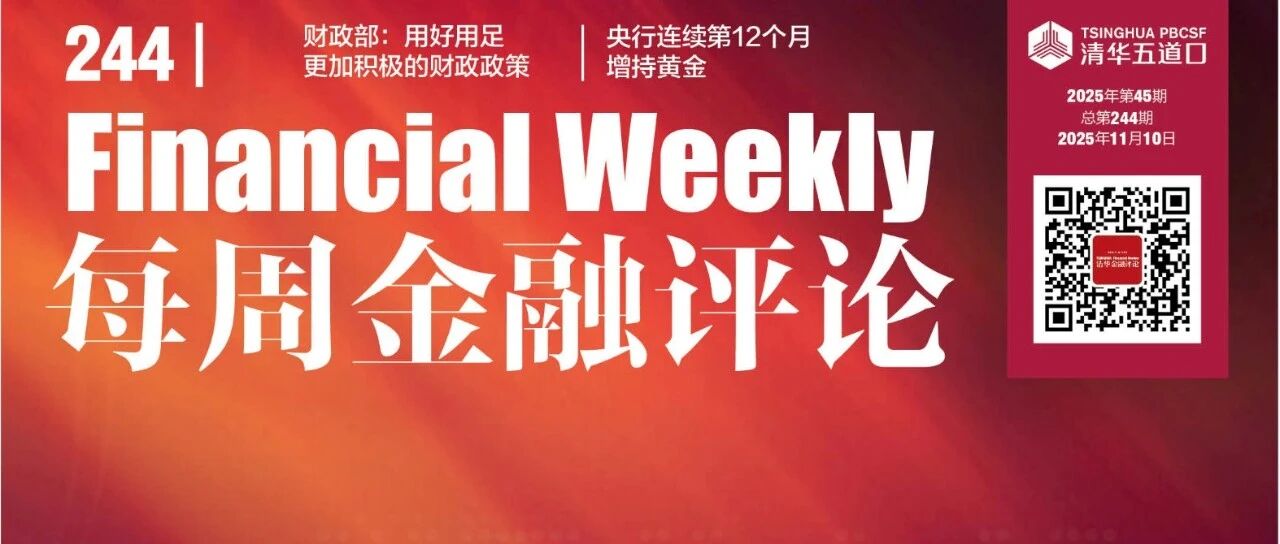
财政部:用好用足更加积极的财政政策;央行连续第12个月增持黄金|每周金融评论(2025.11.3-2025.11.9)
清华金融评论· 2025-11-10 10:06
si TSINGHUA Financial Review 清华金融评论 244 | | 央行连续第12个月 财政部:用好用足 更加积极的财政政策 Financial Weekly 每周金融评论 2025年11日10日 .. Financial Weekly 每周金融评论 | 目录 CONTENTS 国家外汇管理局数据显示,截至10月末中国官方黄金储备为7409万盎司,较上月末增加3万盎司,增幅降至2024年11月恢复增持 以来的最低水平。目前,中国央行已连续12个月增持黄金。 热点聚焦 FOCUS ◎ 央行连续第12个月增持黄金 重大会议 MEETINGS ◎ 何立峰:"十五五"规划建议为香港描绘了更加美好的未来 重大政策 POLICIES ◎ 证监会、财政部联合发布《 证券结算风险基金管理办法》 重大事件 EVENTS ◎ 财政部:用好用足更加积极的财政政策 ◎ 财政部在香港成功发行美元主权债券 重要数字 DATA ◎ 10月CPl同比转涨 PPI环比年内首次上涨 ◎ 2025年10日未、我国外汇储备和模为3.34.33亿美元 热点 聚焦 央行连续第12个月增持黄金 01 《清华金融评论》观察 我国央行连续 ...

把农业建成现代化大产业丨市委书记抓乡村振兴(2025.11.03-11.09)
Nan Fang Nong Cun Bao· 2025-11-10 10:04
Group 1 - The article emphasizes the integration of agriculture with cultural and tourism sectors to create a modern industrial system [11][16][18] - Various city leaders are promoting local特色资源 and特色产业 to enhance economic development and improve living standards for farmers [21][23][34] - The focus is on developing new business models such as ecological tourism and cultural experiences to attract more visitors and boost local economies [15][39][41] Group 2 - The article highlights the importance of reducing bureaucratic burdens on local governments to allow them to focus on key development tasks [48][50] - There is a strong emphasis on environmental sustainability, with initiatives aimed at improving water quality and enhancing green spaces [28][30][36] - The collaboration between local governments and enterprises is crucial for advancing strategic projects and achieving mutual benefits [43][56]

工信部:将遴选一批标志性、创新性、适用性强的新技术新产品
Zhong Guo Xin Wen Wang· 2025-11-10 09:16
Core Viewpoint - The Ministry of Industry and Information Technology (MIIT) aims to select a batch of emblematic, innovative, and highly applicable new technologies and products to promote large-scale application in manufacturing, enhancing the integration of technological and industrial innovation, and accelerating the transformation of scientific achievements into practical applications [1][3]. Group 1: New Technology Promotion - MIIT has selected a first batch of 111 advanced applicable technologies to encourage promotion by industry associations and professional institutions [1][2]. - Since 2024, MIIT, in collaboration with the Ministry of Finance, has initiated two batches of pilot projects for new-type technology transformation in manufacturing across 46 cities, focusing on the promotion of digital intelligence and green technologies [1][2]. Group 2: New Product Implementation - The implementation of insurance compensation policies for major technical equipment and new materials has supported the large-scale application of breakthrough products in sectors such as electronics manufacturing, mineral metallurgy, petrochemicals, rail transportation, and shipbuilding [2]. - Since 2015, a total of 2,975 insurance compensation policies have been supported, with allocated funds amounting to 13.57 billion yuan, providing strong backing for the initial application of major technical equipment and key new materials [2]. Group 3: New Scenario Application - MIIT has launched pilot projects for the large-scale application of Beidou in the industrial and information sectors and for intelligent connected vehicles, guiding local governments to establish 63 provincial-level future industry pilot zones [2]. - Over 100 typical application cases have been promoted in areas such as artificial intelligence and advanced computing, fostering thousands of excellent intelligent manufacturing scenarios to drive larger-scale application [2][3]. Group 4: Future Directions - MIIT plans to deepen the implementation of the spirit of the 20th National Congress and subsequent plenary sessions, focusing on large-scale application demonstration actions for new technologies, products, and scenarios [3]. - The ministry will enhance collaboration with relevant departments to innovate scenarios, facilitate open sharing, and connect supply and demand, aiming to cultivate a batch of innovative scenario promotion institutions and organize a series of supply-demand matching activities [3].
隐债化解防范有新变化:政策周观察第54期
Huachuang Securities· 2025-11-10 09:04
Group 1: Policy Developments - The establishment of a new "Debt Management Department" by the Ministry of Finance aims to enhance monitoring and regulation of government debt, particularly to mitigate hidden debt risks[2] - The Ministry of Finance's report on fiscal policy execution for the first half of 2025 emphasizes a commitment to not increase hidden debt as a strict discipline, with accountability measures for violations[2] - The central bank resumed trading of government bonds on November 4, with a net liquidity injection of 20 billion yuan in October[3] Group 2: Economic Initiatives - The upcoming full closure of Hainan Free Trade Port on December 18 is highlighted as a significant step in expanding China's high-level opening-up strategy[7] - The government is focusing on enhancing the digital economy, artificial intelligence, and clean energy sectors as part of new economic application scenarios[12] - The Ministry of Commerce announced adjustments to tariffs on U.S. imports, indicating a shift in trade relations following the recent U.S.-China summit[3] Group 3: Risk Management - The government is implementing a comprehensive debt replacement policy while strictly addressing any new hidden debt behaviors as they arise[13] - There is a strong emphasis on maintaining a balance between development and security in the context of expanding openness, with a focus on risk identification and prevention[7]
工业和信息化部规划司姚珺:将遴选一批标志性、创新性、适用性强的新技术新产品
Zheng Quan Shi Bao Wang· 2025-11-10 07:40
Core Viewpoint - The Ministry of Industry and Information Technology (MIIT) aims to enhance collaboration with relevant departments to promote scenario innovation, open sharing, and supply-demand matching, thereby supporting new industrialization and the development of a modern industrial system [1] Group 1: Policy Initiatives - MIIT will focus on selecting a batch of emblematic, innovative, and highly applicable new technologies and products [1] - The ministry plans to explore and develop a range of high-potential, high-efficiency, and high-value new scenarios [1] - There will be efforts to cultivate institutions that promote scenario innovation and organize a series of supply-demand matching activities [1] Group 2: Strategic Goals - The initiative aims to create a supply-demand matching platform that drives technological iteration and industrial upgrading [1] - The overall goal is to provide strong support for advancing new industrialization and developing new quality productivity [1] - The strategy is aligned with the construction of a modern industrial system [1]
以全面深化改革开放推动高质量发展——习近平总书记在广东考察时的重要讲话引发热烈反响
Yang Guang Wang· 2025-11-10 07:17
Group 1 - Xi Jinping's visit to Guangdong emphasizes the importance of implementing the spirit of the 20th Central Committee, focusing on high-quality development and comprehensive reform [1][2] - The development of rural characteristic industries is highlighted as a foundation for rural revitalization, with specific reference to the local specialty product, the Jin You pomelo [1][2] - The construction of the Guangdong-Hong Kong-Macao Greater Bay Area is seen as both a significant responsibility and a rare development opportunity for Guangdong [3] Group 2 - The integration of modern service industry advantages from Hong Kong with local enterprises is encouraged to foster innovation in key sectors such as electronic information and biomedicine [3] - Guangdong aims to leverage its role as a pioneer in reform and opening up to create a modern industrial system with international competitiveness [3]
河北理财网:河北资本与产业促进会+招商银行|河北这场对接会解企业融资难
Sou Hu Cai Jing· 2025-11-10 05:34
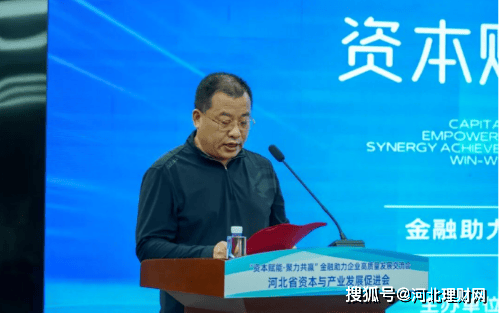
Core Insights - The event "Capital Empowerment: Collaborative Win-Win - Financial Support for High-Quality Development of Enterprises" was successfully held in Shijiazhuang, aiming to create a precise platform for industry-finance connection and inject strong financial momentum into member enterprises and cooperative enterprises of business associations [1][8] - The meeting emphasized the importance of finance in the context of the "14th Five-Year Plan" and the direction set by the 20th National Congress of the Communist Party of China, calling for enterprises to embrace capital and for financial institutions to deepen their services [5][9] Group 1 - The event attracted numerous representatives from enterprises, industry experts, and financial institution leaders, indicating strong interest and participation from various stakeholders [3] - The president of the Hebei Capital and Industry Development Promotion Association highlighted the role of finance as a core element in supporting enterprise transformation and high-quality development [5] - A team from China Merchants Bank Shijiazhuang Branch presented systematic financial service solutions, showcasing how they can provide tailored financial support to optimize resource allocation and enhance operational efficiency for enterprises [6] Group 2 - The event included a practical matching session, with the promotion association establishing a demand matching ledger and assigning dedicated account managers from China Merchants Bank for one-on-one follow-ups to ensure timely responses to enterprise needs [8] - The successful hosting of this event marks a significant step for Hebei Province in "financial support for the real economy," with plans to continue innovating service models and collaborating with more financial institutions [8] - Professor Tian Xiaolin, an economist, was invited to interpret the spirit of the 20th National Congress and analyze opportunities and challenges for enterprises, emphasizing the importance of cash flow protection, technological innovation, and exploring overseas markets [9]

10月份CPI同比涨幅转正,PPI环比年内首次上涨—— 扩内需等政策效应继续显现
Jing Ji Ri Bao· 2025-11-10 04:42
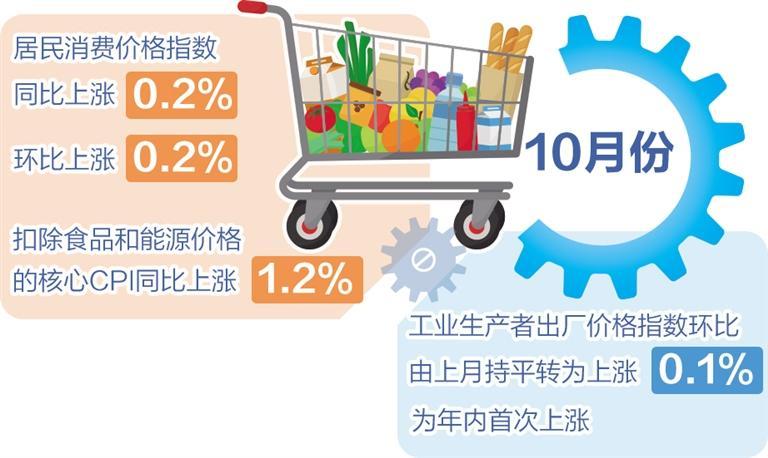
Group 1: CPI Analysis - In October, the Consumer Price Index (CPI) increased by 0.2% month-on-month and year-on-year, marking a shift from a decline of 0.3% in the previous month [2][3] - Service prices rose by 0.2%, driven by increased travel demand during the National Day and Mid-Autumn Festival, with hotel accommodation, flight tickets, and tourism prices rising by 8.6%, 4.5%, and 2.5% respectively [2][3] - Core CPI, excluding food and energy, rose by 1.2% year-on-year, the highest since March 2024, indicating a steady recovery in domestic consumption, particularly in service consumption [2][3] Group 2: PPI Analysis - The Producer Price Index (PPI) saw a month-on-month increase of 0.1% in October, the first rise of the year, influenced by improved supply-demand relationships in certain industries [4][5] - Year-on-year, PPI decreased by 2.1%, but the decline narrowed by 0.2 percentage points compared to the previous month, indicating a trend of price stabilization in key industries [5][6] - Prices in the coal mining and washing industry, photovoltaic equipment manufacturing, and integrated circuit manufacturing have shown upward trends, while international commodity prices have created a mixed impact on domestic prices [4][5] Group 3: Economic Outlook - Experts suggest that the improvement in price data reflects a comprehensive enhancement in the macroeconomic environment and industry sentiment, with a balanced supply-demand relationship [6][7] - The overall price level is expected to rise moderately in the next 3 to 6 months, supported by continued macroeconomic policies and a recovery in market confidence [7] - The construction of a modern industrial system and the expansion of market demand are anticipated to drive price increases in related industries, despite ongoing pressures from the real estate market on certain commodity prices [7]
扩内需等政策效应继续显现——10月份CPI同比涨幅转正,PPI环比年内首次上涨
Jing Ji Ri Bao· 2025-11-10 02:24
Group 1: CPI Analysis - In October, the Consumer Price Index (CPI) increased by 0.2% month-on-month and year-on-year, indicating a recovery in consumer demand, particularly in the service sector [2][3][4] - The core CPI, excluding food and energy, rose by 1.2% year-on-year, marking the highest increase since March 2024 and reflecting a steady recovery in domestic consumption [3][4] - The increase in service prices, which rose by 0.8%, was driven by higher travel-related costs during the National Day and Mid-Autumn Festival, with hotel accommodation, flight tickets, and tourism prices rising significantly [3][4] Group 2: PPI Analysis - The Producer Price Index (PPI) saw a month-on-month increase of 0.1% in October, marking the first rise of the year, driven by improved supply-demand relationships in certain industries [5][6] - Year-on-year, the PPI decreased by 2.1%, but the decline was less severe than in previous months, indicating a narrowing trend in price drops across key sectors [7] - Specific industries such as coal mining, photovoltaic equipment manufacturing, and lithium-ion battery production experienced price increases, while oil and gas extraction faced price declines due to international oil price fluctuations [6][7] Group 3: Economic Outlook - Experts suggest that the improvement in price data reflects a comprehensive recovery in the economy, supported by macroeconomic policies and a balanced supply-demand relationship [8] - The overall price level is expected to rise moderately in the coming months, with CPI anticipated to recover gradually, characterized by strong food prices and weak energy prices [8] - The construction of a modern industrial system and the expansion of market demand are expected to drive price increases in related industries, although the real estate market's adjustment may continue to suppress prices in certain sectors [8]