
业绩比较基准

Search documents
四大证券报精华摘要:5月19日
Xin Hua Cai Jing· 2025-05-19 01:47
Group 1 - The new exit tax refund policy in China aims to enhance the attractiveness of domestic products and increase inbound consumption, with potential inclusion of traditional Chinese medicine products in the refund scope [1] - The satellite navigation and positioning industry in China is projected to exceed 1 trillion yuan in value by 2025, driven by the marketization and internationalization of the BeiDou system [2] - The Shanghai Stock Exchange is intensifying efforts to attract long-term capital into the market, focusing on the role of ETFs in facilitating this process [3] Group 2 - The revised major asset restructuring management measures by the China Securities Regulatory Commission are expected to boost merger and acquisition activities among listed companies, enhancing market confidence [4] - Fund managers have purchased over 2 billion yuan worth of equity funds this year, indicating a positive outlook and confidence in the market [5] - May is expected to see an improvement in credit issuance, with banks focusing on balanced and quality-driven lending, particularly in technology and retail sectors [6] Group 3 - Bond funds have shown strong fundraising capabilities, accounting for 80.19% of total new fund issuance in the second week of May, reflecting investor preference for low-risk fixed-income assets [7][8] - Public funds are exploring new economic sectors, particularly in AI-driven fields such as electronics and software, to identify potential investment opportunities [9] - The introduction of floating fee rate funds by 26 fund companies marks a shift towards a long-term perspective in fund management, aiming to enhance investor experience [10] Group 4 - The successful nomination of independent directors by a securities investor protection agency is expected to improve corporate governance in listed companies [11] - The China Securities Regulatory Commission's new action plan emphasizes the importance of performance benchmarks in public funds, promoting a shift from scale to return-focused strategies [12] - The issuance of REITs has surpassed 11.3 billion yuan this year, with insurance companies playing a significant role as strategic investors [13][14]
回归业绩基准 基金投资酝酿新风格
Shang Hai Zheng Quan Bao· 2025-05-18 18:06
Group 1 - The core content of the "Action Plan for Promoting the High-Quality Development of Public Funds" focuses on guiding fund managers to return to the essence of "entrusted by others, managing wealth on behalf of clients," aiming for high-quality development in the public fund industry [1] - The main direction of the plan is to align with investor interests and enhance their sense of gain, emphasizing the importance of products that can track performance benchmarks with low volatility and controllable risks, rather than merely seeking excess returns [1] - Active equity funds with a turnover rate of 5-10 times, balanced stock and industry holdings, and a management scale of 500 million to 5 billion yuan are more likely to outperform performance benchmarks, while products with style drift show poor performance [1] Group 2 - Over half of the public active equity funds in the market use the CSI 300 index as their core benchmark, with 15% using the CSI 800 index, indicating a significant deviation from actual performance, necessitating changes in benchmarks or holdings [2] - The financial sector has a holding return amount of 264.9 billion yuan, accounting for 4.6% of the sector's free float market value, which is significantly higher than other industries, highlighting the need for attention in cyclical high-dividend sectors like coal, oil, and utilities [2] - As of the first quarter of 2025, active equity funds are mainly overweight in technology and manufacturing sectors, while being underweight in finance and infrastructure, with notable continuous overweights in pharmaceuticals and electronics since 2020 [2] Group 3 - Following the release of the plan, funds have begun to modify their performance benchmarks, with nearly 120 funds changing benchmarks this year, including various types such as equity mixed funds and flexible allocation mixed funds [3] - Performance benchmarks are considered an important reference for portfolio construction, with a focus on achieving stable risk-return characteristics over the long term rather than extreme short-term performance [3] - A new batch of floating management fee funds will be launched, adopting a performance benchmark-based fee model that adjusts management fees according to the fund's performance relative to the benchmark during the holding period [3]
26家公募上报首批基于业绩比较基准的浮动费率基金
news flash· 2025-05-16 10:41
中国证监会官网显示,5月16日,易方达、华夏、嘉实、富国、交银施罗德、汇添富、中欧基金等26家 基金管理人集中申报了首批基于业绩比较基准的创新浮动费率基金。证券时报记者从业内人士处了解 到,上述集中申报的26只基金为《推动公募基金高质量发展行动方案》(以下简称《行动方案》)发布后 首批上报的新模式浮动管理费率产品,即投资者持续持有一定时间后,根据投资者持有期间的收益情况 来确定管理费率档位。 ...
降准降息下,投资者如何配置理财产品
Guo Ji Jin Rong Bao· 2025-05-16 04:33
Core Viewpoint - The recent reduction in reserve requirements and interest rates by the central bank has led to a downward trend in interest rates, prompting banks' wealth management subsidiaries to adjust their strategies and product offerings to adapt to the low-interest environment [1][2][4]. Group 1: Market Response to Monetary Policy Changes - Major wealth management institutions, including ICBC Wealth Management and Agricultural Bank of China Wealth Management, have issued recommendations for asset allocation in a low-interest environment [1][2]. - The reduction in interest rates is expected to lower the yields on wealth management products, with many institutions adjusting their performance benchmarks downward [1][4]. - The anticipated "deposit migration" could lead to a significant increase in the wealth management market size, potentially exceeding 33 trillion yuan this year [1][6]. Group 2: Investment Strategies - Agricultural Bank of China Wealth Management suggests that investors should focus on short-term debt assets to capture opportunities before deposit rates decline further [2][7]. - ICBC Wealth Management recommends extending investment horizons to lock in favorable rates and mitigate short-term volatility [2][7]. - Experts indicate that the current low-interest environment may lead to a shift in asset allocation towards higher-risk assets, such as equities and credit bonds, as investors seek better returns [4][6]. Group 3: Performance Benchmark Adjustments - As of May 19, a wealth management product from China Merchants Bank will see its performance benchmark reduced significantly, reflecting the overall trend in the market [3]. - The average annualized yield for open-ended fixed-income wealth management products has decreased, with a notable drop of 0.29 percentage points in the past month [4]. - Several wealth management products have introduced temporary fee reductions to attract investors in the current market conditions [3][4].
强化业绩比较基准指引对投资行为有何影响?
Huaan Securities· 2025-05-16 02:43
Group 1: Regulatory Impact - The introduction of a performance comparison evaluation system in the "Action Plan for Promoting the High-Quality Development of Public Funds" will significantly influence investment behavior in public funds, especially actively managed equity funds[1] - The new regulations link management fees to fund performance relative to benchmarks, enhancing accountability for fund managers[12] Group 2: Benchmark Composition - The existing performance benchmarks for actively managed equity funds are primarily concentrated in the CSI 300, CSI 800, government bonds, and Hong Kong stock indices, with the top 15 benchmarks accounting for 83.7% of the total weight[2][14] - The overall benchmark weight distribution includes A-share broad-based indices at 48.5%, bonds at 22.9%, industry and thematic indices at 16.2%, Hong Kong stocks at 8.5%, deposit rates at 3.5%, and fixed income at 0.4%[19] Group 3: Asset Allocation Discrepancies - As of Q1 2025, the bond allocation in actively managed equity funds is only 4.5%, significantly below the benchmark weight of 22.9%, indicating an underweight of approximately 638.9 billion yuan[3][21] - Conversely, the equity allocation stands at 84.2%, exceeding the benchmark weight of 73.2%, resulting in an overweight of about 382 billion yuan[3][21] Group 4: Sector Allocation Insights - The electronic sector shows the highest overweight at 18.8%, surpassing the CSI 300 and CSI 800 weights by 8.5 and 7.9 percentage points, respectively[5][26] - The banking sector is notably underweight at 3.8%, falling short of the CSI 300 and CSI 800 weights by 9.7 and 6.7 percentage points, respectively[5][27] Group 5: Future Changes in Benchmarks - A significant number of funds (87) have adjusted their performance benchmarks between early 2024 and May 2025, indicating a trend towards aligning benchmarks with existing investment strategies[33]
亏麻了,基金经理不能再领千万年薪
Sou Hu Cai Jing· 2025-05-15 14:36
Core Viewpoint - The recent action plan issued by the China Securities Regulatory Commission aims to address long-standing issues in the public fund industry, promoting high-quality development by linking fund company income to investor returns [1][3][6]. Summary by Relevant Sections Fund Management Fees - The new regulations require a floating management fee mechanism linked to fund performance, particularly for newly established actively managed equity funds [5][9]. - Management fees for different fund types vary, with stock and mixed funds typically charging between 1.2% and 1.5% [3]. - In 2023, only about 39% of the 4,510 fund products had positive returns, highlighting the disparity between high management fees and poor investor returns [3]. Performance Benchmark Changes - Following the action plan's release, several fund companies have already adjusted their performance benchmarks to align with the new regulations [10]. - The performance benchmark serves as a reference for evaluating fund performance, often based on a combination of market indices [5]. Impact on Fund Companies - The new policy is expected to shift fund companies' focus from scale-driven to performance-driven strategies, enhancing their investment strategies and risk management [6][12]. - Fund companies are encouraged to invest more in research and development to improve their investment capabilities [6]. Fund Manager Accountability - The action plan imposes stricter salary management for fund managers, linking their compensation to fund performance [13][14]. - Fund managers whose products underperform relative to benchmarks will see a significant decrease in performance-based pay, while those who exceed benchmarks may receive higher compensation [13]. Market Reactions and Concerns - The changes have sparked discussions among investors, with many believing that the new performance-linked compensation will improve fund management effectiveness [13][14]. - However, some investors express concerns that an overemphasis on performance benchmarks may lead to homogenized investment strategies, potentially increasing market volatility [15].

再给公募基金一次机会
远川研究所· 2025-05-15 12:31
当投资世界的注意力几乎被关税所垄断的时候,中国公募基金行业还需要面对更多内生的问题。 在吴清主席履职证监会的一年零三个月之后,讨论多时的《公募基金高质量发展行动方案》 (下称《方 案》) 终于出台。行业内许多从业者对《方案》有一个直击本质的简称: 公募改革 。 相比于2022年4月证监会发布的《关于加快推进公募基金行业高质量发展的意见》 (下称《意见》) 里的十六条表述,如今正式推出的《方案》,总计发布了25条举措。华创证券在一篇研报中总结为," 中国公募基金行业成立近三十年来最深入的一次'体检'及最大范围的一次配套改革 [2]。" 以下文章来源于远川投资评论 ,作者张婕妤 远川投资评论 . 看更好的资管内容 从时间点来看,改革并非没有压力。 外部——许多基金投资者,尤其是主动权益基金的持有人,在过去四年承受着不尽如人意的投资体验, 排山倒海的信任危机压在公募行业声誉之上;内部——积重难返的经营治理、人才建设、规模导向等问 题,在行业下行期里愈发外显。 才走了二十多年发展历程的中国公募基金,过去所面临的核心矛盾是行业体量太小。很大程度上,规模 为王的排名方式和评价体系,是一种高效的解决方式,也最终带来了今天中 ...

公募基金未来需要重视的三条路径——《推动公募基金高质量发展行动方案》点评
申万宏源金工· 2025-05-14 08:22
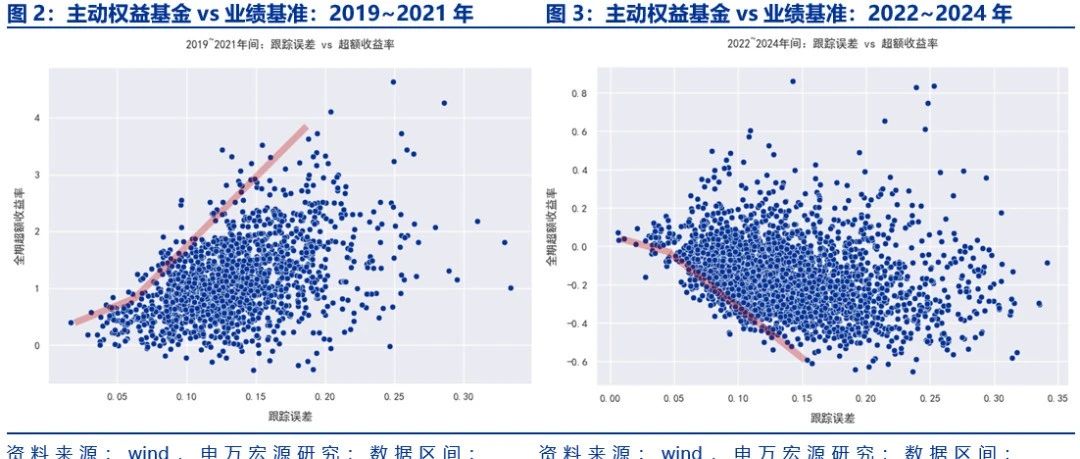
Core Viewpoint - The China Securities Regulatory Commission (CSRC) released the "Action Plan for Promoting the High-Quality Development of Public Funds," which outlines 25 specific measures aimed at enhancing the quality of the public fund industry, marking a significant reform milestone in the asset management sector [1] Group 1: Impacts of the Action Plan on the Public Fund Industry - The introduction of a floating management fee mechanism linked to fund performance may lead to significant differences in management fees among fund companies within the same tier, with top firms expected to issue at least 60% of their actively managed equity funds under this new structure [2] - The focus on performance benchmarks will drive fund companies to explore how to outperform these benchmarks, with strict performance evaluations for fund managers tied to their ability to meet or exceed these benchmarks [3][4] - The emphasis on performance benchmarks will encourage a more objective assessment of fund managers' performance, potentially correcting investor biases in evaluating growth and value style fund managers [5] Group 2: Future Paths for Public Funds - Active equity funds will need to control tracking error effectively, with an optimal threshold identified at 8%, as exceeding this level has historically correlated with significant underperformance against benchmarks [10][11] - Fund companies should prioritize the creation of low-volatility products and those with high Sharpe ratios, as these are associated with better investor outcomes and lower loss rates [12][14] - A shift towards a more advisory-based sales model is recommended, moving away from chasing market trends to better align with investor needs and enhance trust in fund management [15][16]
公募基金改革跟踪系列报告二:如何定义比较基准?海外经验与考核探讨
Huachuang Securities· 2025-05-14 01:50
Investment Rating - The report maintains a "Recommendation" rating for the non-bank financial industry, expecting the industry index to rise more than 5% compared to the benchmark index in the next 3-6 months [55]. Core Insights - The report emphasizes the importance of performance benchmarks in the mutual fund industry, particularly following the recent regulatory changes aimed at enhancing the quality of public fund performance [1][18]. - It highlights the evolution of performance benchmark regulations in the U.S., detailing how the SEC has progressively refined disclosure requirements since 1993 [10][12]. - The report notes that U.S. investors place significant importance on comparing fund performance against benchmarks, with 93% of households with mutual funds doing so [19][20]. Summary by Sections 1. U.S. Regulatory Requirements for Performance Benchmarks - The SEC has established a comprehensive framework for mutual fund performance benchmarks, requiring funds to disclose performance comparisons with broad market indices [10][11]. - Recent amendments to the Investment Advisers Act have increased the disclosure requirements for investment advisers regarding performance benchmarks [14]. - The Global Investment Performance Standards (GIPS) provide guidelines for the establishment and disclosure of performance benchmarks, promoting industry self-regulation [15][16]. 2. Importance of Performance Benchmarks from the Investor's Perspective - U.S. investors recognize the significance of performance benchmarks, which greatly influence their investment decisions [19][26]. - The report indicates that experienced investors are more sensitive to benchmark comparisons, highlighting the need for clarity in benchmark selection [26]. 3. Performance of U.S. Active Equity Funds Against Benchmarks - Analysis shows that approximately 32%, 37%, and 39% of active equity funds outperformed their benchmarks over the past 1, 3, and 5 years, respectively [30]. - The report notes a trend where the longer the evaluation period, the higher the likelihood of funds outperforming their benchmarks [30]. 4. Factors Influencing Fund Manager Compensation and Management Fees - Fund manager compensation is often linked to fund performance, with 79.04% of managers having their pay tied to investment results [38]. - The report discusses the "Fulcrum Fee" model, where management fees are adjusted based on performance relative to benchmarks, ensuring alignment of interests between managers and investors [40].
公募基金告别“旱涝保收” 业绩比较基准成硬标尺
Shang Hai Zheng Quan Bao· 2025-05-12 18:53
Core Viewpoint - The introduction of the "Action Plan for Promoting High-Quality Development of Public Funds" aims to enhance the binding force of performance benchmarks for fund products, transforming them into crucial metrics for investment behavior, product performance evaluation, and fund positioning [1][3]. Group 1: Importance of Performance Benchmarks - The industry has historically undervalued performance benchmarks due to a focus on overall market rankings, leading to issues such as style drift among fund managers and concentrated industry allocations [2][3]. - Data indicates that a significant number of actively managed equity funds have underperformed their benchmarks, with 2,532 out of 4,243 funds failing to beat their benchmarks over the past year, and nearly half underperforming by over 10 percentage points over three years [2][3]. Group 2: Regulatory Measures - The Action Plan proposes to strengthen the regulatory framework surrounding performance benchmarks, including guidelines for setting, modifying, disclosing, and continuously evaluating benchmarks [3][4]. - Fund managers whose products underperform their benchmarks by over 10 percentage points for three years will see a significant decrease in performance compensation, while those who exceed benchmarks may receive reasonable increases [3]. Group 3: Industry Transformation - The Action Plan is viewed as a new pillar for the high-quality development of the fund industry, adding a "benchmark as anchor" concept to the existing foundational structures established since 1998 [3][4]. - The focus on performance benchmarks is expected to lead to a reduction in the pursuit of star fund managers and short-term products, promoting a more stable investment environment [7]. Group 4: Impact on Fund Management - Fund managers will face increased pressure to align with performance benchmarks, necessitating adjustments in investment methodologies and enhanced risk control [8]. - The industry may see a shift towards more passive investment strategies, with ETFs and stable active management funds becoming more prevalent as performance benchmarks are strictly adhered to [8].