
供应链安全

Search documents
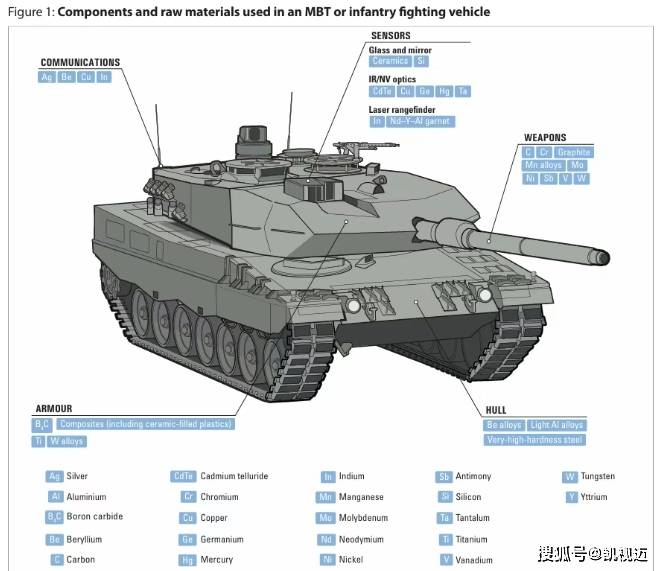
欧洲国防关键原材料
Sou Hu Cai Jing· 2025-11-27 14:15
Core Viewpoint - Critical Raw Materials (CRMs) are essential for European defense, particularly for advanced military equipment, yet Europe heavily relies on imports, especially from China, creating supply chain vulnerabilities that threaten defense autonomy and security [1][2]. Group 1: Supply Chain Vulnerabilities - Europe is increasingly dependent on imports of CRMs, particularly from China, which poses risks to its defense capabilities and strategic autonomy [1][2]. - The geopolitical tensions and the urgent need for technological modernization have heightened concerns regarding the security and sufficiency of critical materials [1][2]. - The COVID-19 pandemic has underscored the potential impacts of supply chain disruptions on critical industries, exacerbating existing vulnerabilities [2]. Group 2: Government Responses - Governments are adopting diverse strategies to mitigate supply chain risks, including diversifying supply sources, stockpiling materials, and enhancing domestic production capabilities [3][10]. - The European Union's Critical Raw Materials Act aims to identify and manage dependencies on strategic materials, ensuring supply chain stability and promoting sustainable economic development [11][12]. - Legislative measures are increasingly incorporating clauses related to the security of critical materials supply, reflecting a growing political focus on this issue [3][10]. Group 3: Strategic Partnerships and Initiatives - Countries are seeking to establish new strategic partnerships and strengthen existing ones to enhance resource security, a strategy referred to as "raw materials diplomacy" [12][13]. - The EU has initiated strategic cooperation with countries like Kazakhstan and Greenland to mitigate supply risks for critical materials such as titanium [12]. - The establishment of a temporary reserve strategy by the EU is being considered to bolster supply chain resilience, although legislative attention on defense issues remains less comprehensive compared to the U.S. [12][13]. Group 4: Challenges in Material Management - The process of reshoring critical materials extraction and processing faces challenges, including higher production pressures and stricter environmental regulations [13]. - The unique properties of certain materials complicate substitution efforts, and recycling remains a developing field with cost implications [4][10]. - The interplay between defense needs and energy transition initiatives may yield beneficial synergies, as many critical materials are common to both sectors [4].

稀土还未解决,另一条命脉也被中方掐住,为摆脱对华制药原材料依赖,美国要拉上印度
Sou Hu Cai Jing· 2025-11-27 03:49
Core Insights - The trade war between the US and China has extended into a "shadow war" over pharmaceutical supply chains, which are crucial for national health and strategic leverage [1] - China holds a 45% market share in drug component registrations, significantly surpassing India's 19%, indicating a shift from "follow-on innovation" to "original innovation" in its pharmaceutical industry [1][3] - The US is heavily reliant on China for nearly 700 key drug components, with China being the sole supplier for many, raising concerns about healthcare security in the US [3] Industry Dynamics - The US faces a dilemma as its dependence on Chinese pharmaceuticals increases, with political figures warning that medical safety has become a component of national security [3] - Historical tariffs imposed by the US, such as a 145% tariff on Chinese medical devices, have raised healthcare costs domestically, complicating the narrative of bringing production back to the US [3] - The ongoing trade conflict has led to a precarious situation for the US, as it struggles to regain dominance in the pharmaceutical sector [3][6] Supply Chain Challenges - The potential for China to impose restrictions on rare earth exports could severely impact US manufacturing, highlighting the interconnectedness of the two nations' supply chains [6] - The idea of decoupling from China is viewed as unrealistic, as alternative solutions, such as partnerships with India, do not fundamentally resolve the reliance on Chinese resources [6] - China's approach to pharmaceuticals reflects a sense of responsibility, emphasizing that health should not be a geopolitical tool, and it has shown a commitment to maintaining supply chain stability [6] Future Outlook - The global pharmaceutical landscape is expected to undergo unprecedented changes, with the pain of transition likely to be felt over an extended period [8] - The competition between the US and China in the pharmaceutical supply chain is not merely an economic battle but encompasses technological innovation, national strategy, and human welfare [9] - The ongoing struggle for healthcare security will intensify, with the ultimate beneficiaries likely to be those nations prioritizing the health and well-being of their populations [9]

杉杉集团重整再生变
Xin Lang Cai Jing· 2025-11-26 02:34
Core Viewpoint - Fangda Carbon New Material Technology Co., Ltd. plans to participate in the substantive merger and restructuring of Shanshan Group and its wholly-owned subsidiary, Ningbo Pengze Trading Co., Ltd. [3][4] Group 1: Company Actions - On November 24, Fangda Carbon held a board meeting and approved the proposal to participate as an industrial synergy partner in the restructuring of Shanshan Group and Ningbo Pengze [3] - The company will prepare and submit the necessary documentation for the restructuring investment, including a due diligence confidentiality agreement and a restructuring investment plan [3][4] - The participation in the restructuring does not constitute a related party transaction or a major asset reorganization, thus does not require shareholder meeting approval [4] Group 2: Strategic Implications - Fangda Carbon aims to leverage its advantages in the anode industry to enhance its industrial chain integration and supply chain stability through this restructuring [4] - The company anticipates that this move will positively impact its future operational development and enhance its core competitiveness [4] Group 3: Context of Restructuring - Shanshan Group and Ningbo Pengze have initiated a new round of restructuring, with the process involving initial selection, final selection, and creditor committee voting [4] - A recent creditors' meeting revealed that the restructuring plan was not approved, indicating challenges in the ongoing restructuring efforts [5][6]

杉杉集团重整再生变,辽宁首富重磅入局
2 1 Shi Ji Jing Ji Bao Dao· 2025-11-26 01:39
Core Viewpoint - The restructuring plan for Shanshan Group has entered a new phase with the selection of new investors, with Fangda Carbon being a prominent participant aiming to leverage synergies in the negative electrode materials sector [1][3]. Group 1: Restructuring Process - The new round of restructuring for Shanshan Group and its subsidiary Ningbo Pengze has begun, with a selection process that includes both new and previous investors [1]. - The selection process will follow a structured approach involving initial selection, final selection, and voting by the creditors' committee [1]. - The timeline for the new investor recruitment has been extended from 7 days in the previous round to 18 days, enhancing the fairness and scope of the selection [9]. Group 2: Fangda Carbon's Involvement - Fangda Carbon has agreed to participate as a strategic investor in the restructuring, aiming to enhance its position in the negative electrode industry and achieve supply chain stability [3][4]. - The company has a history of successful restructuring and acquisitions, indicating its capability to navigate complex investment scenarios [4]. - Despite its strategic ambitions, Fangda Carbon's recent financial performance has shown a decline, with revenues dropping from 52.30 billion yuan in 2022 to an expected 38.72 billion yuan in 2024 [5]. Group 3: Market Reaction and Investor Sentiment - Following the announcement of Fangda Carbon's involvement, its stock price surged to a limit-up close of 6.51 yuan per share, while Shanshan Group's stock also saw a significant increase [1]. - The new round of investor selection has attracted interest due to the potential control over Shanshan Group's core assets, particularly its 23.32% stake in Shanshan Co., a leading supplier of lithium battery anode materials [10].


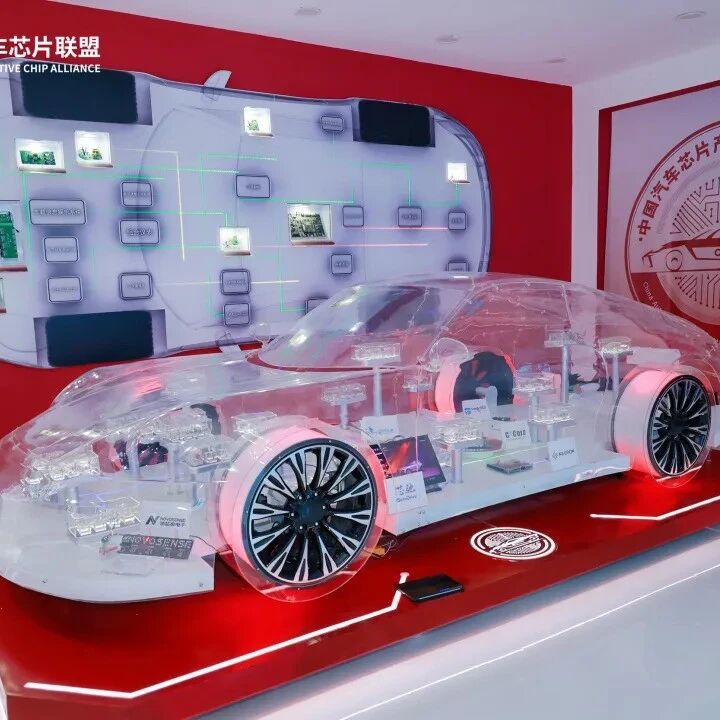
国产汽车MCU量产上车,芯钛科技完成C+轮融资|早起看早期
36氪· 2025-11-26 00:09
主控MCU芯片是决定底盘系统响应、功能安全与体验上限的核心要素。 据悉,此次融资主要用于车规芯片产品量产及全国产化供应链建设。 芯钛科技成立于2017年,主要从事汽车级半导体芯片产品的设计研发,提供安全类MCU、主控MCU等芯片产品,可为智能网联 汽车构建完成的软硬件生态。 36氪了解到,今年11月1日芯钛科技自主研发的ASIL-D级高功能安全主控MCU芯片TTA8,被搭载在广汽昊铂GT-攀登版上,该车 型为国内首台实现芯片设计100%国产化的智能新能源汽车;11月11日,芯钛科技又与上海汇众、上汽金控、上汽研发总院、华域 汽车、联创汽车电子等达成合作,共同赋能上汽集团的"大底盘战略"。 芯钛科技告诉36氪:"智能底盘是整车控制与执行最为关键的载体,涉及转向、制动、悬架等关键技术协同,而主控MCU芯片是 决定底盘系统响应、功能安全与体验上限的核心要素。 该类控制芯片长期以来由海外龙头企业主导,能够满足汽车底盘复杂应用场景的国产MCU市场依然是空白。而这正是芯钛科技大 有可为之处。" 芯钛科技表示,从技术层面,MCU最主要的难点在于功能本身之外的功能安全、可靠性前后端设计、功耗、易用性、微观性能 等。另一方面, ...
方大炭素拟参与杉杉集团重整,方威欲再扩资本版图
Huan Qiu Lao Hu Cai Jing· 2025-11-25 07:32
Core Viewpoint - Fangda Carbon has agreed to participate as an industrial synergy partner in the substantive merger and restructuring of Shanshan Group and its wholly-owned subsidiary Ningbo Pengze, which has positively impacted its stock price and market capitalization [1] Group 1: Fangda Carbon's Involvement - Fangda Carbon's participation in the restructuring is aimed at accelerating its negative electrode industry layout, achieving industrial chain integration, and ensuring long-term stability and security of the supply chain [1] - The company aims to leverage synergies from its solid-state battery and other new energy sectors to enhance profitability and core competitiveness [1] Group 2: Shanshan Group's Background - Shanshan Group has faced significant challenges, including the sudden death of its founder in February 2023, leading to a power struggle between his son and widow [1] - The company has encountered debt default issues and has been sued by multiple financial institutions, resulting in the judicial marking and freezing of some of its shares [1] - In March 2023, a court ruled for the merger restructuring of Shanshan Group and its subsidiary Pengze [1] Group 3: Shanshan Group's Financial Performance - Shanshan Group's main assets include a 23.32% stake in Shanshan Co., bank shares, and various real estate and receivables [2] - Shanshan Co. reported a revenue of 14.809 billion yuan in the first three quarters of the year, a year-on-year increase of 11.48%, and a net profit of 284 million yuan, up 1121.72% [2] - Despite the positive performance, Shanshan Co. has a total debt of 21.968 billion yuan, with short-term loans of 5.293 billion yuan and long-term loans of 6.528 billion yuan, while cash on hand is only 3.15 billion yuan [2]
方大炭素拟参与杉杉集团及其全资子公司实质合并重整投资人招募
Zhi Tong Cai Jing· 2025-11-24 09:48
公司通过发挥自身在负极产业的技术、资本、渠道等优势,作为产业协同方参与杉杉集团及其全资子公 司朋泽贸易的实质合并重整,有利于公司加快负极产业布局,实现产业链一体化和供应链长期稳定安 全,充分发挥公司固态电池等新能源产业协同效应,增强公司盈利能力,提升公司核心竞争力。本次参 与杉杉集团及其全资子公司朋泽贸易的实质合并重整符合公司产业布局和战略发展。预计对公司未来经 营发展产生积极影响。 方大炭素(600516)(600516.SH)发布公告,公司于2025年11月24日召开第九届董事会第十四次临时会 议,审议通过了《关于拟参与杉杉集团及其全资子公司实质合并重整投资人招募的议案》,同意公司作 为产业协同方参与杉杉集团有限公司(简称杉杉集团)及其全资子公司宁波朋泽贸易有限公司(简称宁波朋 泽)的实质合并重整投资人招募,同时授权公司管理层代表公司拟定和提交重整投资的报名资料、签署 尽职调查保密协议、开展尽职调查、提交《重整投资方案》等各项工作。 ...
方大炭素(600516.SH)拟参与杉杉集团及其全资子公司实质合并重整投资人招募
智通财经网· 2025-11-24 09:44
Core Viewpoint - The company, Fangda Carbon (600516.SH), has announced its participation as an industrial synergy partner in the substantive merger and restructuring of Shanshan Group and its wholly-owned subsidiary, Ningbo Pengze Trading Co., Ltd, which is expected to positively impact the company's future operational development [1] Group 1 - The company will hold the 14th interim meeting of the 9th board of directors on November 24, 2025, to review the proposal for participating in the investor recruitment for the substantive merger and restructuring of Shanshan Group and Ningbo Pengze [1] - The company is authorized to prepare and submit the restructuring investment application materials, sign confidentiality agreements for due diligence, conduct due diligence, and submit the restructuring investment plan [1] - By leveraging its advantages in technology, capital, and channels in the anode industry, the company aims to accelerate its anode industry layout and achieve integrated industrial chain and long-term stable supply chain [1] Group 2 - The participation in the substantive merger and restructuring is aligned with the company's industrial layout and strategic development [1] - The move is expected to enhance the company's profitability and core competitiveness by fully utilizing the synergy effects of solid-state batteries and other new energy industries [1] - The company anticipates that this initiative will have a positive impact on its future operational development [1]
国际智链大讲堂正式开播:让共同富裕理念走进千家万户
Sou Hu Cai Jing· 2025-11-24 07:08
在全面推进中国式现代化的新征程上,共同富裕被明确为国家发展的重要目标。如何让政策更透明?如 何让百姓真正参与并共享国家发展红利?如何让社会各界理解供应链安全、数字经济和产业升级对国家 长远未来的重要意义? 为回应这些关切,在有关部门指导下,国际智链大讲堂正式开播,面向全国公众提供权威、系统、通俗 的政策解读与知识普及服务。 推动共同富裕,让红利走向百姓 共同富裕不是一句口号,而是实实在在的国家战略。它既需要顶层设计,也离不开全民参与。国际智链 大讲堂的开播,就是为了让更多普通群众看懂国家政策、理解时代方向、掌握发展机遇。 作为扎根供应链数字化领域的综合平台,国际智链长期参与产业链补链强链、数字人民币跨境流通、农 产品出海扶持、小微企业贸易赋能等项目,在推动"产业增效""企业增收""百姓增益"方面积累了大量的 实践经验。 大讲堂将以公开、普惠、低门槛的形式向社会开放,帮助老百姓理解: 国家为什么大力推进共同富裕? 普通群众能从产业升级中获得什么? 国家在供应链、数字经济、消费促进等领域推出了哪些新政策? 这一系列面向民生的核心议题,将在大讲堂中逐步展开。 国际智链大讲堂将严格遵守国家法律法规,坚持正确舆论导向, ...
每日投资策略-20251124
Zhao Yin Guo Ji· 2025-11-24 03:51
宏观点评 2025 年 11 月 24 日 招银国际环球市场 | 市场策略 | 招财日报 每日投资策略 | | 收市价 | | 升/跌(%) | | --- | --- | --- | --- | | | | 单日 | 年内 | | 恒生金融 | 46,658 | -2.12 | 32.79 | | 恒生工商业 | 13,846 | -2.59 | 23.07 | | 恒生地产 | 18,268 | -2.45 | 22.50 | | 恒生公用事业 | 37,405 | -0.91 | 4.88 | | 资料来源:彭博 | | | | 敬请参阅尾页之免责声明 请到彭博 (搜索代码: RESP CMBR )或 http://www.cmbi.com.hk 下载更多研究报告 1 中国股市大跌,港股医疗保健、原材料与可选消费领跌,电讯、综合与公用 事业跑赢,南向资金净买入 1.05 亿港元,腾讯、小米与阿里巴巴净买入居前, 华虹半导体、赣锋锂业与中芯国际净卖出最多。A 股工贸综合、有色金属与 化工跌幅居前,媒体娱乐、家电与食品饮料跌幅最小。国债收益率走平,人 民币兑美元小幅上涨。 日本批准 21.3 万亿日元经济刺 ...