合规经营

Search documents
2026,如何留在“牌桌”上?
虎嗅APP· 2025-12-12 13:54
Core Viewpoint - The core issue for enterprise management in 2026 will be "workforce productivity," shifting focus from growth to efficiency as investors no longer support "cost-agnostic growth" [5]. Group 1: AI Reshaping Work - By 2026, AI will transition from being a tool to becoming a digital employee, fundamentally altering knowledge work and enhancing human capabilities rather than merely replacing them [8][11]. - McKinsey reports that the adoption rate of generative AI in enterprises surged from 33% to 65% in just one year, with predictions that by 2030, 30% of work hours could be automated [8][11]. Group 2: Compliance as a Survival Line - Compliance will become a critical filter for business survival, as companies relying on non-compliant practices will be deemed outdated and at risk of being eliminated [12][13]. - The pressure for compliance will force business leaders to address internal efficiency issues, such as excessive meetings and redundant approvals, which consume employee time [14][15]. Group 3: From Cost Reduction to Empowerment - The focus will shift from "cost-cutting" to "empowerment-driven efficiency," emphasizing the need for management to view employees as investments rather than costs [16][21]. - Empowerment will involve enhancing time management, skills, and motivation, transforming management from a monitoring role to one that fosters excellence [22][27]. Group 4: The Great Elimination of Middle Management - By 2026, AI is expected to lead to the elimination of over half of existing middle management positions as organizations flatten their structures [24][26]. - The value of traditional management roles will diminish as AI takes over routine tasks, prompting a reevaluation of management's role in driving productivity [26][28]. Group 5: Global Operations and Efficiency - As Chinese companies increasingly expand overseas, the focus will shift to enhancing operational efficiency in global markets, requiring a unified approach to management across different regions [29][30]. - Compliance with local labor laws and cultural expectations will be essential for maintaining a competitive edge in international markets [32]. Group 6: The Five Transformations - The five key transformations—AI disruption, compliance pressure, management quality improvement, organizational streamlining, and global operations—will collectively redefine workforce productivity as a core organizational capability for the future [33].


62亿信用卡不良只融3亿?光大银行ABS折扣率跌破5%释放危险信号
Jing Ji Guan Cha Bao· 2025-12-12 13:08
Core Viewpoint - The issuance of credit card non-performing asset-backed securities (ABS) by Everbright Bank at a low discount rate of 4.81% raises concerns about the underlying asset quality and the challenges in recovering credit card debts in the current economic environment [1][2]. Group 1: ABS Issuance and Discount Rates - Everbright Bank's latest ABS issuance of 300 million yuan is backed by credit card non-performing assets totaling approximately 6.24 billion yuan, resulting in a discount rate of about 4.81%, which is lower than the industry average [1]. - The bank's previous ABS issuances in 2025 had discount rates of 5.01%, 5.25%, and 5.27%, indicating a trend of declining discount rates, reflecting the increasing difficulty in recovering credit card debts [2]. - The cumulative issuance of Everbright Bank's credit card non-performing asset ABS in 2025 has reached 1 billion yuan, covering a total of 19.7 billion yuan in non-performing assets [2]. Group 2: Market Trends and Asset Transfer - The active transfer of credit card non-performing assets on platforms like Yindeng Network indicates a growing urgency among banks to address the rising levels of non-performing assets [3][5]. - Major banks such as Ping An Bank and Minsheng Bank have significantly increased their asset transfer activities, with Minsheng Bank's recent transfer involving 9.607 billion yuan in non-performing loans, highlighting the severity of the issue [4]. - The parallel development of ABS issuance and asset transfers creates a dual-channel approach for banks to manage non-performing credit card assets, reflecting a trend towards systematic and normalized asset disposal [5]. Group 3: Credit Card Business Challenges - The total number of credit cards in circulation has decreased by 10 million from a peak of 807 million, marking a continuous decline over 12 quarters, indicating challenges in the credit card business [6]. - Regulatory pressures and changing consumer behaviors are forcing banks to shift from aggressive card issuance to a focus on quality and risk management, as evidenced by the decline in both card issuance and transaction volumes [7][9]. - Recent regulatory actions against banks for compliance failures underscore the need for stringent management practices in credit card operations, emphasizing the importance of balancing growth with risk control [8][9].


长城人寿被警示后回应:监测与执行衔接问题
Bei Jing Shang Bao· 2025-12-11 01:59
险资举牌上市公司的热潮在资本市场持续升温,然而,在举牌热情高涨的背后,部分机构的合规意识却 未能同步跟进。12月9日,河北证监局对长城人寿保险股份有限公司(以下简称"长城人寿")采取出具警 示函的行政监管措施。 近两年,长城人寿在资本市场动作频频,凭借对多家上市公司的举牌操作被贴上"举牌大户"的标签,但 与资本市场的活跃表现形成鲜明反差的是,该公司的盈利承压,在牛市行情的背景下,前三季度净利润 大幅下滑七成。 收函后回应: 监测与执行衔接问题 河北证监局一纸警示函,揭开了长城人寿在资本市场高歌猛进背后,内部合规体系存在的明显漏洞。 河北证监局表示,9月23日,长城人寿增持新天绿色能源股份有限公司(以下简称"新天绿能(7.420, -0.01, -0.13%)")股票100万股,增持后合计持有新天绿能股票2.1亿股,占新天绿能总股本的5.0027%。9月24 日,长城人寿披露《简式权益变动报告书》,披露上述交易行为。长城人寿在持有新天绿能股份达到 5%时,未停止买卖新天绿能股份,违反了相关要求。 长城人寿告诉北京商报记者,在利率下行背景下,寿险行业确实普遍面临准备金计提增加的压力,进而 挤压利润空间。针对这一挑 ...
违规操作被警示、净利下滑七成 爱举牌的长城人寿如何练好“内功”
Bei Jing Shang Bao· 2025-12-10 14:02
Core Viewpoint - The surge in insurance companies acquiring stakes in listed firms is accompanied by compliance issues, as evidenced by the warning letter issued to Great Wall Life Insurance by the Hebei Securities Regulatory Bureau due to violations in stock trading practices [1][2]. Compliance Issues - Great Wall Life Insurance has been labeled an "acquisition giant" due to its frequent stake purchases in various listed companies, yet it faces significant internal compliance failures, particularly highlighted by its failure to halt trading after reaching a 5% stake in New Tian Green Energy [2][3]. - The Hebei Securities Regulatory Bureau emphasized the importance of adhering to information disclosure and trading restrictions to ensure market fairness and investor rights [2]. Financial Performance - Despite its active participation in the capital market, Great Wall Life Insurance reported a significant decline in both premium income and net profit, with a 5.92% decrease in insurance business revenue to 21.455 billion yuan and a 70.92% drop in net profit to approximately 156 million yuan in the first three quarters [4]. - The company experienced a 12.46% decline in signed premium income, with new policy premiums down 43.04% year-on-year, while renewal premiums increased by 9.50% [4][5]. Strategic Adjustments - In response to external economic pressures, Great Wall Life Insurance plans to undergo a product structure transformation, focusing on dividend-type products and reducing the sale of fixed-income products [5]. - The company aims to enhance its profit management capabilities through a dual approach of asset and liability management, while also addressing the challenges posed by a competitive insurance market [4][5]. Regulatory Penalties - Great Wall Life Insurance has faced multiple regulatory penalties for compliance failures, including a fine for providing external benefits to policyholders and another for improper sales practices [6]. - The company acknowledges the need for improvement in its compliance management system and is implementing measures to enhance internal controls and prevent future violations [6].
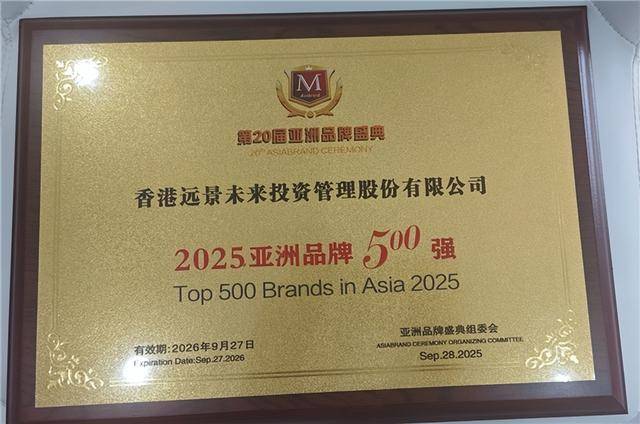
创始人王贵运:长期主义驱动下,远景未来的合规实践与全球视野
Sou Hu Cai Jing· 2025-12-08 19:38
Core Viewpoint - Compliance is not an option but a lifeline for the survival and development of enterprises, as emphasized by the company in its narrative about "global compliance layout" [1][2]. Group 1: Compliance Framework - The company's compliance framework is built on multiple regional financial business licenses, including licenses from the Hong Kong Securities and Futures Commission (SFC) for various core services such as securities trading and asset management [1]. - The company also claims to hold international qualifications like the U.S. MSB (Money Services Business) license, creating a "qualification matrix" that meets regulatory requirements across different jurisdictions [1]. Group 2: Credit and Operational Transparency - The company has achieved an AAA credit rating from the National Standardization Management Committee and the People's Bank of China, which reflects its governance structure, financial stability, and compliance capabilities [4]. - It implements a "bank-grade firewall" by strictly isolating client assets from its own funds and using independent custodial accounts, while also employing blockchain technology for traceability and regular third-party audits to enhance operational transparency [4]. Group 3: International Recognition and Professional Image - The founder's financial qualifications, including CFA and FRM certifications, have led to roles as an "invited investment advisor" for embassies of multiple countries, symbolizing international recognition of the company's compliance practices [5]. - The company's international expansion into regions such as Asia, Africa, and Europe necessitates a robust compliance governance system to navigate complex cross-border regulatory environments [5]. Group 4: Compliance as a Continuous Process - The company views compliance as a dynamic process that must be integrated into every business operation, emphasizing that the value of its compliance framework will depend on its ability to translate commitments into unwavering action and withstand long-term scrutiny from the market and regulators [6].
同日被监管重罚超2300万!兴业银行、徽商银行、成都银行风控漏洞曝光
Xin Lang Cai Jing· 2025-12-08 11:28
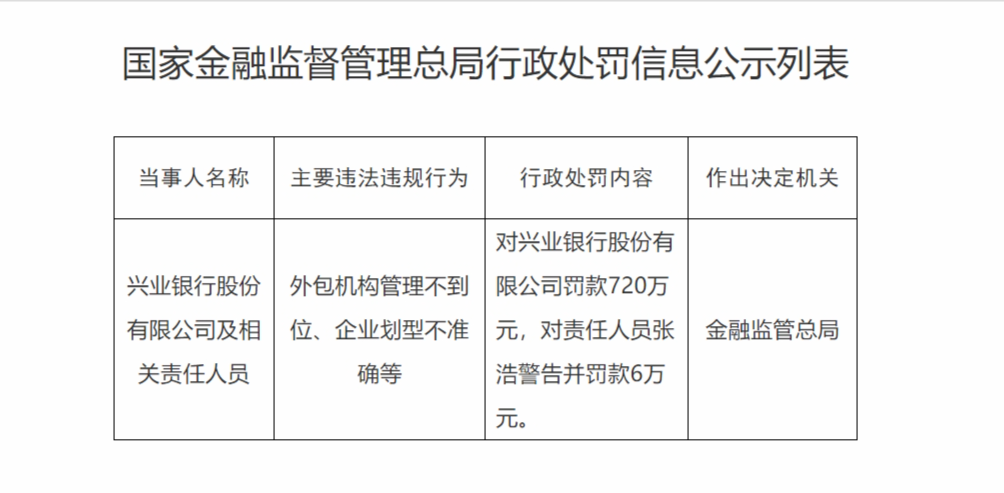
Core Insights - On December 5, three banks, namely Industrial Bank, Huishang Bank, and Chengdu Bank, received regulatory fines totaling over 23 million yuan, highlighting ongoing compliance issues within the banking sector [1][12][13] - The fines reflect a "zero tolerance" approach from regulators towards violations, with each bank facing penalties around 8 million yuan, indicating a strong commitment to rectifying compliance failures [1][12][13] Summary by Category Regulatory Actions - Industrial Bank was fined 7.2 million yuan, with a responsible individual receiving a warning and a 60,000 yuan fine, marking a significant penalty following previous fines for inadequate loan management [1][12][13] - Huishang Bank faced a total of 8.66 million yuan in fines, with violations including improper loan issuance and inadequate post-loan management, indicating deep-rooted governance issues [2][3][12][15] - Chengdu Bank was fined 900,000 yuan, with 15 branches collectively fined 6.35 million yuan, reflecting widespread internal control challenges across its operations [3][4][12][16] Common Violations - "Inadequate loan management" emerged as a common issue among the penalized banks, representing a significant area of regulatory concern within the industry [5][17] - A report indicated that 57.05% of banking violations were related to credit business, with "inadequate loan management" being the most frequent reason for penalties, accounting for 12.99% of cases [5][17] Systemic Issues - The penalties highlight systemic weaknesses in loan management and internal controls across the banking sector, suggesting a misalignment between growth objectives and risk management practices [9][21][23] - The reliance on external institutions for loan management has introduced new compliance risks, as seen in the case of Industrial Bank, which was penalized for inadequate management of external partners [10][22] Regulatory Trends - The regulatory environment is shifting towards more stringent oversight and systemic governance, with a focus on integrating compliance into the core operations of banks [11][23] - Continuous regulatory penalties may not significantly impact the financials of large banks, but the reputational damage and operational restrictions could have long-term implications [11][23]

从线性出海到网格化布局:亚马逊“下一代跨境链”如何重构中国卖家全球化逻辑
Huan Qiu Wang· 2025-12-08 09:30
Core Insights - The core viewpoint of the article emphasizes that globalization has shifted from a choice to a necessity for Chinese cross-border sellers, who are now focused on how to effectively implement global strategies rather than whether to pursue them [1] Group 1: Seller Concerns - Sellers face three main anxieties: the challenge of assessing new markets, compliance issues, and difficulties in product selection [2] - The "evaluation dilemma" arises from the inability to replicate consumer trends and competitive landscapes from mature markets to emerging ones, leading to uncertainty in investment returns [2] - The "compliance confusion" reflects a shift from unregulated growth to a focus on compliance as a core asset for building long-term trust and competitive advantage [2] - The "product selection difficulty" indicates that simply copying successful products from mature markets to emerging ones is no longer effective; sellers must understand local consumer needs [2] Group 2: Strategic Growth Engine - Globalization must be viewed as a systematic "strategic growth engine" rather than a series of isolated experiments [3] Group 3: Next Generation Global Selling - Amazon's "Next Generation Global Selling" (NGGS) aims to restructure traditional cross-border supply chains, allowing sellers to achieve "one listing, one warehousing, global sales" [4] - The establishment of the first Amazon Global Smart Hub Warehouse (GWD) in Shenzhen symbolizes a significant step in addressing sellers' core pain points, such as high overseas warehousing costs and complex logistics [4][6] - The GWD model enables sellers to store products in a centralized location, reducing inventory risks and allowing for simultaneous testing in multiple markets [6] Group 4: Market Opportunities - Emerging markets like Latin America, Australia, the Middle East, and India present unique opportunities for Chinese sellers, with tailored strategies being implemented to facilitate entry [7][8][9] - Latin America is highlighted as a rapidly growing region for Chinese sellers, with Amazon simplifying compliance processes to enhance market access [7] - Australia offers low complexity and high similarity to Western consumer behavior, making it an attractive market for expansion [8] - The Middle East's demand for diverse products and India's projected growth to a $100 billion e-commerce market present significant opportunities for Chinese sellers [8][9] Group 5: Capability Reconstruction - Sellers are encouraged to view global expansion as a "capability reconstruction" process, shifting from experience-driven to data and AI-driven decision-making [10] - Collaboration is emphasized, with successful sellers leveraging Amazon's logistics and compliance solutions to focus on product innovation and brand building [10] - A strategic mindset is crucial, as sellers must treat globalization as a long-term commitment rather than a short-term profit opportunity [10] Group 6: Industry Trends - Data indicates a significant increase in the number of new Chinese sellers on Amazon's European platform, with a projected growth of over 25% by 2025 [11] - The compound annual growth rate of products sold by Chinese sellers on Amazon's emerging platforms has exceeded 50% over the past three years [11] - The competitive landscape of cross-border e-commerce is evolving, focusing on global supply chain collaboration and agile market response capabilities [11]


领峰贵金属安全黄金平台,以合规经营构筑品牌根基
Sou Hu Cai Jing· 2025-12-08 02:36
Core Viewpoint - The global financial market is experiencing volatility due to geopolitical conflicts, fluctuating inflation expectations, and adjustments in Federal Reserve policies, leading to increased demand for gold as a safe-haven asset, which has driven up prices and attracted investor attention [1] Group 1: Company Overview - The company, Lingfeng Precious Metals, has established itself as a preferred platform for investors entering the gold market by providing a stable trading environment and high-quality services [1] - Lingfeng Precious Metals has been a member of the Hong Kong Gold Exchange since its inception, emphasizing compliance, safety, and transparency as core operational principles [2] Group 2: Regulatory Framework - The company adheres strictly to regulatory requirements, maintaining independent client fund segregation accounts to ensure the separation of investor funds from operational funds [4] - The platform operates with transparency in pricing and trade execution, following open and fair trading standards to protect order execution quality and prevent price manipulation [4] Group 3: Technological Capabilities - Lingfeng Precious Metals utilizes the internationally recognized MT4 trading system, known for its stability and a wide range of analytical tools, which is favored by global traders [5] - The platform's servers are configured to high standards, optimizing latency and enhancing order matching speed, ensuring a fast order experience even during significant market events [6] Group 4: Investor Education - The company is committed to investor education, offering systematic teaching through live lectures and strategy explanations, supported by an experienced analyst team that provides in-depth market analysis [7] - By continuously delivering professional content, the company aims to enhance investors' market understanding and analytical skills, improving their trading decision-making accuracy [7] Group 5: Market Positioning - In the context of a changing global economic structure and increasing market volatility, investors are encouraged to choose trading platforms with regulatory advantages, technological strength, and quality service [7] - Lingfeng Precious Metals offers promotional incentives for new account openings, including a bonus of up to $10,000 and a rebate of $26 per lot traded, significantly lowering the entry barrier for investors [7]

网红减肥针,竟是“妆字号”?
3 6 Ke· 2025-12-05 08:15
Core Viewpoint - The article highlights the dangers associated with a popular weight loss injection, which has led to severe health risks for consumers, including life-threatening conditions. The product, marketed as a quick solution for weight loss, is revealed to be produced under illegal and unsafe conditions, raising significant concerns about consumer safety and regulatory compliance in the beauty industry [1][2][4]. Group 1: Product Overview - The weight loss injection, known as "Four Point Slimming King" or "Black Gold Transport Protein," is marketed with claims of rapid weight loss without diet or exercise, costing consumers around 900 yuan for a treatment course [2][4]. - The production cost of these injections is approximately 4 yuan, yet they are sold at inflated prices, sometimes reaching hundreds of yuan, indicating a significant profit margin for illegal manufacturers [11][15]. Group 2: Health Risks and Consumer Complaints - Consumers have reported severe side effects, including vomiting and loss of appetite, with one case resulting in a near-fatal condition due to a rapid decline in health after injection [2][6]. - Numerous complaints have been filed on consumer platforms regarding the ineffectiveness of these products and the adverse reactions experienced by users, raising questions about their safety and compliance [6][8]. Group 3: Regulatory and Compliance Issues - The article emphasizes that products labeled as cosmetic (妆字号) are not approved for injection, which is reserved for medical devices or pharmaceuticals (械字号) that undergo strict regulatory scrutiny [9][18]. - Many of the products in question are found to be using false certifications or mislabeling, with some even utilizing outdated or invalid documentation to mislead consumers [9][13]. Group 4: Industry Implications - The exposure of this black market for weight loss injections serves as a warning for beauty companies attempting to cross into medical aesthetics, highlighting the importance of compliance with regulatory standards [16][20]. - The article outlines the necessity for beauty companies to establish robust compliance mechanisms and professional capabilities when venturing into medical-related products to avoid legal repercussions and maintain consumer trust [21][22].

无证上岗卖基金!浙江两银行遭证监会责令改正
Hua Xia Shi Bao· 2025-12-05 05:14
无证上岗销售基金 日前,浙江证监局连发两份行政监管措施决定书,分别对嘉兴银行与浙江稠州商业银行作出责令改正的 决定。 经查,浙江稠州商业银行在基金销售方面存在多项问题。部分基金销售业务人员未取得基金从业资格; 部分基金宣传材料、基金销售制度修订未经合规审查;存在为个别未完成风险测评的客户办理基金销售 业务;通过手机APP销售基金时,未提示投资者阅读基金合同、招募说明书;在向普通投资者销售高风 险产品时,未履行特别的注意义务。 本报(chinatimes.net.cn)记者张萌 卢梦雪 北京报道 没有基金从业资格,却堂而皇之地销售基金产品? 日前,浙江证监局对嘉兴银行、浙江稠州商业银行分别作出责令改正决定,指出两家银行存在多项违规 行为。不仅部分基金销售业务人员未取得从业资格,嘉兴银行基金销售业务部门的分管负责人亦未取得 从业资格,违反相关规定。 今年下半年以来,已有多家银行因类似问题被监管部门采取责令改正、出具警示函等措施,包括江苏江 南农商银行、海南银行、晋商银行等。 有业内人士向《华夏时报》记者分析称,中小银行在推进财富管理转型过程中,对合规经营重视不足, 合规理念和内控机制建设滞后,是导致相关现象屡禁不 ...