
市净率

Search documents
每日钉一下(估值百分位,在哪些情况下可能会失效?)
银行螺丝钉· 2025-12-06 14:03
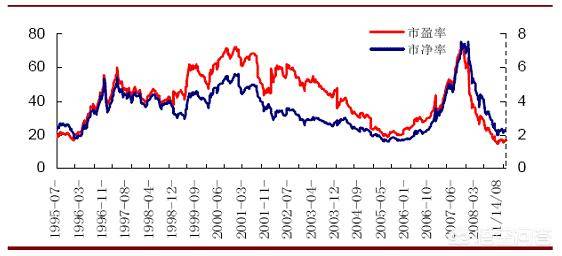
Group 1 - The article discusses the importance of understanding investment strategies for index funds to achieve good returns [2] - A free course is offered to help investors learn index fund investment techniques, along with course notes and mind maps for efficient learning [2] Group 2 - The article highlights three situations where valuation percentiles may fail as a judgment indicator in investments [6] - Situation one involves significant earnings volatility, which can lead to ineffective price-to-earnings (P/E) ratios; in such cases, price-to-book (P/B) ratios can be referenced as an alternative [7][8] - Situation two pertains to indices with a short historical record, where low valuation percentiles may not indicate undervaluation due to insufficient historical data [10] - Situation three addresses changes in index rules, which can significantly alter valuation data; for example, the changes in the China Securities 100 index in June 2022 led to a shift in P/E ratios from around 10 to 13-14 [11][12]


花旗集团市净率7年来首次达到1
Ge Long Hui A P P· 2025-12-06 03:31
Core Viewpoint - Citigroup's price-to-book ratio has reached 1 for the first time since September 2018, indicating that its market value is at least equal to its net asset value, reflecting significant progress in CEO Jane Fraser's transformation plan [1] Group 1: Company Performance - Under Jane Fraser's leadership, Citigroup has implemented measures such as upgrading back-end operations, layoffs, and exiting international retail business [1] - Analysts view the achievement of a price-to-book ratio of 1 as a critical milestone in the transition from "value destruction" to "value creation" for the company [1] - Citigroup's stock price has increased by 58% this year, outperforming all Wall Street peers [1]

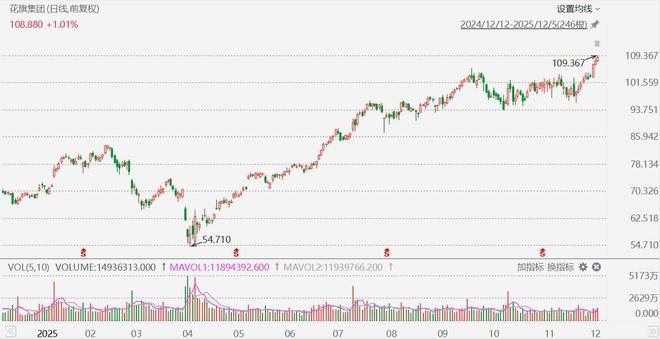
花旗集团市净率七年来首次升至1 拉近与其他华尔街大行距离
Xin Lang Cai Jing· 2025-12-05 22:17
Group 1 - Investors believe for the first time since September 2018 that Citigroup's trading value is at least equal to the total value of its individual assets [1] - The market capitalization to asset value ratio (price-to-book ratio) for Citigroup has returned to parity, indicating the bank is gradually overcoming its lagging position [1] - The price-to-book ratio is a key valuation metric that investors in the banking sector closely monitor, providing a more stable reference compared to other metrics like price-to-earnings ratio due to the regulatory focus on book value and the potential for earnings volatility in banking [1]
每日钉一下(估值百分位,在哪些情况下可能会失效?)
银行螺丝钉· 2025-11-30 13:47
Group 1 - The core concept of fund advisory is to address the issue where funds make profits, but investors do not [4] - Fund advisory services are designed to help investors achieve better returns through professional guidance [5] - The article promotes a free course on fund advisory, offering additional resources like course notes and mind maps for efficient learning [5][7] Group 2 - The article discusses the limitations of valuation percentiles in investment analysis, particularly in three scenarios [8] - Scenario one involves significant fluctuations in earnings, which can render the price-to-earnings (P/E) ratio percentile ineffective [10] - Scenario two highlights that newly established indices may not provide reliable valuation percentiles due to insufficient historical data [13] - Scenario three addresses changes in index rules that can significantly alter valuation metrics, necessitating a reevaluation of historical data [15]

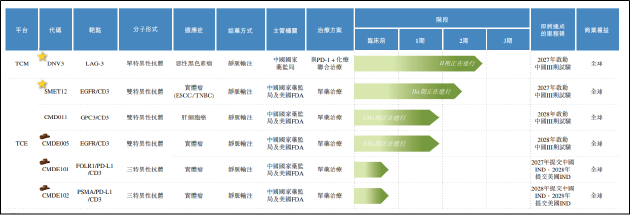
时迈药业IPO:核心产品研发投入逐年走低 四年四换CFO估值已超行业水平
Xin Lang Zheng Quan· 2025-11-28 08:00
Core Viewpoint - Zhejiang Shimai Pharmaceutical Co., Ltd. has submitted its prospectus to the Hong Kong Stock Exchange, aiming for an IPO under Rule 18A, with Huatai International as the sole sponsor. The company focuses on T-cell engagers (TCE) therapies and has attracted investments from notable firms like Betta Pharmaceuticals and Tigermed, achieving a post-Series C valuation of 2.23 billion yuan. However, it faces multiple risks, including reduced R&D investment, frequent changes in financial leadership, and safety concerns regarding core products [1][2]. Financial Performance - The company's revenue for 2023, 2024, and the first half of 2025 is projected to be 14.65 million yuan, 6.62 million yuan, and 2.28 million yuan, respectively, indicating minimal income. Concurrently, net losses are expected to be 74.94 million yuan, 59.89 million yuan, and 25.42 million yuan, leading to cumulative losses exceeding 160 million yuan over two and a half years. Historical cumulative losses since inception are nearing 500 million yuan [2][4]. - R&D expenses have significantly decreased, with figures of 76.11 million yuan, 53.38 million yuan, and 22.39 million yuan for the respective years, reflecting a downward trend. The R&D investment for core products DNV3 and SMET12 has also seen a notable decline [2][4]. Product Development - The company has four clinical-stage candidates, including core products DNV3 and SMET12, which are currently in critical Phase II trials. The reduction in R&D spending during this pivotal phase raises concerns about the company's financial health and ability to validate drug efficacy and safety [4][5]. - DNV3's Phase I trial involved 11 patients, with an adverse event rate of 81.8%, while SMET12's trial included 16 patients, with 93.8% experiencing adverse events. These results raise questions about the safety of the products [6]. Market Position and Valuation - The global TCE market is projected to be only $3 billion in 2024, with the domestic market at 700 million yuan, indicating that TCE therapies are still in the early stages of development compared to the larger oncology market [5]. - The post-Series C valuation of 2.23 billion yuan places the company above industry averages, with a market-to-research ratio of approximately 42 times based on 2024 R&D expenditures. This is significantly higher than the median of 23.21 times for similar unprofitable biotech firms listed under Rule 18A [7].
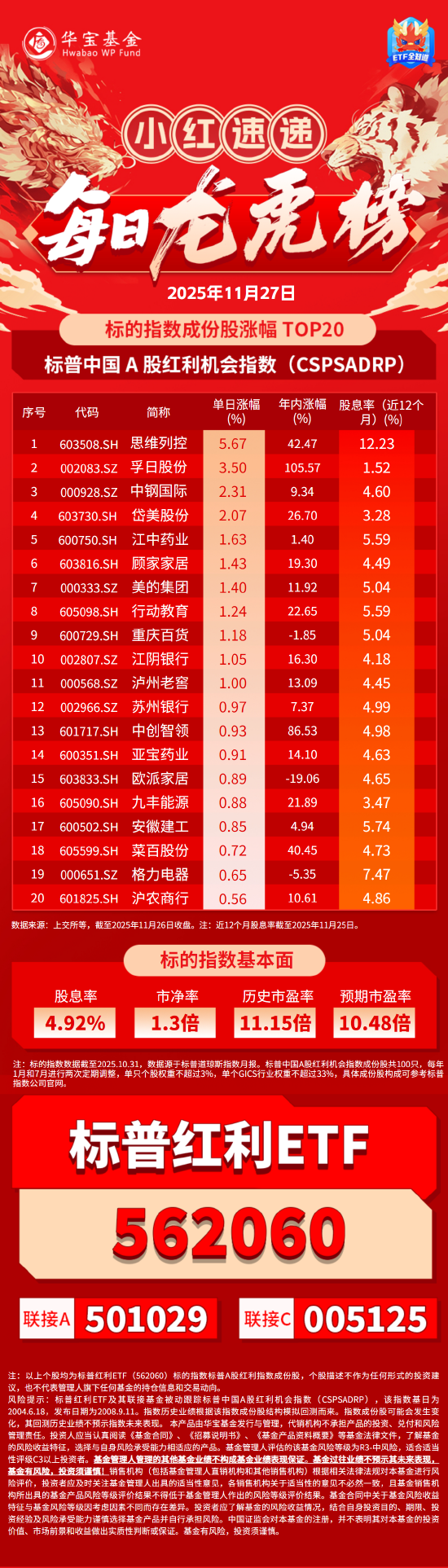
小红日报|孚日股份再现涨停,标普红利ETF(562060)标的指数收涨0.48%
Xin Lang Ji Jin· 2025-11-28 01:07
Group 1 - The article provides a summary of various companies' financial metrics, including dividend yield, price-to-book ratio, historical price-to-earnings ratio, and expected price-to-earnings ratio [2] - The data is sourced from the Shanghai Stock Exchange and is as of the market close on November 26, 2025, with the dividend yield data reflecting the period up to November 25, 2025 [2] Group 2 - Specific companies mentioned include Cai Zhi Co., Ltd. with a dividend yield of 0.72%, Gree Electric Appliances with a dividend yield of 0.65%, and Hu Nong Commercial Bank with a dividend yield of 0.56% [2] - The historical price-to-earnings ratios and expected price-to-earnings ratios for these companies are also provided, indicating their market valuation trends [2]



市盈率和市净率,能证伪上市公司的投资价值吗?
Sou Hu Cai Jing· 2025-11-26 14:50
Core Viewpoint - The article emphasizes the importance of investing in blue-chip stocks with solid performance, highlighting that a significant drop in stock price when earnings do not meet expectations can present a buying opportunity for investors [1] Group 1: Investment Metrics - Price-to-Earnings (PE) ratio is defined as the ratio of a company's stock price to its earnings per share over the past year, serving as a key indicator of investment value; a lower PE ratio suggests a shorter payback period and lower investment risk, indicating higher investment value [1] - Price-to-Book (PB) ratio is the ratio of stock price to net asset value per share, where a lower PB ratio indicates lower risk; the net asset value is influenced by the company's operational performance, with better performance leading to higher asset appreciation and shareholder equity [1]
指数估值日报(2025-11-24 周一)
Sou Hu Cai Jing· 2025-11-24 12:38
Core Insights - The overall valuation of the A-share market is reflected in the PE ratio of 19.91 and PB ratio of 1.56, indicating a relatively high valuation level with a PE percentile of 86.73% [1] - The 10-year government bond yields are significantly different between China (1.82%) and the US (4.05%), suggesting varying risk-free rates impacting investment decisions [1] A-share Major Index Valuation - The PE and PB ratios for major indices show that the ChiNext Index has a high PE of 37.85 and a PB of 4.86, indicating strong growth expectations [1] - The Shanghai Composite Index has a PE of 13.11 and a PB of 1.26, reflecting a more conservative valuation compared to other indices [1] - The CSI 300 Index shows a PE of 13.11 and a PB of 1.26, suggesting it is trading at a reasonable valuation relative to its earnings [1] A-share Major Industry Index Valuation - The computer industry has the highest PE ratio at 201.45, indicating high growth expectations but also potential overvaluation [1] - The banking sector has a low PE of 9.19 and a PB of 0.79, suggesting it may be undervalued compared to other sectors [1] - The real estate sector shows a PE of 59.59 and a PB of 0.97, indicating a mixed valuation with potential risks [1]
聚焦全球能源 | 亚太地区油气生厂商2026年展望
彭博Bloomberg· 2025-11-21 06:05
Core Insights - The global energy market is experiencing volatility due to rapid industry developments, geopolitical tensions, and fluctuating supply-demand dynamics [3][4][10] Group 1: Market Outlook - Asian oil and gas producers will face challenges from oil price fluctuations primarily influenced by supply-demand factors, with WTI crude oil prices expected to remain below $60 per barrel for most of 2026 [3][10] - The MSCI AC Asia-Pacific Energy Index's price-to-book ratio is currently at 1.2, above its 10-year average of 1.1, indicating that investors have not fully accounted for the risks of declining oil prices [3][7] Group 2: Performance Analysis - From January 1 to October 31, the Asian oil and gas index has underperformed the broader market due to weakened demand expectations stemming from U.S. tariffs and OPEC+ production increases [4][5] - The MSCI AC Asia-Pacific Energy Index rose by 13.86% during the same period, while the broader MSCI Asia-Pacific Index increased by 25.83%, highlighting a widening performance gap since August [5] Group 3: Supply Dynamics - OPEC+ is expected to increase production by 137,000 barrels per day in December as part of a gradual exit from voluntary production cuts implemented in 2023, which may lead to a supply surplus in the oil market [10] - The uncertainty surrounding Russian supply could exacerbate supply disruptions and potentially lead to spikes in oil prices in 2026 [4][5]

5连板安泰集团:公司目前的市净率高于所属行业板块的市净率 存在市场情绪过热、非理性炒作风险
Zheng Quan Shi Bao Wang· 2025-11-17 10:14
Core Viewpoint - Antai Group (600408) has experienced a significant stock price increase of 213.18% from September 29 to November 17, which is substantially higher than the Shanghai Composite Index during the same period, indicating potential irrational market speculation and risks of a rapid price decline in the future [1] Company Summary - The company reported a current price-to-book ratio (P/B) of 5.11, which is notably higher than the P/B ratios of its industry peers: 1.57 for the coking processing sector and 1.18 for the steel sector, suggesting that the company's stock may be overvalued compared to its fundamentals [1] - Despite the stock price volatility, the company's production and operations remain normal, and there have been no significant changes in the external operating environment [1] - The company has confirmed that there are no undisclosed significant information that should have been disclosed [1]
