文化赋能

Search documents
国货美妆“出海” 扮靓“颜值经济”
Ren Min Ri Bao· 2025-09-16 20:53
Group 1 - The Chinese beauty products industry is accelerating its "going global" strategy, with exports of cosmetics and personal care products expected to reach 51.2 billion RMB in 2024, a year-on-year increase of 11.9% [1] - Incorporating Chinese culture into brand building is seen as an effective strategy for establishing brand recognition in overseas markets, with companies like Plant Doctor Group using traditional Chinese medicinal ingredients to attract consumers [1][2] - The rise of Chinese cultural influence is enhancing the appeal of domestic beauty brands in international markets, as brands that integrate cultural elements into their narratives can build unique recognition [2][3] Group 2 - Localized design strategies are crucial for Chinese beauty brands to succeed in diverse international markets, as consumer preferences vary significantly across regions [4][5] - Companies like Orange Group are focusing on understanding overseas market preferences and adapting their products accordingly, including developing new shades and formulations to meet local needs [4][5] - Establishing local teams and R&D centers abroad helps brands better align with market demands and regulatory standards, enhancing consumer trust and product freshness [5][6] Group 3 - Continuous investment in technological innovation is strengthening the competitive edge of Chinese beauty products in the global market, with companies developing proprietary technologies and establishing comprehensive supply chains [6][7] - The industry is witnessing a shift towards technology-driven growth, with brands increasingly focusing on R&D to create effective products that meet consumer needs [7][8] - The next 3 to 5 years are expected to see an intensified effort from Chinese beauty brands to expand internationally, particularly in emerging markets, facilitated by the growth of cross-border e-commerce [8]

文化赋能美丽乡村!省委社会工作部调研梅州仓海诗廊
Nan Fang Nong Cun Bao· 2025-09-12 12:33
Core Viewpoint - The article highlights the importance of cultural empowerment in rural revitalization, showcasing the successful transformation of Changlong Village in Meizhou through various initiatives [16][19][20]. Group 1: Research and Development - A research team led by Wang Lichun from the Provincial Social Work Department conducted a survey in Meizhou, focusing on volunteer services for the 15th Provincial Games and the integration of professional social work with volunteer services [2][3][4]. - The team visited various locations, including the football venues for the 15th Provincial Games, to understand the operational support for volunteers and their impact on community governance [9][10]. Group 2: Cultural Empowerment and Rural Revitalization - Changlong Village has implemented the "Hundred Thousand Million Project" as a key strategy, integrating diverse business models and cultural initiatives to enhance rural quality and appearance [16][17]. - The village has been recognized as a cultural and tourism characteristic village in Guangdong and received the "National Civilized Village" honor, demonstrating the significant role of culture in rural transformation [18][19]. - The experience of Changlong Village serves as a model for rural revitalization, providing replicable and promotable strategies for other villages in Guangdong and across the country [20].


巨有科技景区多业态夜游经济:点亮景区夜间消费新场景
Sou Hu Cai Jing· 2025-09-11 15:27
Group 1: Night Economy Development - The night tourism economy is experiencing unprecedented growth opportunities, evolving from a single lighting upgrade to a multi-dimensional experience reconstruction [1] - The night economy is releasing significant benefits by extending time and space, with Beijing Universal Studios' "Magic World Night Show" increasing per capita spending to 1.8 times that of daytime [1] - Chengdu's Jinjiang night tour project has transformed a 2.4 km river into a mobile theater, leading to a 25% increase in rental prices for nearby shops [1] Group 2: Cultural Narratives in Night Economy - Cultural narratives are the core engine of the night economy, shifting from observational to participatory experiences [3] - The "Tokyo Dream of Huazhi" night tour in Kaifeng enhances visitor engagement through role-playing and gamification, increasing the repeat visit rate to 37% [3] - The deep development of cultural IP is creating a chain effect, as seen in the Dunhuang "Night Tour of Mogao Caves," which boosted hotel occupancy rates by 52% [3] Group 3: Technological Innovations in Night Economy - Technological innovations are reshaping the experience dimensions of the night economy through spatial reconstruction, sensory integration, and intelligent response [4] - The "Pearl River Phantom" project in Guangzhou utilizes 5G and 8K technology for real-time interaction, achieving a premium rate 2.3 times higher than ordinary night tours [4] - The application of metaverse technology in Zhangjiajie's "Wuling Fantasy" AR night tour allows digital participation in cultural rituals, with virtual goods transactions accounting for 18% of total revenue [4]

圈粉中外价值跃升:“东方爱情果”广东荔枝IP炼成记
21世纪经济报道· 2025-09-06 12:46
Core Viewpoint - The article highlights the successful branding and marketing of Guangdong lychee under the name "Oriental Love Fruit," which has significantly increased its export volume and market presence both domestically and internationally [2][3][8]. Summary by Sections Export Performance - In the first seven months of 2025, Guangdong exported 13,000 tons of lychee, marking a year-on-year increase of 97.2% [2]. - The export volume of Guangdong lychee first exceeded 20,000 tons in 2021, reaching four times that of 2020 and six times that of 2019 [2]. Branding and Marketing Strategy - The "Oriental Love Fruit" brand was launched at the 21st China (Shenzhen) International Cultural Industries Fair, aiming to enhance market recognition and cultural value [3][4]. - The brand generated 1.5 tons of domestic and international procurement orders on its launch day and has successfully penetrated high-end fresh markets, including a 48-hour delivery to New York [3][4]. Cultural and Emotional Appeal - The branding strategy leverages cultural narratives and emotional connections, using "love" as a universal language to resonate with diverse consumer demographics [5][8]. - The brand's story incorporates historical references and cultural elements, enhancing its appeal and marketability [4][5]. Media and Social Engagement - A multi-layered communication strategy was employed, utilizing social media, live streaming, and collaborations with influencers to amplify brand visibility [6][10]. - The brand's launch coincided with significant media coverage and public engagement, leading to a rapid increase in online discussions and interest [4][6]. Market Integration and Future Prospects - The initiative aims to integrate fragmented regional resources and create a sustainable ecosystem for the lychee industry, potentially expanding into cultural tourism and creative industries [3][8]. - The article emphasizes the importance of transforming brand awareness into sales, with a focus on enhancing the cultural value of lychee to improve its market competitiveness [10][12]. International Market Expansion - The "Oriental Love Fruit" brand is positioned to elevate Guangdong lychee from a tropical fruit to a cultural symbol, aiming for a stronger presence in international markets [8][15]. - The article notes that Guangdong lychee exports exceed 8,000 tons annually, accounting for 55% of the national total, with aspirations to establish a global brand identity [15].

放大海湾经济黄金效益
Jing Ji Ri Bao· 2025-09-05 22:14
Core Viewpoint - The marine economy in China has shown significant growth, with a total output value of 5.1 trillion yuan in the first half of the year, reflecting a year-on-year increase of 5.8%. The bay economy is highlighted as a vibrant growth point, supported by various policies and strategic planning [1][2]. Group 1: Marine Economy Growth - The marine economy's total output value reached 5.1 trillion yuan in the first half of the year, with a growth rate of 5.8% year-on-year [1]. - The bay economy is identified as a key growth area, with over 150 bays larger than 10 square kilometers, forming major bay areas such as the Bohai Rim, Hangzhou Bay, and Guangdong-Hong Kong-Macau [1]. - Significant contributions to the marine economy include the marine shipbuilding industry with an added value of 137 billion yuan, marine engineering equipment manufacturing with 103.2 billion yuan, and marine pharmaceuticals and biological products with 78.1 billion yuan expected in 2024 [1]. Group 2: Policy and Strategic Planning - A series of policies, including the "Bohai Rim Cooperation Development Outline" and "Guangdong-Hong Kong-Macau Greater Bay Area Development Plan," have elevated bay area construction to a national strategic level [2]. - Challenges such as high redundancy in port construction, homogenization of shipping services, and underdeveloped cultural industries need to be addressed for high-quality development of the bay economy [2]. - Recommendations include breaking regional barriers, establishing integrated port operations, and promoting a unified data platform for real-time logistics efficiency [2]. Group 3: Cultural and Industrial Innovation - Enhancing cultural empowerment by integrating historical resources with modern creativity to develop a distinctive cultural industry is essential for new growth points in the bay economy [3]. - Innovation in institutional mechanisms is necessary to facilitate collaborative development among key sectors such as transportation, equipment manufacturing, and new energy [3]. - Establishing a talent exchange mechanism between government, industry, and academia is crucial for nurturing skilled professionals who can support collaborative industrial development [3].
国家文化产业示范基地!凉山文旅去年营收增长491.21%
Nan Fang Du Shi Bao· 2025-08-29 10:21
Core Insights - Liangshan Cultural Tourism Group achieved a total operating income of 1.596 billion yuan in 2024, marking a growth of 491.21% since its establishment, with 1.287 billion yuan earned from January to July 2025 [1] Group 1: Business Performance - Liangshan Cultural Tourism Group's total operating income for 2024 is projected at 1.596 billion yuan, reflecting a significant increase of 491.21% since its inception [1] - The company reported an operating income of 1.287 billion yuan from January to July 2025 [1] Group 2: Cultural and Tourism Integration - The company focuses on "cultural empowerment and three-industry linkage," creating five main business sectors: cultural arts, tourism services, scenic area development, sports health, and cultural tourism elements [2] - Liangshan Cultural Tourism Group has implemented three major brand initiatives, including "Colorful Clouds" for new artistic media, "Asniu" for ecological food supply, and "Panda You Tour" for family service systems [2] Group 3: Cultural Projects and Recognition - The company has produced numerous award-winning cultural works, including TV dramas and ethnic operas, receiving multiple prestigious awards [7] - Liangshan Cultural Tourism Group has organized significant cultural events and projects, such as the Daliangshan Drama Festival and the Spring Festival Gala [7] Group 4: Tourism Development Strategy - The company is developing several new scenic projects across five lines, focusing on various themes such as health tourism, ethnic culture, and ecological tourism [14] - Liangshan Cultural Tourism Group aims to enhance the "Red Army Long March through Liangshan" cultural heritage and innovate in the "industry + research" model for tourism development [14] Group 5: Future Goals and IPO Plans - Liangshan Cultural Tourism Group is targeting an IPO, emphasizing market-oriented strategies and capital operations to enhance its brand and market presence [16] - The company has been rated "AA+" for creditworthiness, becoming the first cultural tourism enterprise in Sichuan province outside Chengdu to achieve this rating [16]

“墨渌无界”当代水墨学术邀请展亮相京城
Bei Jing Shang Bao· 2025-08-28 15:06
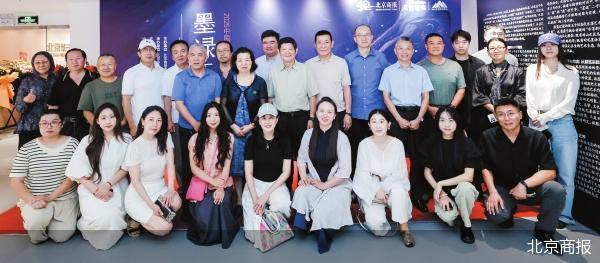
Group 1 - The "Ink Without Boundaries - 2025 China Contemporary Ink Academic Invitation Exhibition" opened in Beijing, showcasing over a hundred works from 50 artists, marking a significant moment for both the Beijing Business Daily and contemporary ink art [2] - The exhibition serves as a systematic presentation of the development of contemporary ink art, connecting history with the present, academia with the public, and art with media [2] - The Beijing Business Daily, celebrating its 40th anniversary, has expanded its value boundaries through a series of exhibitions and salon activities, embodying the concept of "cultural empowerment" [4] Group 2 - The exhibition not only reviews the evolution of ink art but also provides a quality platform for cross-border communication between commerce and culture, highlighting the responsibilities of economic media [6] - The establishment of the Beijing Huaten Art Museum represents a significant step in the "Cultural Huaten" strategy, aiming to integrate art aesthetics with dining aesthetics [10] - The exhibition reflects the contemporary ink art's expansion in terms of creative concepts, aesthetic tastes, and material usage, aligning with the realities of globalization and digitalization [14][16] Group 3 - The exhibition is a comprehensive review and academic examination of the achievements in contemporary ink art, set against a historical backdrop of artistic exploration and innovation [12] - The event also included the unveiling of the "Beijing Auction Association Exhibit Center," creating a new platform for the auction industry in Beijing [18]
定义新标准,激活新市场:汇通达网络(9878.HK)携手桃花潭的“酒水样本”
Cai Fu Zai Xian· 2025-08-27 02:18
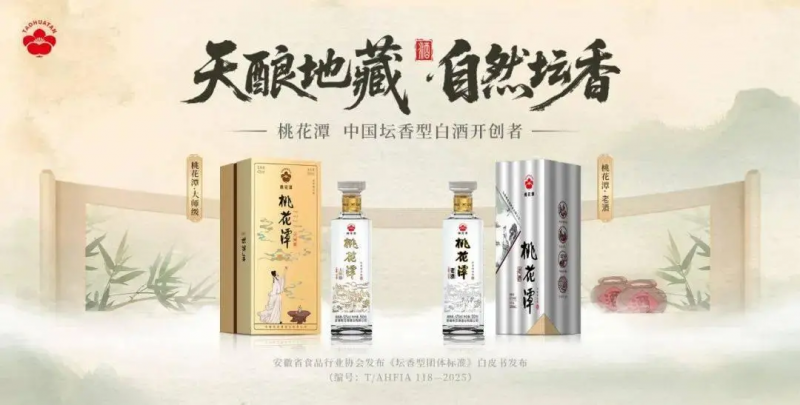
Core Viewpoint - Huitongda Network (9878.HK) is advancing its self-owned brand strategy in the liquor industry, focusing on an "integrated production and sales" model, achieving a favorable performance characterized by both volume and price increases [1] Group 1: Self-Owned Brand Strategy - Huitongda's self-owned brand strategy has been upgraded with the release of the "Tanshang Type Group Standard" white paper in collaboration with Anhui Taohua Tan Liquor Industry, marking a new phase of systematic and standardized empowerment [1][3] - The "Tanshang Type" standard aims to redefine brand value amidst the traditional dominance of three main fragrance types in the liquor industry, catering to diverse consumer flavor preferences [3][5] Group 2: Product Development and Market Positioning - The "Tanshang Type" liquor, developed over three years, features a unique style characterized by "elegant fragrance and smooth taste," utilizing high-quality sorghum and traditional fermentation techniques [3][6] - The release of the standard signifies a shift from brand and channel integration to "industry standard definition," enhancing Huitongda's self-owned brand strategy [5] Group 3: Market Activation and Sales Strategy - Huitongda is leveraging a dual approach of "integrated production and sales" and "cultural empowerment" to tap into the vast liquor market, creating new opportunities for super products in lower-tier markets [8] - The company is building a comprehensive sales matrix by integrating high-quality brewing resources and utilizing a nationwide network of member stores, alongside e-commerce and cultural tourism channels [8] Group 4: Cultural Integration and Consumer Engagement - Huitongda's products are designed to resonate with emotional consumer needs, incorporating cultural narratives and historical elements to enhance brand value and consumer experience [8][10] - The existing product series covers various market segments, from high-end collectibles to mass consumption, ensuring a complete pricing range and consumption pathways [8] Group 5: Industry Innovation and Competitive Advantage - Industry experts note that innovative fragrance types are becoming a benchmark for evaluating liquor companies, with Huitongda's focus on quality and ecological factors supporting its brand differentiation [10] - The combination of self-owned brands, standard formulation, and cultural empowerment positions Huitongda to reshape the traditional liquor industry, transitioning from scale competition to value competition [10]
NBA球星中国行:运动品牌本土化战略的双向奔赴
Cai Jing Wang· 2025-08-23 14:34
Group 1 - The core viewpoint of the articles highlights the evolution of NBA stars' promotional activities in China, transitioning from random commercial appearances to becoming a central module in global sports brand marketing strategies, emphasizing cultural empowerment and localized ecosystem development [1][4] - Sports brands are embedding star IPs deeply into Chinese cultural contexts, transforming them into cross-cultural communication mediums, thus establishing emotional recognition systems that transcend product functionality [2][4] - The connection between cultural experiences and product trust has remained intact, with brands utilizing star visits to enhance consumer awareness of localized production processes, thereby reconstructing and expanding consumption scenarios [3][4] Group 2 - The strategy of cultural empowerment is viewed as a "soft competitiveness," while the establishment of localized ecosystems is defined as a "hard infrastructure" supporting long-term brand growth [4][6] - Youth training systems are crucial for brands' localized strategies, recognizing that the youth demographic represents both future core consumers and significant potential in the Chinese sports market [4][6] - Grassroots events serve as important vehicles for brands to penetrate regional markets, with collaborations and cross-industry partnerships further expanding brand commercial ecosystems [5][6]
民营企业立足本土,持续创新,金星在“中式精酿啤酒”赛道一路领跑
Jing Ji Wang· 2025-08-21 09:50
Core Insights - The article highlights the transformation of the Chinese beer industry from quantity to quality, with Jin Xing Beer emerging as a leader in the craft beer segment, integrating traditional flavors with modern brewing techniques [1][5] Company Overview - Jin Xing Beer has established itself as the pioneer and top producer of Chinese craft beer, achieving a production and sales volume of 100 million cans (1-liter size) and over 100,000 tons as of early June [1] - The company has developed a unique "1258" core brewing process, which includes one month of low-temperature fermentation, sterile and oxygen-free fermentation, a five-stage saccharification process, and eight days of deep cold circulation [1][7] Product Innovation - The latest product launch includes the "Lemon Sea Salt" craft beer, expanding the product line to cater to younger consumers with various packaging options [3] - Jin Xing Beer incorporates local elements such as tea and traditional Chinese flavors into its products, enhancing cultural relevance and consumer appeal [5] Market Trends - The craft beer market in China is expected to see a penetration rate of 6.3% by 2025, with a projected market size of 130 billion yuan, indicating a shift from niche to mainstream consumption [7] - The company has successfully leveraged social media, with significant engagement on platforms like Douyin, achieving over 1.7 billion views for various campaigns [7]