资本市场改革

Search documents
A股单日成交额突破3.6万亿元
Mei Ri Jing Ji Xin Wen· 2026-01-12 13:35
Market Overview - On January 12, the total trading volume of the Shanghai and Shenzhen stock markets reached 3.6 trillion yuan, marking the highest single-day trading amount in history. However, the current trading volume is still significantly lower than the historical peak observed during the "9.24" market period in 2024 [1][4]. Investor Sentiment - There is a strong bullish sentiment among domestic and foreign institutions, with many foreign investment firms expressing a more favorable view towards Chinese assets. This shift indicates a significant change in overseas investors' attitudes [3][8]. Sector Performance - The "technology bull" characteristics remain prominent in the market, with high-tech sectors such as media, computer, defense, and communication leading the gains on January 12. This mirrors the sector performance during the historical peak on October 8, 2024 [6][5]. Institutional Insights - Institutions are generally optimistic about the market outlook, with discussions at the recent China Chief Economist Forum focusing on the revaluation opportunities for Chinese assets as the yuan gradually appreciates. There is a consensus on the structural opportunities in the technology growth sector [7][8]. Foreign Investment Trends - International investors are increasingly interested in participating in the Chinese market, with a 32% year-on-year increase in investor attendance from regions including the US, Europe, the Middle East, and Africa at recent forums. By the third quarter of 2025, the underweight position of foreign capital in Chinese stocks has narrowed from -2.5% to -1.3% [9]. Market Dynamics - Looking ahead to 2026, the A-share market is expected to experience structural differentiation, characterized by industry, profit, and demand disparities. Key investment themes include high-value manufacturing, global expansion of Chinese consumer goods, and the impact of passive investment flows on index-weighted stocks [10].

盘前必读丨证监会最新发声;16倍大牛股天普股份被立案调查
Di Yi Cai Jing· 2026-01-11 23:18
Market Performance - US stock markets experienced a significant rise, with the S&P 500 index increasing by 0.65%, reaching a record closing price. The Nasdaq rose by 0.81%, and the Dow Jones increased by 0.48%, both also setting new closing records [4] - Notable gains were observed in technology stocks, with Broadcom up 3.76% and Tesla rising 2.11%. Alphabet's A and C shares both increased by 0.96%, while Meta Platforms rose by 1.08% [4] - The Philadelphia Semiconductor Index climbed 2.7%, reaching a record high, with Lam Research surging 8.7% and Intel's stock rising nearly 11% following positive comments from President Trump [4] Commodity Market - International oil prices rose, with light crude oil futures for February delivery increasing by $1.36 to $59.12 per barrel, marking a 2.35% gain [5] - Gold prices continued to show strength, with spot gold closing at $4,496.09 per ounce, up 0.5%, and a weekly increase of approximately 3.9% [5] - Silver prices also saw significant gains, with spot silver rising 3.81% to $79.93 per ounce, accumulating a weekly increase of 9.81% [5] Policy and Economic Measures - The State Council emphasized the implementation of coordinated fiscal and financial policies to stimulate domestic demand, aiming to enhance consumer capacity and support private investment [6] - The National Business Work Conference outlined eight key areas for 2026, including boosting consumer spending and promoting trade innovation [7] - The State Administration for Market Regulation announced an investigation into the competitive practices of food delivery platforms to ensure fair competition and compliance with regulations [8] Capital Market Developments - The China Securities Regulatory Commission (CSRC) announced new regulations to increase rewards for whistleblowers reporting securities violations, raising the reward percentage from 1% to 3% of penalties collected [10] - The CSRC is investigating abnormal stock price fluctuations of Tianpu Rubber Technology Co., indicating a focus on maintaining market stability [10] Technological Advancements - The China Weapon Industry Group successfully completed the first flight test of the "Tianma-1000" unmanned transport aircraft, which is designed for logistics and emergency rescue, showcasing its capabilities in complex terrains [11]


促进资本市场健康稳定发展
Xin Lang Cai Jing· 2026-01-11 22:25
Group 1 - The core viewpoint emphasizes the importance of building a stable and healthy capital market as a crucial support for the construction of a financial power, as highlighted in the "15th Five-Year Plan" [2][3] - The capital market's role is evolving from merely a financing platform to a key hub connecting the real economy, technological innovation, and social capital, with a focus on guiding resource flow and risk dispersion [4][5] - The need for a more inclusive and adaptable capital market is increasingly urgent, particularly in supporting new industries and innovative enterprises [5][6] Group 2 - The capital market should serve as a core platform for resource allocation, aligning funding with national strategies in areas like technological innovation and green transformation [3][4] - There is a structural issue in the capital market where financing functions are strong, but investment functions are relatively weak, which hinders long-term healthy operation [7] - The development of direct financing through equity and bond markets is essential for optimizing corporate financing structures and promoting stable capital market growth [8][9] Group 3 - The steady development of futures, derivatives, and asset securitization is crucial for enhancing market completeness and enriching financial products [9] - The capital market must improve its institutional inclusiveness and adaptability to better serve the needs of technological innovation and the growth of tech enterprises [6][7] - Future reforms should focus on differentiating listing standards based on industry characteristics and enterprise development stages to facilitate the entry of high-quality innovative companies into the capital market [6][8]

资本市场改革“三端”发力构建生态链
Zhong Guo Zheng Quan Bao· 2026-01-11 20:49
Core Viewpoint - The 30th China Capital Market Forum emphasized the need for a collaborative approach to enhance the capital market ecosystem, focusing on financing, investment, and regulatory reforms to support high-quality development during the 14th Five-Year Plan period [1] Financing Side - Experts highlighted the importance of enhancing services for technology innovation enterprises, suggesting adjustments to the structure of listed companies to prioritize high-tech and innovative firms [1] - Recommendations include enriching the financial product supply system to better accommodate new industries and technologies, fostering a positive cycle among technology, industry, and finance [1] - The goal is to ensure that the capital market meets investors' risk-return expectations by gradually introducing high-growth tech companies [1] Investment Side - The investment side reform aims to create a stable environment for long-term capital, encouraging large funds to enter the market [2] - The focus is on improving the institutional framework for long-term investments, ensuring that various funds are attracted to the market and can thrive [2] - Historically, the market has been dominated by individual investors, but there is a push to bring in institutional investors like insurance funds and pension funds to enhance market liquidity [2] Regulatory Side - The regulatory environment is deemed crucial for the healthy operation of the capital market, with a focus on enhancing the effectiveness of regulatory enforcement through legal and market-oriented methods [3] - Experts advocate for a comprehensive regulatory system that adapts to rapid market changes, ensuring transparency and accountability among market participants [3] - The core of regulatory reform is to build investor confidence by ensuring market transparency and accurate disclosure of information by issuers [3] Additional Recommendations - Suggestions include establishing a robust securities and futures regulatory system to combat financial fraud and enhance investor protection [4] - There is a call for addressing barriers to long-term capital entering the market, including reforms in public funds and promoting a cycle of fundraising and investment in private equity and venture capital [3][4]
中国人民大学国家金融研究院院长吴晓求:下一步资本市场应做好资产端、投资端、制度端三重改革
Qi Huo Ri Bao Wang· 2026-01-11 16:48
Core Viewpoint - The Chinese capital market has undergone fundamental changes over the past year, particularly since September 24, 2024, with a gradual recovery in market confidence and stabilization of expectations. The next steps involve reforms in three areas: asset side, investment side, and institutional side [1]. Group 1: Asset Side Reform - The goal of asset side reform is to adjust the structure of listed companies, promoting a shift towards high-tech and innovative enterprises to enhance the risk-return capability of the market and optimize the asset structure [1]. Group 2: Investment Side Reform - Investment side reform aims to relax institutional constraints on long-term funds such as insurance, social security, and pension funds entering the market, thereby expanding market liquidity. The revision of rules is intended to guide more long-term institutional funds to enter the market in an orderly and large-scale manner, maintaining a healthy liquidity state [1]. Group 3: Institutional Side Reform - Institutional reform is highlighted as the most critical task, with the core objective being to ensure market transparency, which is deemed the lifeline of the capital market. Various measures will be taken to ensure that issuers disclose information truthfully. The fundamental goal of the reform is to eliminate risks associated with fraudulent listings, financial fraud, false disclosures, and insider trading. Severe penalties will be imposed on all "risk creators" and those who assist them, transitioning from administrative penalties to criminal and civil liabilities. Additionally, intermediary institutions will face equivalent severe penalties [1]. Group 4: Foundations of Capital Market Development - The development of the capital market is supported by three key foundations: a sound legal system, a high degree of contractual spirit, and market transparency. A sound legal system stabilizes market expectations and promotes capital flow, while the contractual spirit is essential for maintaining financial order. Transparency is considered the lifeline of the capital market, with regulatory functions focusing on transparency oversight to ensure all participants, especially listed companies and intermediary institutions, disclose information truthfully [2].
中国人民大学国家金融研究院院长吴晓求:下一步资本市场改革着力点是“三端”
Zheng Quan Ri Bao Wang· 2026-01-11 09:06
Core Viewpoint - The Chinese capital market has undergone fundamental changes since September 24, 2024, with gradually restored market confidence and stable expectations, necessitating reforms focused on the asset side, investment side, and institutional side to meet diverse financing needs of enterprises and wealth management needs of residents [1][2]. Asset Side Reform - The goal of asset side reform is to adjust the structure of listed companies in China, allowing technology-driven enterprises to become the mainstay, as they can provide risk-return rates that meet investor demands [1]. Investment Side Reform - Investment side reform aims to attract large funds by relaxing rules for their entry into the market, specifically targeting long-term funds such as insurance capital, social security funds, pensions, and annuities. This reform is crucial for expanding market liquidity and ensuring it remains relatively sufficient [1]. Institutional Side Reform - Institutional side reform focuses on ensuring market confidence, expectations, and bottom lines, with the core goal of enhancing market transparency. This includes measures to ensure issuers disclose information truthfully and to eliminate risks associated with fraudulent listings, financial fraud, false disclosures, and insider trading. Severe penalties will be imposed on those who create such risks, transitioning from administrative to criminal and civil penalties [2]. Foundations of Capital Market Development - The development of the capital market relies on three key foundations: a sound legal system, a strong spirit of contract, and transparency. A sound legal system stabilizes market expectations and promotes capital flow, while the spirit of contract maintains financial order through stability and predictability in the macro environment. Transparency is deemed the lifeline of the capital market, with regulatory functions centered on ensuring all participants, especially listed companies and intermediaries, disclose information truthfully [3].
吴晓求称要对资本市场埋雷者重罚
Di Yi Cai Jing Zi Xun· 2026-01-11 03:12
2026.01.11 本文字数:951,阅读时长大约2分钟 作者 |第一财经 周楠 2026年伊始,A股市场表现强势,沪指一举突破4100点,两市成交额站上3万亿大关。 "险资就是一个例子,不是说险资不能进,是险资没法进,它的偿付能力指标就约束它了,把投资风险 市场的系数弄得很高,同时考核周期又很短。"他举例说。 吴晓求认为,推动投资端改革是本轮资本市场改革重点,核心目标是扩大市场流动性。 第三,制度端改革。吴晓求说,没有制度端的改革,前述两项改革很难见效,而制度端改革的核心是要 让市场有信心、有预期、有底线性。 他进一步解释称,制度端改革首先要确保市场透明度,要采取各种手段让发行人如实披露信息,不 能"埋雷"。 "现在有一些上市公司总想'埋雷',千方百计地'埋雷'。更有甚者欺诈上市,这样下去市场的'雷'该太多 了。"吴晓求说,资本市场改革要从没有"雷"开始。 那么,如何把"雷"去掉?对此,他建议,对"埋雷者"和"帮助埋雷者"重罚,对欺诈上市、财务造假、内 幕交易等行为的处罚,从行政处罚转变为进行刑事处罚、民事赔偿,并对帮助造假的中介机构同等处 罚。 "最近一年多来,特别是从2024年9月24日以来,中国资本 ...
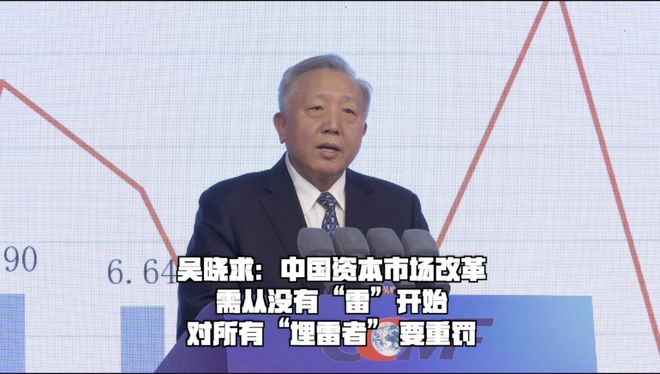
吴晓求:资本市场改革要从没有“雷”开始,对“埋雷者”“帮助埋雷者”重罚
Di Yi Cai Jing· 2026-01-11 02:50
Core Viewpoint - The core viewpoint emphasizes the need for reforms in the capital market to restore market confidence, stabilize expectations, and establish clear bottom lines [2][4]. Group 1: Market Performance - At the beginning of 2026, the A-share market showed strong performance, with the Shanghai Composite Index surpassing 4100 points and total trading volume exceeding 30 trillion [2]. - The fundamental changes in the capital market over the past year, particularly since September 24, 2024, are attributed to the recovery of market confidence and stability of expectations [2]. Group 2: Reform Suggestions - The proposed reforms in the capital market include three main aspects: asset side, demand side, and institutional side [3][4]. - The asset side reform focuses on adjusting the structure of listed companies to prioritize high-tech and innovative enterprises, as their development is seen as the underlying logic for capital market growth [3]. - The demand side reform aims to enhance the investment side, addressing issues such as regulatory constraints and risk perception that have previously limited large capital inflows into the market [3]. Group 3: Institutional Reforms - Institutional reform is deemed essential for the effectiveness of the other two reforms, with the primary goal of ensuring market confidence, expectations, and clear bottom lines [4]. - Key aspects of institutional reform include improving market transparency and ensuring that issuers provide truthful information to avoid hidden risks [4]. - To eliminate risks, it is suggested that severe penalties be imposed on those who conceal risks or engage in fraudulent activities, transitioning from administrative to criminal penalties and civil compensation for such offenses [4].
黄奇帆:资本市场两个“轮子”要一起转
Di Yi Cai Jing Zi Xun· 2026-01-10 15:09
Core Viewpoint - The capital market in China consists of two essential components: the stock market involving listed companies and securities firms, and the capital formation and supplementation mechanism for all enterprises, which includes the development of equity investment funds [2][3]. Group 1: Capital Market Structure - The capital market should not only focus on securities and listings but also encompass mechanisms for capital formation and supplementation for enterprises [2]. - The dual components of the capital market act as a significant driving force for the national economy, necessitating a sustainable capital supplementation mechanism to address issues of corporate efficiency and risk [3][4]. Group 2: Historical Context and Current Challenges - Historically, state-led initiatives in the 1990s, such as the bankruptcy write-off of state-owned enterprises and debt-to-equity swaps, played a crucial role in capital supplementation [3]. - By 2000, the capital of listed companies in China was over 70%, but by the present, corporate debt ratios have risen to around 70%, significantly higher than the 30%-40% seen in the US and Europe [3][4]. Group 3: Proposed Solutions for Capital Supplementation - To improve the capital structure, an additional 30 trillion to 40 trillion yuan is needed to raise the total capital of Chinese enterprises from approximately 200 trillion yuan to around 240 trillion yuan, potentially reducing the debt ratio to 55% or 50% [5][6]. - Four sources for this additional capital include: 1. Bank capital, where banks could allocate about 1 trillion yuan for equity investments [6]. 2. National social security funds, which could contribute approximately 2 trillion yuan [6]. 3. Commercial insurance funds, which could provide around 4 trillion yuan [6]. 4. Foreign exchange funds, which could be mobilized through special government bonds [7]. Group 4: Expected Benefits of Capital Injection - The formation of this additional equity capital could lead to improved corporate risk management, enhanced productivity, significant investment returns, and increased influence of state-owned enterprises on the national economy [7]. - An estimated average return of 8% on these investments could yield 3 trillion to 4 trillion yuan in returns, benefiting public finances and enhancing the returns for social security and insurance funds [7].
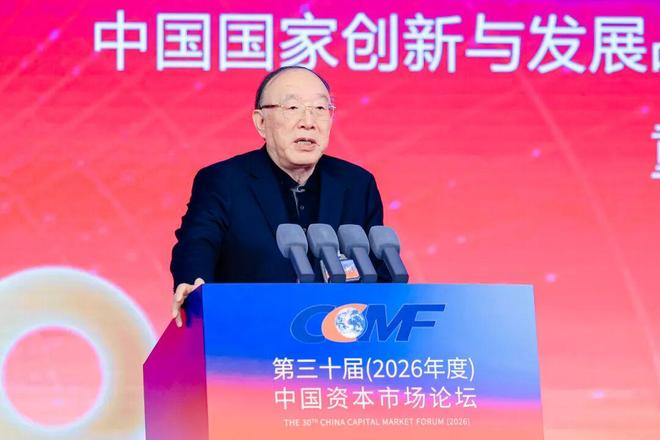
黄奇帆:资本市场两个“轮子”要一起转
第一财经· 2026-01-10 14:58
Core Viewpoint - The article emphasizes the need for a dual mechanism in China's capital market, consisting of both the stock market and a robust capital formation and supplementation mechanism for enterprises, to drive national economic growth [3]. Group 1: Capital Market Structure - The capital market in China includes two main components: the stock market involving listed companies and securities firms, and the broader capital formation mechanisms for all enterprises, including private equity funds [3]. - A sustainable capital supplementation mechanism is crucial for addressing the efficiency and risk issues faced by Chinese enterprises, which currently have a high debt-to-equity ratio [4]. Group 2: Historical Context and Current Challenges - Historically, state-led initiatives in the 1990s, such as debt write-offs and the development of the stock market, significantly contributed to capital supplementation for enterprises [4]. - As of 2000, the capital of listed companies was over 70%, but by now, the debt ratio for enterprises has risen to around 70%, which is significantly higher than the 30%-40% seen in the US and Europe [4]. Group 3: Proposed Solutions for Capital Supplementation - To improve the capital structure, an additional 30 trillion to 40 trillion yuan is needed to raise the total capital of Chinese enterprises from approximately 200 trillion yuan to around 240 trillion yuan, potentially reducing the debt ratio to 55% or 50% [5]. - Four sources for this additional capital include: 1. Bank capital, where banks could allocate about 1 trillion yuan for equity investments [7]. 2. National social security funds, which could contribute around 2 trillion yuan [7]. 3. Commercial insurance funds, potentially providing close to 4 trillion yuan [8]. 4. Foreign exchange funds, which could be mobilized through special government bonds [8]. Group 4: Expected Benefits of Capital Injection - The proposed capital injection could lead to improved enterprise risk management, foster new productive capacities, generate substantial investment returns, enhance the influence of state-owned enterprises on the economy, and improve the credit and returns of private enterprises [8][9]. - An estimated average return of 8% on the proposed funds could yield 3 trillion to 4 trillion yuan in investment returns, benefiting public finances and social security funds [9].