
风险防控

Search documents
扩大开放更要统筹好发展和安全
Jing Ji Ri Bao· 2025-11-22 22:04
Core Viewpoint - The emphasis on balancing development and security in the context of expanding openness in the Hainan Free Trade Port is crucial for achieving high-level foreign trade and investment [1][2][3] Group 1: Development and Security - The current international political and economic landscape is complex, with significant challenges in the trade environment, necessitating a careful approach to openness [1][2] - The Hainan Free Trade Port is seen as a "testing ground" for higher levels of openness, requiring innovative legal, regulatory, and management frameworks [1][2] - A systematic approach to risk identification and prevention is essential to maintain a secure environment while promoting development [2][3] Group 2: Risk Management - Conducting comprehensive pressure tests in specific areas is vital for assessing the feasibility of innovative systems and risk management capabilities [2][3] - A dual approach of technological empowerment and institutional innovation is necessary to enhance the precision of risk prevention [3] - The regulatory framework should shift from "strict access and light regulation" to "broad access and heavy regulation," focusing on process-oriented oversight [3] Group 3: Economic and Social Security - The free flow of goods, capital, talent, technology, and data introduces both traditional and non-traditional economic security risks [2][3] - Building a robust risk prevention system that aligns with the level of openness is critical for maintaining overall economic and social security [3] - The development process should integrate safety measures, enhancing the resilience and vitality of industrial and supply chains [3]
中上协会长宋志平:从筑牢治理根基、聚焦主责主业等五方面提高上市公司质量
Xin Hua Cai Jing· 2025-11-20 09:21
Core Viewpoint - The meeting of the China Listed Companies Association emphasized the importance of improving the quality of listed companies for the healthy development of the capital market and the overall high-quality economic development of the country. The association proposed five recommendations to enhance the quality of listed companies [1]. Group 1: Governance and Compliance - Strengthening governance foundations and enhancing compliance effectiveness is crucial. The revised Corporate Governance Code marks a shift from "formal compliance" to "substantive effectiveness." Companies should build a governance structure that is "well-structured, efficient in operation, and appropriately checks power" [2]. - Companies are encouraged to review their governance structures, enhance board decision-making functions, and improve the supervision mechanism of the audit committee to ensure that all governance bodies fulfill their responsibilities [2]. Group 2: Focus on Core Business - Companies should focus on their main responsibilities and cultivate new productive forces. This involves upgrading core business areas and identifying technological breakthroughs and new growth points [3]. - Companies are advised to avoid blind expansion and instead leverage their strengths to drive innovation and invest in research and development [3]. Group 3: Resource Allocation and Mergers - Optimizing core resource allocation and cautiously advancing mergers and acquisitions is essential. The introduction of measures like the "Six Guidelines for Mergers" has improved the inclusiveness and convenience of restructuring reviews [4]. - Mergers should align with the overall development strategy of the company, ensuring compliance and focusing on integration to achieve synergistic effects [4]. Group 4: Shareholder Returns - Companies should adopt a prudent approach to enhance shareholder return awareness, which reflects stable operations and financial health [5]. - A tailored return policy should be developed based on the company's development stage, industry characteristics, and financial status, utilizing methods like cash dividends and share buybacks [5]. Group 5: Risk Management - Companies must adopt a bottom-line thinking approach to establish a robust risk prevention system. The revised Corporate Governance Code focuses on regulating key minority behaviors and enhancing governance transparency [6]. - A comprehensive risk prevention system should be established, with a strong emphasis on internal controls and the responsibilities of the board of directors in risk management [6].
25万亿+15万亿!山东金融这两大核心指标实现“双突破”
Zheng Quan Shi Bao Wang· 2025-11-19 06:06
Core Insights - Shandong's financial sector is set to achieve significant milestones by May 2025, with social financing expected to exceed 25 trillion yuan and foreign and domestic currency loan balances surpassing 15 trillion yuan by November 2024, indicating early fulfillment of the "14th Five-Year Plan" goals [1] Group 1: Financial Growth and Performance - Over the past five years, Shandong's financial sector has experienced rapid growth, with social financing scale growth consistently exceeding the national average for 25 consecutive quarters and loan balance growth leading the nation for 20 consecutive quarters, providing continuous financial support to the real economy [1] - The average interest rate for newly issued corporate loans in Shandong has decreased to 3.61% as of September 2025, down 1.06 percentage points from the end of 2020, while the average interest rate for personal housing loans has dropped to 3.05%, a significant reduction of 2.2 percentage points [2] Group 2: Targeted Financial Support - Shandong's financial sector has focused on key areas such as technological innovation and rural revitalization, securing a total of 864.45 billion yuan in funding, and providing 378 billion yuan in financing for 343 cultural tourism projects, thereby stimulating domestic demand and consumption [2] - During the "14th Five-Year Plan" period, inclusive loans for small and micro enterprises increased by 1.27 trillion yuan, with an annual growth rate of 24.69%, while inclusive agricultural loans rose by 480.24 billion yuan, growing at an annual rate of 15.67%, expanding financial services to a broader audience [2] Group 3: Financial Innovation and Risk Management - Shandong has leveraged its three financial reform pilot zones to drive innovation, with loans to innovative enterprises in Jinan's pilot zone increasing by 176.7% since its approval, and over 100 innovative reform results emerging from the Qingdao wealth management pilot zone [3] - The financial sector has effectively managed risks, resolving 815.98 billion yuan in non-performing loans over five years, with total industry capital and provisions exceeding 1.1117 trillion yuan, ensuring no systemic risks arise [3] - The foreign exchange hedging ratio for enterprises has improved from 16.83% in 2020 to 30.39% by September 2025, aiding foreign trade enterprises in navigating market fluctuations [3] Group 4: Future Outlook - Shandong's financial sector aims to continue deepening supply-side structural reforms and optimizing the financial ecosystem to ensure that financial resources are more precisely directed towards key areas and weak links in the real economy, supporting the construction of a modern socialist strong province [4]
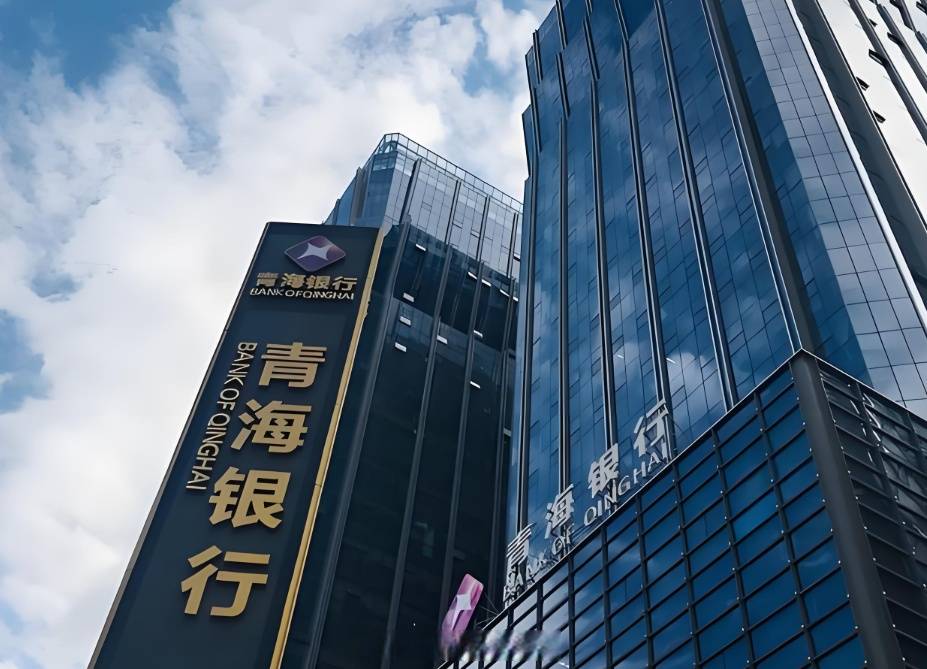
青海银行董事长等三名高管任职资格获批,核心团队落定后亟需攻坚盈利难题
Sou Hu Cai Jing· 2025-11-14 08:01
Core Viewpoint - Qinghai Bank has undergone a management reshuffle with the appointment of new leadership, aiming to address operational challenges and improve financial performance [1][4]. Group 1: Management Changes - The new management team includes Ying Haifeng as Chairman, Wu Cunshou as President, and Liu Hongbo as Vice President, with their qualifications approved by the Qinghai Regulatory Bureau [1]. - Ying Haifeng has extensive experience within Qinghai Bank, having held various key positions since its inception, while Wu Cunshou brings a strong background in credit risk management [2][4]. Group 2: Financial Performance - Qinghai Bank's total revenue and net profit have shown a declining trend from 2022 to 2023, with revenues of CNY 1.003 billion and CNY 961 million, and net profits of CNY 209 million and CNY 203 million respectively [4]. - However, in 2023, the bank reported a recovery with revenues and net profits reaching CNY 1.197 billion and CNY 220 million, marking year-on-year increases of 24.56% and 8.37% respectively [4]. Group 3: Asset Quality - As of the end of 2024, Qinghai Bank's total assets stood at CNY 112.854 billion, with deposits of CNY 83.944 billion and loans of CNY 66.435 billion [7]. - The bank's non-performing loan (NPL) ratio improved to 2.18% by the end of 2024, a decrease of 7 basis points from the previous year, indicating a positive trend in asset quality [7]. Group 4: Risk Management Strategies - Qinghai Bank is employing various strategies to manage non-performing assets, including litigation recovery, debt restructuring, and asset transfer [8]. - The bank has established multiple risk control indicators to enhance its risk management framework, focusing on various loan categories and recovery rates [8].

国务院国资委主任张玉卓到中国国新调研
Zheng Quan Shi Bao Wang· 2025-11-14 06:24
Core Insights - The State-owned Assets Supervision and Administration Commission (SASAC) emphasizes the importance of implementing the spirit of the 20th National Congress of the Communist Party of China in state-owned enterprises [1] Group 1: Strategic Direction - The SASAC highlights the need for China National New Holding Co., Ltd. to leverage the opportunity of formulating the "14th Five-Year" plan to focus on strategic orientation [1] - The company is encouraged to enhance its role as a state-owned capital operation company, increasing investment in technological innovation and focusing on emerging and future industries [1] Group 2: Investment and Development - The establishment of a forward-looking strategic industry "incubator" is recommended to promote intelligent, green, and integrated industrial development [1] - A multi-dimensional investment model combining investment entities, industry tracks, and regional centers is proposed to optimize management and operational systems [1] Group 3: Risk Management - The importance of establishing a digital and transparent risk prevention system is stressed to mitigate risks from the source [1] - The company is urged to adopt a bottom-line thinking approach and strengthen accountability to ensure high-quality development [1] Group 4: Party Leadership and Governance - The integration of party building with business operations is emphasized to ensure comprehensive and strict governance of the party [1] - Continuous improvement of the incentive and constraint mechanisms is necessary to enhance the professional capacity of capital operations [1]
泰州农商银行:规模质效双升 创新风控未来
Jiang Nan Shi Bao· 2025-11-13 23:36
Core Viewpoint - Taizhou Rural Commercial Bank has achieved steady growth in key indicators and significant breakthroughs in key tasks this year through a focus on "scale expansion, structural optimization, and quality improvement" across three dimensions: business scale expansion, risk control enhancement, and service innovation upgrade [1] Business Scale Expansion - The bank has achieved coordinated expansion across three fronts, with a focus on small and micro enterprises and the real economy, resulting in increased loan balances and growth rates in key areas, exceeding regulatory targets for inclusive loans [1] - For large enterprises, the bank offers flexible credit limits, preferential interest rates, and supply chain financial services, while simplifying credit loan approval processes for small and medium enterprises, enhancing customer loyalty significantly [1] - The bank has seen growth in low-cost funding retention on the liability side, with increases in corporate settlement account openings, effective payroll enterprises, and payroll amounts, alongside a steady rise in monthly active users for personal and corporate wallets [1] Risk Control - The bank has established a "three-line defense" for risk control, with a decrease in non-performing loan rates since the beginning of the year and significant achievements in the recovery and disposal of non-performing loans [2] - An innovative online mediation model, "Rongyi Jie," has significantly improved the resolution rate of small non-performing disputes, while a revised responsibility recognition method for non-performing loans has been introduced to stimulate lending enthusiasm among account managers [2] - The efficiency of the full-process risk control has improved, with a nearly 50% reduction in credit approval time under the "three platforms and six posts" model, maintaining a high renewal approval rate for personal clients [2] Service Innovation - The bank has initiated a grid-based service model, leveraging "grid + big data + footwork," resulting in significant increases in the number of new face-to-face clients, archived clients, credit clients, and loan clients in the third quarter [3] - The establishment of specialty branches, such as the government and early tea branches, has progressed smoothly, with the early tea branch collaborating with merchants for promotional activities, creating a "finance + livelihood" service loop [3] - The bank has expanded its convenient service coverage, establishing multiple inclusive financial service demonstration points, achieving good results in agricultural withdrawal and agency payment business volumes and amounts [3]
银行密集召开经营会议,岁末年初划定哪些工作重点?
Xin Lang Cai Jing· 2025-11-13 01:20
Core Viewpoint - Multiple banks are actively preparing for the "opening red" of the new year while balancing the year-end closure of the current year, emphasizing a dual focus on achieving annual goals and preparing for the next year's performance [2][3]. Group 1: Year-End and New Year Preparation - Banks are emphasizing the importance of balancing year-end performance with the preparation for the first quarter of the next year, with some banks starting their preparations two months earlier than usual [3]. - Agricultural Bank of China’s Henan branch is focusing on enhancing service capabilities and market competitiveness while planning targeted marketing activities for customer acquisition [3]. - Huaxia Bank’s Chongqing branch is pushing to meet annual targets and has identified 20 key tasks to ensure readiness for the "opening red" [3]. Group 2: Emphasis on Speed and Proactivity - The keywords "fast, early, and seize" have been highlighted by several banks, with Huaxia Bank’s Taiyuan branch stressing the need for quick responses and decisive actions to maintain a competitive edge [4]. - Donghai Bank is advocating for early planning and action to ensure a strong start for the new year [4]. - Jiangxi Rural Commercial Bank is focused on achieving its goals and accelerating progress in its operations [4]. Group 3: Support for Agriculture and Small Enterprises - Many small and medium-sized banks are reinforcing their commitment to supporting agriculture and small enterprises, with Zhuhai Rural Commercial Bank emphasizing its market positioning in this area [5][6]. - Jiangxi Rural Commercial Bank is focusing on deepening its financial services in county areas to strengthen its support for agriculture and small enterprises [6]. - Beijing Rural Commercial Bank is concentrating on ten key tasks, including increasing credit investment and enhancing service quality for agriculture and small enterprises [7]. Group 4: Risk Management and Control - Risk management remains a central theme in the recent meetings, with banks like China Agricultural Development Bank emphasizing the need for early risk correction mechanisms [10][11]. - Agricultural Bank of China’s Henan branch is focused on controlling credit risk and ensuring compliance with annual governance targets [11]. - Several banks reported significant improvements in risk management, with institutions like Huaxia Bank noting enhancements in asset quality and risk control [12]. Group 5: Performance Evaluation and Accountability - Some banks are focusing on optimizing their performance evaluation mechanisms, with Hengfeng Bank highlighting the need for a market-oriented approach to assessments [13]. - Huaxia Bank’s Taiyuan branch is closely monitoring risk-related evaluation indicators to improve performance scores [13]. - Jiangxi Rural Commercial Bank is working on enhancing its evaluation system to incorporate a more comprehensive assessment of risk management and compliance [13].

三论深入学习贯彻习近平总书记在听取海南自由贸易港建设工作汇报时的重要讲话精神
Hai Nan Ri Bao· 2025-11-11 02:03
Core Viewpoint - The importance of balancing development and security in the construction of Hainan Free Trade Port is emphasized, highlighting that safety is a prerequisite for development and vice versa [2][3][5] Group 1: Development and Security - The construction of the Hainan Free Trade Port requires a high level of safety to ensure high-level openness, as stated by Xi Jinping [2][3] - Continuous emphasis on risk prevention and control has been a consistent requirement for Hainan Free Trade Port since 2018 [2][3] - The upcoming closure of Hainan Free Trade Port presents increasing risks and challenges, necessitating precise risk identification and management [3][4] Group 2: Risk Management Strategies - Strengthening risk identification and prevention is crucial for maintaining safety, with a focus on systematic and bottom-line thinking [4] - The need for sector-specific risk control and enhancing the ability to respond to various risks is highlighted, including the use of technology for better regulatory efficiency [4] - Collaborative mechanisms for risk sharing and management are essential to create a safer environment in Hainan [4][5]
财通资管荣获“2025证券业金牛奖”4项大奖
Zhong Zheng Wang· 2025-11-10 12:58
Group 1 - The core theme of the event was "Introducing New Quality, Linking Global, Promoting Industry" and the "2025 Securities Industry Golden Bull Award" was announced [1] - Caitong Asset Management won four awards, including the "Five-Year Golden Bull Securities Firm Collective Asset Manager" and three individual awards for fixed-income asset management plans, highlighting its long-term commitment and strength in fixed-income investment [1] - As of the end of Q3 2025, Caitong Asset Management's total management scale exceeded 300 billion yuan, with over 100 billion yuan in public fund management and more than 20.8 million investors served [1] Group 2 - In the fixed-income sector, Caitong Asset Management adheres to a "low volatility, stable return" philosophy and emphasizes risk control before seeking returns [2] - The company has established a multi-strategy fixed-income system and has a management scale exceeding 176 billion yuan in fixed-income products, with over 41.5 billion yuan distributed to investors [2] - Caitong Asset Management aims to enhance its active management capabilities and diversify its product offerings to improve investor experience and create long-term value [2]
应对金价波动 强化风险防控——多家银行上调积存金门槛
Jing Ji Ri Bao· 2025-11-07 22:20
Core Viewpoint - Several banks have raised the minimum investment threshold for gold accumulation business, increasing it to a range of 950 to 1200 yuan, which is an increase of 300 to 550 yuan compared to the beginning of this year [1][2]. Group 1: Market Dynamics - The gold accumulation business allows financial institutions to open gold accounts for clients, recording the weight of gold deposited over a certain period, functioning similarly to "installment buying of gold" [1]. - The core reason for banks adjusting the gold accumulation business threshold is the significant increase in gold price volatility and investment risk, with international gold prices rising nearly 60% this year and reaching historical highs [1][2]. - On October 28, international gold prices dropped below 3900 USD per ounce after approaching 4400 USD per ounce, indicating recent fluctuations and high-level oscillations [1]. Group 2: Regulatory and Operational Considerations - The adjustment aligns with regulatory requirements, as the "Interim Measures for the Management of Gold Accumulation Business" mandates that financial institutions protect investor rights and adequately inform them of risks [2]. - Internal operational considerations and risk prevention are also driving the dynamic adjustments, aimed at reducing operational risks associated with severe price fluctuations [2]. - Increasing the threshold helps filter investors with stronger risk tolerance, thereby mitigating liquidity pressure caused by irrational redemptions during market volatility [2].