
国产替代

Search documents
上海沿浦(605128):2025年报预告点评:25Q4超预期,座椅总成+机器人业务打开空间
ZHONGTAI SECURITIES· 2026-01-26 14:02
Investment Rating - The report maintains a "Buy" rating for the company, indicating an expected relative performance increase of over 15% against the benchmark index within the next 6 to 12 months [4][10]. Core Insights - The company is projected to achieve a net profit attributable to shareholders of between 186 million to 212 million yuan in 2025, representing a year-on-year growth of 35.4% to 55% [6]. - The fourth quarter of 2025 is expected to see a net profit of 59 million to 85 million yuan, with a year-on-year increase of 103.4% to 193.1% [8]. - The company is accelerating its layout in seat assemblies and robotics, which is anticipated to open new growth avenues [8]. Financial Performance Summary - Revenue projections for the company are as follows: 1,519 million yuan in 2023, 2,276 million yuan in 2024, 2,541 million yuan in 2025, 3,750 million yuan in 2026, and 4,850 million yuan in 2027, with growth rates of 35%, 50%, 12%, 48%, and 29% respectively [4]. - The net profit attributable to shareholders is forecasted to be 91 million yuan in 2023, 137 million yuan in 2024, 198 million yuan in 2025, 282 million yuan in 2026, and 395 million yuan in 2027, with year-on-year growth rates of 99%, 50%, 44%, 42%, and 40% respectively [4]. - The earnings per share (EPS) are expected to be 0.43 yuan in 2023, 0.65 yuan in 2024, 0.94 yuan in 2025, 1.33 yuan in 2026, and 1.87 yuan in 2027 [4]. Business Strategy and Market Position - The company is focusing on enhancing its core advantages in seat frame technology, which constitutes nearly 70% of the investment in seat assemblies [7]. - The restructuring of the automotive landscape is creating new supply relationships, and there is a strong willingness among new players to cultivate local supply chains [7]. - The company has successfully transitioned to a Tier 1 supplier model, directly engaging with OEMs, and has secured new projects with existing clients, enhancing its long-term growth logic [8]. Growth Potential - The domestic automotive seat market is projected to reach approximately 150 billion yuan in 2025, with a compound annual growth rate (CAGR) of 17% [8]. - The company is expected to see significant growth in its seat assembly and robotics segments, which are anticipated to provide a larger growth ceiling in the medium to long term [8].

楚天科技分析师会议-20260126
Dong Jian Yan Bao· 2026-01-26 13:42
Report Summary 1. Report Industry Investment Rating - Not provided in the content 2. Core View of the Report - The company achieved a significant turnaround in net profit and net profit after non-recurring items in 2025 compared to 2024, mainly due to increased international market expansion, a product differentiation strategy, cost reduction and efficiency improvement measures, and refined management [22]. - The company's performance improvement in 2025 is mainly based on its long - term product and manufacturing technology accumulation, enhanced overall solution capabilities and globalization service capabilities, as well as timely strategic adjustments in 2024 [23]. 3. Summary by Relevant Catalogs 3.1 Research Basic Situation - Research object: Chutian Technology [17] - Industry: Medical devices [17] - Reception time: 2026 - 01 - 26 [17] - Listed company reception staff: Board Secretary Huang Yuting, Securities Affairs Representative Zhou Dewei [17] 3.2 Detailed Research Institutions - Reception object type: Securities company - Institution: China Merchants Securities - Number of related personnel: 2 [20] 3.3 Research Institution Proportion - Not detailed in the content 3.4 Main Content Data 3.4.1 Reasons for the Company's Profit Improvement in 2025 - Increased international market expansion: In 2025, overseas business entered a rapid growth channel, with breakthroughs in Southeast Asia, the Middle East and Africa, and the Americas. The proportion of international business in the company's overall business increased significantly, driving profit growth [22]. - Product differentiation and cost - reduction: Since the second half of 2024, the company adopted a product differentiation strategy to improve order quality and carried out a series of cost - reduction and efficiency - improvement measures, which significantly increased the gross profit margin [22]. - Refined management: Since the second half of 2024, the company carried out refined management measures, and the overall operating cost in 2025 was effectively controlled, with a significant decrease in total period expenses compared to the same period in 2024 [22]. 3.4.2 Industry Trends - Domestic industry competition is still fierce but gradually easing, with characteristics such as accelerated domestic substitution, increased market concentration, expanded advantages of leading enterprises, and international market expansion becoming a new growth point [23]. - The focus of industry competition has shifted from traditional equipment performance to technological integration, system solutions, and global service capabilities [23]. 3.4.3 Overseas Export in 2025 - The company's international sales and service system team has been growing, with local sales and service outlets established in more than 20 key countries and regions. It focuses on five major regions and promotes high - quality sales and services [23]. - The export orders in 2025 increased compared to 2024 [23]. 3.4.4 Pharmaceutical Robot Layout - The company's pharmaceutical robot business layout focuses on the core pharmaceutical equipment industry chain and the medical clean core sector, aiming to upgrade pharmaceutical equipment to unmanned and intelligent levels [23]. - The company has achieved self - production and product implementation of clean robots and sorting robots, which can effectively meet the needs of existing business scenarios [24]. - The core competitive advantages are a deep understanding of application scenarios and downstream pharmaceutical production processes, which can help product iteration and efficiency improvement [24]. 3.4.5 Operating Conditions of ROMACO - ROMACO Group's operating conditions have improved steadily compared to 2024, and its core business indicators and market competitiveness have increased [24]. - Whether goodwill will be impaired and the impairment amount need to be based on formal reports from third - party asset appraisal companies and audit institutions [24]. 3.4.6 New Product Development - The company has been insisting on technological innovation, with a high R & D investment proportion in the industry. It has continuously launched new products and technologies in recent years [25]. - Future products include continuous BFS, fully automatic intelligent lamp inspection machines, etc. The company will continue to implement the "dual - priority" strategy of product and manufacturing technology [25]. 3.4.7 Business Outlook in 2026 - In the business aspect, the company will continue to expand overseas markets, promote the globalization strategy, and increase the proportion of international business in revenue. It will also focus on innovation to drive the integration of the pharmaceutical equipment industry chain with the international market [25]. - In the management aspect, the company will continue to implement "quality improvement and efficiency enhancement", using technological means and management measures to achieve cost reduction and efficiency improvement [25].
“工业黄金”,再添6万吨产能
Shang Hai Zheng Quan Bao· 2026-01-26 12:48
Core Viewpoint - The domestic production of POE (polyolefin elastomer) in China is advancing significantly, with major projects expected to reduce reliance on imports and enhance supply capabilities in strategic industries such as photovoltaics and automotive lightweight components [1][2][3]. Group 1: Industry Developments - China Petroleum's Dushanzi Petrochemical Company has made significant progress in its domestic POE adaptation project, aiming to produce nearly 60,000 tons of POE by 2025 [1]. - The reliance on imported POE in China remains high, with an import dependency of approximately 95% projected until the third quarter of 2025, highlighting the urgency for domestic production [1]. - The import volume of POE in China has increased from 224,400 tons in 2017 to 913,000 tons in 2024, with an average annual growth rate of 19.7% [1]. Group 2: Company Initiatives - Domestic companies are accelerating efforts to enhance POE supply capabilities, with Dingjide investing in a petrochemical new materials project in Dalian, planning for an annual capacity of 200,000 tons of POE [2]. - Dongfang Shenghong's Shenghong Petrochemical has launched a 100,000 tons/year POE project, with the first batch of 320 tons of high-quality products already delivered [3]. - China Petroleum's Dushanzi Petrochemical has focused on high-end polyolefin research since 2015, achieving a significant technological breakthrough in POE production by 2024, with total POE capacity expected to exceed 300,000 tons by the end of 2026 [3].

A股发展能力百强榜出炉,谁是未来的增长引擎?|上市公司观察
Sou Hu Cai Jing· 2026-01-26 12:44
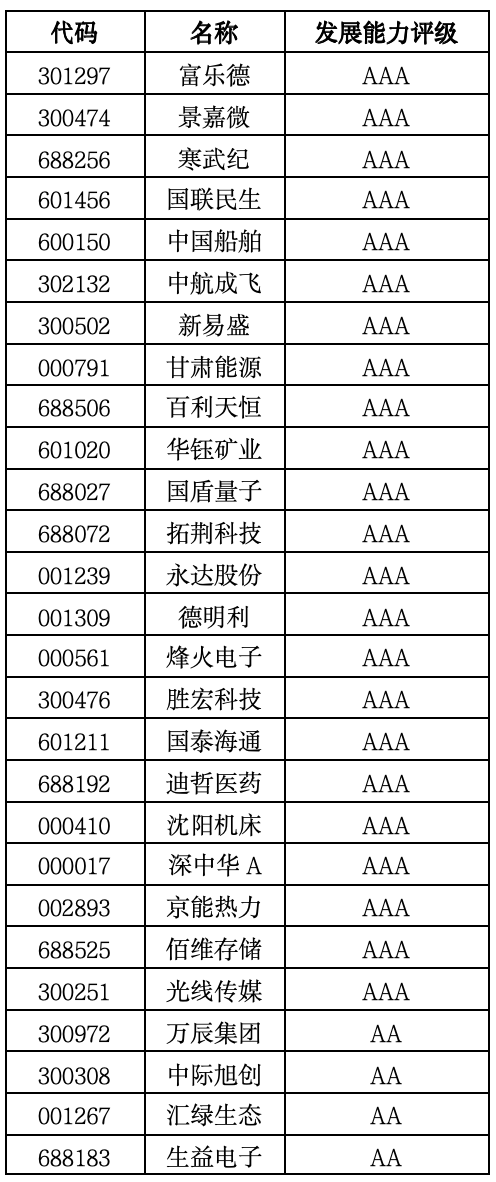
Core Insights - The article emphasizes that a company's growth capability, determined by its foresight, adaptability to technological changes, market expansion execution, and competitive landscape shaping, is crucial for future success [1][2] - The latest competitiveness rating data from JIAN Jin Xin highlights the top 100 companies in the A-share market based on their development capabilities, showcasing their strong potential in R&D investment, market expansion, and strategic foresight [1][2] Group 1: Development Capability Assessment - The assessment of "development capability" focuses on several key factors: R&D investment ratio, contribution from new products/markets, patent quantity and quality, strategic foresight, and growth stability [2] - Higher scores indicate stronger growth momentum and greater long-term value potential within their respective sectors [3] Group 2: Key Sectors and Companies - The list is heavily concentrated in sectors such as technology, high-end manufacturing, pharmaceuticals, new energy, and military industry, which are seen as "hardcore growth tracks" [3] - Notable companies in the semiconductor and AI chip sector include Cambricon, Jingjia Micro, and others, which are pivotal for domestic substitution and China's technological self-reliance [3][4] - In the biopharmaceutical sector, companies like Baillie Tenheng and Dize Pharmaceutical have made significant breakthroughs in cancer treatment [4] - The military and aerospace sectors are represented by companies like AVIC Chengfei and China Shipbuilding, which are crucial for national strategic security [4] Group 3: Emerging Technologies and Innovations - New energy and new materials companies are at the forefront of the energy revolution, with firms like Fulede and Gansu Energy rapidly rising due to technological upgrades and innovative models [5] - Emerging tech companies such as Fulede and Cambricon have quickly become market stars due to their disruptive technologies and clear strategic paths [5] Group 4: Development Capability Ratings - A detailed list of companies with their development capability ratings includes top-rated firms like Fulede, Jingjia Micro, and Cambricon, all rated AAA [6][7] - The ratings serve as a roadmap for assessing a company's growth potential and strategic vision [9]


珂玛科技2025年第四季度净利润料同比变动-51.18%至7.23%
Xin Hua Cai Jing· 2026-01-26 12:25
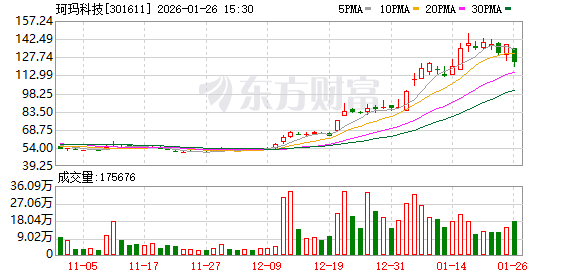
Core Viewpoint - Kema Technology forecasts a revenue of 1.06 billion to 1.08 billion yuan for 2025, representing a year-on-year growth of 23.63% to 25.96%, while net profit is expected to range from 286.1 million to 335.85 million yuan, with a year-on-year change of -8.00% to 8.00% [2] Revenue Summary - The growth in revenue is attributed to the large-scale production and delivery of the core product, the "function-structure" modular product [3] - The company has completed the relocation of its ceramic heater production line and is enhancing related facilities to gradually release production capacity within the year [3] - The ceramic heaters are primarily supplied to domestic semiconductor wafer manufacturers and mainstream equipment manufacturers, with some products already in mass production for wafer film deposition processes [3] Profit Summary - The lower growth rate of net profit compared to revenue is due to changes in the revenue structure, driven by strong market demand for ceramic structural components, which have a lower gross margin than modular products [4] - The overall gross margin for 2025 is expected to decline compared to 2024 due to the increased revenue share of lower-margin ceramic structural components [4] - The company is increasing R&D investment to ensure delivery capabilities and strengthen market competitiveness, including new R&D projects and the acquisition of Suzhou Kaixin Semiconductor Technology Co., Ltd. [4] Stock Performance - Kema Technology's stock price fell by 10.97% on January 26, 2026, closing at 123.22 yuan per share, with a market capitalization of approximately 53.72 billion yuan [4] - The stock price increased by 179.0% over the 40 trading days from November 24, 2025, to January 20, 2026 [4]
立高食品(300973):全年收入双位数增长 盈利能力继续提升
Xin Lang Cai Jing· 2026-01-26 10:37
Core Viewpoint - The company has disclosed its performance forecast for 2025, indicating a significant acceleration in revenue growth compared to 2024, with a projected revenue of 4.26 to 4.42 billion yuan, representing a year-on-year increase of 11.1% to 15.2% [1] Revenue Forecast - The company expects to achieve a revenue of 4.26 to 4.42 billion yuan in 2025, with a median growth rate of approximately 13.2% compared to 2024 [1] - For Q4 2025, the revenue is projected to be between 1.12 to 1.28 billion yuan, showing a year-on-year change of -0.2% to +14.1%, with a median of about 690 million yuan, indicating a slight slowdown in growth compared to the first three quarters [1] - Sales in key channels such as supermarkets, restaurant chains, and overseas markets are expected to grow, with overseas sales projected to exceed 100 million yuan, reflecting a year-on-year increase of over 50% [1] Profitability Improvement - The company forecasts a net profit attributable to shareholders of 310 to 330 million yuan for 2025, representing a year-on-year increase of 16.1% to 23.5% [2] - The expected net profit margin is approximately 7.3% to 7.5%, an increase of 0.3 to 0.5 percentage points year-on-year, with a median increase of about 0.4 percentage points [2] - For Q4 2025, the net profit is anticipated to be between 60 to 80 million yuan, with a year-on-year change of -2.6% to +28.2% [2] Short-term and Long-term Outlook - In the short term, the company is expected to perform well in Q1 2026 due to concentrated inventory preparation for the Spring Festival and successful new product launches in channels like Sam's Club [3] - Long-term growth is anticipated from new channels such as Sam's Club and Hema, alongside the company's strengthened product development capabilities [3] - The company is well-positioned to benefit from domestic substitution opportunities in baking raw materials, supported by favorable policies and local dairy prices [3] Investment Recommendations - The company has adjusted its profit forecasts, expecting revenues of 4.35 billion, 4.91 billion, and 5.44 billion yuan for 2025 to 2027, with year-on-year growth rates of 13%, 13%, and 11% respectively [3] - The projected net profits for the same period are 320 million, 400 million, and 480 million yuan, with year-on-year growth rates of 20%, 24%, and 19% respectively [3] - The company maintains a "recommended" rating based on the positive short-term and long-term outlooks [3]

公募基金调仓图谱:科技制造主线强化 传统蓝筹获回流布局 新能源内部分化(附加减仓TOP50榜单)
Xin Lang Cai Jing· 2026-01-26 10:09
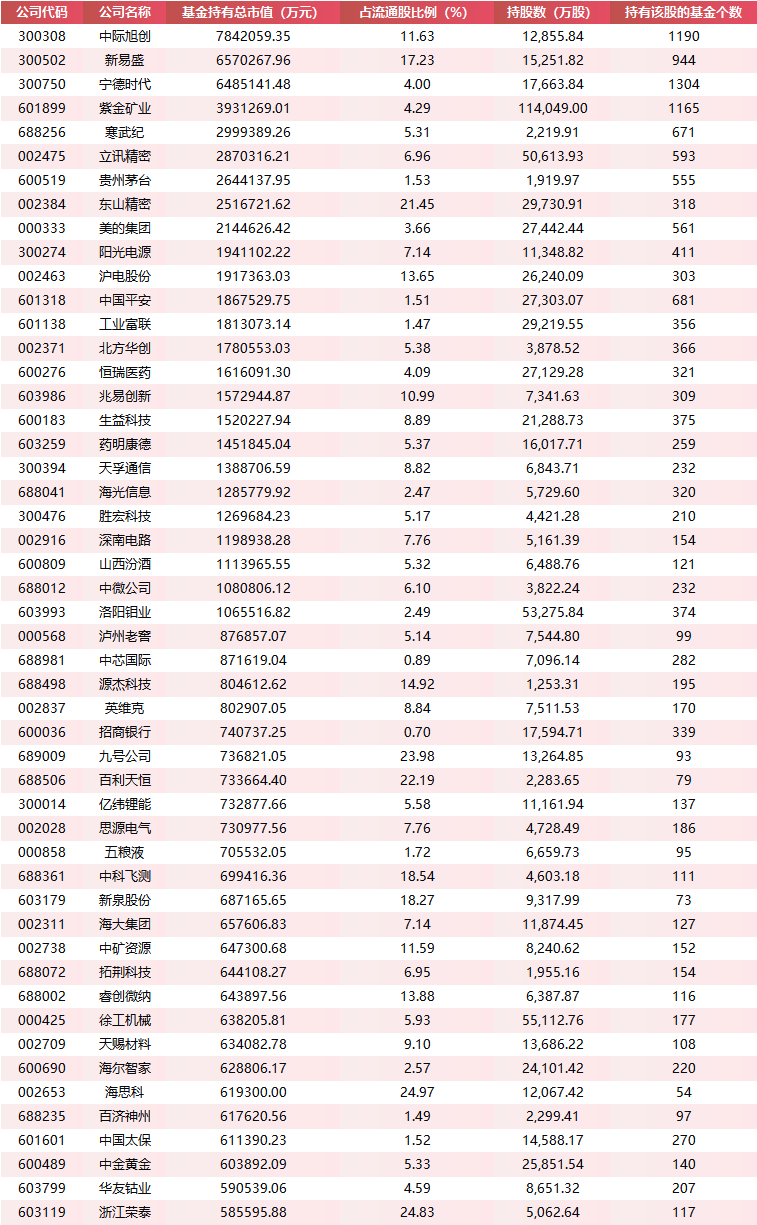
截至2025年四季度末,公募基金持仓数据已随季报披露完毕。从整体配置看,科技成长与高端制造仍是基 金布局的核心方向,传统行业龙头及部分周期股也保持较高配置水平。 专题:聚焦2025基金四季报:AI应用、商业航天、核聚变,谁领2026投资主线? 公募基金Top50重仓股:科技成长与高端制造核心方向 超千只基金持有宁德时代、中际旭创、紫金矿业 在持股市值排名前50的个股中,前十大重仓股多集中于通信、AI、电子等科技板块,包括中际旭创、新易 盛、寒武纪、立讯精密等龙头,体现出机构对科技创新与产业升级的持续看好。新能源方向以宁德时代、 阳光电源为代表;资源股如紫金矿业、洛阳钼业配置稳定,反映对周期板块的结构性布局。消费行业仍以 贵州茅台、美的集团为核心持仓;医药板块中恒瑞医药、药明康德持续入选,但持股基金数量有所波动。 | 公司代码 | 公司名称 | 基金持有总市值 (万元) | 占流通股比例 (%) | 持股数 (万股) | 持有该股的基金个数 | | --- | --- | --- | --- | --- | --- | | 300308 | 中际旭创 | 7842059.35 | 11.63 | 12,855. ...





电子行业周报2026、1、19-2025、1、25:2026年全球AI服务器出货同比有望增超28%,AI相关芯片涨价持续-20260126
Donghai Securities· 2026-01-26 09:18
[Table_Reportdate] 2026年01月26日 1 标配 行 业 周 报 [Table_Authors] 证券分析师 方霁 S0630523060001 fangji@longone.com.cn 联系人 董经纬 djwei@longone.com.cn 联系人 方逸洋 fyy@longone.com.cn [table_stockTrend] [table_product] 相关研究 1.台积电CapEX超预期,2025 年智能手机出货实现韧性增长 ——电子行业周报2026/1/12- 2025/1/18 1. 台积电CapEX超预期,2025年智 能手机出货实现韧性增长——电子 行业周报(20260112-20260118) 2. 英伟达Rubin平台正式发布,台 积电2025全年营收创新高——电子 行业周报(20260105-20260111) 3. 英伟达获Groq推理技术授权,中 芯国际对部分产能实施涨价——电 子行业周报(20251222- 20251228) [Table_NewTitle] 2026年全球AI服务器出货同比有望增超 28%,AI相关芯片涨价持续 ➢ 电子板块观点: ...
天禄科技(301045) - 2026年1月26日投资者关系活动记录表
2026-01-26 09:12
Group 1: Fundraising and Project Changes - The company announced the termination of the original fundraising project "Expansion of Large-size Light Guide Plate Project" to improve fundraising efficiency and redirect remaining funds to the TAC film project and reflective polarizing film project [1] - The TAC film and reflective polarizing film projects are aimed at addressing domestic supply chain issues and enhancing the company's growth trajectory [1] Group 2: Market Analysis and Competitive Landscape - The demand for TAC film is projected to reach 1.229 billion square meters by 2025, with over 70% of panel production capacity located in mainland China [2] - Currently, 75% of the global TAC film market is dominated by Japanese suppliers, highlighting the need for domestic production to reduce reliance on imports [2] Group 3: Project Progress and Challenges - As of June 2025, the construction of the factory for the TAC film project is progressing steadily, with major equipment expected to be installed and tested in the first half of the year [3] - The procurement of production equipment has faced challenges due to the need for customized machinery and the limited availability of suppliers, but these issues are being addressed [4] - The company plans to increase the use of domestic equipment in future phases of the project to enhance the localization of TAC film production [4]
楚天科技(300358) - 楚天科技投资者关系管理信息20260126
2026-01-26 09:06
Group 1: Financial Performance - The company expects a significant turnaround in 2025, with a substantial increase in net profit and net profit excluding non-recurring items compared to 2024, driven by international market expansion and cost control measures [2][3] - The overall operating costs were effectively controlled in 2025, with total expenses significantly reduced compared to the same period in 2024 [3] Group 2: Market Expansion - The company has made breakthroughs in overseas markets, particularly in Southeast Asia, the Middle East, and the Americas, leading to a notable increase in the proportion of international business in overall operations [2][4] - The international sales and service team has expanded, establishing localized sales and service points in over 20 key countries and regions [4] Group 3: Product Development and Innovation - The company has consistently focused on technological innovation, with R&D investment among the highest in the industry, launching new products such as continuous BFS and fully automated inspection machines [7] - Future strategies will continue to prioritize dual advancements in product technology and manufacturing technology, enhancing overall solution capabilities for clients in the pharmaceutical industry [7] Group 4: Strategic Outlook for 2026 - The company aims to further expand its overseas market presence, capitalizing on the growth and high-end transformation trends in the domestic pharmaceutical equipment industry [8] - Management strategies will focus on quality improvement and efficiency enhancement through smart manufacturing and cost control measures [8]
