稳定币

Search documents
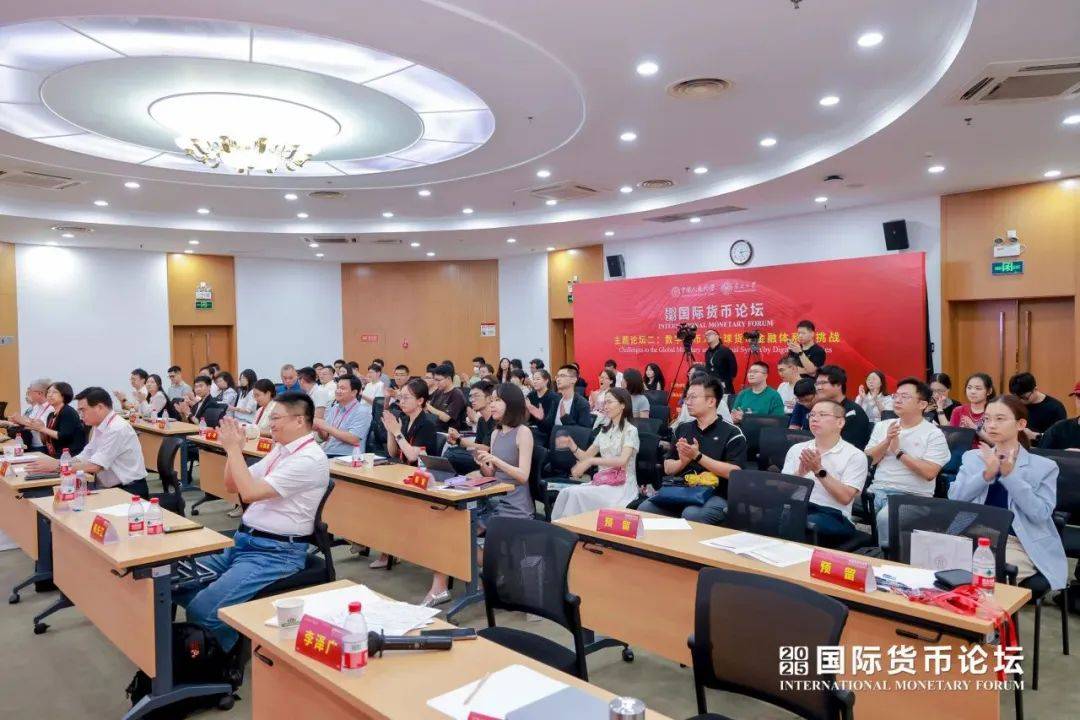
会议简报 | 2025国际货币论坛主题论坛二成功举办 聚焦“数字货币对全球货币金融体系的挑战”
Sou Hu Cai Jing· 2025-08-04 14:06
Core Insights - The "2025 International Currency Forum" focused on the challenges posed by digital currencies to the global monetary and financial system, featuring discussions from various experts in academia, government, and industry [1][3]. Group 1: Expert Opinions - Professor Xiao Geng from the Chinese University of Hong Kong emphasized the importance of re-evaluating RMB assets and reducing cross-border transaction costs to enhance cooperation with countries along the Belt and Road Initiative [5]. - Professor Lin Chen from the University of Hong Kong compared the regulatory frameworks of Hong Kong's Stablecoin Regulation and the U.S. GENIUS Act, highlighting the role of stablecoins in bridging traditional and digital finance [8]. - Researcher Zhang Ming from the Chinese Academy of Social Sciences analyzed the potential impacts of stablecoins on the international monetary system, noting challenges such as the Triffin dilemma and the weaponization of the dollar [10]. Group 2: Strategic Recommendations - The forum suggested that Hong Kong could leverage its financial regulatory advantages to create offshore RMB stablecoins, which would help balance the dollar-dominated international financial system and promote RMB internationalization [6]. - Professor Yang Changjiang from Fudan University advocated for a rational view of the competition among various stablecoins, emphasizing the need for an open mindset to embrace the opportunities and challenges they present [12]. - Professor Fan Xiaoyun from Nankai University highlighted the strategic role of stablecoins in maintaining U.S. financial hegemony and recommended accelerating the internationalization of the RMB through stablecoin initiatives [14]. Group 3: Future Directions - The forum aimed to foster high-level dialogue and deepen research on stablecoins, contributing to policy decision-making and clarifying future research directions in the context of a rapidly evolving digital economy and geopolitical landscape [14].

美国非农数据不及预期,金价回暖
Mei Ri Jing Ji Xin Wen· 2025-08-04 11:29
Market Overview - As of last Friday (August 1), London spot gold closed at $3362.64 per ounce, with a weekly increase of $26.42 per ounce, representing a 0.79% rise [1] - The highest gold price reached $3362.64 per ounce, while the lowest dipped to $3275.05 per ounce during the week [1] - The market is currently experiencing fluctuations in gold prices, with potential benefits if a rate cut is initiated [1] Economic Data - The U.S. non-farm payroll data for July was below expectations, with an increase of 73,000 jobs compared to the anticipated 104,000 [2] - Significant downward revisions were made to the May and June data, totaling a reduction of 258,000 jobs [2] - The labor force participation rate in July was 62.2%, lower than expected, while the unemployment rate was 4.2%, in line with expectations but higher than the previous value [2] Federal Reserve Actions - The Federal Reserve maintained the interest rate at 4.25%-4.5% during the July FOMC meeting, with a hawkish tone from Chairman Powell [4] - The Fed's statement acknowledged economic uncertainty and the need to monitor inflation risks, while not providing a clear response regarding a potential rate cut in September [4] Long-term Trends - The trend of "de-dollarization" globally is expected to support gold prices, as central banks continue to increase their gold reserves [7] - China's central bank reported an increase in gold reserves to 73.9 million ounces, marking the eighth consecutive month of gold accumulation [7] - The potential impact of the U.S. government's legalization of stablecoins may influence the demand for gold as a hedge against currency depreciation [6]
富册金科(FTFT.US)宣布正式成立RWA事业部
智通财经网· 2025-08-04 11:02
Core Insights - FTFT has officially established a "Real World Asset Tokenization Division" (RWA Division) to explore the technical pathways and compliance feasibility for issuing stablecoins and tokenizing core assets under its umbrella [1] - The company aims to apply for regulatory licenses related to the issuance and circulation of stablecoins, marking a new phase in the integration of RWA and stablecoin business under the Web 3.0 framework [1] Group 1 - The RWA Division will be led by former Blockchain Division President Xu Kai, who will oversee strategic planning and daily management [1] - The primary focus of the division includes communication with U.S. regulatory bodies to apply for relevant licenses for RWA and stablecoins, as well as exploring the feasibility of tokenizing core or potential acquisition assets [1][2] - Former Vice President of FTFT Securities, Chen Jia, has been appointed as Vice President of the RWA Division, responsible for communication with Hong Kong regulatory bodies and lawyers, and applying for additional virtual asset-related licenses [1] Group 2 - FTFT CEO Li Hu stated that the next major task is to build a technical framework for stablecoin issuance and management, evaluating underlying assets such as gold and Bitcoin to be linked with U.S. Treasury bonds [2] - The RWA Division will lead the design and implementation of the on-chain process for real-world assets, establishing a comprehensive asset valuation, risk management, and trading mechanism [2] - The company's blockchain chief advisor, Professor Xiong Yu, will assist in communication and collaboration with regulatory agencies and partners to ensure the healthy development of stablecoin and RWA business in compliance [2]

清华田轩:稳定币热点交锋,价值锚与防风险如何并行
2 1 Shi Ji Jing Ji Bao Dao· 2025-08-04 10:55
21世纪经济报道 记者 崔文静 北京报道 香港《稳定币条例》与美国《GENIUS法案》的相继落地,对此,21世纪经济报道记者与清华大学国家 金融研究院院长、清华大学五道口金融学院副院长田轩教授展开一场对话。在田轩看来,上游发币方如 Circle(USDC),依托合规性与储备资产透明度形成优势,但需警惕储备资产流动性风险;中游服务 商如 Chainalysis,凭借技术能力立足,却面临技术迭代被替代的挑战;下游场景方如蚂蚁、京东等,通 过 "RWA + 支付" 闭环释放商业潜力,不过概念炒作可能催生估值泡沫。 跨境协作方面,香港作为国际金融枢纽,在稳定币监管中高度重视与其他司法管辖区的合作,通过建立 互信机制,促进稳定币的跨境流动与使用场景扩展。而美国的《GENIUS法案》更多聚焦于国内市场的 整合与保护,在国际合作上通常附带严苛条件。因此,这种灵活性、包容性方面的差异,使得香港模式 能够更好地适应多边金融体系,促进全球稳定币市场的多元化发展,而美国模式则可能在短期内继续通 过美元锚定型稳定币主导主流市场,进一步挤压其他货币的空间。 21世纪:您提到香港条例推动"数字金融与跨境资本体系重构"。稳定币是否可能冲击 ...
21专访|清华田轩:稳定币热点交锋,价值锚与防风险如何并行
2 1 Shi Ji Jing Ji Bao Dao· 2025-08-04 10:52
21世纪经济报道 记者 崔文静 北京报道 香港《稳定币条例》与美国《GENIUS法案》的相继落地,对此,21世纪经济报道记者与清华大学国家 金融研究院院长、清华大学五道口金融学院副院长田轩教授展开一场对话。在田轩看来,上游发币方如 Circle(USDC),依托合规性与储备资产透明度形成优势,但需警惕储备资产流动性风险;中游服务 商如 Chainalysis,凭借技术能力立足,却面临技术迭代被替代的挑战;下游场景方如蚂蚁、京东等, 通过 "RWA + 支付" 闭环释放商业潜力,不过概念炒作可能催生估值泡沫。 田轩提醒投资者需理性看待三类主体的长期价值锚点 —— 发币方看储备安全与合规性,服务商看技术 壁垒与效率,场景方看用户粘性与生态扩展力。同时,对于港股券商ETF 因牌照引发的短期暴涨,需 警惕估值与实际业务的脱节。在这场金融创新浪潮中,唯有穿透概念、聚焦本质,才能在稳定币生态中 稳健前行。 他指出,从境内监管和风险防范的角度出发,内地在法律法规完善度、市场认可度、技术安全、金融系 统稳定性及风险防控等方面尚不具备推进稳定币的条件,境内目前也尚未批准任何稳定币的发行和交 易。 香港VS美国:稳定币监管的制度 ...
港股收盘(8.04) | 恒指收涨0.92% 黄金股全天强势 英诺赛科(02577)再度强势冲高
智通财经网· 2025-08-04 08:55
Market Overview - Hong Kong stocks opened lower but closed higher, with all three major indices ending in the green. The Hang Seng Index rose by 0.92% to 24,733.45 points, with a total turnover of HKD 234.68 billion [1] - The overall upward trend in Hong Kong stocks is considered healthy, shifting from previous risk-averse sentiment to improvements in fundamentals and positive policy expectations [1] Blue Chip Performance - New Oriental-S (02057) led blue-chip stocks, rising by 6.49% to HKD 36.58, contributing 2.7 points to the Hang Seng Index. Its revenue for the fourth fiscal quarter grew by 9.4% year-on-year, exceeding market expectations [2] - Other notable blue-chip performances included Zhongsheng Holdings (00881) up 5.59%, Lenovo Group (00992) up 4.95%, while Xinyi Glass (00868) fell by 5.87% [2] Sector Highlights - Gold stocks performed strongly due to lower-than-expected U.S. non-farm payroll data, with Shandong Gold (01787) rising by 10.7% and Chifeng Jilong Gold Mining (06693) up 8.89% [3] - Semiconductor stocks also saw significant gains, with Hua Hong Semiconductor (01347) up 8.69% and Shanghai Fudan (01385) up 5.66% [4] Stablecoin Sector - The stablecoin sector continued to decline, with Yunfeng Financial (00376) down 6.91% and Guotai Junan International (01788) down 6.48%. The Hong Kong Monetary Authority's new regulations on stablecoins are expected to delay the issuance of licenses until early 2026 [5][6] Notable Stock Movements - InnoCare Pharma (02577) surged by 30.47% after announcing a partnership with NVIDIA to promote a new power architecture for AI data centers [7] - Huajian Medical (01931) rose by 20.7% following a strategic cooperation agreement with BGI [8] - China Resources Medical (01515) fell by 15.58% due to a profit warning, expecting a decline of 20% to 25% in profit for the upcoming six months [9]


香港《稳定币条例》正式生效:储备资产须全额覆盖流通面值
news flash· 2025-08-04 06:28
Core Viewpoint - The implementation of the Stablecoin Regulation in Hong Kong on August 1 marks a significant step in establishing a licensing system for stablecoin issuers and enhancing the regulatory framework for virtual asset activities in the region [1] Group 1: Regulatory Framework - The new regulation aims to align Hong Kong's stablecoin regulations with international standards, reflecting a timely response to the global development of stablecoins [1] - Licensed issuers are required to ensure that the market value of their reserve assets is always at least equal to the face value of the outstanding stablecoins that have not been redeemed [1] - Issuers must consider the risk profile of their reserve assets and ensure appropriate over-collateralization to cover market risks [1]
英国前财相:英国在加密货币领域落后了
news flash· 2025-08-04 04:26
金十数据8月4日讯,英国前财政大臣乔治•奥斯本对工党政府对待加密货币的方式发起了猛烈抨击,他 警告称,英国有可能错过一场类似于"上世纪80年代的金融大改革",进而落后于潮流。奥斯本现在是美 国加密货币交易所Coinbase全球顾问委员会的成员,他说,财政大臣里夫斯和英国央行行长贝利正在让 英国走在慢车道上。奥斯本称:"瑞秋•里夫斯说得对,我们都变得过于厌恶风险了。我们之所以成为世 界金融中心,是因为我们不害怕变化。""在加密货币和稳定币上,就像在很多其他事情上一样,一个残 酷的事实是:我们完全被抛在了后面。是时候迎头赶上了。"奥斯本表示,指责监管机构过度谨慎是一 个"站不住脚的借口",里夫斯应该效仿美国国会,在法律上制定一个加密框架。他警告称,美国、欧 盟、新加坡和阿布扎比等地都在抢在英国前面。 (英国金融时报) 英国前财相:英国在加密货币领域落后了 ...
期指:静待走稳
Guo Tai Jun An Qi Huo· 2025-08-04 03:22
Report Summary 1. Report Industry Investment Rating - Not provided in the content 2. Core Viewpoints - On August 3, the four major stock index futures contracts showed mixed performance. IF fell 0.52%, IH fell 0.67%, IC fell 0.16%, and IM rose 0.21% [1]. - On this trading day, the total trading volume of stock index futures declined, indicating a cooling of investors' trading enthusiasm. The total trading volume of IF decreased by 56,758 lots, IH by 25,092 lots, IC by 30,117 lots, and IM by 54,792 lots. In terms of positions, the total positions of IF decreased by 9,118 lots, IH by 3,066 lots, IC by 6,919 lots, and IM by 10,044 lots [2]. 3. Summary by Relevant Catalogs 3.1 Index Futures Data - **Closing Prices and Fluctuations**: The closing prices and percentage changes of the four major stock indexes (CSI 300, SSE 50, CSI 500, and CSI 1000) and their corresponding futures contracts on August 3 are presented, with some rising and some falling [1]. - **Basis**: The basis of each futures contract is provided, showing the difference between the futures price and the spot price [1]. - **Trading Volume and Turnover**: The trading volume, turnover, and their changes of each futures contract are given, indicating the market activity [1]. - **Open Interest**: The open interest and its changes of each futures contract are shown, reflecting the market's holding situation [1]. 3.2 Index Futures Member Positions - The long - and short - position changes of the top 20 member institutions in each futures contract are presented, including the net changes in some contracts [5]. 3.3 Market Trends and Influencing Factors - **Trend Intensity**: The trend intensities of IF and IH are 1, and those of IC and IM are also 1, with the range of trend intensity being integers in the [-2, 2] interval [6]. - **Important Drivers**: The National Development and Reform Commission has completed the allocation of 69 billion yuan in the third batch of ultra - long - term special treasury bond funds for consumer goods trade - ins this year and will allocate the fourth batch of 69 billion yuan in October to reach the annual plan of 300 billion yuan. The NDRC will continue to promote measures to stabilize employment and the economy, and strengthen economic monitoring and policy reserve [6]. - **Other Policies**: The "Two - Key" construction project list of 800 billion yuan has been fully allocated, and the central budgetary investment of 735 billion yuan has been basically allocated. The NDRC is taking measures to address "involution - style competition" and promote the high - quality development of the private economy [7]. 3.4 Stock Market Performance - The Shanghai Composite Index fell 0.37%, the Shenzhen Component Index fell 0.17%, and the ChiNext Index fell 0.24%. The A - share trading volume was 1.62 trillion yuan, down from 1.96 trillion yuan the previous day. This week, the Shanghai Composite Index fell 0.94% and the ChiNext Index fell 0.74%. Some sectors such as innovative drugs, traditional Chinese medicine, photovoltaic industry chain, intelligent logistics, and AI agents showed strength, while AI hardware, military, stablecoin, and rare earth permanent magnet concepts declined [8].
赢了业绩输了规模!绩优主动权益基金遭ETF“偷袭” 什么情况?
Zheng Quan Shi Bao Wang· 2025-08-04 02:05
Group 1 - The core phenomenon observed in the market is that active equity funds have outperformed ETFs in terms of performance, but ETFs have significantly outpaced active funds in terms of scale growth [1][2][3] - The innovation drug sector has seen a remarkable surge, with a total of 17 funds doubling their performance this year, of which 10 are active equity funds and 7 are innovation drug-themed ETFs [2][3] - Despite the strong performance of active equity funds, their scale growth is lagging behind that of ETFs, indicating a preference among investors for ETFs to capture the benefits of policy and industry breakthroughs [3][4] Group 2 - The rapid growth of ETFs has led to a significant increase in their number, scale, and coverage, which has put pressure on active equity funds [6] - ETFs attract investors due to their transparent holdings, flexible trading features, and lower management fees compared to active equity funds, making them a more appealing option for many [6][7] - The market trend shows that while ETFs are gaining popularity, active equity funds still hold value in terms of identifying undervalued stocks and smoothing out volatility [6][7] Group 3 - The recent performance of ETFs, particularly in sectors like human robotics and brokerage, has outstripped that of active equity funds, highlighting a shift in investor preference towards passive investment strategies [4][6] - The influx of funds into ETFs has been particularly pronounced during high-growth periods, such as the recent boom in the innovation drug sector, which has provided a prime opportunity for ETF expansion [3][4] - The competitive landscape is evolving, with fund companies increasingly focusing on passive investment strategies, further constraining the space for active equity funds [6][7]