降本增效

Search documents
第一上海:维持新东方-S“买入”评级 目标价57.9港元
Zhi Tong Cai Jing· 2025-11-05 06:03
Core Viewpoint - First Shanghai has given New Oriental-S (09901, EDU.US) a target price of $74.5 / HKD 57.9 based on a 25x PE for FY26E net profit, maintaining a buy rating due to the stabilization of core business and significant shareholder returns [1] Group 1: Performance Overview - For FY26Q1, the company reported a net revenue of $1.52 billion, a year-on-year increase of 6.1%, slightly exceeding previous guidance [2] - Operating profit reached $310 million, up 6% year-on-year, while Non-GAAP operating profit was $336 million, reflecting an 11.3% increase [2] - The net profit attributable to shareholders was $240 million, down 1.9% year-on-year, primarily due to dividend withholding tax and fluctuations in other income [2] Group 2: Education Business Performance - In FY26Q1, the overseas exam preparation and study abroad consulting businesses grew by 1.0% and 2.0% year-on-year, respectively, with youth exam training showing faster growth [3] - The university and adult exam business saw a year-on-year growth of 14.4% [3] - New business revenue increased by 15.3% year-on-year, with non-academic tutoring registrations reaching 530,000, a 9.5% increase [3] - The active paying users for the smart learning system and devices reached 452,000, up 39.9% year-on-year [3] Group 3: FY26Q2 and FY26 Outlook - The company expects FY26Q2 net revenue to be between $1.132 billion and $1.163 billion, representing a year-on-year growth of 9% to 12% [4] - For FY26, the total net revenue is projected to be between $5.145 billion and $5.39 billion, with a year-on-year growth of 5% to 10% [4] Group 4: Shareholder Return Plan - In July 2025, the company approved a three-year shareholder return plan, committing to return no less than 50% of the previous fiscal year's net profit to shareholders starting from FY26 [5] - The shareholder return plan includes a cash dividend of $190 million (to be paid in two installments) and a $300 million buyback within the next 12 months, resulting in a total return rate of approximately 5% [5] - The total planned return through dividends and buybacks amounts to $490 million [5]
万润股份(002643):前三季度业绩符合预期,降本增效优化盈利结构
Huaan Securities· 2025-11-05 03:48
Investment Rating - The investment rating for the company is "Buy" (maintained) [1] Core Views - The company reported a revenue of 2.826 billion yuan for the first three quarters of 2025, representing a year-on-year increase of 2.31%, and a net profit attributable to shareholders of 306 million yuan, up 3.27% year-on-year [2][3] - The company's performance demonstrates resilience, driven by cost reduction and efficiency improvements alongside strong R&D investment, which is crucial for future growth [3] - The strategic expansion in new materials, particularly in OLED and semiconductor sectors, is enhancing the company's product offerings and market position [4] - Shareholder confidence is bolstered by significant share buybacks and stock purchases by major shareholders, indicating strong belief in the company's intrinsic value and growth prospects [5][8] Financial Performance Summary - For Q3 2025, the company achieved a revenue of 956 million yuan, a year-on-year increase of 18.62%, while the net profit was 87 million yuan, up 8.41% year-on-year [2] - The company has successfully reduced its sales, management, and financial expense ratios, indicating effective cost control [3] - R&D expenses remain high at 10.99% of revenue, supporting ongoing business expansion and performance growth [3] Business Development and Strategy - The company is deepening its strategic layout in OLED and semiconductor materials, with significant progress in product validation and supply stability [4] - The ongoing construction of the C05 project in the industrial park aims to enhance production capacity for high-end electronic materials, with an investment of 287 million yuan [4] Future Profitability Forecast - The company is projected to achieve net profits of 375 million yuan, 499 million yuan, and 514 million yuan for 2025, 2026, and 2027 respectively, with corresponding P/E ratios of 34, 25, and 24 times [9]

海信家电(000921):央空受地产拖累,白电保持经营韧性
Tianfeng Securities· 2025-11-05 03:14
Investment Rating - The investment rating for Hisense Home Appliances is "Buy" with a target price not specified [5] Core Views - The central view indicates that the central air conditioning (CAC) business is under pressure due to weak real estate trends, while the white goods segment shows operational resilience [3][2] - Future cost reduction and product structure optimization are expected to drive profit improvement [3] Financial Performance Summary - For the first three quarters of 2025, the company achieved operating revenue of 71.53 billion yuan, a year-on-year increase of 1.4%, and a net profit attributable to shareholders of 2.81 billion yuan, up 0.7% [1] - In Q3 2025, the company reported operating revenue of 22.19 billion yuan, a 1.2% increase, but a net profit of 735 million yuan, down 5.4% [1] - The CAC business is expected to continue facing challenges, while the home appliance segment shows strong growth, particularly in the refrigerator and washing machine categories, with profits up 35% year-on-year [2] Segment Performance Summary - **CAC**: The CAC business is under pressure, but maintains a leading market share despite domestic sales challenges [2] - **Home Appliances**: The home appliance segment saw a 41% increase in domestic sales but a 20% decrease in exports [2] - **Refrigerators and Washers**: This segment experienced steady growth with a profit increase of 35% year-on-year, leading the industry in growth rates [2] - **Kitchen Appliances**: Revenue increased by 50% year-on-year, with offline channels also showing significant growth [2] Financial Projections - Projected net profits for 2025, 2026, and 2027 are 3.49 billion yuan, 3.45 billion yuan, and 3.68 billion yuan respectively, with corresponding dynamic valuations of 10.2x, 10.3x, and 9.7x [3]
金龙汽车20251104
2025-11-05 01:29
Summary of Jinlong Automobile Conference Call Company Overview - **Company**: Jinlong Automobile - **Industry**: Automotive, specifically bus manufacturing Key Financial Performance - **Q3 2025 Revenue**: 780,000 CNY, up 159.25% YoY [2] - **Earnings Per Share (EPS)**: 0.34 CNY, up 209.09% YoY [2] - **Total Bus Sales**: 34,862 units, up 5.86% YoY [2] - **Gross Margin**: Increased by nearly 2 percentage points QoQ due to cost reduction and higher-value orders [2][5] - **Net Profit**: 247 million CNY, up 223.71% YoY [3] Growth Drivers - **Cost Reduction and Efficiency**: Significant improvements in cost management and procurement strategies [2][5] - **Export Business**: Exports accounted for over 60% of total sales, contributing positively to gross margin [2][5] - **High-Value Orders**: Increased proportion of high-value orders has positively impacted profitability [2][5] Future Outlook - **Q4 2025 Expectations**: Continued growth in revenue and profit, but uncertainty in gross margin improvement [6] - **Annual Performance Goals**: Targeting positive net profit after deductions, a 2 percentage point increase in gross margin, and ROE exceeding 6% [7] - **Sales Projections**: Domestic sales may decline by 5%-10% in 2025, but overseas markets are expected to grow by 10%-15% annually [4][27] Export Market Insights - **Key Markets**: Significant growth in Asia, Middle East, Southeast Asia, and Northeast Asia, with Israel as the largest export destination [4][14] - **Demand Drivers**: Increased demand in Southeast Asia due to reduced exports from Japanese manufacturers and electric vehicle projects [4][14] Strategic Initiatives - **Intelligent Driving**: Early investments in smart driving technology, including partnerships with Baidu for autonomous buses [4][9] - **Consolidation of Subsidiaries**: Ongoing integration of three bus manufacturing subsidiaries to enhance operational efficiency [17][22] - **Centralized Procurement**: Achieved over 30% centralized procurement, aiming for 90% by the end of 2027 [10][19] Challenges and Risks - **Domestic Market Volatility**: Anticipated decline in domestic sales due to subsidy changes and market conditions [27] - **Competitive Landscape**: Need to improve market share against competitors like Yutong, which holds a significant portion of the market [29] Additional Insights - **Non-Recurring Gains**: Third-quarter non-recurring gains primarily from government subsidies and reduced financial income [8] - **Future Product Development**: Focus on enhancing vehicle comfort and performance through advanced technologies [29][30] Conclusion Jinlong Automobile is experiencing significant growth driven by export markets and strategic cost management. The company is well-positioned for future growth, although it faces challenges in the domestic market and competition. The focus on intelligent driving and centralized procurement will likely enhance its competitive edge in the coming years.

企业数字化预算投入多少才算合理?
3 6 Ke· 2025-11-05 00:56
Core Insights - The article discusses the challenges faced by CIOs and business leaders regarding digital budget allocation, highlighting the disparity in perspectives on digital investment [1][2] - There is no standardized approach for determining the appropriate level of digital investment, which often leads to confusion and misallocation of resources [2][3] Group 1: Digital Investment Standards - Digital investment should be based on addressing critical business pain points and delivering measurable value, rather than simply increasing expenditure [2] - Companies often experience a disconnect between initial high investment and subsequent budget cuts due to unmet expectations on ROI [2][3] Group 2: Factors Influencing Digital Investment - The article outlines four key factors that determine reasonable digital investment: strategic goals, industry characteristics, digital maturity, and urgency of pain points [4][5][8] - Companies must align their digital investment with their strategic objectives, such as cost-saving, growth, or innovation, with suggested investment ratios varying from 1-5% of revenue based on these goals [4] - Industry characteristics significantly influence digital investment levels, with tech-driven sectors typically investing over 5%, while traditional industries may invest between 2-4% [5] Group 3: Digital Maturity and Pain Points - Companies in the early stages of digital maturity should focus on foundational capabilities with a lower investment ratio, while those in the growth phase can increase investment to enhance application and integration [6][7] - Addressing immediate business pain points can guide investment decisions, although this approach may lead to a lack of systematic planning and potential inefficiencies in the long run [8] Group 4: Strategic Planning and ROI - Digital investment should not be viewed merely as financial expenditure but as a strategic business investment aimed at generating commercial returns [8] - CIOs need to adopt an investment mindset and effectively communicate the value of technology investments to management to secure larger budgets [9]
韩国今年仅拍了17部,中国谁还在拍电影?
3 6 Ke· 2025-11-05 00:35
Group 1 - The South Korean film market is experiencing a significant downturn, with only 17 films produced this year, leading to concerns about a potential complete lack of new releases in two years [1] - The decline in the South Korean film industry is attributed to a drop in audience numbers, with no films reaching over 10 million viewers, resulting in tighter investment conditions [1][5] - The trend of declining investment is mirrored in the Chinese film industry, where major studios are also reducing the number of projects, focusing instead on cost-cutting and efficiency [7][9] Group 2 - Major film companies in China, such as Wanda and Alibaba Pictures, are adopting a cautious investment strategy, with fewer large projects being initiated this year [9][11] - Smaller and mid-tier production companies are stepping up to fill the gap left by major studios, with an increase in projects from streaming platforms and production companies that previously focused on series [14][20] - The current film market is undergoing a transformation, with a shift towards smaller projects that may better reflect contemporary audience preferences and tastes [27]



宏盛华源预中标5.84亿国网项目 降本增效前三季扣非增88.93%
Chang Jiang Shang Bao· 2025-11-04 23:32
Core Viewpoint - Hongsheng Huayuan, the largest transmission line tower supplier in China, announced a pre-bid win of approximately 584 million yuan in the State Grid's procurement for 2025, which is expected to positively impact the company's performance [1][2]. Group 1: Company Performance - In the first three quarters of 2025, Hongsheng Huayuan achieved a net profit attributable to shareholders of 283 million yuan, representing a year-on-year increase of 58.54% [3][4]. - The company's gross profit margin for the first three quarters of 2025 was 12.13%, an increase of 3.02 percentage points compared to the same period last year [4]. - For the full year of 2024, the company reported a revenue of 10.139 billion yuan, a year-on-year growth of 9.07%, and a net profit of 230 million yuan, up 85.52% [3]. Group 2: Market Position and Orders - As of the end of September 2025, Hongsheng Huayuan had a contract liability balance of 490 million yuan, an increase of 32.4% from the end of 2024, indicating a strong order backlog [3]. - The company secured a total of 7.109 billion yuan in bids in the first half of 2025, a year-on-year increase of 47.25%, with domestic bids amounting to 5.884 billion yuan, up 68.19% [3]. Group 3: Technological Advancements - Hongsheng Huayuan has invested significantly in R&D, with expenditures increasing from 52.17 million yuan in 2021 to 121 million yuan in 2024, reflecting a commitment to innovation [7]. - The company has implemented advanced manufacturing technologies, including automated systems and intelligent production lines, enhancing production efficiency and safety [6][7]. Group 4: Industry Standing - Hongsheng Huayuan is recognized as a "national team" in the domestic transmission line tower manufacturing industry, with leading production capacity and technology levels [1][6]. - The company has participated in all major ultra-high voltage projects in China, establishing a strong technical foundation and industry recognition [6].

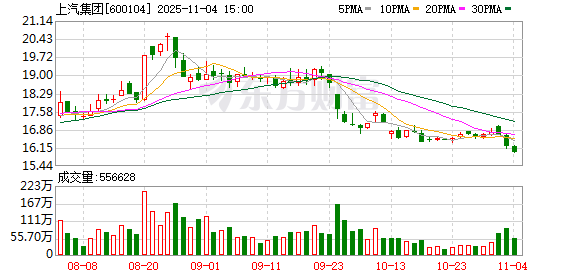
上汽集团控制成本单季扣非增57倍 前10月售车逾364万辆有望夺回销冠
Chang Jiang Shang Bao· 2025-11-04 23:28
Core Viewpoint - SAIC Motor Corporation has successfully returned to industry leadership, demonstrating significant growth in revenue and profit in the third quarter of 2025, with a strong focus on market expansion and operational efficiency [1][2][3]. Financial Performance - For the first three quarters of 2025, SAIC reported total revenue of 468.99 billion yuan, an increase of 8.95% year-on-year [1][3]. - The net profit attributable to shareholders reached 8.101 billion yuan, up 17.28% year-on-year, while the net profit excluding non-recurring items surged by 578.58% to 7.122 billion yuan [1][3]. - In Q3 2025, revenue was 169.403 billion yuan, reflecting a 16.19% increase year-on-year, with net profit soaring by 644.88% to 2.083 billion yuan [1][3]. Sales Performance - As of October 2025, SAIC's cumulative sales reached 3.6472 million units, marking a 19.53% increase year-on-year, positioning the company close to surpassing BYD's sales of 3.7019 million units [1][5][10]. - The company aims to exceed 4.5 million units in total sales for 2025, with a revenue target of over 674 billion yuan [9][10]. Cost Management - In the first three quarters of 2025, SAIC managed to reduce sales expenses by 5.6% to 14.11 billion yuan, while maintaining management expenses at 14.9 billion yuan, indicating effective cost control measures [10]. Product Development - The launch of the Hongmeng Intelligent Driving family model, the Shangjie H5, has seen significant pre-sale interest, although initial sales figures were lower than expected [12][13]. - The company is focusing on expanding its product lineup and enhancing brand positioning in the competitive market, particularly in the 150,000 to 200,000 yuan segment [13][14].

看日本三大便利店的破局与新生 | 便利店的未来不一定在货架上
Sou Hu Cai Jing· 2025-11-04 19:15
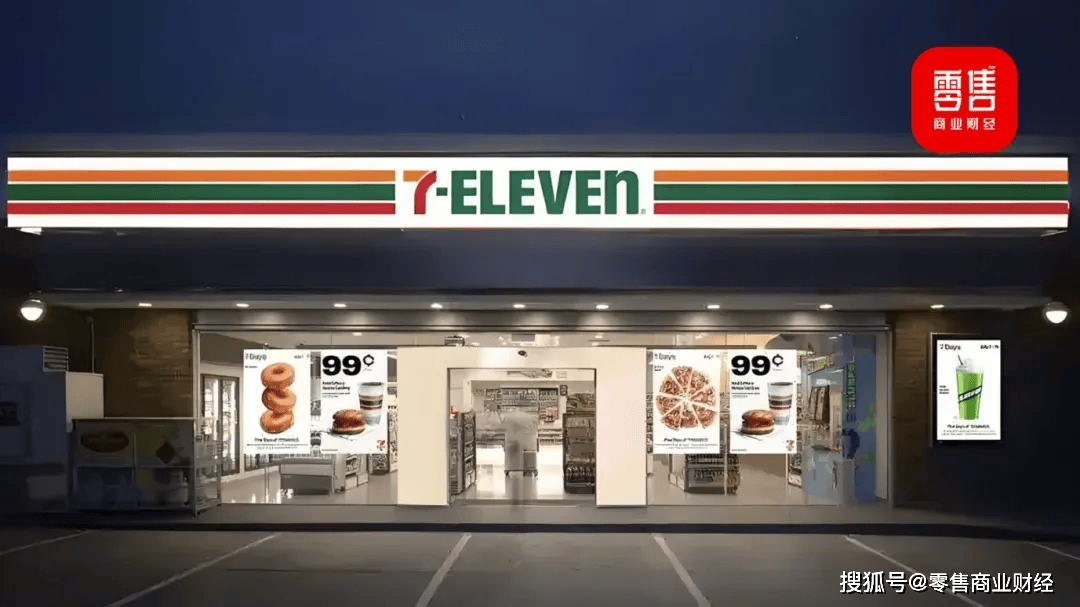
Core Insights - The convenience store industry is shifting from a growth-focused strategy to a competition for existing market share, with various retail formats challenging traditional convenience stores [2] - Japanese convenience stores like 7-ELEVEn, FamilyMart, and LAWSON are redefining their value propositions by focusing on emotional connections and understanding consumer needs rather than just product variety and discounts [2][28] Group 1: 7-ELEVEn's Strategy - 7-ELEVEn is targeting the previously overlooked female demographic aged 10-60 with its "Seven Cafe Tea" initiative, aiming to create a new reason for customers to visit stores [3][5] - The introduction of freshly brewed tea is not just about selling a beverage but about enhancing the consumer's emotional experience and slowing down their pace of life [5][7] - This shift from "saving time" to "spending time" with consumers represents a significant change in the understanding of convenience [7][26] Group 2: FamilyMart's Approach - FamilyMart is addressing cost reduction and efficiency through emotional engagement, exemplified by its "crying rice ball" campaign, which encourages consumers to save food from being wasted [10][14] - This initiative has reportedly increased purchase rates by 4%-10% and aims to reduce food waste by approximately 3,000 tons annually [14] - The campaign illustrates that efficiency can be achieved with warmth and social responsibility, fostering trust with consumers [27][28] Group 3: LAWSON's Innovation - LAWSON is transforming its parking lots into temporary lodging spaces for travelers, redefining the role of convenience stores beyond traditional boundaries [17][19] - This innovative use of existing resources aligns with resource-based theory, showing that competitive advantage can come from reinterpreting and reallocating current assets [19][20] - The initiative emphasizes the importance of creating new experiences and value in everyday life, moving beyond the constraints of physical store space [23][24] Conclusion - The evolution of convenience stores indicates a shift from merely selling products to providing meaningful experiences that resonate with consumers' daily lives [25][30] - The future of convenience retail may lie in understanding and addressing deeper emotional and situational needs rather than focusing solely on product offerings [28][31]
通用大涨 大众乏力 上汽三季报冰火两重天
Guo Ji Jin Rong Bao· 2025-11-04 15:57
Core Insights - SAIC Motor Corporation has shown a significant recovery in Q3 2025, with a revenue of 169.4 billion yuan, a year-on-year increase of 16.2%, and a net profit of 2.08 billion yuan, surging 644.9% compared to the previous year [3] - The company's performance is heavily influenced by a low base from the previous year, raising questions about the sustainability of this turnaround [3][9] Financial Performance - In the first three quarters, SAIC reported total revenue of 468.99 billion yuan and a net profit of 8.101 billion yuan, with a cash flow from operating activities of 31.94 billion yuan [3] - The gross margin for Q3 was 8.99%, up 0.50 percentage points year-on-year, while the net margin improved to 2.21%, an increase of 1.51 percentage points from the previous year [3] - The company reduced its operating expenses in Q3 to 40.481 billion yuan, a decrease of 59.67% year-on-year, with sales expenses down by 22.71% [3] Sales Performance - SAIC's total vehicle sales in Q3 reached 1.141 million units, a year-on-year increase of 38.7% [6] - The breakdown of sales by brand shows significant variation, with SAIC-GM-Wuling leading at 404,400 units, a 49.77% increase from the previous year [5][6] - SAIC-GM's sales grew by 156.35% to 135,600 units, while SAIC Volkswagen's growth was minimal at 0.10% [7][8] Brand Performance - The performance of various sub-brands within SAIC is uneven, with some brands showing strong growth while others remain stagnant [4][8] - The high-end electric vehicle brand, Zhiji, sold only 23,500 units in Q3, falling short of its annual target of 100,000 units [8][9] - Despite high pre-sale orders for the new H5 model from the joint venture with Huawei, actual sales have not met expectations, indicating challenges in converting interest into sales [9] Market Dynamics - The overall market for SAIC is characterized by a mix of recovery and ongoing challenges, particularly in the electric vehicle segment where brands like Zhiji and Shangjie have yet to establish a strong foothold [9]