大数据

Search documents
证监会:加快打造一流投资银行和投资机构,对优质证券机构适度打开资本空间和杠杆限制,畅通证券业创新试点工作机制
Zheng Quan Shi Bao· 2025-12-08 00:31
二是专业服务能力要展现新提升。要切实扛起"看门人"责任,从把好IPO入口关向"全程护航"加快转 型,引导上市公司规范经营,提升IPO、并购重组服务的专业性和影响力,深度参与企业价值创造。要 注重加强承销保荐和定价能力建设,促进一二级市场协调平稳发展。加快健全以投资者回报为核心的评 价体系,推动经纪业务、投顾业务和综合财富管理的转型发展。对于各类中长期资金,要做好产品、交 易、做市、风险管理等全方位支持。有条件的机构要稳步推进国际化和"一带一路"沿线布局,推动境内 外协同发展。证券行业要在风险可控基础上,不断创新金融产品、服务和组织架构,稳步探索推进人工 智能、大数据、区块链等技术在资本市场的布局和应用。证监会将和行业协会一道,畅通证券业创新试 点工作机制,丰富监管沙盒等应用场景。同时,完善对金融创新活动的监测监管和风险应对机制,避免 监管缺位导致创新风险失控。 三是差异化特色化发展要做到新突破。头部机构要进一步增强资源整合的意识和能力,用好并购重组机 制,力争在"十五五"时期形成若干家具有较大国际影响力的头部机构。需要强调的是,一流投行不是头 部机构的"专属""专利",中小机构也要把握优势、错位发展,在细分领 ...
全球大公司要闻 | 好莱坞工会反对奈飞收购华纳兄弟
Wind万得· 2025-12-07 22:59
Group 1 - Netflix announced an agreement to acquire Warner Bros. Discovery for an enterprise value of approximately $82.7 billion, focusing on its film studios and HBO Max streaming assets, including top IPs like Harry Potter and Game of Thrones, aiming to build a "super content" empire, with the deal expected to face strict antitrust scrutiny [3] - OpenAI plans to respond to Google's Gemini 3 with the upcoming GPT-5.2, which is now expected to launch on December 9, ahead of its original schedule [3] - SpaceX is reportedly seeking an $800 billion valuation through a share sale, although Elon Musk denied the accuracy of this report, stating that revenue from NASA is expected to account for no more than 5% of the company's income by 2026 [4] Group 2 - X, the social platform owned by Musk, was fined €120 million under the EU's Digital Services Act for allegedly violating content moderation regulations [4] - Microsoft is in talks with Broadcom to design future custom chips, potentially shifting from its current supplier Marvell [4] Group 3 - Xingqi Eye Care has multiple products included in the National Medical Insurance Directory, with a notable product priced at 1.78 yuan per piece, expected to positively impact long-term operations [6] - Kexin Pharmaceutical's CAR-T drug has entered the commercial insurance innovative drug directory, drawing market attention [6] - Wuliangye will adjust the price of its eighth-generation product starting next year, offering a discount of 119 yuan per bottle from a base price of 1019 yuan [7] Group 4 - Huawei's CEO emphasized the importance of AI research while focusing on the application of large models and big data in agriculture and technology over the next 3-5 years [6] - BYD's chairman noted a decline in domestic sales due to technological lag and user demand issues, indicating the need for significant technological breakthroughs [7] - Baidu Kunlun Chip plans to file for an IPO in Hong Kong as early as Q1 next year, with a recent valuation of 21 billion yuan [7] Group 5 - Samsung Electronics achieved a key breakthrough in 4nm process technology, improving yield rates to 60-70%, which is expected to enhance its competitiveness in advanced manufacturing [12] - SK Hynix announced plans to localize EUV photoresist to reduce dependence on Japanese suppliers [12]






城市高校专业加速调整,哪些就业率高?
3 6 Ke· 2025-12-07 22:43
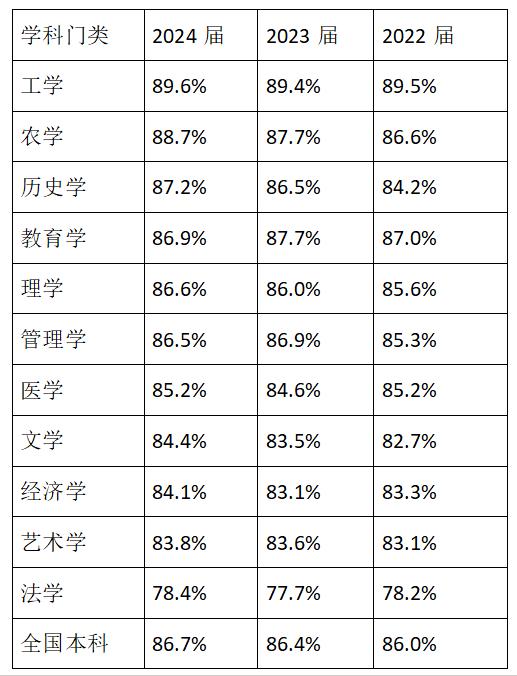
Group 1 - The core phenomenon in Chinese higher education is the rapid adjustment of professional structures, with universities actively optimizing their programs to align with emerging fields like embodied intelligence [1][15] - The Ministry of Education has shifted from revising the professional directory every ten years to an annual update, with over 20% of programs adjusted in the past two years to enhance employment quality for graduates [1][19] - The rise of AI and robotics is creating new challenges for traditional engineering programs, necessitating timely updates to curricula to meet market demands for high-skilled talent [3][20] Group 2 - The 2025 Employment Report indicates that the overall employment rate for 2024 graduates is 86.7%, with significant disparities across disciplines, particularly favoring engineering fields [2][5] - Engineering disciplines, especially energy and electrical engineering, show high employment rates, while traditional humanities and social sciences face challenges with lower employment rates [4][6] - The report highlights a concerning trend for computer science graduates, with a low employment rate of 82.4%, attributed to market saturation and evolving industry requirements [12][13] Group 3 - The adjustment of academic programs is reflected in the establishment of new majors, such as artificial intelligence and data science, while many underperforming programs are being phased out [15][16] - The report categorizes programs into "green," "yellow," and "red" based on employment outcomes, with engineering programs generally performing well, while law and arts programs are struggling [17][18] - The need for universities to innovate management mechanisms and establish a dynamic adjustment system for programs is emphasized to ensure competitiveness and relevance in the job market [3][21]
证监会:加快打造一流投资银行和投资机构
Sou Hu Cai Jing· 2025-12-07 22:15
Core Viewpoint - The China Securities Regulatory Commission (CSRC) aims to accelerate the development of first-class investment banks and institutions, with plans to relax regulations for high-quality firms and implement differentiated supervision for small and foreign brokerages [1][4]. Group 1: Industry Growth and Achievements - Since the last member conference over four years ago, 107 securities companies have seen total assets grow to 14.5 trillion yuan and net assets to 3.3 trillion yuan, representing increases of over 60% and 40% respectively [1]. - The securities industry has facilitated the listing of nearly 1,200 technology innovation enterprises and supported domestic financing for various companies exceeding 51 trillion yuan [1]. Group 2: Strategic Goals for the Securities Industry - The CSRC emphasizes the need for the industry to enhance its functions, focusing on serving the real economy and participating in major reforms like the Sci-Tech Innovation Board and the Growth Enterprise Market [2]. - There is a call for the industry to take on social responsibilities, protect investor rights, and improve investment stability and value judgment [2]. Group 3: Professional Service Enhancement - The industry is urged to transition from merely gatekeeping IPOs to providing comprehensive support throughout the process, enhancing the professionalism and impact of IPO and M&A services [3]. - There is a focus on improving underwriting, pricing capabilities, and developing a core evaluation system centered on investor returns [3]. Group 4: Differentiated Development - Leading institutions are encouraged to enhance resource integration and utilize mergers and acquisitions to establish several internationally influential firms during the 14th Five-Year Plan [4]. - The CSRC plans to implement differentiated supervision to promote specialized development among small and foreign brokerages [4]. Group 5: Compliance and Risk Management - The industry must enforce strict governance and ownership management, prevent conflicts of interest, and enhance transaction management to protect investors [5]. - There is a strong emphasis on risk prevention in key areas such as margin trading and private asset management, with a focus on maintaining compliance and liquidity [5]. Group 6: Industry Culture Development - The industry is called to promote a financial culture with Chinese characteristics, integrating cultural development into corporate strategies and operations [5]. - There is a need for improved reputation management and proactive engagement with media to shape and maintain the industry's image [5]. Group 7: Governance and Collaboration - The new leadership of the China Securities Association, represented by industry members, raises expectations for governance and collaboration within the industry [6].
证监会:加快打造一流投资银行和投资机构 对优质证券机构适度打开资本空间和杠杆限制,畅通证券业创新试点工作机制
Zheng Quan Shi Bao· 2025-12-07 18:34
Core Viewpoint - The Chairman of the China Securities Regulatory Commission (CSRC), Wu Qing, emphasizes the need to accelerate the development of first-class investment banks and institutions, proposing regulatory adjustments to support quality institutions while maintaining strict oversight on problematic firms [1][4]. Group 1: Industry Development Goals - The securities industry is expected to enhance its role in serving the real economy and new productive forces, with a focus on protecting investor rights and optimizing asset allocation for residents [1][2]. - The industry should move beyond mere scale and speed competition, instead prioritizing service to the real economy and participating in major reforms like the Sci-Tech Innovation Board [2][3]. Group 2: Professional Service Enhancement - The industry must transition from merely gatekeeping IPOs to providing comprehensive support throughout the process, improving the professionalism and impact of IPO and M&A services [3]. - There is a call for strengthening underwriting and pricing capabilities, as well as developing a robust evaluation system centered on investor returns [3]. Group 3: Differentiated and Specialized Development - Leading institutions are encouraged to enhance resource integration and utilize M&A mechanisms to establish several internationally influential firms during the 14th Five-Year Plan [4]. - Smaller firms should focus on niche markets and unique client segments to create "boutique" investment banks, with regulatory support for differentiated supervision [4]. Group 4: Compliance and Risk Management - The industry is urged to implement strict governance and risk management practices, including preventing shareholder interference and enhancing transaction management [5]. - There is a focus on identifying and mitigating risks in key areas such as margin financing and private asset management, with a particular emphasis on new asset classes like cryptocurrencies [5]. Group 5: Industry Culture and Governance - The new leadership of the China Securities Association is expected to enhance governance and foster a sense of community among members, promoting shared goals and collaborative efforts [6].
证监会主席吴清系统阐述未来五年证券业发展方向:强化四大使命责任 五方面打造一流投行和投资机构
Shang Hai Zheng Quan Bao· 2025-12-07 18:11
□ 时刻牢记个人投资者占绝大多数这个最大市情,进一步强化证券公司交易主渠道综合优势,自觉维护 市场交易秩序和"三公"原则。要带头践行价值投资理念,强化跨周期逆周期布局,提升投资稳健性和价 值判断力 □ 对优质机构适当"松绑",进一步优化风控指标,适度打开资本空间和杠杆限制 □ 夯实投行内控"三道防线",从把好IPO入口关向"全程护航"加快转型,引导上市公司规范经营、提升 价值 □ 对于加密资产等新业态要深入研判、稳慎对待,看不清、管不住的坚决不展业,违法违规的坚决不做 ◎记者 梁银妍 12月6日,中国证券业协会第八次会员大会在北京举行。中国证监会主席吴清在会上发表讲话,对"十五 五"期间证券行业如何加快打造一流投行和投资机构作出系统性阐述。 吴清表示,"十五五"是全面深化资本市场改革、加快打造一流投行和投资机构的战略机遇期。证券行业 作为直接融资的主要"服务商"、资本市场的重要"看门人"、社会财富的专业"管理者",要自觉担负四个 使命责任,在行业功能发挥、专业服务能力、差异化特色化发展、合规管理和风险防控、行业文化建设 等五方面有所作为。 吴清强调,只有始终胸怀"国之大者",牢牢践行资本市场工作的政治性、人民 ...
中国证监会主席吴清:奋力打造一流投资银行和投资机构
Qi Huo Ri Bao Wang· 2025-12-07 16:51
Core Viewpoint - The speech by Wu Qing emphasizes the mission and responsibilities of the securities industry during the "14th Five-Year Plan" period, focusing on high-quality development and the need for the industry to adapt to the evolving economic landscape [1][2][3]. Group 1: Mission and Responsibilities - The securities industry must strengthen its mission in serving the real economy and the development of new productive forces [1]. - There is a need to enhance services for investors and assist in optimizing the allocation of residents' assets [1]. - The industry should accelerate the construction of a strong financial nation and promote high-level institutional openness [1]. Group 2: Business Structure and Innovation - The industry is urged to optimize its business structure and innovate financial products based on the needs of real enterprises and industrial development [2]. - There is a focus on enhancing the precision and adaptability of product services in response to changes in financial service demands from enterprises [2]. - The importance of protecting investors' rights and maintaining market order is highlighted, with a call for value investment practices [2]. Group 3: Technological Innovation and Market Adaptation - The securities industry is at the forefront of the market economy and must innovate financial products and services while managing risks [3]. - Financial technology innovations, such as AI, big data, and blockchain, are transforming the financial market ecosystem, and the industry should actively explore these technologies [3]. - There is an emphasis on resource integration and the use of mergers and acquisitions to create influential leading institutions in the industry [3].
东华软件(002065)参股成立东华软件(塔城市)有限公司,持股比例99%
Xin Lang Cai Jing· 2025-12-07 15:04
Core Insights - Donghua Software (Tacheng) Co., Ltd. has been established with a registered capital of 50 million yuan, and its legal representative is Cui Yulu [1][2] Company Overview - The company is co-owned by Donghua Software and Donghua Cloud Computing Co., Ltd. [1][2] - The business scope includes software development, technical services, technical consulting, software sales, network and information security software development, and various other technology-related services [1][2] Business Activities - The company engages in the manufacturing and sales of computer hardware and software, cloud computing equipment, and information security devices [1][2] - It also provides services in smart control system integration, smart agriculture management, big data services, data processing, and internet data services [1][2] - Additional activities include the sale of second-class medical devices, information system maintenance, system integration services, and IoT technology services [1][2]

上海菜贸通供应链科技有限公司成立,注册资本10000万人民币
Sou Hu Cai Jing· 2025-12-07 07:34
Group 1 - Shanghai Caimaitong Supply Chain Technology Co., Ltd. has been established with a registered capital of 100 million RMB [1] - The company is wholly owned by Hubei Zhongguan International Trade Co., Ltd. [1] - The legal representative of the company is Xie Bin [1] Group 2 - The business scope includes technology services, fresh vegetable wholesale and retail, edible agricultural products wholesale and retail, and aquatic products trading [1] - The company also engages in supply chain management services, internet sales, and software development [1] - The registered address is located in Qingpu District, Shanghai [1]
筹划重大资产重组!128页交易预案曝光,明起复牌
Zhong Guo Zheng Quan Bao· 2025-12-07 00:33
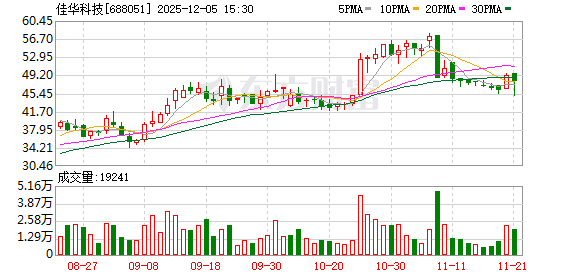
Group 1 - The core point of the article is that Jiahua Technology plans to acquire 90% of Shudun Technology through a combination of issuing shares and cash payments, which is expected to constitute a significant asset restructuring [2][4] - Jiahua Technology's stock will resume trading on December 8 after being suspended since November 24, with a closing price of 48 yuan per share and a market capitalization of approximately 3.7 billion yuan as of November 21 [2][4] - The company has seen its stock price increase by over 130% this year [2] Group 2 - The transaction involves an issuance price of 31.05 yuan per share, which is not less than 80% of the average trading price over the previous 120 trading days [4] - After the transaction, some of the trading counterparties are expected to hold more than 5% of the company's total shares, indicating that it will constitute a related party transaction [4] - Jiahua Technology is a leading enterprise in the domestic IoT big data sector, focusing on the integration of AI, blockchain, cloud computing, and big data technologies [4] Group 3 - Shudun Technology specializes in domestic cryptography technology research and information security solutions, recognized as a key enterprise in the field [5] - The acquisition is expected to create synergies in business, technology, and customer relations, enhancing Jiahua Technology's market competitiveness and service capabilities [5] Group 4 - Jiahua Technology reported a revenue of 166 million yuan for the first three quarters of the year, a decrease of 30.72% year-on-year, and a net loss of 67.24 million yuan [8] - The decline in revenue is attributed to reduced income from certain projects, a decrease in gross margin, and increased credit impairment losses [8]