
AI大模型

Search documents
A股新开户数持续增加 透露了哪些利好信息
Zheng Quan Ri Bao· 2025-10-13 22:44
Core Insights - The continuous increase in new A-share accounts indicates growing investor confidence in China's economy and capital market reforms, highlighting the increasing attractiveness of Chinese assets [1][2][3] - The A-share market has shown resilience amid complex external conditions, with the Shanghai Composite Index rising 16.04% year-to-date as of October 13 [1][2] Group 1: Market Dynamics - In September, 2.9372 million new A-share accounts were opened, a year-on-year increase of 60.73% and a month-on-month increase of 10.83%, marking four consecutive months of growth [1] - The total number of new A-share accounts for the first three quarters of the year reached 20.1489 million, reflecting a year-on-year growth of 49.64% [1] - The resilience of the stock market is supported by a recovering economy and effective government measures to stabilize the market, which have led to a steady increase in market indices [2][3] Group 2: Investment Trends - The deepening reforms in the capital market are providing better investment opportunities, particularly in technology sectors, which have become the main focus of the current market rally [2][3] - The emergence of a "1+N" policy framework has led to significant structural changes in the market, fostering a culture of respecting and rewarding investors among listed companies [3] Group 3: Asset Allocation Shifts - There is a noticeable shift in residents' asset allocation towards financial assets, with A-shares expected to become a core vehicle for wealth preservation and appreciation [3][4] - Data from the central bank indicates a decrease of 1.1 trillion yuan in household deposits, while non-bank deposits increased by 2.14 trillion yuan, signaling a migration of funds towards financial assets [3] - High-net-worth clients and industrial capital are driving the growth of securities margin financing, indicating a preference for core assets in the A-share market among risk-tolerant investors [3]
A股新开户数持续增加透露了哪些利好信息
Zheng Quan Ri Bao· 2025-10-13 16:22
Core Insights - The continuous increase in new A-share accounts indicates growing investor confidence in China's economy and capital market reforms, highlighting the increasing attractiveness of Chinese assets [1][2][3] - The A-share market has shown resilience, with the Shanghai Composite Index reaching a year-to-date increase of 16.04% as of October 13, driven by positive macroeconomic fundamentals and a series of stabilizing measures [1][2] - The deepening reforms in the capital market are providing better investment opportunities, particularly in technology sectors, which are becoming the main focus of the current market rally [2][3] Market Dynamics - The influx of institutional investors, with 10,900 new accounts in September, marks a significant milestone and reflects a growing trend towards long-term and value investing [3] - The shift in residents' asset allocation towards financial assets, particularly A-shares, is becoming evident as traditional investments like real estate face regulatory constraints [3][4] - The trend of asset migration to A-shares is expected to continue, but maintaining investor confidence through protection measures and promoting rational investment practices is crucial for sustaining this trend [4]
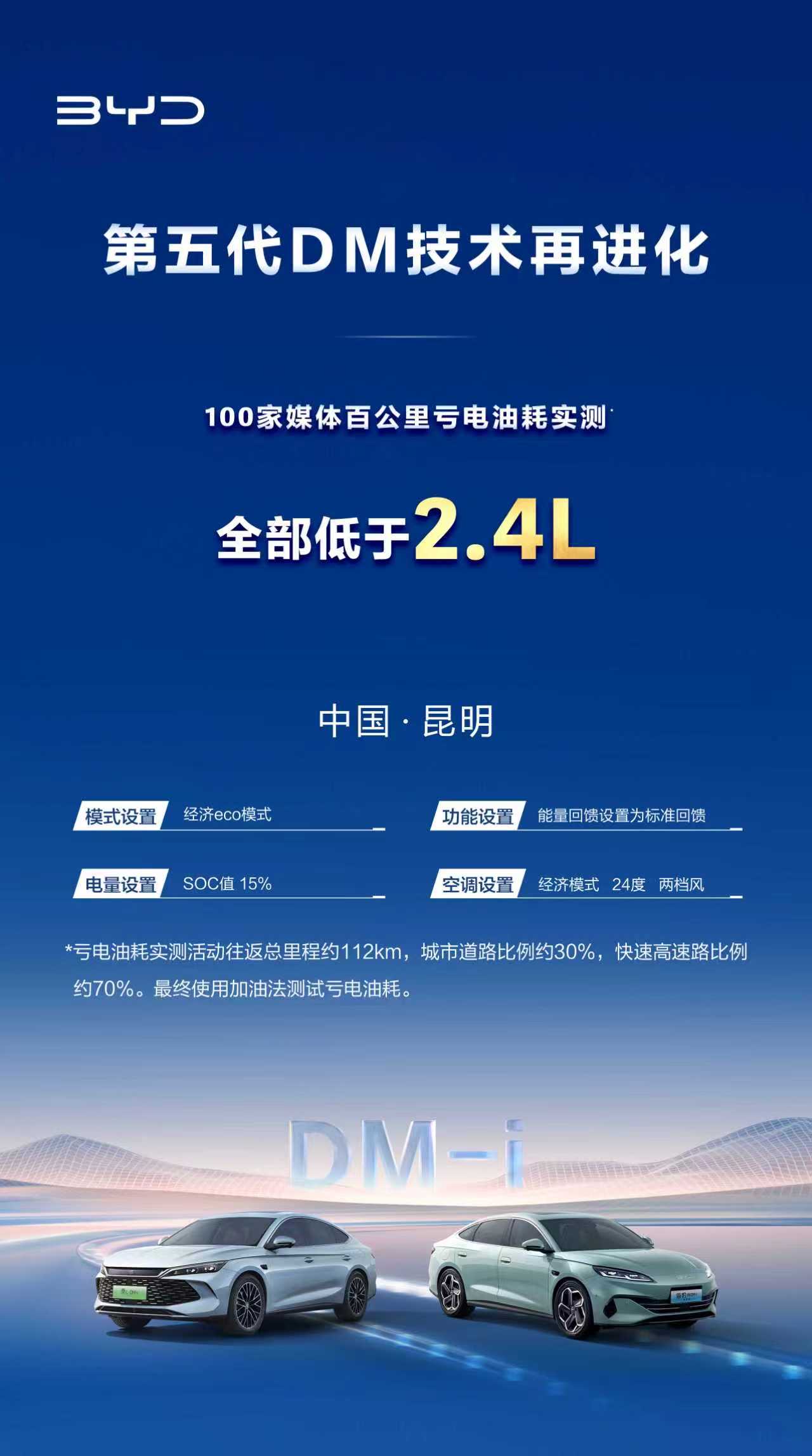
比亚迪第五代DM技术亏电油耗低至2.6L,正式开启OTA推送
Jing Ji Guan Cha Wang· 2025-10-13 11:49
Core Insights - BYD's fifth-generation DM technology has been upgraded, resulting in a further reduction of NEDC fuel consumption to 2.6L per 100 kilometers, setting a new global low for fuel consumption in electric mode [1][3] - The upgrade leverages a database of over 150 million users and 28 billion kilometers of driving data, utilizing a newly developed AI model for optimized fuel-saving strategies across more than 180 million driving scenarios [3][4] - The evolution of DM technology marks a shift from hardware competition to strategic optimization, establishing BYD as a benchmark in the plug-in hybrid industry [4] Summary by Sections Technology Advancement - The fifth-generation DM technology has achieved a fuel consumption rate of 2.6L per 100 kilometers, which is a 10% reduction from previous levels [1] - Real-world tests showed that models like the Qin L DM-i and Seal 06 DM-i recorded fuel consumption below 2.4L, outperforming official certifications [3] Cost Efficiency - The upgrade allows for a savings of 0.3 liters of fuel per 100 kilometers, translating to a total savings of 6.3 liters over a full tank, equating to a cost reduction of 40-50 yuan per fill-up based on current fuel prices [3] Industry Positioning - BYD's continuous innovation over 17 years has led to five major iterations of DM technology, with the fourth generation achieving a fuel consumption of 3.8L per 100 kilometers and the fifth generation entering a new era of fuel efficiency [4] - The DM technology has been recognized in academic circles, being included in textbooks and serving as a key case study in automotive education, highlighting its industry-leading status [4]


医保局严查定点药店“阴阳价”;康泰医学收到美国FDA警告信
2 1 Shi Ji Jing Ji Bao Dao· 2025-10-13 01:03
Policy Developments - The "Regulations on the Management of Clinical Research and Clinical Translation Applications of Biomedical New Technologies" were officially published, emphasizing the balance between innovation and safety in the biomedical sector [2] - The National Healthcare Security Administration has issued a draft for "Basic Medical Insurance Registration Service Specifications," mandating that registration for individuals or units must not exceed five working days [3] Industry News - The National Healthcare Security Administration is conducting a special investigation into "dual pricing" practices at designated retail pharmacies, which discriminate between insured and uninsured patients [4] - Keren Biotechnology's TROP2 ADC has received approval for second-line treatment of EGFR mutation NSCLC, marking a significant advancement for the company's core product [6] - Beijing Norsland Biotechnology Co., Ltd. plans to issue H-shares and apply for listing on the Hong Kong Stock Exchange to enhance its international presence and raise funds for long-term development [8] - The National Medical Products Administration has reclassified Dangshen Granules and Regulating Menstrual Blood Capsules from prescription to over-the-counter drugs [10] - KingMed Diagnostics, Tencent, and Guangzhou Medical University First Affiliated Hospital announced a collaboration to develop a multimodal model for pathological genetics using AI [11] Company Updates - Kangtai Medical received a warning letter from the FDA regarding non-compliance with medical device quality system regulations, which could prevent its products from entering the U.S. market until issues are resolved [14] - Warner Pharmaceuticals has voluntarily withdrawn its drug registration application for Arolol Hydrochloride Tablets, which will not significantly impact the company's current or future operations [15]





中美AI芯片杀疯了!AMD叫板英伟达,寒武纪华为绑定DeepSeek绝地反击
Tai Mei Ti A P P· 2025-10-13 00:48
Group 1 - AI chips have become a crucial "trump card" in the US-China tech competition, with significant investments from companies like Nvidia and AMD towards OpenAI [2][5] - Nvidia plans to invest up to $100 billion in OpenAI over the next decade, while AMD has entered a multi-billion dollar supply agreement with OpenAI [2][5] - The domestic AI chip market in China is experiencing rapid growth, with companies like Cambricon and Huawei making significant advancements and investments [5][14] Group 2 - The US has expanded export controls on AI chips to China, which may result in Nvidia missing out on a $50 billion market opportunity [6][9] - Competition in the AI chip market is intensifying, with both foreign and domestic companies developing cost-effective AI computing products [7][19] - OpenAI has spent $7 billion on computing power in the past year, indicating a growing demand for AI infrastructure [8] Group 3 - Nvidia's market share in China has dropped from 95% to 50% over the past four years, highlighting the increasing competition from domestic firms [11][13] - The Chinese AI chip market is facing a supply-demand imbalance, with significant orders for domestic chips from major internet companies [14][19] - The DeepSeek model has significantly reduced training costs compared to leading US AI models, further enhancing the competitiveness of Chinese AI chips [10][17] Group 4 - The global semiconductor industry is projected to reach record sales of $697 billion by 2025, driven by advancements in AI and 5G technologies [8] - The demand for AI infrastructure is expected to reach $3 trillion to $4 trillion over the next five years, presenting substantial opportunities for chip manufacturers [13][18] - The Chinese AI server market is projected to exceed $140 billion by 2029, with domestic chips gaining a larger market share [19][29] Group 5 - The need for new architectures, storage solutions, and communication technologies is critical for the advancement of AI chips [20][24] - The current semiconductor manufacturing landscape is facing challenges, with rising costs and limitations in advanced process technologies [22][23] - Companies are exploring innovative solutions such as reconfigurable computing architectures to enhance AI chip performance [25][28]



【财联社早知道】国家发改委等两部门印发政务领域AI大模型部署应用指引,机构称大模型的赋能下软件业正加速演进
财联社· 2025-10-12 10:42
Group 1 - The National Development and Reform Commission and another department issued guidelines for the deployment and application of AI large models in the public sector, indicating that the software industry is accelerating its evolution under the empowerment of large models [1] - Two major rare earth giants have raised prices by 37% month-on-month, with institutions stating that the industry is showing a resonance pattern on both supply and demand sides; one company specializes in high-performance rare earth permanent magnet materials such as sintered neodymium iron boron and sintered samarium cobalt [1] - A company has established a full-chain industry layout from storage chip packaging and testing to storage module assembly [1]

19岁,她融资1.2亿
投资界· 2025-10-12 07:42
Core Insights - The article highlights the rise of Gen Z entrepreneurs in the AI sector, exemplified by Serena Ge, a 19-year-old co-founder of DataCurve, who has successfully raised $1.77 million in funding within a year [4][11]. Company Overview - DataCurve, co-founded by Serena Ge and Charley Lee, aims to address the challenge of acquiring high-quality labeled data for AI models, which is crucial for overcoming existing bottlenecks in AI development [7][12]. - The company employs a unique "bounty hunter" system to attract skilled software engineers for data collection tasks, offering rewards ranging from $5 to $50 per completed task, and has distributed over $1 million in bounties to date [7][8]. Funding and Growth - DataCurve has completed a total of $1.77 million in funding, including a recent $1.5 million Series A round led by Chemistry VC, with participation from notable investors such as Y Combinator and others [10][11]. - The company achieved over $1 million in revenue within two months of its establishment and has secured contracts with major tech firms like Facebook, Apple, Amazon, and Google [8][11]. Industry Context - The article notes a broader trend of Gen Z entrepreneurs successfully raising significant funding, with examples including Axiom Math, which raised $64 million, and other startups led by young founders [14][15]. - The AI industry is characterized by a growing need for high-quality data, which remains essential regardless of technological advancements, positioning data labeling companies as critical players in the AI ecosystem [12].

不依赖云端!vivo把“AI大脑”直接装进你的手机
2 1 Shi Ji Jing Ji Bao Dao· 2025-10-11 10:44
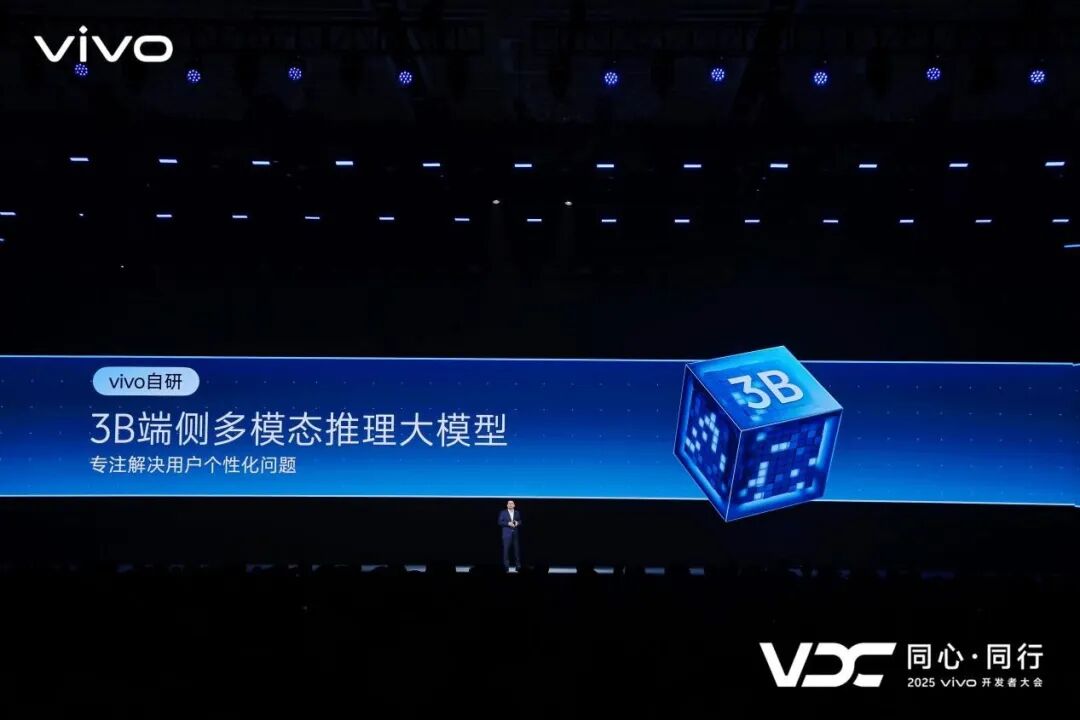
Core Insights - The article highlights the significant advancements in AI large models, particularly in the context of mobile devices, indicating a shift from technical competition to a focus on deep user understanding [1][2][4] - Vivo has developed the world's first 3B (3 billion parameters) model specifically for mobile agents, which showcases capabilities in multimodal processing, reasoning, and long-context understanding [1][2][4] Model Breakthrough - The new 3B model allows for independent operation on mobile devices without relying on cloud resources, enhancing user experience and enabling personalized AI interactions [2][4] - This model excels in language processing, multimodal understanding, and logical reasoning, marking a transition from a "public service" AI model to a "personalized" AI model [4][5] User Experience Enhancements - The model enables instant responses and offline functionality, allowing users to perform tasks without internet connectivity, thus providing reliable assistance anytime and anywhere [5][6] - It can understand and execute commands related to both text and images, evolving from a conversational AI to an actionable assistant capable of performing tasks across applications [6][8] Ecosystem Development - Vivo emphasizes the importance of an open ecosystem to enhance AI capabilities, aiming to connect various intelligent agents with users to create a more personalized experience [8][10] - The company has established the "Blue Heart Personal Intelligence Framework," focusing on perception, memory, planning, and execution to improve user interaction with AI [8][10] Collaborative Opportunities - Vivo's strategy includes opening its AI capabilities to developers, allowing for a broader range of personalized services and applications, thus fostering a collaborative ecosystem [10][12] - Over 50 ecosystem partners have already integrated with Vivo's open platform, indicating a growing network of services that enhance user experience through personalized AI interactions [10][12]
不依赖云端!vivo把“AI大脑”直接装进你的手机
21世纪经济报道· 2025-10-11 10:35
Core Viewpoint - The article emphasizes the significant advancements in AI models, particularly in the mobile sector, highlighting the transition from cloud-dependent models to personalized, on-device AI agents that understand individual user preferences and needs [1][2][5]. Group 1: Model Breakthroughs - Vivo has developed the world's first 3B model specifically designed for on-device AI agents, showcasing capabilities in multimodal understanding, reasoning, and long-text processing [2][5][7]. - The new 3B model allows for independent operation on mobile devices without relying on cloud resources, enhancing user experience and enabling real-time responses [5][7]. - This model can handle local files up to 128K in length, providing functionalities such as summarizing meeting recordings and drafting emails without needing an internet connection [7][8]. Group 2: Transition to Personalization - The shift from a "public service" AI model to a "personalized" AI model is highlighted, where the AI can learn and adapt to individual user habits and preferences [7][8]. - Vivo's AI can understand and execute tasks across different applications, evolving from a mere conversational agent to an active executor of user commands [8][10]. - The introduction of an on-device model training engine allows users to personalize their AI experience, making it more intuitive and tailored to individual needs [8][10]. Group 3: Ecosystem Development - Vivo aims to create an open ecosystem that connects various intelligent agents with users, facilitating a collaborative environment for AI development [10][11]. - The "Blue Heart Personal Intelligence Framework" is established to enhance user understanding through perception, memory, planning, and execution capabilities [11][13]. - Over 50 ecosystem partners have integrated with Vivo's open platform, providing over 200 services that enhance user experience across different applications [13][15]. Group 4: Strategic Insights - Vivo's strategy reflects a deep understanding of the rapid technological evolution, advocating for collaboration rather than isolated development [15]. - The focus on establishing industry standards and lowering development barriers aims to attract more partners, fostering a robust AI ecosystem [15]. - The ongoing upgrades to the Blue Heart model matrix and the personal intelligence framework signal a move towards a future where AI becomes a reliable companion that understands and adapts to users [15].

武汉无人驾驶出租车的成绩单
Zhong Guo Qi Che Bao Wang· 2025-10-11 08:39
Core Insights - Wuhan is a pioneer in China's autonomous taxi industry, having started testing operations on June 30, 2022, and officially launched commercial operations in September 2022. As of May 15, 2024, the company "Luo Bo Kuaipao" has deployed 1,000 sixth-generation autonomous vehicles for large-scale commercial operations [1][2]. Group 1: Operational Performance - Wuhan has over 1,000 autonomous taxis, with more than 700 actively carrying passengers and over 300 in testing. The average daily orders exceed 20, with an average daily driving distance of approximately 200 kilometers, covering major urban areas [1][2]. - The maximum speed of Wuhan's autonomous taxis is 51 km/h, with an average speed of about 13 km/h, which has not caused significant traffic issues. Overall, the safety performance of these autonomous taxis surpasses that of human-driven vehicles [2]. Group 2: Safety and Comfort - The autonomous taxis have recorded zero collision incidents and zero active thefts, with over 30 passive conflicts and three traffic rule violations. The longest recovery time after a failure is 48 seconds, with a 100% recovery success rate [1][2]. - However, there are comfort issues, such as sudden acceleration at startup and abrupt deceleration during conflict avoidance, which can create a noisy environment for passengers [2]. Group 3: Challenges and Improvements - Despite good overall performance, there are still shortcomings, such as failures in lane-changing maneuvers and overly cautious behavior in complex scenarios, which can lead to traffic congestion and discomfort compared to human driving [3][4]. - The "long-tail problem" in unconventional scenarios is identified as a bottleneck for the large-scale application of autonomous driving technology. This includes issues with sudden failures and the need for improved comfort levels [4]. Group 4: Future Directions - The transition to Level 3 (L3) autonomous driving, which allows conditional autonomous driving while still requiring driver intervention, is a key focus. Research is ongoing regarding the dynamic allocation of driving rights between human drivers and autonomous systems [4][5]. - The development of AI models is expected to accelerate the iteration of end-to-end autonomous driving technology, with a significant increase in traffic data enabling a closed-loop for all scenarios. The industry is encouraged to pursue a collaborative approach involving government, research institutions, and industry leaders to promote the large-scale application of autonomous vehicles [5].