数字孪生

Search documents
国家管网西气东输为长三角一体化绿色发展注入强劲动能
Ren Min Wang· 2025-06-05 06:20
西气东输管道系统向长三角地区输送天然气达5500亿立方米 目前,国家管网集团所辖西气东输管道系统途经长三角地区30个地市,每天向长三角地区204家直供用户供应"福气",日均分输量超1.45亿立方米,最 高日分输量近2亿立方米,供气量约占长三角地区天然气消费总量的四分之三,超2亿人口从中受益。 6月5日,记者在国家管网集团西气东输公司媒体公众开放暨品牌日活动上获悉,国家管网西气东输累计向上海输送天然气突破650亿立方米,向长三角 地区输送天然气达到5500亿立方米。累计输送的5500亿立方米天然气,折合替代标煤7.1亿吨,可减少排放二氧化硫1399.2万吨、粉尘3.98亿吨和二氧化碳 8.04亿吨,相当于种植阔叶林24.2亿公顷,约等于67个长三角面积,为推动长三角地区一体化高质量发展注入强劲的"绿色动能"。 国家管网西气东输坚定做"绿水青山就是金山银山"理念的积极传播者和模范践行者,以"双碳"目标为引领,全面提速长三角区域管网建设与互联互通, 进一步促进资源优化配置,提升能源供应保障能力,协同推进增输、降碳、扩绿、创新,为促进能源、经济、社会与环境的协调发展贡献力量。 "一条线"到"一张网"的升级 在吴淞江南 ...



探访超级智能生态基地:在世界工厂造豪华“旗舰”
Zhong Guo Qi Che Bao Wang· 2025-06-05 01:18
Core Insights - Audi's first dedicated electric vehicle production base in China, located in Changchun, represents a significant milestone in the company's strategy to support its operations in the Chinese market [1][19] - The Q6L e-tron, a luxury electric SUV, has officially begun pre-sales, showcasing Audi's technological strength and innovation in the electric vehicle sector [3][19] Production and Technology - The Audi FAW New Energy PPE factory is recognized as the most advanced production facility globally, emphasizing a fully digital and automated production system [4] - The factory employs digital twin technology to ensure real-time updates and synchronization between digital models and actual construction progress [4] - Automation is a key feature, with 824 KUKA robots achieving a welding precision of 0.1 mm, significantly enhancing production efficiency and quality [6] - The integration of a comprehensive IT architecture allows for the interconnection of all maintenance, logistics, and manufacturing processes, improving operational efficiency [4][8] Environmental Sustainability - The factory operates under a "zero emissions" plan, achieving 100% photovoltaic coverage and green energy supply, along with a closed-loop water treatment system [10][12] - The facility has implemented various ecological initiatives, including the creation of a micro-ecosystem with local flora and fauna, enhancing biodiversity [12] Supply Chain and Localization - A supply chain ecosystem is forming around the PPE factory, with 50% of suppliers located within a 30-kilometer radius, which increases localization and reduces logistics carbon footprint [14] Future Outlook - By 2025, Audi plans to launch its largest product offensive in China, with the Q6L e-tron positioned as a flagship model, combining German engineering with Chinese manufacturing speed [19]

强化技术支撑 发展数字经济
Jing Ji Ri Bao· 2025-06-04 22:03
Core Insights - A recent report by Renmin University of China's Global Public Opinion Research Center indicates that 86% of global respondents view China as advanced in digital technology, with 92.2% from developing countries and 75.2% from developed countries [1] - China's digital economy is projected to have a core industry value-added accounting for about 10% of GDP by 2024, with significant breakthroughs in integrated circuits, artificial intelligence, industrial software, and foundational software [1] - The establishment of six national digital economy innovation development pilot zones in provinces such as Hebei, Zhejiang, and Guangdong aims to explore new mechanisms for digital economy elements and resource allocation [1] Policy Framework - The State Council has released the "14th Five-Year Plan for Digital Economy Development," focusing on optimizing digital infrastructure, leveraging data elements, and promoting industrial digital transformation [2] - The Central Committee and State Council's 2023 "Overall Layout Plan for Digital China Construction" emphasizes accelerating digital technology innovation and deep integration with the real economy [2] - Local governments are also implementing action plans to promote high-quality digital economic development, creating a comprehensive policy environment for digital technology [2] Mechanism Improvement - Digital technology should be integrated into the national innovation system, with a comprehensive policy framework covering basic research, application development, and results transformation [3] - Establishing a data property rights system and a governance framework that balances security and efficiency is essential for facilitating data flow and transactions [3] - Reforming regulatory mechanisms to eliminate barriers to digital technology application and creating a supportive environment for new technologies and business models is crucial [3] Technical Advancement - Focus on key areas such as artificial intelligence algorithms, high-end chip design, and quantum information science to drive core technology breakthroughs [3] - Increase investment in basic research and promote deep integration of industry, academia, and research to build a comprehensive innovation system [3] - Strengthening the digital technology standard system and enhancing international influence in rule-making are vital for fostering a competitive digital technology ecosystem [3] Application Integration - Promote the penetration of digital technology across the entire value chain of the real economy, accelerating the transformation of manufacturing through intelligent upgrades [4] - Expand application scenarios in fields like bio-manufacturing, smart energy, and digital finance to cultivate new integrated business models [4] - Develop collaborative platforms across industries to facilitate technology sharing and efficient flow of resources, while exploring future industries like digital twins and the metaverse [4]
连云港虹洋热电公司入选2025年江苏省先进级智能工厂
Xin Hua Ri Bao· 2025-06-04 20:54
Core Viewpoint - Jiangsu Province's Industrial and Information Technology Department has announced the list of advanced smart factories for 2025, with Lianyungang Hongyang Thermal Power Co., Ltd. recognized for its achievements in smart manufacturing and digital transformation, becoming a model enterprise in the energy sector of the province [1] Company Summary - Lianyungang Hongyang Thermal Power has invested over 9.8 billion in its establishment since 2011, with a total heating capacity of 3,428.5 tons/hour, making it the largest clean energy cogeneration project in the Xuwei New Area [1] - The company has implemented a comprehensive digital transformation strategy, focusing on "data-driven, intelligent empowerment," utilizing advanced technologies such as artificial intelligence, big data, and the Internet of Things to enhance production management and data connectivity [1][2] Industry Summary - The Xuwei New Area is actively promoting the integration of industrial chains, innovation chains, and digital chains, establishing a tiered cultivation system for smart factories to support the intelligent and green transformation of enterprises [2] - In the past two years, three enterprises in the Xuwei New Area have been approved as national industrial internet pilot demonstrations, three as national 5G factories, and ten as provincial-level smart factories [2] - The economic development bureau of Xuwei New Area plans to continue fostering smart factory development through benchmark leadership and tailored strategies to build a trillion-level industrial cluster [2]

行业第一的再互动营销平台是如何助力酒厂销量飙升128%
Sou Hu Cai Jing· 2025-06-04 12:02
Core Insights - The article highlights the transformative impact of the "one code, one item" technology in the beverage industry, particularly for leading liquor companies, as a standard solution for digital transformation [1][9] - The success of the interactive marketing platform is exemplified by a 128% increase in sales for collaborating liquor brands, driven by technology empowerment, data-driven strategies, and comprehensive marketing approaches [1][9] Group 1: Technology Empowerment - The core competitive advantage of the interactive marketing platform lies in its proprietary "one code, one item" technology, which transforms traditional liquor products into dynamic data nodes [3] - For example, a certain liquor brand saw a 30% increase in bottle opening rates and a 25% increase in terminal repurchase rates through a dual-code interaction model [3] - The platform enables a complete digital transformation of the supply chain, improving response speed by 60% and ensuring robust sales support [3][5] Group 2: Data-Driven Strategies - The platform constructs a consumer data center based on the "one code, one item" approach, allowing brands to gather extensive consumer data for targeted marketing [5] - A specific liquor brand implemented a three-tier operational strategy based on consumer data, achieving a 32% conversion rate for new customers and increasing repurchase frequency to 2.8 times per month for active users [5] - The feedback loop from consumer data significantly influenced product development, leading to the rapid launch of a mini bottle product that sold over 500,000 units in three months [5] Group 3: Comprehensive Marketing - The platform creates a "Brand-Channel-Consumer" integrated operational ecosystem, enhancing terminal coverage by 55% and increasing single-store output by 80% [6] - A "anti-diversion 2.0 system" was developed to reduce diversion rates from 12% to 3%, while also converting compliance data into marketing resources [6] - The balance of control and empowerment in the channel management significantly improved dealer satisfaction by 68% [6] Group 4: Ecological Collaboration - The platform's leading position is further demonstrated by its ecological collaboration capabilities, integrating with major apps like WeChat and Douyin for extensive consumer engagement [9] - A specific marketing campaign during the Spring Festival achieved 320 million exposures, enhancing the brand's youthfulness index by 40% [9] - The collaboration with JD Logistics for "scan-to-book delivery" reduced order fulfillment time to 2 hours, greatly enhancing user experience [9]
辛顿、杨立昆等 AI 先驱都源自信号处理——对话 IEEE 首位华人主席、美国双院院士刘国瑞 | 万有引力
AI科技大本营· 2025-06-04 05:42
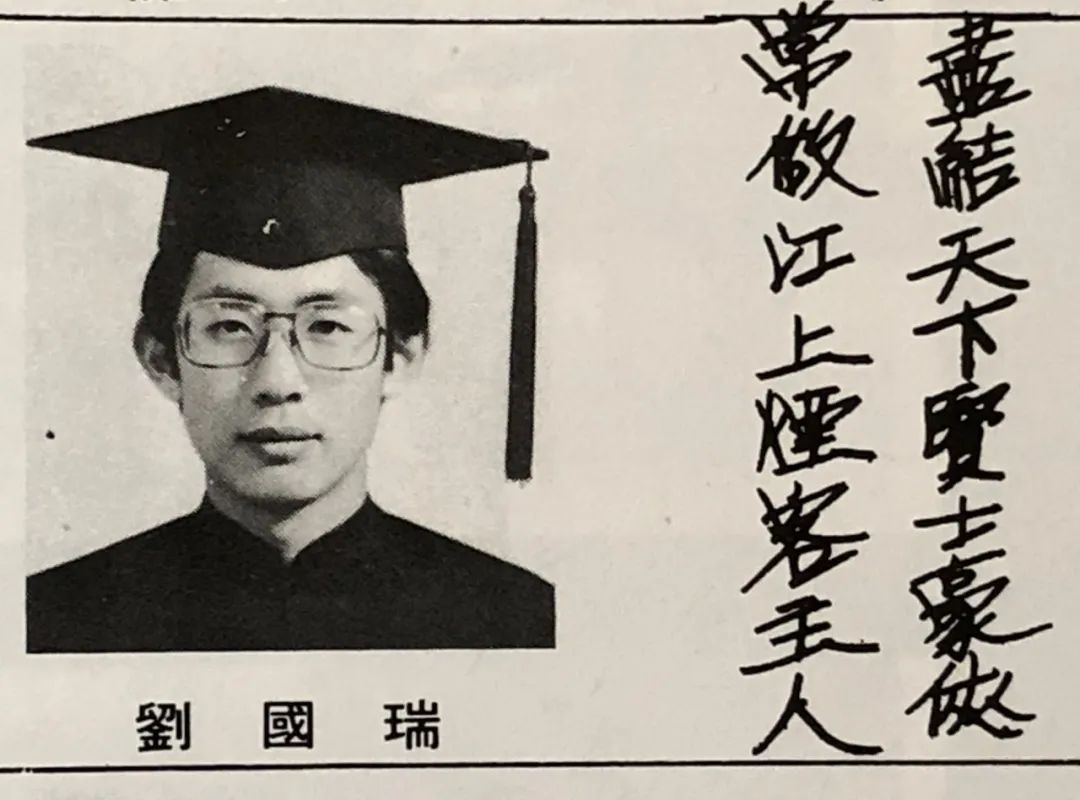
Core Viewpoint - The article highlights the journey and achievements of K. J. Ray Liu, emphasizing his contributions to the field of wireless sensing and AI, as well as his philosophy of pursuing dreams and maintaining one's original intentions in life and career [2][15][40]. Group 1: Personal Journey - K. J. Ray Liu was born in Taiwan and showed early interest in communication and signal processing, which became his lifelong profession [2][4]. - He faced challenges during his academic journey, including a difficult transition to studying in the U.S. and overcoming biases as a Chinese scholar [5][6]. - Liu became the first Asian president of IEEE in 2022, implementing significant reforms during his tenure [6][9]. Group 2: Contributions to Education - Liu has mentored over 70 doctoral and postdoctoral students, many of whom have achieved notable success in academia and industry [11][30]. - His teaching philosophy emphasizes the importance of independent thinking and problem discovery among students, rather than merely solving assigned problems [31][32]. Group 3: Transition to Industry - Liu retired from academia to pursue entrepreneurship in wireless AI, believing that practical applications require real-world data and environments [39][40]. - His company, Origin Wireless, focuses on utilizing wireless signals for environmental sensing, which has significant implications for health monitoring and safety [41][42]. Group 4: Vision for Wireless AI - Wireless AI aims to leverage ubiquitous wireless signals to perceive and understand human activities and health conditions without the need for wearable devices [41][42]. - The technology has already been deployed in various regions for remote monitoring, demonstrating its potential to save lives and improve health outcomes [42].

解码龙岗缘何成为裸眼3D LED显示发展的高地 创新是密钥 市场是风帆
Shen Zhen Shang Bao· 2025-06-03 22:39
Core Viewpoint - Longgang has established itself as a global leader in the naked-eye 3D LED display industry, supported by a robust industrial cluster, strong government policies, and effective commercialization capabilities [1][6]. Group 1: Industry Overview - Longgang is home to the largest LED industry cluster in China, featuring companies like Yingtian Technology, Absen, and Bandu Technology, which together create a complete industrial chain from packaging to solutions [1]. - The naked-eye 3D display technology developed by Longgang companies is being utilized by major firms such as Tencent, BOE, Lenovo, and Huawei in various applications [2][3]. Group 2: Technological Advancements - Yingtian Technology has achieved significant advancements in naked-eye 3D display technology, with its key product, a controllable 2D/3D switchable liquid crystal lens screen, entering production in 2023 [2]. - Bandu Technology's innovations include ultra-high-definition air suspension displays and immersive 3D screens, which are applicable in diverse fields such as digital experience, cultural heritage, and urban governance [4][5]. Group 3: Market Performance - Absen has sold over 2 million outdoor display screens globally, with its products recognized for their energy efficiency, saving up to 144,000 RMB in electricity costs over five years for a 300 square meter screen [3]. - The company has maintained the top position in exports among Chinese LED display manufacturers for 12 consecutive years, establishing a comprehensive global sales and service network [3]. Group 4: Government Support - The rapid development of the naked-eye 3D LED display industry in Longgang is significantly supported by local government initiatives, including funding for research and development and various subsidies for high-tech enterprises [6]. - Longgang's supportive business environment includes streamlined services and efficient complaint handling, enhancing the operational efficiency for technology companies [6].

西门子“Realize LIVE”活动透视:AI+工业软件新征程,持续推进一站式AI解决方案
3 6 Ke· 2025-06-03 19:25
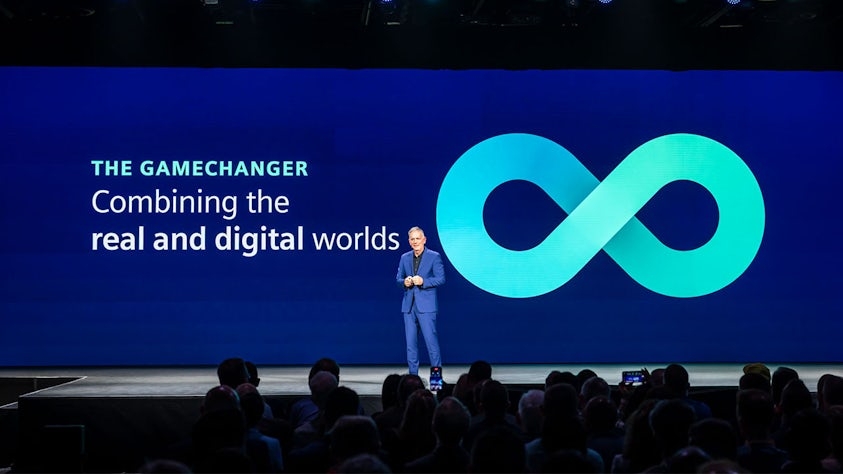
Core Insights - Siemens is focusing on digital transformation in manufacturing, emphasizing the integration of AI and digital technologies to enhance operational efficiency and competitiveness [3][4][5] Group 1: Event Overview - The Realize Live Americas 2025 conference hosted over 2,500 Siemens customers, partners, and industry experts to discuss best practices and insights in industrial digitalization [3] - Tony Hemmelgarn, CEO of Siemens Digital Industries Software, highlighted the ongoing evolution of the Siemens Xcelerator platform, which aims to provide comprehensive digital transformation solutions [3][4] Group 2: Technological Advancements - The Xcelerator platform integrates software, hardware, and services to help businesses become truly digital enterprises, improving manufacturing agility and operational efficiency [3][4] - AI capabilities are being integrated into Siemens' Teamcenter software for automatic problem detection and into Simcenter products to reduce engineering computation time [3][4] Group 3: Strategic Acquisitions - Siemens strengthened its digital twin capabilities through the acquisition of Altair, enhancing its ability to model and simulate physical systems in a virtual environment [4][5] - The integration of Altair's technology allows Siemens to offer advanced high-performance computing solutions, balancing workloads between GPU and CPU [4] Group 4: Product Lifecycle Management - Siemens' Teamcenter, a core product lifecycle management (PLM) solution, has seen a performance improvement of 20 times over the past 18 to 24 months, incorporating AI for intelligent lifecycle management [5] - The introduction of independent release processes and enterprise-level change functions enables simultaneous management of multiple product changes with complete traceability [5] Group 5: Case Study - Workhorse, an electric vehicle manufacturer, successfully utilized Siemens Xcelerator for comprehensive digital transformation, developing high-quality electric trucks in a short timeframe [6][8] - The deployment of NX and Teamcenter X PLM software allowed Workhorse to complete the full development process of its next-generation electric vehicle in just 22 months [8]

研发团队缩水一半,仲裁案增加开支,五一视界靠什么拉增长?
Bei Jing Shang Bao· 2025-06-03 14:24
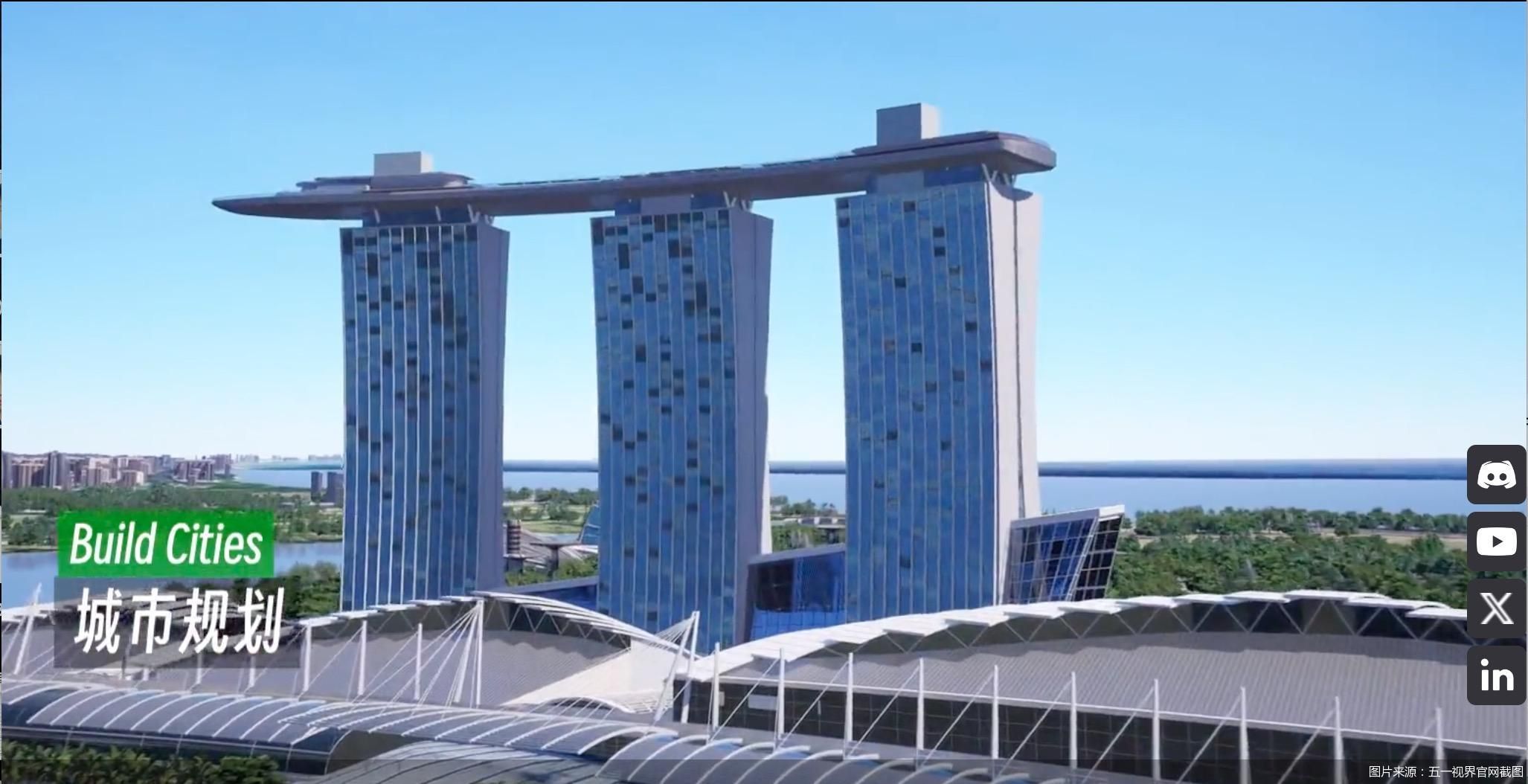
Core Viewpoint - The company, Wuyishijie, is experiencing both growth in revenue and a narrowing of adjusted net losses, but faces challenges such as declining gross margins and increasing costs, particularly in sales and administrative expenses [2][10]. Financial Performance - Revenue for Wuyishijie is projected to grow from 170 million yuan in 2022 to 287 million yuan in 2024, with adjusted net losses decreasing from 132 million yuan to 45.77 million yuan over the same period [2]. - The gross margin for the 51Aes digital twin platform, which contributes over 80% of revenue, is declining, with figures dropping from 69.2% in 2022 to 52.8% in 2024 [5]. - Sales costs are increasing at a faster rate than revenue, rising from 117 million yuan in 2023 to 141 million yuan in 2024, a growth of 19.8% [6]. Business Segments - The three business segments of Wuyishijie include 51Aes (digital twin platform), 51Sim (synthetic data and simulation platform), and 51Earth (digital earth platform), with 51Aes being the primary revenue driver [3]. - Revenue contributions from 51Aes are 83.3%, 79.8%, and 82.2% for the years 2022, 2023, and 2024 respectively, while 51Sim contributes 15.3%, 16.6%, and 16.6% [3]. Customer Dynamics - The number of customers for 51Aes has decreased from 183 in 2023 to 131 in 2024, but the average revenue per customer has increased from 1.1 million yuan to 1.8 million yuan [4]. - The company is focusing on customer revenue per capita, which indicates a shift in strategy towards fewer, higher-value clients [4]. Cost Structure - Research and development expenses have decreased significantly from 103 million yuan in 2023 to 58.21 million yuan in 2024, a reduction of 43.3% due to a reduction in the R&D team size [7]. - General and administrative expenses have surged from 50.33 million yuan in 2023 to 92.30 million yuan in 2024, an increase of 83.4% [6][8]. Future Outlook - Wuyishijie anticipates an increase in net losses for the year ending December 31, 2025, due to ongoing arbitration and rising costs [10][11]. - The company is planning to hire 50-100 new R&D personnel over the next three years, indicating a potential shift back towards growth in this area after recent cuts [8].
辛顿、杨立昆等AI先驱都源自信号处理——对话 IEEE 首位华人主席、美国双院院士刘国瑞
3 6 Ke· 2025-06-03 09:48
Group 1 - Liu Guorui, the first Chinese president of IEEE, emphasizes the importance of perseverance and hard work in overcoming biases and achieving recognition in the engineering field [3][4] - Under Liu's leadership, IEEE underwent significant reforms, including the restructuring of representation for the Asia-Pacific region and changes to the Fellow selection process [4][6] - Liu's journey to becoming IEEE president was marked by challenges, including unfounded accusations and initial lack of nomination, which he overcame through determination and support from board members [4][6] Group 2 - Liu Guorui has dedicated over 30 years to education, mentoring more than 70 doctoral students, many of whom have achieved notable success, including becoming professors and IEEE Fellows [7][25] - He advocates for students to explore the world beyond academia, emphasizing the importance of broad perspectives and real-world experiences in academic pursuits [7][8] - Liu's book, "Origin: Science & Life," aims to share his life experiences and encourage young people to pursue their dreams without fear of failure [10][19] Group 3 - Liu transitioned from academia to entrepreneurship at the age of 60, founding Origin Wireless to pursue advancements in wireless AI technology [6][34] - The company focuses on utilizing wireless signals for environmental perception, which has applications in health monitoring and safety, such as fall detection and sleep quality assessment [35][36] - Liu's approach combines academic research with practical applications, allowing for the collection of real-world data to drive innovation in AI [33][34]