
美国就业市场

Search documents
美联储副主席杰斐逊:美国就业市场趋弱 若无政策支持或承压
智通财经网· 2025-09-30 12:59
Core Viewpoint - The Federal Reserve Vice Chairman Philip Jefferson anticipates a growth rate of approximately 1.5% for the U.S. economy for the remainder of the year, indicating potential pressure on the job market without Fed policy support [1] Group 1: Economic Growth and Inflation - Jefferson supports a 25 basis point rate cut during the Fed's policy meeting on September 16-17 to balance the risks of persistent inflation above target levels and the observed threats to the job market [1] - He expects inflation to begin declining towards the Fed's 2% target after this year [1] Group 2: Job Market and Policy Uncertainty - The current job market is gradually softening, suggesting that without support, it may face pressure [1] - Jefferson highlights high uncertainty in his baseline forecast due to the impacts of the current U.S. government's new policies on employment and inflation [1] Group 3: Trade and Tariff Impacts - The effects of trade, immigration, and other policies from the Trump administration are still evolving [1] - Although tariffs have a lower impact on inflation and other economic areas than some economists expected, Jefferson believes these effects will become more apparent in the coming months [1] Group 4: Interest Rate Adjustments - The Fed has already lowered the benchmark interest rate to a range of 4% to 4.25%, marking the first rate adjustment since December of the previous year [2] - Following the last policy meeting, policymakers forecast two additional rate cuts for the remainder of the year [2]
时隔9个月美联储再降息|一周市场观察
Sou Hu Cai Jing· 2025-09-22 00:02
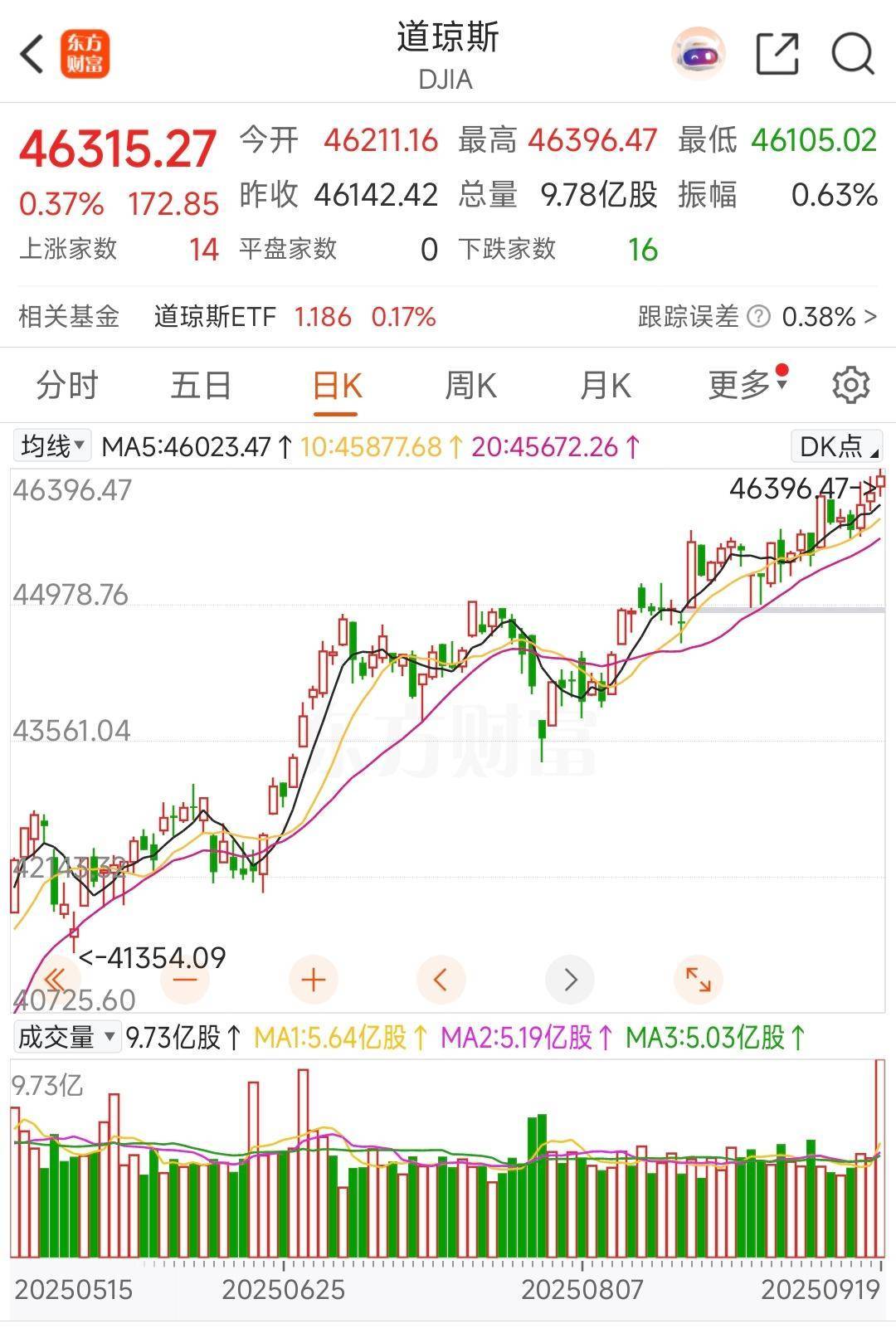
Group 1 - The Federal Reserve has lowered the federal funds rate target range by 25 basis points to 4.00%-4.25%, marking the first rate cut of the year and a continuation of the easing cycle initiated in 2024 [1][3] - Recent data indicates a slowdown in U.S. economic activity, with a decrease in new job creation and increasing downside risks to employment [1][3] - The Federal Reserve forecasts an additional 50 basis points cut by the end of the year, followed by 25 basis points cuts in each of the next two years [1] Group 2 - Market expectations for the rate cut were already established, primarily driven by weak employment data indicating a deteriorating labor market [3] - Despite the employment challenges, inflation data shows resilience, requiring the Federal Reserve to balance monetary policy to support the job market [3] - Following the rate cut, U.S. stock markets surged, with the Dow Jones Industrial Average rising by 172.85 points to 46,315.27, a 0.37% increase [3] Group 3 - International spot gold prices surged, breaking above $3,700 per ounce, driven by expectations of further rate cuts, geopolitical uncertainties, and strong investment demand [5] - Deutsche Bank has raised its 2026 gold price forecast to $4,000 per ounce, citing strong central bank demand and potential dollar weakness [5] - The rate cut is expected to benefit three key areas: gold assets, Hong Kong tech stocks, and A-share tech stocks, with the latter two likely to see valuation recovery due to external liquidity and domestic policy support [5]

美联储9月议息会议点评:点阵图的重大分歧或值得关注
Guolian Minsheng Securities· 2025-09-19 12:41
Group 1: Federal Reserve Actions - The Federal Reserve lowered the policy interest rate by 25 basis points in September 2025, bringing the target range to 4%-4.25%[4] - The market had anticipated a 25 basis point cut with a probability of 96.1% prior to the meeting[7] - This marks a total of 125 basis points cut in the current cycle, with four reductions since the beginning of the cycle[16] Group 2: Divergence in Dot Plot - The dot plot indicates a widening divergence among committee members regarding future rate cuts, with 9 members supporting 2 more cuts this year, while 6 members believe there should be no further cuts[8] - One member suggested a reduction to below 3%, implying a need for cuts exceeding 50 basis points in the next two meetings[8] - The voting showed one dissenting vote, with Stephen I. Miran advocating for a 50 basis point cut instead of 25[28] Group 3: Economic Outlook - The Fed slightly raised its GDP growth forecast for 2025 to a median of 1.6% while maintaining the unemployment rate at 4.5%[9] - Inflation expectations for 2026 were slightly adjusted upward, with the Fed showing more tolerance for deviations from the 2% inflation target[9] - The Fed's statement highlighted a weakening job market as a significant reason for the rate cut, reflecting concerns over employment risks[10] Group 4: Market Reactions - Following the announcement, the Dow Jones increased by 0.57%, while the S&P 500 and Nasdaq fell by 0.1% and 0.33%, respectively[4] - Short-term Treasury yields declined, with the 3-month yield dropping by 2 basis points[30] - The dollar index showed volatility, initially falling before rebounding by the close of trading[30]
美联储降息,鲍威尔转向
Sou Hu Cai Jing· 2025-09-18 18:49
Core Viewpoint - The Federal Reserve has adjusted its monetary policy by lowering the federal funds rate target range by 25 basis points to between 4.00% and 4.25% due to economic slowdown and rising inflation concerns [1][2]. Group 1: Economic Indicators - Recent indicators show a slowdown in U.S. economic activity, with employment growth decelerating and inflation rates increasing [1]. - The U.S. non-farm payroll data for August revealed only a 22,000 increase in jobs, significantly down from a revised 79,000 in July, with the unemployment rate rising to 4.3%, the highest in nearly four years [2]. - The Labor Department revised down the projected job growth for the next year by 911,000, raising concerns about the weakness in the U.S. job market [2]. Group 2: Federal Reserve's Decision-Making - The Federal Open Market Committee (FOMC) voted 11 to 1 in favor of the 25 basis point rate cut, with only Stephen Milan opposing, advocating for a 50 basis point cut [3]. - Fed Chair Powell emphasized the need to balance the dual mandate of employment and inflation, indicating that future decisions will be data-driven, particularly focusing on inflation and employment data [3]. - The FOMC's economic forecast summary indicates an upward revision of the GDP growth forecast to 1.6% and an unemployment rate expectation of 4.5% [3]. Group 3: Political Pressures - President Trump has exerted pressure on the Federal Reserve to lower interest rates, with previous calls for Powell's resignation [1][2]. - The recent confirmation of Stephen Milan as a Fed governor, who aligns with Trump's views, raises questions about the Fed's independence [2][3]. - Powell's commitment to maintaining the Fed's independence amidst political pressures is crucial for future monetary policy decisions [3].
美联储降息25个基点,特朗普盟友却嫌降得不够狠| 京酿馆
Xin Jing Bao· 2025-09-18 07:53
Core Points - The Federal Reserve announced a 25 basis point cut in the federal funds rate, bringing it to a target range of 4.00% to 4.25%, marking the first rate cut of 2025 and following three cuts in 2024 [2][3] - The decision to cut rates was passed with an 11-1 vote, with the only dissenting vote coming from Stephen Moore, who advocated for a 50 basis point cut [2] - The Fed's decision has raised questions about its independence, particularly in light of President Trump's previous pressures for rate cuts [2][8] Economic Data - The Fed's economic projections indicate that the personal consumption expenditure inflation rate is expected to reach 2.6% next year, up from a previous forecast of 2.4%, with the 2% target not expected to be met until 2028 [3] - Employment data shows a downward revision of 911,000 jobs for the period from April 2024 to March 2025, indicating a weaker job market than previously anticipated [3][4] - The unemployment rate currently stands at 4.3%, the highest level since 2021, with a notably high unemployment rate among recent graduates [4] Market Reactions - Following the rate cut announcement, the U.S. stock market showed mixed reactions, with the S&P 500 and Nasdaq indices closing down, while the Dow Jones Industrial Average rose [6] - Analysts suggest that the rate cut may lead to a gradual decrease in housing, auto, and credit card loan rates, but the overall impact on stocks remains uncertain [6][7] - Historical context indicates that previous Fed rate cut cycles have typically involved larger cuts, suggesting that the current cycle may not be as aggressive [7] Political Implications - The Fed's rate cut is seen as a response to Trump's economic policies, particularly in light of the tariffs that have increased household expenses [8] - There is a perception that the Fed's independence is compromised, with some media outlets suggesting that the current Fed is effectively operating under Trump's influence [8] - The internal contradictions between Trump's policies and the Fed's actions may lead to political repercussions for Trump in the future [8]

美联储宣布降息25个基点 年内或再降息两次
Sou Hu Cai Jing· 2025-09-18 07:36
Group 1 - The Federal Reserve announced a 25 basis point interest rate cut, marking its first rate cut of the year and indicating two more cuts may follow this year [1][3] - The new target range for the federal funds rate is now set at 4.0% to 4.25%, following a total of 100 basis points cut in the previous year [1] - Recent data shows a slowdown in U.S. economic activity, with a decrease in new job creation and increasing risks to employment [1][4] Group 2 - Analysts note that the 25 basis point cut aligns with market expectations, reflecting the Fed's need to balance employment pressures and persistent inflation [3][6] - The U.S. labor market is showing signs of deterioration, with significant downward revisions to non-farm employment data, raising concerns about economic slowdown [4][6] - Inflation remains above the 2% target, complicating the Fed's monetary policy decisions [4][6] Group 3 - The recent interest rate cut has diminished the attractiveness of the U.S. dollar and dollar-denominated assets, leading to a rise in international gold prices [8] - The total U.S. national debt surpassed $37 trillion, raising concerns about the scale and growth of U.S. debt [10] - There has been a significant inflow of capital into emerging markets, with net inflows reaching $256.08 billion from January to August, a 35% increase year-on-year [10] Group 4 - The World Gold Council reports that 95% of surveyed central banks expect to increase their gold holdings in the next 12 months, indicating a shift away from reliance on the U.S. dollar [12] - Central banks are increasing gold reserves due to declining trust in the dollar, driven by high U.S. debt levels and a restructuring of global order [14]

Job seekers feel awful about the labor market. Data is finally starting to explain why.
Yahoo Finance· 2025-09-17 16:20
Job Market Overview - The US job market is experiencing significant challenges, with the unemployment rate rising to 4.3% in August, the highest since October 2021, after remaining between 4% and 4.2% since May 2024 [3] - Economic data revisions indicate a net loss of 13,000 jobs in June 2024, marking the first monthly job loss since December 2020, and nearly a million fewer jobs added than previously reported for the year prior through March 2025 [3] Job Seekers' Experience - Job seekers, particularly those trying to enter the labor market or switch jobs, are facing difficulties, as evidenced by one individual who submitted over 500 applications but only secured two interviews [4] - The share of unemployed Americans who have been out of work for more than 27 weeks reached 25.7% in August, a level not seen since early 2022 [5] Employment Dynamics - Employed individuals are hesitant to leave their current jobs due to the challenging job market, leading to a situation where job applications have become a full-time endeavor for many [5] - The current labor market is characterized as a "no-hire, no-fire" environment, where economic uncertainty is causing companies to refrain from hiring [5]
美国 8 月非农数据大爆冷!新增就业不及预期,9 月 FOMC 政策走向成谜
Sou Hu Cai Jing· 2025-09-16 10:38
Core Viewpoint - The unexpected employment report released by the U.S. Labor Department has created a dilemma for the Federal Reserve ahead of the upcoming FOMC meeting, causing anxiety among global investors [1][3]. Employment Data Summary - The core data from the report indicates that the U.S. added only 22,000 non-farm jobs in August, significantly below the market expectation of 75,000 [3]. - The report also revised previous data, notably adjusting June's non-farm employment from an initial 147,000 to -13,000, marking the first negative growth since 2021 [3]. Labor Market Analysis - The current U.S. labor market is characterized by a "distorted balance," reflecting weak supply and demand [6]. - On the demand side, the employment diffusion index stands at 49.6, indicating that more companies are reducing hiring than increasing it, primarily due to high interest rates and previous tariff impacts [7][8]. - On the supply side, the willingness of individuals to seek jobs is also low, with many older workers opting for early retirement and changes in immigration policies reducing the labor force [9]. Supply and Demand Dynamics - The labor market's supply-demand gap fell to -203,000 in August, the first negative value since May 2021, illustrating the dual weakness in both supply and demand [10]. Upcoming Economic Indicators - The employment data is just the first of several key indicators before the September FOMC meeting, including the initial non-farm adjustment on September 9, the Producer Price Index (PPI) on September 10, and the Consumer Price Index (CPI) on September 11 [13]. Federal Reserve's Dilemma - The Federal Reserve faces uncertainty with two potential scenarios: a "recession trade" if subsequent data shows significant downward revisions and weak inflation, or a "hawkish rate cut" if employment remains weak but inflation stays high [17][20]. - The market's expectation of nearly three rate cuts this year may be overly optimistic, and if the Fed's actions do not meet expectations, both interest rates and the dollar could reverse course [20].
国泰海通 · 晨报0916|宏观
国泰海通证券研究· 2025-09-15 13:43
Group 1: Macroeconomic Insights - The U.S. labor market is showing signs of potential recession, with a significant increase in the proportion of the population considering job availability as difficult [2][5] - The current unemployment rate is rising at a historically slow pace, indicating a rare transition in the labor market from supply constraints to demand constraints [3] - A fragile balance in labor supply and demand is maintained due to simultaneous reductions in labor supply from immigration policies and retirement trends, but this balance is expected to be disrupted soon [4][7] Group 2: Employment Trends - The average monthly job creation needed to maintain the current unemployment rate is estimated to be between 150,000 and 180,000, while the recent average has dropped to 120,000 [5] - The labor market is sensitive to changes in employment demand, with a risk of rapid unemployment rate increases if demand continues to decline [7] - The impact of immigration on labor supply is diminishing, and the trend of early retirements is expected to decrease as the peak retirement year of 2025 approaches [7] Group 3: Agricultural Sector - Attention is drawn to the seed and livestock sectors as significant activities in the agricultural industry during the autumn season [8] Group 4: Research and Reports - Various industry reports and discussions are scheduled, including topics on transportation, home appliances, consumer structure changes, real estate cycles, and textiles [9][11]

美联储会超预期大幅降息吗
Zheng Quan Ri Bao· 2025-09-14 16:14
Group 1 - The core viewpoint is that the recent cooling of U.S. employment data has reignited discussions about the Federal Reserve's potential interest rate cuts, with a significant focus on the likelihood of a 25 basis point cut rather than a more aggressive 50 basis point cut [1][2][3] - In August, U.S. non-farm employment increased by only 22,000, and the non-farm employment figures for April 2024 to March 2025 were revised down by 911,000 [1] - The unemployment rate in August was 4.3%, indicating that while the job market is cooling, there is no evidence of large-scale layoffs or imminent recession [1][3] Group 2 - The inflation data, while not obstructing rate cuts, presents a potential rebound risk, with the Consumer Price Index (CPI) rising by 2.9% year-on-year and 0.4% month-on-month in August [2] - Consumer long-term inflation expectations rose to 3.9% for September, marking the second consecutive month of increase [2] - The independence of the Federal Reserve is under scrutiny, and a hasty 50 basis point cut could lead to greater controversy and negatively impact the credibility of the dollar [3]